
The European market for ready-made curtains is growing. More than half of the import value comes directly from developing countries. The mid-end market has the most potential for exporters in developing countries. To supply this segment, the curtains must have added value. Special techniques, craftmanship, and the type and quality of raw materials can be showcased. Sustainable materials, the story behind a product and innovation can give an exporter a competitive edge.
European demand for candle holders is driven by their ability to create ambience in the home. Candles and candle holders also play a supporting role in the increasingly important wellness trend. The mid- and higher-end segments of the European candle holder market hold the most potential for exporters in developing countries. To target these segments, you can add value by incorporating sustainability, gift packaging and fun designs.
The European market for blankets and throws has made a strong comeback after a dip in 2020. Nearly two-thirds of the import value is sourced directly from developing countries. The mid- and high-end segments have the most potential for you. The focus on sustainability and wellness continues to increase, driving the interest in natural materials and designs. To supply these segments, you can use traditional techniques and designs to add value and a story to your products.
Europe is an important sunflower seed producer. However, it does not produce enough to meet its own needs and therefore relies on imports from third countries. Most of the sunflower seeds produced in and imported into the EU are crushed into cooking oil. But whole sunflower seeds are important food ingredients used in baking goods and, increasingly, as healthy and convenient snacks for health-conscious consumers – a growing market segment with promising opportunities for suppliers outside of Europe.
As cycling is a low-impact, sustainable outdoor activity, there are good opportunities for cycle-friendly tourism businesses to attract the European market. The segment is diverse, offering a wide range of cycling tourism experiences such as bicycle touring over longer distances, mountain biking on challenging terrain and urban cycling on sightseeing trips. Cycling tourists are also looking for inspirational and personal experiences that include elements of culture and seeing local life.
Finding a local operator who shares our values and approach is really important to us. We look for local teams we can work with to deliver a great customer experience centred around discovering a country by bike. Our clients want to see the real place, meeting local people and exploring a destination’s hidden gems, alongside high-quality cycling experiences that have minimal impact on the environment. A local partner with good local knowledge who is reliable and professional is essential to ensure our clients enjoy a smooth trip.

Lizzie Cottier, Head of Product Development, Skedaddle
To attract cycling tourists from Europe, you have to work with European tour operators such as Eigen-wijze Reizen. In order to make an attractive offer to a European tour operator, you must include sufficient information. Your route should be diverse and attractive. Perhaps more importantly, you need to assure us that you can provide quality bicycles, repair on the road and be easily accessible.
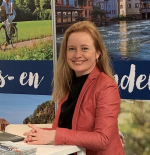
Nadine Stehouwer, Marketing and PR, Eigen-wijze Reizen
Webinar recording
13 September 2022
Search
Enter search terms to find market research
Cycling tourism in Europe requires a lot of hard work and knowledge. To help you prepare CBI provides a Market Potential study with a list of European countries that offer the most opportunities for cycling tourism and it describes the trends that offer new opportunities. The Market Entry study on this page contains information about buyer requirements and certifications, main market segments and distribution channels as well as information about the competition.
Terms & conditions are a key part of any purchasing agreement or contract between you and your buyer. They provide clarity to all parties and save time. Having your own set of terms & conditions gives you a more secure bargaining position in the negotiations with your buyer. This study describes what these terms & conditions could look like, so you can use it as a guideline to develop your own.
Search
Enter search terms to find market research
In the European market for home decoration and home textiles (HDHT), imports traditionally flow through wholesale importers and larger retailers or retail chains. Nowadays, smaller (independent) retailers are also increasingly buying directly from producers in developing countries. Another way to reach European consumers is via business-to-consumer (B2C) e-commerce. This study discusses the pros and cons of distribution through smaller retailers and direct online sales to help you decide if these alternative channels are an option for you.
Search
Enter search terms to find market research
Europe is one of the most interesting markets for apparel made from sustainable materials. It is the biggest apparel importer in the world, and it has a high demand for sustainable apparel, driven by demand, retailers, brands, governments and non-governmental organisations (NGOs). This report outlines opportunities and requirements for using sustainable materials in apparel on the European market. It serves as a guide for identifying sustainable material options and marketing them to buyers in the EU.
Europe is a strong market for men’s shirts, with a total import value of €5.0 billion and a five-year average decline of 4.8%. The biggest markets include Germany, France, Italy, the Netherlands, Spain and Poland.