
European cutlery imports are growing, with almost half of them coming from developing countries. This makes Europe an interesting market for you. Depending on your concept, a high or lower-middle market is available to you. The latter requires an innovative design approach, where the former is based on high productivity and low cost. Generally, sustainable values are new to this category and can be used to differentiate.
As the world’s leading candle importer, Europe is an interesting market for you. Demand is mainly driven by candles creating ambience in the home. In addition, candles increasingly play a supporting role in maintaining and improving consumers’ physical and mental wellbeing. The mid- to high-end market has the most potential for you. To target these segments, you can add value related to the origin of your ingredients, high-level craftsmanship and design, gift packaging and sustainability.
Tourism businesses face many different risks, from health and safety incidents to extreme weather, political unrest and operational disruption. Understanding how to manage these risks is important for all tour operators. This is especially true for those that work with European markets where buyers expect clear procedures, good planning and strong health and safety standards.
When disruption happens, the businesses that cope best are usually the ones that stay flexible, understand their costs, communicate clearly and avoid overextending themselves. During a crisis, it is important to stay visible, protect trust and keep adapting rather than going quiet.

Raj Gyawali, Founder at Social Tours Nepal, specialising in soft adventure and immersive cultural experiences
For tour operators in emerging markets, building robust frameworks around health and safety, environmental stewardship, and political contingency planning is essential not just to protect travellers, but to build the kind of trust that sustains a business over the long term. European travellers are increasingly discerning; they want immersive, transformative experiences, but they also expect operators to demonstrate professionalism and preparedness.

Gustavo Timo, President at Adventure Travel and Tourism Association (ATTA)
Search
Enter search terms to find market research
Food safety certification and frequent laboratory testing are necessary for pistachio suppliers who want to supply Europe. Emerging suppliers can attract buyers’ attention with sustainable production, good prices and social responsibility measures. Pistachio suppliers need to pay special attention to mycotoxin control in their products. Pistachio nut shipments can be rejected at European border controls if the aflatoxin content is too high.
Search
Enter search terms to find market research
Europe only buys safe, certified macadamia nuts with clear labels and traceable supply chains. Make sure your macadamia nuts comply with EU contaminant limits and buyer audits. Use recognised certifications. The best route into the market is through experienced importers that serve the snack segment. There are also opportunities in the food ingredient and private label markets. Compete with established suppliers by offering a dependable supply, certifications and service.
Search
Enter search terms to find market research
Europe offers a large and diverse market for groundnuts. Buyers expect safe, clean and well-documented products. European buyers pay close attention to aflatoxins, pesticide residues, allergens, packaging and traceability. Specialised importers are the best first channel for most SME exporters. Argentina is still the premium supplier of groundnuts, while China, the United States and Brazil compete in terms of scale, processing and price.
Building a relationship with suppliers matters a lot. You need to see if you can work well with the persons on the other side. Switching suppliers too often is not good practice. You want to have stable business relationships with reliable partners. Trust is very important. We are also increasingly looking for more proof of sustainability from our suppliers.
Luke Schaaf, Purchasing Manager at De NotenBeurs
The key issue for new supplier countries is good aflatoxin management. Getting aflatoxins under control is the number one expectation from a buyer perspective. Sustainability is also becoming more important. Good labour practices and fair working conditions are becoming a focus of interest for our clients.
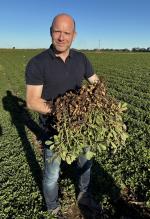
Jordi van der Stelt, Commercial manager at Stockinvest
Search
Enter search terms to find market research
Food safety certification, combined with frequent laboratory testing and good product quality, is necessary for cashew nut producers who wish to export to Europe. Sustainable production and social responsibility standards will help emerging suppliers to the European market to improve their long-term business operations. Exporters from Southeast Asia are strong competitors for new suppliers of shelled cashew nuts. But Côte d’Ivoire has recently shown that African exporters can be just as strong of a competitor.
Search
Enter search terms to find market research
Food safety certification, combined with reliable and frequent laboratory testing, helps create a positive image for dried tropical fruit suppliers wishing to export to Europe. Emerging suppliers can reap additional advantages through sustainable production methods and the implementation of corporate social responsibility measures. South Africa, Burkina Faso and Ghana are the leading suppliers of dried mango, while Ecuador is the main supplier of banana chips. Thailand is the leading supplier of sweetened dried tropical fruit.
Search
Enter search terms to find market research
While IT and IT-enabled services export to Europe is not ‘export’ in the traditional meaning of the word, there are several things to take into consideration when you start exporting your product or service. This document consists of eight tips to successfully get your product or service onto European market. Most tips focus on getting the necessary paperwork for exporting, but there are also tips on how to stand out from your competition.
We proudly display our certification on our website, but also in our background for video meetings. It is a symbol of our commitment to quality and reliability in our services.

Dennis Céspedes Araya, Chief Sales Officer at Novacomp – A software development company in Costa Rica that is successfully outsourcing to Europe.
Search
Enter search terms to find market research
The demand for mango puree in Europe is driven by the popularity of mango as an exotic flavour and the increasing awareness of its health benefits. The largest consumer of mango puree in Europe is the fruit juice industry. It is also increasingly being used as an ingredient in the baby food, bakery, confectionery and dairy industries. There are opportunities for new developing country suppliers in large markets, such as the Netherlands, the United Kingdom, Germany, France, Spain and Portugal.