
The European market potential for wildlife tourism
Wildlife tourism is popular among European travellers, especially those from the United Kingdom (UK), Germany and France. Visiting wildlife attractions is often a highlight of a broader adventure trip. Africa is the leading destination for safaris to view the iconic Big Five in their natural habitats. Responsible tourism, which considers animal welfare and the conservation of natural habitats, is a big trend in the market today. This is a global issue, and one that the European market feels very strongly about.
Contents of this page
1. Product description: wildlife tourism
Wildlife tourism involves viewing wildlife in their natural habitats. Wildlife tourism has 4 specialist niches:
- Safaris: These are usually wildlife-watching trips and holidays in Africa. There are many types, or passion groups, of safari, including 4x4 vehicles, walking safaris, canoe safaris, safaris on horseback and fly-in safaris.
- Marine life watching: Trips by boat to view marine life like whales, sharks and dolphins, and natural events like the sardine run.
- Wildlife watching: Trips in Africa and other places to view resident wildlife, which also includes birds.
- Conservation and voluntourism: Travel experiences where visitors actively contribute to protecting wildlife and habitats. These trips may include volunteering with conservation projects, supporting anti-poaching initiatives, participating in animal monitoring, or helping with habitat restoration while learning about ecosystems and sustainable tourism practices.
Wildlife tourism is part of the broader tourism segments of adventure tourism and nature tourism. It means that many of the characteristics of tourists interested in wildlife are shared with adventure and nature tourists. This offers good opportunities to local businesses to prepare suitable tourism products for a big market.
Tour operators offer ‘theme’ safaris, family safaris (suitable for families with younger children) and honeymoon safaris (with personalised extras for a honeymooning couple). There are also specialist safaris, like gorilla safaris or safaris to view rare animals like the pangolin in specific locations. Photography safaris, guided by a professional photographer, are also a popular type of safari among a relevant market.
Conservation and voluntourism experiences also fit in the wildlife tourism niche. Read the CBI report on opportunities in volunteer and educational tourism for insights into the market. Many participants in volunteer and educational tourism are taking a gap year from education or employment. So, you should also read the CBI study on opportunities in the European gap year tourism market.
Examples of wildlife tourism experiences
The European market for wildlife tourism is extensive. Viewing wildlife is often the main reason for travel amongst European travellers, but it can also be part of a wider trip. The table below gives examples of the main types of wildlife tourism trips and their related specialist niches.
Table 1: The Wildlife Tourism Specialist Niche and Passion Groups
| Wildlife Tourism Specialist Niche | Passion Group | Examples |
|---|---|---|
| Safari | 4x4 safaris |
|
| Walking safaris |
| |
| Canoe safaris |
| |
| Safaris by horseback |
| |
| Fly-in safaris |
| |
| Marine life watching |
| |
| Wildlife watching |
| |
| Conservation and Voluntourism |
|
Source: Acorn Tourism Consulting, 2025
End-market segmentation and consumer behaviour
Wildlife tourism is a popular activity while on a trip to many destinations across Africa, Asia and Latin America. It is estimated that up to 40% of all international tourists have an interest in some form of wildlife watching. Wildlife tourists cross over with many different markets, especially adventure tourists and fully independent tourists (FITs). They include many ages and generations. They have many motivations for travel; the chart below shows the broad groups of wildlife traveller and their motivations and typical behaviours.
Table 2: Types of wildlife tourists
| Wildlife Tourist Type | Motivations and Behaviours |
|---|---|
| Explorer |
|
| Backpacker |
|
| Backpacker Plus |
|
| General Interest |
|
| Special Interest |
|
| High-Volume |
|
Source: Wildlife Watching and Tourism, UNEP/CMS Convention on Migratory Species and TUI, 2006
Tips:
- Find out more about the different niche markets for European wildlife tourism in the CBI studies What are the opportunities in the European market for adventure tourism? and What are the opportunities in the European FIT tourism market?.
- See how the different niches cross over. Use the CBI infographic to help you.
- Take a look at your country’s or region’s wildlife product. Be sure you know where and what the iconic and other wildlife species are that visitors want to see. Be especially sure that the wildlife tourism products are operated under sustainable principles. You can find out more about sustainability in wildlife tourism in the accompanying CBI study Entering the European market for wildlife tourism products.
Accessible tourism on the European market
Accessible tourism is the ongoing effort to make sure tourist destinations, products and services are accessible to all people, regardless of physical limitations, disabilities or age. It includes publicly and privately owned tourist locations. The improvements not only benefit those with permanent physical disabilities. It also benefits parents with small children, elderly travellers, people with temporary injuries like a broken leg, and their travel companions. Disabled tourists can travel individually, in groups, with their family or with carers.
Accessibility and wildlife tourism
Wildlife tourists crosses over with adventure tourists. So, you can be sure that those with disabilities have an equally strong desire to travel and see wildlife in their natural habitats, just like people without disabilities. They will certainly be well-informed about how tourism businesses can meet their needs. Being open and honest about what you can and cannot provide is the most important factor for this market. There are many tour operators on the market today that cater to the accessibility market. They need good, reliable suppliers they can trust to deliver products to them.
Here are some practical things you can do to cater to this market:
- Train your staff. Educate all your staff, from office staff to guides and drivers, so they understand about disability and are respectful of all types of needs. Have a dedicated staff member as the main point of contact.
- Make your tour physically accessible. If you offer a tour in a mini-bus or 4x4, make sure it is an accessible vehicle. Make sure you have ramps for wheelchairs. Offer to loan walking sticks or other walking aids to people who need them.
- Communicate in the right way, either directly or via marketing materials. Use large print in your communications, including signage, marketing materials and website.
- Accessibility statement. Make sure to include an accessibility statement on your website and make it easy to find. Include details of how you will actively support this market.
Have a look at these tour operators, which offer accessible safaris. See what they provide so you can adapt your business to cater for the disability market.
- Epic Enabled is based in South Africa and offers different accessible tours in Kruger National Park. They supply equipment to borrow, like wheelchairs, walking frames, shower chairs and hoists.
- Endeavour Safaris promotes tours in southern Africa for elderly people with various disabilities, including those with visual and hearing impairments.
- Access 2 Africa Safaris provides tours for wheelchair users, people with hearing and visual disabilities, and others with mobility problems.
Tip:
- Read the CBI studies The European market potential for accessible tourism and Entering the European market for accessible tourism products. They offer practical and useful advice on how to make your tours accessible.
2. What makes Europe an interesting market for wildlife tourism?
Europe is an interesting market for wildlife tourism. This niche is very popular among European travellers. This includes those who travel mainly to view the wildlife and others who include wildlife watching among a range of activities. Wildlife watching is also set to grow. Wildlife tourism is a valuable tourism niche market. There are varied statistics about the global value and growth predictions. Below are some interesting statistics:
- The global wildlife tourism market was estimated to be worth US$147.8 billion in 2024. It is forecast to be US$245.3 billion by 2034 – a compound annual growth rate (CAGR) of 5.2%.
- Another study indicates that Europe will probably be the fastest-growing source market for wildlife tourism. This is because Europeans are becoming more concerned about the welfare of wildlife.
- Safari tourism was estimated to be worth US$35.5 billion in 2024. It is expected to reach US$55.3 billion by 2033 – a CAGR of 5.06% for 2025-2033. In this case, safari tourism is separate from the broader wildlife tourism segment.
- The World Travel & Tourism Council (WTTC) estimates that global wildlife tourism generates five times more revenue than the illegal wildlife trade per year. This means there is a real incentive among local communities all over the world to conserve wildlife and habitats. In turn, this can provide a long-lasting livelihood.
- Wildlife tourism is well represented among European tour operators. Almost half of these operators are involved in the wildlife tourism niche (57.7%). This shows a strong demand in the market for the activity.
- In 2024, safaris/wildlife-viewing was listed as one of the top-5 primary adventure activities among global tour operators in the ATTA (Adventure Travel Trade Association) Travel Trends Insights Report 2025. The association also noted safaris/wildlife viewing as a ‘hot trending’ adventure activity.
Several factors are driving growth. Europeans are becoming more aware of environmental issues that affect the planet. They are attracted by travel that has a positive impact on people and places. They often want to travel more sustainably and make more responsible travel choices, like travelling with ethical and responsible safari businesses.
Social media is also driving growth in wildlife tourism. Unique, immersive and nature-based experiences like safaris, whale watching and birdwatching are becoming more popular. They are highly visible on social media platforms like Instagram and TikTok. They reach younger audiences who are driving travel growth today. Improved access to remote destinations to view iconic species where fewer tourists travel is also very appealing to some Europeans. These travellers are more often looking to avoid overcrowded destinations to enjoy a more authentic experience.
Tip:
- Find out where wildlife tourists to your destination come from. Your national tourist board is a good place to start. That way, you can research the needs of these tourists to make sure you meet them.
- Do some research into the local offering in your destination. Then identify local tour operators that you can network with and learn from. For example, what type of wildlife product is the most popular on the market? Work out ways to add value to your product.
3. Which European countries offer the most opportunities for wildlife tourism?
The European countries that offer the most opportunities for wildlife tourism in developing destinations are Germany, the UK, France, Italy, the Netherlands and Spain. They are the leading outbound source markets to developing destinations. They also like to visit long-haul destinations to view wildlife. Other interesting markets to consider are Scandinavia (Denmark, Norway and Sweden) and Switzerland/Austria. Scandinavian countries have small populations but high travel rates per person. Switzerland and Austria are usually high-spending and nature-loving markets.
All markets have strong economies, a high desire to travel and a culture of nature-based and ethical travel. These outbound markets send many people on safaris and other wildlife-watching trips overseas. This is evidenced by the large number of tour operators that serve the market.
Consumer research carried out by CBI in 2024 found that interest in safaris and wildlife watching was on the rise among European markets. An average of 4.4% of respondents said they planned to take part in wildlife watching in 2025. This number was up from 3.5% in 2024. France has the highest intent to watch wildlife in 2025 (7.0%), followed by the UK (5.4%) and Italy (4.0%).
Source: CBI, Acorn Tourism Consulting 2025
The United Kingdom
The UK is the largest market for wildlife tourism. British travellers are well-known for their long-haul safari trips and adventurous wildlife travel. The UK safari tourism industry is set to grow strongly, from US$4.9 billion in 2023 to US$7.6 billion in 2035. This is a CAGR of 6.3%, higher than the global tourism growth average. Growth is especially expected in the luxury market, with tailor-made safari packages, exclusive game drives and luxury lodges.
Around 50% of the UK wildlife tourism market is made up of international safari-goers. Africa is a major continent for British wildlife tourists, especially Kenya and Tanzania. Compared to South Africa’s Kruger National Park, the country’s top destination for safaris, more remote destinations are gaining popularity among British safari-goers. Examples are Tanzania’s Ruaha (rather than the well-visited Serengeti) or the less-visited conservancies of Namibia.
Malawi looks set to be an interesting destination for British wildlife tourists in 2025, according to ABTA (the Association of British Travel Agents). Malawi is further off the beaten track and offers an authentic experience. Like many African countries, it has a strong wildlife product, including the Majete Wildlife Reserve to view the ‘big five’ (lion, leopard, rhino, elephant and buffalo). There are excellent lodges in Liwonde National Park.
British wildlife tourists are sustainably minded and want to participate in conservation-focused safari experiences. Eco-lodges and camps with a low environmental impact through solar energy, water recycling and buildings with local materials are appealing to the British market.
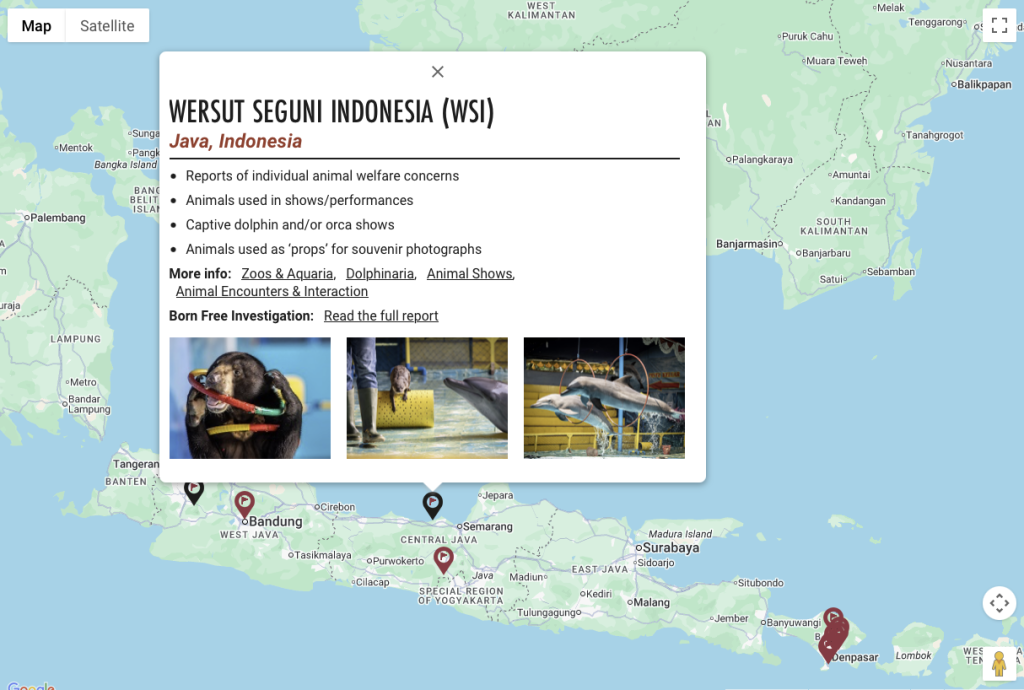
British travellers also often avoid experiences that exploit animals, like unregulated big cat encounters. They prefer to take tours that protect endangered species or fund conservation programmes. ABTA has issued guidelines for travellers on taking part in activities that involve animals. In fact, British travellers are encouraged to ‘raise the red flag for captive wild animals’ through the Born Free Foundation. You should check to see whether any flags have been raised in your destination.
Figure 2: Raise the red flag for captive wild animals – example of animal exploitation in Indonesia
Source: Born Free Foundation, 2025
Kenya, Tanzania, Botswana and South Africa are all major destinations for British wildlife tourists. The British have a long history of travelling to Africa on safari, so the British tour operator market specialising in safari and wildlife tourism is wide. Examples are Safaris Online, Wildlife Worldwide and Naturetrek. Most general tour operators also offer wildlife/safari holidays within their portfolio of trips, including Audley Travel, Explore and Intrepid.
Germany
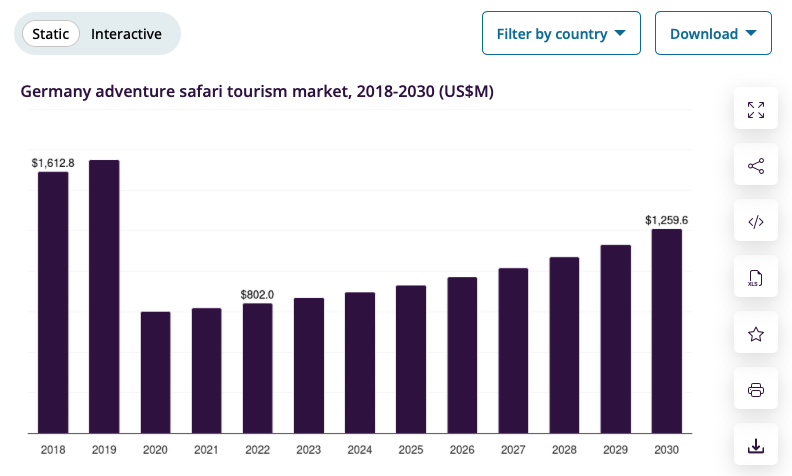
There is a large market of safari-goers in Germany. The market is also growing, with a predicted revenue of US$1.26 billion by 2030. This means a CAGR of 5.8% for 2023-2030. The chart below shows the market has still not recovered to pre-pandemic levels. Friends travelling together made up the largest share of revenue (41.6%).
Figure 3: Germany adventure safari tourism market size and outlook to 2030
Source: Grand View Research, 2022
Germans are especially drawn to nature, natural beauty and wildlife experiences. They also enjoy participating in community-based tourism experiences like community-run ecolodges. They are environmentally conscious, and welfare of animals is a priority for them. 88% of travellers believe tour operators should avoid activities that cause suffering to animals. That is why it is very important that local operators avoid offering or marketing such activities. Find out more about unacceptable practices in wildlife tourism in the accompanying study, Entering the European market for wildlife tourism products.
Major safari destinations for the German market are Tanzania and Botswana in Africa and Sri Lanka in South Asia. More adventurous German travellers will visit lesser-known game parks like Ruaha and Selous. Namibia is another good choice for the German market. Part of its population speaks German. There are many German tour operators offering wildlife and safari holidays, and the market is well established. Afrika Safari Urlaub, REWE Reisen and Tanzania Specialist offer many different safari options.
France
In 2023, the wildlife tourism market in France was worth US$2.8 billion 2023. This is predicted to rise to US$4.6 billion in 2030 – a CAGR of 7.2%. France is the fastest-growing regional market in Europe and has a 1.7% global share.
The French have a strong preference for viewing wildlife in their natural habitat, which has been growing strongly. This is especially true for the 45-64 age group, for whom wildlife viewing is a top-ranked activity. Like the German market, they like to stay in ecolodges and use tour operators that can prove their sustainability credentials.
Africa is a top destination for French wildlife tourists. Source market favourites are in East Africa (Kenya, Tanzania) and South Africa. French-speaking Senegal and Madagascar pull in wildlife tourists from France as well. Since the pandemic, more French people have been travelling to Costa Rica for the nature and wildlife. In 2023, France was one of the top European source markets to Costa Rica, with 13.1% growth. The Galapagos Islands are also popular in the French market.
Like other source markets, the tour operator market strongly supports wildlife tourism products. Operators include Terre d’Aventure, Nomade Aventure and Safaris à la Carte. French wildlife tourists like it when tours are done in their own language. So, if you can offer this, this will be a good advantage.
Italy
Italian wildlife tourists share characteristics with other source markets. They are concerned about the welfare of animals and are becoming more interested in responsible animal practices and sustainable tourism policies. They are also interested in getting involved in volunteering projects related to wildlife and conservation. There is evidence that this type of travel is on the rise in Italy. This offers good opportunities for local tour operators to consider this market.
Destinations like Costa Rica, Madagascar and African game reserves are interesting destinations for Italian wildlife tourists who look for purpose-driven travel opportunities. You can find out more about the volunteering niche market in the CBI study What opportunities are there on the European volunteer and educational tourism market?.
Like other source markets, safari holidays are widespread in the tour operator market. Examples are Turisanda, Eden Viaggi and Safari Avventura. Organisations that offer volunteering opportunities include Piratin Viaggio and Lipu. These organisations also offer advice and support and links to other organisations. It is worth looking at some of these, to check how they attract the European market.
Netherlands
Growing numbers of Dutch tourists are taking part in wildlife watching while on a trip abroad. Participation in wildlife activity rose from 28% in 2014 to 30% in 2019. The Dutch are among the most sustainably minded of the source markets, and they also care a lot about animal welfare. Several Dutch tourism organisations, including ANVR (a Dutch travel association), have adopted enhanced guidelines about animal welfare based on the guidelines developed by ABTA. This helps to make sure wildlife tourism is ethical and responsible.
Dutch wildlife tourists like to travel to many different destinations. Examples are the major African destinations and Asian countries like Sri Lanka and Indonesia. More Dutch wildlife tourists have been travelling to Costa Rica in recent years. In 2023, arrivals for nature and wildlife grew by 20.1%. This was a higher growth rate than all other European source markets. Specialist wildlife hotspots like the Galapagos Islands and Brazil’s Pantanal are also popular.
Like many source markets, wildlife tourists look for inspiration on the internet about the best places to go. They use blogs like De 10 beste wildlife-spot bestemmingen (the 10 best wildlife spot destinations, a webpage in Dutch). You can often find these on tour operator websites, like Riksja Travel. Other Dutch tour operators that sell wildlife holidays are Djoser, Tenzing Travel and Impala Tours.
Spain
The Spanish adventure safari tourism market was valued at US$247.1 million in 2022. It is predicted to be worth US$367.1 million in 2030 – a CAGR of 5.1%. Like in the Italian market, there is growing interest in wildlife and conservation volunteering trips among Spanish wildlife tourists. Spanish travellers appreciate tours in their own language. They are more likely to arrange a trip with a Spanish-speaking tour operator. This also means that Spanish-speaking countries with good wildlife-watching opportunities, like Costa Rica and Argentina, are popular for this market.
There are many tour operators on the Spanish market that offer safari and wildlife holidays in their portfolios. Examples are Sukia Travel and Tangol Tours, which list Argentina as a popular destination. Volunteer wildlife tourists from Spain often buy their products from tour operators that work worldwide, like African Conservation Experience and Volunteer South Africa.
Tips:
- Make sure you know a lot about the wildlife in your destination, so you can pass on good information to wildlife tourists. The European market wants to learn about different animals and how they behave.
- Check how ethical and responsible your trips/tours really are. You must take the welfare of animals and conservation of their habitats seriously and be honest and transparent about your sustainability actions if you are to attract the European wildlife market. The accompanying study, Entering the European market for wildlife tourism products, has more details about animal welfare and sustainability in wildlife tourism.
- Find out more about these European source markets. CBI publishes many studies to help you build your knowledge. What is the demand for outbound tourism in the European market? offers lots of market detail. For opportunities on the European market, CBI recommends other studies on adventure, nature, birdwatching and volunteer and educational tourism.
4. Which trends offer opportunities or pose threats in the European wildlife market?
The main trends that are impacting the wildlife tourism niche today are centred around responsible tourism and sustainability. Generally, there has been a shift away from mass-market experiences towards smaller, lower-impact models. These benefit animals, local communities and visitors. But there is still a clear need for more action in this area, to discourage bad behaviour around animals and stop experiences that treat animals wrongly. Social media is an important medium that drives interest in wildlife tourism among younger generations.
Future of wildlife tourism driven by sustainability, conservation and community-based tourism initiatives
The major trend in the safari and wildlife niche is that wildlife enthusiasts are looking for experiences that are both memorable wildlife encounters and have strong conservation and community benefits. Europeans enjoy natural encounters with animals in the wild. These often happen in off-the-beaten-track destinations where there are fewer tourists. This shift shows growing awareness among visitors that their choices help sustain ecosystems for the future and do not harm animals or their habitats, or have negative impacts on communities.
Operators are moving away from mass-market game drives towards smaller, lower-impact models. They are working in community-owned conservancies rather than heavily trafficked reserves. They set strict limits on vehicles and visitor numbers. They also make sure that money raised goes directly into conservation funds and supports local livelihoods. But it is important that there is clear reporting on activities and tangible evidence of positive outcomes, so travellers are clear on how their money is being spent.
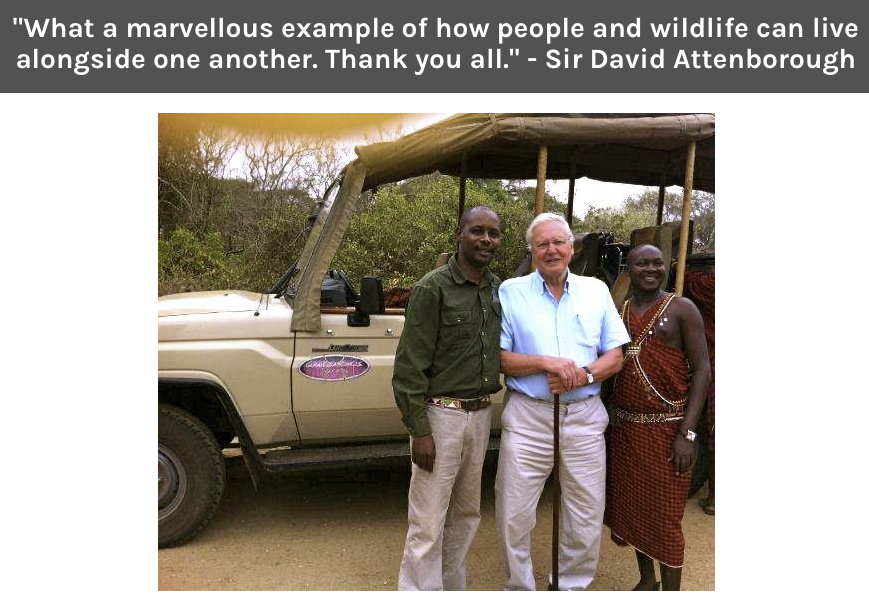
Gamewatchers Safaris in Kenya are a good example of best practice in responsible wildlife tourism. The operator has set up long-term partnerships with Maasai landowners. It pays leases to keep land open for wildlife rather than fenced for agriculture. Their temporary Porini camps are solar-powered. This means they have a much lower carbon footprint than traditional lodges. Guests enjoy crowd-free game viewing while knowing their stay helps finance thousands of acres of protected habitat.
New initiatives, like their Adopt-an-Acre programme and working together with conservation finance groups, are bringing safari tourism in line with new ‘nature-positive’ investment models. They have even been approved by one of the world’s leading naturalists, Sir David Attenborough.
Figure 4: How Gamewatchers Safaris live in harmony with people and wildlife
Source: Gamewatchers Safaris, 2025
As this trend continues to grow, sustainability is no longer ‘nice to have’. It is now an expectation for all tourism experiences. When it comes to wildlife tourism, animal welfare is very important. So are appropriate strategies to manage habitat conservation and benefit local communities living alongside. Operators that manage their organisation in this way will benefit not only their business but the resident wildlife and local communities long into the future.
Increased concern about overtourism, animal welfare and poor tourist behaviour
There is higher global awareness of the need to protect animals and their habitats. But it is clear that the tourism industry must do more to protect animals in the wild and refrain from encouraging overtourism or irresponsible behaviour around wild animals. Recent stories like this one, Tourists with cameras are now as bad as the trophy hunters, give shocking evidence of poor tourist behaviour. This has terrible consequences for animals.
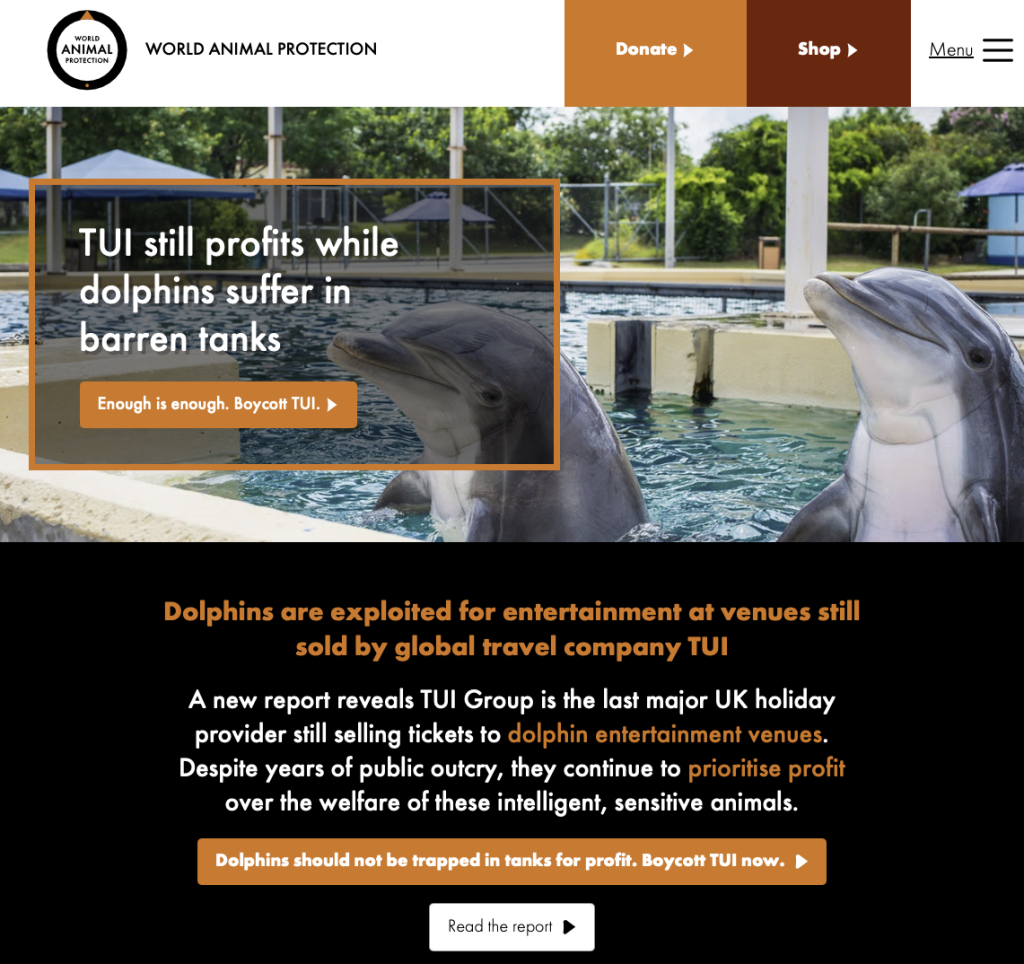
Human interaction with wild animals and the exploitation of animals for human pleasure have also been criticised. Unfortunately, these experiences are still offered today, even by European operators. World Animal Protection has exposed how leading European tour operator TUI is still selling tickets to dolphin entertainment venues. The organisation is encouraging wildlife supporters to boycott the operator. Read the report to find out why these experiences are so bad.
It is bad news for any operator if it turns out they are acting against the trend for responsible wildlife tourism. Negative publicity will harm their reputation. This is why you must make sure your operations, tours and trips do not promote behaviour that harms or endangers animals or their habitats.
Figure 5: Boycott TUI – the importance of animal welfare to European wildlife tourists
Source: World Animal Protection
The Community Baboon Sanctuary (CBS) in Belize is a good example of a wildlife organisation that is responsible and has animal welfare at its centre. Its operations are fully integrated into the 7 local communities of the Belize River Valley. This keeps the land safe for the black howler monkeys and other wildlife that live there. The sanctuary is deeply connected to the Kriol culture and the region’s history. Women play an important role in the sanctuary. They lead community projects, oversee conservation activities and ensure sustainable management. CBS also offers educational and training opportunities.
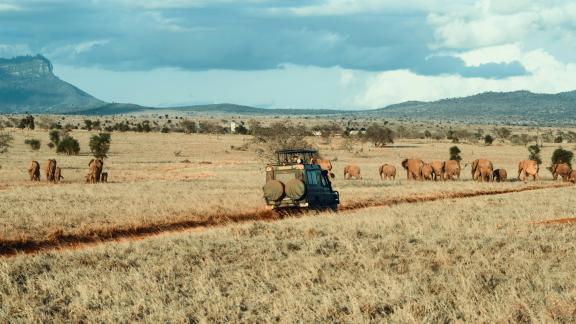
Figure 6: Responsible wildlife tourism takes tourists away from popular hotspots
Source: Cédric Dhaenens at Unsplash, 2019
Social media is driving interest in wildlife encounters among younger consumers
Today, social media is helping transform wildlife tourism from a niche activity into a global travel trend. This is especially true among younger Gen Y and Gen Z generations, aged 13-29 and 30-45, respectively. Beautiful photos of wild animals and safaris, dramatic animal encounters, and behind-the-scenes conservation stories on Instagram, TikTok and YouTube inspire them to dream of taking a safari holiday.
These younger consumer groups are more often looking for trips that are both exciting and ethical. Influencers like Spotlight Responsible Tourism show how visits can support conservation and local communities. Dioniso Paniagua is a Costa Rican wildlife guide who has become a viral sensation on TikTok. His videos celebrate Corcovado National Park’s biodiversity, combined with his respect for nature and his reinforcement of responsible wildlife watching.
Using social media channels to attract new audiences and reinforce messages around sustainability, conservation and responsible tourism. This gives local operators good opportunities to develop their businesses.
Acorn Tourism Consulting Limited carried out this study on behalf of CBI.
Please read our market information disclaimer.
Disclaimer: The statistics quoted throughout this study are drawn from different sources. Because of variations in data collection and presentation methods, figures may not always be directly comparable.
Search
Enter search terms to find market research
Do you have questions about this research?
The future of tourism lies in regenerative models – where protecting wildlife and habitats goes hand in hand with partnering with and uplifting local communities. When operators embed conservation and community benefit at the heart of their business, they not only safeguard nature but also create resilient economies and unforgettable guest experiences. It is these authentic experiences and a focus on delighting guests that can be a positive step to attracting guests and getting repeat and referral business for the long term.

Mohanjeet Brar, MD, Gamewatchers Safaris & Porini Camps
Respecting animals as individual beings is becoming more important among European tourists. It is, therefore, important to offer wildlife tourism in an animal-friendly way. Nature experiences in which the animals’ intrinsic value is emphasised are key. This strengthens the bond between people and nature.

Akke Folmer, research lecturer in sustainable tourism
Webinar recording
8 June 2021