

Entering the European market for wellness tourism
European demand for wellness tourism is growing as more travellers seek holidays that improve their physical, mental and emotional wellbeing. To succeed in this market, you need to understand European traveller preferences and the latest wellness trends, develop authentic, high-quality wellness experiences, and meet European buyer expectations for quality and sustainability. You need to understand how competing destinations position themselves, along with building relationships with specialist tour operators and other sales channels that reach European wellness travellers.
Contents of this page
- What requirements and certifications must wellness tourism meet to be allowed on the European market?
- Through which channels can you get wellness tourism on the European market?
- What competition do you face on the European wellness tourism market?
- What are the prices of wellness tourism products on the European market?
1. What requirements and certifications must wellness tourism meet to be allowed on the European market?
European tour operators that sell wellness tourism products to European tourists are bound by strict regulations to ensure the safety of their travellers and to protect them financially. You should be familiar with the relevant regulations.
What are the mandatory and additional requirements that buyers have?
The requirements that European tour operators have for wellness tourism products in low- and middle-income countries cover the following:
- The European Package Travel Directive.
- General Data Protection Regulation (GDPR).
- Liability Insurance and Insolvency Protection.
As a first step, you should read the CBI’s What requirements must tourism services comply with to be allowed on the European market and familiarise yourself with the comprehensive details of legal, non-legal, and common requirements.
What are the requirements for niche markets?
European wellness travellers have high expectations. They look for safe, authentic and professionally delivered experiences that improve their wellbeing while respecting local communities and the natural environment. Meeting these expectations will help you attract visitors, build trust with European buyers and encourage repeat business.
Meet health, safety and cleanliness standards
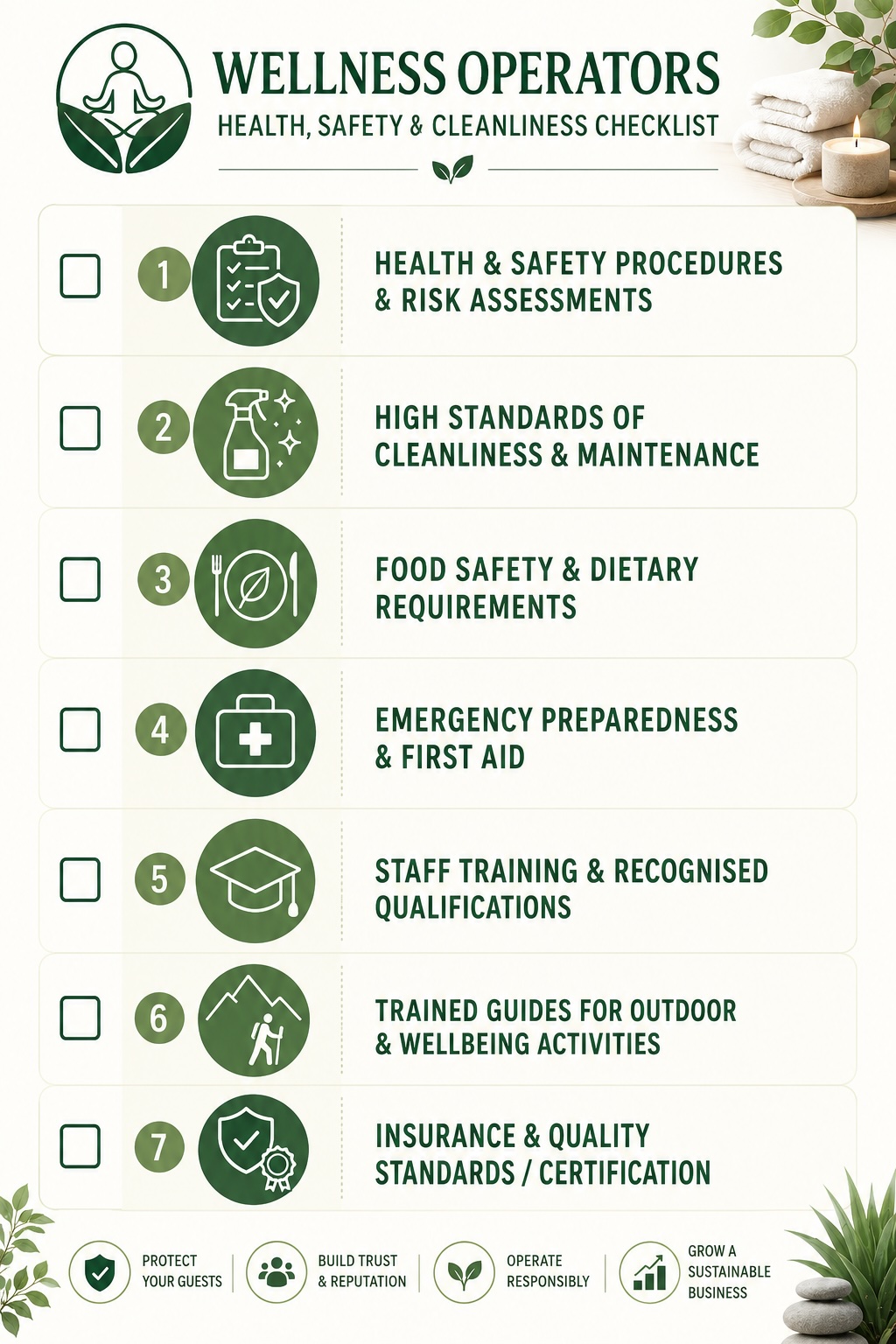
European travellers expect wellness experiences to be safe, hygienic and delivered by qualified professionals. High standards of health, safety and cleanliness are essential for building trust with visitors and meeting the requirements of European tour operators. Guests should feel safe and well cared for throughout their stay, from arrival and accommodation to treatments, activities and excursions.
If you operate a spa or wellness facility, consider adopting recognised standards such as ISO 17679 for wellness spa services or Wellness in Travel and Tourism (WITT) certification. Although certification is optional, it demonstrates professionalism, quality and a commitment to continuous improvement, giving European buyers and guests greater confidence. If you work with wellness providers, you should also look out for ones that follow these standards.
Follow these steps when preparing your wellness tourism product:
- Develop written health and safety procedures and carry out regular risk assessments for all activities and facilities. Keep treatment rooms, accommodation, pools, hot tubs, yoga studios, changing rooms and communal areas clean and well-maintained. If you provide food, follow recognised food hygiene practices and cater for dietary requirements where possible. Ensure staff know how to respond to emergencies and that at least some employees are trained in first aid.
- Invest in staff training and ensure employees hold recognised qualifications relevant to the services they provide. Appropriately trained professionals should always lead wellness activities. For example, yoga teachers should complete recognised teacher training through registered Yoga Alliance schools, while Pilates instructors should complete recognised training aligned with the Pilates Method Alliance.
- Pay attention to outdoor wellbeing activities such as hiking, cycling, kayaking and paddleboarding, as these should also be led by qualified guides with the appropriate technical and safety skills. Using unqualified instructors increases the risk of injury, damages your reputation and may expose your business to legal liability.
- Provide regular refresher training in health and safety, hygiene, customer care and safeguarding. Encourage staff to develop specialist skills such as mindfulness, meditation, nutrition or wellness coaching to broaden your product offering. Investing in local staff improves service quality, creates employment opportunities and supports the long-term development of the wellness sector.
- Make sure your business, staff and activities are well insured, particularly if you offer adventure, water-based or physically demanding experiences.
Figure 1: Checklist for wellness tourism providers
Source: Acorn Tourism Consulting, 2026
Embed sustainability into your operations
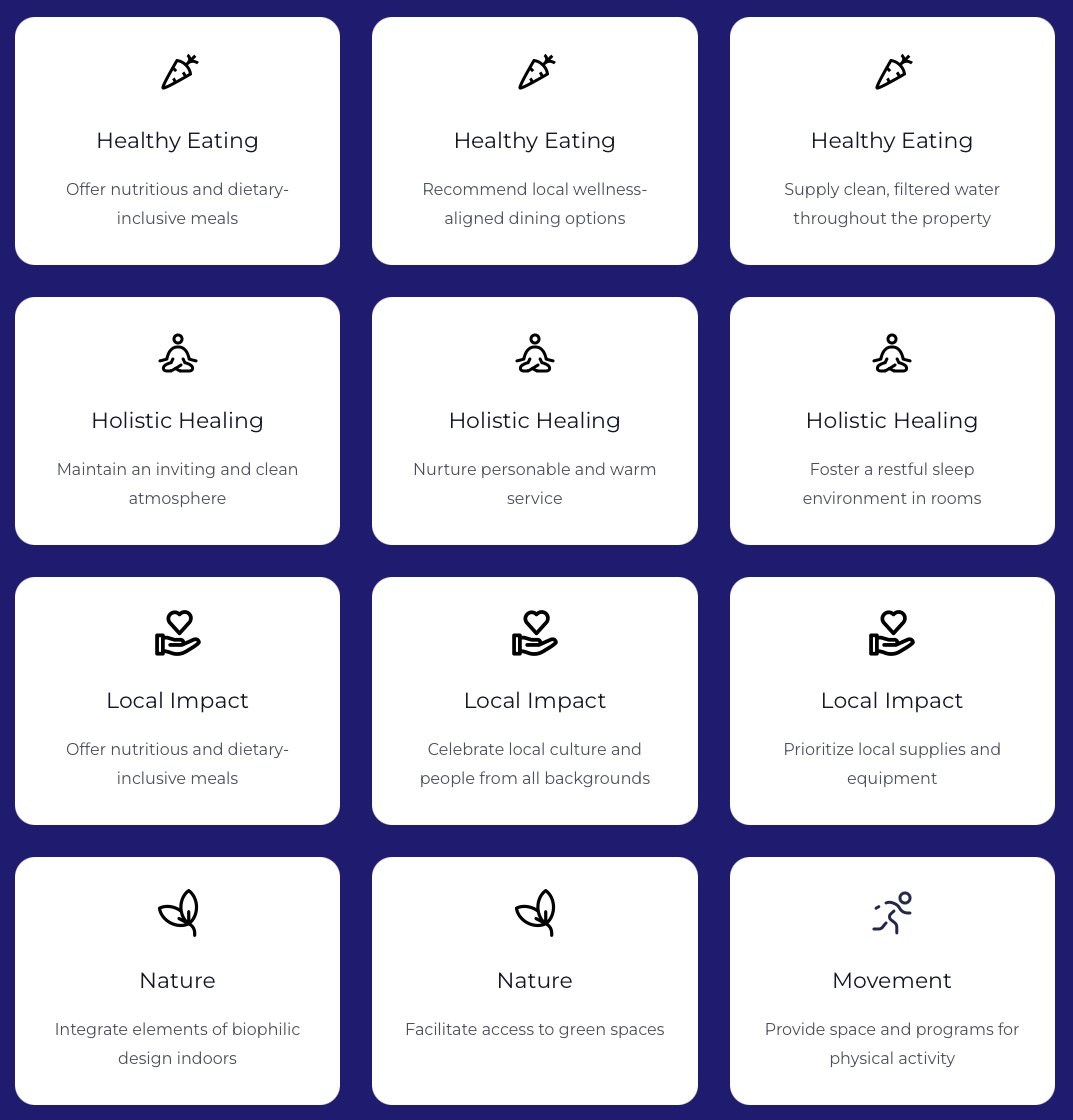
Sustainability is a core expectation in the European wellness tourism market. Wellness travellers associate personal wellbeing with the health of local communities and the natural environment. Many wellness experiences depend on healthy ecosystems, clean environments and thriving communities.
Embed sustainability throughout your business rather than treating it as an add-on. Typical sustainable actions include reducing energy and water consumption, minimising waste and eliminating single-use plastics where possible. Source food, spa products and other supplies locally and responsibly, choosing organic or natural products where appropriate. These measures can reduce operating costs while enhancing the visitor experience.
Support local communities by employing local staff, purchasing from local businesses and working with local farmers, artisans, guides and wellness practitioners. Celebrate local culture and traditional knowledge where appropriate, such as indigenous healing practices, herbal remedies or locally produced wellness products.
Figure 2: Core wellness sustainability standards for hotels
Source: Wellness Tourism Association, 2026
Measure and communicate your sustainability efforts. European buyers are starting to ask suppliers to provide evidence of their environmental and social performance. Set realistic goals, monitor your progress and share examples of the actions you are taking on your website and in your marketing materials.
Consider joining a recognised sustainability certification programme, such as Travelife, TourCert or Good Travel Seal. Certification is not essential, but it demonstrates a commitment to responsible tourism, provides independent verification of your sustainability practices and can strengthen your credibility with European buyers.
Tips:
- Read the CBI study How to be a sustainable tourism business? for practical guidance on sustainability, certification, and responsible business practices. It will help you as you prepare your journey towards being a sustainable tourism business, and European tour operators will be more likely to do business with you.
- Reduce your environmental impact by measuring energy and water use, minimising waste, eliminating single-use plastics and sourcing food, spa products and other supplies locally and responsibly wherever possible.
- If you serve food or drinks as part of your wellness experience, implement a recognised food safety management system based on HACCP (Hazard Analysis and Critical Control Points) principles. Train staff in safe food handling, maintain high hygiene standards and clearly communicate ingredients and allergens to accommodate guests with dietary requirements and food allergies
- Consider joining a recognised certification scheme, including Travelife, TourCert or Good Travel Seal, to demonstrate your commitment to quality and responsible tourism.
Understand travellers’ motivations around wellness
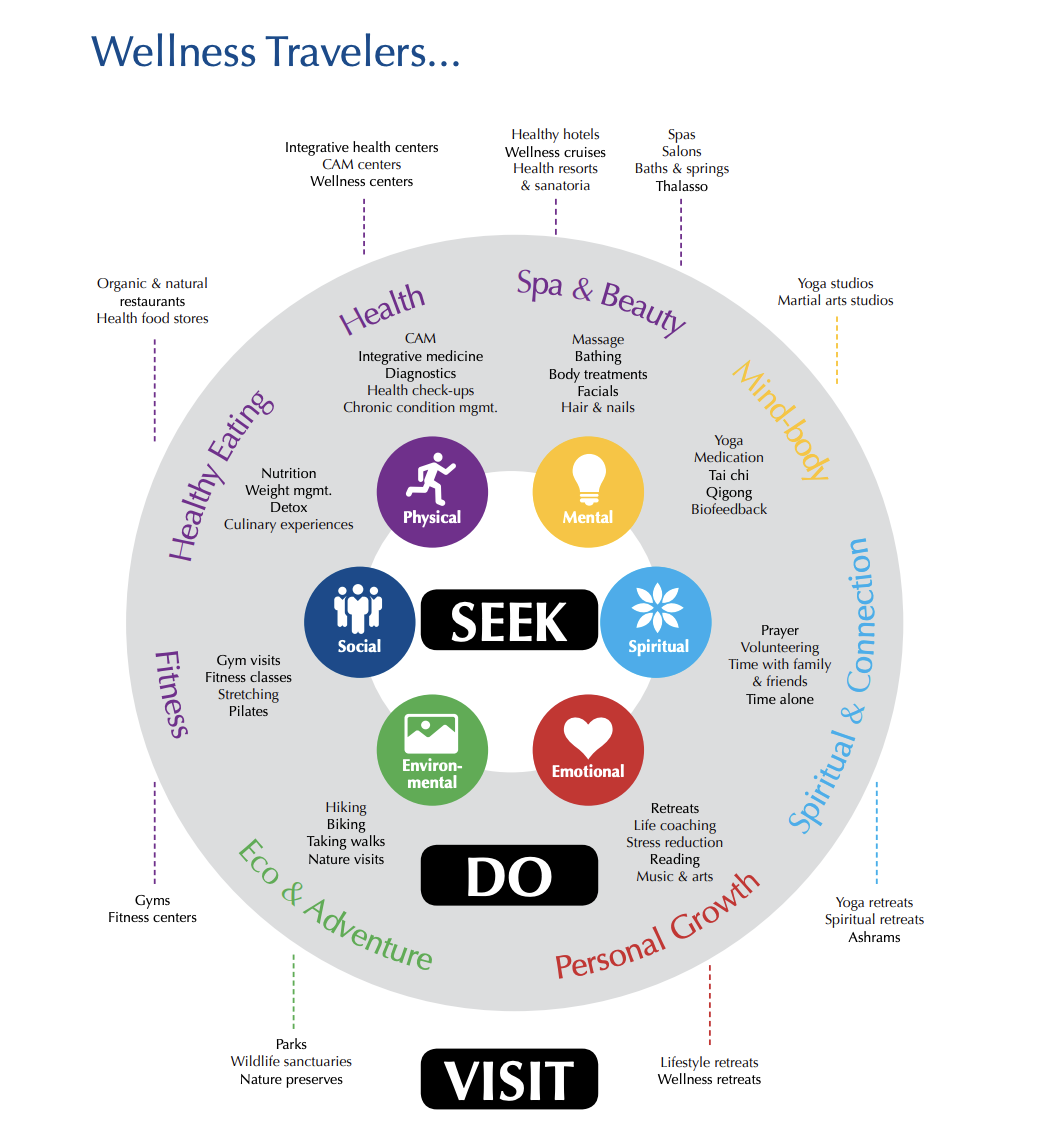
Understanding why people choose a wellness holiday will help you develop products that meet their needs and market them more effectively. European wellness travellers are looking for experiences that improve their physical, mental and emotional wellbeing. While relaxation remains an important motivation, more and more travellers are seeking opportunities to reduce stress, reconnect with nature, improve their health, learn new skills and return home feeling refreshed and rejuvenated.
Figure 3: Wellness travellers’ motivations
Source: Global Spa and Wellness Summit/Global Wellness Tourism Congress, 2026
When developing new experiences, think about the outcomes your products deliver rather than the activities themselves. For example, a guided forest walk can help visitors relax and practise mindfulness, a farm-to-table cooking experience can promote healthy eating, while a community-led cultural activity can foster meaningful connections and improve emotional wellbeing. Even traditional tourism experiences can appeal to wellness travellers when they help visitors feel healthier, happier or more connected.
Integrate wellness into your existing tourism products
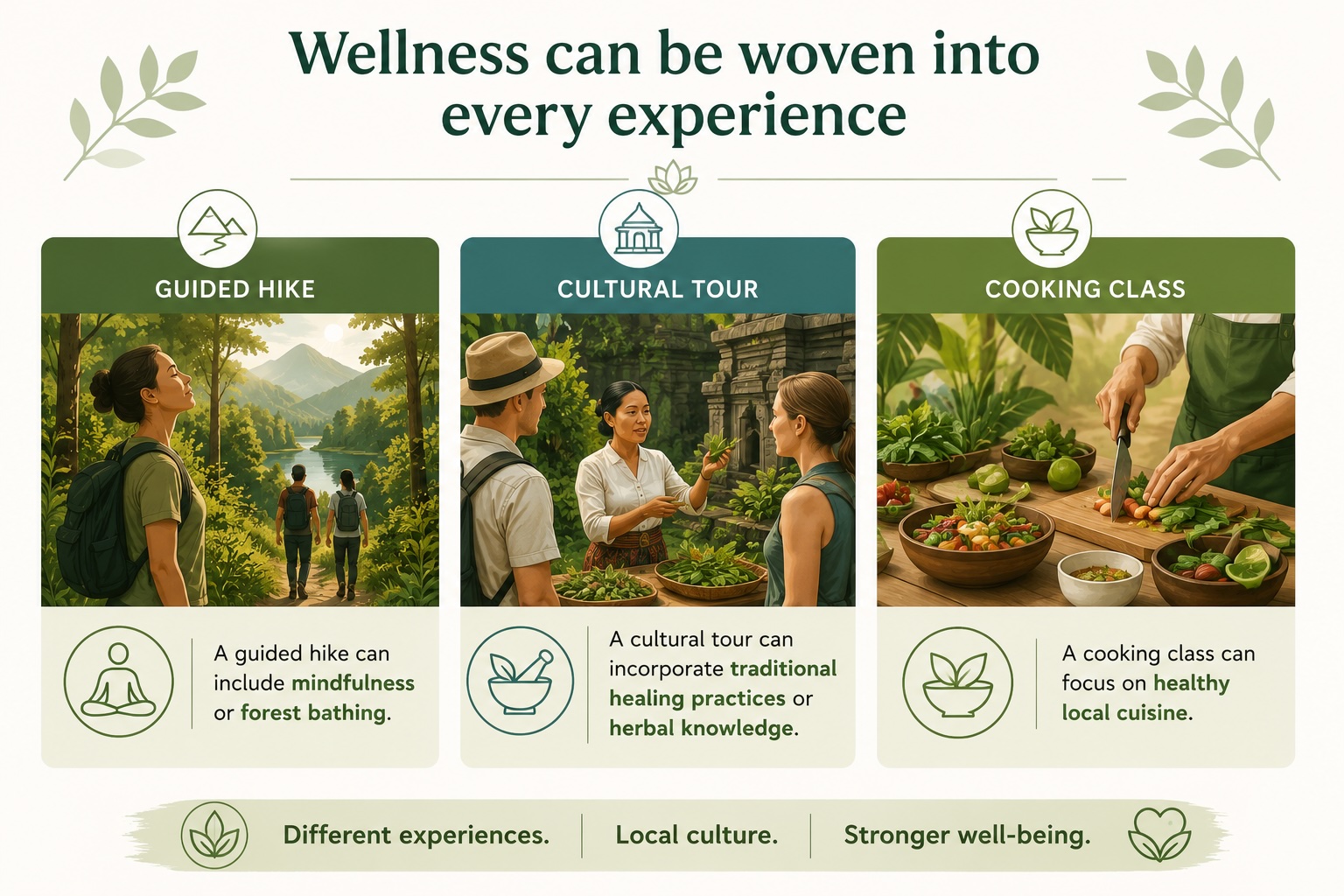
You do not need to operate a spa or wellness retreat to attract wellness travellers. As the What is the European potential for wellness tourism report shows, visitors are motivated by a wide range of wellbeing benefits. Many tourism businesses already offer experiences that support these motivations and can strengthen their appeal by incorporating wellness elements into their existing products.
Think about how your current experiences contribute to visitors’ physical, mental or emotional wellbeing. Have a look at the infographic below, which provides some examples of what your existing offers may cover in terms of wellness outcomes.
Figure 4: Wellness can be woven into every experience
Source: Acorn Tourism Consulting, 2026
Accommodation providers can create quiet spaces for relaxation, offer yoga or meditation sessions, provide healthy meal options or develop sleep-friendly rooms with features such as comfortable mattresses, blackout curtains, soundproofing, calming décor and herbal teas to promote restful sleep. Small changes can add significant value without requiring major investment.
Nature provides one of the strongest foundations for wellness tourism. Activities such as walking, cycling, wildlife watching, or stargazing can all support wellbeing when designed with relaxation, mindfulness or connection to nature in mind. Similarly, cultural experiences, creative workshops and opportunities to disconnect from technology can all contribute to visitors’ sense of wellbeing.
When designing wellness experiences, focus on quality rather than quantity. Offer authentic experiences that reflect your destination’s natural and cultural assets instead of copying products from other destinations. European travellers value unique, locally rooted experiences that cannot be found elsewhere more and more often.
Make sure you test new wellness products with visitors and ask for feedback before investing in larger developments. Many successful wellness experiences begin by adapting existing tourism products rather than creating entirely new ones.
Tips:
- Identify which wellness motivations your existing products already meet (using Figure 3 from this study) and where you could add new wellbeing elements. This will help you strengthen your offer, communicate its wellness benefits more clearly and develop experiences that appeal to a wider range of wellness travellers.
- Build on your destination’s unique natural and cultural assets by adding simple wellness elements, such as mindfulness, digital detox opportunities, healthy food or time for reflection, to your existing products.
- Gather visitor feedback regularly and use it to refine your wellness experiences, ensuring they continue to meet the changing needs and motivations of European wellness travellers.
Market your wellness experiences effectively
European wellness travellers want to know how your experiences will help them relax, recharge and reconnect. Focus your marketing on the wellbeing outcomes you provide and support this with authentic photography, customer reviews, sustainability credentials and clear practical information. A professional online presence and strong relationships with specialist tour operators will help build trust and attract more European visitors.
Figure 5: Tips on how to market wellness tourism
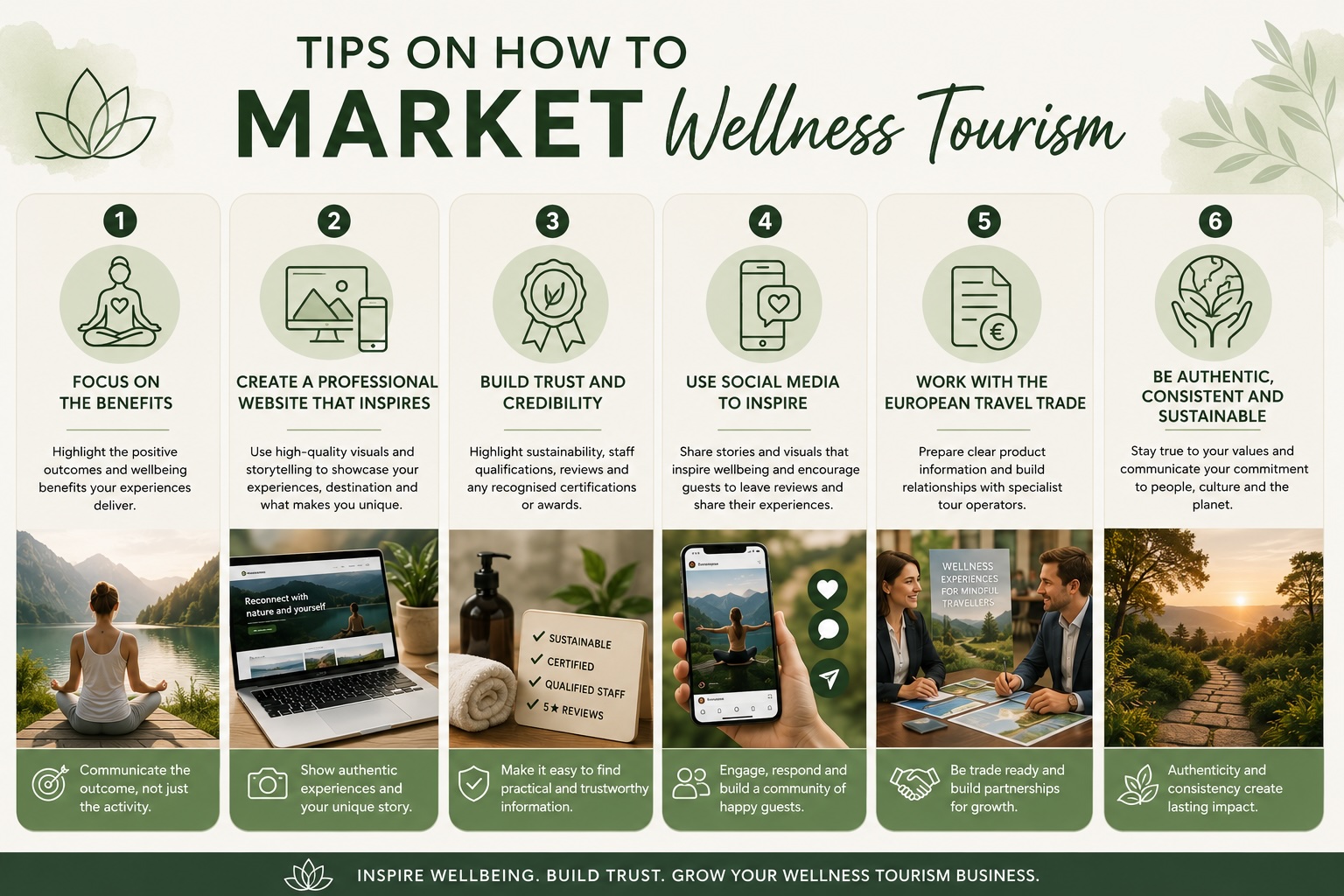
Source: Acorn Tourism Consulting, 2026
Tips:
- Read the CBI study, How to be a successful tourism company online, and watch the video, Tutorial on how to be a successful tourism company online. This will help you improve your online presence, reach more potential customers and increase direct bookings.
- Invest in high-quality photography and videos that show authentic people enjoying your experiences in natural settings. High-quality visual content helps potential visitors imagine themselves in your destination, builds trust and increases booking enquiries.
- Highlight your sustainability practices, staff qualifications and any recognised certifications. This reassures European buyers and travellers that your business is professional, responsible and committed to delivering high-quality wellness experiences.
- Encourage satisfied guests to leave reviews and testimonials and respond professionally to feedback on review platforms and social media. Positive reviews build credibility, influence booking decisions and help you improve your products and services over time.
2. Through which channels can you get wellness tourism on the European market?
Wellness tourism products are often sold to European travellers through specialist wellness tour operators, Online Tour Operators (OTAs) and Destination Management Companies (DMCs). These businesses understand the needs and expectations of wellness travellers and carefully select suppliers that offer high-quality, authentic experiences. Building strong relationships with local DMCs and specialist wellness buyers can help you reach the European market and increase opportunities to sell your wellness products.
How is the end-market segmented?
Wellness tourism is commonly sold to two main groups of wellness tourists: primary and secondary wellness tourists:
- Primary wellness tourists choose a destination specifically for its wellness offer, such as a spa resort, yoga retreat or traditional healing programme.
- Secondary wellness tourists participate in wellness activities as part of a wider leisure or business trip. This is the largest market segment, accounting for 83% of wellness tourism trips and 84% of global wellness tourism expenditure in 2024.
For most tourism businesses in low- and middle-income countries (LMICs), secondary wellness tourism presents the greatest opportunity, as wellness experiences can often be integrated into existing itineraries and as add-ons.
Wellness tourism can also be segmented into domestic and international travellers, with domestic tourism accounting for most wellness trips worldwide. However, international wellness travellers typically spend more per trip, making them an attractive target market.
To learn about the wellness traveller and their characteristics, motivations, and behaviours, have a look at the detailed product description in the accompanying study, the European Market Potential for Wellness Tourism.
Tips:
- Offer different levels of wellness experiences. Provide wellness activities for mainstream travellers and premium, personalised experiences for affluent visitors who are willing to pay more for qualified practitioners, exclusive experiences and tailored wellbeing programmes.
- Don’t overlook domestic travellers. A strong domestic market can provide year-round business, reduce seasonality and help you test and refine new wellness experiences before promoting them to international visitors.
Through which channels does a wellness product end up on the end market?
Wellness tourism products are sold through a range of different channels, depending on the type of experience and the traveller.
- Wellness holidays are mostly sold through specialist wellness tour operators, European tour operators and DMCs. They are usually undertaken by primary wellness tourists.
- Wellness experiences, such as yoga classes, spa treatments, guided nature experiences or wellness activities taken during a broader holiday, are also widely sold through online travel agents (OTAs) and directly to travellers. These experiences are sold to secondary wellness tourists.
The different channels are further explained as follows:
Figure 6: Sales Channels and Route to Market for Wellness Tourism Products
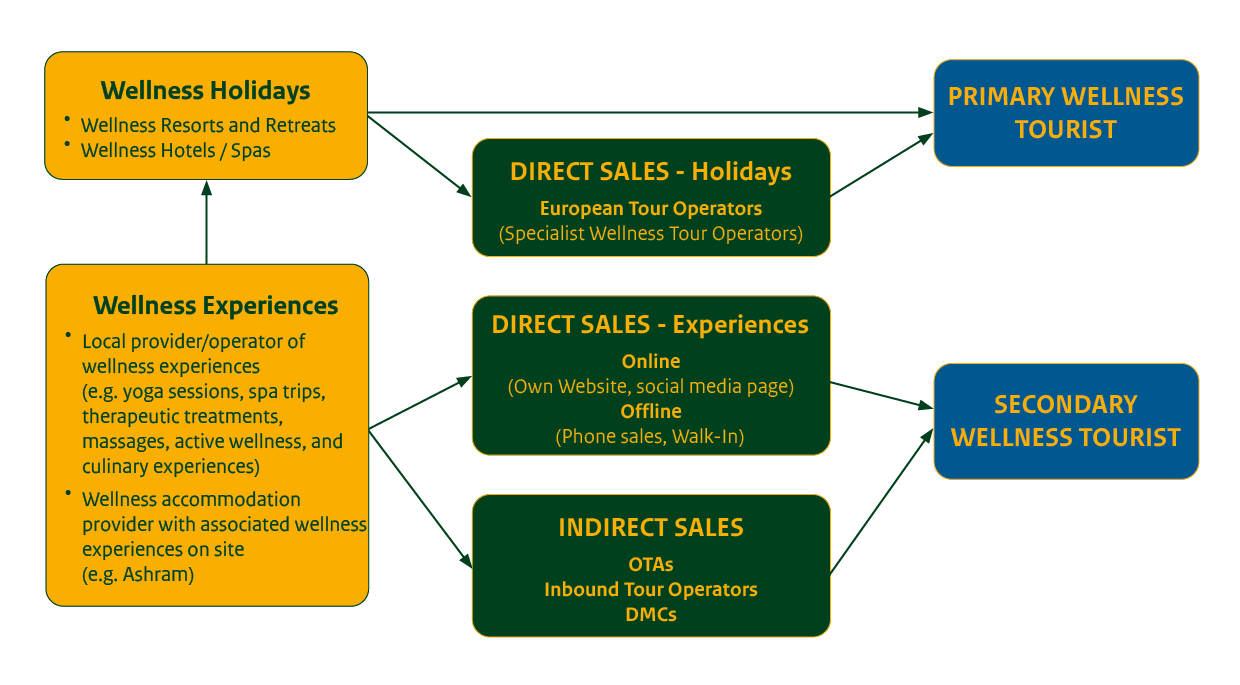
Source: Acorn Tourism Consulting, 2026
The sales channels can be categorised into three groups:
- Direct sales - Holidays: Many wellness accommodation providers, retreats and lodges sell complete wellness holidays directly through their own websites, social media channels or by email and telephone. A professional website, high-quality photography, positive reviews, and clear information about your wellness experiences can help generate direct bookings while reducing commission costs.
- Direct sales - Experiences: Travellers also book individual wellness experiences directly with local businesses. This may include yoga classes, spa treatments, guided meditation, forest bathing, healthy cooking classes or nature-based activities. Use your website and social media channels to showcase your products. Offering an easy online booking process and responding quickly to enquiries can help increase direct sales.
- Indirect sales: Many tourism businesses reach European wellness travellers through intermediaries. Local inbound DMCs combine accommodation, transport, and experiences into itineraries sold by European tour operators and specialist wellness tour operators. Wellness experiences are also sold through online travel agencies (OTAs) such as Viator, GetYourGuide, Airbnb Experiences and Klook more and more often. This allows small and medium-sized businesses to reach a wider international audience.
Good Practice Example: Working with a Destination Management Company (DMC)
A Destination Management Company (DMC) is a local tourism business that develops and delivers travel experiences for international tour operators. DMCs combine accommodation, transport, activities and local experiences into complete itineraries and act as the main link between local tourism businesses and European buyers.
Example: Aitken Spence Travels, Sri Lanka
Aitken Spence Travels is one of Sri Lanka’s leading DMCs, offering wellness, nature and cultural itineraries to international tour operators. The company works with local accommodation providers, wellness practitioners and guides to create market-ready experiences.
Why it matters: For many tourism businesses, partnering with a reputable DMC is the easiest way to access the European market and be included in itineraries sold by overseas tour operators.
Examples of European businesses operating across these different sales channels are shown in the table below.
Table 1: Wellness travel specialists, tour operators and OTAs in the European marketplace
| Sales Channel | Examples |
|---|---|
Wellness tour operators | Germany: Fit Reisen, Wellnessurlaub.com France: Thalasseo, Luxe Wellness Club, Voyage Privé Spa UK: Healing Holidays, Wellbeing Escapes, Health and Fitness Travel, The Healthy Holiday Company Italy: Terme Italia Spain: Viajes El Corte Inglés Wellness Austria: Ruefa Wellness, Mondial Reisen Switzerland: Fit Reisen Switzerland Netherlands/Belgium: Pureandcure, Wellness Vakantie |
European your operators (that offer wellness holidays) | Germany: TUI, Meiers Weltreisen France: Voyage Privé, Pierre & Vacances UK: Kuoni, Trailfinders Italy: Alpitour, Eden Viaggi Spain: Viajes El Corte Inglés, Catai Austria: Ruefa Switzerland: Kuoni Switzerland Netherlands/Belgium: Corendon, Sawadee, Experience Travel, Better Places |
OTAs (that specialise in wellness trips) | BookYogaRetreats, BookRetreats, Retreat Guru, Tripaneer |
OTAs (that sell wellness experiences) | Viator, GetYourGuide, Klook, KimKim, Evaneos, We Design Trips; SafariBookings, With Locals, Responsible Travel |
Source: Acorn Tourism Consulting, 2026
What is the most interesting channel for you?
Inbound DMCs are one of the most effective routes into the European wellness tourism market. Many European specialist wellness tour operators work with trusted DMCs to source accommodation, retreats and wellness experiences from local suppliers. Building relationships with DMCs can help you reach European buyers without having to market directly to overseas tour operators. DMCs also understand the expectations of European clients and can advise you on product quality, pricing and buyer requirements.
If you offer high-quality wellness experiences, retreats or accommodation and can demonstrate qualified staff, high standards of health and safety and strong sustainability practices, you should also consider approaching specialist wellness tour operators directly. They are constantly looking for new, authentic experiences that help differentiate their holiday programmes.
For businesses offering day experiences, treatments, yoga classes or other wellness activities, OTAs and direct sales through your own website are also important channels. Many European travellers research and book these experiences independently, either before they travel or while they are at the destination.
To maximise your visibility, maintain a professional website, keep your information up to date and actively manage your online reviews and social media presence. Review the study How to be a successful business online for tips on improving your online presence. You should also read the CBI study, How to work effectively with OTAs. to understand how to get the best results from online booking platforms.
Tips:
- Start with a DMC – find your local DMCs. If you are new to the European market, working with an inbound DMC is often the most effective first step. DMCs already have relationships with European wellness tour operators and buyers, understand what they expect and can help you package and present your products effectively.
- Match your channel to your product. For example, retreats, residential programmes and multi-day wellness holidays are best sold through specialist wellness tour operators and DMCs.
- Do not rely on a single channel. The most successful wellness businesses use a combination of trade relationships, OTA listings and direct bookings. Each channel reaches a different type of traveller, so using several together will help you build a more stable and varied customer base.
3. What competition do you face on the European wellness tourism market?
The global wellness tourism market is very competitive, as there are many destinations around the world that invest in wellness products and experiences. European travellers now have a wide range of choices, from established spa destinations to emerging nature-based and culturally rooted wellness experiences. To succeed, tourism businesses need to understand who they are competing with and develop products that highlight their own natural assets, cultural traditions and distinctive sense of place.
Which countries are you competing with?
This section highlights four destinations that illustrate different approaches to wellness tourism: Indonesia (Bali), Sri Lanka, Costa Rica and South Africa. Each has built a strong reputation by combining nature, local culture and wellness in different ways, providing useful examples and lessons for tourism businesses in developing countries.
Figure 7: Wellness tourism destinations worldwide
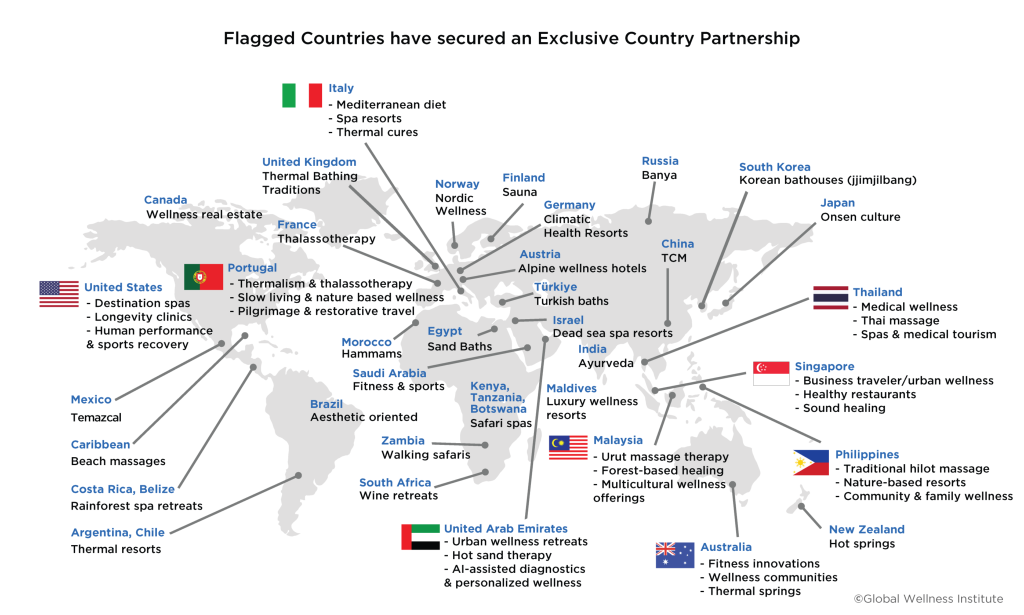
Source: Global Wellness Institute, 2026
The map above shows that leading wellness destinations are found across Europe, Asia, Africa and the Americas, reflecting the global growth of the wellness tourism market. Alongside the destinations featured below, countries such as Thailand, India, Japan, Iceland and Portugal have also established strong reputations for wellness tourism.
Sri Lanka
Sri Lanka is a strong wellness destination because it combines Ayurveda, yoga, meditation, healthy local food and restorative coastal settings. It offers a variety of different natural environments, from beaches and lagoons to tea country, rainforest and mountain retreats. Its wellness offer is closely linked to local culture and traditional healing, while specialist properties such as Ayurveda resorts, spa hotels and retreat lodges are helping position the country as a holistic wellness destination.
In 2018, Sri Lanka developed a national wellness tourism strategy that aims to make the country a preferred destination for wellbeing. A strong focus has been put on traditional medicine offers, including Ayurveda, which is a growing industry worldwide. They have created an interesting acronym for the word ‘wellness’, shown in the figure below.
Figure 8: Success factor for Sri Lanka’s wellness tourism industry
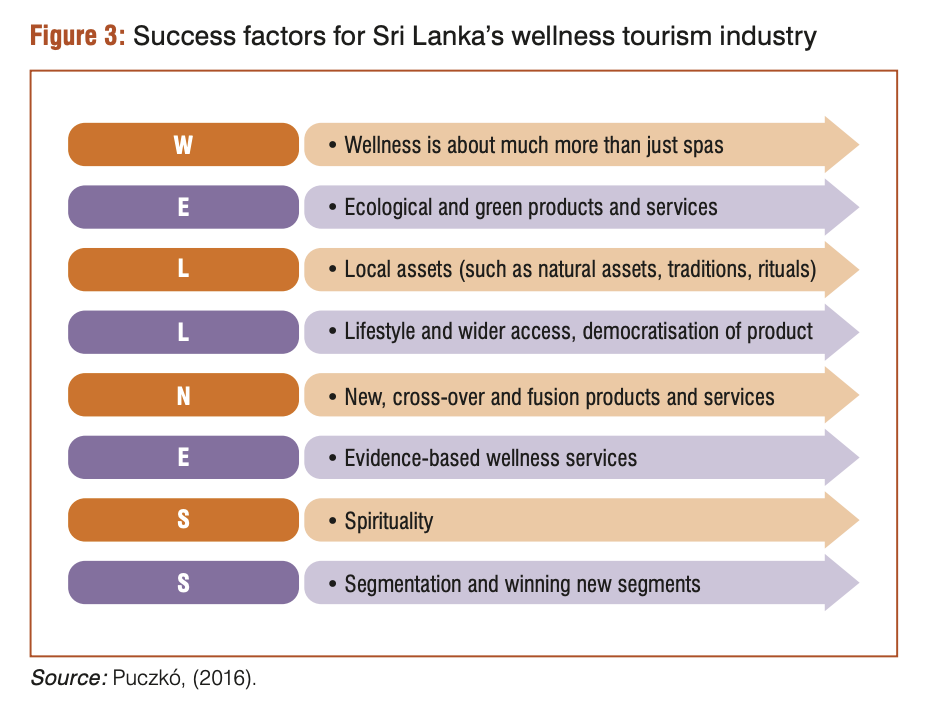
Source: Sri Lanka Wellness Tourism Strategy, 2018
Indonesia (Bali)
Indonesia, in particular the island of Bali, is one of the world’s best-known wellness destinations. The island’s spa sector has expanded rapidly, growing by more than 160% since 2003 to around 390 spas, helping establish Bali as one of Asia’s leading wellness destinations.
Indonesia is also strengthening its position through the development of the Sanur Wellness Economic Zone, the country’s first dedicated wellness and medical tourism hub. The project combines wellness, preventative healthcare and hospitality, highlighting Indonesia’s long-term commitment to becoming a global wellness destination.
Bali also benefits from growing domestic demand, as Indonesian consumers become more interested in preventative health, spa treatments, fitness, beauty, healthy food and mental wellbeing. This helps support the sector beyond international tourism and creates a stronger year-round market for wellness businesses.
The island offers excellent value for money. Visitors can enjoy high-quality wellness experiences at prices that are often significantly lower than in Europe, making the island particularly attractive to long-haul wellness travellers seeking affordable, high-quality experiences.
Costa Rica
Costa Rica has built its wellness tourism offer around its exceptional natural environment and the country’s Pura Vida lifestyle, which encourages a slower pace of life and a strong connection with nature. Wellness experiences are centred on destinations such as Arenal, Monteverde, the Nicoya Peninsula and the Osa Peninsula, where visitors can enjoy activities including forest bathing and surfing.
The Nicoya Peninsula is also one of the world’s five recognised Blue Zones: regions where people are known to live longer, healthier lives due to factors such as active lifestyles, nutritious diets, strong communities and low stress levels. This has helped strengthen Costa Rica’s reputation as a leading destination for nature-based wellness and healthy living.
Growth in Costa Rica’s wider tourism market is also being supported by demand for higher-value, sustainability-led and wellness-focused travel, with the sector forecast to grow from US$393.4 million in 2026 to US$562.0 million by 2031.
South Africa
South Africa offers a distinctive wellness experience by combining spectacular natural landscapes with luxury accommodation, healthy cuisine and world-renowned wine. Wellness is closely linked to the country’s outdoor lifestyle, allowing visitors to reconnect with nature.
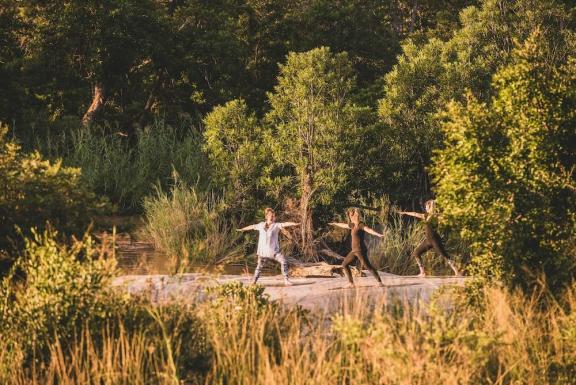
Wellness is also becoming an important part of South Africa’s luxury safari sector. Londolozi’s Healing House combines wildlife experiences with holistic wellbeing through personalised treatments, yoga, meditation, movement and healthy cuisine, demonstrating how luxury safari lodges are creating immersive wellness experiences centred on nature, restoration and relaxation.
Figure 9: Yoga in the bush with Londolozi’s Healing House team
Source: Londolozi, 2026
Favourable exchange rates also make South Africa an attractive value-for-money destination, allowing international visitors to enjoy luxury wellness experiences at prices that are often significantly lower than in Europe or North America. The country has one of the largest spa industries in Africa, with more than 700 spa facilities recorded in 2016, supporting its position as one of the continent’s leading wellness destinations.
South Africa also benefits from a strong and growing domestic wellness tourism market. Increasing numbers of South Africans are prioritising health, wellbeing and nature-based experiences, creating year-round demand for wellness products. This domestic market provides businesses with opportunities to test new experiences, build their reputation and reduce reliance on international visitors, while reflecting many of the same wellness trends seen among European travellers.
Main takeaways
- Research how competing wellness destinations position themselves, including their wellness experiences, natural environments, accommodation, healthy cuisine, sustainability credentials and unique selling points.
- Develop a distinctive wellness offer based on your destination’s strengths. This could include nature, traditional healing, local culture, healthy food, adventure, wildlife or opportunities to relax and reconnect.
- Integrate wellness throughout the visitor experience rather than offering standalone treatments. Combine accommodation, food, nature, activities and local culture to create holistic wellbeing experiences.
- Appeal to both international and domestic markets. A strong domestic wellness market can help businesses test new products, build year-round demand and strengthen resilience while attracting European visitors.
Which companies are you competing with?
Studying successful wellness tourism businesses can provide valuable ideas for developing and marketing your own products. The examples below show how companies in leading wellness destinations have created distinctive experiences by combining nature, culture, healthy lifestyles and local traditions. They also demonstrate practical ways to communicate your offer, build trust with European travellers and stand out in a competitive market.
Sri Lanka
Aitken Spence Travels is one of Sri Lanka’s leading DMCs and offers a range of wellness itineraries centred on Ayurveda, yoga, meditation, healthy cuisine and nature. Its wellness holidays combine treatments with cultural experiences, wildlife, scenic landscapes and local food, demonstrating how wellness can be integrated throughout a holiday rather than offered as a standalone activity.
The company is Travelife Certified, showing its commitment to environmental management, fair working conditions and supporting local communities. Its marketing highlights the wellbeing benefits of its experiences while reinforcing sustainability as an important part of the visitor experience.
Sen Wellness Sanctuary demonstrates how showcasing your team can help build trust with potential guests. Rather than simply describing its treatments and programmes, the sanctuary introduces its Ayurvedic doctors, yoga teachers, therapists and wellness practitioners through dedicated staff profiles.
Each profile highlights the individual’s qualifications, professional experience, philosophy and specialist areas of expertise, helping visitors understand who will deliver their wellness journey. By placing equal emphasis on the people behind the experience, Sen reinforces the quality, authenticity and credibility of its wellness offer.
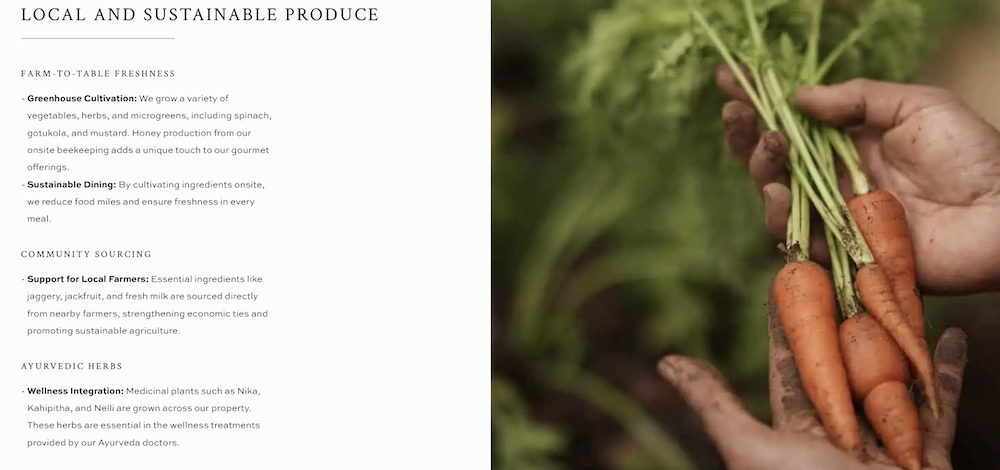
Santani Wellness shows how healthy local food can become a core part of the wellness experience. Seasonal menus are created using fresh produce sourced from nearby farmers and the retreat’s own gardens, giving guests nutritious meals while supporting local livelihoods and reducing environmental impacts. This approach reinforces Santani’s philosophy that wellbeing extends beyond treatments to include nutrition, sustainability and community connections.
Figure 10: Santani Wellness use local and sustainable produce
Source: Santani Wellness, 2026
Indonesia (Bali)
Amanaska Bali specialises in tailor-made wellness holidays that combine wellness activities with traditional Balinese healing. Rather than selling individual activities, its website organises holidays around the outcomes visitors want to achieve, such as reducing stress, improving sleep, restoring energy or reconnecting with nature. This makes it easy for potential guests to identify the experience that best meets their personal wellbeing goals.
The website also provides detailed information about the experiences, accommodation and wellness programmes on offer. However, the amount of text can make it difficult for visitors to quickly identify important information. A clearer layout with shorter sections and stronger headings could improve the user experience and make the website easier to navigate.
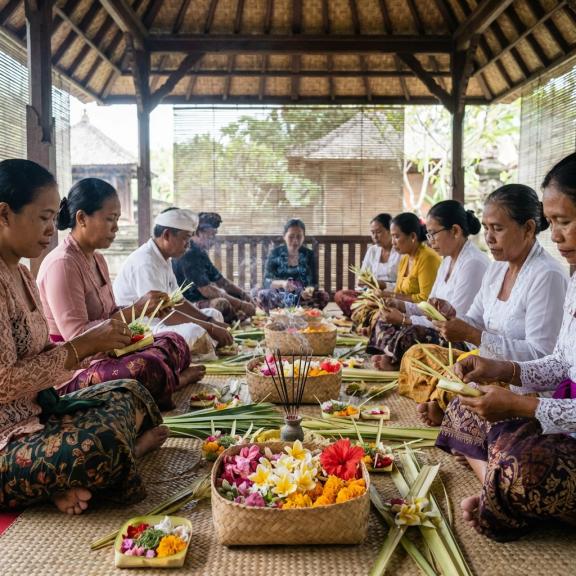
Five Pillar Experiences is a Bali-based tour operator that demonstrates how wellness can be integrated into more traditional cultural and nature-based tours. The company also works closely with local farmers, artisans and community organisations, ensuring tourism benefits local people. Whilst also providing visitors with authentic experiences rooted in Balinese culture and the philosophy of Tri Hita Karana, which promotes harmony between people, nature and spirituality.
Figure 11: Bali canang sari experience (a daily Balinese Hindu offering of gratitude and cosmic balance)
Source: Five Pillar Experiences, 2026
Costa Rica
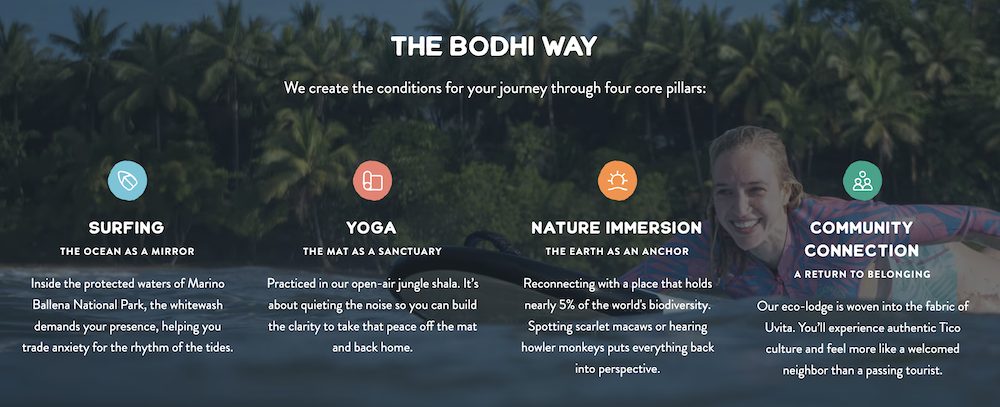
Bodhi Surf + Yoga, based in the small coastal community of Uvita, has built its business around four core pillars: surfing, yoga, community and environmental stewardship. Rather than offering standalone surf lessons or yoga retreats, it combines these elements into a single holistic experience centred on wellbeing, sustainability and local connection. This clear identity helps the business stand out in the increasingly competitive wellness tourism market by offering visitors an experience that is authentic, purpose-driven, and closely rooted in its destination.
Figure 12: The 4 pillars of Bodhi Surf + Yoga
Source: Bodhi Surf + Yoga, 2026
Mindful Costa Rica is a locally owned tour operator. Its itineraries are designed around authentic local experiences, slower travel and meaningful connections with nature and Costa Rican culture. Rather than simply visiting popular attractions, guests are encouraged to explore lesser-known destinations, meet local communities and experience the country’s Pura Vida lifestyle through a more mindful approach to travel. This demonstrates how smaller tour operators can create distinctive wellness experiences by focusing on quality, authenticity and personal connection.
South Africa
Coffeebeans Routes, based in Cape Town, develops community-based walking tours, food experiences and cultural encounters that connect visitors with local people, history and everyday life. Rather than promoting wellness directly, its experiences encourage visitors to slow down, engage with local communities and develop a deeper connection with the destination.
Fynbos Trails is a local tour operator that offers multi-day walking holidays through the Cape Floral Kingdom, encouraging visitors to disconnect from busy lifestyles and reconnect with nature at a slower pace. By combining walking, locally owned accommodation, fresh seasonal cuisine and partnerships with local guides and food producers. Fynbos Trails creates experiences that support both physical and mental wellbeing while benefiting local communities and helping conserve one of the world’s richest biodiversity hotspots.
Main takeaways
- Develop holistic wellness experiences. Combine accommodation, healthy local food, nature, culture and wellness activities to create experiences that improve visitors’ physical, mental and emotional wellbeing.
- Showcase your people. Introduce your guides, therapists, instructors and healers through staff profiles that highlight their qualifications, experience and specialist expertise to build trust with European travellers.
- Market the benefits, not just the activities. Focus on the outcomes visitors can expect, such as relaxation, better sleep, reduced stress or a stronger connection with nature, rather than simply listing facilities or treatments.
- Use local culture and communities to differentiate your offer. Incorporate traditional healing practices, local cuisine, artisans and community experiences to create authentic products that also benefit local people.
- Make your website easy to navigate. Use clear headings, high quality photography and concise text so visitors can quickly understand your products, prices and wellbeing benefits.
- Demonstrate your commitment to sustainability. Highlight recognised certifications, local sourcing, conservation initiatives and community partnerships to build credibility with European buyers and travellers.
Which products are you competing with?
The main competition in the wellness tourism market are experiences that align with wellness but are not necessarily marketed or promoted as such. For instance, walking and hiking, cycling, community-based tourism, and agritourism experiences. This means your main competitors may not be traditional wellness businesses.
Understanding which products compete with your own will help you identify your target market and position your experiences more effectively. The table below provides examples of the types of tourism products that may appeal to wellness travellers.
Table 2: Categories and examples of competing wellness tourism products
| Category | Example experiences |
|---|---|
| Spa and holistic wellness | Spa treatments, massage, Ayurveda, traditional healing, hydrotherapy, hot springs, thermal baths |
| Mind and body | Yoga, meditation, mindfulness, breathwork, Tai Chi, Pilates, sound healing, fitness classes |
| Nature-based wellness | Forest bathing, wildlife watching, guided nature walks, hiking, birdwatching, wild swimming, beach walks, gardening |
| Adventure and active wellbeing | Cycling, kayaking, paddleboarding, surfing, snorkelling, horse riding, trail running |
| Healthy food and nutrition | Farm to table dining, healthy cooking classes, herbal medicine tours, vineyard visits, tea and coffee experiences |
| Culture and community | Traditional healing practices, village visits, cultural workshops, craft experiences, music, dance, storytelling |
| Retreats and multi day experiences | Yoga retreats, digital detox breaks, wellness retreats, silent retreats, transformational journeys |
Source: Acorn Tourism Consulting, 2026
Tips:
- Use local knowledge to your competitive advantage. Many of the strongest competitors in this market have built their offer around what makes their destination unique.
- Understanding which product categories you compete with will help you position your experiences and identify your strongest selling points. Look at table 2 to identify where you sit in the market. Your main competitors may not be dedicated wellness businesses. Nature tours, cultural experiences, healthy food and adventure activities can all attract wellness travellers
4. What are the prices of wellness tourism products on the European market?
The price of a wellness holiday depends on the type of experience, its duration and the level of accommodation and services provided. Multi-day retreats generally include accommodation, meals and a programme of wellness activities, while day experiences are usually priced separately. Common cost components include:
- Accommodation: which is often the highest cost, particularly for retreats and resort-based holidays.
- Wellness activities: such as yoga, meditation, spa treatments, traditional healing, fitness classes or guided nature experiences.
- Healthy food and beverages: which are commonly included in retreats and wellness packages.
- Transport and excursions: where these form part of the itinerary.
The table below provides examples of prices for wellness experiences and holidays available on the European market.
Table 3: Example prices on the wellness tourism market, 2026
| Wellness experience | Country | Duration | Guide price per person (€) |
|---|---|---|---|
| Day and part-day experiences | |||
| Guided forest bathing experience | Costa Rica | 3 hours | 55 |
| Traditional Balinese healing and purification ceremony | Indonesia (Bali) | Half day | 65 |
| Ayurvedic consultation and treatment | Sri Lanka | Half day | 70 |
| Yoga and a healthy brunch experience | South Africa | Half day | 75 |
| Traditional Sri Lankan cooking class with market visit | Sri Lanka | Half day | 80 |
| Guided herbal medicine and wellness walk | Costa Rica | Half day | 90 |
| Sunrise yoga and temple meditation | Indonesia (Bali) | Half day | 95 |
| Full day wellness and spa experience with hot springs | Costa Rica | 1 day | 165 |
| Short breaks (2 to 6 days) | |||
| Ayurvedic wellness retreat | Sri Lanka | 3 days | 520 |
| Yoga and wellness retreat | Indonesia (Bali) | 4 days | 650 |
| Safari wellness escape with spa treatments | South Africa | 3 days | 950 |
| Rainforest wellness retreat | Costa Rica | 5 days | 1,150 |
| Wellness holidays (7+ days) | |||
| Authentic Ayurveda retreat | Sri Lanka | 10 days | 1,350 |
| Bali yoga and holistic wellness retreat | Indonesia (Bali) | 8 days | 1,650 |
| Wellness safari and Winelands holiday | South Africa | 10 days | 2,950 |
Source: Acorn Tourism Consulting, 2026
Tips:
- Research your competitors’ prices and products. Compare similar wellness experiences, retreats and day activities in your destination and internationally. Only charge higher prices if you offer added value, such as qualified staff, unique experiences, premium accommodation or recognised sustainability credentials.
- Be transparent about what is included. Clearly explain your prices, inclusions, group sizes, cancellation policies and any optional extras. European travellers value clear information and are more likely to book when there are no hidden costs.
- Monitor the market regularly. Review wellness products offered by specialist tour operators and OTAs, such as BookRetreats, Viator and GetYourGuide, to understand current prices, product trends and how successful businesses market the wellbeing benefits of their experiences.
Acorn Tourism Consulting Limited carried out this study on behalf of CBI.
Please review our market information disclaimer.
Disclaimer: The statistics quoted throughout this study are drawn from a range of sources. Due to variations in data collection and presentation methods, figures may not always be directly comparable.
Search
Enter search terms to find market research
Do you have questions about this research?
Wellness is becoming more about slowing down, spending time in nature and taking time for yourself rather than booking a traditional wellness retreat. We are seeing growing demand for solo walking holidays, where people disconnect, recharge and enjoy the outdoors at their own pace. Tour operators should think beyond spas and incorporate nature, wellbeing and flexibility into their travel experiences.

Kim Nooyens, Co-Founder, Avontuur Dichtbij
European wellness travellers are increasingly looking for time, privacy and nature rather than busy schedules. The biggest opportunities for tourism businesses lie in creating small scale, authentic experiences that combine local traditions, natural settings and genuine wellbeing, allowing guests to slow down, reconnect with themselves and experience the destination in a more meaningful way.

Henriëtte Bokslag, Founder at Wellnessspots