
The European market potential for religious tourism
Religious tourism covers a wide range of tourism products including pilgrimages, visits to sacred sites, visits to churches, mosques, and temples, and religious festivals. It is popular among both believers and non-believers from top European source countries including Germany, the UK and France. It is closely aligned to cultural tourism, particularly for non-believers. It also fits in well with the trend for authentic and immersive tourism experiences. If sustainably managed, there are good opportunities for local tour operators to serve this market well. Well-managed religious tourism can also help to preserve heritage sites.
Contents of this page
1. Product description: religious tourism
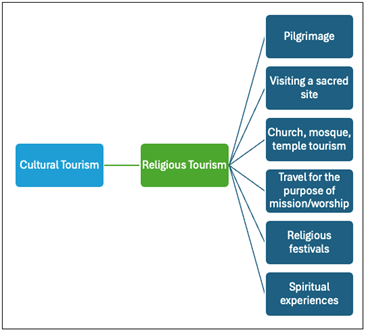
Religious tourism refers to trips taken for religious or spiritual purposes. Both believers and non-believers take part in religious tourism. It is also known as faith tourism and is one of the oldest forms of tourism. Religious tourism is a part of the larger niche of cultural tourism. There are several types of religious tourism including pilgrimages, visiting a sacred site, church, mosque, and temple tourism, travel for the purpose of mission or worship, and religious festivals, as shown in the chart below.
Figure 1: Religious tourism as a sub-niche of cultural tourism
Source: Acorn Tourism Consulting, 2025
Each type is a substantial sub-niche, but there are many similarities between them. For example, one person’s sightseeing trip to holy sites in Israel and Palestine may be another person’s long-planned pilgrimage. The Vatican in Rome is another example. It is a very important place for believers of the Catholic (Christian) faith, but is also visited by millions of non-believers for its connection to spirituality and for its architectural beauty. Personal religious ties, including Catholicism, Protestantism and Islam, are often key reasons for religious tourism.
Each sub-niche is further described as follows:
- Pilgrimage: A pilgrimage is a trip to a religious or spiritual place to experience religious or personal enlightenment. It may also be related to spiritual experiences.
- Visiting a sacred place: Trips to sacred sites, which are often ancient religious sites.
- Church, mosque and temple tourism: Trips to visit religious buildings that are working religious sites. They host regular periods of worship and are also important tourist destinations.
- Travel for the purpose of mission or worship: Trips for the purpose of worship, like religious retreats, being involved in Christian or other charity work, or volunteering. This is closely related to pilgrimage tourism.
- Religious festivals: Religious festivals play an important part in a nation’s or region’s religious identity and are often celebrated on recurring cycles, once or twice a year for example. Christmas and Diwali are examples of religious festivals.
- Spiritual experiences: There is a strong link between spirituality and wellness. Traditional healing practices such as Ayahuasca and Ayurveda, and wellness practices like yoga and meditation are all forms of wellness that create spiritual wellbeing.
The table below shows some examples of religious destinations and popular religious tourism sites around the world. Note how they cross over with one another. The table also shows whether they attract believers or non-believers. You can find more information about the target market in the following section.
Table 1: Examples of religious experiences by type
| Type of religious tourism | Target group | Selection of tour operator trips |
|---|---|---|
Pilgrimage:
| Primarily attracts believers |
|
Visiting a sacred site:
| Mainly attracts non-believers interested in culture and spiritual heritage |
|
Church, mosque, temple tourism:
Churches worldwide:
Mosques worldwide:
Temples worldwide:
| Mainly attracts non-believers from a tourism point of view, although many believers also visit religious buildings and monuments for both religious and tourism purposes | Visits to churches, mosques and temples by believers and non-believers are often made independently. However, for tourists on a group tour, religious sites like these are often included within an itinerary. Examples are:
|
Travel for the purpose of mission or worship | Mainly attracts believers |
|
Festivals:
| Attracts both believers and non-believers |
Many festivals are attended independently or as part of a group tour mixed itinerary |
Spiritual experiences:
| Attracts both believers and non-believers |
|
Source: Acorn Tourism Consulting, 2025
End-market segmentation and consumer behaviour
The broad market of religious tourism is made up of believers and non-believers. They are both important target markets, and are described as follows:
- Believers: Believers look for spiritual support to strengthen their religious beliefs. They are moved to take a pilgrimage to make their faith and beliefs stronger. For example, the Hajj is the most important pilgrimage for Muslims. On the other hand, a pilgrimage to Jerusalem is very important for Christians. Believers are very motivated to travel and often like to travel in groups of like-minded people.
- Non-believers: Non-believers are more like cultural tourists. They are more interested in sacred sites and religious places for their cultural, historic and heritage significance than for their religious meaning. However, that does not mean that they do not understand that religion is important. The religious and/or spiritual significance of activities also has important meaning to non-believers.
Demographics of religious tourists usually span all age groups. That is why you must consider the needs of both younger and older travellers. The table below shows the various characteristics of believers and non-believers within each group.
Table 2: Characteristics of religious tourists
| Group | Characteristics of believers | Characteristics of non-believers |
|---|---|---|
Younger religious tourists (aged 18-29) |
|
|
Mid-life religious tourists (aged 30-54) |
|
|
Older religious tourists (aged 55+) |
|
|
Source: Acorn Tourism Consulting, 2025
Accessible tourism on the European market
Accessible tourism is the ongoing effort to make sure that tourist destinations, products, and services are accessible to all people, regardless of their physical limitations, disabilities or age. It includes publicly and privately owned tourist destinations. The improvements not only benefit those with permanent physical disabilities, but also parents with small children, elderly travellers, people with temporary injuries such as a broken leg, as well as their travel companions. Tourists with disabilities may travel individually, in groups, with their family or with caregivers.
Accessibility and religious tourism
To attract religious travellers with accessibility needs, you must be very clear about what you offer. Travellers with disabilities do a lot of research before they travel. They know very well what they can and cannot do. If you make promises you cannot keep, it will harm your reputation and could potentially be harmful for the customer. Remember, not all people with disabilities are wheelchair-bound. Just because you cannot see a disability, does not mean it does not exist. Elderly people are not necessarily registered as having a disability. However, they may have similar needs, such as safe walking trails, facilities for those with limited hearing, good bathroom facilities and so on.
The more you can learn about your guests and their needs beforehand, the better prepared you will be and the better the experience will be for your customer.
Tips:
- Train your staff on how to communicate with customers with disabilities. It is a good idea to have a dedicated member of staff who is responsible for looking after the needs of guests with disabilities.
- Be very clear about the facilities you offer. For instance, state the size of rooms and bathrooms. Say whether you can lend travellers walking sticks or wheelchairs, and whether you have access to technology for the hard of hearing. If your walking tour involves multiple steps or difficult terrain, say so.
- Be inclusive. Treat guests with disabilities the same as guests without disabilities.
- Read the CBI studies on the European market potential for accessible tourism and entering the European market for accessible tourism products for practical and useful advice on how to make your tours accessible.
Tips:
- Find out more about religious places at your destination. Think about cultural and religious beliefs for each location and understand whether visitors are believers or non-believers. This will help you to offer them the right products.
- Look at the competition. Who are the other local tour operators in your market and what do they offer? See if you can find a gap in the market that you could fill with your product. Or look for ways to make your product different to offer an alternative.
- Clearly describe the religious part of the trip you are selling. Make your business stand out from competitors by explaining the positive role of your offer within the local environment and community. Make sure you highlight any heritage preservation benefits your product contributes to.
- Find out more about cultural tourism. Cultural tourism is closely related to religious tourism and non-believers are an ideal target for religious and spiritual experiences. Read our study on opportunities on the European cultural tourism market.
2. What makes Europe an interesting market for religious tourism?
Europe is a very interesting market for religious tourism. It has a wide mix of historical faith traditions and a large outbound market of tourists who like to travel. Christianity is the most common religion in Europe. Catholic, Protestant and Orthodox traditions have shaped religious culture across the continent. There is a large market of both believers and non-believers on the European market.
As the largest outbound travel market in the world, Europeans also have a curious nature and like to explore all types of religious destinations. These include Buddhist and Hindu temples in Asia, Islamic heritage sites in the Middle East, and Christian sites throughout Latin America. Many spiritual experiences are also attractive to Europeans, such as the sacred sites of Machu Picchu and Angkor Wat. Pilgrimages are important to Europeans who also look for similar experiences internationally.
The table below shows the different religions practiced across the top European source markets. There are also many Europeans who are not part of any religion. However, people are very interested in cultural tourism in all these European markets. They are also enthusiastic travellers to all types of historic and cultural destinations, including religious attractions.
Table 3: Religious composition of top European source markets, 2020
| Country | Christian | Muslim | Jewish | Hindu | Buddhist | Unaffiliated |
|---|---|---|---|---|---|---|
| Germany | 64% | 7% | <1% | 0% | 2% | 26% |
| United Kingdom | 59% | 6% | <1% | 2% | 1% | 31% |
| France | 58% | 8% | 1% | 0% | 0% | 32% |
| Italy | 81% | 5% | <1% | 0% | 0% | 13% |
| Spain | 75% | 3% | <1% | 0% | 0% | 21% |
| Netherlands | 47% | 7% | <1% | 1% | 0% | 45% |
Source: Religious Composition by Country, Pew Research Centre, 2020
Estimates of the size of the global religious tourism market vary from USD 253.3 billion in 2023 to USD 1,293.7 billion in 2024. The reasons for these differences could include different research methodologies, definitions of religious tourism and how the data was gathered by the various organisations. What they do share however, is the fact that religious tourism is growing at strong rates between 6.5% and 15.3% annually. In Europe, growth is expected to be 5.5% per year between 2025 and 2033.
Religious tourism has always been a strong niche segment. Catholicism is the largest segment by religious tourism type with a 24.1% share. More than 1.3 billion Catholics worldwide want to visit famous churches, cathedrals, and other sites important to their faith.
The Middle East is the top region with a share of 38.9%. Every year the Hajj and Umrah pilgrimages attract between 2 and 3 million international tourists.
Growth in the market is being driven by an increased desire to experience different cultures and rich heritage. This is a major tourism trend today. Believers and non-believers look for authentic and immersive experiences that connect them with other cultures and their religious traditions. This gives local tour operators opportunities to offer this market tailored experiences that combine spirituality, culture and leisure.
Tips:
- Learn how to do business with the European market by reading CBI studies. 'What are the requirements for tourism services in the European market' and 'Tips for organising your tourism services export to Europe' will help you find your way around the competitive European market.
3. Which European countries offer the most opportunities for religious tourism?
The European countries that offer the most opportunities for religious tourism in developing destinations are those with the largest populations of believers and non-believers: Germany, the United Kingdom (UK), France, Italy, Spain and the Netherlands. Religious tourism is closely linked to culture tourism. The market for cultural tourism in all markets is also strong, regardless of religious beliefs. Christianity is the main religion across all the source markets.
Germany
Around two-thirds of German nationals are Christian and generally evenly follow the two main Christian religions of Protestantism and Catholicism. However, in Germany, as in many European nations, the number of people who actively practice religion by going to church services, is much lower. Around one-third of the German population are atheists.
Islam is the largest non-Christian religion practiced in Germany, with around 6.6% of the population, or 5 million people. The Muslim population in Germany is expected to rise. Two scenarios created for 2050 suggest a medium migration increase of 10.8% and a high migration increase of 19.7%. Most Muslims in Germany are Turkish or of Turkish descent. Other religions practiced in Germany (Judaism, Buddhism, Hinduism, Sikhism and Yazidi) together account for around 3-5% of the population.
German outbound tourists are very interested in culture. Germany has Europe’s largest population and is the largest outbound market in Europe, taking 65 million holiday trips of 5+ nights in 2023, mostly to destinations abroad (78%). Top destinations for German outbound tourists were Turkey and Egypt, which are among the best-known cultural destinations. ReiseAnalyse reported ‘culture and new experiences’ as among the top motivations for German outbound tourists, which have become more important since 2019. They are also interested in visiting countries with diverse cultures.
There are many tour operators on the German market that offer religious holidays. This shows how important this niche is for German believers. Examples include Emmaus Reisen and Biblische Reisen. Tours are often led by well-known leaders who might be theologians or other religious experts. General tour operators like Lotus Travel offer spiritual journeys to places like India, Bhutan and Thailand as options.
United Kingdom
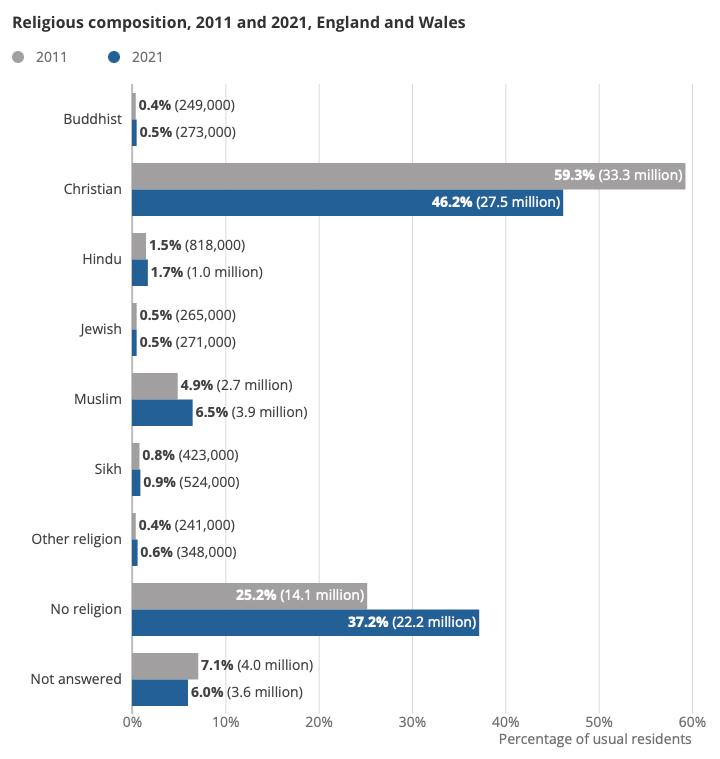
The UK’s official religion is Christianity. The main form of Christianity is Anglicanism, a form of Protestantism. Catholic, Baptist and Methodist are other forms of Christianity practiced in the UK. Islam is the next largest non-Christian religion practiced in the UK, accounting for about 6.5% of the population, or 3.9 million people. Around 1 million people in the UK practice Hinduism.
However, the number of people who say they are Christian is going down in England and Wales. The 2021 census found that the number of English and Welsh nationals who said they were Christian went down from 59.3% to 46.2%. This is a drop of 5.8 million people. This means that less than half the population today say they are Christian. The number of people who say they are not religious increased by 12%, or 8.1 million people. This means there are many non-believers in the UK.
Figure 2: English and Welsh nationals reporting religious affiliation
Source: ONS, 2021
The UK is Europe’s second-largest outbound market. In 2023, they took 86.2 million trips to many different countries. Turkey, India and Morocco are top destinations for UK outbound tourists; all strong cultural destinations. 2023 arrivals to all three countries have risen substantially since 2019. This shows that many British outbound tourists want to travel abroad. Local culture and history experience are important factors for British outbound tourists when planning international trips (26%).
The tour operator market for religious holidays in the UK is a mix of specialised operators and general operators offering religious or spirituality-themed trips. Globus Journeys, McCabe Pilgrimages and Tangney Tours are examples of specialised providers. There are many small operators that serve the market, and they are usually highly specialised. Mainstream tour operators like Cosmos and Macs Adventure also offer guided tours to some destinations.
France
Catholicism is the main form of Christianity practiced in France, with between half and two-thirds of the population saying they are Catholic. Only 2% of the population identifies as Protestant or evangelical Christian. However, the number of people who go to church in France is among the lowest in the world.
In spite of this, the numbers of adult baptisms have grown in recent years, up by 31% in 2024. There were also a record-breaking number of young people preparing for baptism or confirmation during the 2025 Easter period. Analysis over the longer term suggests that a Catholic renaissance may be happening in France, whereby people are rediscovering their faith.
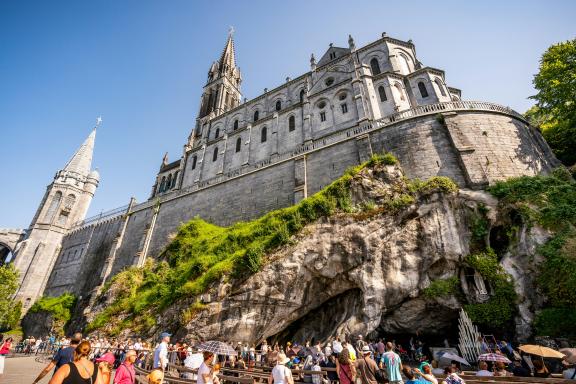
Lourdes in France is one of the most important pilgrimage destinations in the world. Between 5 and 6 million people visit every year.
Figure 3: Lourdes in France is one of the world’s top pilgrimage destinations
Source: Nick Castelli via Unsplash, 2022
Islam is the second-largest faith, accounting for around 13% of the population, or 9 million people. France has the largest Muslim population in Europe. Around 25% of the population does not belong to any religion.
France is another large outbound tourism market, and French travellers made 28 million trips in 2022. Africa is very popular and Morocco is the top destination, followed by Tunisia. This is probably because of the countries’ historic ties and use of the French language in some areas. West Africa is also a hotspot for French outbound tourists, especially Senegal and Cameroon. Unique cultures, religion and spirituality are reasons to travel to this region. Local culture and history is an important factor for 30% of outbound tourists.
Several religious tour operators are on the French market, such as Ictus Voyages, Terre Entière and Tourisme du Monde. Odeia offers a mix of cultural trips and pilgrimages, showing the close link between the two. Ephata Voyages and Mandala Tours specialise in religious and spiritual trips to African countries.
Italy
As the home of the Roman Catholic church, the Italian Christian community is the largest in Europe at between 75% and 80%, possibly more. Italy is the cradle of Christianity in the west, originating in Rome in the 1st century. The Vatican is the heart of Catholic Christianity. It is an iconic symbol of faith and spirituality that attracts more than 6.5 million visitors every year.
Muslims make up around 4% of the Italian population. The largest established groups are those with Moroccan and Albanian roots.
Italian outbound tourists are a large group of travellers who made 25 million trips in 2022. Egypt, Turkey and Morocco are top destinations for Italian tourists. Culture and religious discovery are important to Italians, and they often seek personal discovery whilst on a trip. 27% state that local culture and history are very important when planning an international trip. They also like guided tours with Italian-speaking guides, providing opportunities for operators who can cater to them.
There are many tour operators that serve the market, many of which are specialised tour operators. They include Viaggi e Pellegrinaggi, Brevivet and Florentour.
Spain
Catholicism is the main religion practiced in Spain and around 75% identify as Catholic. Islam is the second-most practiced religion, accounting for around 5.3% of the population or 2.5 million people. Most of these people live in the autonomous cities of Ceuta and Melilla in North Africa.
Spain has one of the best-known Christian pilgrimage destinations in Europe, Santiago de Compostela. Almost 500,000 people completed the Camino de Santiago (St James’ Way) in 2023 by foot, bicycle, horseback, and even wheelchair. It was a record year, which shows how popular pilgrimages and religious tourism are today.
Spanish outbound tourists made 15.7 million trips in 2022. Spanish-speaking destinations are popular with this source market. Many of these, for example Mexico and Colombia, are important religious destinations for Christian populations. Cultural products are very important to the Spanish market (44%).
Tour operators that serve the market include Pertur, Peregrino Travel and Panavision Tours.
Netherlands
The religious landscape in the Netherlands shows a mix of religions. The active practicing of religion has generally gone down over the years. Christianity is practiced by 42% of the population. The two main branches are Catholicism and Protestantism, practiced by 17% and 14% respectively. Around 7% of the population are Muslims, one of the largest proportions recorded in Europe.
The Netherlands has a smaller population than the other source markets, but Dutch nationals are very enthusiastic travellers. 85% of the population take trips for personal reasons. Turkey, Egypt and Morocco are the most popular destinations for both religious and cultural tourism experiences. Dutch people also speak English very well, which makes them a good target for English-speaking tour operators.
There are several tour operators on the market. They include Labrys Reizen and Open Door, a travel company that wants to connect Christians as they travel abroad. DrieTour is a specialised tour operator that organises tailor-made tours to Biblical destinations for church congregations, parishes, dioceses and so on, whether Catholic or Protestant. Beter Uit offers Christian tours to African countries including Namibia, Botswana and Madagascar.
Tips:
- Research each of the source markets to understand how best to reach them, for example by reading CBI studies. 'What is the demand for outbound tourism on the European market?' provides more detailed information about each source market. 'Tips for finding buyers on the European tourism market' and 'Tips for doing business with European tourism buyers' offers a range of practical advice.
- In your marketing, make sure you explain local customs and cultures to your guests, especially non-believers. As cultural tourists, they will want to behave in the right way.
4. Which trends offer opportunities or pose threats on the European religious tourism market?
Religious tourism trends are mostly shaped by major trends in the tourism sector today. Most of the European market expects authentic, immersive and unique experiences. As with all other tourism trips, sustainability is another trend that is an essential requirement.
Authentic and immersive experiences are key
Believers and non-believers look for authentic and immersive experiences that connect them with religious traditions and practices. With this type of experience, they can learn about and understand the beliefs and practices of different religions. This gives them deeper connections with local cultures and people. Meeting local people is also important for a true immersive experience.
Authentic and immersive tourism is a key component of community-based tourism. Local tribes usually have deep-seated spiritual beliefs and unique cultural practices. These appeal to travellers who want to learn about new cultures. Visits to these communities are often a highlight for European travellers and are very authentic and immersive.
For example, the Dani tribe in Papua New Guinea lives very traditionally and has many rituals and ceremonies relating to their ancient gods. The pig festival is a specific ritual that involves cooking a pig underground.
Making sure your trips are immersive and authentic is even more important for religious tourists, because they are often more open to new experiences and tours. Combining unique and interesting experiences is another good way to attract this market. Making positive contributions to preserving the heritage of these important sites is also important to religious tourists, both believers and non-believers.
Growing interest in spirituality and wellness contribute to religious destinations
Spirituality is a growing trend in line with a growing interest in wellness. Many destinations in developing countries are well-known for wellness tourism, offering holistic treatments and therapies with roots in religious traditions. For example, in Rishikesh in India, visitors can combine spiritual retreats with yoga, meditation and Ayurvedic treatments. Rishikesh is located on the River Ganges, India’s most holy river. This means that the importance of spirituality and healing is very clear. There are many opportunities on the market that combine health and sightseeing.
The Veda5 Wellness Retreat offers different packages. One example is an 8-hour day tour package that involves Ayurvedic treatment, yoga, an Indian tea session, meditation and sightseeing. Another option is this Rishikesh day tour with yoga, spiritual temples and spa, which offers travellers the ‘spiritual essence of Rishikesh’ for mind, body and soul.
Combining spirituality, wellness and sightseeing is a good way to attract wellness tourists who are interested in culture. After all, the link between wellness and spirituality is strong.
Emphasis on sustainability in tourism continues to grow
As with all tourism niches today, sustainability is becoming an important part of religious tourism products across all social, environmental and economic areas. Operators are encouraging pilgrims and travellers to be sustainable when they travel, for example on the Camino Way. Travellers are encouraged to get to know the local people en route, join festivals or volunteer, and travel responsibly by sticking to marked paths.
This operator, Green Hajj, helps its customers to complete the Hajj in a green and sustainable way. Tips for being sustainable during the Hajj include using reusable water bottles and using less water. Another tip is considering doing the Hajj once in your life and using the money saved to support poorer communities or help them to complete the Hajj.
New Life Rising, an Ayahuasca Retreat in Costa Rica, is an eco-resort located in the rainforest. Its location helps to deepen the connection between the physical and the spiritual. It is another example of how spirituality, wellness and sustainability are very closely connected.
Tips:
- Ask yourself if your trips are authentic and immersive. Think about how you can make your trips more connected to local people and places. Maybe you can find a local healer or religious expert to add extra value to your trips.
- Combine two or more experiences within one tour. Work with communities to make sure they are connecting with visitors through experiences with them.
- Tell your customers how they can be more sustainable as they travel. Offer tips like bringing a reusable water bottle, throwing away rubbish or making contributions to local community initiatives.
- Make sustainability part of your business. Europeans want to know that the trips they are making are not harming the environment and are supporting local communities. CBI offers several studies to help you do this: 'How to be a sustainable tourism business', 'Tips to go green in the tourism sector' and 'Tips to be socially responsible in the tourism sector'.
- Learn how other local tour operators make sustainability a part of their businesses. The study 'Best practice for successful sustainable tour operators' offers tips and advice.
Acorn Tourism Consulting Limited carried out this study on behalf of CBI.
Please review our market information disclaimer.
Search
Enter search terms to find market research
Do you have questions about this research?
Coordinating the itinerary with religious ceremonies is very important for religious tourists so that they experience authentic practices. A proper introduction to sacred sites that makes clear how essential they are to the community is critical. Religious tourists want brief commentary and more time to experience sacred sites as locals. They are willing to go to sites even in the middle of the night for an authentic experience. They are usually older and looking for a luxury service.

Daniel Ademe, Managing Director, Source Ethiopia Tours
In the European market, we see rising demand for a certain level of comfort when it comes to religious tourism. Nowadays, travellers are looking for comfortable accommodation with a deep connection to the region. The tour must integrate true local encounters as well as local food experiences off the beaten track. The whole trip also needs to be done in a very sustainable way, especially when it comes to the environment and local revenues.

Ambros Gasser, ASI Reisen