
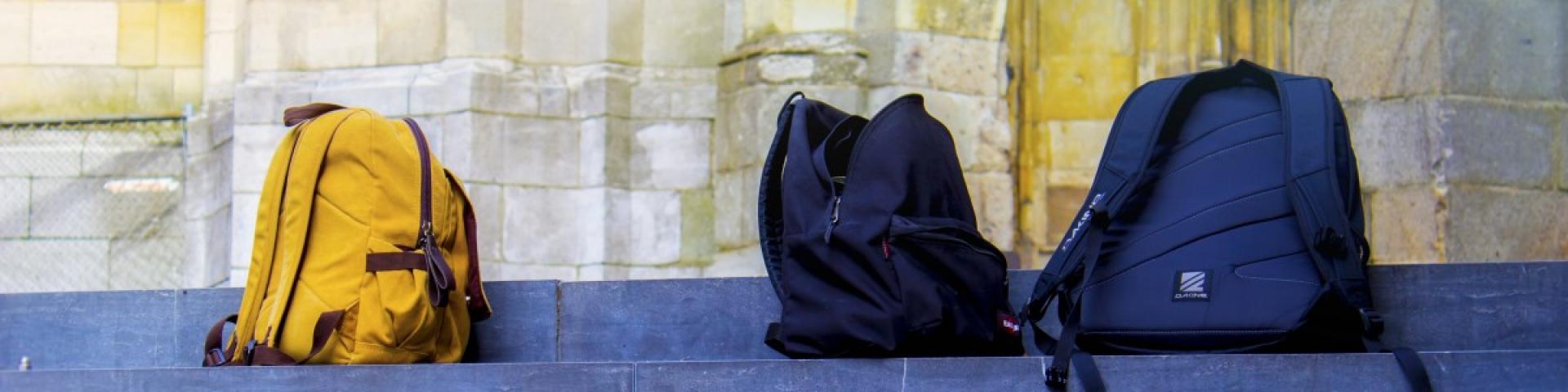
The European market potential for work and school bags
The European market for work and school bags peaked in 2022. This is possibly due to the return to school and the office after 2 years of lockdowns. Developing countries performed quite well. They directly supplied almost half of the import value in 2024. Although the European market is crowded, this suggests there could be opportunities for you. To appeal to consumers, your bags should be functional and stylish. Design, craftsmanship, sustainability and ergonomics can add further value.
Contents of this page
1. Product description: work and school bags
In Home Decoration and Home Textiles (HDHT), there are several categories made up of various product groups. Bags in the HDHT sector are mainly functional, like work and school bags. These are categorised under ‘office and school’. The product group includes items like executive or attaché cases, briefcases, school satchels, backpacks, and laptop/tablet bags and sleeves. More fashion-oriented personal accessories belong to the apparel sector, rather than HDHT.
This study uses the following codes to indicate trade in work and school bags.
Table 1: Product codes for work and school bags
| Harmonised System (HS) | Description |
|---|---|
| 4202 11 10 | Executive cases, briefcases, portfolios, school satchels and similar containers with an outer surface of leather, composition leather or patent leather |
| 4202 12 11 | Executive cases, briefcases, school satchels and similar containers, with an outer surface of plastic sheeting |
| 4202 12 91 | Executive cases, briefcases, school satchels and similar containers, with an outer surface of plastic, including vulcanised fibre or of textile materials (excluding those with an outer surface of plastic sheeting or moulded plastic material) |
Functionality
Work and school bags need to be functional and comfortable. They often have multiple compartments and pockets for items like laptops, tablets, documents, pens and water bottles. These bags vary in size but should be spacious enough to hold essentials without being bulky. They may feature extra padding to protect fragile items and often have external zippered pockets and internal organisers.
Handles and (detachable) shoulder straps need to be sturdy. Backpacks are best for comfort. They often have padded, adjustable shoulder straps and back panels that distribute weight evenly to reduce strain. Water-resistant or waterproof materials are commonly used to protect contents from the elements.
Video 1: Ethically made handcrafted leather work bag with GRS-certified cotton lining
Source: O My Bag Amsterdam
Material
Work and school bags are often made from leather or synthetic leather. Other popular materials are textiles like cotton-based canvas and (recycled) synthetics like polyester. These materials are often combined, for example in canvas bags with leather straps and details. Hardware – like buckles, latches, zippers and clasps – is often made from metal or plastic. Synthetic materials are often water-resistant or waterproof, while natural materials like leather and textiles can be treated with water-repellent coatings. Canvas’s tight weave makes it naturally water-resistant.
When it comes to leather bags, different types and grades of leather are used depending on the segment. Cow leather is the most common, but cheaper pig leather is often used for bags in the lower-end of the market. In the high-end luxury market, more exotic leathers can be used. At the same time, more consumers are looking for sustainable and ethical alternatives to leather. As the quality of synthetic leather rises, consumers can hardly tell the difference between genuine and synthetic leather.
Design
The design of work and school bags has to combine functionality and aesthetics. Bags for professional use generally come in neutral tones like black, navy, grey and tan. Meanwhile, backpacks for students often have vibrant colours or printed graphics. Details like neat and reinforced stitching, symmetrical seam lines and clean-cut silhouettes add visual appeal. Quality dyeing should prevent colour fading. Finishing touches like metal hardware, logos and leather accents can add function and design value.
Durability
The durability of work and school bags largely depends on the materials used and the quality of the construction. Canvas and leather are popular choices that can withstand daily wear and tear, especially when treated with water-repellent coatings. The tight weave of canvas makes it particularly durable. Proper dyeing should prevent colour fading. Synthetic leather is known for being more resistant to moisture and stains than genuine leather. But it may not age as well and can be more prone to cracking. Reinforced stitching at stress points means the bags can handle heavy loads. Double and triple-stitched seams add extra strength.
2. What makes Europe an interesting market for work and school bags?
The European market for work and school bags peaked in 2022. Developing countries performed relatively well. They directly supplied nearly half of the 2024 import value.
Source: Eurostat Comext & ITC TradeMap, 2025
Europe’s imports of work and school bags peaked at €762 million in 2022. This is likely due to a combination of pandemic-related factors. In 2022, international trade was caught up with delayed shipments. People were also returning to the office and school after 2 years of lockdowns. The number of Europeans working from home stabilised at 8.9% of the employed population in 2023–2024 after peaking at an estimated 13.3% in 2021. This was about 5% before the pandemic. A further 13 to 14% work from home occasionally. This was about 8 to 9% before the pandemic.
Europe’s imports of work and school bags declined from €633 million in 2020 to €550 million in 2024, at a compound annual growth rate (CAGR) of -3.5%. About 29% of the 2024 imports were leather bags, mainly from European countries.
Direct imports from developing countries mainly consisted of bags made from textile or plastic materials (86% in 2024). These imports performed fairly well, especially compared to the intra-European trade in work and school bags. They grew from €229 million in 2020 to €246 million in 2024, at a relatively strong CAGR of 1.8%. As a result, their direct import market share grew from 36% to 45%. This makes Europe an interesting market for exporters from developing countries.
Various international trade disruptions still affect the costs and availability of raw materials, energy and transport. For drivers of demand, see the section on trends.
3. Which European countries offer the most opportunities for work and school bags?
The larger Western European economies are the main importers of work and school bags. However, importers in these countries generally sell their products across Europe. This means the best strategy is to focus on a particular segment rather than a specific country.
Source: Eurostat Comext & ITC TradeMap, 2025
Germany is Europe’s largest importer of work and school bags. It accounted for 21% of imports in 2024. The Netherlands followed with 17%, and France with 11%. The United Kingdom (9%), Italy (6.8%) and Poland (5.1%) complete the 6 largest importing countries.
Focus on segments
European countries have different roles in the HDHT market. Some are mainly importers and others are mainly manufacturers. Western European countries are mainly importers, and most Western European importers are re-exporters. They do not just sell their products in their own country, but they distribute them across the continent. This explains why in HDHT, small countries like the Netherlands often import much more than they consume.
In terms of marketing, you should know that countries are not markets. The HDHT market consists of different market segments, ranging from low to high (see our study on market entry for work and school bags). Every European country has these segments, although their size may vary. Therefore, it makes much more sense for you to focus on a segment in work and school bags and connect with importers in that segment. They will then sell your products in that segment across Europe.
Consumer spending is under pressure
Sales of products like work and school bags are sensitive to economic cycles. When economic circumstances and prospects are down, consumers hold off on buying items that they do not urgently ‘need’. When economic conditions are good, purchases of such non-essential products tend to rise.
European consumer confidence fell sharply in March 2022 due to the situation in Ukraine and the cost-of-living crisis that followed. Although it has improved since then, consumer confidence is fragile and still scores below its long-term average.
*Forecast
Source: OECD Economic Outlook 116, 2025
The cost-of-living crisis has clearly affected consumer spending (‘private consumption expenditure’) in the leading European markets. Forecasts for 2025/2026 continue to be modest, reflecting consumer confidence.
Germany is Europe’s largest importer of work and school bags
Germany is Europe’s leading work and school bag importer. It has a large domestic market and is an important European trade hub. Its imports of work and school bags peaked at €203 million in 2022. After that, they declined to €118 million in 2024. This translates to a CAGR of -8.8% between 2020 and 2024. However, this was mainly due to the drop in intra-European trade.
Germany’s imports from developing countries grew from €42 million in 2020 to €49 million in 2024, at a CAGR of 3.8%. With that, developing countries’ direct import market share grew from 25% to 41%. This is slightly below the European average of 45%. In 2024, Germany’s main suppliers were China (30%), Italy (20%) and the Netherlands (14%). Other important suppliers from developing countries included Vietnam (5.4%) and India (4.1%). Opportunities for smaller supplying countries may be limited in the current German market for work and school bags.
The Netherlands is an important European trade hub
The Netherlands is another important European trade hub. This could make the country an interesting market for you. Its imports of work and school bags grew from €73 million in 2020 to €94 million in 2024 at a CAGR of 6.6%. However, this was mainly due to a strong increase in intra-European trade. Its main suppliers were China (36%), Germany (16%) and Belgium (11%).
Dutch imports from developing countries slightly declined from €48 million in 2020 to €46 million in 2024, at a CAGR of -1.2%. Nevertheless, it continued to be the second largest import market for work and school bags from developing countries. The direct market share declined from 66% to 49%. However, this was also above the European average. Important suppliers from developing countries other than China included Indonesia (4.4%), Vietnam (3.1%), India (2.6%) and Cambodia (2%).
Indonesia and Cambodia performed particularly well, considering they hardly exported any work or school bags to Europe in 2020. This suggests there are opportunities to enter the Dutch market.
France’s intra-European imports of work and school bags declined
From 2020 to 2022, France’s imports of work and school bags were fairly stable at about €86 million. They then declined to €60 million in 2024. This translates to an overall CAGR of -8.7%. However, this was mainly due to a drop in intra-European trade.
Although France’s imports from developing countries declined slightly (from €24 million to €23 million), their direct market share grew from 27% to 38%. This continued to be below the European average. These imports mainly came from China, which provided 34% of the imports in 2024. Other large suppliers included Italy (22%) and the Netherlands (11%). Developing countries that supplied work and school bags to France included India (1.6%), Thailand (0.8%), Cambodia and Vietnam (0.4% each).
The UK mainly imports its work and school bags from China
The UK’s imports of work and school bags dropped from €73 million in 2020 to €50 million in 2024, at a CAGR of -9.3%. This was due to a decline in imports from other European countries, from €33 million to €9.3 million. As a result, developing countries now dominate this market. Their direct import market share grew from 53% to 80%, as they supplied €39 million in both 2020 and 2024.
Although China supplied most of these imports (65% of all imports in 2024), there is room for suppliers from other developing countries too. Countries that performed particularly well included India (7.8%), Indonesia (1.8%), Cambodia (1.4%) and Morocco (0.6%). These countries increased their exports of work and school bags to the UK considerably and, as a result, their direct market shares.
Brexit has led to more direct imports from developing countries. This allows British buyers to avoid additional fees now that they are no longer part of the European Union’s single market. Considering the country’s high imports from developing countries and the potential increased interest in direct sourcing, the United Kingdom could offer opportunities.
Italy’s imports of work and school bags declined
Italy’s imports of work and school bags peaked at €61 million in 2022. Overall, they declined from €55 million in 2020 to €38 million in 2024, at a CAGR of -9.0%. This was mainly due to a drop in imports from other European countries and Hong Kong. However, imports from developing countries declined too. Nevertheless, their direct import market share grew from 38% to 47%. This was slightly above the European average.
The main suppliers of work and school bags to Italy were China (38% in 2024), France (23%) and India (6.5%). When it comes to suppliers from developing countries, Tunisia also performed well. It increased its direct market share from 0.1% in 2020 to 0.5% in 2024. This shows there could be opportunities, but this is a challenging market.
Poland is an emerging market
Poland’s imports of work and school bags grew from €20 million in 2020 to €28 million in 2024, at a CAGR of 8.5%. Leading suppliers were China (40% in 2024) and European trade hubs Germany (30%) and the Netherlands (12%).
The direct import market share for developing countries grew from 34% to 44%. This is comparable to the European average. Imports reached €12 million in 2024. Besides China, they mainly came from India (1.3%), North Macedonia (1.3%) and Indonesia (1.1%). As the Polish market continues to mature, it may offer opportunities.
Tip:
- Do not just focus on specific European countries. Instead, identify the appropriate segment and let your buyers distribute your products across Europe within that segment.
4. What trends offer opportunities or pose threats in the European market for work and school bags?
Several trends shape the market for work and school bags. Sustainability and wellness are key themes.
Sustainability: people, planet and animals
Social and environmental sustainability are quickly becoming central consumer needs. European consumers are increasingly adopting more sustainable lifestyles. Most consumers in Europe’s leading markets believe that leading a sustainable lifestyle is important.
For work and school bags, sustainability issues are mainly related to:
- Materials: are your materials renewable? Are they recycled? Are they produced with animal welfare in mind? Are they traceable and responsibly traded? Are the dyes and tannins natural or non-toxic?
- Production process: can you reduce your energy and water use? Can you prevent water pollution, especially in the tanning and/or dyeing process? Can you reuse waste, either inside the production system or elsewhere? In general, can you ensure low-impact production?
- Labour and ethical practices: does production take place in a safe and healthy way? If your producers work from home, how do you ensure good working conditions? Are your labour contracts fair?
- Transport: do you use clean transport options? Are your packing materials recyclable?
Pollution, deforestation and animal welfare are important topics when it comes to leather bags. Organisations like the Sustainable Leather Foundation and Textile Exchange are working to address these challenges in the leather industry. The new Deforestation Regulation (EUDR – EU 2023/1115) aims to reduce the EU’s impact on global deforestation and forest degradation. It applies to leather as a raw or processed material but not to finished products like bags. Nevertheless, you should pay attention to the sustainability of the leather you buy from your suppliers.
Synthetic ‘vegan’ leather is a good alternative for consumers who like the look and feel of leather but prefer non-animal products. Vegan leather is often made from polyurethane. It is animal-friendly but not sustainable. However, new and innovative plant-based leathers are being produced. They are made from fruit waste like pineapple leaves, apple peels and other natural materials such as cactus, mycelium (mushroom) and cork.
Video 2: Piñatex pineapple leather
Source: Dole Packaged Foods
Certified organic and/or recycled fabrics are a good option for textile bags. Bags from recycled PET bottles have become fairly common. One interesting company in this area is Freitag. It produces bags from recycled truck tarpaulins and other discarded products.
Traditional craftsmanship and design
In this era of mass consumption and industrial production, craftsmanship plays an important role in preserving traditional techniques and offering unique products. Traditional craftsmanship can also inspire, using traditional elements and motifs as a starting point for your design.
Producing your bags with the help of skilled artisans emphasises values like authenticity and sustainability. It helps to make you stand out from competitors that have mechanised their production processes. Smaller numbers are easier to produce. This makes you interesting for smaller buyers that cannot meet the needs of mass production.
Tips:
- Use sustainable materials and invest in sustainable production, packaging and transport methods.
- If you produce the fabrics for your bags, consider sustainable innovations like using natural dyes and/or dyes with a higher fixation rate, reduced salt use, and machines that use less water for processing.
- If your products have a unique origin or story, communicate the particular techniques, materials, producers, processes or meanings. This may add value to your concept, and your importer’s.
- If your importer is interested, consider certification options, such as organic or fair trade. For more information, see the CBI’s studies about market entry for work and school bags and buyer requirements for HDHT. Also see the CBI’s special study on sustainability in HDHT, as well as the CBI’s tips to go green and become socially responsible, and webinars on sustainability in the European HDHT market and sustainable innovations for your HDHT business.
Wellness: Mental and physical
European consumers are driven by the desire to improve their mental and physical health. 89% of people around the world took more action to improve their wellbeing in 2024 than the year before. This has consequences for the market for work and school bags.
Work-life balance
Since the Covid-19 pandemic, work-life balance has become a must for many workers. During lockdowns, remote work and education became the norm. In 2022, people were able to return to the office and school. However, many remote workers wanted to continue working from home. This allows people to achieve a better work-life balance, for example by offering them flexibility and saving them the commute.
Source: Eurostat, 2025
The number of Europeans that usually or occasionally work from home stabilised at about 22 to 23% of the employed population in 2022–2024, after peaking at an estimated 24% in 2021. Before the pandemic, this was about 12 to 13%. This translates to an extra 10% of working people who need new bags less often, because they do not wear them out as fast. At the same time, remote work has increased the need for comfortable laptop bags to transport devices between home and the office.
Ergonomics
Concerns about back pain, posture and overall comfort drive demand for ergonomic work and school bags. Ergonomic bags are designed to support a healthy posture, distribute weight evenly and reduce strain on users’ backs and shoulders. Backpacks are particularly good for this. Important features are adjustable padded straps, multiple compartments for weight distribution and waist/chest straps. Lightweight and breathable materials are popular, especially for the back panels.
Tips:
- Create timeless designs with durable materials to appeal to consumers who need bags for long-term use.
- Make sure your bags are suitable for laptops, preferably with a dedicated compartment.
- Design your bag for comfort. Ergonomic design can add value, especially for backpacks. Make the straps adjustable and padded, include multiple compartments and consider adding waist or chest straps. Use breathable, lightweight materials.
- If you want to excel in ergonomics and make verified claims about the benefits of your bags, consider TÜV’s safety and quality audits for bags with ergonomics inspection. Ask your buyers if they are interested in this and if they would contribute to the auditing fees.
Customised developments
More small and medium-sized HDHT brands want to add bags to their product range. These bags should reflect their image. They look for reliable suppliers that can help develop their ideas into attractive designs and produce the bags. This is also relevant for importing brands that specialise in bags.
If you can focus on producing bags and specialise in this field, this can help you attract buyers. Good access to different materials and accessories for bags can further help to increase your value as a development and production partner.
Tips:
- Develop a small product collection that showcases the different models, materials and production techniques you have to offer.
- If your production is flexible and you can supply smaller quantities, emphasise this in your marketing.
Example company
Her Works is a female-owned company. Its founder strives to "unveil the beauty and delicacy of the art and the handicraft works of the lesser-known ethnic minorities" in Laos. They want to provide work and income to female producers from these groups. The women harvest, spin and dye natural fibres to weave textiles. Each group uses different techniques, such as embroidery, weaving and hand-stitching. The patterns also reflect the producers’ unique Lao identity. Her Works transforms their weaves into beautiful bags, souvenirs, garments and shoes.
Figure 7: Company introduction
Source: Her Works
For its bags, Her Works uses high-quality and durable materials such as canvas, hemp and leather. The bags are designed to highlight the delicate craftwork. The LAWAYAM laptop bag was earned the prestigious Good Design Award 2023. This bag is handcrafted from upcycled fashion industry waste that would otherwise end up in landfill. The design was praised for being both functional and beautiful, showcasing traditional Krieng and Hmong techniques. It features practical solutions like a dedicated central zip pocket for a laptop and various compartments for other essentials.
Globally Cool carried out this study in partnership with GO! GoodOpportunity and Remco Kemper on behalf of CBI.
Please review our market information disclaimer.
Search
Enter search terms to find market research
Do you have questions about this research?
The European market has a special interest in leather bags. Buyers appreciate the material and understand the industry. They also value our company’s impact on society with our fair trade and ethical business practices and the job opportunities we create.

Taslima Miji, Founder at Leatherina and Gootipa, Bangladesh