
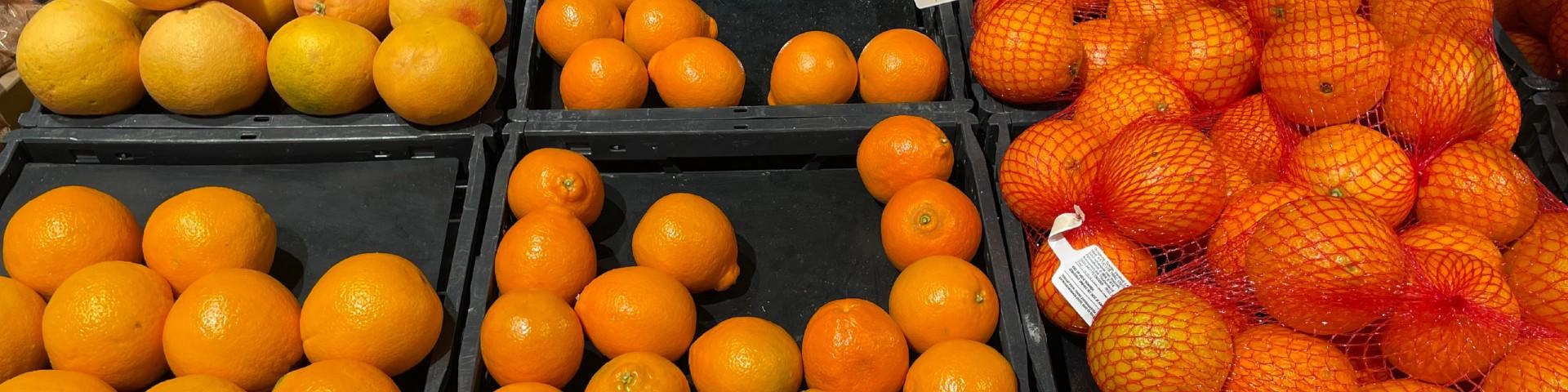
The European market potential for fresh oranges
The European markets with the most potential for fresh orange exports are the Netherlands, the UK, Spain, Portugal, Italy and France. These countries offer different types of opportunities. The Netherlands is mainly a logistics and re-export centre. The UK and France are more consumption-driven end markets. Spain, Portugal and Italy are producer markets where imports are more linked to supply gaps, late-season needs and price opportunities.
Contents of this page
1. Product description: oranges
Orange is a citrus fruit with a sweet to mildly acidic taste. The most traded orange for fresh consumption is the sweet orange, Citrus sinensis (L.) Osbeck. In Europe, oranges are mainly eaten fresh or used for juice. They are also used in fruit salads, desserts, marmalade, sauces and savoury dishes. Processing uses include juice, concentrate, pulp, peel, essential oil and pectin. These products are used in the food and beverage industry, cosmetics, cleaning products and pharmaceuticals.
Fresh oranges are categorised under the Harmonised System (HS) code: 080510 Fresh or dried oranges. There are several varieties of oranges available in the European market (see Table 1).
Table 1: Main commercial orange varieties in the European market
| Variety group | Main supplying countries to the European market | Main use or season |
|---|---|---|
| Navelina and similar early Navel varieties, such as Fukumoto and M7 | Spain | Early-season table oranges, mainly October–January. |
| Navel and late Navel varieties, such as Lane Late, Navel Powell, Chislett and Navelate | Spain, Egypt and South Africa | Fresh market. Late Navel varieties extend the supply season into spring. |
| Salustiana, Valencia Late and Midknight | Spain | Mainly used for late-season supply. Also suitable for juicing. |
| Valencia | Spain, Egypt, South Africa and Argentina | Late-season supply. Also widely used for juicing. |
| Blood and pigmented oranges, such as Tarocco, Moro, Sanguinelli and Cara Cara | Italy and Spain | Fresh market and premium citrus segment. |
Source: Globally Cool, April 2026
2. What makes Europe an interesting market for fresh oranges?
Europe is interesting for orange exporters because the market is large and import-dependent during part of the year. European countries still supply most oranges traded in the region, especially during the Spanish season. However, imports from low- and middle-income countries become much more important from July to October. This creates a recurring seasonal window for exporters that can offer reliable volumes, good quality and competitive prices.
European suppliers remain the largest source of oranges traded within Europe
In 2021-2025, European supplying countries remained the largest source of oranges traded within Europe. Import volumes from European suppliers were around 2 million tonnes each year, falling from 2.17 to 2.07 million tonnes – a decline of 1.1% per year on average. Even so, European suppliers still accounted for around 65% of total European orange imports in 2025. This shows their strong position in the market.
Low- and middle-income countries were the second-largest source. Their volumes changed more year-to-year but increased from 1.05 million tonnes to 1.08 million tonnes. This equals growth of 0.7% per year on average. Their share in total European orange imports also rose slightly, from about 32.5% to 34.2%. This shows that low- and middle-income countries gained some ground, despite strong competition from European suppliers. Other non-European suppliers remained a very small source.
Source: Eurostat, Norstat, SwissImpEx, UNComtrade, UK Trade, April 2026
*Low and middle-income countries are defined as the OECD-DAC list of ODA recipients. 'Rest of the world' refers to all other countries.
Overseas oranges become most important from July to October
Orange imports follow a clear seasonal rhythm. European supply is strongest during the Spanish season. From June onwards, European volumes fall and overseas suppliers take a larger share of the market. The strongest import months for suppliers from low- and middle-income countries are July, August, September and October. Exporters that can match this window with the right varieties and stable quality have the best chance of entering retail, wholesale or juicing channels.
Source: Eurostat, Norstat, SwissImpEx, UNComtrade, UK Trade, April 2026
Southern Europe leads orange consumption, but import-dependent markets also offer opportunities
Apparent per capita consumption of oranges is highest in Greece, Spain, Portugal and Italy. Greece has the highest apparent consumption, at 54.0 kg/person. Spain follows with 39.4 kg, Portugal with 32.3 kg and Italy with 31.2 kg.
These high figures are partly linked to strong domestic orange production in Southern Europe. Spain, Italy, Portugal and Greece have suitable climates for citrus production. Oranges are widely available and are part of regular food habits in these countries. The figures also include oranges used by the local processing industry, for example for juice, concentrates and other citrus products.
In Northwestern and Central Europe, apparent consumption was much lower. The Netherlands reached 9.6 kg/person, while Belgium reached 6.9 kg, France 5.9 kg and Germany 4.9 kg. The UK had one of the lowest levels, at 3.3 kg/person. These countries depend more on imported oranges and have little or no domestic orange production.
Source: Globally Cool, 2026
For exporters from low- and middle-income countries, this means that the largest apparent markets are not always the best direct targets. Southern Europe has high consumption, but also strong local production and processing. Northwestern Europe has lower per capita consumption but depends more on imports. This can create opportunities, especially outside the European production season.
Tips:
- Read CBI's tips on finding buyers and doing business with buyers in the European fresh fruit and vegetables market.
- Stay up to date on the European orange market by following newsletters and trade platforms. For example, FreshPlaza offers a global market overview on oranges. Other useful sources are Fruitnet (Eurofruit) and FreshFruitPortal.
- Use the European Commission's citrus statistics and Agri-food trade dashboard to monitor changes in import volumes, prices and supply gaps.
Organic oranges offer a small but clear niche opportunity
Organic oranges are a small niche in the European orange market. In 2024, Europe imported 7,100 tonnes of organic oranges from outside Europe. This is small compared to total orange imports, but shows that there is demand for certified organic supply.
Imports changed widely in 2020-2024: they reached 10,900 tonnes in 2020, fell to 7,700 tonnes in 2021, rose to 12,000 tonnes in 2022, then fell again to 6,600 tonnes in 2023. In 2024, imports recovered slightly to 7,100 tonnes. This shows that the market is volatile.
This volatility may be linked to organic supply availability, prices, certification and the size of the European harvest. Because of this, organic oranges are not an easy mass-market opportunity. They are more suitable for exporters that can offer reliable certified supply and full traceability.
For exporters from low- and middle-income countries, the best opportunities are mainly outside the European season, when local organic supply is lower. Exporters should focus on specialised organic citrus buyers that understand the extra costs, risks and documentation needed for organic trade.
3. Which European countries offer the most opportunities for fresh oranges?
In 2021-2025, the Netherlands was Europe's leading market for oranges from low- and middle-income countries, while the UK stayed a large and broadly stable destination. Spain, Portugal and Italy were also important markets, but their import patterns differed more. Spain was volatile and window-driven, Portugal remained stable, and Italy became a more important destination over the period. France also gained ground, supported by strong household demand.
Source: Eurostat Comext and UK Trade, March 2026
Overall, the European orange market offered a mix of stable hub markets, sizeable end markets and more opportunistic producer markets.
The Netherlands: Europe's gateway for fresh conventional and organic oranges
The Netherlands is an important market for fresh oranges, but even more importantly, it serves as a trade and distribution hub for the rest of Europe. It remained Europe's leading importer of oranges from low- and middle-income countries throughout 2021-2025. Except for a weak import volume in 2022, annual imports stayed close to 500 thousand tonnes, and the CAGR of 0.4% points to a stable rather than fast-growing market. In 2024, the country imported 6,548 tonnes of organic-certified oranges, equal to about 93% of total EU imports from outside Europe.
The Netherlands is the main European entry point for overseas oranges. Its role is based not only on Dutch consumption but also on logistics, cold storage, ripening and redistribution to other European markets. This makes it a useful first market for exporters that want access to buyers in Germany, Belgium, Scandinavia and Central Europe. Dutch companies are professional, internationally connected and strongly focused on continuity of supply.
Several specialised Dutch companies are clearly active in oranges and citrus:
- Hillfresh imports oranges from Egypt and South Africa and distinguishes between Navel oranges for direct consumption and Valencia oranges for juicing and large retail programmes.
- Staay Food Group sources citrus year-round from countries like Spain, South Africa and Egypt.
- Olympic Fruit offers a year-round assortment of both table oranges and juice oranges from Spain, Egypt, Morocco and South Africa.
- Fruitfactor presents itself as a year-round orange importer and exporter with a strong focus on continuity and logistics. It imports from many countries: Portugal, Türkiye, South Africa, Morocco, Israel, Chile, Argentina and Uruguay.
Per capita use of oranges in the Netherlands decreased in recent years, reaching 14.0 kg/person in 2022 but falling to 11.2 kg in 2023 and 9.6 kg in 2024. This shows a clear downward trend. Even so, Dutch consumption is still higher than in France and the UK. In the Netherlands, oranges are mainly consumed in two ways: as fresh fruit and as juice oranges. In practice, this means the Dutch market values both convenience for direct consumption and suitability for squeezing at home or in foodservice.
Oranges also have a long place in Dutch food culture. The Dutch word sinaasappel ('China apple') refers to this history, and orange flavour appears in traditional products such as the oranjekoek pastry. This is a niche use, but shows that oranges are familiar to Dutch consumers beyond direct fresh consumption.
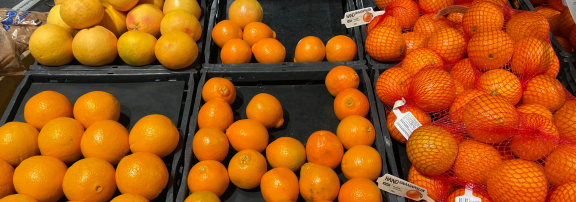
Figure 5: Fresh oranges in a Dutch supermarket
Source: Globally Cool, April 2026
South Africa remained the dominant supplier to the Dutch market in 2021-2025, with stable volumes and imports reaching almost 262 thousand tonnes in 2025, of which 6,230 tonnes organic-certified oranges (in 2024). Egypt stayed the clear number-2 supplier and matched South Africa's CAGR of 1.7%, but its growth was much more volatile.
Zimbabwe remained a much smaller supplier, but it recorded the fastest growth among the top origins, reaching 36 thousand tonnes in 2025. Peru stayed a minor supplier and showed an overall declining trend despite some recovery after 2022. Argentina lost the most ground, with imports falling from 22 thousand tonnes in 2021 to 8 thousand tonnes in 2025.
Outlook
In the short term, the Netherlands will remain the main gateway for overseas oranges. According to the European Commission's Spring 2026 Economic Forecast, economic growth is expected to be modest, with GDP forecast at 1.0% in 2026 and 1.1% in 2027. This points to stable but not fast-growing demand. The best opportunities are with importers that redistribute oranges to other European markets, especially during the overseas supply window.
United Kingdom: Stable market for imported oranges
The UK is an important European importer of oranges from low- and middle-income countries. Import volumes ranged between 148 and 151 thousand tonnes, with a dip in 2023 followed by a recovery in 2024-2025. With a CAGR of 0.5%, the market appears mature and broadly stable rather than structurally fast-growing.
For exporters from low- and middle-income countries, this makes the UK a relevant destination market. Unlike the Netherlands, the UK is less of a pan-European redistribution hub and more of a large end market.
The UK has one of the lowest apparent per capita use levels in Europe. Use of oranges was stable at 3.7 kg/person in 2021 and 2022, then fell to 3.1 kg in 2023 and increased slightly to 3.3 kg in 2024.
Oranges are widely sold in mainstream retail in packs and convenience formats. Tesco sells Jaffa Oranges in several varieties, while Sainsbury's offers both standard and premium lines. There is also a clear juicing segment. Ocado sells M&S Juicing Oranges, described as selected for maximum juice. This shows that oranges in the UK are valued not only for direct consumption but also for home juicing.
At the same time, public health guidance gives fresh fruit a stronger nutritional position than juice. The NHS says fruit juice can count towards 5 A Day, but only 150 ml a day counts as one portion because juicing releases sugars. This supports the view that fresh oranges fit well within the healthy-eating message, while orange juice remains popular but is seen more cautiously from a nutritional viewpoint.
Several companies are active in the citrus trade in the UK. AMT Fresh (part of the AMFRESH Group) says it has supplied Tesco for over 20 years and delivers around 11 million boxes of citrus each year, equal to about 140 million nets. The Jaffa brand is a well-known citrus brand in the British market. NFB Import supplies wholesale markets, supermarkets and pre-packers across the UK from its distribution centre in Preston. Fruitmont imports and distributes fresh produce in the UK and Europe, and sources citrus year-round from countries like South Africa and Egypt. EXSA Imports, based at New Spitalfields Market in London, sources produce from several continents and supplies the UK wholesale, processing and packing sectors.
Egypt and South Africa remained by far the leading low- and middle-income-country suppliers of oranges to the UK throughout 2021-2025. Egypt strengthened its position, with shipments rising by about 11%, from 64 thousand tonnes in 2021 to 71 thousand tonnes in 2025. South Africa followed closely behind, although its exports were more volatile and increased from 66 to 68 thousand tonnes.
Argentina remained a relatively small supplier, but after a weaker period in 2022 and 2023 its exports recovered to 5 thousand tonnes in 2025. Peru showed the clearest decline among the smaller suppliers, with shipments falling from 8 to 4 thousand tonnes. Uruguay recorded the fastest growth, although from a very low base, with exports increasing from 801 tonnes in 2021 to 3 thousand tonnes in 2025 – an average yearly rise of more than 40%.
Outlook
GDP in the UK is expected to grow by 0.7% in 2026 and 1.2% in 2027. This points to weak short-term growth, followed by a mild recovery. For orange exporters, this means that the UK is likely to remain a stable but price-sensitive end market. Opportunities are strongest for suppliers that can offer reliable quality, retail-ready packaging and good value for money.
Spain: Opportunities in a window-driven orange market
Spain is not just an importer of oranges (naranjas in Spanish), but also one of Europe's main producing countries. According to the USDA's latest EU citrus annual, Spain accounts for about half of total European orange production. This helps explain why Spanish orange imports are volatile. Spain mainly imports when there are supply gaps, quality issues, timing mismatches or attractive price opportunities.
Imports from low- and middle-income countries moved sharply up and down in 2021-2025. The overall CAGR of −6.0% shows that Spain is an unpredictable import market rather than a steadily growing one. For exporters, this means Spain can offer attractive openings, but these are often seasonal or short-term rather than structural. Spanish imports of organic oranges from outside Europe are small and reached 320 tonnes in 2024, all from South Africa.
Because Spain has such a strong domestic citrus sector, many of the most relevant players are not pure importers. Instead, they are distributors or large citrus marketers that combine Spanish supply with imported fruit. One example is Frutas Niqui Madrimport, which is strategically located in Mercamadrid, and specialises in international sourcing, cold storage and distribution.
Spain has a very high per capita use of oranges. It was 46.7 kg per person in 2021, then dropped sharply to 25.9 kg in 2022 and recovered to 35.0 kg in 2023 and 39.4 kg in 2024. This high level is mainly because Spain is Europe's largest orange producer and processor. Oranges are widely available, familiar to consumers for eating and juicing, and strongly used by the processing industry.
Spain is also an important organic orange producer: in 2025 the country was the world's third-largest producer of organic citrus. Spain had close to 3 million hectares under organic production. Although consumption of organic citrus is certainly there, most organic oranges are exported to other European countries, predominantly to large organic markets like Germany and Switzerland.
Organic oranges in the domestic market seem to remain a selective premium segment rather than a mass-market category. Mainstream retailers do offer them: both Alcampo and Carrefour sell organic juicing oranges under their own ecological ranges, as well as organic orange juice products. This shows that organic citrus is clearly visible and accessible to consumers.
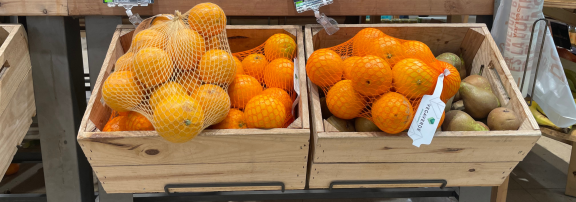
Figure 6: Fresh organic oranges in a Spanish supermarket
Source: Globally Cool, April 2026
Egypt was one of the leading suppliers in 2021-2025, but its performance was highly volatile, and volumes ended the period about 23% (or 6.2%/year) below the 2021 level. Argentina remained a mid-sized but irregular supplier, with shipments falling between 2022 and 2024 before recovering to 12 thousand tonnes in 2025.
Morocco lost substantial ground, as exports dropped from 20 thousand tonnes in 2021 to 10 thousand tonnes in 2025, a decline of about 17%/year. South Africa also weakened sharply over the period, with a CAGR of −17.8%, pointing to a long-term decline.
Outlook
Spain has the strongest economic outlook among the 6 selected markets, with GDP growth forecast at 2.4% in 2026 and 1.9% in 2027. However, Spain is also Europe's main orange producer. This means import opportunities depend less on general demand and more on harvest gaps, variety needs, quality issues and price opportunities. Exporters should see Spain as a window-driven market, not as a stable year-round import market.
Portugal: Stable orange market with strong local production
Portugal is not only an importer of oranges, but also an important citrus producer. USDA notes that EU citrus production is concentrated in the Mediterranean region and that, after Spain and Italy, Portugal is one of the main producing countries. Within Portugal, the Algarve is by far the leading citrus region.
This strong local production base helps explain Portugal's import pattern. In 2021-2025, imports from low- and middle-income countries went from 74 to 72 thousand tonnes, but the overall trend was broadly stable. All imports are conventional oranges. Portugal is a relevant orange market, but imported fruit must compete alongside the strong domestic citrus sector.
Portugal has high per capita use of oranges. It fluctuated between 25.8 and 35.1 kg/person/year in 2021-2024. The high level is linked to domestic production, a developed fruit processing industry and strong fresh consumption.
Oranges (laranjas in Portuguese) are consumed mainly as fresh fruit and juice, but also have a place in traditional desserts like pudim de laranja do Algarve and torta de laranja. This doesn't make cooking use a major demand driver, but does show that oranges are familiar in Portuguese food culture beyond everyday fresh consumption.
António Aurélio is one of the clearest examples of a Portuguese buyer active in the orange market. Like other Portuguese companies, they can switch between local and imported supply depending on the season, product availability and customer requirements.
South Africa was by far the dominant low- and middle-income-country supplier. Its shipments fluctuated greatly, but over the whole period they remained stable, reaching 69 thousand tonnes in 2025. Zimbabwe remained a much smaller supplier and lost ground over the period, with volumes falling by 15% per year. Egypt was the most volatile supplier, with exports rising sharply from a very low base, peaking at 19 thousand tonnes in 2024 and then dropping back to around 1 thousand tonnes in 2025. Although its CAGR remained strongly positive at 27%, the wider pattern points to irregular supply rather than steady market growth.
Outlook
Portugal is expected to show stable economic growth, with GDP forecast at 1.7% in 2026 and 1.8% in 2027. This supports steady demand for fresh oranges. However, Portugal has strong local citrus production, especially in the Algarve. Imports will remain most relevant when local supply is limited, when prices are attractive or when buyers need specific origins or varieties.
Italy: Imported oranges gain ground in a producer market
Italy is both a major orange producer and a more and more important importer of oranges from low- and middle-income countries. This makes it an attractive but demanding market. USDA notes that Sicily and Calabria together account for about 86% of Italian orange production. The same report says Italy's 2025-26 orange crop was delayed, but remained broadly in line with the previous season, yielding good quality, good fruit size, high sugar content and good colouring.
In 2021-2025, Italy's imports of oranges from low- and middle-income countries grew from 57 to 80 thousand tonnes, almost all being conventional produce. After a slight drop in 2022, imports rose strongly in 2023 and remained high in 2024 and 2025. In other words, Italy is becoming a more important destination for imported oranges, even though it is itself a major producing country.
Imported oranges are most relevant when they extend the season, fill supply gaps, or complement the local offer by variety or origin. Italy's main orange varieties include the blood oranges Tarocco, Moro and Sanguinello, while the leading blond varieties include Naveline, Valencia and Ovale. A few Italian companies – like Conor and Cherry Passion (through the Netherlands) – handle imported citrus as part of broader fresh produce activities.
There is also a strong premium and origin-based segment around Sicilian blood oranges. The consortium for Arancia Rossa di Sicilia IGP says the product is closely linked to eastern Sicily, around Catania, Enna and Siracusa, where local conditions give it its distinctive quality. Separate research found that Italian consumers see Sicilian blood oranges as a top-quality product and are willing to pay a premium for it.
Italy shows high and stable per capita use of oranges. In 2021-2024 it was 30.0-32.5 kg/person/year. The high level is linked to strong domestic production, above-average fresh consumption and industrial use (juice).
South Africa remained by far the leading low- and middle-income-country supplier of oranges to Italy throughout 2021-2025, with shipments increasing from almost 40 thousand tonnes to 47 thousand tonnes. Egypt recorded the strongest growth, reaching over 27 thousand tonnes in 2025. Its exports to Italy increased by 22%/year. Argentina remained a relatively small supplier and showed a slight decline overall (CAGR −1.6%).
Outlook
Italy's GDP growth is forecast at only 0.5% in 2026 and 0.6% in 2027. This weak economic outlook may keep buyers and consumers price-sensitive. Still, Italy remains an important orange market because of its high consumption and strong processing sector. Imports from low- and middle-income countries can gain ground when local production is delayed, short or unable to meet specific market needs.
France: Sizeable end market for oranges
In recent years, France has become a more important market for oranges from low- and middle-income countries. In 2021-2025 imports rose from 39 to 49 thousand tonnes, following a peak of 57 thousand tonnes in 2024. This shows that France is gaining importance as a destination for imported oranges from outside Europe.
France imported about 180 tonnes of organic oranges from outside Europe in 2024. Morocco supplied 110 tonnes and Tunisia supplied 70 tonnes. This shows that France sources mainly organic-certified oranges from nearby North African suppliers.
France is marked by a relatively low per capita use, at 5.7-6.3 kg/person/year for 2021-2023. FranceAgriMer reports that French household purchases of fresh fruit increased by 2% in 2025, driven by higher purchases of citrus and exotic fruit. In the same year, oranges ranked as the 3rd most purchased fruit by volume in France, after bananas and apples.
Another important feature is the central role of Rungis wholesale market in Paris. The Marché International de Rungis describes itself as the world's largest fresh produce market, with 1,226 companies and a turnover surpassing €12 billion in 2024. For orange exporters, this matters because access to the French market often runs through this wholesale platform and the companies based there.
South Africa recorded by far the strongest growth in the French market. In 2021-2025, shipments increased from 6 to 24 thousand tonnes, an average annual rise of 43%. Egypt also strengthened its position over the period, although in a more volatile way. Its CAGR of 15% still points to strong long-term growth, but also to a less stable market position. Tunisia lost substantial ground, with shipments declining by 16% per year. Colombia also weakened over the period, although less sharply than Tunisia. With a CAGR of −12%, Colombia appears to be gradually losing relevance in the French market.
Outlook
France is a large end market for oranges, but economic growth is expected to remain weak in 2026. GDP is forecast at 0.8% in 2026 and 1.1% in 2027. This suggests cautious consumer spending in the short term. Exporters should focus on reliable supply, competitive prices and clear product positioning, especially for retail and wholesale buyers.
Tips:
- Read our market studies on the Netherlands, the UK and Spain to learn more about Europe's leading markets for fresh fruit and vegetables.
- Plan your exports carefully. In producing countries like Spain, Italy and Portugal, be prepared for opportunities that are often temporary and linked to harvest shortfalls, weather-related disruptions or seasonal gaps in supply.
- Make sure your oranges are backed by a strong market proposition. Organic fruit, origin-based concepts and premium citrus can offer opportunities, but only if they are matched with consistent supply, good eating quality and a competitive price.
- Visit major European trade fairs like Fruit Logistica (Germany), Fruit Attraction (Spain), Macfrut (Italy) and medFEL (France) to identify potential buyers. These events are important meeting places for anybody involved in the European orange trade.
- Use your web browser's built-in translation function so you can read the webpage in your preferred language.
4. Which trends offer opportunities or pose threats in the European fresh oranges market?
The orange market is mature and competitive. Export opportunities depend strongly on timing, price and availability of European supply. Climate volatility can create temporary openings, but large suppliers like South Africa and Egypt also compete for these windows. At the same time, buyers expect more proof of sustainability, traceability and food safety.
Climate volatility and stronger off-season competition are reshaping market windows
Climate volatility is among the most important trends in the European orange market. European orange production for 2025-2026 is projected at just over 5.6 million tonnes, down from 5.9 million tonnes in 2024-25. Spain still accounts for about half of Europe's orange production, but the season has been affected by spring rains, high temperatures during fruit development and hail damage. Portugal also started the season later than usual, with generally smaller fruit sizes. This can create opportunities for exporters from low- and middle-income countries when European supply is lower, delayed or less consistent than expected.
At the same time, these opportunities are becoming more competitive. Imports from low- and middle-income countries mainly find room during specific supply gaps and in the European off-season. These windows are also more and more contested by large exporting countries. South Africa expects higher orange production and export volumes for 2025-26; Europe remains its largest export market, taking around 37% of South African orange exports. Egypt also expects fresh orange exports to increase. It remains the world's leading orange exporter, with Europe as one of its main destination markets.
For exporters from low- and middle-income countries, this means that market opportunities are not only shaped by European shortages but also by the export strength of competing countries. A lower crop in Europe can open a window, but larger export volumes from South Africa or Egypt can quickly increase competition in the same period. Because of this, exporters should not rely on European supply shortages alone. The best opportunities are for suppliers that understand the seasonal calendar, monitor supply developments closely, and enter the market at the right moment.
Tips:
- Familiarise yourself with orange seasonality. For example, IPD's seasonal fruit calendar shows when oranges from different supplying countries are available.
- Use the European Commission's Citrus Trade Dashboard to analyse orange import trends, supplying countries and seasonal trade patterns in Europe.
Health remains relevant, but affordability is driving buying decisions
European consumers still associate fruit with healthy eating, which remains positive for oranges. However, the latest EFSA Eurobarometer shows that cost is now the main factor shaping food choices for 60% of Europeans, ahead of taste (51%) and food safety (46%). At the same time, pesticides remain the top food-safety concern, mentioned by 39% of respondents. Fresh oranges still match consumer interest in healthy eating, but they also need to offer clear value for money.
This trend is visible in the way oranges are marketed in Europe. ALDI UK, for example, sells 'Wonky Oranges', or Class II oranges under its Everyday Essentials range. This shows how retailers use lower cosmetic standards to keep fresh fruit affordable and accessible while still offering a healthy product. This reflects a broader market reality: appearance matters less when price pressure is high.
Direct-to-consumer businesses are responding in a similar way. QuieroNaranjas presents itself as a Valencian family company selling organic oranges directly from the farmer at the best price. It also offers unsorted oranges, giving consumers a cheaper option without moving away from the product's natural and healthy image.
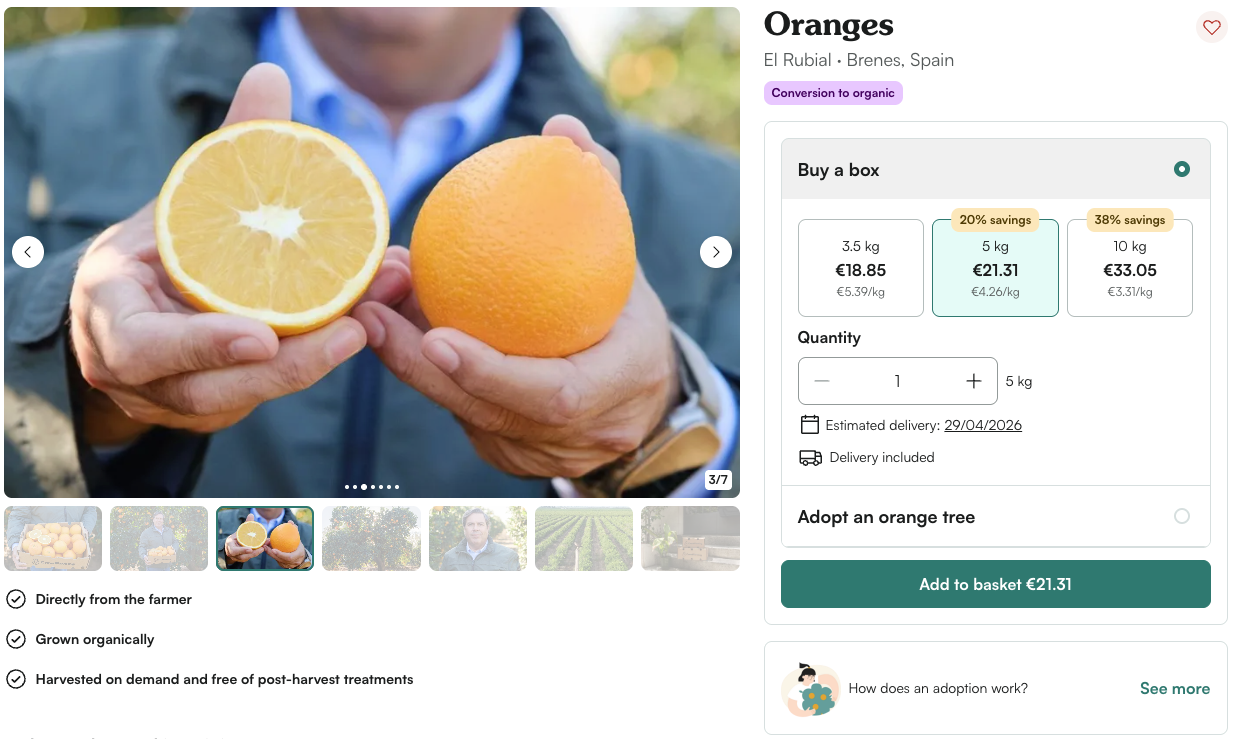
CrowdFarming reflects another side of the same trend. Its orange offer is built around direct sales from the farmer, transparent origin, and distribution without intermediaries. The platform stresses fair and predictable conditions for farmers while offering consumers fresh oranges with a clear story and direct link to production. In this way, affordability is not addressed only by low prices but also through transparency and perceived fairness in the chain.
For exporters, the main lesson is that health remains relevant but it is no longer enough on its own. The strongest position in the European market is likely to come from oranges that combine good taste and confidence in food safety with a clear value proposition. That value can come from competitive pricing, simpler grading, direct sourcing models or communication that makes the product feel more transparent and accessible.
Figure 7: Direct sourcing from orange farmers
Source: www.crowdfarming.com, April 2026
Sustainability and organic continue to offer opportunities
Sustainability is still an important market direction, but its role is changing. European consumers still care about sustainability, although EIT Food reports that fewer than half now take it into account when making food choices.
At the same time, sustainability is becoming more embedded in the way European companies source and market fresh produce:
- The Packaging and Packaging Waste Regulation entered into force in February 2025, although most rules will apply from August 2026, with more changes coming in phases up to 2030 and beyond. This regulation aims to reduce packaging waste and lower the use of primary raw materials.
- The Corporate Sustainability Due Diligence Directive entered into force on 25 July 2024 and is intended to address human rights and environmental impacts across global value chains. As a result, sustainability is no longer just a branding issue. It is more and more part of how European buyers organise sourcing and assess long-term suppliers.
A good example of a company bringing sustainability into practice is Kivinaki Cooperative in Peru. This cooperative brings together smallholder farmers in the Chanchamayo valley that grow organic oranges that are 100% rain-grown and do not require irrigation. Kivinaki has previously exported organic orange juice and is now exporting fresh organic oranges to Europe for the first time. Farms are relatively small, averaging 5–6 hectares, and many growers combine oranges with crops like mango, papaya, coconut, maize, bananas, pepper and bamboo.
This illustrates how sustainability can become a concrete market proposition. It is not only about organic certification, but also about lower dependence on irrigation, greater biodiversity, and a clear grower story that buyers can communicate to the market.
Organic oranges are a small but visible niche in Europe. Import volumes from outside Europe are modest, vary strongly year-to-year, and did not grow in 2020-2024 (−10% per year on average). This makes organic oranges more suitable for exporters with confirmed buyers than for exporters looking for a broad mass-market opportunity. The best opportunities are in periods when European organic supply is limited and buyers need certified fruit from outside Europe.
Despite this opportunity, sustainability alone is not enough. European buyers also look at availability, consistency and market fit. Sustainability claims need to be credible and practical. They must also be combined with reliable supply and competitive pricing. Exporters that can offer organic oranges or other measurable sustainability advantages, while also meeting commercial expectations, will have the best chances in the European market.
Tips:
- Build a measurable sustainability story, especially on water, residues and social conditions.
- Focus on long-term partnerships with importers and retailers that value planning and transparency.
- Read CBI's trends study for fresh fruit and vegetables to understand how sustainability, health and climate risks are changing European buyer expectations.
Globally Cool carried out this study on behalf of CBI.
Please review our market information disclaimer.
Search
Enter search terms to find market research
Do you have questions about this research?
Fruit producers face growing pressure to deliver high-quality products at low prices and with short lead times. In producing countries, this increases reliance on cheap labour, often under insecure conditions such as informal contracts, limited legal protection and low wages. It also creates environmental risks, including biodiversity loss and agro-ecosystem degradation. Fairtrade calls for stronger cooperation between buyers, suppliers, governments and civil society to address both risks and root causes.

Karen Bouwsma, senior policy advisor at Fairtrade Nederland
Consumers still see oranges as healthy, but health alone is not enough. The product also needs good taste, easy use and a price that fits the current market.
Anonymous European fresh produce importer