

The European market potential for fresh lemons
The main markets with the greatest potential for exporting fresh lemons to Europe are the Netherlands, the UK, Italy, Portugal, Romania and Bulgaria. Spain is usually the leading supplier in the European market. Suppliers from low- and middle-income countries can find opportunities by exporting lemons during the off-season. A large share of lemons from outside Europe enters the European market through the Netherlands, which plays an important role as a trade hub for fruit and vegetables.
Contents of this page
1. Product description: lemons
Lemon is a citrus fruit with a strong sour taste. Its scientific name is Citrus limon. It is used for culinary purposes as well as in other industries.
For culinary purposes, fresh lemons are used by consumers as well as by professionals in the food service industry. Fresh lemons are used in both food and drink, and are popular because of their distinctive flavour. Every part of the fruit can be consumed. Common uses of lemon include:
- As a cooking ingredient: salad dressings, sauces, marinades;
- In drinks: lemonade, lemon water, cocktails;
- In baking and desserts: cakes, cookies.
Lemons can also be processed for use in various industries, such as juice, juice concentrate, pulp, essential oil, dehydrated peel, citric acid and pectin. Industries that use processed lemons include food and beverage, cosmetics and personal care, cleaning products, nutraceuticals, pharmaceuticals and essential oils.
Fresh lemons are categorised under the following Harmonised System (HS) code: 08055010 Fresh or dried lemons 'citrus limon, citrus limonum'.
There are several varieties of lemons available in the European market (see Table 1).
Table 1: Examples of commercial lemon varieties in the European market
| Varieties | Main supplying countries to the European market |
|---|---|
| Fino / Primofiori | Most important variety produced in Spain |
| Verna | Second most important variety produced in Spain |
| Femminello | Most important lemon variety produced in Italy |
| Eureka | Supplied from Türkiye, Argentina and South Africa, most important variety in South Africa and Argentina |
| Lisbon | Supplied from Türkiye, Argentina and South Africa, important variety in Argentina |
| Interdonato | Important variety produced in Türkiye |
| Lamas | Important variety produced in Türkiye |
Source: Globally Cool, April 2026
Figure 1: Typical appearance of the Eureka lemon variety
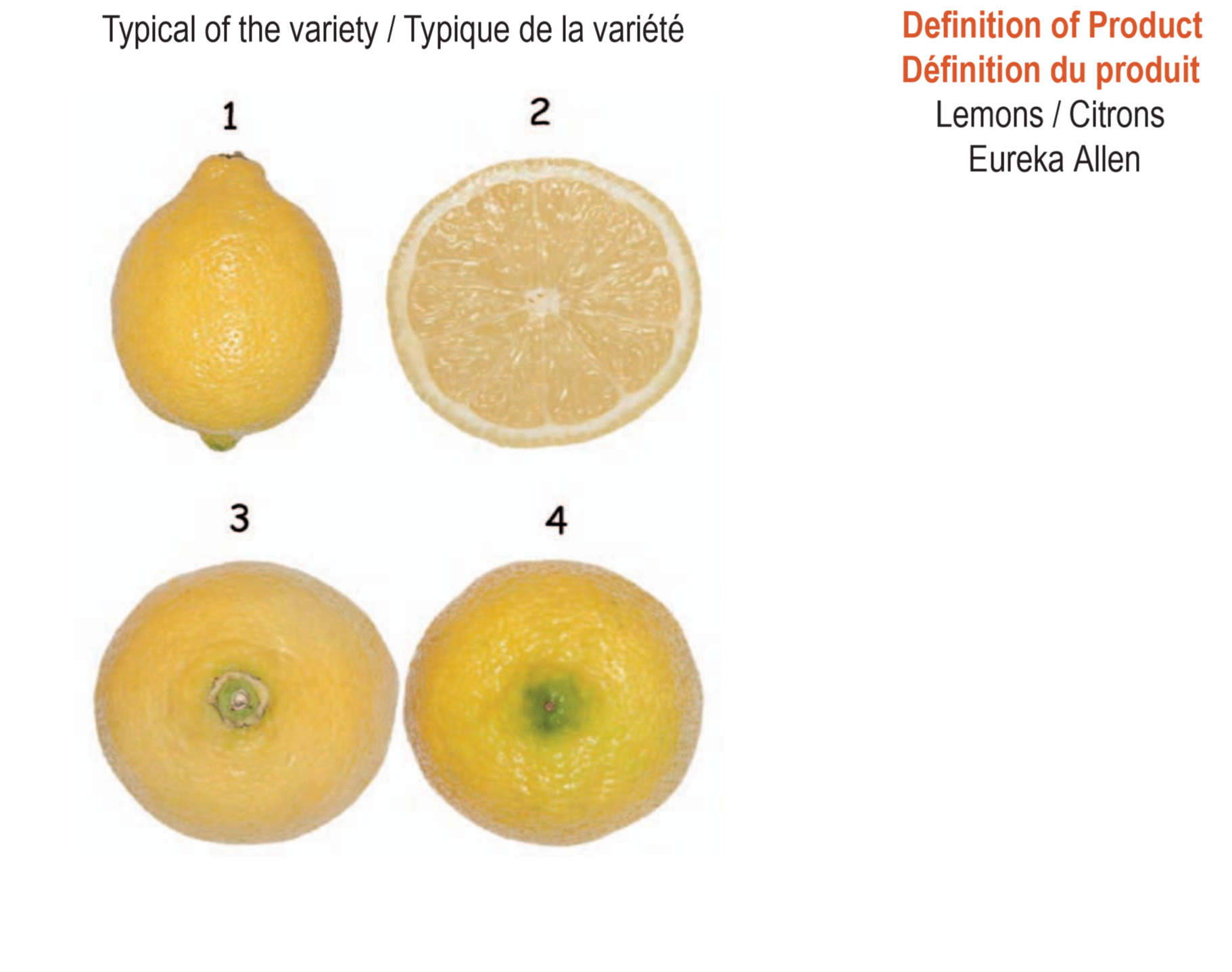
Source: OECD Citrus Fruits, International Standards for Fruit and Vegetables, OECD Publishing, Paris, 2010
2. What makes Europe an interesting market for fresh lemons?
Europe is an attractive lemon market because demand is stable throughout the year but supply is highly seasonal. Suppliers from low- and middle-income countries have the strongest position in the summer months, when European production is lower and buyers rely more on overseas origins.
Europe: Large and stable market for lemons
Europe is a large market for lemons, with clear opportunities for non-European suppliers. In 2021-2025, European imports were mainly supplied by other European countries, especially Spain. These volumes stayed high, between 928,100 tonnes in 2021 and 817,200 tonnes in 2023.
Figure 2 shows European lemon imports by main origin. Imports from Europe remained the largest source throughout the period. Imports from low- and middle-income countries were smaller but still important, ranging between 498,400 tonnes in 2022 and 403,900 tonnes in 2024.
Source: Eurostat, Norstat, SwissImpEx, UNComtrade, UK Trade, April 2026
Imports from low- and middle-income countries are closely linked to European production, especially in Spain. When Spanish supply is lower, buyers need more lemons from outside Europe. This creates opportunities for suppliers that can offer reliable quality, certification and supply during European shortages. In both the short term (1-3 years) and the longer term (over 3 years), European imports of lemons from outside Europe are likely to grow slightly, as Spanish production is already expected to drop in the 2025-2026 season. Even so, the market is not expected to face a major supply shock, as lower volumes are also likely to help keep prices stable.
Window opportunities for suppliers from low- and middle-income countries
European lemon imports show a clear seasonal pattern by origin with most imports from low- and middle-income countries between June and September. Imports from Europe are highest from late autumn to spring, while imports from low- and middle-income countries peak in summer and early autumn. This means that suppliers from outside Europe mainly enter the market when European supply is lower.
Figure 3 clearly shows that European suppliers dominated the market from November to May, reflecting the long Mediterranean lemon season, with Spain as the main supplier. Imports from low- and middle-income countries were strongest from June to September.
Source: Eurostat, Norstat, SwissImpEx, UNComtrade, UK Trade, April 2026
Per capita use shows where lemons are important in daily life and industry
Per capita use shows where lemons are important in daily life and industry. In 2024, lemon use was highest in producing countries like Greece, Italy, Spain and Portugal. This is linked not only to household consumption, but also to the use of lemons by the processing industry for juice, essential oils, peel and food ingredients.
Figure 4 shows the estimated per capita use of lemons in selected European countries. The figures are based on apparent demand, calculated as production plus imports minus exports, divided by population. This means that the figures include both domestic consumption and industrial use. So they should not be read as only including household consumption.
Source: Globally Cool, April 2026
Figure 4 shows that Greece and Italy have the highest per capita use, followed by Spain and Portugal. France, the UK and the Netherlands show lower levels. For exporters from low- and middle-income countries, this means that producing countries may be interesting during supply gaps, while import-dependent markets offer more regular demand.
Tips:
- Read CBI's tips on finding buyers and doing business with buyers for the European fresh fruit and vegetable market.
- Subscribe to newsletters and platforms to stay up-to-date on the latest news about the European lemon market. You can check out Freshplaza's global market overview on lemons, Fruitnet (Eurofruit) and FreshFruitPortal.
3. Which European countries offer the most opportunities for fresh lemons?
Europe is a major market for fresh lemons. The biggest opportunities for fresh lemons coming from low- and middle-income countries are in the high-volume markets of the UK, Italy and Portugal. The Netherlands serves as a gateway for wider European distribution.
Source: Eurostat Comext and UK Trade, March 2026
The Netherlands: Trade hub for conventional and organic lemons from non-EU suppliers
The Netherlands is the main European entry point for lemons from low- and middle-income countries. Imports peaked at 167 thousand tonnes in 2022, dropped to 118 thousand tonnes in 2024, and then rose strongly to 175 thousand tonnes in 2025. This reflects the Dutch role as a trade hub, with re-exports to other European countries.
Although volumes fluctuated, the overall trend was positive, with average annual growth of 4%. Imports reached their highest level in 2025, underlining the Netherlands' strong position in the European lemon trade. Per capita lemon use in the Netherlands is moderate, at 3.3 kg per year on average for 2021-2024. This confirms that the country is more important as a trade hub than as a large consumer market.
For lemon suppliers, it can be beneficial to look for importers in the Netherlands. In the off-season, the Netherlands imports large quantities from outside Europe. The imported lemons – citroenen in Dutch – are not only used within the Netherlands, they are also redistributed across Europe. Dutch imports increase strongly between June and September. This period offers the most potential for non-European suppliers.
Figure 6: Fresh lemons in a Dutch supermarket
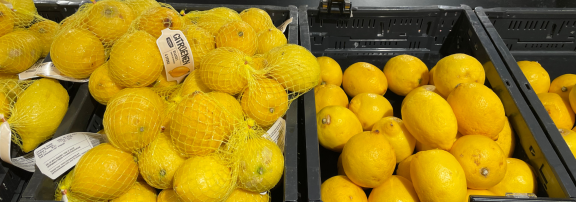
Source: Globally Cool, April 2026
South Africa strengthened its position in 2021-2025, becoming by far the Netherlands' main lemon supplier with more than 135 thousand tonnes in 2025. At the same time, Argentina lost ground at 30 thousand tonnes, while Egypt grew steadily from a small base and Türkiye's role declined sharply. Overall, Dutch sourcing became much more concentrated around South Africa, pointing to a clear shift in the country's lemon supply pattern.
Organic lemons
The Netherlands is Europe's largest importer of organic lemons from outside Europe. Imports remained stable at around 8-9 thousand tonnes in 2020-2024. South Africa is the leading supplier, followed by Chile, Peru and the Dominican Republic. This reflects the Dutch role as both a consumer market and Europe's main distribution hub for organic fresh produce.
For exporters from low- and middle-income countries, the Netherlands remains the best entry point for organic lemons, especially for supplying retailers and specialised organic importers. All major Dutch supermarket chains currently offer both organic and conventional lemons, reflecting the broad availability of organic options. The table below presents the origin calendar for organic lemons at the Dutch supermarket chain Jumbo.
Table 2: Seasonal origin calendar for organic lemons, example from the Dutch food retail chain Jumbo
| Month | Origin |
|---|---|
| January | Spain, Greece |
| February | Spain, Greece |
| March | Spain, Greece |
| April | Spain, Greece |
| May | Spain, Greece |
| June | Spain, Greece |
| July | South Africa |
| August | South Africa, Chile |
| September | South Africa, Chile, Argentina |
| October | South Africa, Spain |
| November | Spain, Greece |
| December | Spain, Greece |
Source: Jumbo, April 2026
Market outlook
In the short term, the Netherlands will remain the main entry point for lemons from low- and middle-income countries. Imports may fluctuate depending on re-export demand and supply from Spain and South Africa. In the longer term, the Dutch role as trade hub will stay strong, especially as European buyers continue to rely on specialised importers and logistics services.
United Kingdom: Steady growth in fresh lemon imports
In 2021-2025, UK import volumes of lemons from low- and middle-income countries grew by a yearly average of 3.4%, reaching their highest level in 2025 at nearly 50 thousand tonnes. This points to stable demand and steady long-term growth.
Per capita lemon use in the UK is relatively low and stable, at an average 2.0 kg/year in 2021-2024. This means that the UK opportunity is mainly linked to its large population, stable retail demand, and demand for premium formats such as organic and unwaxed lemons.
The British lemon market is shaped mainly by Spain and South Africa. Spain remains the leading supplier overall, but South Africa has strengthened its role and stayed by far the main supplier among low- and middle-income countries, at 42 thousand tonnes. Other low- and middle-income countries remained much smaller, with Egypt and Morocco gaining ground while Argentina lost importance.
Large retailers offer lemons in different formats, including loose and in nets. In addition, retailers offer different types of lemons, such as conventional, unwaxed, seedless and organic. For example, ASDA offers seedless lemons of the LemonGold® brand.
Organic lemons
The UK is one of the main markets for organic food products in Europe. Organic lemons are present in many British supermarkets year-round. A driving sales factor of organic lemons is that consumers are confident to use the peel for food preparations without fear of ingesting coatings and other chemical residues.
Market outlook
In the short term, British imports are expected to grow slowly, supported by stable consumer demand. In the longer term, the UK will remain a reliable end market for lemons, with steady demand for both conventional and premium products such as organic or unwaxed lemons.
Italy: Major lemon market and producer
Italy is both an important lemon market and a major lemon producer. Lemons – limoni in Italian – are deeply rooted in the country's food culture. Italy exported around 50 thousand tonnes of lemons in 2025, mainly to nearby markets like Germany, France, Austria and Switzerland. This shows that Italy is not only a consumer market but also a regional supplier.
Lemon production is concentrated in southern Italy, especially Sicily, with smaller but specialised production areas in Calabria and Campania. Sicily is by far the country's main citrus region. Campania is much smaller, yet includes famous lemon areas such as Amalfi and Sorrento. At the same time, the sector faces growing pressure from drought, heat, pests and diseases. These risks affect both quality and harvest timing.
Lemons are used mainly as an ingredient. They are popular in drinks, seasoning, juice, zest, essential oils, liqueurs and candied products. CSO Italy data for 2024 show that 67% of Italian households buy lemons, with an average annual purchase of 5.46 kg. Retail accounts for about 85% of sales volumes, with organic lemons holding a relatively strong 15% share. This reflects the importance of lemons in everyday cooking and food preparation. The total per capita lemon use in Italy is even higher, at an average 8.0 kg/year in 2021-2024. This reflects the strong role of lemons in Italian food culture, retail sales and processing.
Italy also remains one of Europe's leading importers of lemons from low- and middle-income countries, though imports have weakened in recent years. Over 2021-2025, volumes declined by an average of 2.9% a year, despite a slight recovery in 2025, reaching 41 thousand tonnes. This suggests that the market is still sizeable but offers less growth potential than some other European countries.
Spain and South Africa are the main suppliers to Italy, but their roles have shifted. Spain's exports to Italy have been decreasing since 2021, while South Africa's have increased. In 2025, South Africa became Italy's leading supplier, with almost 30 thousand tonnes. Argentina lost ground, while Egypt remained a very small but gradually growing supplier.
Organic lemons
Italy produces organic lemons itself, but also imports small volumes during periods when domestic supply is insufficient. Organic imports from outside Europe – mainly from Chile and Peru – remained below 120 tonnes in 2021-2024. For exporters, this makes Italy a niche market rather than a high-volume destination. The best opportunities arise during the Italian off-season or when domestic production is affected by weather or pest pressure.
Market outlook
In the short term, imports will continue to complement domestic production, especially when local supply is limited. Italy's lemon production is under pressure from irregular weather and higher pest pressure, which is likely to keep local supply less stable. In the longer term, Italy will remain a market shaped by both domestic production and imports. If these production risks continue, suppliers from low- and middle-income countries may find more opportunities, especially if they can offer reliable off-season supply and stable quality.
Portugal: Local production and imports shape the lemon market
Portugal is an import market as well as a lemon-producing country. In 2021-2025, imports from low- and middle-income countries fluctuated strongly, with imports falling to 27 thousand tonnes in 2023 and 2024 before recovering to 38 thousand tonnes in 2025. Per capita lemon use in Portugal is above the European average, at 4.9 kg/year for 2021-2024. This supports regular demand, especially for household cooking, drinks, fish dishes and desserts.
Domestic production adds another layer to the market. Production is concentrated mainly in the Algarve; Citrinos do Algarve PGI highlights major growing areas like Silves, Tavira, Loulé, Faro and Portimão.
Portuguese lemons are especially linked to a strong culinary tradition. Local lemons are described as thin-skinned and very juicy, with production peaks around December-January and again in June-July. Consumers use lemons – limões in Portuguese – mainly in the kitchen, for juices, marinades, fish dishes, desserts and drinks. This makes lemons a practical and versatile product in Portuguese households.
South Africa was by far the leading low- and middle-income country supplying Portugal throughout 2021-2025. Imports from this country rose from almost 28 thousand tonnes in 2021 to 33 thousand tonnes in 2025. Spain remained an important supplier, but its exports to Portugal declined by almost 31%. Argentina lost ground even more sharply, with volumes dropping from 9 thousand tonnes to a little over 4 thousand tonnes.
Although Portugal produces lemons itself, it still depends heavily on imports to meet market needs. For exporters from low- and middle-income countries, the main opportunity lies in supplying a market that combines domestic production with continued demand for imported lemons.
Organic lemons market depends on European supplies
Portugal has an established organic food market, but imports of organic lemons from outside Europe remain very limited. The market relies chiefly on domestic production and supplies from other European countries, especially Spain. For exporters from low- and middle-income countries, opportunities exist mainly during temporary supply shortages rather than as a regular export destination.
Market outlook
In the short term, imports may continue to fluctuate depending on domestic production and price levels. In the longer term, Portugal is expected to remain a smaller but stable market, with opportunities mainly in years when local supply is weaker.
Romania: Price-sensitive market open to new suppliers
Romania is a price-sensitive lemon market, but weaker supply from Türkiye is creating room for alternative suppliers. Romania remained an important importer of lemons from low- and middle-income countries in 2021-2025. Import volumes stayed stable at around 35–37 thousand tonnes in 2021-2024, before falling sharply to 24 thousand tonnes in 2025. This points to steady underlying demand, but also clear sensitivity to supply disruptions and higher prices.
Romania is primarily a consumption market. Per capita lemon use in Romania is moderate, at an average 3.5 kg/year in 2021-2024. This supports stable household demand, but the market remains sensitive to price increases. In 2025, supply from Türkiye and southern European producers weakened, especially because Türkiye faced severe frost and lower citrus yields. Lower availability raised lemon prices, which reduced Romanian purchasing volumes.
Türkiye remained by far the leading supplier from low- and middle-income countries to Romania throughout 2021-2025. However, its shipments fell by about 43%, from 34 thousand tonnes to just over 19 thousand tonnes. Argentina stayed a small and volatile supplier, with volumes below 2 thousand tonnes. Egypt recorded the strongest growth, with exports rising from 286 tonnes in 2021 to almost 2 thousand tonnes in 2025. This suggests that Romanian buyers are more and more willing to source from alternative origins when Turkish supply tightens.
In Romania, lemons – lămâie in Romanian – are used mainly as a kitchen and beverage ingredient. They are common in lemonade, tea, fish soup, salads, marinades, cakes, syrups and desserts. This points to a market where lemons are mostly bought for everyday flavouring and household use rather than for premium or niche consumption.
Market outlook
In the short term, import volumes may remain under pressure if prices stay high and supply from Türkiye remains limited. In the longer term, Romania offers growth potential, as buyers are open to new suppliers like Egypt. However, the market is likely to remain price-sensitive.
Bulgaria: Price-sensitive market with steady household use
Bulgaria is a price-sensitive lemon market, but lemons remain a common product in household drinks and cooking. In 2021-2025, Bulgaria remained an important European importer of lemons from low- and middle-income countries, though import volumes declined by a yearly average of 7.3%. Imports were fairly stable until 2024, but then fell sharply to 24 thousand tonnes in 2025, the lowest level in the period. This suggests that demand held up for several years before weakening.
Bulgaria is mainly an end market. As the country has very limited domestic lemon production, it depends on imports throughout the year. This gives suppliers from low- and middle-income countries a regular role in the market, even if volumes are modest compared to larger European destinations.
Türkiye was by far the dominant supplier from low- and middle-income countries to Bulgaria throughout 2021-2025, yet shipments fell from 31 thousand tonnes to almost 23 thousand tonnes. South Africa remained a much smaller supplier, but its exports grew from 505 tonnes to 879 tonnes. Argentina moved in the opposite direction, with volumes falling from 573 tonnes to 250 tonnes.
Lower Turkish production and higher prices appear to have reduced Bulgarian lemon imports. This suggests that the Bulgarian market is price-sensitive. When prices rise, buyers may reduce volumes or limit purchases to the most competitive origins.
Lemons – лимони (limoni) – are widely used in Bulgarian households. Per capita lemon use in Bulgaria is moderate, at 3.6 kg/year on average in 2021-2024. They are common in drinks and cooking, including lemon water, lemonade-style drinks, cocktails, salads, fish dishes, soups and desserts. Lemons are also linked to home remedies, especially for colds and throat comfort. This supports steady retail demand, even if total import volumes can fluctuate.
Market outlook
In the short term, imports may stay volatile, especially if prices remain high or supply from Türkiye is unstable. In the longer term, Bulgaria will remain a steady but price-sensitive market, with opportunities for competitive suppliers that can offer reliable volumes at affordable prices.
Tips:
- Use Dutch importers if you want to reach several European markets. The Netherlands is the main entry point for lemons from low- and middle-income countries and a strong hub for re-exports.
- Target the UK, Italy and Portugal if you can offer stable quality, retail-ready supply and premium options such as organic or unwaxed lemons.
- Target Romania and Bulgaria only if you can compete on price and offer reliable volumes. These markets are more sensitive to price increases.
- Check supermarket assortments in your target markets to understand common varieties, packaging and product types – for example: Albert Heijn (Netherlands), Tesco (UK), Coop (Italy), Continente (Portugal), Lidl (Romania), Kaufland (Bulgaria).
- See our studies on exporting fresh fruits and vegetables to the Netherlands, Germany and the UK for more information on the leading European markets.
4. Which trends offer opportunities or pose threats in the European fresh lemons market?
In Europe there is a strong focus on sustainable agricultural production. As a result, sustainability is an important driver in the European market for fresh lemons. European consumers are more and more health-conscious. They prefer natural lemons that are free from chemicals. Opportunities to export fresh lemons to the EU vary per season, as climate volatility affects the EU lemon market.
Focus on sustainability
Sustainability is now a standard practice in the fruit and vegetables sector. European buyers want produce that is sourced responsibly, and they expect a clear, traceable supply chain. In major importing markets like Germany, the Netherlands and the UK, sustainable sourcing is a top priority. You will need to meet stricter sustainability requirements from European buyers more and more often. Sustainability includes both environmental impact and social working conditions.
An important international sourcing and distribution company for organic fresh produce in the Netherlands is Eosta. The company supplies retailers and wholesalers across Europe. They place strong emphasis on sustainable business practices. This includes climate and biodiversity footprint reduction, fair partnerships and transparent sourcing. Their lemons are certified organic and meet GRASP and GLOBALG.A.P. standards. They source lemons from farms in South Africa, Türkiye, Argentina, Peru and Chile.
One sustainable lemon supplier of Eosta is the South African company Groenheuwel Boerdery. They apply several sustainable business practices, including:
- Renewable energy: The farm has installed 2,775 solar panels, allowing the warehouse to operate mostly on solar power. This lowers electricity costs and reduces their carbon footprint.
- Organic citrus farming: The farm has grown citrus fruit organically since 2001. They avoid the use of synthetic fertilisers and pesticides, which helps cut CO₂ emissions.
- Soil care: The farm improves soil quality with compost made from wood chips, straw, manure and organic waste. By not using synthetic agrochemicals, they support soil microbiology and keep the soil healthy.
- Social responsibility: Employees are not exposed to harmful agrochemicals, creating a safer work environment. The company invests in employee well-being through community activities, housing, and education and training.
Read more about the sustainable business practices of Eosta's other lemon suppliers from South Africa and Türkiye: Hexrivier Citrus, Modderfontein farm, Orex Export, and Tareks.
Organic lemons: small but clear niche
Organic lemons are a small but clear niche in the European lemon market. Most of the major supermarket chains in the top European importing countries sell organic lemons, like Jumbo (Netherlands), REWE (Germany), Carrefour (France), and Sainsbury's (UK). In 2024, Europe imported 11,100 tonnes of organic lemons from outside Europe. This volume was slightly higher than in 2023, but still below 2021 and 2022 levels. This shows that demand exists but that this isn't a mass market.
The Netherlands is the main entry point. In 2024, it imported 8,300 tonnes, equal to about 75% of total organic lemon imports from outside Europe. South Africa was the leading supplier, followed by Chile, Peru and the Dominican Republic. Spain was the 2nd largest destination, with 2,100 tonnes, mainly from Peru.
Most organic lemons in Europe are still sourced from European suppliers, especially Spain. In 2023, organic lemons accounted for 21% of Spain's total cultivated area. However, non-European suppliers can find opportunities in the European off-season, when local organic supply is lower. Exporters need organic certification, strong traceability and reliable residue control. This is especially important because consumers often use lemon peel in cooking and drinks.
Tips:
- Make sustainability part of your sales offer. Show buyers what you do on water use, soil health, energy use, worker safety and traceability. Use clear evidence, such as certification, audit results or farm-level data.
- Check whether organic certification is commercially useful before investing in it. Organic lemons are a niche market, so first ask importers whether they need your origin, variety and supply period.
- For more details on sustainability standards and organic certification, see the CBI studies on entering the fresh lemons market and on buyer requirements for fresh fruit and vegetables.
- Use Dutch importers if you want to enter the European market with organic lemons. The Netherlands imports the largest quantities of lemons from outside Europe and is the biggest importer of organic agri-food products. Dutch importers are experienced with the different requirements across Europe, as they redistribute lemons throughout the continent.
Opportunities depend on the season: Impact of climate volatility on the European lemon market
Lemon production in the EU is expected to fall for the 2nd consecutive year. In the 2023-2024 marketing year, total production reached 1.7 million metric tonnes. However, for the 2025-2026 season production is predicted to drop to around 1.3 million metric tonnes. Spain and Italy are the two main lemon producers in the EU, with Spain accounting for about 65% of the total production and Italy for nearly 30%.
The expected decrease in 2025-2026 is mainly due to lower yields in Spain. Spanish lemon production is forecasted to decline by 18% compared to the previous season. This reduction is mainly linked to climate change, including heavier rainfall in spring, higher temperatures in June, and difficulties during the flowering and fruit setting. Italy is also reporting lower production levels, while Greece is expected to maintain similar production in 2025-2026. As a result, the cost per kg of lemons is likely to increase.
Due to lower EU production, lemon imports are projected to stay stable in 2025-2026. Imports from Türkiye decreased in 2024-2025. At the same time, imports from Southern Hemisphere countries like South Africa, Argentina and Brazil have increased. For the 2025-2026 season, Turkish lemon production is expected to fall by 35% because of severe cold weather and frost in March and April 2025. This leaves more opportunities for Southern Hemisphere countries.
Business opportunities in the European market vary depending on the season. Since the area planted with lemon trees continues to expand in Europe, there is a possibility of oversupply in the future, like the situation seen in the 2023-2024 season.
Tip:
- Plan your export season carefully. Your best opportunities are usually when Spanish, Italian or Turkish supply is lower, but you must also monitor supply from South Africa and Argentina. For example, use IPD's seasonal fruit calendar to see when lemons from the different supplying countries are available.
Unwaxed lemons seen as healthier
European consumers care a lot about their health. More consumers are trying to live healthier, especially by changing what they eat. Around 60% of consumers in the EU market make an effort to follow a healthy diet. They want to eat fewer processed products and avoid artificial ingredients and preservatives. A 2024 Interfel survey in 5 EU countries (the Netherlands, France, Germany, Spain and Italy) found that 81% of participants would like to eat more fruit and vegetables.
This health trend also affects the lemon market. Lemons are often treated after harvest to reduce disease and extend shelf life. However, many consumers prefer lemons that are as natural as possible and contain fewer chemical residues. As a result, more buyers pay attention to labels and product information when choosing lemons.
Unwaxed lemons are especially attractive to health-conscious consumers. Lemon peel is widely used in European cooking for baking, desserts and savoury dishes. Consumers also often add lemon slices, including the peel, to water, tea and other drinks. For these uses, unwaxed lemons are preferred.
Retailers are responding to this demand. Some supermarket chains now actively promote unwaxed lemons. For example, Sainsbury's highlighted its unwaxed lemons under the name 'Unwaxed lemons by Sainsbury's' (nowadays they are just promoted as lemons) and labels them as 'grown with care'. These lemons are promoted as ideal for zesting. ASDA also sells 'ASDA Tangy & Zesty Unwaxed Lemons' which carry a 'Quality Checked' label.
Figure 7: Label on organic lemons in Germany stating 'Peel is suitable for consumption'
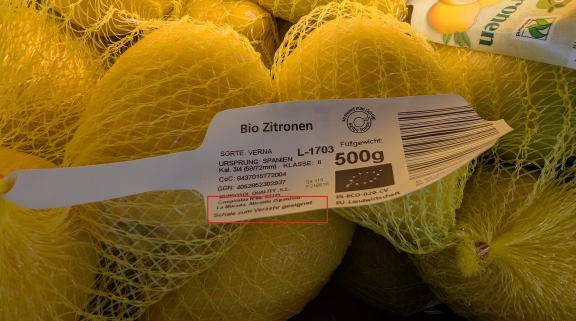
Source: Globally Cool, April 2026
The EU is also drafting stricter MRLs for several pesticides, which includes citrus fruits. The draft regulation of the European Commission states that for the active substance fenpropathrin, the existing MRL in citrus fruits is not substantiated by sufficient toxicological data. So it is proposed to lower the MRL to the LOQ (Limit of Quantification). Be aware that this is a draft: so far it has not been adopted by the European Commission.
Tips:
- Follow European pesticide rules closely. Check the EU Pesticide Database before exporting and ask your buyer whether they apply stricter private residue limits.
- Offer unwaxed lemons only if you can guarantee strong peel quality and low residue risk. This is important because consumers often use lemon peel in drinks, baking and cooking.
- Read CBI's trends study on fresh fruit and vegetables to understand how sustainability, health and climate risks are changing European buyer expectations.
- Use your web browser's built-in translation function to translate the webpage into your preferred language.
Globally Cool carried out this study on behalf of CBI.
Please review our market information disclaimer.
Search
Enter search terms to find market research