

Entering the European market for fresh lemons
To export lemons to the European market, you should follow strict legal and buyer requirements. European suppliers dominate the lemon market for a large part of the year, especially those from Spain. Competition from outside Europe comes from South Africa, Argentina and Türkiye. As a non-EU supplier, your biggest window of opportunity is to supply the European market from June through September.
Contents of this page
1. What requirements and certifications must fresh lemons meet to be allowed on the European market?
Fresh lemons must meet the general requirements for fresh fruit and vegetables. You can find these in the general buyer requirements for fresh fruit and vegetables on the CBI market information platform. You can also use My Trade Assistant, which provides an overview of export requirements for lemons (use Combined Nomenclature code 08055010).
What are mandatory requirements?
If you want to export lemons to the European Union (EU), your product must meet strict food safety and quality requirements. These include control of pesticide residues, contamination control and phytosanitary regulation. Below is a summary of the main legal requirements to keep in mind when exporting lemons.
Avoid pesticide residues and contaminants
The EU sets limits on how much pesticide is allowed on food. These limits, called maximum residue levels (MRLs), are set under Regulation (EC) No 396/2005. Pesticide residues are one of the crucial issues for fruit and vegetable suppliers. This is particularly important for lemons, as the skin can also be consumed. Products containing more pesticides than allowed will be withdrawn from the market. The same applies if your product contains contaminants like heavy metals.
Products that fail to meet European food legislation are reported through the Rapid Alert System for Food and Feed (RASFF), involving for example the detection of chlorpyrifos-methyl and prochloraz in lemons from Türkiye or unauthorised pesticides found in lemons from Iran. In 2025, the RASFF database received 15 notifications for lemons.
Be aware that buyers in several EU member states – Germany, the Netherlands, the UK and Austria – use stricter MRL requirements than the ones laid down in European legislation. Also, the EU is drafting stricter MRLs for several pesticides, also for citrus fruits.
Tips:
- Check the EU Pesticide Database with the product code 0110030 (lemons), to see which limits apply to lemons.
- Apply Integrated Pest Management (IPM). IPM is an agricultural pest control strategy that involves an integrated approach to prevent harmful organisms and keep the use of pesticides within acceptable levels.
- Make sure that contamination of lead in lemons remains below 0.10 mg/kg and cadmium below 0.020 mg/kg, in accordance with EU Regulation 2023/915 on maximum levels for certain contaminants in food (consolidated version 8-10-2025).
Phytosanitary regulation
European Regulation (EU) 2016/2031 and Regulation (EU) 2019/2072 require lemons to be subject to plant health inspections before being introduced into the EU market. Other requirements are:
- Lemons must originate from a country or area recognised as free from Tephritidae (fruit fly);
- No sign of Tephritidae should have been observed at the place of production or in its immediate surrounding area;
- Lemons must have been subjected to an effective systems approach or post-harvest treatment to ensure they are free from Tephritidae.
Tip:
- Before starting with your exports, contact your country's National Plant Protection Organisation (NPPO) to ensure that the plant health authority can meet the phytosanitary requirements.
Quality standard
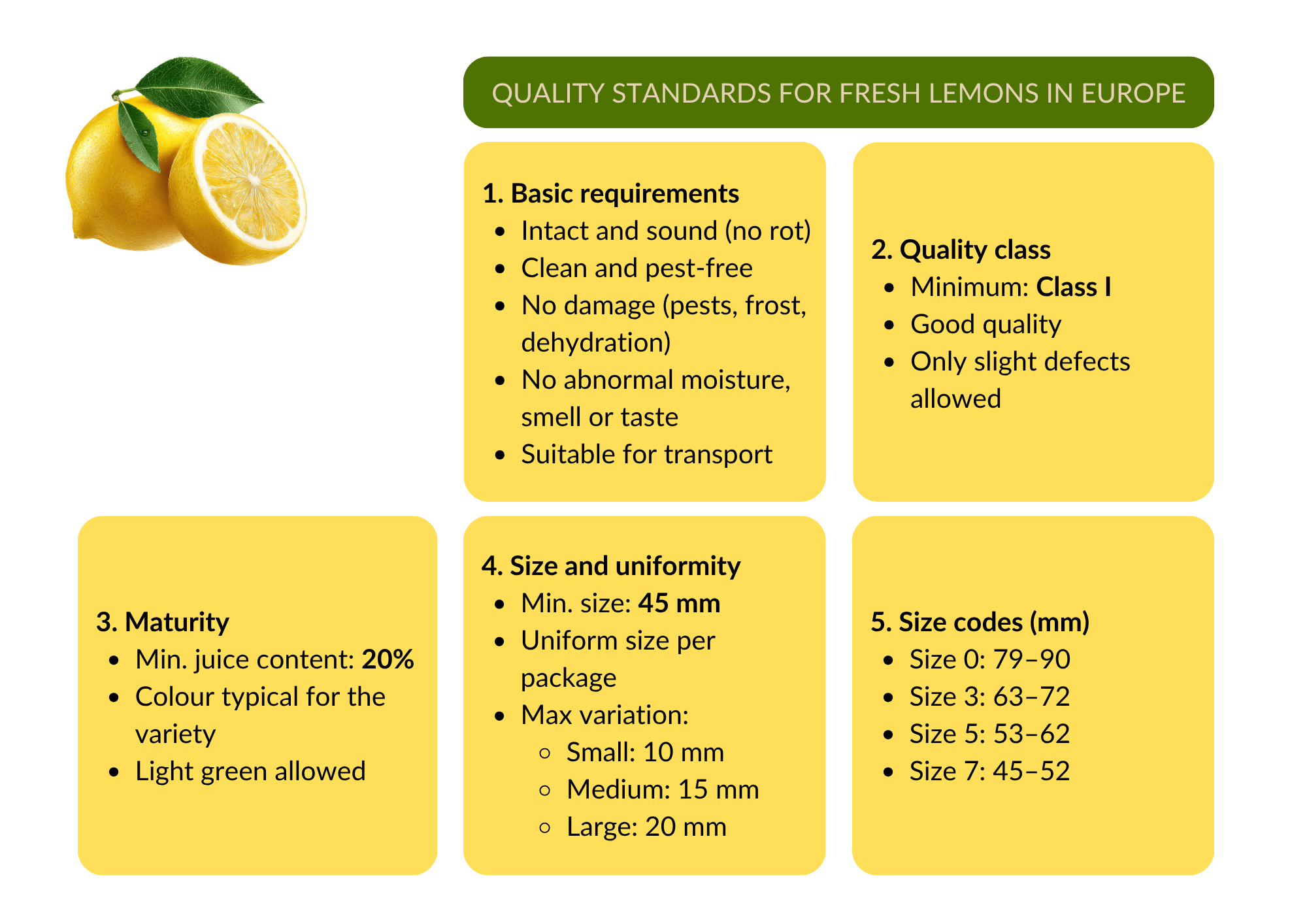
Product quality is very important to European buyers. There are several factors that determine the quality of lemons. These are listed in the available product standards for citrus fruits, such as the UNECE standard for citrus fruit (2025 edition).
Figure 1: Summary of quality standards for fresh lemons
Source: UNECE standard for citrus fruit, 2025 edition.
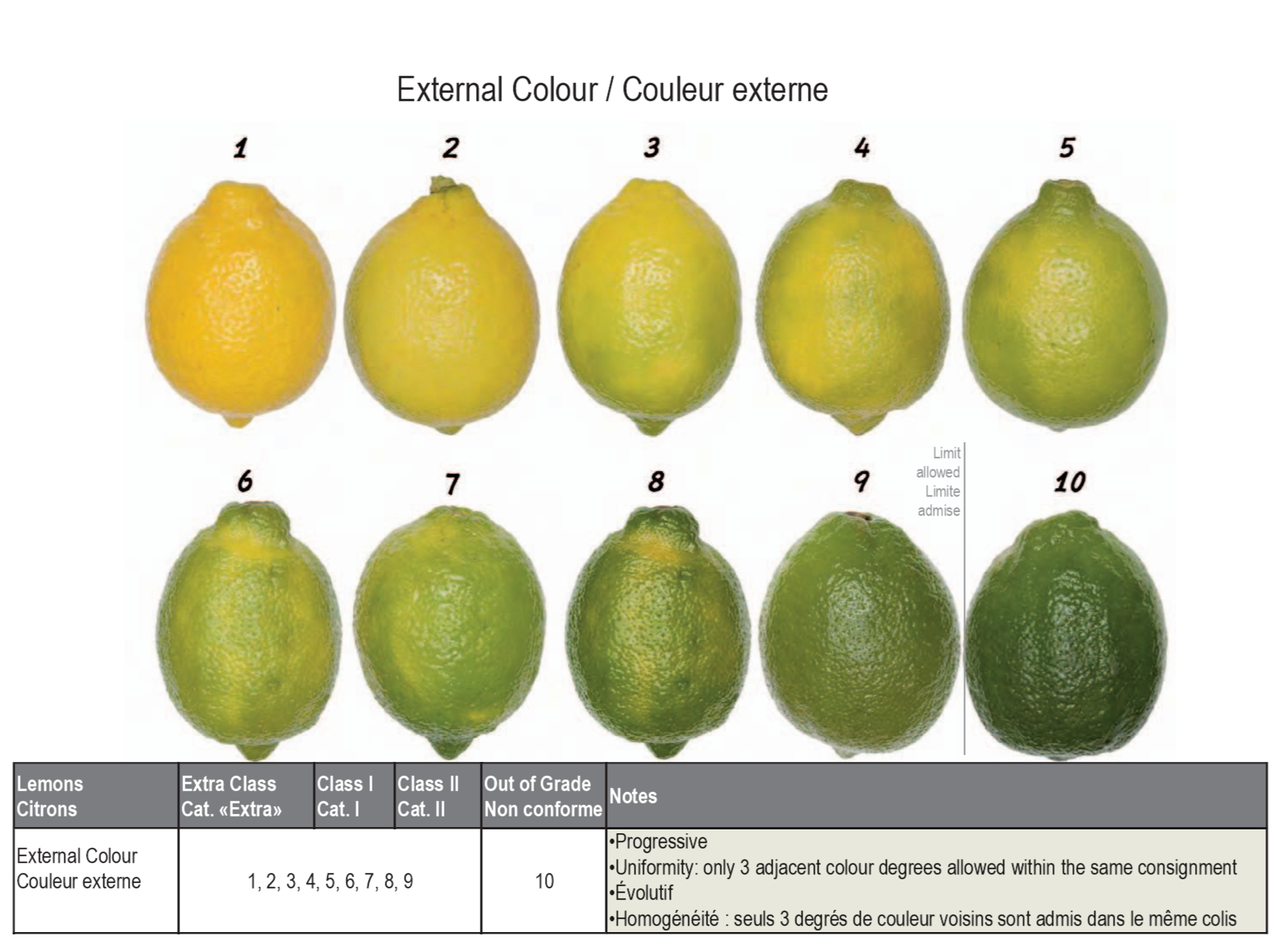
Figure 2: Lemon grading according to external colour
Source: OECD, Citrus Fruits, International Standards for Fruit and Vegetables, OECD Publishing, Paris, 2010
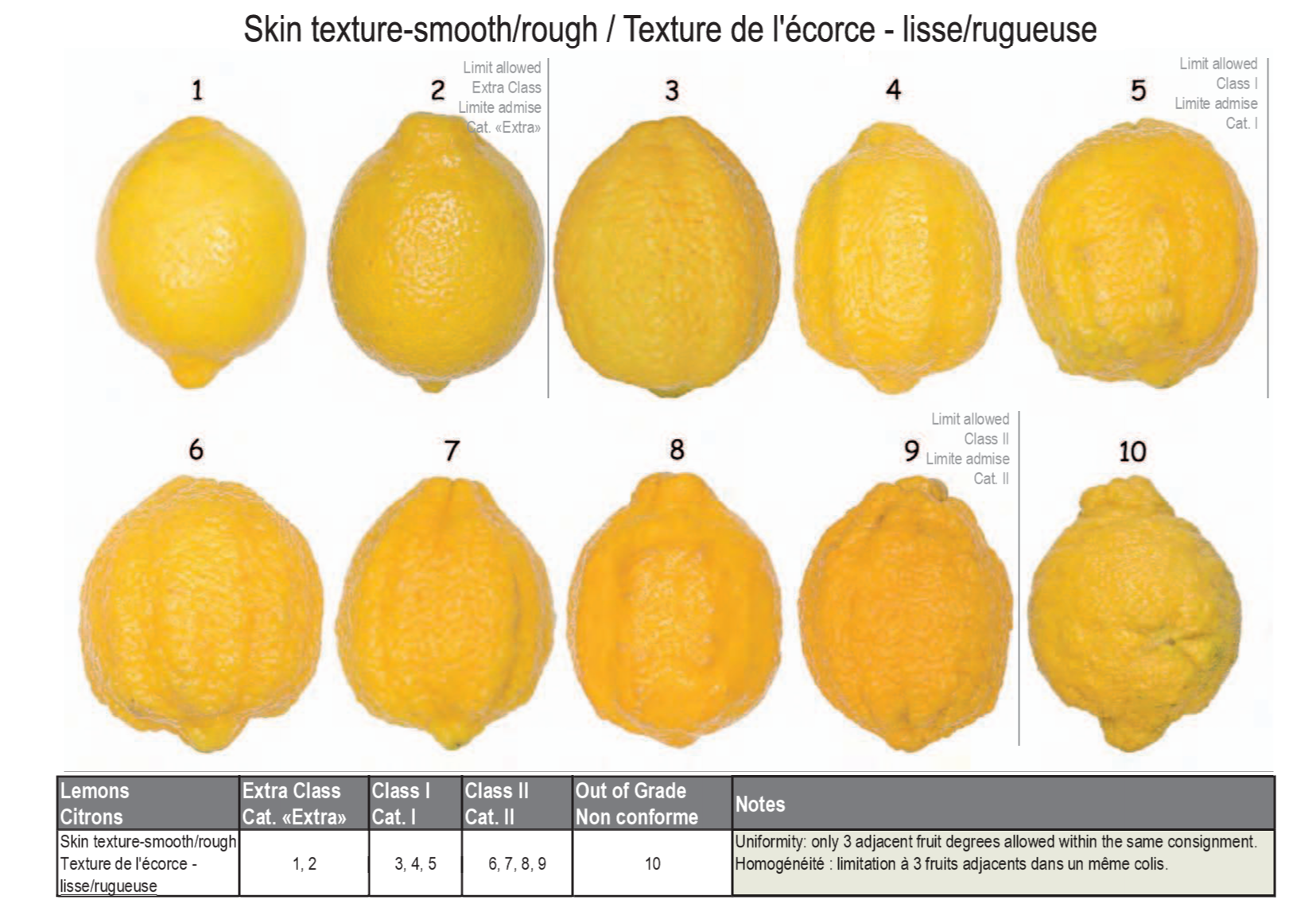
Figure 3: Lemon grading according to skin texture
Source: OECD, Citrus Fruits, International Standards for Fruit and Vegetables, OECD Publishing, Paris, 2010
Tip:
- See the OECD International Standard for citrus fruit for more sample images of lemons in different classes, based on defects in shape, shape of styler, and superficial light-coloured silver scurfs and other characteristics.
Packaging and labelling
The content of each package must be uniform and contain only lemons of the same origin, variety or commercial type, quality and size, including the same degree of ripeness and development. The visible part of the content in the package must be representative of the entire content.
The lemons must be packed in such a way as to protect them properly, without becoming damaged in transport and handling. Common packaging formats are:
- Loose or organised in telescopic boxes of 10-18 kg
- Loose or organised in open-top boxes of 4-10 kg
- In nets or bags in boxes of 14-18 kg
Lemons sold in the European market must follow EU labelling rules (see the section 'Provisions concerning marking'). For a full overview of the labelling rules, check our study on buyer requirements for fresh fruit and vegetables. In addition to the general labelling requirements, you should specify the preserving agent or other chemical substances that were used during the post-harvest stage (if applicable).
Tip:
- Always talk with your European buyers about their specific packaging needs and preferences.
What additional requirements and certifications do buyers often have?
Besides the legal requirements, European buyers often have additional requirements. These can include GLOBALG.A.P. certification and compliance with social and environmental standards.
Certification
An example of certification that shows good agricultural practices is GLOBALG.A.P., a widely accepted standard and often a minimum requirement. Some retailers ask for more. For example, Albert Heijn (Netherlands) and Delhaize (Belgium) use a GLOBALG.A.P. add-on called AH-DLL GROW, which includes extra checks on hygiene, pesticide residues and contamination risks. If you want to supply these retailers, you need to meet their extra farm-level safety rules. For packhouses, buyers may also ask for GLOBALG.A.P. Produce Handling Assurance (PHA) or another recognised food safety system.
Sustainability compliance
European buyers require you to follow social and environmental standards. This holds especially for European retailers. Common recognised standards are:
- GLOBALG.A.P. Risk Assessment on Social Practice (GRASP): a GLOBALG.A.P. add-on to evaluate workers' wellbeing at the farm level;
- Sedex/SMETA: a system and audit tool that lets firms share social and environmental reports.
A common industry reference is SIFAV, a sustainability platform coordinated by IDH and supported by many European importers and retailers. Companies committed to SIFAV aim to source at least 70% of volumes from high water-risk regions under approved water management standards, and at least 90% of volumes from high- and medium-risk countries under approved social standards. This means buyers may expect certified or verified produce more and more often from lemon suppliers.
Tips:
- Apply standards that help you become a sustainable business and are requested by your buyers. See the SIFAV basket of social standards and water management standards to select widely accepted standards in Europe.
- For more on sustainability certification for fresh fruits and vegetables, read our tips on becoming environmentally sustainable and being socially responsible.
- For other additional requirements like payment and delivery terms, see CBI's study on buyer requirements for fresh fruit and vegetables and tips for doing business with European buyers.
What are the requirements for niche markets?
Organic lemons are the main niche market for fresh lemons in Europe.
Organic certification
Europe has a relatively small market for organic lemons compared to conventional lemons. Organic lemons are mostly sourced from within Europe. An important supplier of organic lemons is Spain. In 2023, organic lemons represented 21% of the total cultivated area in Spain.
Although small in comparison to the conventional market, demand for organic lemons is steady. Currently there isn't enough supply of organic lemons in the European low season. This creates opportunities for new certified suppliers during the export window from June to September.
If you want to market organic lemons in Europe, you must follow Regulation (EU) 2018/848. This regulation sets out the rules on production and labelling for organic products. Make sure you understand these rules before starting the certification process.
Tip:
- Carefully evaluate organic production. Organic certification can be expensive, and yields are lower than for conventional production.
2. Through which channels can you get fresh lemons on the European market?
You can get fresh lemons on the European market through importers, producer groups, and large distribution channels of supermarkets. For small and medium-sized suppliers, it is best to work together with experienced importers. The largest segment is Class I lemons.
How is the end market segmented?
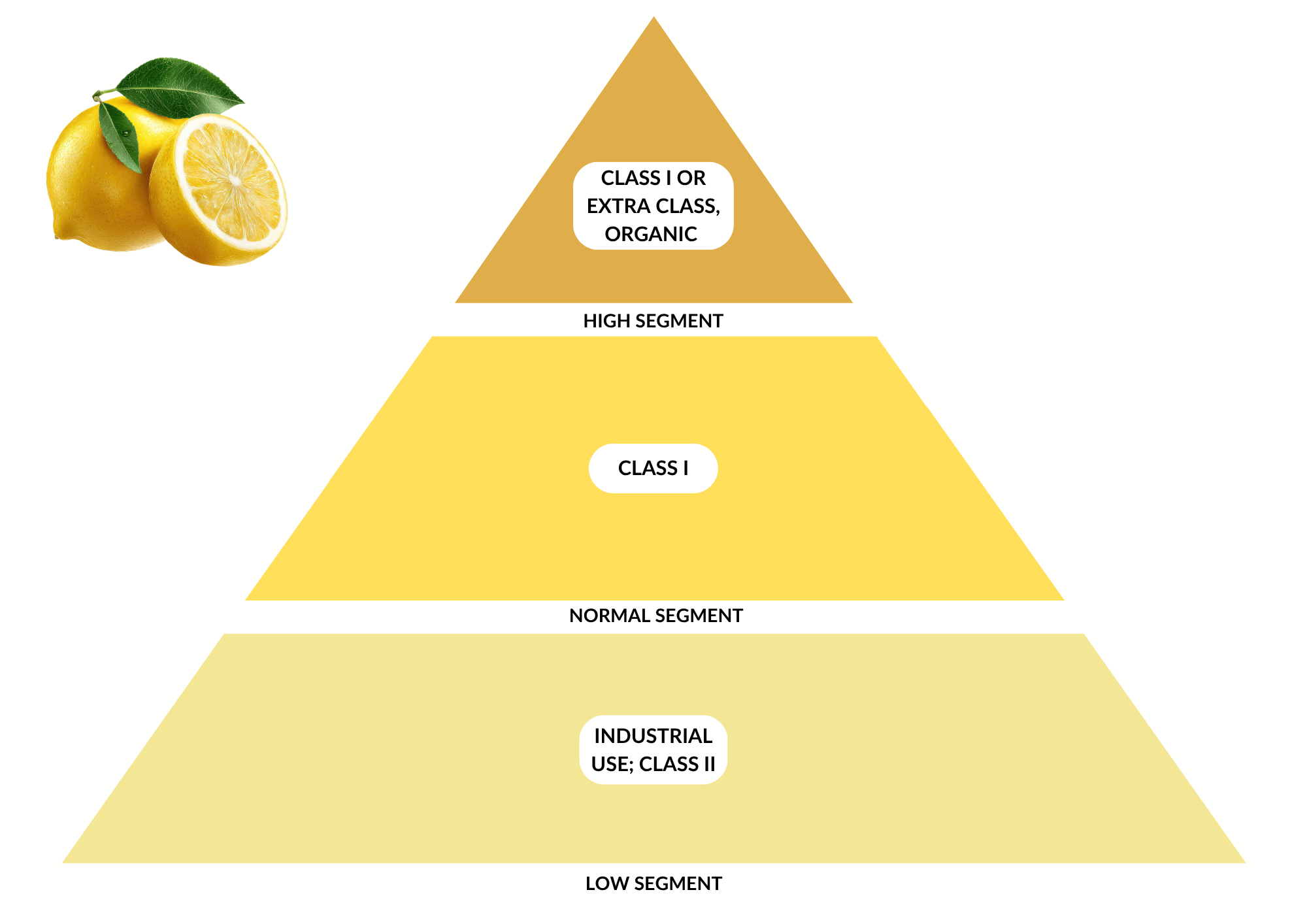
The market for fresh lemons can be divided into 3 segments: high, normal and low.
Figure 4: Market segments for fresh lemons in Europe
Source: Globally Cool, May 2026
Within the normal segment, supermarkets represent the largest group. In supermarkets, you typically find Class I or Extra Class fresh lemons. For retailers, the way the fruit looks is very important. The food service industry is also part of the mainstream segment. In this channel, taste is more important than in retail, as lemons are often used for culinary purposes.
Organic lemons are part of the high segment. They can be found in specialised organic-food shops (like Ekoplaza), as well as in the food service industry (like Bidfood) and mainstream supermarkets. For example, in the Netherlands all major supermarkets (like Albert Heijn and Jumbo), including discount retailers (like Lidl), sell organic lemons in addition to conventional ones.
Class II lemons are mostly used in the food processing industry; they are also available in ethnic shops and street markets, and are supplied by foodservice distributors (like METRO) too.
Tip:
- Focus on supplying lemons of Class I or higher to the European market. In addition, focus on a specific segment and its main criteria. For example, major criteria for supermarkets are quality, price and looks, whereas in the foodservice industry quality, price and taste (rather than looks) are important.
Through which channels do fresh lemons land on the end market?
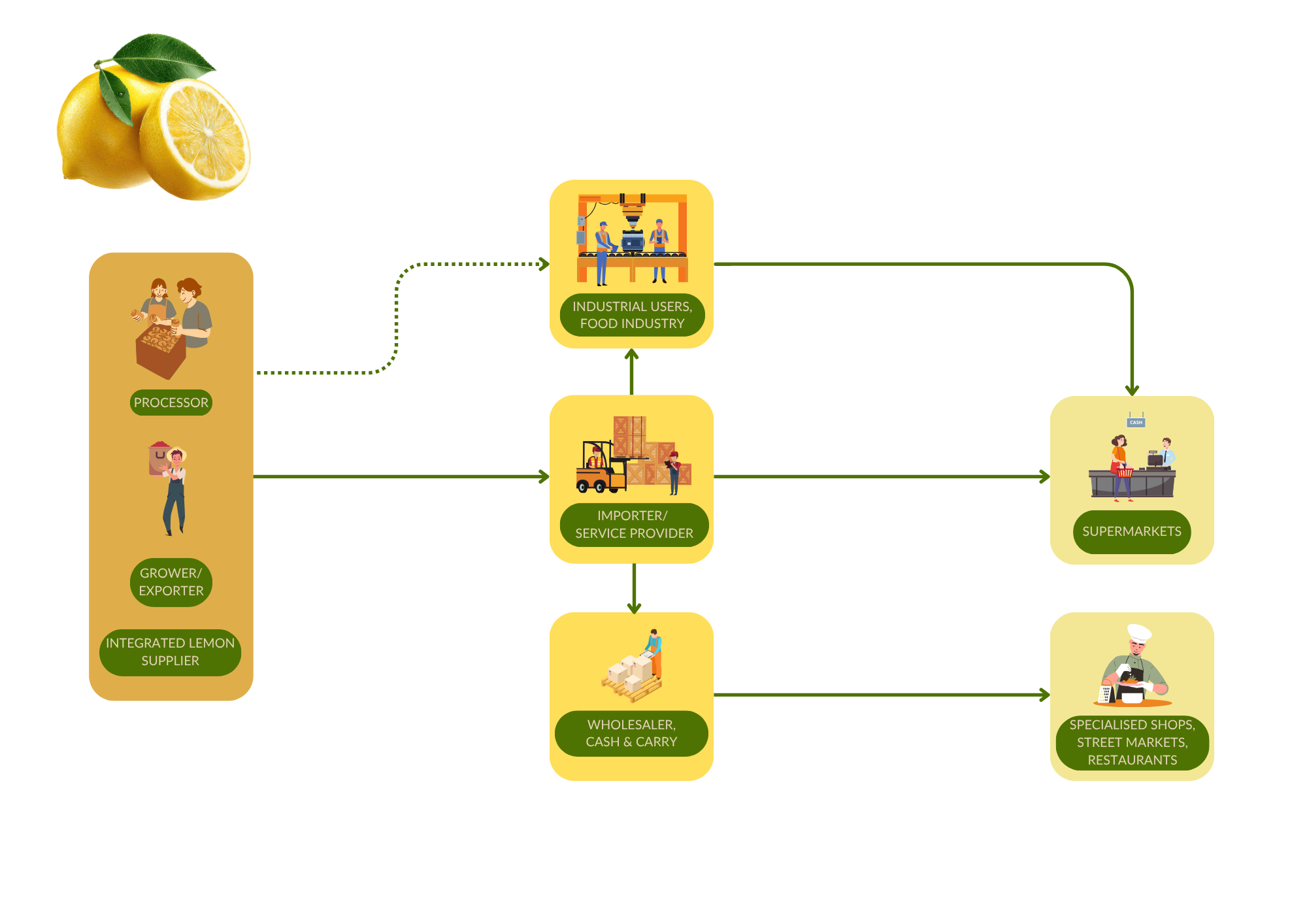
Figure 5 shows an overview of the different market channels to get lemons on the European market. The most important market channels for fresh lemons are importers and service providers.
Figure 5: Market channels for fresh lemons to Europe
Source: Globally Cool, May 2026
Importers
Importers serve as the primary entry point to the European market. Their responsibilities include managing customs clearance, overseeing quality control and distributing fruit across the European market. Importers work with different end clients and therefore have good knowledge of the requirements of multiple market channels. Clients include supermarkets, wholesalers and cash-and-carry stores.
Types of importers include:
- Importers of fruits and vegetables, like Beva Fruits International (France) and JEM Fruits (UK);
- Specialised importers like Direct Source International (Netherlands), focused on citrus fruits and grapes; and
- Importers specialised in organic fruits and vegetables, like Eosta (Netherlands).
Service providers
Successful supermarket suppliers often position themselves as service providers, organising the supply chain based on what their customers need – from sourcing products to packing, repacking and branding. To be a service provider, you need to be able to deliver the right quality and ensure reliable logistics.
For example, the Dutch company Bakker Barendrecht has a strategic partnership with supermarkets Albert Heijn (Netherlands), Delhaize (Belgium) and Albert (Czech Republic). AMT Fresh partners with Tesco (UK) for global fresh produce, including lemons, covering every part of the value chain: sourcing, category management, logistics and finance.
Food retail programmes
Supermarkets sell most of the fresh lemons in Europe. Figure 5 shows them as the main retail channels at the end of the supply chain. Large-scale distribution is especially strong in Northern, Western and Central Europe. These large-scale food retailers often run their own programmes.
Many large retailers work with fixed food retail programmes where the retailer agrees on volumes, quality, packaging, prices and delivery planning with a service provider, importer or direct supplier. This makes supply more predictable, but it also makes entry more demanding for exporters.
European retail chains are relatively close to important lemon-production areas like Spain and Italy. For this reason, some retailers have become more involved in direct sourcing. However, this differs per retailer. Many still work through specialised importers or service providers, especially for off-season supply from outside Europe.
One company that supplies directly to food retail chains is FruitOne Europe; they are vertically integrated (grower, packer, exporter, importer and distributor) and specialise in citrus fruit and grapes. They have their own citrus farming base in South Africa and work with supplier partners in different citrus regions, allowing them to offer retail customers planned supply programmes, also outside the European season.
Wholesalers (spot market)
Traditional fruit wholesalers operate in the spot market and adjust quickly to trade fluctuations. They supply specialised shops, street merchants, restaurants, catering and hotel chains. Important wholesale markets in Europe include Rungis (France), Mercabarna and Mercamadrid (Spain), and Grossmarkt Hamburg (Germany).
Foodservice
The foodservice or HoReCA (hotels, restaurants and catering) sector relies on cash-and-carry outlets and food service distributors for its fruits supply.
Cash-and-carry stores are wholesale outlets where businesses can buy a broad range of food and non-food articles. An example is METRO, a cash-and-carry company with a strong network of international trading offices that handle food procurement around the world. The procurement of fruits and vegetables is handled by its Valencia Trading Office. They work with around 300 suppliers and producers from over 80 countries. Lemons are among their top-5 most important product categories in terms of volume.
Food service distributors provide food and non-food products to the HoReCa sector on a daily basis. They operate large storage facilities and maintain a fleet of trucks to deliver all kinds of food, and purchase fruit and vegetables from importers and wholesalers or directly from foreign suppliers. For example, the food service distributor Bidfood sources lemons from Van Gelder groente & fruit (Dutch wholesaler).
Processors
Although there is trade in Class II lemons to European processing companies, most of the processing takes place in the countries that produce the lemons (like Italy, Spain and Argentina). This processing is done by vertically integrated citrus/fruit processors like Eurofood (Italy) and Citromil (Spain).
Tips:
- Understand the seasonality of lemons in Europe. In season, European buyers will purchase lemons from within Europe and will supplement supplies with imports from outside Europe. It is essential to know when Europe's off-season period occurs.
- Use your best-quality lemons for fresh exports to Europe. Find other markets or local solutions for processing lesser-quality fruit.
What is the most interesting channel for you?
Importers are the most suitable partners for exporters from the global South. They have a solid supply chain and a strong network. Importers usually have a specialisation, which can be a specific product assortment, sourcing region, target market, or customer segment. To export lemons, look for European importers focused on general fruit and vegetables or importers specialised in citrus fruit. Some examples:
- Frutex Global (Spain): Company specialised in importing citrus fruits from the Southern Hemisphere;
- Van der Lans (Netherlands): Importer and exporter of fresh fruits and vegetables, importing mainly from the southern hemisphere. They import lemons from Egypt, South Africa and Argentina.
- NFB Import (UK): Fruit and vegetable importer that supplies to supermarkets, pre-packers and wholesale markets in the UK.
Another option is to explore partnerships with European lemon producers that supplement their domestic supply with imported lemons. Focus on companies from the largest European producing countries: Spain and Italy. Search the member list of the Spanish association for lemon and pomelo Ailimpo to find lemon producers.
To succeed in the European market, make sure to have close relationships with primary producers. Without these connections, you will struggle to meet European requirements due to a lack of direct control over your suppliers.
Tips:
- Attend European trade fairs to connect with potential buyers. Important trade fairs are Fruit Logistica (Berlin, Germany) and Fruit Attraction (Madrid, Spain).
- Read our tips for finding buyers on the European fresh fruit and vegetables market.
3. What competition do you face on the European fresh lemons market?
Spain dominates the lemon market in Europe. Suppliers from low- and middle-income countries can find opportunities during Spain's off-season. Important non-European competitors you need to consider during the off-season include South Africa, Argentina and Türkiye.
Which countries are you competing with?
Spain dominates the lemon market in Europe, accounting for 75% of all imports taking place from October to March. South Africa and Argentina fill the gap between May and September, when European supply is limited. Türkiye is in the market from October to December, at the beginning of Spain's Primofiori season, supplying especially Eastern Europe.
Source: Eurostat, UK Trade, April 2026
Spain is by far the main supplier of lemons to Europe, followed at a distance by South Africa, Argentina and Türkiye.
Source: Eurostat, Norstat, SwissImpEx, UNComtrade, UK Trade, April 2026
Spain: Main supplier in Europe
Spain is by far the dominant supplier of lemons to other European countries for most of the year. It supplies more than half of total European demand. Spain is the world's second-largest lemon producer, after Argentina, and the leading global exporter of fresh lemons. Spanish lemons are strongly preferred in Europe because of their quality, phytosanitary reliability and short distance to the main markets.
In 2024, Spain produced 920,000 tonnes, down from 1,149,000 tonnes in 2023. The main varieties grown in Spain are Fino and Verna. In the 2024-2025 season, production reached 864,500 tonnes of Fino lemons and 389,830 tonnes of Verna lemons.
In 2021-2025, export volumes declined from 591 to 508 thousand tonnes, equalling an average annual decrease of 3.7%. Even so, Spain has kept its strong lead, underlining its central role in the European lemon market.
For 2025-2026, Spain is expected to produce 18% fewer lemons, mainly because of unfavourable weather conditions. Forecasts point to 735,000 tonnes of Fino lemons (down 15%) and 292,000 tonnes of Verna lemons (down 25%). This lower supply already affected market volumes in 2025 and is likely to continue influencing the market in 2026.
One positive development is that Spanish producers improved pest control during the 2024-2025 season, supported by Ailimpo's Agefis project for phytosanitary monitoring. This has improved fruit quality and strengthened the position of Spanish lemons in the fresh market.
Spain is also a major producer of organic lemons and leads the world in organic lemon farming. In 2023, Spain's cultivated area of organic farming was 11,348 hectares, representing 21% of Spain's total lemon area and 41% of the global organic lemon area. Most organic lemons are grown in Murcia, Andalusia and Valencia.
South Africa: Most important off-season supplier
South Africa is Europe's leading non-European lemon supplier and an important off-season competitor. In 2021-2025, exports to Europe grew from 205 to 270 thousand tonnes, equalling an average annual growth of 7.2%. Europe is South Africa's main destination for fresh lemons.
South Africa is expected to export more lemons in 2026 than first estimated. In June 2026, the Citrus Growers' Association of Southern Africa raised its export forecast from 45.8 million to 49.4 million 15 kg cartons. This increase is mainly linked to favourable growing conditions in major production regions, young orchards reaching full production, higher rainfall and better fruit size.
South African lemon exports to the Middle East have become more difficult because of geopolitical disruption and adjusted shipping routes. South African citrus is still reaching that region (June 2026), but transit times and logistics costs have increased. If more South African lemons are redirected to Europe in 2026, this could put pressure on import prices during the 2026 season. However, the final effect will depend on Middle Eastern demand, shipping costs and total volume shipped to Europe.
South Africa's export season usually runs from mid-January to early October, with peak supply from late April to mid-July. Eureka is the main variety, covering about 75% of lemon orchards. South Africa's main strength is logistics. Shipments to Europe take only 7–10 days, compared to about 25 days from Argentina. This gives South African exporters an advantage in freshness, flexibility and cost. Additionally, exporters also use real-time shipment data to manage weekly volumes to the EU and avoid oversupplying the market.
Important to note is that the EU had laid down temporary measures for lemons imported from South Africa to prevent the spread of Phyllosticta citricarpa (citrus black spot) into the EU. The measures will be maintained until 31 March 2028.
Argentina: Facing strong competition in Europe
Argentina exported 80 thousand tonnes of lemons to Europe in 2025, down from 111 thousand tonnes in 2021. This equals an average annual decline of 7.8%, though exports have recovered from the very low 2024 level.
Compared to South Africa, Argentina competes less on volume and more on quality, control and long-term customer relationships. Many exporters use integrated production models, covering orchards, harvest, packing, logistics and processing. This gives them strong control from production to export.
Argentina also has long-standing ties with the European market. Strict phytosanitary and residue controls are another strength. Each container is inspected before export, and fruit that doesn't meet standards is blocked at origin. This helps protect the reputation of Argentinian lemons in Europe.
Argentina is expected to produce around 1.9 million metric tonnes of lemons in 2025-2026. Production is concentrated in Tucumán, which accounts for about 80% of national output. About 70%–75% of production goes to processing, mainly essential oils, frozen juice and dried peel. Fresh lemon exports are expected to reach 210,000 tonnes in 2025-2026.
Argentina's exports to the EU fluctuate strongly because of changes in EU production, stricter import rules and competition from South Africa. South Africa has become Argentina's main rival in Europe because of lower production and transport costs. Argentina is therefore relying more on the United States, which took 63% of its fresh lemon exports in 2024. As with South Africa, the EU has laid down temporary measures for lemons imported from Argentina against Phyllosticta citricarpa.
Türkiye: Supplying the Eastern European market
Türkiye increased its lemon exports to Europe until 2023, reaching 127 thousand tonnes. Volumes then fell sharply to 72 thousand tonnes in 2025. Over the full period, exports declined by an average of 8.5%/year.
Türkiye mainly supplies nearby and price-sensitive markets in Southeastern and Eastern Europe. Bulgaria and Romania are the main destinations, followed by Poland and Croatia. In 2025, exports to Bulgaria fell to 22.7 thousand tonnes and exports to Romania fell to 19.5 thousand tonnes. This shows that Türkiye has a strong regional position, but that its supply can be volatile.
Turkish lemon production has declined in recent years. Total lemon production reached 1.7 million metric tonnes in 2024-2025 but is expected to fall to 1.1 million tonnes in 2025-2026. This 35% drop is mainly linked to severe cold and frost in March and April 2025. Lower supply also led to higher prices in Türkiye.
Because of this, Türkiye considered a temporary export stop in April 2025, a decision that was later changed. Exporters now need to inform the Ministry of Agriculture about every export shipment. Lemon exports are expected to fall from 440,000 tonnes in 2024-2025 to 350,000 tonnes in 2025-2026.
Turkish lemons are subject to a temporary increase in official controls at the border because of pesticide residue risks. Currently, 30% of consignments are subject to identity and physical checks. Main rejection risks include fruit fly and residues above the allowed maximum levels.
Interdonato and Lamas are the main export varieties and are valued for quality and long shelf life. Türkiye's main strengths are proximity, competitive prices and established regional trade links. Its main challenges are lower production, higher input and labour costs, cold storage costs, pest pressure and stricter EU controls.
Tip:
- Monitor production outlooks for the main suppliers. Lower supply can create opportunities for new exporters. Review your market opportunities each year, as conditions can change quickly. Pay special attention to production volumes and quality in Spain and Italy, and keep track of non-EU competitors, including prices, export restrictions and trade agreements.
Which companies are you competing with?
Your main competitors outside the Spanish season are suppliers from South Africa, Argentina and Türkiye. Some companies that supply fresh lemons to the European market:
TC ExpoProductores – Spain
TC ExpoProductores is a Spanish distributor and exporter of citrus fruit. Thanks to its strategic location and strong transport network, it can deliver products quickly and efficiently. The company processes up to 100,000 kilos of fruit per day and supplies both the national and international market, including many European countries.
They continuously improve their facilities and equipment to ensure high product standards. For example, they have a Sunkist electronic grading system that can select fruit by quality, colour, and size in millimetres. This system can sort fruit into 3 grades at the same time: Extra Class, Class I and Class II. The company is also GLOBALG.A.P.-certified, guaranteeing high quality and safety standards.
Freshgro – South Africa
Freshgro Citrus Growers is a South African export company that represents 10 leading citrus farms in the Eastern Cape. The company exports fruit to more than 28 countries, including many in Europe, such as the Netherlands, the United Kingdom, France, Spain, Italy and Portugal.
All the growers are GLOBALG.A.P.-certified, ensuring safe and sustainable production that meets international food safety standards. In addition, they are members of the Sustainability Initiative of South Africa (SIZA). Almost all their growers have obtained the SIZA Ethical Audit.
On their website, the company publishes its harvest calendar to show when all their citrus varieties are available. This makes it easier for their buyers to plan their import schedules. Their lemons are available from April until September.
SA Veracruz – Argentina
SA Veracruz is a family-owned lemon company in Tucumán, Argentina. The company produces, packs, processes and exports lemons and lemon by-products. Its strength is vertical integration. It owns more than 900 hectares of GLOBALG.A.P.-certified lemon orchards and has a packing house with 16 tonnes/hour capacity. It also has an industrial plant with 80,000 tonnes/year processing capacity. Products include fresh lemons, lemon essential oil, lemon juice and dehydrated lemon peel.
The company also communicates its environmental and social actions, including carbon and water footprint measurement, gender equity and biodiversity work. Veracruz's 2024 Sustainability Report shows progress in environmental, social and governance management. The company measured a total carbon footprint of 6,665 tCO2e and keeps zero-effluent status by treating and reusing all industrial wastewater. It recovered 99.8% of waste, produced 480–580 tonnes of compost and kept native cover in 75% of buffer areas. It also trained 100% of staff on environmental topics.
Social KPIs include 461 employees, 43% women, 0 labour-rights claims and 0 child or forced labour cases. Improvements planned include SBTi-aligned decarbonisation, lower freshwater use, more recyclable waste and stronger human-rights due diligence.
Arman Citrus – Türkiye
Arman Citrus is a Turkish company based in Adana. It specialises in growing, packing and exporting citrus fruit, including to Europe. The business operates its own packing facilities, has a cold storage unit close to the orchards, and manages more than 100 hectares of farmland. The company grows 4 lemon varieties: Meyer, Interdonato, Eureka and Lamas. The different varieties allow them to supply fresh lemons from August until February. In addition, it follows GLOBALG.A.P. standards to guarantee high quality and safe agricultural practices.
Tips:
- Get to know your international competitors and clearly define your unique value proposition (UVP). Identify your competitive advantage and highlight what makes your fresh lemons different such as off-season availability, proximity to the market, specific lemon varieties, quality standards, and/or sustainability practices.
- Look for partners among exporters in Spain and Italy. They might be interested in extending their offer to their current buyers beyond their production season.
Which products are you competing with?
Fresh lemons mainly compete with limes in the European market. Both fruits are used in similar ways, especially in drinks, cooking and food preparation. They can often replace each other in salads, marinades, sauces, cocktails and soft drinks.
Limes are especially popular in the foodservice sector and in international cuisines like Asian and Latin American. They are also widely used in cocktails, for example mojitos and gin-based drinks. This has increased their visibility in restaurants, bars and urban retail markets.
Fresh lemons also compete with other citrus fruits like oranges, grapefruits and mandarins. These fruits are not direct substitutes in recipes, but they compete for shelf space, consumer attention and household spending. In price-sensitive periods, consumers may choose other citrus fruits if lemons become too expensive.
Processed lemon products are another form of competition. These include bottled lemon juice, frozen lemon juice, lemon concentrate and lemon flavourings. They are convenient and have a longer shelf life. However, they do not offer the same fresh appearance, peel use and natural image as fresh lemons.
Lemons remain more widely used than limes in European households. They are strongly linked to traditional recipes, hot drinks, baking, fish dishes and everyday cooking. They are also commonly available in supermarkets and often cheaper than limes.
Tip:
- Position fresh lemons as a versatile product for everyday use. Stress freshness, peel quality, juiciness and year-round availability. These points help fresh lemons compete with limes, other citrus fruits and processed lemon products.
4. What are the prices of fresh lemons on the European market?
Prices for lemons fluctuate based on availability, season, fruit size and country of origin. Consumer prices also vary depending on various factors such as quality, conventional versus organic and consumer packaging.
Import prices and price fluctuations
Trade prices for fresh lemons can vary depending on the availability of the fruit in Spain and other main suppliers. The most important factors affecting prices are the total lemon harvest, the season, the size of the fruit and the country of origin.
Trade prices for fresh lemons imported from outside Europe are clearly higher during the European off-season from late spring through summer and early autumn, when domestic and regional supply is more limited.
There has been a noticeable upward trend in prices over time in the last five years, with significantly higher levels recorded in 2025 across most markets, indicating tighter supply. In 2024, import prices mostly ranged between €0.70 and €1.20 per kg. In 2025, prices often exceeded €1.20 per kg.
Among importing countries, the Netherlands and Italy tend to register higher price levels, while markets like Bulgaria and Romania typically import at lower prices, although these have also increased in recent years. The UK stands out for its relatively stable price development, with fewer fluctuations compared to other markets.
Source: Eurostat Comext and UK Trade, March 2026
Retail and wholesale prices
Retail prices tend to be more stable and are less directly influenced by fluctuations in trade prices. Supermarkets operate under supply contracts, which allow them to maintain more consistent pricing levels.
Table 1 compares the consumer prices of different types of lemons in large European supermarkets. Consumer prices vary depending on factors such as organic versus conventional and size of consumer packages. For conventional lemons, the price varies from €0.32 to €0.69 per piece. Prices of organic lemons are higher, ranging from €0.50 to €0.99 per piece.
Table 1: Consumer prices of fresh lemons in large European supermarkets, € per piece
| Conventional lemons | Organic lemons | |
|---|---|---|
| Netherlands | 0.32–0.69 | 0.55–0.85 |
| France | 0.50–0.65 | 0.50–0.99 |
| United Kingdom | 0.34–0.40 | 0.65–0.85 |
Source: Globally Cool, February 2026
In the French market, the wholesale price of conventional lemons is €1.55–€2.40 per kg. Organic lemons cost €2.01–€4.94 per kg. Organic lemons from France are twice the price of organic lemons from Spain.
Price breakdown
The price breakdown of lemons depends strongly on the supply chain structure and the companies involved. In a typical supermarket programme involving an exporter, an importer and a retailer, the final consumer price can be divided broadly as shown in the figure below.
Source: Globally Cool, May 2026
In this example, around 35% of the final retail price goes to production and export. Import and freight account for about 12%, while importer handling, processing and packaging account for another 18%. Retail distribution and margin account for around 30%, and VAT makes up the remaining 5%.
Tip:
- Check current prices in the different European markets. For the French market, go to FranceAgriMer. For the German market, visit Fruchtportal and click on the latest 'Marktbericht Obst und Gemüse' link. For the Spanish market, go to Mercalicante and select the category (Frutas), product (Limón) and variety (for example 'Limón fino o primafiori').
Globally Cool carried out this study on behalf of CBI.
Please review our market information disclaimer.
Search
Enter search terms to find market research
Do you have questions about this research?
If the Spanish supply is short at the end of the Northern Hemisphere season, Argentine lemons can enter the European market earlier to fulfil demand and could keep up to the prices of local lemons, especially at the start of the southern hemisphere season, with great quality fruit and compliance with European specifications.

Guillermo Raya, General Manager at SA Veracruz
For products like lemons, retailers define the specifications and choose suppliers. Importers then execute the sourcing and supply according to those requirements.
Anonymous QA manager at a medium-sized fresh fruit importer in Northern Europe