
Entering the United Kingdom’s coffee market
Exporting to the UK is similar to exporting to other European countries, although some buyers may request other information. Because the UK left the EU, their legislation is slightly different. Many buyers will require certification, such as Organic, Fairtrade, or Rainforest Alliance. Brazil, Vietnam, Colombia, Indonesia, Honduras and Peru are the most important coffee suppliers to the EU.
Contents of this page
1. What requirements and certifications must coffee meet to be allowed on the British market?
You can only export green coffee to the UK if you follow British import requirements. As of 1 January 2021, European Union trade agreements no longer apply to the UK. However, the UK has agreed on new trade agreements with many countries. These largely retain the trade agreements that previously applied. A complete overview of these trade agreements and their status can be found online.
The requirements by buyers and the British government can be divided into:
- Mandatory requirements;
- Additional company requirements to maximise success in the market;
- Requirements for niche markets.
Mandatory requirements, additional requirements and the requirements for niche markets are described below. Most requirements are equal for all European markets. For a more extensive and generic description, read our report on requirements for the European coffee market.
What are mandatory requirements?
Your exports to the UK need to meet many mandatory requirements. Because the UK is no longer a part of the EU, legislative demands are slightly different than in the EU.
Requirements on food safety and hygiene
You must follow British legal requirements applicable to coffee. These rules mainly deal with food safety, where traceability and hygiene are the most important themes. Special attention should be given to specific sources of contamination of pesticides and mycotoxins/mould, particularly Ochratoxin-A (OTA). You can read more about this on the British Food Standards Agency website. The Animal and Plant Health Agency (APHA) manages coffee health in England and Wales. For Scotland, this is done by the Science and Advice for Scottish Agriculture (SASA).
For export, you will need a phytosanitary certificate. Your exporter can provide this. However, your buyer will likely require you to do some phytosanitary tests. Mind that not all contracts determine who pays for these tests.
Labelling requirements
Labels of green coffee exported to The UK should be written in English. They should include the following information to ensure the traceability of individual batches:
- Product name;
- International Coffee Organisation (ICO) identification code;
- Country of origin;
- Grade;
- Net weight in kilograms;
- For certified coffee: name and code of the inspection body and certification number.
Figure 1: Example of green coffee labelling
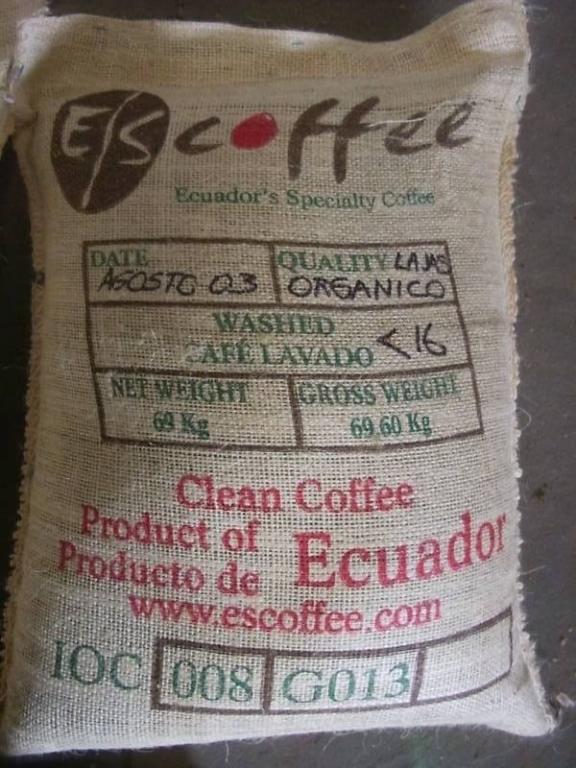
Source: Escoffee
Payment and delivery terms
Payment is generally required when accepting the coffee, or within 30–45 days. This depends on the terms in your contract. Cash Against Documents is the most common deal when exporting coffee to Europe. You provide documents proving shipment, such as a bill of lading or invoice, and get paid in return.
It is crucial to examine these terms carefully. Generally, you will be paid sooner if you sell your coffee to a trading company than if you sell directly to a roaster. You can read more about this in our Tips on organising your coffee exports.
Packaging requirements
Green coffee beans are traditionally shipped in woven bags from jute or hessian natural fibre. Jute bags are robust. Some specialty coffee suppliers, like GrainPro, Ecotact and Videplast, also use other materials inside jute bags. These materials have added value over traditional packaging: they preserve bean quality, prevent post-harvest loss, reduce solid waste, reduce farmers' net carbon footprint and facilitate chemical-free storage. Note that these innovative materials are mostly used for the high-end and upper-end segments.
Other packaging for transporting coffee include:
- polypropylene super sacks for 1 tonne;
- polyethylene liners for 21.6 tonnes;
- vacuum-packed coffee.
These techniques increase efficiency and maintain and preserve quality.
Figure 2: Examples of coffee packing, from left to right: jute bag, container-sized flexi bag, GrainPro and Videplast liner
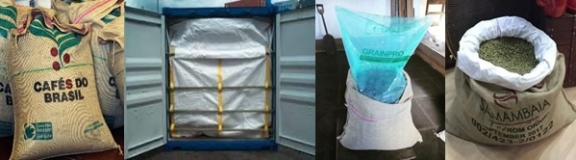
Sources: Raad, Bulk Logistic Solutions and GrainPro
Sustainability requirements become stricter
The UK is not directly bound by European Union Green Deal legislation. However, it still must deal with its effects in practice. EU laws apply to companies that place products on the EU market. As a result, some British businesses must follow EU laws if they export to the EU or are part of EU-based supply chains.
In response, the UK takes a parallel but separate approach. Instead of copying EU laws, the UK relies on its own legislation, like the Modern Slavery Act, the Environment Act and the UK Sustainability Reporting Standards (SRS) for large companies. These laws already require British firms to assess risks in their supply chains. This includes human rights abuses and environmental harm. They are generally less prescriptive than the EU rules.
The Modern Slavery Act
The Modern Slavery Act requires large businesses to take steps to prevent modern slavery, human trafficking and forced or child labour in their operations and supply chains. It requires affected businesses to publish a yearly statement describing preventive steps. The act applies to British organisations with a yearly turnover of £36 million or more. It also applies to non-British companies that do business in the UK and meet the same turnover threshold.
The Act affects mainly British companies, but it may also affect you as their supplier. If your client is a large British buyer, it may want to see documentation, such as how your company deals with forced or child labour. It may also conduct audits and require you to demonstrate traceability throughout your supply chain. Using third‑party verification – like Fairtrade and Rainforest Alliance certification – can help you with offering this documentation.
Environment Act
The UK Environment Act 2021 is the main legal framework guiding environmental protection in the UK after Brexit. It sets long‑term goals, creates new governance structures, and gives the government powers to regulate environmental impacts across supply chains. The act includes legally binding environmental targets.
Part of the Environmental Act is the UK Forest Risk Commodity Regulation (UKFRC). The regulation has many similarities with the European Deforestation Regulation (EUDR), but is not yet in force. Also, the main focus will be on other sectors, not coffee. Besides this, it only applies to deforestation that is illegal under its local laws. In short, there is no such thing as EUDR when exporting coffee to the UK.
Sustainability Reporting Standards
The Sustainability Reporting Standards (SRS) is a new regulation, replacing the Streamlined Energy and Carbon Reporting Scheme. The SRS provides a more global approach to sustainability reporting. It forces large British companies to report on their governance, climate reduction targets and climate transition. The SRS is mandatory for companies in 2026. It follows the CSRD, which is already mandatory in the European Union.
The direct implication of the SRS is likely limited for you as an exporter. Large buyers may ask you for more detailed information on diverse sustainability issues. It also emphasises the greater need for increased supply chain traceability. This indirectly creates a higher need for you to ensure your coffee is traceable to farm level.
What additional requirements and certifications do buyers often have?
Some British buyers may demand extra food safety requirements for processing, or additional quality requirements.
Additional food safety requirements
You can expect buyers in the UK to request extra food safety guarantees from you. Regarding production and handling processes, you should think of:
- Implementation of good agricultural practices (GAP): The main standard for good agricultural practices is GLOBALG.A.P., a voluntary standard for certification of agricultural production processes that provide safe and traceable products. Certification organisations like Rainforest Alliance often incorporate GAP in their standards.
- Implementation of a quality management system (QMS): A system based on Hazard Analysis and Critical Control Points (HACCP) is required by buyers more and more often as a minimum standard for green coffee production, storage and handling. The implementation of regular checks of residue levels in your green (and roasted) coffee is an example of what could be part of this system. Especially monitor Ochratoxin-A (OTA), polyaromatic hydrocarbons (PAHs) and glyphosate contamination.
Quality requirements
Generally, coffee grading combines a physical evaluation and a sensory evaluation to determine the quality. The quality assessment is usually based on the following criteria:
- Density;
- Colour and smell;
- Bean size (often called screen size);
- Uniformity;
- Number of defects and imperfections.
Usually, buyers include a moisture check and water activity analysis in the assessment. Buyers may also roast samples to assess the quality and uniformity of the green coffee.
The sensory quality assessments are determined by cupping the coffee. For specialty coffee, important quality indicators for determining cup quality are aroma, flavour, aftertaste, acidity, body (mouth feel), uniformity, clean cup, sweetness and overall rating.
In the conventional coffee market, sensory assessment is usually less detailed and focuses more on the absence of defects and consistency than on positive sensory complexity.
Tips:
- Know the coffee you sell. This includes information on the growing process, the processing and the flavour attributes. Examples of flavour attributes are fruity and chocolate. Also, know the quality you sell. This can help you sell part of your coffee for a higher price.
- Inform yourself on green coffee quality assessment. The Specialty Coffee Association is the leading standard, but you can also read about other ways to assess coffee quality.
What are the requirements for niche markets?
Exporting organic coffee, specialty coffee or roasted coffee comes with additional requirements.
Requirements for organic coffee
Exporting organic coffee comes with extra requirements. To market your coffee as organic in the British market, it must follow the rules on labelling organic food, feed and seeds. For more guidance, check the Biodynamic Certification website.
Organic coffee is checked at the British border. To export organic coffee, you will need a certificate of inspection (COI) from the control body in your country. Your coffee must also include a control body code. You can find your control body via the British guidance on organic registers.
The EU organic label is also applicable in the UK.
Figure 3: The British organic label
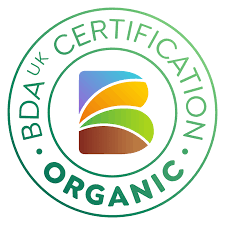
Source: BD certification
Requirements for specialty coffee
Specialty coffee is graded according to its cupping profile. Fragrance, flavour, aftertaste, balance, acidity, sweetness, uniformity and cleanliness are important factors in the grading process. If you sell specialty coffee, buyers need to know your coffee's cupping score. Including this in your export documentation helps buyers assess quality and can strengthen your position in negotiations.
It is very important to be aware of the quality of your coffees. You can do so through local cupping experts or by learning about cupping and quality yourself.
Besides high-quality, a high level of transparency is also very important. Many buyers are interested in stories about the product's origin, such as details of your coffee farm, the coffee growers, how and where you grow your coffee, and your processing facilities. This means that you should know and document the specifics of your coffee, from soil management to cup, from variety to processing, from external suppliers to farmers. You must be willing to share this information honestly.
Tips:
- Read our study on exporting roasted coffee to Europe to learn more about this market.
- Consult the British Pesticide Database for an overview of each pesticide's maximum residue levels (MRLs). You can search for coffee under the product or search for the active ingredient of your pesticide if you know it. This will show the MRLs of the active ingredients accepted in the EU.
- Find more information on import requirements in the British guidance for import of plants and plant products.
- Read the CBI study on buyer requirements for coffee in Europe for the full buyer requirements.
- Try to combine audits in case you have more than one certification. This will save time and money. You can also investigate the possibilities for group certification with other regional producers and exporters. For other tips, read more about exporting certified coffee by reading our studies on organic coffee, certified coffee and multi-certified coffee.
2. Through which channels can you get coffee on the British market?
The British market can be divided into several market segments, from the lower to the upper end. Most coffee is imported via large multinational trading companies. The multinationals are mostly the importers and the exporters. Most coffee in the UK is sold via supermarkets. Cafés and coffee chains are also accountable for a large market share. Coffee reaches consumers through a diverse range of value chain actors.
How is the end market segmented?
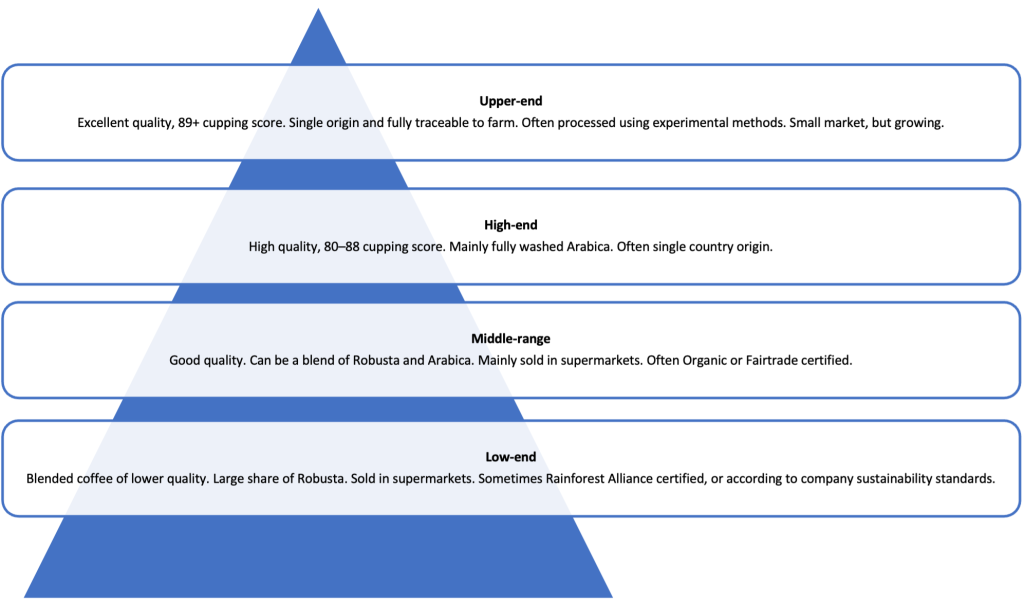
The British end market for coffee can be divided into four segments: the lower-end, middle-end, high-end and upper-end.
Figure 4: Coffee end-market segmentation by quality
Source: Based on Profound
Low-end
Coffees in the low-end segment are mainstream, lower-quality and mainly blended coffees. These blends are characterised by high shares of Robusta beans. Besides mainstream brands, lower-quality private-label products from supermarkets also belong to the low-end segment. Most coffee pads and instant coffee belong to this segment. Low-end coffee is mainly sold in supermarkets and through service channels such as offices and universities. Especially older people tend to drink low-end coffee.
On a consumer level, the lower-end segment is by far the largest segment in the UK. The British at-home market is very price sensitive. The lower-end consumer market has grown due to increased global coffee prices.
The low-end roasting market, and with it the imports of lower-quality coffee, has declined in recent years. JDE Peet's and Nestlé have shifted part of their soluble coffee production from the UK to continental Europe for strategic reasons.
Mid-range
Mid-range coffees are commercial coffees with a good, consistent quality profile, such as good espresso. This segment typically consists of blends with a higher proportion of Arabica compared to the low-end segment. The mid-range segment represents a stable coffee market in which sustainability certifications are important. Mid-range coffees are often sold in supermarkets and by the food service industry. Premium private-label ranges from retailers typically fall into the mid-range segment.
The mid-range is under increasing pressure. As coffee prices have increased, many consumers have shifted to lower-priced alternatives for mid-range coffee.
High-end
High-end coffee mainly consists of washed Arabicas. Especially the 84-86 segment is under pressure due to increased coffee prices. Some roasters have shifted from 84-86 to 80-83 graded coffee, to keep prices competitive.
Upper-end
The upper end segment consists of specialty coffees of excellent quality, sometimes from micro or nano lots that go through processing methods such as naturals and honeys. These are mainly fully traceable and single-origin Arabica beans. This segment is far less price-sensitive compared to the other markets. The upper-end market is small but slightly growing.
Besides quality, consumers in the high-end and the upper-end value sustainability, single-estate or single-origin coffees, innovative processing methods (such as co-fermentation) and strong producer stories.
Tips:
- Understand the coffee quality you sell. The higher the quality, the higher your price should be. Very high-quality beans, if processed well, can also offer opportunities for direct trade. Many high-end roasters are interested in offers with a unique taste.
- Explore ways to enhance the quality of the coffee you produce. Certification, good agricultural practices and post-harvest processing can improve the actual or perceived quality of your product and help raise its market value.
Through which channels does coffee land on the end market?
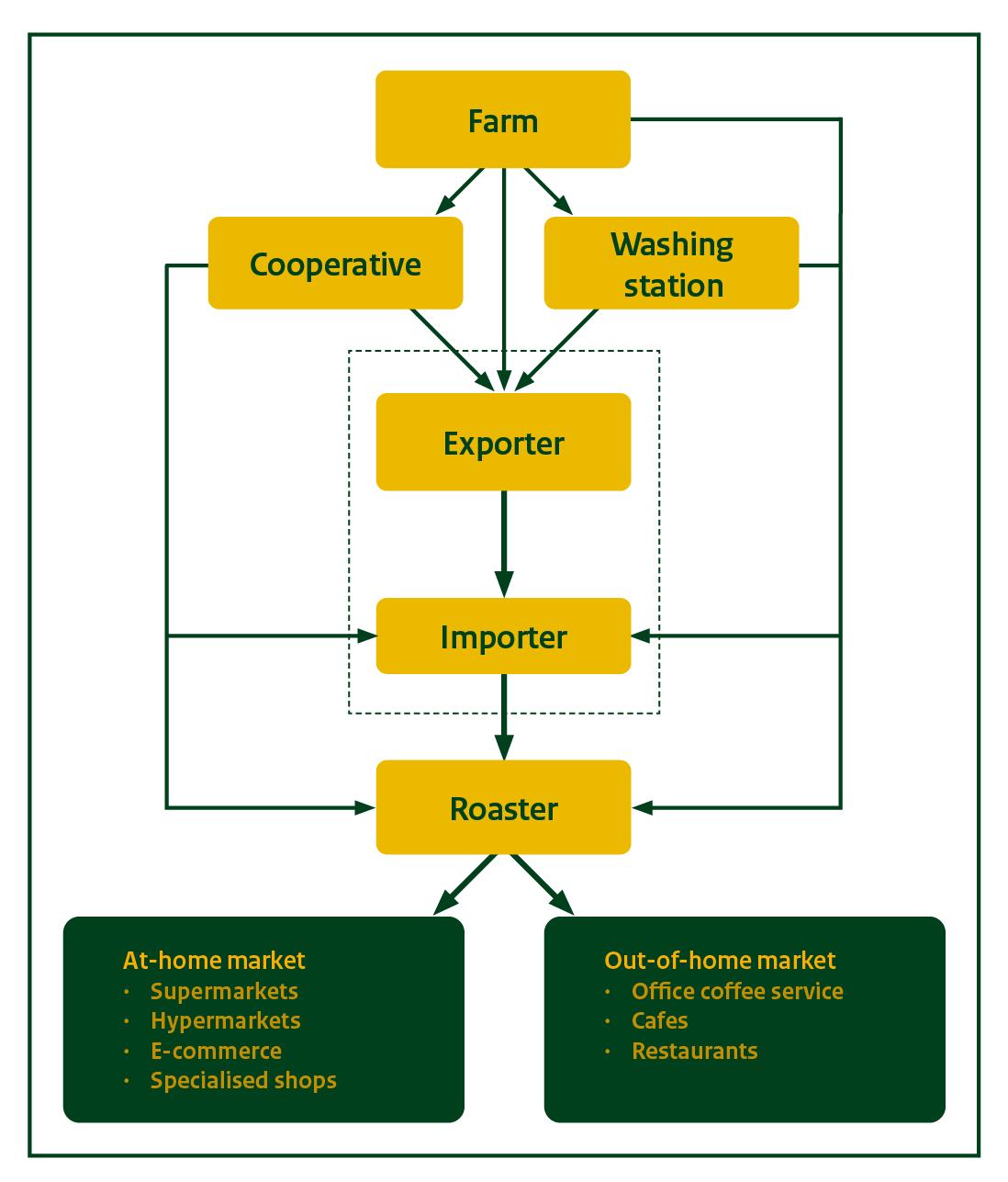
The British supply chain consists of many actors. These actors are mentioned in Figure 5. Most coffee flows through all actors of the chain. However, options to penetrate the British market more directly are arising.
Figure 5: The British coffee supply chain
Source: based on Counter Culture Coffee
Importers play a major role in the British coffee supply chain
Importers are important facilitators in the UK's coffee market, bridging the gap between coffee producers worldwide and British roasters and retailers. They handle a wide array of essential tasks. This includes sourcing coffee, quality control, managing logistics, pre-financing shipments and evaluating financial risks. Importers ensure British businesses receive the types and qualities of coffee that best suit their needs. Some of the importers are:
- Nestlé UK
- ED&F Man
- Louis Dreyfus
- Falcon Coffees
- Mercanta Limited
- Interamerican Coffee
- Covoya
- Dr Wakefield & Company
- Keynote Coffee
Some of these coffee-importing companies originate from other, mostly European, countries. ED&F Man, Falcon Coffees, Mercanta Limited, Dr. Wakefield and Keynote Coffee are British companies.
Online marketplaces facilitate trade
Online marketplaces are platforms that connect actors in the chain, mainly linking farmers to roasters directly. Using marketplaces allows farmers or cooperatives to cut out parts of the chain. This may help you secure better prices for your products. Only a small share reaches British roasters via a marketplace, but this share is growing. Some of these marketplaces are:
- Algrano (Switzerland)
- Raw Material (UK)
- Beyco (Netherlands)
Although these marketplaces initially focused on specialty coffee, they are now used by conventional coffee traders more and more often as well. Online marketplaces are rarely used as a sole sales channel; instead, they serve to diversify market channels and help sellers reach new buyers.
Moreover, these platforms can provide a first step towards engaging in direct trade. Beyond the online marketplace itself, they offer support and guidance in establishing business relationships. Algrano also provides education to help producers prepare for exporting their products. Both Beyco and Algrano can additionally assist producers with pre-financing.
British roasting market for conventional coffee: dominated by a few large companies
Although the British market is well-known for its large specialty coffee market, a few large multinational commodity coffee roasters dominate the market:
- JDE Peet's, with brands like Kenco, L'OR, Tassimo and Douwe Egberts;
- Nestlé UK, with brands like Nescafé and Nespresso;
- UCC Coffee, with the brands Lyons coffee and Roastworks;
- Taylors of Harrogate;
- Lavazza Group.
In contrast to the very large roasters that dominate the conventional market, the specialty coffee sector is characterised by a high number of small and micro roasters. The UK, in particular, has an exceptionally high density of these small-scale roasters. Most of them source their coffee through traders, although a portion also engages in direct trade with producers. As of 2025, the UK has almost 2,000 registered coffee roasters. An example of such a roaster is Aromatico Coffee.
British retail coffee market: dominated by supermarket and coffeeshop chains
Like in other European countries, most coffee in the UK is sold through supermarkets. In 2026, Tesco is the largest supermarket chain, with a market share of 28%; Sainsbury's ranks 2nd at 15.6%; Asda (11.6%), Aldi (10.6% ), Morrisons (8.3%), Lidl (8.3%) and Co-op (5.3%) follow. Other supermarkets have a combined market share of 12.5%.
The out-of-home market is dominated by coffeeshop chains. The UK counts over 12,000 coffee shops and bakeries in 2025. Large brands present in the UK are Costa Coffee (2,671 stores), Greggs (2,610 stores) and Starbucks (1,354 stores).
Tips:
- Find British coffee roasters via the Gov UK website.
- Develop long-term partnerships with your buyers. This requires you to always follow their requirements and keep your promises. See our Tips on doing business with European coffee buyers for more information.
What is the most interesting channel for you?
The best sales channel for your coffee depends on many factors, but mainly on your unique selling points. This means you need to know your product.
To sell your coffee to British buyers – or any country – your first step is to understand its specific characteristics and what sets it apart from the competition. Think about the origin of your coffee and its unique flavour notes. Consider factors like your coffee beans' genetic profile, agroecological context, post-harvest practices, quality, and impact on communities and nature. Storytelling and traceability are also important. A good story can help connect consumers to the origin of your coffee and make their experience richer.
Although these factors gain relevance for the high end, it is also important for producers in the lower and middle ranges to know your quality, since volume and consistency are generally more important in these ranges.
The second step is to learn what your potential buyers want. To successfully sell your coffee to European or UK buyers, it is important to understand their taste preferences and consumption patterns. Explore specific coffee requirements like cup quality and sustainability with your buyers. Look for buyers who are willing to build long-term relationships. Approach them directly or through an importer. You can increase your chances of success by analysing market information and identifying major buyers.
If you export green commodity coffee, consider entering the British market through large importers. These companies usually have agents or representative offices in producing countries. This can be your first point of contact.
If you have coffee with cupping scores of 80 and above, consider working with specialised traders or roasters, like Falcon Coffees and Caravela.
Supplying to small roasters is interesting if you have:
- High-quality coffee;
- Micro lots;
- Sustainability certification;
- Willingness to engage in long-term partnerships.
As the coffee market continues to evolve, it is wise to explore multiple market channels.
Tips:
- Look into online marketplaces like Algrano, Beyco and Raw Material. These platforms allow you to sell directly to British importers and roasters.
- If you have high-quality coffees and work through an importer, explore direct trade possibilities and connect with specialised roasters.
- Offer your coffee directly to specialised coffee importers and small coffee roasters. However, this requires substantial financial means and technical know-how to organise export activities.
3. What competition do you face on the British coffee market?
As a coffee supplier, you operate in a global and competitive landscape. For producers and exporters, it is important to understand the market segment you operate in and the scale at which you work. By identifying these factors, this helps you understand which countries you compete with.
Understanding the quality level, volume and positioning of your products allows you to better assess your competition and develop strategies to differentiate yourself in the global market. This knowledge is essential to improve your competitiveness and stand out in the market.
Which countries are you competing with?
Competition in the British coffee market is fierce. Your main competitors depend on the product you supply. In this section, we focus on the top-6 countries you might be competing with. Vietnam and Indonesia are the UK's main Robusta suppliers. Brazil, Colombia, Honduras, and Peru place greater emphasis on Arabica.
Brazil: UK's largest green coffee supplier
Brazil is the world's largest coffee producer and exporter, producing both Arabica (around 70%) and Robusta (around 30%), although almost 80% of exports consist of Arabica. It is also the UK's largest supplier. Brazilian exports to the UK reached 50,000 tonnes in 2025, registering an average yearly increase of 3.9% since 2021.
Brazil's coffee-producing areas are relatively flat. This allows high adoption of mechanical pickers, which has reduced labour and production costs. It has also led to lower-quality averages because machines do not distinguish ripe from unripe cherries.
Brazil mainly produces natural and pulped natural coffees. Low-grade Brazilian Arabica is mostly used in blends. This is in high demand among British roasters, where prices are very important, also in the speciality coffee market.
Brazilian coffee farmers are relatively profitable. Factors contributing to their success are:
- The scale they operate at;
- Mechanised cherry picking;
- Efficient infrastructure;
- Favourable climate (although climate change drastically impacts several major producing regions in the country).
Brazil is the only large producing country where the average coffee farmer can generate a living income.
Although Brazil is known mainly for exporting large volumes of standard quality, the country also has a strong reputation as a producer of speciality coffees. The sector receives considerable institutional support through the Brazil Specialty Coffee Association (BSCA). The association aims to elevate the quality standards and enhance value in the production and marketing of Brazilian coffees. Among exporters of speciality coffees in Brazil are Burgeon and Bourbon Specialty Coffees.
The 2024-2025 outlook for Brazil is positive, with an expected 6.4% production increase .
Table 1: Competitive country profile of Brazil
| Strengths | Weaknesses | Image on the coffee market |
|---|---|---|
|
|
|
Vietnam: UK's main green Robusta supplier
Vietnam is the world's second-largest coffee producer and the biggest Robusta producer. Over 96% of Vietnamese coffee production consisted of Robusta coffees in 2024-2025. Vietnam's coffee production strongly focuses on producing large volumes of standard-quality coffees.
Vietnam’s total coffee exports to the UK reached approximately 31,000 tonnes in 2025. Exports had dropped by 55% in 2024, mainly due to a drought reducing the 2023-2024 harvest.
Major Vietnamese coffee exporter groups include Simexco Daklak, Intimex Group, Tin Nghia Corporation and Mascopex.
Vietnamese coffee production is expected to increase in the short term. High coffee prices encourage farmers to invest in production, which cancels the negative influences of bad weather conditions. In the medium term this may be counterproductive, as the short-term focus on production may lead to overexploitation. Not replacing older plants with younger ones will reduce future production.
Table 2: Competitive country profile of Vietnam
| Strengths | Weaknesses | Image on the coffee market |
|---|---|---|
|
|
|
Colombia: Strong brand of high-quality coffee
In 2025, the UK imported almost 15 thousand tonnes of green coffee from Colombia. In 2021-2025, imports had been decreasing by an average 2.4% yearly.
Colombia is the world's largest producer of washed Arabica. It has a strong national coffee industry with high technological development. The Colombian Coffee Growers Federation strategically promotes and markets Colombian coffee. The country has an established image and brand for high-quality coffees. Colombian coffee is known for its chocolate, nuts, herbs, fruit and citrus notes. Its main processing technique is washed processing. The country's most well-known coffee varieties are Typica, Bourbon, Caturra and Castillo.
'Café de Colombia' is a protected trademark. It is registered in eAmbrosia. This is the register for protected trademarks in Europe. A registration in eAmbrosia is unique among coffee-producing countries, and it protects the rights of more than 550,000 small-holder families in the country.
The Colombian coffee industry is continuously developing. Coffee companies are more and more involved in capacity building and product quality. Colombian producers can follow coffee quality and tasting programmes to get certified. The Coffee Quality Institute (CQI) has a strong presence in Colombia, providing courses in partnership with the National Institute of Professional Training SENA. The country's coffee has ongoing success in competitions, such as the World Barista Championship.
Successful Colombian cooperatives or private organisations exporting coffee to the international market include Red Ecolsierra and La Maseta.
Table 3: Competitive country profile of Colombia
| Strengths | Weaknesses | Image on the coffee market |
|---|---|---|
|
|
|
Indonesia: The world's second-largest Robusta exporter
In 2025, Indonesia exported 11 thousand tonnes of green coffee to the UK. Import levels were 13.6 thousand tonnes in 2021 and 3.5 thousand tonnes in 2024. The low imports in 2024 were caused by bad weather conditions in the 2023-2024 season.
Around 85% of Indonesian coffee exports to Europe is Robusta. Robusta production dropped by 9% to 516,000 tonnes in the 2024-2025 season due to lasting weather problems from 2023-2024. Crops largely failed to recover in the lowlands of Southern Sumatra. However, Robusta production increased in highland areas.
Domestic consumption is growing quickly. Indonesia exports around 46% of its green coffee production. About 20% of Indonesia's coffee exports are certified or verified as sustainably produced. Indonesia has some of the largest organic coffee production areas worldwide, with around 22,602 hectares in 2023.
Indonesian Robusta coffee comes in many varieties. Well-known varieties are:
- Lampung Robusta: known for its chocolate, brown sugar, woody, sweet and earthy flavours;
- Temanggung Robusta: characterised by an earthy, caramel flavour profile;
- Jampit Robusta: offers a sweet, caramelised sugar aroma and a full, heavy body with dark chocolate notes;
- Kintamani Robusta: tastes chocolatey, nutty and fruity, with a hint of lemon.
Indonesia has very low average coffee production per hectare, mainly because its system comprises many smallholder farmers that have limited access to resources and support.
Table 4: Competitive country profile of Indonesia
| Strengths | Weaknesses | Image on the coffee market |
|---|---|---|
|
|
|
Honduras: Main supplier of organic coffee
Honduras supplies a large share of organic coffee to the UK. According to ITC Trademap, in 2025 the UK imported 31.6 thousand tonnes from Honduras. In 2021-2025, green coffee imports from Honduras registered a 0.8% yearly decline percentage. According to the USDA, leaf rust and domestic labour shortages led to a 24% coffee production reduction in 2023-2024.
For the 2025-2026 and subsequent seasons, Honduran production is expected to increase. Where rust leaf was the main reason for lower production levels, this was partially countered by planting more Parainema, a rust-resistant coffee variety.
The Honduran Coffee Institute IHCAFE has been promoting the production of value-added coffees, either through certification or by actively improving quality. The country has grouped coffee production and quality specifications into six regions with different microclimates and soil composition.
Honduras has a growing reputation as a high-quality coffee supplier. The UK is a large importer of specialty coffee. One British specialty coffee trader importing specialty coffee from Honduras is Origin Coffee.
A relatively large share of Honduras's coffee is organic. According to FiBL & IFOAM The World of organic Agriculture 2026, 64,346 hectares were dedicated to organic coffee farming in Honduras. This is approximately 5.7% of the country's total planted coffee area. With 24 thousand tonnes, Honduras was the UK's largest organic coffee supplier in 2023, followed by Peru with 17 thousand tonnes.
Certified coffee production in Honduras has grown, from 42% in 2018-2019 to 58% in 2022-2023. This includes Fairtrade, Rainforest Alliance, 4C and organic certification. In 2023-2024, however, the certified production area dropped to 52%. Successful exporters in Honduras include Cafico (organic coffee) and Benjamin Paz (specialty coffee).
Table 5: Competitive country profile of Honduras
| Strengths | Weaknesses | Image on the coffee market |
|---|---|---|
| High volatility due to bad weather conditions, increasing leaf rust vulnerability. |
|
Peru: Takes a top position in the production of certified coffee
In 2024, The UK imported almost 7 thousand tonnes of green coffee from Peru. British imports have fluctuated between 9.4 thousand tonnes in 2022 and 6.6 thousand tonnes in 2023.
According to UNDP, coffee is one of Peru's main agricultural products, accounting for around 25% of their agricultural income. As much as 40% of Peruvian farmland is destined for coffee production. In the highlands, this figure rises to 70%. Peru counts as the global leader in specialty coffee production. One Peruvian specialty exporter is RainForest Trading.
Next to specialty coffee, Peru also has a dominant position as a supplier of organic coffee. It is the second-largest organic coffee exporting country. It owned 163,456 hectares dedicated to growing organic coffee in 2026.
The flavour profile of Peruvian coffees is usually nutty, chocolaty and mildly citrusy. The country's varieties include Catimor, Pache, Bourbon, Typica and a small amount of Pacamara. Their main processing method is wet processing.
Peruvian coffee is known for its consistent quality and sustainable production. It is one of the leading countries trading with Fairtrade-certified coffee, and 75% of the coffee industry is owned by smallholders. In 2018 Peru introduced a national coffee brand, Cafés del Peru, to the international market.
Table 6: Competitive country profile of Peru
| Strengths | Weaknesses | Image on the coffee market |
|---|---|---|
|
|
|
Tips:
- Identify your potential competitors. To be successful as an exporter, it is important to learn from them too.
- Identify, document and promote your unique selling points. Give detailed information about your coffee-growing region or origin, varieties, qualities, post-harvesting techniques and certification of the coffee you offer. You can also tell the history of your organisation, your coffee-growing farm, and the passion and dedication of the people working there. These are all elements that make your company unique.
- Actively promote your company on your website and trade fairs. Coffee competitions also provide good opportunities to share your story, for example the auctions organised by the Cup of Excellence.
- Are you interested in exporting high-quality coffee? Learn more about grading protocols and best practices on the website of the Specialty Coffee Association (SCA).
- If your company size or product volume is too small, work with other coffee producers and exporters in your region. As a group, you can promote good-quality coffee from your region and be more attractive and competitive.
Molgo Research carried out this study in partnership with Ethos Agriculture on behalf of CBI.
Please review our market information disclaimer.
Search
Enter search terms to find market research
Do you have questions about this research?
The UK specialty market is likely the largest in Europe. It is home to a vast number of small and micro‑roasters working with small lots of specialty coffee. This high concentration of roasters makes the market extremely competitive, placing downward pressure on coffee prices, even within the specialty segment.

Stuart Ritson, consultant and coffee trader at S. Ritson Consulting
Younger consumers are helping to reshape the UK coffee landscape, driving demand for specialty, RTD, flavoured and capsule coffees. Sustainability, flavour innovation, and origin stories matter as much as price, making the UK one of Europe's most diverse and experimental coffee markets.

Paul Rooke, executive director of the British Coffee Association