

The Dutch market potential for dried fruit and nuts
The Netherlands is one of the world’s largest import and distribution hubs for dried fruit and nuts. It offers access to Dutch consumers and wider European markets. This study examines market size, trade flows, buyer requirements and key trends. It identifies groundnuts, cashews, dried grapes, dates, walnuts and desiccated coconuts as the strongest opportunities for exporters from low- and middle-income countries (LMICs).
Contents of this page
1. Country description: Netherlands
The Netherlands is a small, wealthy country in north-western Europe. It borders Germany and Belgium and is part of the European Union (EU). The Dutch population was 18.13 million at the beginning of 2026. The GDP per person was about €63,000 in 2024. This was the fourth highest in the EU and about 60% above the EU average of €39,700. The official language is Dutch, but English is widely spoken and common in international business. The country’s official currency is the Euro.
The Netherlands is one of Europe’s most trade-oriented economies. In 2024, the combined value of Dutch imports and exports was equal to 159% of the country’s total annual economic output. This shows how important international trade is to the Dutch economy. Many imported products are not consumed in the Netherlands. Instead, they are transported or sold onwards to other European markets. The Netherlands can therefore serve as an important entry point to the wider European market.
The Netherlands has excellent transport links. Rotterdam is Europe’s largest port, handling 14.2 million container units in 2025. Schiphol Airport handled 68.8 million passengers and 1.43 million tonnes of air cargo in the same year. Major consumer markets in Europe can be reached from the Netherlands within a day.
This study explores the market opportunities for dried fruit and nuts in the Netherlands. ‘Dried fruit’ refers to fruit from which nearly all the water has been removed. Nuts refer to edible kernels or seeds of fruits, usually protected by a hard shell and husk. They are sold as snacks or used as ingredients in bakery, confectionery, breakfast products and other foods.
The harmonised system and combined nomenclature codes below are used for statistical analysis.
Table 1: Products in the dried fruit and nuts product group
| Codes used | Products |
|---|---|
| 0801 | Desiccated coconuts, Brazil nuts and cashew nuts (except fresh coconuts) |
| 0802 | Almonds, pistachios, walnuts, hazelnuts, macadamia nuts, chestnuts, pine nuts, pecans and other nuts (except Kola nuts and Areca nuts) |
| 08039090 | Dried bananas |
| 08031090 | Dried plantains |
| 080410 | Dates |
| 08042090 | Dried figs |
| 080620 | Dried grapes |
| 0813 | Dried prunes, dried apricots, dried apples, other dried fruit, mixtures of nuts or dried fruits |
| 1202 | Groundnuts (peanuts) |
| 2008 | Selection of roasted nuts and some sugar infused dried fruit (e.g. cranberries) |
Source: Autentika Global based on World Customs Organisation and the EU tariff and statistical nomenclature regulation
Some dried fruits, particularly tropical fruits, have no dedicated trade codes. Instead, they are grouped with other products. As a result, industry estimates are used where necessary.
Figure 1: Map of the Netherlands
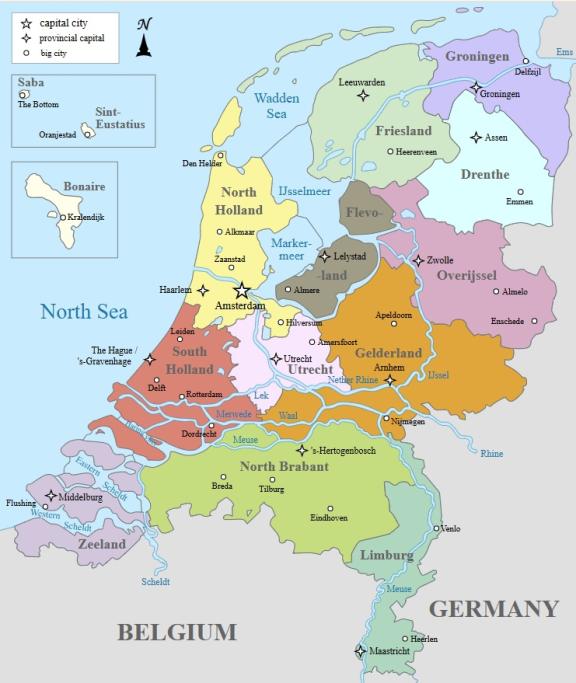
Source: Alphathon, CC BY-SA 3.0, via Wikimedia Commons

2. What makes the Netherlands an interesting market for dried fruit and nuts?
The Netherlands is a gateway to the European market
The Netherlands is the third largest importer of dried fruit and nuts in the world, after Germany and the United States. Since 2021, imports of dried fruit and nuts to the Netherlands have increased at an annual rate of 3%. Imports reached 766,000 tonnes in 2025, valued at €2.6 billion. The Netherlands primarily serves as a trade and distribution hub for these products. Approximately 80% of imports are re-exported. The remaining 20% are consumed domestically.
The Netherlands offers good logistics services for exporters of dried fruit and nuts. It is home to major ports, and has many warehouses, customs services and strong road, rail and waterway connections. Dried fruit and nuts from outside the EU can be stored in approved customs warehouses without a fixed customs time limit. This gives importers and traders flexibility to store products, combine shipments, complete customs procedures, repack them and send them to other markets when needed.
Source: Autentika Global based on Eurostat data, 2026
Low- and middle-income countries (LMICs) directly supply 57% of Dutch dried fruit and nut imports. Other European countries account for 17%. The remaining 25% comes from other parts of the world. Logistics companies, especially around Rotterdam, allow exporters to store their products, retain ownership and distribute them to buyers in the Netherlands and other European markets. Some exporters also have Dutch companies to manage storage and sales.
Imports are growing across the main product groups
In 2025, nuts accounted for 79.3% of Dutch imports in this product group, followed by dried fruit (17.4%) and mixtures of nuts and dried fruit (3.3%). Imports of all three groups increased by around 3% every year between 2021 and 2025. This growth reflects Dutch demand and the Netherlands’ role as a European trade hub. Most imported dried fruit and nuts are re-exported. However, the Netherlands is also an important consumer market. Despite its relatively small population, it is Europe’s largest consumer of Brazil nuts and pecans.
Source: Autentika Global based on Eurostat data, 2026
Demand is supported by healthy snacking, breakfast products and the growing popularity of plant-based foods. Nuts have a particularly strong position. This is because they are widely used in these products and are valued as a source of plant-based protein. Plant-based proteins accounted for about 39% of Dutch protein intake in 2025. Nuts and dried fruit are also used in granola, bars, snack mixes, bakery products, desserts, salads and hot dishes.
Tip:
- Consider using a Dutch logistics provider to store your products and deliver smaller quantities when needed. Use the Port of Rotterdam warehousing tool and the Rotterdam Port Promotion Council member directory to find suitable providers.
3. Which dried fruit and nuts offer the most opportunities on the Dutch market?
The six most promising products were selected through industry consultation and statistical analysis. This covered import and consumption volumes, market growth, processing and re-export roles, and supplies from LMICs. Particular attention was given to countries where CBI is active. Groundnuts, cashews, dried grapes, dates, walnuts and desiccated coconuts offer the strongest opportunities. This is because of their role in consumption, processing, retail and re-export.
Groundnuts benefit from Dutch peanut butter consumption, snack processing and re-export
The Netherlands imports groundnuts (peanuts) in several forms. These forms include raw shelled and in-shell peanuts, roasted peanuts, retail-packed products and peanut butter. However, raw shelled peanuts account for 97% of imports and are often supplied blanched. Since 2021, imports of shelled peanuts have grown at an average annual rate of 4%. They reached 379,000 tonnes, worth €552 million in 2025. Argentina was the leading supplier of shelled peanuts, with a 71% share, followed by China (7%), Brazil (6%), the United States (6%) and Nicaragua (3%).
In addition to shelled peanuts, the Netherlands imported 6,600 tonnes of retail-packed roasted peanuts, 3,700 tonnes of in-shell peanuts and 1,700 tonnes of peanut butter in 2025. Argentina was the main supplier of in-shell peanuts, followed by Egypt and China. Roasted peanuts came mainly from Germany, Poland, Belgium and Spain, although much larger volumes are roasted in the Netherlands after import. Peanut butter imports mainly came from nearby European countries. The United Kingdom, France and Spain were the main countries, followed by Canada.
The Netherlands offers opportunities as a major processing hub and as a strong consumer market of peanut butter. Dutch companies import raw peanuts for blanching, roasting, snack production and peanut butter manufacturing, as well as for distribution across Europe. Around 40% of imported peanuts are re-exported to other European countries. Large amounts are also processed and sold in the home market. Total market consumption in the Netherlands was estimated at 111,000 tonnes in 2025.
Imported raw peanuts are used in several market segments. The largest is the snack industry. Peanuts are roasted, salted, coated and flavoured by companies and brands such as Intersnack and PepsiCo Nederland (Duyvis brand). Large volumes are also processed into peanut butter. It is especially popular in the Netherlands. Calvé, a major peanut butter brand owned by Unilever, estimates that Dutch consumers eat around 25 million jars each year, equal to about 1.5 jars per person.
Peanut sauce, known locally as pindasaus or satésaus, is another established product in Dutch retail and foodservice.
Figure 4: Duyvis peanuts in the Netherlands
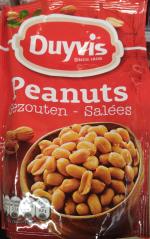
Source: sebleouf, CC BY-SA 3.0, via Open Food Facts, 2026
Argentina’s established supply chain and consistent quality make it difficult for new origins to compete on price alone. Suppliers from Africa, Asia and Latin America need reliable aflatoxin prevention, pesticide-residue control and lot segregation. They should also provide clear specifications for kernel size, blanching performance, oil content and roasting characteristics. A failed food-safety test can quickly remove any price advantage.
In the next one to three years, demand for peanut butter and roasted snacks is likely to remain stable. Supplier diversification may be gradual. This is because processors need consistent flavour, quality and processing performance. Based on industry estimates, Dutch imports of peanuts are forecast to increase by 2–5% every year in the longer term. This may create opportunities for traceable, residue-controlled and high-oleic peanuts from emerging origins. However, exporters will still need to match the reliability of Argentina’s established industry.
Tips:
- Read the CBI market study on groundnutsto learn more about Dutch buyers and market requirements.
- Offer blanched peanuts and have a clear aflatoxin-control plan. Show how you manage drying, moisture and lot separation, and provide recent laboratory results for aflatoxins and pesticide residues. Ask Dutch buyers for their limits. They may be stricter than EU rules.
Dutch demand supports more cashew processing at origin
The Netherlands is the world’s third-largest cashew importer, after the United States and Germany. Imports fluctuate with harvests in producing countries. In 2025, they reached 61,000 tonnes, worth €403 million. Volume was nearly 500 tonnes lower than in 2024. However, demand remained strong. Poor weather reduced yields and supply, pushing up average prices.
Imports are highly concentrated. Vietnam is largest with 75%, followed by India (8%), Côte d’Ivoire (7%), Germany as a transit country (3%), Tanzania (2%) and Burkina Faso (1.5%). Supported by investment in local processing, Côte d’Ivoire has steadily gained market share over the past 5 years. Tanzania’s supply rose from just 48 tonnes in 2021 to 1,200 tonnes in 2025.
The Netherlands is the world’s largest redistribution hub for cashew nuts. Although it fails to produce any of its own cashews, it is the world’s third-largest exporter of cashew kernels, after Vietnam and Côte d’Ivoire. Its re-export volumes are even higher than India’s, even though India is the world’s second-largest cashew producer. Domestic consumption is significant. Cashews have become a common snack and cooking ingredient. They are sold through retail chains, including Albert Heijn, Jumbo, Plus, Spar, Picnic and Ekoplaza.
Sustainable and transparent supply chains are increasingly important for Dutch buyers. Fairtrade Nederland promotes a minimum price for farmers and fair and sustainable work conditions for workers. Dutch retailers and brands support certified sustainable cashews. For example, leading Dutch supermarket chain Albert Heijn sells Rainforest Alliance-certified cashews. Johnny Cashew sources cashews processed in Africa instead of routing them through Asia, keeping more jobs and value in producing countries.
Figure 5: The Johnny Cashew brand in the Netherlands
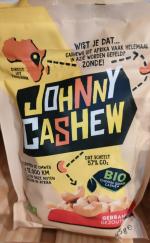
Source: foodless, CC BY-SA 3.0, via Open Food Facts, 2026
In the next one to three years), the Dutch cashew market is likely to remain unstable. This is because of changes in raw nut prices, weather conditions and limited processing capacity in producing countries. In the long term, i.e. five years and beyond, more Dutch buyers are expected to source cashew kernels directly from processors in African producing countries. This creates opportunities for cashew-producing countries. However, these chances are limited to factories that can demonstrate transparent and sustainable sourcing, food safety certification, consistent colour, low breakage and reliable delivery.
Tips:
- Read the CBI study on the European cashew market for more information about Dutch importers and market opportunities. As most cashews imported into the Netherlands are re-exported, understanding the wider European market is also important.
- Follow updates from the Sustainable Nut Initiative and FairMatch Support to learn about traceability, local processing and other sustainability developments in the cashew sector.
The Netherlands leads Europe in dried grape consumption
The Netherlands is the world’s third-largest importer of dried grapes, after the United Kingdom and Germany. Despite harvest-related fluctuations in leading supplier countries, imports grew by 1% annually between 2020 and 2025. In 2025, they reached 53,700 tonnes, worth €152 million. Türkiye led with a 45% share, followed by South Africa (19%), China (9%), Chile (7%) and Iran (6%).
Sultanas are light-coloured dried grapes often treated with lye and sulphur dioxide. They accounted for 45% of imports in 2025. Darker, naturally dried raisins made up a 41% share. Small purple-black currants traditionally associated with Greece accounted for 6%. Türkiye leads in sultanas, South Africa in Thompson Seedless raisins and Greece in currants.
The Netherlands is both a major trading hub and one of the world’s leading dried grape consumers. Annual consumption exceeds 2 kg per person. This is the highest in Europe. It is mainly because of the use of dried grapes in the baking industry and home cooking. Albert Heijn, the leading retailer, lists more than 40 products that contain dried grapes, as well as single snack packs.
Over 80% of dried grapes sold in the Netherlands are supplied in bulk as ingredients, compared with less than 20% in retail packs. Bakery uses include raisin and currant bread (rozijnen- en krentenbrood), Limburgse vlaai(a traditional tart from Limburg with EU Protected Geographical Indication) and oliebollen (fried dough balls that contain raisins or currants, popular around New Year).
Figure 6: Albert Heijn raisin and currant buns
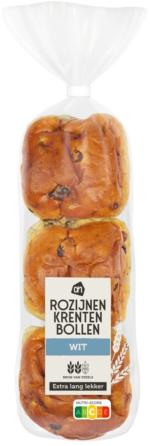
Source: blackcuda, CC BY-SA 3.0, via Open Food Facts, 2026
Dutch traders Yme Kuiper and Klaas de Poel specialise in supplying raisins to bakeries. Raisins are also used in confectionery. For example, Tony's Chocolonely and Chocolatemakers use them in chocolate bars, and Holiday Ice, a private-label specialist, and De Jong's IJs both use them in ice cream.
Türkiye is the main competitor in dried grapes in terms of volume and price. Suppliers from LMICs should therefore focus on higher-quality, low-residue and more sustainable products rather than compete with standard Turkish raisins. Strict control of ochratoxin A, sulphites and chlorpyrifos is essential. They are the common reasons for rejection by European buyers.
Dutch demand is expected to remain stable over the next one to three years as raisins are widely used in everyday foods. Looking beyond the next five years, the market may grow by 1–2% annually, as other origins gain market share with different varieties, colours, drying methods and more sustainable production.
Tips:
- Use the CBI dried grapes studies to help you understand the Dutch market, compare it with other European markets and identify suitable opportunities for your product.
- Before contacting Dutch importers, prepare a clear product specification and a recent laboratory report. Include the variety, berry size, colour, moisture, sulphite treatment, ochratoxin A and pesticide residues.
Dates benefit from strong import growth, premium Medjool demand and the Dutch hub trade
Dates recorded the strongest import growth among Dutch dried fruits, rising from 17,500 tonnes in 2021 to 27,000 tonnes worth €115 million in 2025. Israel was the largest exporter, with a 44% share, mostly Medjool dates. It was followed by Germany, a transit country (12%), Tunisia with predominantly Deglet Nour dates (8%), and Saudi Arabia with mostly Sukkari dates (6%).
Over 80% of dates imports are re-exported, mainly to Germany and Belgium. Producer brands are uncommon in mainstream retail, although more visible in ethnic shops. Standard pitted Deglet Nour dates serve the mainstream market, while large Medjool dates are often sold in premium packs. The Netherlands is a major European import and redistribution hub for Medjool dates. Israel supplied around 12,000 tonnes in 2025.
Demand peaks during Ramadan, when dates are eaten to break the fast, and during the winter holidays. This is important in the Netherlands: around 920,000 people aged 15 and older identify as Muslim. According to Statistics Netherlands, Muslims accounted for 6% of the Dutch population in 2025. Dates are increasingly consumed year-round as snacks and natural sweeteners.
Figure 7: Yogi & Yousef dates in the Netherlands

Source: openfoodfacts-contributors, CC BY-SA 3.0, via Open Food Facts, 2026
Dates also have a wider role beyond seasonal and ethnic demand. They are part of the Dutch Nutrition Centre’s healthy-eating guidelines. Unsweetened Medjool dates are also listed as a suitable snack for children. Retailers promote dates in snack bars, breakfast products and home baking. Organic shops sell date syrup as a sweetener. This creates year-round opportunities for pitted dates, pieces, paste and syrup, although their high natural sugar content may limit portion sizes.
Dutch demand is expected to remain strong for the next one to three years. However, imports may fluctuate with harvest volumes, prices and stocks. In the long term, growth is likely to slow to around 4–7% annually, supported by premium Medjool dates and their increasing use as natural sweeteners. Demand for date paste should also increase. Food manufacturers use date paste as a natural sweetener and binder in fruit bars, bakery products and similar products.
Tips:
- Read the CBI studies on the European dates market. Dutch demand largely depends on other European markets.
- Contact potential buyers at PLMA’s World of Private Label in Amsterdam, especially if you can meet Dutch and other European retailers’ requirements.
Walnut demand grows across snacks, bakery and food processing
Dutch walnut imports fluctuated but grew by an average of 5% annually between 2021 and 2025. In 2025, imports reached 17,200 tonnes, worth €103 million. Shelled walnuts accounted for 92% of imports and in-shell walnuts for 8%. The United States was the leading supplier (26%), followed by China (20%), Chile (14%), Germany as a transit country (11%), Spain (5%) and Ukraine (5%).
Nearly 50% of walnuts imported into the Netherlands are re-exported. However, people in the Netherlands also still eat a large amount of walnuts. Consumption has increased because plant-based foods are popular. The market now reaches more than 17,000 tonnes, which is over 900 grams per person. The Dutch Nutrition Centre recommends eating around 30 grams of unsalted nuts every day. It includes walnuts among the suitable choices.
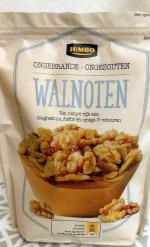
Walnuts are consumed as a snack and are widely used in cakes, biscuits, granola, salads, yoghurt and desserts. These uses create demand for different grades. Light-coloured walnut halves are ideal for retail packs and decorating cakes, while pieces and smaller kernels can be sold to bakeries, breakfast-product manufacturers, salad producers and other food processors. Suppliers from LMICs face competition in the Dutch market from light-coloured Chandler walnuts supplied by the United States and Chile.
Figure 8: Jumbo private-label walnuts
Source: kiliweb; modified by bertusdendroef, CC BY-SA 3.0, via Open Food Facts, 2026
Rancidity is one of the main commercial quality risks for walnut kernels. Their high unsaturated oil content makes them sensitive to heat and oxygen. Dutch retailers reflect this requirement: both Albert Heijn and Jumbo sell walnut kernels under a protective atmosphere and recommend cool, dry and dark storage. Timely harvesting and drying, controlled storage temperatures and oxygen-resistant packaging are therefore important for maintaining flavour, colour and commercial value.
The organic segment also offers opportunities. In 2025, Ukraine alone exported 1,952 tonnes of organic walnuts, worth €6 million, to the Netherlands.
Sustainability is becoming more important to Dutch walnut buyers. Water use is a concern. Many commercial orchards depend on irrigation in drought-prone regions. The organic segment also offers opportunities. The Netherlands is Europe’s largest importer of organic walnuts. Its imports more than doubled between 2021 and 2025 to over 2,300 tonnes. Ukraine supplied around 85% of organic walnuts, followed by Moldova.
Over the next one to three years, Dutch demand is expected to remain stable. This is because walnuts are well established in retail, healthy snacking and food processing. Looking beyond the next five years, the demand for plant-based proteins could lead to some steady growth in the market. Organic walnuts are a growing opportunity. Competition will remain strong, as Dutch private-label buyers can change origins and compare suppliers in terms of price, colour, freshness and consistency.
Tips:
- Focus on consistent quality rather than origin alone. Show buyers how you protect light colour and fresh taste through timely harvesting, drying, suitable packaging, controlled storage and reliable delivery.
- Prepare separate offers for halves and pieces. State the kernel size, colour grade, moisture level, percentage of broken kernels and intended use.
Desiccated coconuts gain from bakery demand, Dutch re-export and the organic niche
The Netherlands is the world’s second-largest importer of desiccated coconuts, after the United States. Imports are relatively stable, with small fluctuations caused by global supply and coconut harvests. In 2025, imports reached 34,000 tonnes, worth €101 million. The Philippines was the largest supplier, with a 79% share, followed by Indonesia (12%) and Sri Lanka (4%). Sri Lanka has gained market share in recent years, increasing its supply from 973 tonnes in 2021 to 1,451 tonnes in 2025.
Many Dutch desiccated coconuts imports are re-exported to other European markets. Rotterdam’s logistics network and specialised traders support storage and redistribution. Rotterdam-based Catz International, part of the Acomo group, is the world’s largest single buyer and distributor of coconut products. It supplies desiccated coconut throughout the year.
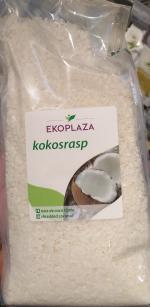
Local demand is also quite large. Desiccated coconut is widely used in bakery products, confectionery, breakfast cereals, ice cream and Asian dishes. Kokosbrood, a sweet coconut-based sandwich topping, is a distinctive Dutch product. Albert Heijn sells several varieties, including an original product made according to a recipe used since 1954. The Mars factory in Veghel, which produces Bounty bars, is another important industrial user.
The best opportunities are in fine and medium grades for bakery and confectionery, and in flakes, chips and other cuts for breakfast products and snacks. Organic and traceable products offer a smaller, higher-value segment. In 2025, the Netherlands imported 2,233 tonnes of organic desiccated coconut, supplied in almost equal quantities by Sri Lanka and the Philippines. This shows opportunities for alternative suppliers. However, they must offer consistent white colour, mild flavour, competitive prices and reliable, year-round delivery.
Figure 9: Ecoplaza organic desiccated coconut
Source: sebleouf, CC BY-SA 3.0, via Open Food Facts, 2026
Beyond organic certification, Dutch coconut buyers increasingly consider wider sustainability risks. These include ageing palms, climate change, pests, low farmer incomes and limited replanting. Traceability is also difficult, as most coconuts come from smallholders. Tradin Organic supports certified sourcing projects in Indonesia and the Philippines. Exporters should therefore combine certification with farm mapping, tree renewal, reliable supply and clear evidence of origin.
Tips:
- Read the CBI studies on desiccated coconut to better understand European demand, buyer requirements and market opportunities.
- Show how you are acting to secure future supply. Provide evidence of farm traceability, tree renewal, climate adaptation, farmer support and measures to reduce waste during coconut processing.
4. Which trends offer opportunities or pose threats to the Dutch dried fruit and nuts market?
The Dutch market offers increasing opportunities for exporters who combine health, sustainability and reliability. Demand for nuts is supported by healthy snacking and plant-based eating. Meanwhile, dried fruit benefits from bakery products, breakfast products and no-added-sugar products. At the same time, Dutch buyers expect trustworthy proof of sustainability claims, traceability and risk management. Suppliers that communicate early, adapt to climate and trade shocks, and deliver consistent quality will be best placed to succeed on the Dutch market.
Plant protein drives Dutch nut consumption, while bakery and confectionery boost dried fruit usage
In the official Dutch food consumption survey from 2022, the average intake of unsalted nuts and seeds rose from three grams per day in 2012–2016 to five grams in 2019–2021. The share of Dutch adults consuming at least 15 grams daily also rose from 5% to 11% during the same period. Despite this increase, most Dutch adults still eat less than the recommended amount of daily nuts. For exporters, the Dutch market offers room to establish regular rather than occasional consumption.
One reason is the image that nuts have as a healthy source of plant protein. Vegetarian and vegan diets support demand, but the opportunity is larger than this. Nuts also appeal to meat-eaters who choose plant-based food often. This fits the Dutch National Protein Strategy. It aims to expand the production and use of plant proteins.
Official dietary advice strengthens this position further. The Netherlands Nutrition Centre recommends a daily handful of unsalted nuts, preferably raw or lightly roasted. It also includes 100% nut paste and peanut butter. It promotes nuts as a replacement for meat. This creates opportunities beyond the snack shelf, including nut mixes, breakfast toppings, nut butters and ingredients for meals.
The Netherlands Nutrition Centre claims that dried fruit with no added sugar can be part of a healthy Dutch diet. However, it advises no more than a handful, as dried fruit contains a lot of sugar and loses vitamin C during drying. Dried fruit still provides fibre, minerals and quick energy. Its natural sweetness supports use in bakery, confectionery, breakfast products and snack bars, especially those with no added sugar. Sports nutrition offers another opportunity, as dried fruit provides natural energy after exercise.
Dutch supermarkets are also paying more attention to healthier eating. This supports products like unsalted nuts and dried fruit with no added sugar. However, the first national supermarket monitor found that only around 40% of food sold by weight at leading Dutch supermarkets met the national guidelines for a healthy diet. This shows that healthier products have a strong retail presence, but still compete with many less healthy choices.
These trends create opportunities for exporters to support the promotional activities of Dutch importers, packers and retailers. The Dutch trade association NZV has dedicated working groups for nuts and dried fruit and a public-relations committee. The Dutch Wissel ’ns Wat! campaign encourages Dutch consumers to choose plant-based food more often. It highlights nuts as a source of plant protein. Exporters can support these campaigns with product information, recipes and promotional material, while offering stable quality and competitive prices.
Over the next three years, the Dutch demand for nuts is likely to keep rising, supported by healthy snacking. Over the next five years and beyond, nuts should also benefit from the shift towards plant protein. For reference, plant protein now provides 43% of Dutch protein intake versus the target of 60%. Dried fruit should gain opportunities as a source of natural sweetness in bakery, bars and no-added-sugar products.
Tips:
- Read the CBI study on trends in the European processed fruit, vegetables and edible nuts market to learn more about changing consumer demand, plant-based eating, clean-label products and other market developments.
- Ask Dutch buyers which nutrition messages they want to use, then provide laboratory results for protein, fibre, sugar and energy. Check whether claims such as ‘source of protein’, ‘high in fibre’ and ‘no added sugar’ meet the conditions in the EU Register of Nutrition and Health Claims. This gives buyers reliable evidence for packaging and promotional campaigns.
Sustainability is now a part of product specifications
Sustainability is becoming a key factor in Dutch sourcing of dried fruit and nuts. It can strengthen suppliers’ market position. The Sustainable Nut Initiative is a Dutch foundation that brings companies across the nut supply chain together. It focuses on traceability, risk assessment and continuous improvement beyond certification. This creates opportunities for exporters who can provide reliable data and show progress. However, it is a threat to suppliers who cannot support their claims.
Sustainability in the Netherlands includes growth in organic consumption, demand for more traceable supply chains, stronger consumer interest in product information and efforts to source directly from origin.
The clearest Dutch indicator for sustainability is the growth of organic sales in supermarkets. According to the Dutch government’s overview of organic consumption, organic food and drinks accounted for 4.1% of supermarket spending in Q1 2026. This was an increase of 3.8% compared with Q4 2025. Imports of organic fruit and nuts follow a similar trend. They fell in 2022 and 2023, when inflation linked to the war in Ukraine reduced demand for more expensive organic products. However, imports are increasing again.
Source: Autentika Global based on EU analytical briefs, 2026
Between 2023 and 2025, Dutch imports of organic dried fruit and nuts from non-EU countries increased by over 12,000 tonnes, from 26,500 tonnes to 38,800 tonnes. In 2025, organic nuts accounted for 28,900 tonnes and organic dried fruit for about 10,000 tonnes. During this period, the share of organic products in total nut imports rose from 4% to 6%. The share of organic dried fruit in total dried fruit imports also increased from 8% to 9%.
Organic nut imports consist mainly of shelled peanuts (54%), cashews (19%), desiccated coconut (8%), shelled walnuts (8%) and Brazil nuts (4%). Organic dried fruit imports consist mainly of dates (32%), sultanas (26%), sugar-infused cranberries (17%), raisins (7%) and dried tropical fruit (5%).
The leading supplier of organic nuts to the Netherlands is China (groundnuts, pine nuts), followed by Vietnam (cashew nuts), Egypt (peanuts), Ukraine (walnuts), Bolivia (Brazil nuts) and Mexico (pecans). The leading supplier of organic dried fruit to the Netherlands is Türkiye (dried grapes, apricots and figs), followed by Canada (sugar infused cranberries), Israel (dates), Tunisia (dates) and Argentina (dried grapes).
Organic growth is part of a wider Dutch demand for clear and credible product information. A 2025 Deloitte supermarket survey found that pesticide use, human exploitation and waste were important for 70% of Dutch respondents. In fact, 53% wanted more information about pesticide use, and 51% wanted to know about the health benefits. These concerns are relevant for dried fruit and nuts. Consumers and buyers need information about the origin, pesticide residues, processing methods and working conditions.
However, sustainability information needs to be simple and credible. A 2025 Milieu Centraal survey found that 83% of Dutch consumers sometimes think about sustainability labels when buying food. However, 72% find the large number of different labels confusing to them. Almost half would check labels more often if the main labels were clearly marked. For exporters, sustainability claims must therefore be supported by recognised certification, traceability and clear product information. Organic, Fairtrade and other sustainable products are more likely to succeed when buyers value these claims and accept the price.
One good example is the partnership between Dutch cashew brand Johnny Cashew and Tanzanian processor Mama Cashew. It processes cashews grown in Tanzania locally rather than in Asia. This reduces transport-related emissions by 57%. Mama Cashew provides fair working conditions for more than 600 employees, including over 500 women, while more than 1,000 Fairtrade farmers receive premium prices. The products are sold by major Dutch retailers, including Albert Heijn, Picnic and Ekoplaza.
Another strong example is the Kenyan processor Tropical Mac. It shows how investment in sustainability can support economic growth. The company sources macadamias directly from several thousand farmers. It recently invested in a Fair for Life certificate to support better farmer prices, improved working conditions and progress towards living wages for employees. It is also BRCGS-certified and SMETA-audited. To strengthen its links with Dutch buyers, the company established a physical presence in the Port of Rotterdam.
Sustainability will become more important to buyers over the next three years. This is particularly true for branded, organic and specialist products. In the longer term, exporters with reliable sustainability data may gain an advantage as retailers increasingly use this information in supplier assessments and purchasing decisions.
Tips:
- Read CBI’s studies on how to go green and how to become more socially responsible. They provide practical steps to improve environmental and social sustainability and meet Dutch and European buyer expectations.
- Claiming your product is sustainable is not sufficient. Provide clear evidence, such as certification status, farm practices, traceability, water and pesticide controls, and social audit reports, such as SMETA and amfori BSCI. Explain how these measures reduce risks for buyers.
Climate and trade shocks make reliable suppliers more valuable
Dutch importers and packers source dried fruit and nuts from many countries. Drought, heat, poor harvests, shipping problems and trade measures can quickly affect prices, quality and delivery times. Buyers therefore value suppliers that provide early warnings and realistic crop and shipment plans. This creates opportunities for exporters that manage risks well. However, it poses a risk for those that communicate only after problems occur.
Climate risks are growing. A joint FAO-WMO report from 2026 warned that extreme heat is becoming a critical threat to global food production. It can reduce yields and worsen drought, wildfire and pest pressure. This is especially relevant for dried fruit and nuts, as many are grown in hot, water-stressed regions.
Recent events show how quickly such risks can affect international supply chains. In 2025, Türkiye experienced its driest period in 52 years. Rainfall across the country was 26% below normal during the first ten months. This affected Turkish supplies of hazelnuts, dried grapes, dried apricots and dried figs.
Even big harvests are not always good for business. In Côte d’Ivoire, a larger cashew crop failed to lead to smooth sales in 2025. Reduced buying by Vietnamese processors and uncertainty about US tariffs left around 200,000 tonnes of raw cashew nuts at risk of spoilage. This shows how a problem at one stage of the supply chain can later affect processors and buyers in Europe.
In the next one to three years, Dutch buyers will probably ask more frequently for crop updates, risk information and continuity plans. In the longer term, suppliers that combine climate adaptation, reliable data and stable delivery are likely to gain an advantage.
Tips:
- Give Dutch buyers regular crop and shipment updates. Explain how weather may affect volumes, quality and delivery dates, and what to do in case of harvests and shipment delays. Where possible, agree on alternative grades, volumes and shipment periods in advance.
- Use the guidance behind the INC Sustainability Certification as a practical checklist, even if certification is not your immediate goal. Review your practices related to climate risks, water and energy use, labour conditions and traceability.
Autentika Global carried out this study on behalf of CBI.
Please review our market information disclaimer.
Search
Enter search terms to find market research