
The European market potential for organic cocoa
Demand for organic cocoa is low. Organic cocoa imports and consumption have gone down slightly in the last few years, but should recover and continue to grow. This is mostly driven by growing consumer interest in health and wellness and concern about sustainability issues. The new EU organic law could have a negative impact on organic cocoa supply in the short term, but should also lead to growth in the long term. The Netherlands, Belgium and Germany are the main importers of organic cocoa. France, Italy and Switzerland are important markets for organic chocolate.
Contents of this page
1. Product description: organic cocoa
The EU is implementing its European Green Deal, which wants to make Europe climate-neutral by 2050. One of the important parts of the Green Deal is the Farm to Fork (F2F) strategy. This is a strategy that wants to create a healthier and more sustainable food system. The goal of F2F is to convert at least 25% of agricultural land in Europe to organic farming by 2030.
Organic farming means producing food using only natural substances and processes. This has a positive effect on the environment in several ways. The EU lists the following benefits:
- Responsible use of energy and natural resources;
- Maintenance of biodiversity;
- Preservation of regional ecological balances;
- Improvement of soil fertility;
- Maintenance of water quality.
Organic farming also encourages a high standard of animal welfare. In the European Union, the EU regulates organic certification centrally. The EU has strict control and enforcement on organic products. Imported organic products are also checked to make sure that they are produced according to organic principles.
If a chocolate product is certified as organic, the manufacturer can use the EU organic logo. There are also different national and private organic certification labels. The national labels require you to get an organic certification, and private sector labels have other requirements as well. You can read more about the requirements of these labels in the CBI study on entering the European market for organic cocoa.
Figure 1: Cocoa beans
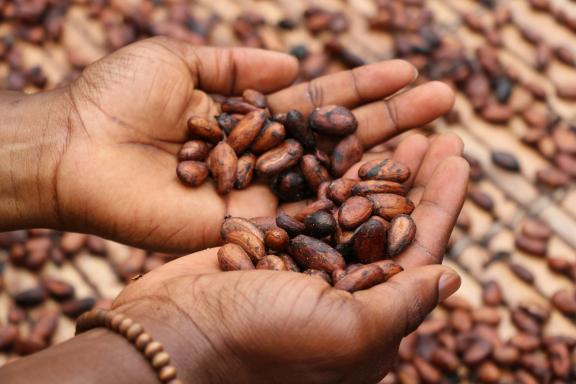
Source: Etty Fidele via Unsplash
The EU imported 56,000 tonnes of organic cocoa beans in 2023. This was 4% of the total volume of cocoa beans imported by the EU in 2023. Imports of organic cocoa butter and powder are much smaller than organic bean imports. Less than 1% of all imported cocoa paste and powder is organic.
The market for organic chocolate has grown strongly in Europe because people have a lot of money to spend and are more interested in healthier living. However, even though consumers are happy to pay more for organic chocolate, it is still a niche market.
Most organic cocoa is imported as cocoa beans. That is why this study will focus on cocoa beans (HS code 1801: Cocoa beans, whole or broken, raw or roasted).
Tips:
- Turn on your browser’s translation function to read this study in your native language.
- Make sure that you have interested buyers before starting the path to organic certification. It can take a lot of investment to make sure you comply with the organic standard and to set up full traceability. It could be easier to go for organic if you already have experience with another certification programme such as Rainforest Alliance or Fairtrade.
2. What makes Europe an interesting market for organic cocoa?
Europe is the world’s largest cocoa market and the second-largest region for organic products after the United States of America (USA). European imports of organic cocoa beans are rising, and so is consumer interest in organic products. People are interested in organic products because they want to live healthy lives and care about the environment.
Europe’s organic food market is expected to recover
Global organic agriculture has grown a lot. Organic agricultural land has gone up by 103% between 2014 and 2023. This means that it has more than doubled in size. European consumers are also buying more organic products. The European organic food market more than doubled between 2014 and 2023, increasing by 109%. Total sales were EUR 5 billion in 2023.
The EU market growth was similar for organic cocoa. Organic cocoa production has gone up steadily over the past decade. The production area increased by 104% between 2014 and 2023. However, the market for organic stopped growing in 2023. Demand went down because of the sharp rise in food prices. Retail sales in the EU went up by 2.9% between 2022 and 2023, but imports to the EU went down by 9.1%. This is the lowest level since 2018.
Organic cocoa imports have also stopped growing after years of growth. Organic cocoa imports to the EU went down by 17,000 tonnes between 2022 and 2023. This was a decrease of 23%. This is partly because there is less organic cocoa available. Organic certification is also becoming more complicated and expensive. See the section on trends for more details.
Source: TRACES 2025
The organic cocoa production area also went down slightly, by 1.2%. However, the amount of organic cocoa is going down less than global cocoa production and exports. All cocoa production and exports went down, so a decline in organic exports was in line with global changes. The decrease in organic cocoa production was only 1.2%, compared to the 14% decrease in global cocoa production from 2022-23 to 2023-24. Organic cocoa was better able to survive these global shocks. Global cocoa production has also shown signs of growth in 2025.
Short-term, organic cocoa production may be further impacted by the new EU regulations. These could make it more difficult or expensive to certify and ship organic cocoa as the industry adjusts to the new regulations. However, in the long term, industry experts expect the European market for organic cocoa to recover and keep growing. That is why imports are expected to go up in the coming years.
The EU is also trying stimulate this recovery and further growth. Organic consumption is part of their Farm to Fork strategy. Member states have developed Common Agricultural Policy (CAP) Strategic Plans and national Organic Action Plans. The goal of the CAP plans is to increase organic production in the EU. The Action Plans include stimulating demand for organic products. These plans are expected to help stimulate further growth.
Attention to health and sustainability issues keep increasing
Attention to health and sustainability issues should further increase demand for organic cocoa. The growing interest in healthy living in Europe is the most important motivation for consumers to buy organic products. Organic chocolate is free of synthetic pesticides and fertilisers. This makes it attractive to health-conscious Europeans. According to a 2023 study, 60% of European consumers are now more focused on healthier food and drink consumption.
This health trend has grown since the COVID-19 crisis which led to an increasing demand for organics. It made consumers more aware of food quality and health. Consumers believe organic foods are healthier and safer than conventional products. This trend is strongest among adults aged 18 to 34 years. This group is putting sustainability and ethics first in their purchases, more than other age groups do.
The growing health awareness in Europe also comes with several challenges. For example, it has raised concerns about sugar intake. Younger Europeans are more aware of the health risks. The high levels of sugar in many chocolate products could mean that fewer people buy them.
The second most important reason why people want organic products is that they are more aware of sustainability issues. Health and wellness are in line with the trend towards sustainability. Personal health and environmental sustainability overlap for Europeans. Pesticides and non-eco-friendly practices are both seen as unhealthy and are having a negative impact on the environment.
Many consumers are aware of organic certification. In 2022, the EU Organic logo was the most recognised sustainability label in Europe. The number of people who recognised it grew from only 24% in 2012 to 61% in 2022.
Tips:
- The European Commission publishes organic cocoa import data every year. Here, you can find import data for each EU country and where the cocoa was imported from. The latest data is available on the page about agricultural markets in the organic sector.
- You can learn more about organic markets in Europe on the FiBL website.
- You can learn more about global organic developments in the report 'The World of Organic Agriculture: Statistics & Emerging Trends 2025'.
3. Which European countries offer the most opportunities for organic cocoa?
The largest organic food market in Europe is Germany, with a value of 16 billion euros. This is followed by France with 12 billion euros and Switzerland with 4 billion euros. Organic food products have the highest market share in Denmark (11.8%), Switzerland (11.6%) and Austria (11.0%). These countries also have the highest per-capita consumption of organic products. They are also important countries for organic cocoa consumption.
Organic food market shares went down in many countries in 2023. This was because of high inflation rates and a sharp rise in food prices across the entire food market. This also had an impact on the cocoa sector. Despite the overall decrease in Europe, retail sales went up in some countries. The largest increases were seen in Estonia (+13.0%), the Netherlands (+12.5%) and Austria (+6.5%).
In 2023, the main EU importers of organic cocoa beans were the Netherlands with 26,000 tonnes, Belgium with 17,000 tonnes, Italy with 7,000 tonnes, Germany with 4,000 tonnes and Spain with 2,000 tonnes. These 5 countries together made up 99% of all organic cocoa bean imports in the EU in 2023. Imports in the Netherlands have gone down in the last 2 years, while imports in Belgium have gone up. Outside the EU, the UK and Switzerland are also important European importers and consumers of organic chocolate.
The Netherlands, Belgium and Germany are important entry points. Most of the organic cocoa imported into the Netherlands and Belgium is re-exported to other European countries and the USA. France is an important importer of organic cocoa within Europe.
This study will focus on Germany, the Netherlands, Belgium, Italy, Switzerland and France as important markets for organic cocoa. Imports of cocoa paste, butter and powder were insignificant compared to bean imports. That is why this study will not go into them.
Source: TRACES 2025
The Netherlands is Europe’s largest importer of organic cocoa
The Netherlands is the world’s second-largest importer of organic cocoa, after the USA. The Netherlands imported 26,000 tonnes of organic beans in 2023. This makes up 3% of their total bean imports from producing countries.
Organic cocoa imports have gone down in the last years (2022 and 2023). This could be because Belgium is becoming a more important market for organic cocoa. Belgian imports have gone up, while Dutch imports have gone down. For exporters of organic cocoa, the Netherlands and Belgium are still the most important targets. In 2023, these two countries combined imported 77% of all organic cocoa into the EU.
Source: TRACES 2025
The Netherlands is an important import hub for organic cocoa. A large part of the organic cocoa that is imported into the Netherlands is processed and then exported to other European countries and the USA.
The Dutch market for organic products is growing. Even though the EU organic market went down in 2022, the market in the Netherlands grew by 4.4%. A national campaign was started in 2024 to promote the consumption of organic products. The Dutch organic market is expected to keep growing.
The main importer of organic cocoa in the Netherlands is Tradin Organic. They are responsible for most organic imports. Other organic cocoa importers include Daarnhouwer and Huyser Müller BV.
Examples of Dutch organic chocolate brands include Chocolatemakers and Lovechock. Chocolatemakers also imports organic cocoa directly. Craft organic chocolate products are sold in organic retail shops such as Ekoplaza.
For exporters, it will be very important to have direct relationships with organic cocoa importers (especially Tradin Organic) if they want to have a good position in the European market. The Netherlands is Europe’s largest organic cocoa importer. This means that it is the main route for organic exporters to enter the European market.
Belgium is a key hub for organic cocoa
Belgium is an important organic cocoa importer. Belgium imported 17,000 tonnes of organic cocoa beans in 2023. This was 5% of their total bean imports. This made them the second-largest importer of organic cocoa in the EU. The country was also the EU’s largest importer of organic cocoa paste and powder. The total volume was only 761 tonnes, but it made up 37% of all EU imports.
Most of the cocoa that is imported to Belgium is re-exported as beans or processed cocoa. This means that Belgium is an important hub for organic cocoa, but a less important destination market for organic chocolate.
Barry Callebaut, Cargill and Puratos import 90% of all cocoa into Belgium. All three also import organic cocoa, but they do not report their total organic volumes. This means that it is not clear how much of Belgian organic imports flow through these companies. Of the three, Puratos has the biggest focus on organic. They have a long-term goal to increase the amount of organic products. They source organic cocoa from Papua New Guinea (775 tonnes in 2023) and Uganda (610 tonnes). 4 out of 52 Belcolade (Puratos) chocolate products are organic.
There are several brands available in Belgium that are 100% organic. One example is Belvas, which uses 100% certified Fairtrade and Organic cocoa. Equitable is another small brand that is 100% organic certified. Two-thirds of the key Fairtrade products sold in Belgium (including chocolate) are also organic-certified. You can find a list of Fairtrade organic chocolate products in the business catalogue.
For exporters, Belgium is similar to the Netherlands. The consumption market is not very big compared to other countries, but Belgium imports a lot of organic cocoa directly from producing countries. Building relationships with importers is very important.
Italy is an interesting market for organic cocoa
Organic production and consumption are important in Italy. The organic food market in Italy is growing. Italy is the fourth-largest EU market for organic food. Organic retail sales reached 3.9 billion euros in 2023. It is also the fourth-largest importer of organic products. Import is growing, with a large increase of 40% from 2022 to 2023.
Organic agriculture is also important in the country. Italy has the most organic producers and organic processors in the EU. The country also has the largest export value in the EU at 3.6 billion euros in 2023. This shows that Italian consumers are well-informed and very aware of the value of organic products.
Italy imports a relatively high share of organic cocoa beans. Total bean imports were 89,000 tonnes in 2023, of which 7,000 tonnes were imported as organic. This made up 6% of total imports, which was the highest share among the bigger organic cocoa importers in the EU.
Italy buys from different origins than other EU countries. More than two-thirds of their 2023 imports came from Peru and Uganda. These countries were only the fourth and fifth largest origins overall.
Italian chocolate confectionery company ICAM is an important company in the organic market, They are also one of the largest global manufacturers of organic chocolate. ICAM is the biggest organic cocoa importer in Italy. It is also the owner of the premium organic chocolate brand Vanini. They have strong links with Peru and Uganda and are responsible for a large part of the imports from those countries.
Chocolate products that are certified as both Fairtrade and organic are very common in Italy. Examples include the chocolate products of Otto Chocolates and Alce Nero.
Source: TRACES 2025 and Eurostat 2025
Switzerland has the highest per-capita organic consumption
Organic is important in Switzerland. In 2023, Switzerland had the highest per capita consumption worldwide at 468 euros per capita. They were the sixth-largest organic market in the world with retail sales of 4.2 billion euros and a market share of 11.6%. This makes Switzerland one of the most important organic markets in Europe.
Switzerland is an interesting market for Fairtrade and organic cocoa. Swiss consumers are very motivated to buy these products because of ethical reasons. Total volumes are not large yet, but they are growing. About 8,500 tonnes of Fairtrade-certified cocoa was sold in Switzerland in 2023, of which 9% was also certified as organic (around 800 tonnes).
Bio Suisse Organic is a private organic certification programme for Switzerland. While it is not required by law to meet this standard, it has become the industry standard for Switzerland. Organic products need to meet this standard to be attractive on the Swiss market. Producers need to meet extra criteria for Bio Suisse compared to the EU Organic regulation. An extra advantage is that producers can get a higher premium as well.
Only importers with a valid licence contract with Bio Suisse can import organic goods. Importers usually apply for their potential suppliers to get a Bio Suisse certification so that products can be marketed in Switzerland as Bio Suisse products. Certification can give added value. For exporters to Switzerland, it is important to discuss this with their buyers.
Most organic cocoa is imported by the Swiss company PRONATEC. In 2022, they opened a processing facility where they can process 15,000 tonnes of organic cocoa per year. Other importers are Cocoasource, Minka SCS and Walter Matter.
Examples of Swiss chocolate companies producing organic chocolate are HALBA (part of the Coop group), Durig Chocolatier Lausanne,and Swiss chocolate. The latter used to be called Stella Bernrain, and mainly produces under private label.
Retailers are also demanding more organic products. Coop is the largest Swiss retailer and sells many organic chocolate products. 32% of the chocolate sales of their producer HALBA were organic in 2024.
Germany is Europe’s largest organic market, but is a small organic cocoa importer
Germany is the largest importer of organic products in Europe. Discount stores saw strong growth in organic product sales, even though prices went up a lot in these outlets. Germany has a relatively high net disposable income: 35,234 euros per household per year. This is higher than the EU average of 27,566 euros per household. This greater financial flexibility means that German consumers can buy higher-priced goods. This includes organic products, which are usually more expensive.
Germany is Europe’s biggest buyer of organic cocoa. However, Germany does not import a lot of organic cocoa directly from producing countries. In 2023, only 4,000 tonnes were imported directly. This was less than 1% of their total bean imports in 2023. Germany mostly imports organic beans and processed cocoa from large importers in countries like the Netherlands.
Although the overall organic market has moved from niche to mainstream in Germany, the market for organic chocolate is still considered niche. About 2.5% of chocolate sales in Germany in 2021 were organic. Bigger chocolate manufacturers in Germany, like Ritter, have tried to make their entire chocolate line organic. But this has not worked because not enough people want to buy it.
There is a lot of competition for the small organic chocolate market share. Consumers can buy organic chocolate in all price ranges, from low-end and private label to premium.
The combination of Fairtrade and organic is most popular in the chocolate drinks category. 88.0% of Fairtrade products is this category are also organic certified. Other shares are 46.5% for organic chocolate, 50.3% for confectionery and 1.2% for Fairtrade products that also contain non-organic ingredients.
One of the most popular German organic chocolate brands is Vivani, sold everywhere in Europe. Rapunzel is an example of a German chocolate maker working solely with Fairtrade and organic cocoa. Other examples are GEPA, Chocolate and Love and Liebharts.
For exporters, this means that Germany is not an attractive country for direct exports. Most organic cocoa enters Germany through other European countries. However, because it is Europe’s largest organic market, it is important to monitor their organic cocoa market. Import preferences could change, and this could lead to opportunities. There might also be chances for direct relationships with German manufacturers.
France has a large organic market, but is a small organic cocoa importer
France is also an important market for organic products. It had the EU’s second-largest organic market with sales of 12.0 billion euros. It was also the second-largest organic farming area in 2023.
However, France showed almost no growth in 2023. Sales from specialist retailers are going up, but sales from mainstream retailers are going down. About 172 organic food shops closed in 2022. This is partly caused by higher prices and doubts about the organic origins of the products. With inflation and the overall rising cost of food, this could reduce the demand for organic chocolate.
Organic cocoa imports change from one year to the next. Total organic bean imports were over 5,000 tonnes in 2020, 2021 and 2022. However, imports were less than 500 tonnes in 2019 and 2023. This could be because of changes between importing from producing countries and other European countries. Belgian imports were higher in the years when French imports were lower, so more cocoa could have been imported from Belgium. The change could also be linked to overall European imports, which were also lower in 2019 and 2023.
Even during higher import years, cocoa volumes are not large compared to the Netherlands and Belgium. However, France has a larger organic market than those two countries. This means that most organic cocoa arrives via other European countries rather than directly from producing countries.
Source: TRACES 2025
Organic chocolate is available in all price ranges, from low-end and private label to premium brands. Examples include the organic private label range of chocolate manufacturers Cémoi and Kaoka.
The most popular organic chocolate brand in France is Ethiquable. Other examples are Alter Eco and Kaoka. In 2020, the lower-end chocolate brand Poulain also entered the organic market with its organic milk chocolate bars. Private-label suppliers like Carrefour sell organic chocolate in their supermarkets.
Similar to Germany, exporters should not focus too much on France for their exports. Most organic cocoa enters France through other European countries.
Tips:
- Visit trade fairs to meet potential buyers and learn about (organic) cocoa demand and trends. BIOFACH, a German trade organisation, organises well-known fairs for the organic food sector. Most organic buyers in Europe will visit this fair.
- For more examples of European organic processors and traders, see the member list of the Organic Processing and Trade Association (OPTA). This list includes some cocoa traders as well.
- If you want more information about these European markets, read our studies on exporting cocoa to the Netherlands, Germany, Belgium, France, Switzerland and Italy.
4. Which trends offer opportunities or pose threats in the European organic cocoa market?
The market for organic cocoa is getting bigger in Europe. Market awareness is high, and consumer demand is going up. Organic chocolate is becoming more common in supermarkets, also as private-label products. Higher prices and the cost of living could stop growth in the short term, but the market is expected to grow in the long term. High cocoa prices and new EU regulations on organic could also have an impact on growth.
Figure 7: Organic cocoa at a warehouse in the Democratic Republic of Congo
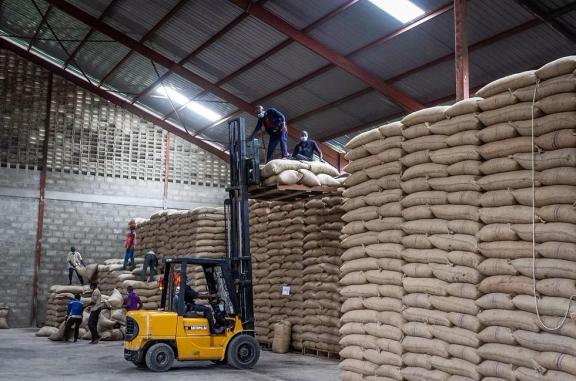
Source: Esco Kivu
Higher prices impact the organic cocoa market
In 2024, the price of cocoa went up a lot. Prices rose from 2,000-3,000 USD per tonne in 2023 to over 10,000 USD per tonne several times in 2024 and 2025. The price is expected to stay high in the short term. Because the market is always changing, it is hard to say what the prices will be in the long term. But some people are expecting the price to stabilise somewhere between the early 2023 price and the record-high price of 2024.
One of the reasons for the price rises is that the available supply has gone down. The world is producing less cocoa because of the impact of climate change, lack of investment, farmer poverty, illegal mining in West Africa and many other reasons. Read the CBI study 'What is the demand for cocoa on the European market?' to find out more about the price rise.
The price increase has made organic cocoa less popular on the market, relatively speaking. The organic premium is not worth as much when prices are so high. Farmers can get prices that are 2 to 3 times higher on the market than what they had agreed with their buyers. That is why more farmers are selling organic cocoa on the conventional market. It is common practice that no extra organic premium is paid if market prices are very high. This makes it more difficult for buyers of organic cocoa to find enough cocoa.
High prices have also made some organic cocoa farmers think about switching to conventional (non-organic) cocoa to save money. This makes more sense from a short-term economic perspective. However, non-organic cocoa production has a bad effect on the soil and offers less protection against climate change, dry periods and changing rain patterns. In the long term, this might not be the best choice for cocoa farmers.
Producers and exporters that have a strong relationship with importers have protected themselves against this trend. When a long-term relationship and agreement is in place, the producers and companies are more likely to keep to the agreements. PRONATEC has taken several measures to address the changing prices. They are adjusting prices more frequently, paying in a safe way, protecting producers against theft, and making their relationships stronger.
Producers and exporters can benefit from this trend by staying committed to organic cocoa production. Producers can use the extra income from high prices to invest in organic production. Demand for organic cocoa is rising, but there is less supply available because of the higher prices. Many buyers are finding it hard to get enough organic cocoa. If a producer can consistently offer organic cocoa in the coming years, then it makes them more attractive to European buyers.
It is very important to point out that organic production is also a long-term investment. Prices always change, so the price could go down again. When the price goes down, the organic premium becomes much more important again.
Climate change can be both a threat and an opportunity
Climate change is affecting global cocoa production. Organic origins have been less affected by the supply decrease than bulk cocoa producers. This is because the most affected origins are not the main organic producers, and because organic products help to protect again climate change.
The main origins where overall cocoa production went down were Ghana and Côte d’Ivoire. Both are not big organic cocoa producers. The three biggest organic cocoa producers (the Dominican Republic, the Democratic Republic of Congo (DRC) and Peru) are all producing more cocoa than before.
Organic producers can make good use of this trend by staying committed to organic cocoa farming. The effects of climate change are only expected to get worse. Some organic producers have also been less affected by climate change, because organic production helps to protect them against droughts or changing rain patterns.
Organic farming helps to protect farmers against climate change. That is why it is a smart long-term investment.
The new EU Organic Regulation could impact supply
On 1 January 2025, the new EU Organic Regulation came into effect. There are several changes that could impact organic producers and exporters. Producers and companies had three years to change over to the new regulation (since 2022), but in 2025, not all of them are ready. See the CBI study on entering the European market for organic cocoa for more details on the changes.
These changes could increase administrative and operating costs. Audits may take longer, making them more expensive. Potential delays can make storage costs go up. The increased costs, stricter certification requirements and new pesticide rules could make it less interesting for farmers to produce organic cocoa. Fairtrade is worried that the consumer market for organic products may become smaller as a result of these changes.
For exporters, the most important impact will come from new requirements on testing batches and giving out the Certificate of Inspection (COI). They will need to test more batches for contamination before they are shipped. COI requirements make the administrative costs go up. Some certification bodies charge a fee to give out the COI. The process could take longer, which delays shipping (4 to 8 weeks instead of 2 to 3 weeks). For an exporter, it could mean higher costs and extra time spent to deal with problems.
Producer groups are also impacted. The legal structure can only include organic farmers, which impacts groups that have both organic and conventional farmers. These groups will need to split up so they only include organic farmers.
The maximum group size also changes. Groups can now only have up to 2,000 members, so larger groups will need to be split up into different groups. This is estimated to impact about 68% of all organic cocoa farmers in Fairtrade organic groups. The change would have an impact on 68% to 75% of all organic cocoa imports into the EU and Switzerland.
New requirements on farm size and annual turnover will also have an impact on producers. Farms that are bigger than 5 hectares and that have more than 25,000 euros in annual turnover will now need to be individually certified. Some producers are now reaching the turnover threshold because of the high cocoa prices. Individual certification means that producers can no longer share the certification costs with other group members. This makes certification much more expensive.
More farms will now be audited, with more requirements being audited as well. Audits will probably take longer and overall administrative and operating costs will probably go up as well.
The new EU organic regulations have made imports more difficult in specific cases. For example, importing a bean to bar chocolate product from Madagascar into the EU is no longer possible because of complex USDA and EU Organic requirements.
In 2025, producers are trying to adjust to these changes. Many producers are finding it hard to adjust. For example, many cocoa producers in the Dominican Republic still do not fully understand the changes. In some cases, they were even planning stricter adaptation measures than what was required. They were also worried about the higher operational and certification costs. Even with the higher prices, they are not sure that the higher costs will be covered.
The stricter regulation can also be seen as an opportunity. Working together with exporters and importers can help to find the opportunity in these changes. In the Dominican Republic, PRONATEC and their subsidiary YACAO work closely with FUNDOPO. The group only needed to make a few small changes. They were already organised regionally in smaller sub-groups. Fairtrade certification already gives them the democratic member structure that the EU requires. YACAO is helping larger farms that require individual certification on a case-by-case basis.
Demand for organic cocoa should keep increasing
The new EU regulation also has benefits. It should lead to people having more confidence in the EU Organic label. The changes reassure consumers that organically labelled products are in fact produced organically. This increased trust should mean that more people want to buy the products.
It also creates simpler rules and a fair playing field between EU and non-EU countries. All organic products now need to comply with the same requirements if they are sold on the EU market. This replaces the more than 60 different standards that applied before, with the equivalence system.
New regulations also make people more aware of sustainability issues and stimulate demand. Companies are now marketing the sustainability aspects of their products more often. These trends are expected to lead to more short-term and long-term demand for organic products.
Tips:
- Focus on the organic market and use this to tell people your broader origin and sustainability story. Organic is used more often in the high-end or niche markets where there is more attention paid to sustainability.
- Learn more about the different organic markets in Europe, their organic retail sales and per-capita consumption on the retail sales database of FiBL Statistics. You can select the country or region you are interested in, as well as the specific years. Hold the Shift button to select several countries or years, then click ‘Show data’ to see the results.
- Take a look at this manual by Naturland on how to grow organic cocoa. It includes tips on how to avoid diseases and yield losses. Check the Organic Certification Preparation Guide by AVSF.
- Make long-term agreements with farmers and build long-term relationships with exporters. This helps to make sure there is enough supply for the future, and supports the livelihoods of organic farmers. It is important to build a good relationship with importers and to keep to your agreements. This will benefit both parties in the long term.
- For exporters, it is important to monitor the short-term and long-term demand for organic cocoa, and the global price of cocoa. In the long-term, price could have both positive and negative effects on the organic cocoa market. Speak to your buyers about their demand for organic cocoa in the coming years.
Long Run Sustainability carried out this study in partnership with Ethos Agriculture on behalf of CBI.
Please review our market information disclaimer.
Search
Enter search terms to find market research
Do you have questions about this research?
It is important for farmers to keep investing in organic production, despite today’s high prices. We expect demand to continue to increase. Organic practices not only meet market needs, but also build resilience against climate change – making them a smart, future-focused investment for every farmer.
Nicolo Rieben, Head of Cocoa Beans, PRONATEC
Webinar recording
Opportunities and requirements for exporting organic cocoa to the European market
22 May 2025