
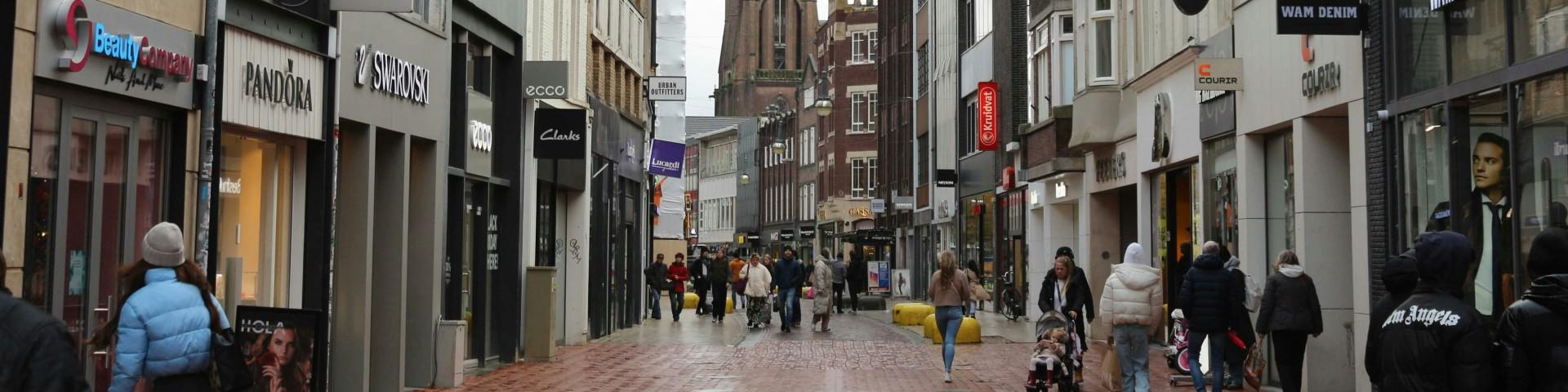
The Dutch market potential for apparel
The Netherlands can be seen as a gateway to the wider European apparel market. It may be small in terms of physical size and population (the seventh largest in the EU), but it is 4th in terms of apparel imports by value, re-exporting 90% of it. Dutch buyers can be hard negotiators. Successfully doing business in the Dutch apparel market, however, can open doors to other EU markets as well.
Contents of this page
1. Country description: Netherlands
The Netherlands is a small but highly developed country in Western Europe. Despite its size, it plays an important role in European trade, politics, and culture. The Netherlands has a high standard of living, strong democratic institutions and a well-developed social welfare system. Dutch people are known for being practical, direct and open-minded. Sustainability is more and more important in both government policy and daily life. English is widely spoken, making communication easy for international business partners.
Tallest people in the world
The Dutch are the tallest people in the world, with an average height of 1.84 m for men and 1.70 m for women. This is noticeably taller than the other top EU apparel importing countries: Germany (1.80 m/1.66 m), France (1.78 m/1.64 m), Spain (1.76 m/1.62 m), Italy (1.74 m/1.61 m) and Poland (1.80 m/1.65 m). If you want to supply to Dutch buyers, make sure your size range reflects this.
Temperate climate
The Netherlands has a temperate climate with cool winters, mild summers and rain throughout the year. This means there is steady demand for a wide range of apparel, including outerwear, knitwear and layering pieces, across all seasons.
The Netherlands is a founding member of the European Union (EU). It is fully integrated into the EU single market. Together with Belgium and Luxembourg, it forms the Benelux region: a group of 3 neighbouring countries with close economic, political and cultural ties. Exporters often regard the Benelux as a single block, sharing similar consumer values, distribution infrastructure and regulatory frameworks.
The Port of Rotterdam is the largest port in Europe. This makes the Netherlands a major entry point for goods moving into the wider EU market.
The market potential for apparel in the Netherlands
The Netherlands imported around €18.5 billion worth of apparel in 2024 (up from €15.8 billion in 2019), with a drop in 2020 due to the Covid-19 pandemic. The Netherlands ranked 4th amongst EU countries in terms of apparel import value in 2024.
Source: Eurostat, 2026
This was equal to 3.2 billion units of clothing in 2024 (down slightly from 3.25 billion in 2019). Of 2024’s total import value, 52.2% consisted of knitted or crocheted apparel (up 2.6% since 2019). Similarly, 43.2% of the total value came from non-knitted/woven apparel (down 2.5% since 2019). Nonwovens/other textiles made up the remaining 4.7%. Between 2019 and 2024, the market grew by an average of 3.2% per year.
Figure 2: The Netherlands has a population that is relatively tall, affluent and multicultural, and that enjoys outdoor activities
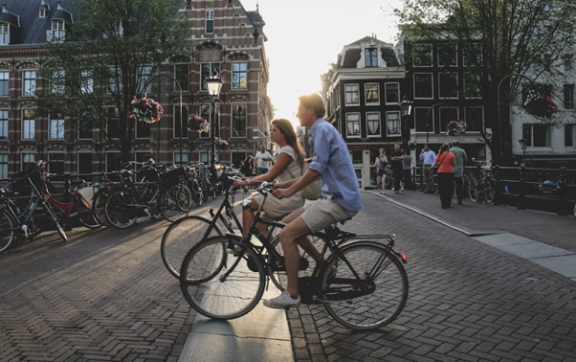
Source: sabina fratila on Unsplash
2. What makes the Netherlands an interesting market for apparel?
The Netherlands is a relatively small country. With 18.4 million people, it has the seventh largest population in the EU, making up just 4.1% of the total. However, its role in the European apparel trade is much larger than its population suggests. With the third highest GDP per capita in the EU, Dutch consumers have significant spending power.
Figure 3: The Netherlands’ location in Europe
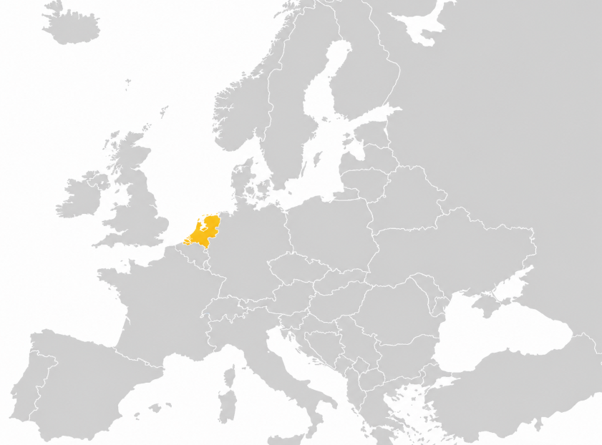
Source: FT Journalistiek
Table 1: Top 20 EU countries by population 2026; ranked by 2024 import value and share of EU imports
| Country | Population size 2026 | Rank (world) population 2026 | Rank EU population 2026 | % of World population 2026 | % of EU population 2026 | Rank apparel import value (EU) 2024 | Import value per capita (€) 2024 |
|---|---|---|---|---|---|---|---|
| Germany | 83,456,045 | 19 | 1 | 1.02% | 18.6% | 1 | 477 |
| France | 68,669,303 | 23 | 2 | 0.84% | 15.3% | 2 | 343 |
| Italy | 58,971,230 | 25 | 3 | 0.72% | 13.1% | 5 | 286 |
| Spain | 48,619,695 | 31 | 4 | 0.60% | 10.8% | 3 | 409 |
| Poland | 36,620,970 | 41 | 5 | 0.45% | 8.1% | 6 | 410 |
| Romania | 19,067,576 | 64 | 6 | 0.23% | 4.2% | 14 | 142 |
| Netherlands | 17,942,942 | 68 | 7 | 0.22% | 4.0% | 4 | 1033 |
| Belgium | 11,817,096 | 82 | 8 | 0.14% | 2.6% | 7 | 637 |
| Sweden | 10,551,707 | 90 | 9 | 0.13% | 2.3% | 10 | 438 |
| Czechia | 10,900,555 | 89 | 10 | 0.13% | 2.4% | 11 | 371 |
| Portugal | 11,204,347 | 87 | 11 | 0.14% | 2.5% | 12 | 272 |
| Greece | 10,375,764 | 95 | 12 | 0.13% | 2.3% | 15 | 221 |
| Hungary | 9,584,627 | 96 | 13 | 0.12% | 2.1% | 18 | 163 |
| Austria | 9,158,750 | 99 | 14 | 0.11% | 2.0% | 8 | 780 |
| Bulgaria | 6,445,481 | 112 | 15 | 0.08% | 1.4% | 20 | 137 |
| Denmark | 5,961,249 | 114 | 16 | 0.07% | 1.3% | 9 | 815 |
| Finland | 5,603,851 | 118 | 17 | 0.07% | 1.2% | 19 | 223 |
| Slovakia | 5,424,687 | 119 | 18 | 0.07% | 1.2% | 16 | 373 |
| Ireland | 5,351,681 | 120 | 19 | 0.07% | 1.2% | 13 | 538 |
| Croatia | 3,861,967 | 130 | 20 | 0.05% | 0.9% | 17 | 493 |
| EU27 | 449,489,862 | 410 |
Sources: Eurostat and UN Population Division, 2024
The Netherlands: Europe's apparel trade hub
In 2024, the Netherlands had the 4th highest total apparel imports by value in the EU, with a 10.1% share. This means it imports more than twice its expected share based on population alone. At €1,005 per capita, it has the highest apparel import value per person of any EU member state (more than double the the EU27 average of €410).
Domestic consumption is not the only thing that drives Dutch imports. Instead, they reflect the country’s role as a gateway to the wider EU market. Several international brands have headquarters in the Netherlands. Global companies use Dutch logistics infrastructure to distribute across Europe. The Netherlands re-exports 90% of the apparel value it imports, well above the EU27 average of 78.3%. In comparison, Germany, France and Spain re-export 65.5% on average, reflecting their primary role as consumer markets.
Italy and Poland have different explanations for their higher than average import rankings. Both countries are significant apparel manufacturing countries. Their high export values reflect domestic production and re-export activity. Spain combines domestic manufacturing with its role as a centralised distribution base for large Spanish retailers. This inflates its export ratio compared to pure consumer markets.
Figure 4: Rotterdam has Europe’s biggest port, making the Netherlands a gateway to other European markets
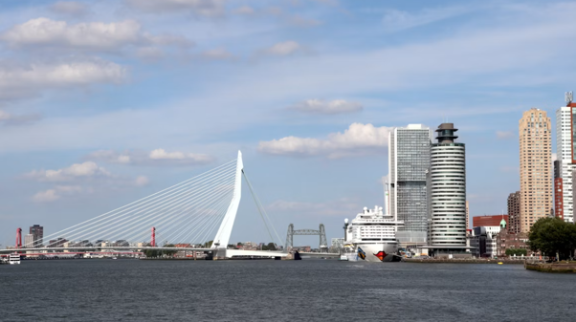
Source: Julia Taubitz on Unsplash
Table 2: Top 10 EU apparel importers, imports, export and trade ratios with the rest the world, 2024
| Country | Total apparel imports (€) | Share of EU apparel imports | Total apparel exports (€) | Share of EU apparel exports to world | Import/export ratio (based on value) |
|---|---|---|---|---|---|
| Germany | 39,825,432,190 | 21.7% | 26,298,435,389 | 14.31% | 66.1% |
| France | 23,569,681,013 | 12.8% | 14,040,254,570 | 7.64% | 59.6% |
| Spain | 19,927,699,559 | 10.8% | 14,135,904,894 | 7.69% | 70.9% |
| Netherlands | 18,549,911,081 | 10.1% | 16,691,708,094 | 9.08% | 90.0% |
| Italy | 16,862,560,852 | 9.2% | 25,669,819,746 | 13.97% | 152.2% |
| Poland | 15,011,216,525 | 8.2% | 12,702,642,585 | 6.91% | 84.3% |
| Belgium | 7,523,628,191 | 4.1% | 7,981,957,856 | 4.34% | 106.1% |
| Austria | 7,142,542,791 | 3.9% | 2,576,279,659 | 1.40% | 36.1% |
| Denmark | 4,859,782,283 | 2.6% | 4,874,397,963 | 2.65% | 100.2% |
| Sweden | 4,627,010,032 | 2.5% | 2,611,970,044 | 1.42% | 56.5% |
| EU27 | 183,796,646,352 | 143,919,213,456 | 78.3% |
Source: Eurostat, 2026
Belgium and Denmark have even higher re-export ratios than the Netherlands, at 106.1% and 100.2%, respectively. Like the Netherlands, this reflects distribution rather than manufacturing strength. However, with total import values of €7.5 billion and €4.8 billion, respectively, both Belgium and Denmark operate at well under half the scale of the Netherlands. It is the combination of high volume and high re-export ratio that makes the Netherlands stand out from other hub economies and positions it as the EU's leading apparel distribution hub.
Sourcing from low- and middle-income countries
The Netherlands gets 60.3% of its apparel imports by value from low- and middle-income countries (LMICs), and as much as 84.6% by volume. This is more than any other EU country. The share of imports from low- and middle-income countries, in value terms, is as much as 16.5% higher than the EU average. The share of imports from LMICs, in volume terms, is 21.5% higher than the EU average.
China is the Netherlands’ top sourcing destination. Its value share is almost 20% of all Dutch apparel imports. However, China’s share is declining across almost all product categories, most notably in outerwear (-12.2%). Bangladesh is the Netherlands' 2nd-largest LMIC exporter with a share of 11.9%. At the same time, the country is losing share in most categories, possibly reflecting increased competition and the high sustainability and compliance requirements in the Netherlands.
Türkiye and Vietnam both increased their overall share of Dutch imports between 2019 and 2024, by 1.5% and 1.7%, respectively. This reflects Dutch buyers' requirements for flexibility and shorter lead times, which Türkiye can provide. Vietnam largely owes its growth to its increased technical capabilities in complex categories, such as outerwear, and sports and activewear. Cambodia is also emerging as a supplier, particularly in outerwear and knitwear.
Table 3: Top 6 EU apparel importers 2024; LMIC share of imports; LMIC imports average annual growth; average LMIC price per unit
| Country | LMIC imports € | LMIC imports average annual growth 2019–2024 | LMIC share of total imports (value) | LMIC change in share 2019–2024 (value) | LMIC share of total imports (volume) |
|---|---|---|---|---|---|
| Germany | 18,739,003,976 | 1.9% | 47.1% | -4.4% | 65.7% |
| France | 10,466,150,276 | 1.3% | 44.4% | -1.3% | 60.7% |
| Spain | 12,639,960,043 | 0.5% | 63.4% | -7.1% | 79.5% |
| Netherlands | 11,189,163,074 | 2.7% | 60.3% | -1.2% | 84.6% |
| Italy | 7,625,900,151 | 0.5% | 45.2% | -5.7% | 63.6% |
| Poland | 4,433,427,903 | 12.2% | 29.5% | -3.5% | 62.3% |
| EU27 | 80,441,301,215 | 1.9% | 43.8% | -4.4% | 63.1% |
Source: Eurostat, 2026
Table 5: Leading apparel exporters to the Netherlands and share of value
| Major exporters | % share | change in share |
|---|---|---|
| China | 19.5% | -1.8% |
| Germany | 15.4% | -1.5% |
| Bangladesh | 11.9% | -1.9% |
| Türkiye | 8.5% | 1.5% |
| Vietnam | 4.9% | 1.7% |
| Top LMIC exporters | % share | Change in share |
|---|---|---|
| Bangladesh | 11.9% | -1.9% |
| Türkiye | 8.5% | 1.5% |
| Vietnam | 4.9% | 1.7% |
| India | 3.3% | -0.2% |
| Cambodia | 3.2% | 0.7% |
Source: Eurostat, 2026
A growing market with high requirements for flexibility and sustainability
The Dutch apparel market is characterised by small and medium-sized brands and retailers, with lower minimum order quantities than larger consumer markets like Germany or France.
The Netherlands is also relatively advanced in terms of textile sustainability regulation. Sustainability and compliance requirements are high and increasing. It is worth noting that even budget retailers such as Zeeman and mainstream retailers such as HEMA have strict chemical management standards, including comprehensive RSLs. This demonstrates that strict buyer requirements are not limited to premium brands. They apply across all market segments.
Dutch buyers tend to be knowledgeable and skilled negotiators. This is due to the Netherlands’ long history as a trading nation. Dutch brands and retailers typically expect competitive prices, accounting for quality, sustainability and order size. Suppliers that can meet these requirements have a competitive advantage in the Netherlands and the wider EU market.
Long-term predictions about the Dutch apparel market
Economic growth in the Netherlands is projected to slow in the short term (from 1.8% in 2025 to 1.1% in 2027). The Dutch apparel market, however, is likely to remain attractive for apparel in the medium- to long-term (3–10 years). Thanks to its healthy business climate, affluent population, high GDP and purchasing power, excellent infrastructure, and the Dutch government’s commitment to maintaining the Port of Rotterdam as Europe’s largest port, the Netherlands will continue to act as a gateway to Europe.
In the domestic market, the long-term trend of rising consumer spending is affected by short-term uncertainty due to rising inflation. In the longer term, however, the Dutch market is projected to grow steadily, mainly due to population growth caused by immigration. This means the Netherlands will become even more diverse over time.
At the same time, the Netherlands is becoming a more and more ageing society. People aged 65 and over now outnumber people under 20. All this means continued demand for a wide range of apparel styles, sizes and price segments.
Stricter sustainability legislation will continue to be a challenge for exporters to the EU and the Netherlands. The EU recently limited the scope and complexity of certain new laws, but the long-term trend is still towards more requirements regarding sustainable production, use and transparency. Dutch buyers expect suppliers to provide reliable data on materials, chemicals, environmental impact and supply chains.
Tips:
- Research Dutch brands in your product category carefully. You can use FashionUnited’s company directory, for example. Going into a conversation without detailed knowledge of a client’s collections, certifications and sustainability requirements will put you at a disadvantage.
- Ensure your chemical management systems are well-documented. In the Netherlands, strict RSL compliance is expected in all market segments.
- Dutch buyers tend to have lower minimum order quantities than buyers in larger EU markets like Germany and France. Make sure your pricing reflects the extra cost of producing smaller batches.
3. Which apparel items offer the most opportunities on the Dutch market?
Trousers and shorts, knitwear, t-shirts, underwear/nightwear, outerwear, shirts and blouses are the most common product categories that LMICs export to the Netherlands. Together, these 6 categories had an LMIC import value of €8.4 billion in 2024. This accounts for 75.9% of all apparel exports from LMICs to the Netherlands.
The fastest-growing apparel category exported by LMICs is ensembles (sets of 2 or more pieces that belong together), followed by hosiery (socks, tights and stockings) and underwear/nightwear. Babywear, accessories (gloves, ties, scarves), outerwear, shirts and blouses and dresses and skirts categories on the other hand, are growing at or below the average 5-year growth rate of 3.9% from for all apparel categories from LMICs.
Between 2019 and 2024, China’s market share of imports decreased for the categories dresses and skirts, ensembles, shirts and blouses, suits and jackets, trousers and shorts, outerwear and knitwear. This presents opportunities for LMIC suppliers. The highest decline was seen in the outerwear category (-12.2% growth).
On the other hand, China still maintains a market share larger than all LMIC exports to the Netherlands combined in the accessories, hosiery, suits and jackets, outerwear, sports and activewear, and ensembles categories. These categories have more complex and technical products or require high-quality raw materials.
Table 6: Dutch imports from LMICs by product category; price developments; top exporters
| Product category | Import value 2024 in € | 5 year average growth | 2024 average price | 5 year price change | Top LMIC exporters (change in market share of LMIC imports 2019–2024) |
|---|---|---|---|---|---|
| Trousers and shorts | 2.5 billion | 2.9% | 6.99 | 1.28 |
|
| Knitwear | 1.6 billion | 4.3% | 7.87 | 1.52 |
|
| T-shirts | 1.2 billion | 2.8% | 3.18 | 0.69 |
|
| Underwear/nightwear | 1.1 billion | 4.0% | 2.34 | 0.27 |
|
| Outerwear | 1.0 billion | 2.1% | 17.71 | 1.51 |
|
| Shirts and blouses | 0.87 billion | 0.9% | 8.18 | 2.51 |
|
| Dresses and skirts | 0.77 billion | 0.2% | 9.88 | 3.34 |
|
| Hosiery | 0.43 billion | 4.5% | 0.55 | 0.01 |
|
| Suits and jackets | 0.32 billion | 3.8% | 18.31 | 3.09 |
|
| Sports and activewear | 0.30 billion | 3.1% | 9.64 | 1.70 |
|
| Apparel accessories | 0.21 billion | 1.9% | 1.24 | -0.36 |
|
| Babywear | 0.19 billion | -2.8% | No data | No data |
|
| Ensembles | 0.05 billion | 23.0% | 8.21 | 2.37 |
|
Source: Eurostat, 2026
Trousers and shorts
The top product category imported by the Netherlands is trousers and shorts. This segment grew 2.9% every year on average between 2019 and 2024. It makes up 23% of all Dutch apparel imports from LMICs by value. At €6.99 in 2024, the average import unit price of trousers and shorts from LMICs is €0.50 higher than the EU average, having increased by €1.28 in the 2019–2024 period.
The trousers and shorts category is based on volume. Bangladesh is the largest LMIC exporter, with a 23.2% share (despite a decline in share of 6.9% between 2019 and 2024). Denim is an important niche market in this segment. In 2024, denim made up over 25% of the total value of trousers and shorts imports to the Netherlands from LMICs. This is 2.4% more than the EU average.
Amsterdam: The world’s denim capital
Amsterdam is widely regarded as the global capital of denim. The city is home to Kingpins Show, one of the world's most important denim trade fairs held twice yearly. Amsterdam also has the only dedicated denim school in the world. It is also home to several sustainable denim brands, including G-STAR, Kings of Indigo, Kuyichi, Denham and MUD Jeans. In 2020, the Dutch government launched the Denim Deal: an initiative to bring brands, manufacturers, recyclers and government together to make recycled cotton fibre the industry standard.
Well-known Dutch brands that produce and market pants and trousers (including denim) include MUD, Denham, Kings of Indigo, G-STAR, C&A, Scotch & Soda, Mr Marvis and Vintage Industries.
Knitwear
Dutch imports in the knitwear category have grown by 4.3% on average each year between 2019 and 2024. Knitwear makes up 14.5% of all Dutch apparel imports from LMICs. At €7.87 in 2024, the average import unit price of knitwear from LMICs is €1.08 higher than the EU average, having increased by €1.52 over the past 5 years.
China is the largest exporter of knitwear to the EU. Bangladesh is the biggest LMIC exporter, with a 20.3% share of LMIC knitwear exports to the EU (a reduction of 1.7% since 2019), serving the budget to mid-market segment.
Knitwear made from cotton fibres makes up most of the import market, followed by knitwear made from man-made fibres. Respectively, they accounted for 44.6% and 41.5% of the total value of knitwear imports to the Netherlands from LMICs in 2024.
The Netherlands has a mild climate with cool winters and rain throughout the year. This supports steady demand for knitwear and layering pieces across all seasons.
Brands and retailers headquartered in the Netherlands that have significant knitwear collections include: mainstream retailers, such as HEMA and WE Fashion; mid-market brands, such as Summum and State of Art; and upper-middle market brands, such as Scotch & Soda, Profuomo and Tommy Hilfiger. Dutch knitwear brands that have sustainable profiles include Studio Anneloes, Knit-ted and Loop.a life.
T-shirts
T-shirts make up 11.2% of all Dutch apparel imports from LMICs. The category grew on average by 2.8% each year between 2019 and 2024. The average import unit price of a t-shirt from an LMIC was €3.18 in 2024 (€0.45 higher than the EU average). This is a 5-year increase of €0.69.
Bangladesh is the largest developing-country exporter, with a 34.4% share. This is a decrease of 3.1% since 2019. Türkiye is the 2nd-largest exporter, with a 14.5% share, down from 17.8% in 2019. The T-shirt segment is highly competitive. Niches include T-shirts made with more sustainable fibres such as organic or recycled cotton as well as higher-end T-shirts that use alternative fibres (such as linen) or are knitted with finer yarns. For example, look at Dutch brands King Louie and SKOT.
Well-known brands and retailers for T-shirts include big retailers, such as HEMA and WE Fashion, mid-market brands, such as State of Art and America Today, and upper-middle-market brands, such as by-bar and Scotch & Soda.
Underwear and nightwear
Underwear and nightwear make up 9.9% of all Dutch apparel imports from LMICs. The category grew by 4% each year on average between 2019 and 2024. The average import unit price of underwear and nightwear from LMICs was €2.34 in 2024 (€0.09 higher than the EU average). This represents a 5-year increase of €0.27.
China is the largest exporter, with a 36.5% share. This represents an increase in share of 5.3% since 2019. Bangladesh is the second largest exporter, with a 26.8% share, up from 25.7% in 2019, followed by Sri Lanka, with a 9.3% share.
Well-known brands and retailers include big retailers Action, Zeeman, HEMA and Ten Cate. For women’s underwear and nightwear, mainstream retail chains include Hunkemöller, and mid-market brands include LingaDore and Sapph. Bamigo and Undiemeister are well-known underwear brands for men.
Outerwear
The outerwear category includes overcoats, car coats, cloaks, anoraks (including ski jackets), wind jackets and similar articles. Outerwear makes up 9.5% of all Dutch apparel imports from LMICs. It grew by 2.1% each year on average between 2019 and 2024. The average import unit price of outerwear from LMICs was €17.71 in 2024 (€2.03 higher than the EU average). This represents a 5-year increase of €1.51.
China is the largest exporter by far, with a 49.2% import share. However, its share decreased by 12.2% between 2019 and 2024. Vietnam is the second largest exporter, with a 15.9% share (an increase of 6.2% since 2019). As shown in Table 6, with production moving away from China, there is more potential for growth for skilled manufacturers of outerwear. You need access to a well-developed supply network for outerwear fabrics (including technical fabrics).
Cambodia has already gained a 5.1% market share since 2019. This is mostly thanks to its relatively low labour costs, GSP-preferential trade status, investments from foreign Asian factories and growing technical capabilities.
Well-known brands and retailers that have significant outerwear ranges include big chains, such as HEMA and WE Fashion, mid-market and outdoor brands, such as Petrol Industries, Protest, Brunotti, O'Neill, G-STAR and America Today, and premium brands, such as Scotch & Soda and KASSL Editions.
Shirts and blouses
Shirts and blouses make up 7.8% of all Dutch apparel imports from LMICs. The category declined by 0.9% each year on average between 2019 and 2024. The average import unit price of shirts and blouses from LMICs was €8.18 in 2024 (€1.49 higher than the EU average). This represents a 5-year increase of €2.51.
Bangladesh is the largest LMIC exporter with a 21.4% share. This is a decrease in share of 1.3% since 2019. China is the second largest exporter with a 21.2% share, down from 28.9% in 2019.
Well-known brands and retailers that sell shirts and blouses include: big retailers, such as HEMA, WE Fashion and America Today; mid-market brands, such as State of Art, Petrol Industries, Summum, by-bar, Claudia Sträter, Fabienne Chapot and Tramontana; and premium brands, such as Scotch & Soda, Profuomo, Karl Lagerfeld and Viktor & Rolf.
Tips:
- Invest in sustainability certifications relevant to your product category, such as GOTS, GRS, OEKO-TEX STANDARD 100 or RWS. Dutch buyers treat these as minimum requirements more and more often.
- If your facility has the right capabilities, take advantage of the shift away from China by supplying outdoor apparel that meets Dutch brands’ quality and sustainability requirements.
- If you produce outerwear or performance fabrics, ensure your water-repellent treatments are PFAS-free. For practical guidance on phasing out PFAS, see the AFIRM guidance for manufacturers.
- To find potential Dutch buyers, check FashionUnited’s company directory, the exhibitor’s page of Dutch trade fair Modefabriek (mostly but not exclusively Dutch brands) and the members list of CAST: the Dutch trade centre for shoes and fashion.
4. Which trends offer opportunities or pose threats on the Dutch apparel market?
The Dutch apparel market follows the general apparel industry trends and developments related to sustainability, circularity and corporate social responsibility. This is largely due to policy initiatives under the EU Green Deal.
EU laws are changing the way European buyers source apparel
The European Union’s ‘Green Deal’ aims to make Europe the ‘first climate-neutral continent’ by 2050.To achieve this, the EU is introducing new laws that require European apparel brands and retailers to make their products and supply chains more sustainable and transparent.
Be aware that European buyers require suppliers to have good chemical management systems and provide test reports. Suppliers must also be able to provide information about where materials come from and how products are made. From around 2028, many textile products will be expected to require a Digital Product Passport. This provides information on materials, origin, environmental performance and compliance with EU requirements. Buyers may also ask you to use circular designs and materials that are easy to recycle.
The Netherlands: a global leader in sustainable fashion
The Netherlands has a strong focus on sustainability. Besides EU laws and directives, the country is pioneering its own national regulations on transparency and sustainable production.
In terms of regulation, the Netherlands was one of the first EU member states to introduce a mandatory Extended Producer Responsibility (EPR) scheme for textiles. Under the Dutch EPR Textiles Decree, which came into force in July 2023, textile producers and importers are responsible for the collection, reuse and recycling of their products. This requires 75% of textiles to be prepared for reuse or recycling by 2030.
The Netherlands is also home to several influential organisations in global fashion sustainability.
- The ZDHC Foundation, headquartered in Amsterdam, leads the Roadmap to Zero Programme. This is a global industry standard for chemical management in textile and apparel supply chains, with over 350 signatories worldwide.
- Fashion for Good, also based in Amsterdam, is a globally recognised platform for sustainable fashion innovation. It has supported 187 innovators to date, connecting startups with brands, manufacturers and investors to scale solutions in circularity, traceability and sustainable materials.
- Cascale is a global industry initiative with 300+ members (brands, retailers, factories, governments, and NGOs) with head offices in Amsterdam. It publishes the well-known Higg Index: a database with information on the sustainability performance of a wide variety of materials.
- Fair Wear Foundation (Amsterdam) is a social standard that works with over 100 apparel brands and factories to improve wages, labour rights and worker safety.
- The Social & Labor Convergence Program (Amsterdam) is a multi-stakeholder initiative to make it easier for factories and brands to share audit data.
- Solidaridad (Utrecht) is an international NGO with 55+ years of experience running development projects in several industries including textiles in 40+ countries.
Pioneering textile technology companies
The Netherlands is also home to a number of pioneering textile technology companies.
- DyeCoo developed the world's first commercial waterless dyeing process using CO2, eliminating water use and significantly reducing energy consumption and chemical discharge.
- Wolkat, based in Tilburg, is one of the only textile recyclers in the world to sort, spin and weave under one roof, supplying post-consumer recycled cotton feedstock to manufacturers including denim brands.
- Brightfiber Textiles launched what it describes as the world's first fully circular textile factory in Amsterdam.
Dutch industry initiatives
The Dutch apparel industry is actively preparing for the EU Digital Product Passport (DPP). It will be mandatory for all textiles sold in the EU from 2028. In October 2025, a group of Dutch industry organisations published a joint sector statement to help Dutch textile and fashion companies prepare: MODINT (the Dutch fashion and textiles trade association), GS1 Nederland (the Dutch body responsible for supply chain data standards) and DCTV (Dutch Circular Textile Valley, a national initiative working towards a circular textile chain in the Netherlands).
As part of this work, 2 real-world pilots were carried out (article in Dutch), each involving suppliers in LMICs.
- Engelvaart Bodywear tested a DPP on men's briefs and a singlet in 100% BCI cotton, working with Tunisian knitwear manufacturer DEMCO, Tunisian label manufacturer La Griffe and LCA platform bAwear to collect data from across the full supply chain.
- SockLab ran a similar pilot for a fully biodegradable sock, working with Pakistani manufacturer Interloop and tracking data from every stage of production. A separate pilot, called DPP4CD, is running until 2027 specifically for circular denim, involving MUD Jeans, Denim Deal, bAwear, MODINT and GS1.
For apparel exporters, this is very relevant. DPPs need to contain verified data on material composition, chemical compliance, environmental impact, recyclability, supply chain information and certifications. This data needs to be collected at the point of production. Dutch brands are already asking suppliers to provide this information ahead of the 2028 DPP deadline. Exporters that invest in data collection and supply chain transparency now will be better prepared and positioned for the wider EU market.
Tips:
- Start preparing for the EU Digital Product Passport now. Build data collection into your production processes at every stage of the supply chain. The MODINT/GS1 sector statement provides practical guidance.
- Familiarise yourself with the ZDHC Roadmap to Zero Programme and its Manufacturing Restricted Substances List (MRSL). Many Dutch brands require their suppliers to work towards ZDHC MRSL conformance.
- Invest in building your Life Cycle Assessment (LCA) capability (check this LCA guide by Ecochain for background information). Dutch brands request environmental impact data from their suppliers more and more often, because of DPP requirements and the broader Dutch sustainability agenda. bAwear offers textile-dedicated LCA tools specifically designed for manufacturers. Results can be generated quickly even with limited data, and a free trial is available.
Best practice
DEMCO is a Tunisian manufacturer of jeanswear and knitwear that supplies international buyers, including Dutch ones. In terms of chemical management, the company has achieved 97% compliance with the ZDHC Manufacturing Restricted Substances List (MRSL). DEMCO conducts monthly reports and shares these on the ZDHC Gateway platform. DEMCO also carries out regular wastewater testing in line with ZDHC Wastewater Guidelines. Following an evaluation of their chemical management system, they hold Level 1 Supplier to Zero status.
DEMCO also participated in the Engelvaart Bodywear’s Digital Product Passport pilot (see above), one of the first real-world DPP pilots in the Dutch textile sector. Full supply chain data was collected from every stage of production. As part of building their data capabilities, DEMCO also carried out LCA assessments on selected products using bAwear, with environmental impact scores coming in below the international benchmark.
DEMCO's experience shows that manufacturers in LMICs can actively engage with the sustainability and transparency requirements of the Dutch market. Building these capabilities step by step gives suppliers a stronger position in the Dutch and wider European market.
FT Journalistiek carried out this study in partnership with Giovanni Beatrice on behalf of CBI.
Please review our market information disclaimer.
Search
Enter search terms to find market research
Do you have questions about this research?
Breaking into the Dutch apparel market can be difficult. Finding unique products is the challenge. If you do want to service volume buyers, be aware that your price needs to be super-competitive. And still the quality needs to be ‘okay’. Even in the cheapest segments, items cannot have defects. Try to be different, in product development, pricing or presentation.

Edwin van den Broek, Fashion Sourcing Expert