

10 tips on how to go green in the apparel sector
Going green means minimising negative impacts on people, animals and the environment. The apparel industry is very harmful to the environment. Its impact is clearly visible in polluted production areas around the world. Meanwhile, end markets struggle with large amounts of apparel waste. Manufacturers have an important responsibility to source more sustainable materials and to produce items in an environmentally friendly manner. This study explains how you as an apparel manufacturer can ‘go green’.
Contents of this page
- Understand the European sustainability landscape
- Prepare for European legal sustainability requirements
- Reduce the use of harmful inputs
- Implement environmental-friendly manufacturing practices
- Apply green innovation to your production facility
- Measure and prove your sustainability performance
- Reducing greenhouse gas emissions and reporting on progress
- Reduce water impacts and report on progress
- Reduce chemical impacts and report on progress
- Turn sustainability into a business opportunity
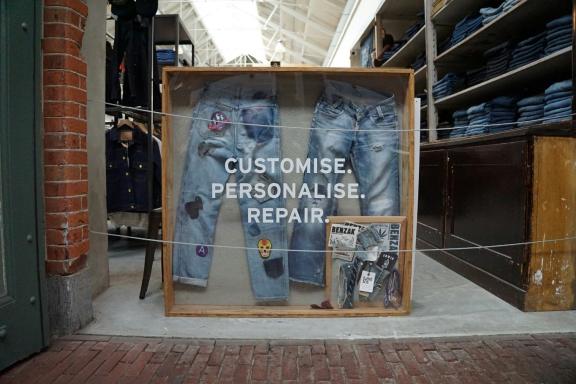
Figure 1: More sustainable styles are becoming more and more mainstream in Europe
Source: Photo by Luba Glazunova on Unsplash
1. Understand the European sustainability landscape
Regulators, brands, retailers, NGOs and end-consumers have all been pushing for more sustainability in the industry. Europe stands out as a market with strict requirements for sustainable production and marketing. Many of these requirements are based on EU and national (member state) legislation. However, European brands often go beyond legal requirements. They have introduced their own extra sustainability requirements.
The EU is currently the biggest force behind the transition to a sustainable apparel industry in Europe. By implementing a ‘Green Deal’, it wants to move to a clean, circular economy and stop climate change. They also want to revert biodiversity loss and cut pollution. Several new legal measures are being introduced, focused on the reduction of environmental impacts and social risks, and on improving transparency and reporting.
European end-consumers mostly support these measures. According to a 2025 survey conducted by Globescan in five European countries, over 70% of young Europeans want to buy more sustainable fashion. They expect brands and retailers to make sustainability the default through a range of measures. These include lower prices, more sustainable materials, reduced packaging, better product design and programmes that support repair, reselling and recycling.
Going green will help you gain access to the European market. It will also give you a competitive advantage if you target other markets. Research by Première Vision conducted in 2022 reports that 50.4% of American respondents say they recently bought sustainable fashion. Moreover, according to a 2024 study by Bain & Company, 79% of end-consumers in fast-growing economies, such as China, India and Indonesia, are concerned about sustainability.
Tips:
- Connect with industry networks such as the Global Fashion Agenda to keep yourself updated about new developments and to gain access to sources of new information and tools.
- Check the EU’s website about the European Green Deal (which includes a timeline) to keep yourself updated on coming policy changes.
2. Prepare for European legal sustainability requirements
Your first priority should always be complying with local labour and environmental laws. These include, for example, those on the use of water and energy and the treatment of solid and liquid waste. Second, you should investigate European laws and regulations to make sure you comply when exporting to Europe. Third, buyers in your export market may have their own, company-specific requirements that go beyond European laws and regulations. You need to follow those too.
Legal requirements for exporting to the EU
One of the most important legal requirements for exporting to the European Union is the REACH Regulation. This restricts the use of chemicals in apparel and trims. Restricted chemicals include certain Azo-dyes, flame retardants, waterproofing and stain-repelling chemicals and nickel. REACH's main goal is to guarantee consumer safety. Promoting environmentally friendly production is a side-benefit. Note that a wide range of substances of Very High Concern (SVHCs), such as PFAS, are regularly added to REACH.
The EU’s most important legal sustainability requirements
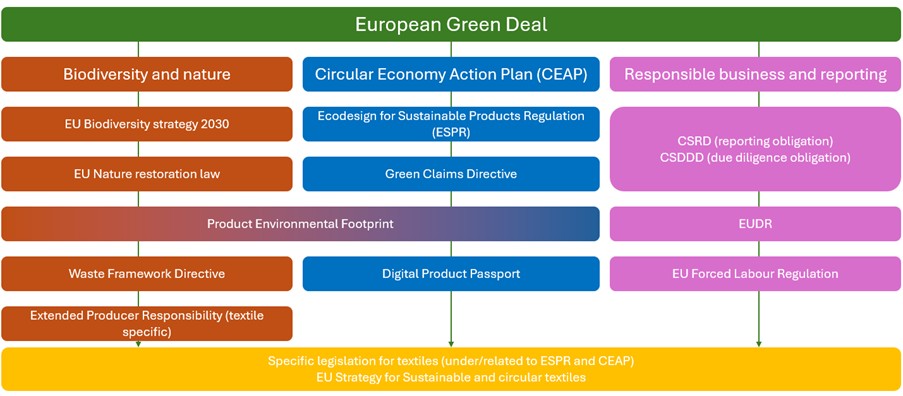
The EU is implementing several new laws and directives aimed at making apparel production and importing into Europe more sustainable. This affects you as a supplier, as European buyers will want to share the responsibility of compliance.
Figure 2: EU rules and regulations on sustainable apparel production in context
Source: FT Journalistiek
The EU and national governments have increased the speed and scope of new and revised laws. The following major legislations will shape the apparel industry. Note that EU regulations apply to all EU member states. However, directives only set outcomes, leaving implementation to EU member states. Most of the following laws and regulations are a result of the EU Green Deal.
- The Ecodesign for Sustainable Products Regulations (ESPR) will require clothing products to meet minimum sustainability and quality standards. It also includes a Digital Product Passport that will provide detailed traceability of materials and environmental impacts.
- The Corporate Sustainability Reporting Directive (CSRD, 2023) puts reporting requirements on large companies (more than 1,000 employees and above €450 million net annual turnover) including those in the apparel sector, when it comes to their environmental, social, and governance (ESG) performance. This means European apparel buyers will ask their suppliers for sourcing data.
- The Corporate Sustainability Due Diligence Directive (CSDDD, 2024, full compliance postponed to 2029) mandates that large European companies (more than 5,000 employees and above €1.5 billion net annual turnover) identify, prevent and mitigate social and environmental impacts in their operations and across their value chains.
- The EU is introducing new legal measures under the Extended Producer Responsibility (EPR, 2023). These include the ‘right to repair’ (under the Ecodesign for Sustainable Products Regulation). There is also the EU-wide EPR policy framework that makes companies responsible for the way their products are disposed of, recycled or repaired. This is included in the Waste Framework Directive. Producers must develop systems for the collection, recycling and disposal of garments. France, the Netherlands and Sweden have already introduced national EPRs. Italy and Spain are currently working on them.
- The EU’s Forced labour regulation is scheduled for 2027. It bans products made with forced labour, including child labour. This regulation will apply to all companies importing into and exporting from the EU.
- A new Regulation on Deforestation-free Products (EUDR, implementation scheduled for 2026/2027) forces European apparel importers to prove that their products do not originate from recently deforested land or have contributed to forest degradation. It currently only applies to (raw, part processed and finished) leather, but not finished products containing leather.
- The Empowering Consumers Directive (2024, implementation scheduled for 2026) bans companies from making generic, vague or misleading claims such as ‘green’ or ‘eco-friendly’. It also bans false claims about the durability and reparability of products. The related Green Claims Directive, which sets out rules for the verification of such claims, is currently pending.
- Product Environmental Footprint (2024) aims to set up a standardised life cycle assessment (LCA) methodology for assessing and labelling the environmental impacts of products. It will give consumers with trustworthy information about several points in a garment’s supply chain: from raw material production to waste management. This will make it easier for consumers to make sustainable purchasing decisions. Read the EU’s PEF Category Rules for Apparel and Footwear.
Buyer-specific requirements
Buyers may require social and environmental audits of raw materials production or production facilities. The buyer can conduct them itself or they may ask an independent third party to do these. These audits may be announced or unannounced. Factories and mills that do not allow full access will usually be blacklisted and will not receive future orders.
Table 1: Major certifications for sustainable materials in the European apparel market
| Name | Logo | Description | Further information |
|---|---|---|---|
| OEKO-TEX® 100 | 
| Tests fabrics and accessories for substances considered harmful to human health. Most European brands require that products carry the OEKO-TEX quality mark. | Check the STANDARD 100 by OEKO-TEX® application process here. |
| OEKO-TEX® STeP | 
| Social and environmental certification system for brands, retailers and manufacturers in the textile and leather industry. Certification is suitable for production facilities at all processing stages. | Check the OEKO-TEX® STeP application process here. |
| EU Ecolabel | 
| The EU Ecolabel is a voluntary label for products and services with a reduced environmental impact. It is awarded only to products with the lowest environmental impact in a particular product range. | Check the application process for the EU Ecolabel here. |
| BCI | 
| The Better Cotton Initiative (BCI) is a non-profit, multi-stakeholder governance group that promotes better standards in cotton farming and practices across 15 countries. | Check the BCI membership process here. |
| GOTS | 
| The Global Organic Textile Standard (GOTS) is the leading standard for organic textiles. It applies to the harvesting of raw materials, environmentally and socially responsible manufacturing and labelling. | GOTS provides a list of organisations that can perform audits. |
| C2C | 
| Cradle to Cradle Certified® is a third-party certification programme and a standard for materials and products considered to be safe, circular and responsibly made. Products are assessed according to five categories of sustainability performance including material health, product circularity, clean air and climate protection, water and soil stewardship, and social fairness. | Check the C2C® certification process here. |
| Bluesign® | 
| The use of Bluesign®-approved chemical products and materials increases the safety of products and minimises risks for companies throughout the value chain. Bluesign®-approved textiles are those that have been sustainably produced and assessed according to the Bluesign® criteria. | Learn more about the Bluesign® assessment process here. |
| ZDHC | 
| A multi-stakeholder programme that leads the apparel industry in eliminating harmful chemicals from supply chains. | The ZDHC provides a guide that outlines the requirements for indicating ZDHC MRSL conformance. |
| Sedex | 
| Online platform for companies to manage and improve working conditions and environmental protection in global supply chains, from raw material production to garment manufacturing. | Check the Sedex certification process here. |
| Fairtrade | 
| Fairtrade is a non-profit organisation whose work focuses on smallholder farmers and workers in developing countries. It is a movement to reduce poverty and promote fair and equal opportunities. It is also a quality mark for products for which a fair price has been paid. | Check the Fairtrade certification process here. |
Table 2: Motivations for apparel manufacturers to ‘go green’
| Intrinsic values | Protecting the environment needs to be at the core of every organisation. This is because it is this generation’s responsibility to secure a safe future for the next. |
|---|---|
| Consumer demand | End-consumers are growing more concerned about the environmental impact of the products they buy, including apparel. Manufacturers that show they commit to sustainability are more likely to attract and retain environmentally conscious consumers. |
| Buyer requirements | More and more buyers are demanding data on the environmental impact of apparel production. This means the true value of products will not only be determined by production cost-price but also by sustainability. |
| Regulatory requirements | Governments are introducing more regulations to limit the environmental impact of manufacturing activities. Apparel manufacturers that fail to comply with these regulations risk facing penalties and damage to their reputation. |
| Resource efficiency | Sustainable manufacturing practices can help apparel manufacturers become more resource-efficient. This will reduce production costs, increase financial stability and profitability, and ensure long-term sustainability. |
| Brand reputation | Manufacturers that demonstrate a commitment to environmental sustainability can improve their brand reputation and their competitive advantage. |
| Supply chain management | A focus on sustainability can also help apparel manufacturers improve supply chain management. This is done by ensuring that suppliers and partners meet environmental standards and by promoting transparency throughout the supply chain. |
Tips:
- To learn more about buyer requirements, including environmental standards and certifications read the CBI studies What requirements must apparel meet to be allowed on the European market? and The EU Green Deal – How will it affect my business?.
- Some EU laws and regulations may not apply to you directly. This can happen, for example, if your buyer is too small to fall under CSRD or CSDDD requirements. However, being able to provide data on the impact and origin of different materials, production methods, washings, coatings and finishings makes you an attractive business partner. In the long term, all European apparel buyers need practical guidance on sustainable materials, production methods, design for recycling, circular business models and traceability.
3. Reduce the use of harmful inputs
For an apparel manufacturer to ‘go green’ means you need to minimise the environmental impact of your production processes. The first step is to reduce the use of harmful inputs. This applies to all the inputs you use in the production process (including the inputs you source from other suppliers), like:
- Materials used in the production of ready-made garments: fabrics, accessories;
- Energy used to maintain the building and to operate all machinery in the production process;
- Water used in wet-processing and to maintain the building and surroundings;
- Chemicals used in the production process (mainly wet-processing);
- Packaging material and logistics;
- Materials and inputs used to build and maintain your production facilities.
Reducing harmful or unsustainable inputs can be done by:
- Using more efficient machinery or production processes;
- Recycling inputs;
- Replacing inputs by more sustainable alternatives (including recycled inputs);
- Eliminating inputs from the production process.
Offsetting impacts that cannot be reduced (further)
Impacts that cannot reasonably be reduced any further can, in some cases, be offset (compensated). Many large Western companies, for example, have tried to offset their CO2 emissions on the voluntary carbon market by buying carbon credits. However, be aware that this method has attracted considerable criticism in recent years. Many carbon offset projects have been found to have exaggerated claims and been based on unreliable or incomplete data. Because of this, some Western companies now prefer to invest in efforts to reduce carbon emissions directly.
Sustainable materials
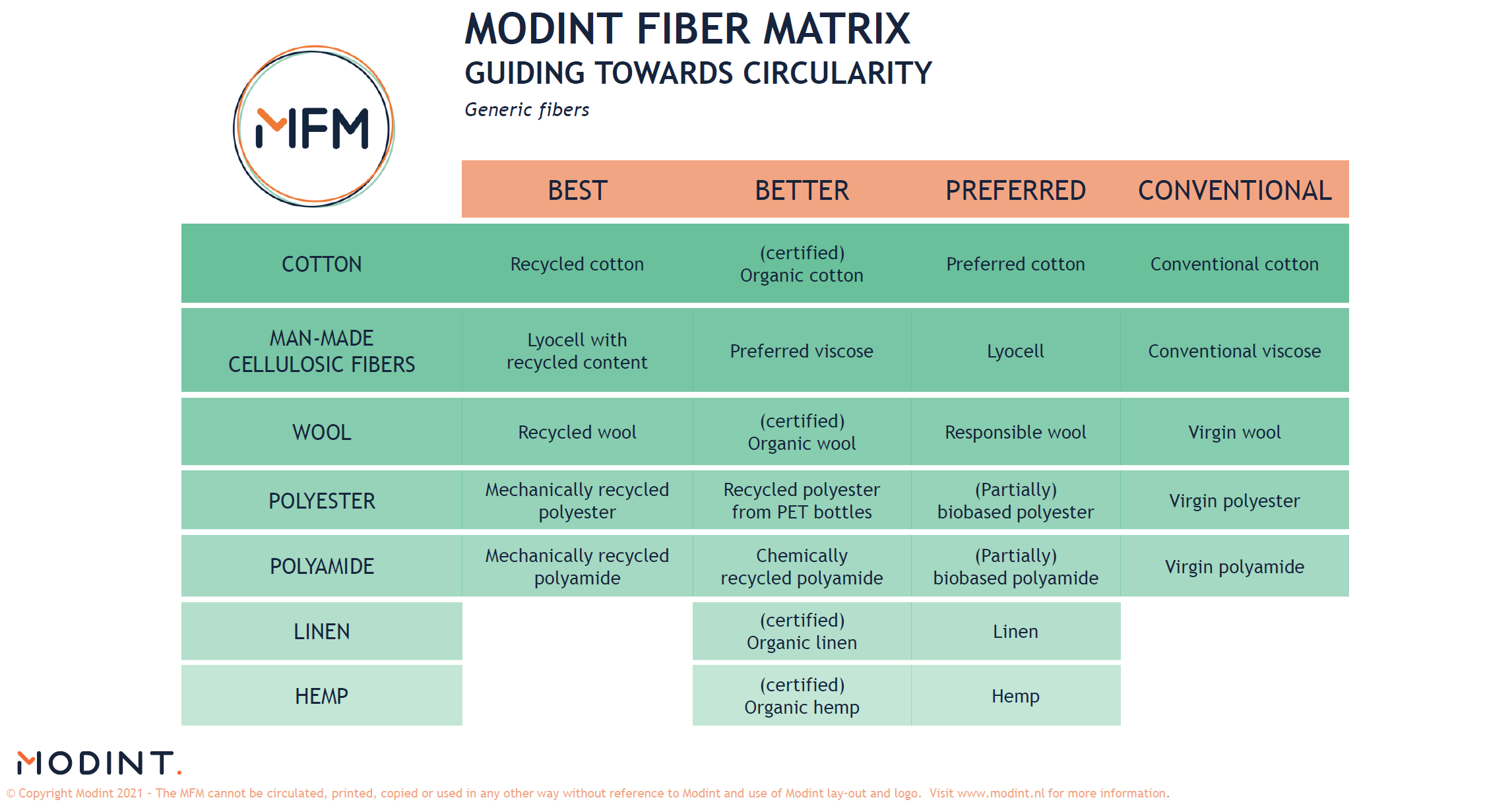
Apparel factories will need to reduce their environmental impact by using materials that are more environmentally friendly. Eco-friendly materials include organic cotton, Flocus or recycled/bio-degradable polyester. This will not only meet the growing market demand for sustainable fabrics but also protect the impact on the environment in the local market.
Figure 3: Modint’s Fiber Matrix shows the relative sustainability of common textile materials
Source: ©Modint Fibre Matrix.
4. Implement environmental-friendly manufacturing practices
Green manufacturing practices help apparel manufacturers reduce both their environmental impact and production costs. The most important measures include:
- Reducing the use of fossil fuels or ‘grey’ electricity by investing in energy-efficient machinery;
- Replacing polluting energy sources with renewable sources such as solar, wind and biogas;
- Reducing the use of freshwater by investing in more efficient wet-processes and water treatment and recycling techniques;
- Reducing the use of chemicals by investing in more efficient wet-processing;
- Replacing harmful chemicals by eco-friendly alternatives.
The added value of investing in more efficient machinery and generating your own energy and water supply is that you will save costs and reduce your dependency on energy sources as provided by local government.
Waste reduction and circularity
Implementing circular economy practices, such as recycling and repurposing materials, can help apparel companies reduce waste and conserve resources. This includes post-consumer waste. Collecting waste and helping buyers to recycle and reuse industrial and post-consumer waste will not only let the buyer comply with EU legislation. It will also let you explore new markets.
Best practices
- Trinity Circle is a garment manufacturer in Mumbai, India offering upcycling services. They produce new apparel items made from recycled fabrics and even re-cut garments.
- Sejauh is an Indonesian apparel manufacturer and online retailer producing apparel and home textile items made from recycled fibres and fabrics.
- Sartex Group from Tunisia is a manufacturer of sportswear and jeanswear, with clients throughout Europe. They create non-garment products made from cutting waste, including rugs.
Figure 4: Textile items made from cutting waste by Tunisian factory Sartex

Source: Sartex Group
Increasing production quality standards
If you can, encourage buyers to purchase products that are manufactured based on higher quality standards. Feel free to advise buyers on styles and materials that will expand the lifespan of the product. A commercial incentive for buyers can be that higher quality products allow European apparel companies to target the second-hand or resale market, which is a growing niche in the European apparel industry.
Treat your waste before disposing of it
Not all countries have proper public waste collection and treatment systems for solid or liquid waste. In these cases, you need to be able to treat your waste on-site. Wastewater can be treated using wastewater basins. Here sediment is separated from water, which in turn is biologically purified. Closed-loop systems can reduce water use. Solid waste should be separated at the source. This includes cuttings, scraps, chemicals and packaging. Recycle as much as possible and work with waste collectors, informally if no other options are available.
Reduce packaging and use sustainable materials
The EU adopted the new Packaging and Packaging Waste Regulation (PPWR) in 2025, aimed at reducing the use of packaging and virgin materials. The regulation also focuses on increasing the use of recycled plastics, and requires all packaging to be recyclable by 2030.
Try to lower the environmental impact (and financial costs) of packaging materials. For example, you can try to use less packaging material by putting more items in a single polybag or box, or by using materials made from recycled cardboard (including hangers) or biodegradable plastics (polybags).
5. Apply green innovation to your production facility
Being a ‘green’ manufacturer involves the building and maintenance of your factory. Try to use the most environmentally friendly resources for the construction and operation of your buildings. If you rent your factory space, try to have a conversation with your landlord about sustainable measures. When constructing or adapting your factory, kepp the following in mind:
- Use recycled or environmentally-friendly construction materials. Ask your building company for options.
- Surround your factory with trees providing shade and lowering the inside temperature naturally and consider installing a ‘green roof’. This saves energy and provides for a pleasant environment for your workers. As an example: Sags Apparels factory in India reduced the temperature inside the factory by installing solar-reflecting roof tiles and improved isolation.
- Install renewable energy systems such as solar panels, wind turbines, bioenergy systems, infrared heating or heat pumps.
- Install a water treatment and recycling facility. Never discharge untreated water.
- Install smart meters or energy management systems to monitor energy use.
- Reduce electricity usage by installing LED lights and train staff on taking responsibility for minimising electricity usage.
Best practice
SM Sourcing in Bangladesh is a fabric and garment manufacturer that has implemented several green technologies in its factory. Of the total factory area, 35% is open and green, providing fresh air flows into the building. The ceiling is 1.5 metres higher than average, keeping temperatures and humidity low. The rooftop is covered with solar panels, generating 45 of the daily 225 kilowatts that are used daily.
In India, Arvind is working on reducing the environmental impact of its 4 key inputs: fibres, water, energy and chemicals. The company analysed its impact on climate change and adopted an action plan to reduce its climate risk. It will integrate solar and biomass power into its energy mix, eliminate its use of fresh water, limit water discharge and maximise water recycling, directly source BCI cotton and organic cotton from regenerative farmers and introduce energy-efficient machinery.
Tips:
- To learn more about opportunities for going green, sustainable materials and industry standards, read the CBI studies The European apparel market and sustainable fashion, or our studies on exporting sustainable materials and hemp apparel to Europe.
- Implement a certification process for your building and operations that is recognised by industry standards, such as BREEAM, LEED and ISO 14001.
- An apparel factory should be environmentally friendly, but also pleasant to work in. Often these two objectives combine well. Provide natural daylight, natural colours, ventilation and natural surroundings.
6. Measure and prove your sustainability performance
European buyers expect apparel suppliers to measure and share data on their environmental performance. Measuring your performance helps you identify practices that are not efficient. It also helps reduce costs and demonstrate improvements to buyers.
Start with a baseline assessment of your factory’s environmental impact. This means measuring your current performance in major areas like energy use and greenhouse gas emissions, water consumption, wastewater quality, solid waste generation and chemical use. Once you know your starting point, you can set realistic goals and monitor improvements.
Begin with simple indicators, such as:
- Energy use per garment produced;
- Water consumption per kilogram of fabric processed;
- Percentage of waste generated and recycled;
- Compliance with wastewater standards;
- Chemical consumption and use of safer chemicals.
Several widely-used tools can help you measure and report these impacts. The Cascale Higg Facility Environmental Module (Higg FEM) is commonly used by European brands to assess environmental performance on the factory floor. The Zero Discharge of Hazardous Chemicals (ZDHC) Foundation programme provides tools and guidelines for managing chemicals and wastewater in textile production.
7. Reducing greenhouse gas emissions and reporting on progress
The apparel industry is estimated to be responsible for over 8% of global carbon emissions, making it a big contributor to climate change. For this reason, many Western brands have committed to climate neutrality by signing the Fashion Pact pledge. This industry network aims to take the apparel industry into a carbon-neutral future.
The exact amount of GHG emissions per kilogram product can vary depending on factors such as the materials used, the manufacturing process, and the location of production. On average, the production of 1 kilogram of cotton fibre results in up to 1.9 kilograms of CO2 emissions, while synthetic fibres like polyester result in up to 3 times more emissions. Transportation of goods and the use of energy-intensive processes such as dyeing and finishing can also add a lot to the total emissions generated in the apparel sector.
To calculate the carbon footprint of a product, the emissions are usually measured in units of carbon dioxide equivalent (CO2e). The total emissions are then divided by the number of products to get the emissions per product. The calculation itself is a complicated process. There are several organisations, industry platforms and standards that have set benchmarks for certain materials and/or products. Others can help you calculate the carbon footprint of your specific product and identify areas for improvement.
- Cascale’s Higg Index. This is a set of tools for the standardised measurement of value chain sustainability. Brands, retailers, manufacturers, governments, NGOs, and consumers can use the Higg Index to inform their individual sustainability strategies across topics such as carbon emissions, water use and labour conditions.
- OEKO-TEX offers an impact calculator to track your carbon and water footprint.
- Consultancies such as The Carbon Trust or Climate Neutral Group can calculate the carbon footprint of your organisation or individual products. They will often also advise on how to reduce or offset your impact.
Tips:
- Choose the most suitable carbon calculation method for your situation. Make sure to introduce the tool to your different stakeholders and that each stakeholder takes the responsibility to measure their individual carbon footprint. Share and report results and discuss potential improvements with your stakeholders, including buyers.
- To learn more about where GHG-emissions mostly occur in the apparel value chain and how they can be measured and reduced, read this research paper by Elsa Dominish for the International Labour Organisation (ILO).
- Check the CBI study 10 tips to measure and reduce your carbon footprint for more background information and practical guidance.
8. Reduce water impacts and report on progress
Water use and water pollution are amongst the most significant environmental impacts of the apparel industry. Textile production requires large amounts of water for processes such as dyeing, washing and finishing fabrics. These processes also generate wastewater that contains chemicals, dyes and other pollutants. Apparel production is estimated to account for 20% of global clean water pollution.
At the factory level, water consumption can be very high. Dyeing and finishing alone may use hundreds of litres of water per kilogram of fabric. Producing one kilogram of fabric can also generate large amounts of wastewater that must be treated before discharge. Many garment factories are located in regions where lack of water is already a challenge. Improving water efficiency and preventing pollution are crucial for both environmental protection and business continuity.
Good water management is becoming a market requirement for manufacturers that export to Europe.
- Measure your water baseline. Install water meters at key production stages (e.g. dyeing, washing, finishing), and monitor total water use per kilogram of fabric or per garment produced.
- Identify the most water-intensive processes. In many apparel factories, dyeing, washing and finishing use the most water. Focus improvements on these processes first.
- Reduce water consumption by making processes more efficient. Reuse rinse water, use low-liquor-ratio dyeing machines, and fix leaks in pipes and equipment.
- Separate clean and dirty water streams. This makes water recycling easier and reduces the cost of wastewater treatment.
- Install and maintain a wastewater treatment system. Wastewater should be treated before discharge to remove colour, chemicals and organic pollutants.
- Check wastewater quality regularly. Test for pH, chemical oxygen demand (COD), biological oxygen demand (BOD), temperature and suspended solids.
- Reuse water where possible. Some treated wastewater can be reused for washing or cleaning. Collect rainwater for use in non-critical processes.
- Train workers on water efficiency and pollution prevention.
- Track and report improvements annually. Monitor indicators such as litres of water per kilogram of fabric processed, wastewater quality results, and percentage of water reused. Cascale, ZDHC and the Alliance for Water Stewardship (AWS) provide helpful tools.
Tip:
- Check Solidaridad’s Wet Processing Guidebook for an overview of industry initiatives, tools, certificates, guidelines and strategies for reducing social and environmental impacts during the wet-processing stage of material production.
9. Reduce chemical impacts and report on progress
Chemicals used to produce apparel can pose risks to your employees, to surrounding communities, to end-consumers who wear the garments and to the environment. The goal of responsible chemical management is to manage and reduce the risks that can arise from the use of chemicals throughout the supply chain.
Responsible chemical management is essential if you want to export to Europe. Any apparel item exported to the EU needs to comply with the EU’s REACH Regulation. They should also follow buyer-specific Restricted Substances Lists (RSL) or Manufacturing Restricted Substances Lists (MRSL), often based on guidelines developed by the ZDHC (see Section 2 above).
To reduce the negative effects from the use of chemicals, you need to have a chemical management system in place. This is a set of rules and procedures that help you track and control inputs and outputs. A good chemical management system lets you improve constantly.
Implement the following steps:
- Identify the biggest risks in your operation using the CBI study on chemical management.
- Develop and implement a chemical management system (CMS) with clear rules and procedures for storing, labelling, handling and disposing of chemicals in the factory.
- Introduce a simple chemical inventory list (CIL) to track all your input chemicals.
- Give your employees protective equipment (PPE) and make sure they use it. If the PPE is not used properly, try to find out why.
- Make sure input materials are tested for REACH compliance.
- Try to replace hazardous chemicals with safer alternatives, for example by using approved formulations listed in the ZDHC Gateway: the world’s largest database for safer chemicals.
- Collect and share chemical data with your buyer(s). This way, you can improve transparency and provide evidence of proper chemical management.
Tips:
- Check the CBI study 9 tips on responsible chemical management in the apparel sector for background information and practical guidance.
- Check the Material District or Springwise online databases to keep yourself updated on innovations in sustainable production methods and materials for apparel production.
- Subscribe to online publications such as Sourcing Journal, Just Style and the Business of Fashion for the latest news about sustainable materials.
10. Turn sustainability into a business opportunity
An environmentally friendly manufacturing setup adds value to your proposition and will increase buyer interest. Growing evidence suggests that companies with strong sustainability practices can outperform their peers in the long term. However, before you start investing in costly sustainable production techniques, you need to make an informed decision.
Table 3: The risks of going green
| Uncertainty in measurement | Sustainability metrics can be difficult to standardise and quantify. This makes it difficult for (potential) buyers to accurately assess the sustainability performance of a company. Only make claims about sustainable improvements if you have clear indicators that can be accurately measured and monitored. |
|---|---|
| Return-on-investment risk | Always make a realistic return-on-investment (ROI) calculation. Balance all investment costs (purchase and write-down of machinery, training of employees) against the expected benefits (reduced inputs and associated costs, higher price point for products and higher appreciation in the market). |
| Reputation risk | Companies that are not transparent about their sustainability practices, exaggerate their performance (‘green washing’) or that have a history of environmental or social controversies can face reputational risk, which can negatively impact their financial performance. |
| Market risk | Sustainability is subject to market dynamics, just as any other aspect of the market. Today’s buyers may appreciate a different aspect of sustainable production than tomorrow. In other words: there are trends in sustainability requirements. What buyers look for in terms of sustainable production can also differ between product categories, market segments and of course between individual buyers. Make sure your investments in sustainable production match your target market. Always investigate your buyers’ requirements. |
Advertise your sustainability principles in a Code of Conduct
‘Going green’ is as much a matter of following your own principles as it is about following buyer requirements. A good idea is to develop your own Corporate Social Responsibility policy (CSR) or Code of Conduct. In such a document, companies share topics of particular interest to them, such as saving water or energy, reducing carbon emissions, reducing pollution, recycling (production) waste or sourcing environmentally friendly materials, including new, innovative materials. Below are some guidelines for setting up your own Code of Conduct.
- Include in your Code of Conduct a commitment to reducing your organisation's environmental impact and promoting sustainable practices.
- Establish goals and guidelines for reducing energy consumption, waste and emissions, both in the office and in the field.
- Set out the standards and requirements for suppliers, in relation to health and safety, labour rights, and environmentally friendly production of fabrics and other materials.
- Educate employees about the importance of environmental protection and the specific actions they can take to make a positive impact.
- Regularly review and update your code of conduct to ensure it aligns with current environmental best practices.
- Show your commitment to your local community by supporting environmental causes and organisations.
- Implement due diligence processes to assess and monitor supplier compliance with the company's standards and requirements, including through regular audits and assessments.
- Publish your Code of Conduct online and make sure your suppliers, employees, buyers and other stakeholders know where to find it.
Tips:
- Wait to invest in green innovations until success is guaranteed (proof of concept). New sustainable technologies are introduced to the market all the time. Make sure you only invest in technologies that have been proven over a longer period of time. Ask suppliers for their track record (including after-sales service) and get references, for instance by asking other factories about their experience with certain technologies.
- Advertise your investments in sustainable production online, in your booth when participating in trade fairs and in other communication materials. Use your mission to ‘go green’ as a tool to create new business.
- Monitor the front runners in the industry and follow upon their success.
Further Reading
The CBI report 10 Tips for Finding European Buyers can help you with finding interesting prospects and how to approach them.
The CBI study 10 Tips for Doing Business with European Buyers provides tips on how to successfully approach a potential buyer and develop a long-lasting business relationship with them.
FT Journalistiek carried out this study in partnership with Giovanni Beatrice on behalf of CBI.
Please review our market information disclaimer.
Search
Enter search terms to find market research
Do you have questions about this research?
The apparel industry is on its way to change towards a CSR-driven industry in which flexibility and transparency is the key to success.

Laurent Lambrette, Linkwear