

The European market potential for knitwear
The value of European knitwear imports is estimated at €25.8 billion, making it a major apparel sub-segment. According to ITC Trade Map statistics, in 2022 the European share of total world knitwear imports was as much as 34%, compared to 26% for the USA.
The markets offering the best opportunities for the import of knitwear to the EU include Germany, France, Italy, Spain and the Netherlands. These countries are the biggest importers of knitwear in the EU and are also amongst the biggest importers of knitwear from developing countries. Poland stands out due to its high growth in recent years (including imports from developing countries) and is among the region’s key markets.
Knitwear is a fashion segment that fits well into the trend for ‘slow fashion’. High-quality knitted garments are not only durable but also timeless. Knitwear products made from natural or more sustainable fibres are becoming increasingly popular among a growing market of environmentally conscious consumers.
Contents of this page
1. Product description
Knitwear refers to garments made from yarns that are knitted or woven together using needles. Knitwear is popular because it is stylish yet comfortable due to its stretch properties. It is warm, versatile and easy to pair, which makes it ideal for layering in colder climates. Knitwear made with lighter or looser weaves can be cooling in summer, particularly if the fibre has temperature regulating properties (such as merino wool, linen, cotton or modal). Knitwear is easily packable as it is largely resistant to creasing, making it perfect for travelling.
The term knitted garments refers to all garments traded under HS Code 61. This includes a broad range of sub-segments, from T-shirts to socks, sweaters, tracksuits, dresses and even blazers. The term knitwear, on the other hand, generally refers to upper-body garments made from knitted fabric, traditionally worn to provide warmth by layering.
For the purposes of this analysis, the knitwear segment includes knitted or crocheted jerseys, pullovers, cardigans and waistcoats made of wool, fine animal hair (including cashmere), cotton, man-made fibres and other textile materials. The HS Codes under which these garments trade are the following:
2. What makes Europe an interesting market for knitwear?
Europe is the most significant import market for knitwear globally. In 2022, the value of knitwear imports to Europe, including intra-EU imports, amounted to €25.8 billion, up from €16.8 billion in 2017. This corresponded to roughly 2.75 billion units of clothing in 2022 (up from 2.27 billion in 2017). During the 2017-2022 5-year period, the value of the EU’s knitwear imports grew by an average of 9% annually compared to growth of 6.75% for the apparel industry as a whole.
Source: Eurostat
The EU knitwear import market was growing steadily in the years prior to the pandemic. It experienced a 10.9% dip in 2020, which was in line with the overall apparel industry decrease of 10.7%.
The market rebounded in 2021, however, to surpass pre-pandemic levels. Between 2021 and 2022, imports increased by over 29%. This growth can be attributed to continuous product innovation and increasing demand for different types of knitwear. This includes sustainably manufactured knitwear and lightweight or sheer, higher-gauge knitted tops for evening and summer wear.
Reflecting an increase in demand for more value-added products, the average import price for knitwear items entering the EU in 2022 was €9.40, up from €7.39 in 2017. The biggest year-on-year increase occurred in 2022.
By far the largest sub-segments in the European Union (EU) are the cotton and man-made fibre segments which represented 46.7% and 39.8% of all knitwear imports into the European Union in 2022, respectively. Cotton is also the highest growth sub-segment, achieving an average annual growth rate of 11.7% between 2017 and 2022.
Table 1: Knitwear imports into the European Union by sub-segment, 2022 EUR value; % share of segment; average 5-year compound growth
|
Sub-segment |
Value 2022 |
% share |
5 year average growth |
|
Cotton HS611020 |
€12 bn |
46.7% |
11.70% |
|
Man-made fibres HS611030 |
€10.2 bn |
39.8% |
6.50% |
|
Wool HS611011 |
€2 bn |
7.9% |
7.60% |
|
Cashmere HS611012 |
€827 m |
3.2% |
10.60% |
|
Other textile materials HS611090 |
€451 m |
1.8% |
5.20% |
|
Other fine animal hair HS611019 |
€168 m |
0.7% |
8.60% |
|
Total segment |
€25.8 bn |
100.0% |
9.00% |
Source: Eurostat
The EU is also a large exporter (and re-exporter) of knitwear. In 2022, it exported knitwear worth €18.5 billion (up from €11.6 billion in 2017). EU knitwear exports increased at an average annual rate of 9.7% between 2017 and 2022. The biggest exporting countries in 2022 were Germany (€2.53 billion), Italy (€1.57 billion), the Netherlands (€1.45 billion), Spain (€1.24 billion), Poland (€1.17 billion), and Belgium (€968 million). Together, these 6 countries accounted for 73% of the EU’s knitwear exports inside and outside the 27 countries of the European Union. Among the top-10 leading exporters, the biggest average annual growth in knitwear exports can be seen in Poland (19.1%), followed by the Czech Republic (16.3%) and Belgium (13.7%).
Source: Eurostat
Currently, the value of EU knitwear imports is divided fairly evenly between knitwear products traded within the EU (intra-EU imports) and knitwear imported from outside the EU, at 47.2% and 52.7% respectively. In 2022, developing-country suppliers accounted for 50.7% of all knitwear imports into the European Union in terms of value (down from 51.7% in 2017). Suppliers from the rest of the world accounted for just 2% of the total import value (down from 4.5% in 2017).
The value of EU knitwear imports originating from developing countries amounted to €13.1 billion in 2022. This has increased at an average annual rate of 8.6% since 2017 (just under that of the knitwear segment overall).
During the same period, knitwear imports from within the EU increased at a rate of 10.6%. This indicates increasing interest in intra-EU trade. However, these statistics mask the fact that some intra-EU trade involves products that are originally manufactured in developing countries, exported into the EU, and subsequently re-exported. These products are therefore not in direct competition with imports from developing countries.
5 of the top-6 intra-EU exporters are also among the top-6 importers of knitwear. This indicates that certain EU countries are increasingly becoming important as regional distribution hubs. Direct and indirect trade with developing countries is expected to continue to grow in the future, creating new opportunities for these countries.
Source: Eurostat
Imports of knitwear into the EU have been dominated by China, Bangladesh and Turkey in recent years. Together, these 3 countries accounted for 71% of all knitwear imports into the EU in 2022. In terms of annual growth, imports from Bangladesh and Turkey both saw double-digit growth. The fastest growth was in imports from Vietnam, Myanmar and Pakistan (24.3%, 23.8% and 22.1% respectively). In the 2017-2022 period, Bangladesh increased its market share by 6%.
China lost 7% in terms of market share, but the value of China’s imports still grew and it remains the largest exporter, likely thanks to its extensive fibre and yarn production infrastructure. In fact, 4 out of the top-5 exporters have domestic cotton production, enabling the vertical manufacturing of cotton knitwear. Cotton knitwear is the largest knitwear sub-segment. China, Turkey and Pakistan also grow organic cotton, and Turkey is a world leader in organic cotton production.
Source: Eurostat
As shown in Figure 4, Europe’s intra-EU knitwear trade is dominated by distribution hubs Germany, Italy, the Netherlands, Spain and Poland. Germany, Italy, Poland and Spain are also notable producers of knitwear garments. These 5 countries make up over 65% of all intra-EU knitwear exports. Between 2017 and 2022, the Netherlands, Spain and Poland experienced average annual growth rates well above the growth rate for the overall segment. Poland’s 19.1% annual intra-EU export growth rate is evidence of its continued importance as a manufacturing country, and also indicates its status as Europe’s fastest growing economy and its increasing importance as a regional distribution hub.
All of the above trends show that the high volume/lower price market is an increasingly strong segment for knitwear. In parallel, we are seeing an increase in demand for flexible production and more sustainable, high-quality knitwear.
Most of the brands selling knitwear apparel in Europe are general fashion brands. Products are mass-produced in developing countries and Eastern Europe. Nevertheless, there are also smaller boutiques, e-commerce shops and innovative start-ups that focus specifically on knitwear products. They focus on high-end quality products with enhanced environmental credentials and fair production practices. Many of these smaller companies, as well as luxury fashion brands, produce their knitwear within the European Union.
Europe is a driving force behind progress in sustainability
Under the EU Green Deal, the Circular Economy Action Plan has singled out the textiles and clothing sector as a priority sector for the EU’s move towards sustainability and circularity. The Green Deal is a set of policy initiatives designed to make the EU climate-neutral by 2050. It is no surprise, therefore, that the European Union is at the centre of global efforts to make clothes production– including knitwear - more sustainable.
Alongside Japan, Europe is home to many of the industry’s best technical innovators and manufacturers of knitting machinery globally. Every 4 years, the International Textile Machinery Association (ITMA) exhibition is hosted in Europe. It highlights innovations and focuses particularly on knitting machinery. It also has an online sourcing platform and knowledge hub called ITMAconnect. ITMAconnect facilitates sourcing for innovative technologies, matching with business partners and participation in online events.
Suppliers working with European brands and retailers will have access to the latest knowledge and technical innovation that are driving global trends.
Tips:
- Europe is a well-established importer of knitwear from developing countries. To compete, you should invest in sustainable and circular innovation in addition to offering low prices.
- Focus on products made from more sustainable fibres, including organic and recycled fibres. This is the future of knitwear across all value segments and price points.
- Keep up-to-date with trends and expand your knowledge and network through the ITMAconnect platform. Take part in its online events such as product demonstrations, webinars and technical forums.
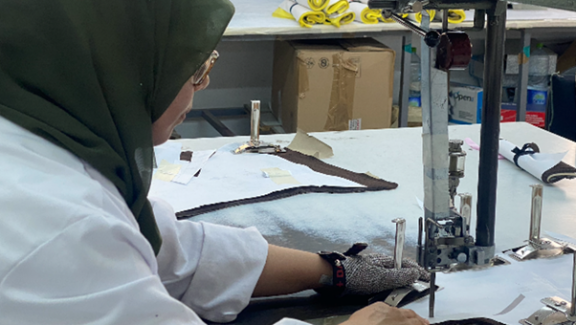
Figure 5: Provide your employees with metal gloves to reduce risk during cutting
Source: Forward in Fashion
3. Which European countries offer the most opportunities for knitwear?
Germany is the biggest importer, followed by France and Italy. Poland is the only Eastern European country in the top 10, and its imports are growing faster than any other top-10 country. The top-6 countries together account for 75% of knitwear imports in the European Union. Imports to these countries have grown at an average of 6.1% per year over the 2017-2022 period, driven primarily by growth in Poland and Italy.
Other important markets include Belgium and Denmark, which ranked 7th and 8th respectively in terms of 2022 import value, with Denmark achieving double digit import growth. Imports into Eastern and Southeastern Europe are still worth less than imports into Western European countries. However, the Czech Republic, Greece, Romania, Bulgaria, Croatia, Hungary and Slovenia import more than €100 million worth of knitwear and imports are growing at over 11.5% annually. In the future, Poland will play an important role as a distribution hub for these markets.
Table 2: Top-10 EU importers of knitwear, 2022 value; average annual growth; developing-country share of imports; developing-country imports average annual growth
|
|
Value 2022 |
5 year growth |
Developing-country share 2022 |
Developing-country imports 5 year growth |
Developing-country imports change in share 2017-2022 |
|
Germany |
€5.76 bn |
7.03% |
56% |
6.68% |
-0.92% |
|
France |
€3.72 bn |
7.70% |
48% |
8.04% |
0.74% |
|
Italy |
€2.89 bn |
11.03% |
48% |
7.05% |
-9.59% |
|
Spain |
€2.69 bn |
9.63% |
69% |
8.90% |
-2.36% |
|
Netherlands |
€2.63 bn |
8.10% |
61% |
5.81% |
-6.92% |
|
Poland |
€1.62 bn |
17.92% |
37% |
22.07% |
5.87% |
|
Belgium |
€1.39 bn |
8.56% |
61% |
10.64% |
5.57% |
|
Denmark |
€827 m |
10.07% |
72% |
10.68% |
1.96% |
|
Austria |
€747 m |
4.43% |
13% |
6.22% |
1.00% |
|
Sweden |
€669 m |
8.02% |
55% |
8.40% |
1.00% |
|
EU total |
€25.8 bn |
8.97% |
51% |
8.58% |
-0.93% |
Source: Eurostat
In terms of developing-country sourcing, Spain and Denmark stand out with 69% and 72% of imports coming from developing countries, respectively. Poland has grown its knitwear imports from developing countries at an average of over 22% in the last 5 years. Belgium and Poland both increased their market share of imports from developing countries by over 5.5% between 2017 and 2022. For all the other countries in the top 10, developing country market share is either stable or decreasing, indicating that nearshoring and regional distribution are both on the rise.
Germany is Europe’s largest importer of knitwear
Germany is Europe’s largest knitwear import market by far. In 2022, its knitwear imports amounted to €5.76 billion (up from €4.1 billion in 2017), or approximately 588 million units of clothing. In the 2017-2022 period, the value of Germany’s knitwear imports increased at an average rate of 7% per year. This was around 2 percentage points under the growth rate for the wider sector, while import volumes increased by 2.67%.
Table 3: 2022 imports of knitwear products into Germany with 5-year growth, average import unit price and 5-year price evolution
|
GERMANY |
Value 2022 |
5 year growth |
Average unit price 2022 |
5 year price change |
|
TOTAL |
€5.76 bn |
7.03% |
€9.81 |
€1.84 |
Source: Eurostat
Average unit prices for German knitwear imports are around €0.40 higher than the European average (€9.40).
Germany is a country with relatively strict and/or increasing sustainability and circularity requirements, driven by national legislation and policies. Some German legislation regarding harmful chemicals goes beyond EU REACH legislation. Germany also has its own social and environmental standard, the Grüner Knopf label, which is displayed on garments at the point of sale. Although investment in chemicals management and certification is required, this provides opportunities in the coming years for higher quality and sustainable products in line with the overall segment trends.
Germany’s Karl Mayer Group is 1 of the leading manufacturers of knitting machines for the textile industry globally. Germany is also a producer of high-quality knitted apparel. Manufacturers make use of modern machinery, new technology and skilled labour to maintain their unique selling points.
Popular German brands and retailers that sell knitwear include Blue Seven, Gerry Weber, Adidas, Closed, Esprit, Peek and Cloppenburg and Marc Cain (which has its own in-house 3D knitting factory in Germany). Knitwear-focused brands include Maiami, Allude, pos.sei.mo and Maerz.
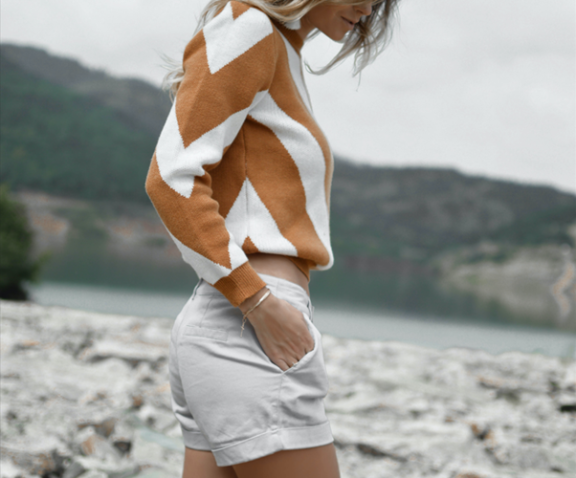
Figure 6: Higher-gauge, lightweight knitwear can be worn in all seasons in Europe
Source: Tamara Bellis on Unsplash
France is a high-volume market with increasing sustainability requirements
France is the second-largest knitwear import market in Europe. In 2022, its knitwear imports amounted to €3.72 billion (up from €2.56 billion in 2017), or approximately 365 million units of clothing. In the 2017-2022 period, the value of France’s knitwear imports increased by an average of 7.7% per year, while the import volume increased by 3.2% per year.
Popular French brands and retailers that sell knitwear include La Redoute, Devernois, Sezane, Claudie-Pierlot, Saint James and Rosaé Paris. Knitwear-focused brands include Rodier, Eric Bompard, From Future, Montagut and Kujten.
Table 4: 2022 imports of knitwear products into France with 5-year growth, average import unit price and 5-year price evolution
|
FRANCE |
Value 2022 |
5 year growth |
Average unit price 2022 |
5 year price change |
|
TOTAL |
€3.72 bn |
7.70% |
€10.18 |
€2.12 |
Source: Eurostat
France can be described as a highly competitive, high-volume market. Even so, average unit prices for knitwear imports are almost €0.80 higher than the European average and price increases have also been slightly higher than the European average of €2.01.
The country is tightening up its legislation regarding sustainability, in particular its chemicals legislation. It is now a legal requirement in France to inform customers at the point of sale about products that contain 1 or more substances on the REACH Substances of Very High Concern (SVHC) list. France is also the first EU country to put in place specific regulations for MOSH/MOAH. These are mineral oils that are often used in printing inks and are therefore found in packaging materials made from recycled paper. These oils contain substances that are harmful to human health and make recycling very difficult.
Italy is a large and growing market that pays a high premium for value-added products
Italy is the third-largest knitwear import market in Europe. In 2022, its knitwear imports amounted to €2.89 billion (up from €1.71 billion in 2017), or approximately 247 million units of clothing. In the 2017-2022 time period, the value of Italy’s knitwear imports increased by an average of 11% per year, 2 percentage points more than the EU average. The import volume increased by just 2.7% per year during the same time period.
These trends reflect the fact that Italy has reduced its sourcing from developing countries by 9.6% over the past 5 years. Of the top-6 importing countries, Italy pays 1 of the highest premiums for knitwear imports from Europe compared to developing countries (€5.95).
Table 5: 2022 imports of knitwear products into Italy with 5-year growth, average import unit price and 5-year price evolution
|
ITALY |
Value 2022 |
5 year growth |
Average unit price 2022 |
5 year price change |
|
TOTAL |
€2.89 bn |
11.03% |
€11.68 |
€3.78 |
Source: Eurostat
Knitwear is a well-established industry in Italy, with its long tradition of combining knowledge, technological research, creativity and production quality in garments made from high-quality yarns. Wool or cashmere knitwear made up as much as 34% of total Italian exports of knitwear in 2022 (compared to just 7.3% of Germany’s exports). Italian excellence in knitwear spans the entire supply chain, from spinners, knitters, and laboratories, to dyers and machine manufacturers.
Italy is also a leading producer of recycled wool. Spinners in the Prato region have been recycling and reusing wool since the mid-19th century. According to The Florentine, 142 million kilograms of materials were converted into fibres by Prato’s textile industry in 2017.
Many Italian brands choose to produce closer to home so that they can monitor and collaborate with their partners on design and fibre quality. Nevertheless, China is still the largest exporter of knitwear to Italy (15.5%), followed by Bangladesh (14%). This demonstrates that there is a healthy volume market for knitwear products in Italy.
Popular Italian brands and retailers that sell knitwear include OVS, UPIM, Loro Piana, Stone Island, Roberto Cavalli, Yoox Net-à-Porter, Prada and Jil Sander. Brands that focus heavily on knitwear products include Missoni, Artknit Studios and Sartoria Vico.
Spain – home to some of the largest international retailers in Europe
Spain is the fourth-largest knitwear import market in Europe. In 2022, its knitwear imports amounted to €2.69 billion (up from €1.69 billion in 2017), or approximately 377 million units of clothing. In the 2017-2022 period, the value of Spain’s knitwear imports increased at an average rate of 9.6% per year, just above the growth rate for the overall segment. The import volume increased by 5.1%.
Popular Spanish brands and retailers that sell knitwear include Zara, TwoThirds, Monica Cordera, El Corte Inglés, Bershka and Massimo Dutti. Brands that focus specifically on knitwear products include Counting Clouds, Floca, Babaa and Diarte.
Table 6: 2022 imports of knitwear products into Spain with 5-year growth, average import unit price and 5-year price evolution
|
SPAIN |
Value 2022 |
5 year growth |
Average unit price 2022 |
5 year price change |
|
TOTAL |
€2.69 bn |
9.63% |
€7.12 |
€1.35 |
Source: Eurostat
Much of Spain’s imports can be attributed to a few large international fast fashion retailers. However, these import statistics do not reflect the country’s relatively low GDP/capita, low average wages and underperforming local market. The prices paid by Spain’s importers of knitwear are the lowest of the leading importer countries. The average price was almost €2.30 below the European average of €9.40. The country also had the lowest 5-year price increase of the leading European importers.
Netherlands is a key European distribution hub
The Netherlands is the fifth-largest knitwear import market in Europe. In 2022, its knitwear imports amounted to €2.63 billion (up from €1.78 billion in 2017), or approximately 252 million units of clothing. Over the 2017-2022 period, the value of knitwear imports into the Netherlands increased by an average of 8.1% per year. This was just under 1 percentage point below the overall segment trend. Import volumes decreased by 0.09%.
Table 7: 2022 imports of knitwear products into the Netherlands with 5-year growth, average import unit price and 5-year price evolution
|
THE NETHERLANDS |
Value 2022 |
5 year growth |
Average unit price 2022 |
5 year price change |
|
TOTAL |
€2.63 bn |
8.10% |
€10.43 |
€3.39 |
Source: Eurostat
The country benefits from a favourable business climate which facilitates imports and exports. This, combined with its proximity to the sea and maritime trade routes, makes it an ideal route for importing products into Europe. For this reason, many foreign brands have established their headquarters in the Dutch capital, including Nike, Karl Lagerfeld and Tommy Hilfiger.
Popular Dutch brands and retailers that sell knitwear include Scotch & Soda, C&A, America Today, Bloomings and Yaya. Brands that focus heavily or specifically on knitwear products include Saint Steve, Knit-ted and Extreme Cashmere.
Poland is the fastest-growing economy in Europe
Poland is the sixth-largest knitwear import market in Europe. In 2022, its knitwear imports amounted to €1.62 billion (up from €714 million in 2017), or approximately 212 million units of clothing. In the 2017-2022 time period, Poland experienced high economic growth. The value of its imports increased by an average of 17.9% per year – around twice the European average. The import volume increased by 13.3% per year.
Table 8: 2022 imports of knitwear products into Poland with 5-year growth, average import unit price and 5-year price evolution
|
POLAND |
Value 2022 |
5 year growth |
Average unit price 2022 |
5 year price change |
|
TOTAL |
€1.62 |
17.92% |
€7.65 |
€1.37 |
Source: Eurostat
Poland has a low GDP/capita and lags its Western European counterparts in terms of sustainability awareness. It is currently not a suitable market for value-added or sustainable products. The current average import price is less than the European average of €9.40. However, this masks the high premium that Poland’s importers pay for intra-EU imports (€5.63). Unlike Italy, this has less to do with sourcing premium products and more to do with the use of more indirect distribution channels.
As Poland’s economy continues to expand and domestic brands establish themselves, the country is expected to continue increasing its imports from developing countries. These imports have already increased significantly (22%) over the past 5 years. In 2022, developing-country exporters had a 37% market share, compared to an average across the European market of 51%, meaning they will have many opportunities to increase their exports to Poland in the short and medium term.
Popular Polish brands and retailers that sell knitwear include Reserved, House, Mohito, MISBHV and Cropp.
Tips:
- Consider exporting to Eastern European countries like Poland, the Czech Republic, Romania, Croatia, Hungary and Slovenia. These are Europe’s fastest-growing importers of knitwear products.
- Check out the website of LLP. This company owns many of Poland’s most popular brands which sell internationally and regionally.
4. Which trends offer opportunities or pose threats on the European knitwear market?
The European knitwear market reflects trends and developments in the wider apparel industry with respect to sustainability, circularity and corporate social responsibility. This is driven largely by policy initiatives under the EU Green Deal.
The negative social and environmental effects of knitwear production are closely linked to the type of fibre used. The cultivation of conventional cotton requires high levels of water consumption as well as large quantities of pesticides and fertilisers. Emissions from fertilisers also contribute to high levels of greenhouse gases. Rearing sheep and processing wool can be very water intensive and sheep emit a large amount of methane into the atmosphere. Land needs to be cleared and trees felled to make room for grazing and the animals are often subjected to cruel practices such as mulesing.
The production of synthetic fibres is extremely energy intensive. Synthetic fibres are made from non-renewable fossil fuels. They are not biodegradable and shed microplastics at each stage in a garment’s lifecycle. These microplastics end up in our oceans and enter our food chain.
To make knitwear more sustainable, European brands may require the use of sustainable fibres such as organic cotton, hemp, linen and responsible wool. In addition, knitwear companies focus on reusing, recycling and upcycling raw materials (especially cotton and wool), increasing production efficiency, shortening the manufacturing process and reducing waste.
Trend 1: Certification requirements are on the rise due to upcoming transparency legislation
In March 2023, the European Commission adopted a proposal for a Green Claims Directive (GCD). The GCD aims to tackle false environmental claims communicated to consumers. The directive sets standards for companies, which will have to prove their environmental claims. Soon, certain products placed on the EU market will need an individual Digital Product Passport (DPP). This is a digital record of a unique product’s complete life cycle.
- Brands are starting to assess their supply chains and record data relating to environmental impact. Currently, the most effective way to provide transparency is through certification.
- Swedish brand Asket achieved 89% traceability for their products in 2022. Asket offers a range of 100% traceable, single-origin merino wool essentials, for instance. The merino wool is sourced from farms that are Nativa™ and RWS certified. Certifications, such as GOTS, OCS, GRS and RWS, are an important aspect of a brand’s ability to trace raw materials from farms or recycled fibre sources to yarn. They also make it possible to calculate (and publish) the environmental impact of products.
- According to Textile Exchange (PDF), in 2021 the number of facilities certified to GOTS (Global Organic Textiles Standard) and OCS (Organic Content Standard) standards was up 19% and 37%, respectively, from the previous year. For recycled cotton, the number (PDF) of Global Recycled Standard (GRS) and Recycled Content Standard (RCS) certifications increased by 14% and 15% respectively between 2020 and 2022. According to the Better Cotton Initiative, 2.2 million licensed Better Cotton farmers produced 20% of the world’s cotton production in 2021, up from 14% in 2017.
Trend 2 – Increasing use of organic cotton
Sustainable alternatives are moving from niche to mainstream. This is creating opportunities for suppliers with the right networks for sourcing raw materials. Organic cotton uses no chemical pesticides or fertilizers. It also produces fewer greenhouse gas emissions and consumes less water than conventional cotton. Organic cotton protects the environment where it is grown, while providing a stable income and fair wages for those who produce it. Global Google searches for organic cotton rose by as much as 82% between May 2017 and May 2023.
- Organic cotton is already a core material for most premium knitwear or sustainability-focused brands. Now, many fashion brands in the budget and lower-middle segments are also starting to incorporate organic cotton into their knitwear collections in increasing percentages. However, prices do not differ significantly from the core collection. With a 47.6% share of the market, the cotton knitwear sub-segment has an important role to play in this transition.
- 19 of the 21 organic cotton-producing countries are developing countries from the OECD-DAC list (PDF). These include Benin, Burkina Faso, Ethiopia, Mali, Tanzania, Uganda, Argentina, Brazil, Peru, China, India, Pakistan, Egypt, Kazakhstan, Kyrgyzstan, Tajikistan, Turkey and Uzbekistan.
- The growth in organic cotton reached 37% in 2021 compared to the previous year. Turkey was by far the biggest contributor, and is also the second-largest producer of organic cotton. However, in 2021, just 1.4% of all cotton grown globally was certified as organic. The demand for organic cotton is rising and outstripping supply. A 2021survey (PDF) of brands already engaged in organic cotton sourcing forecasts an 84% increase in the demand for organic cotton by 2030 compared to 2020.
- An increasing number of European brands use in-conversion cotton, which is produced by farmers who are in the process of moving towards organic practices but whose cotton has not yet been certified as such. By doing this, these brands are helping to foster a new generation of organic farmers and solve the current supply issues.
Trend 3: Storytelling is fuelling the slow fashion and artisanal knitwear trends
Sustainability-focused fashion brands such as Asket, Honest Basics and Armedangels favour quality over quantity. Emerging knitwear-focused brands promote smaller collections made with natural (often locally sourced) fibres and with a focus on local artisanal small-batch production. Examples include Spanish brands Floca and Counting Clouds. These brands are engaging more and more with consumers, using ‘emotional branding’ on social media to communicate sustainability as a unique selling point.
Manufacturers can also use storytelling. For example, Peru-based Harkened specialises in manufacturing high-end knitwear in large quantities through a wide network of small, artisan-led businesses. The company has its own in-house brand, The Endery. The Endery uses leftover production materials to make quality knitwear. The company is highly adept at telling its story. Through its network of photographers and videographers, it also works with brands on various forms of content.
Opportunities in the artisanal, slow fashion niche are limited to suppliers in certain traditional knitwear-producing communities. However, EU legislation and sustainability targets mean there are opportunities for other developing-country suppliers to help more mainstream brands tell their sustainability story. According to a 2020 survey by consulting company McKinsey, 67 percent of respondents view the use of sustainable materials as an important purchasing factor and 63 percent consider a brand’s promotion of sustainability in the same way.
Tips:
- Follow industry websites such as Knitting Industry and the Knitting Trade Journal to keep up to date with trends and developments.
- Consider using tools such as Remokey and Textile Exchange’s Preferred Fibre and Materials Matrix to capture your sustainability data and communicate your progress to your customers.
- Check out the websites of your target brands/retailers to identify how they are marketing themselves to the end consumer in terms of sustainability. This might include certifications, impact measurement, traceability of raw materials, community projects in production locations and/or materials use targets. Think about how you could add value.
FT Journalistiek carried out this study on behalf of CBI.
Please review our market information disclaimer.
Search
Enter search terms to find market research
Do you have questions about this research?
European buyers like their suppliers to solve problems for them. They are used to being able to point something out and then get it. That’s why you need to secure easy access to fabrics and trims.

Michel Timmer, Platform Projects