
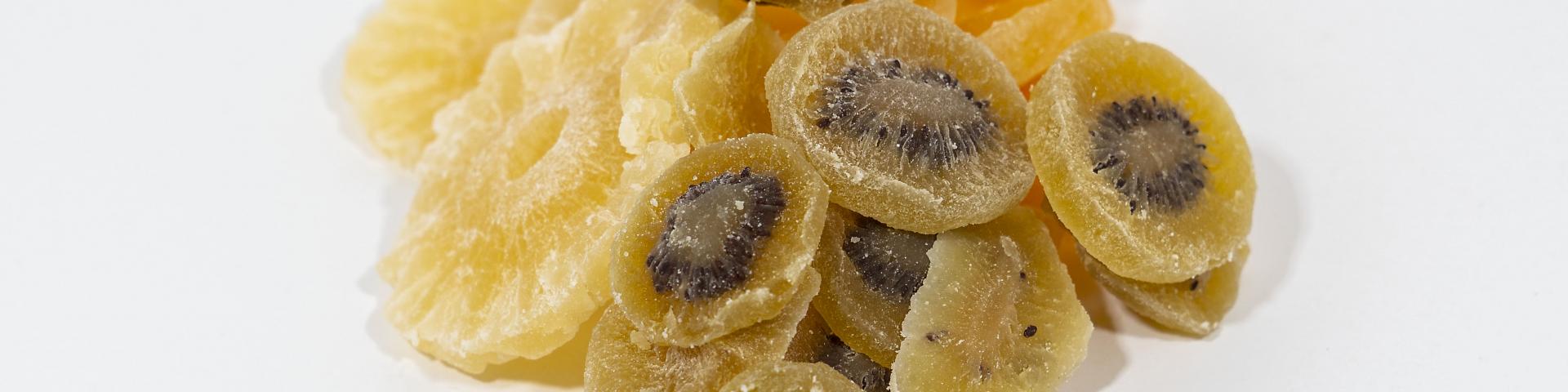
The European market potential for dried tropical fruit
In the medium to long term, the European market for dried tropical fruit is expected to show stable growth of 5-6% in volume per year. This is likely due to changes in the consumption patterns of European consumers, including wanting more healthier snacking options and eating sweet snacks less. The United Kingdom, Germany, France, the Netherlands, Belgium and Italy offer opportunities for developing country suppliers.
Contents of this page
1. Product description: dried tropical fruit
Dried tropical fruit is made from ripe fruit that is native to or grown in tropical regions (climatic zone surrounding the equator). The fruit is dried, either by air-drying or other recognised methods of dehydration. Sweetening agents (for example, cane sugar) and food additives are sometimes added during the process. You can also soak the fruit in syrup before drying, which creates a very sweet, shelf-stable product. This is widely done for soft fruit, such as papaya and pineapple.
In some production methods (for example, for banana chips), the product is not actually dried. It instead is fried in hot oil, like when making potato chips. Another characteristic of banana chips is that it is made from green instead of ripe fruit. However, bananas and plantains in Europe are also increasingly being sold as naturally dried. A small amount of flour is usually added to avoid stickiness.
Depending on the species and variety, dried tropical fruit can be cut into different shapes. The most common are halves, slices, pieces, spears, chunks or cubes.
The most popular dried tropical fruit in Europe include mangoes, pineapples and banana chips. Other types of dried tropical fruit are also becoming more popular, although they are still eaten less than leading ones. These include papayas, physalis, guavas, carambola (star fruit), durian, rambutan, passion fruit, jackfruit and pitahaya.
Dried tropical fruit is used at home, as a snack or cooking ingredient, elsewhere in hotels, restaurants and other places, and in the food industry, such as in bakery and confectionery products, or in breakfast cereal mixtures.
This study covers general information on the European dried tropical fruit market that is of interest to producers in developing countries. When the study refers to ‘Europe’, it means the 27 member states of the European Union (EU), plus the United Kingdom, Switzerland, Norway, Iceland and Liechtenstein. Developing countries are countries listed as official development assistance recipients.
Desiccated coconuts and dates are not part of this study. Coconut belongs to the nut family (not fruit), while dates are not tropical but sub-tropical fruit. For more specific information about these two products, see our studies on Desiccated Coconut and Dates.
Please see Table 1 for the specific products and the product codes used for statistical analysis. Note that the range of dried tropical fruits is wider than statistical analyses can show. For example, dried mangoes and dried pineapples do not have specific statistical codes.
Dried fruit preserved by sugar (candied or crystallised fruit) is not included in the extensive statistical analysis. Dried mangoes and dried pineapples are sometimes excluded from yearly statistical analyses due to the absence of relevant statistical codes. However, they are included in estimations and qualitative analyses. For more detailed information, read the CBI studies on dried mango and dried pineapple.
Table 1: Products in the product group of dried tropical fruit
| Combined Nomenclature Number | Product |
|---|---|
| 08134065 | Dried tamarinds, cashew apples, lychees, jackfruit, sapodilla plums, passion fruit, carambola and pitahaya |
| 08134050 | Dried papayas |
| 08039090 | Dried bananas |
| 08031090 | Dried plantains |
2. What makes Europe an interesting market for dried tropical fruit?
Europe is an attractive market for dried tropical fruit as people are snacking more. They want simple, minimally processed foods, clean labels and no added sugar. Dried tropical fruit products offer natural sweetness and fibre for school, work and travel. Europeans like exotic flavours, so retailers are expanding the range of dried fruit they offer.
European imports of dried tropical fruit vary by around 20,000 tonnes, including internal European trade. Official European statistics showed a large increase in 2022 when imports reached over 40,000 tonnes (Figure 1). This increase was the result of imports of dried bananas of more than 20,000 tonnes from Poland through the Netherlands. However, it looks like the official EU data are incorrect because Dutch customs statistics reported exports of only 116 tonnes from Poland in the same year.
Almost all imports from outside Europe come from developing countries. Over the last five years, imports have increased at an average annual rate of 2%. They reached almost 8,000 tonnes in 2024. If we add dried mango and dried pineapple, total imports of dried tropical fruit probably reached around 16,000 tonnes. In the next five years, the European market for dried tropical fruit will probably increase at an annual growth rate of 2–3%.
*without dried mangoes and pineapples
Source: Eurostat, 2025
Dried tropical fruit cannot be produced in Europe because of the climate. As such, the market is entirely dependent on imports. This makes Europe an attractive market for suppliers in developing countries. On average, European importers also pay higher prices for fruit than most buyers in Asia, Africa and South America. European consumers are interested in healthy snacks, exotic flavours and natural dried fruit. This creates opportunities for all types of exporters of dried tropical fruit.
Source: Eurostat, 2025, and author estimations
Dried mango is the largest imported product in the category, making up 42% of total dried tropical fruit imports, followed by dried bananas and plantains (30%), dried pineapples (12%), dried papayas (6%) and other dried tropical fruit (10%).
Tip:
- Read the CBI’s study on the demand for processed fruit and vegetables to better understand the dynamics of the European dried tropical fruit market.
3. Which European countries offer the most opportunities for dried tropical fruit?
As Europe’s main importer of dried tropical fruit, the United Kingdom (UK) is an interesting focus market. Germany provides specific opportunities, especially for organically certified dried tropical fruit. The Netherlands, Italy, France and Denmark are also interesting markets.
Source: Autentika Global, Eurostat and ITC TradeMap
Note: above data does not include import statistics on dried mango and dried pineapple.
The United Kingdom: the traditional tropical dried fruit importer
The United Kingdom (UK) is one of the largest European importers and markets for dried tropical fruit in Europe. It was the first market in Europe in which dried mangoes entered leading retail chains. Imported quantities are mainly consumed within the country, while re-exports are very small. Imports of dried tropical fruit have increased at an annual rate of approximately 14% over the last five years. Total consumption is estimated to be over 5,000 tonnes.
Dried mangoes make up the largest share of imported dried tropical fruit, at approximately 1,500 tonnes. This is followed by banana chips (1,000 tonnes), pineapples and other dried tropical fruit. Imports of lesser-known dried tropical fruit are increasing, including guavas, longans, durians and tamarinds. Still, these products are mostly sold in ethnic, Asian speciality shops and specialised supermarkets. The UK’s South Asian communities (Indian, Pakistani, Bangladeshi) specifically consume dried tamarind.
Consumption of dried tropical fruit in the UK is driven by the healthy snacking trend and by final consumers liking the taste of exotic fruit. Dried tropical fruit (especially mango and pineapple) is also being used more often as an ingredient in breakfast cereals and fruit bars.
Leading suppliers of dried tropical fruit to the UK are:
- Burkina Faso (dried mango);
- Ghana (dried pineapples);
- The Philippines (dried mangoes, banana chips);
- Thailand (dried tamarinds and papayas);
- Ecuador (banana chips);
- South Africa (dried mangoes);
- Bangladesh (dried tamarinds);
- India (dried tamarinds);
- Vietnam (dried papayas);
- Uganda (air dried bananas);
- Costa Rica (dried plantains).
Specific to the UK market is the popularity of the carabao mango variety from the Philippines. Other European markets mainly use other varieties of dried mangoes (for example, Kent, Keitt, Tommy Atkins). UK companies are marketing the carabao variety as superior compared to others and sell it for higher prices. Another specific characteristic is the sources from which the UK prefers to get dried bananas. While almost all European importers source dried bananas mainly from Ecuador, the UK imports the largest quantities from Uganda and Colombia.
Figure 4: Dried pineapple brand sold in the UK (by Forest Feast)
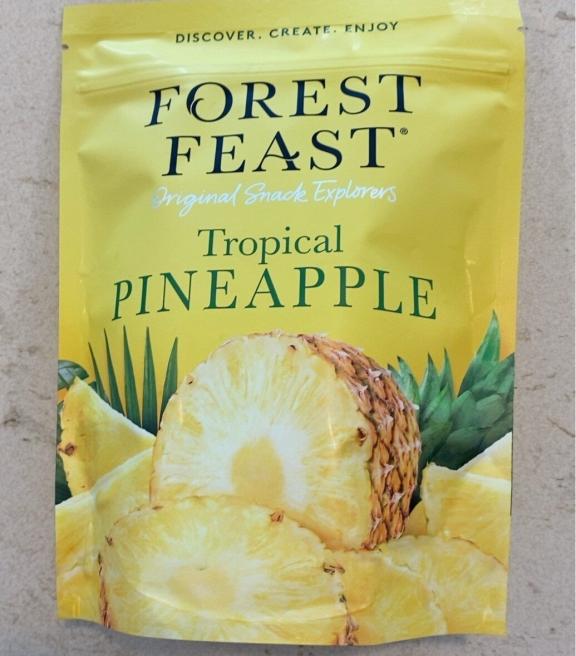
Source: kiliweb for Open Food Facts, licensed under CC BY-SA 3.0.
The majority of dried tropical fruit in the UK is sold as a snack. The largest market shares are held by the private labels of retail chains such as Tesco, Sainsbury’s, ASDA and Morrisons. Dried tropical fruit private labels in the UK make up more than 60% of the market share. Retail chains are commonly supplied via local packing and European brand companies and they rarely import retail-ready products directly from developing countries.
Leading brands selling dried tropical fruit include Whitworths, Forest Feast and Crazy Jack. Dried tropical fruit is also increasingly being used as an ingredient in fruit bars (for example, Fruit Doctor) and in breakfast cereals (for example, Dorset cereals and Jordans Crunchy Oat Granola with tropical fruits). Innovative dried tropical fruit snack products include fruit rolls and freeze-dried mango.
The UK market offers specific opportunities for suppliers of Fairtrade-certified dried tropical fruit, as the country is the largest Fairtrade products market in Europe. There are currently over 6,000 Fairtrade-certified products on sale in the UK.
Tip:
- Stay up-to-date with the dried tropical fruit market in the UK from the Nut & Dried Fruit Trade Association.
The Netherlands: The European trade hub
The Netherlands imports around 4,000 tonnes of dried tropical fruit every year. It is estimated that at least 70% of all imported dried tropical fruit is re-exported to other European destinations. The largest destination for the Dutch re-export is Germany, followed by France. Dried bananas make up approximately 50% of dried tropical fruit imports, followed by dried mangoes (30%), dried papaya (5%) and other dried tropical fruit (15%).
The growing consumption of dried tropical fruit in the Netherlands is driven by the healthy snacking trend and the popularity of ‘exotic’ flavours. Apart from snacking, dried tropical fruit is increasingly being used as an ingredient in fruit bars, bakery and confectionery products and breakfast cereals. Still, most breakfast cereals with tropical dried fruit contain sugar-infused fruit, although there is a clear trend towards healthier alternatives.
The Netherlands is characterised by a high import share for sugar-infused dried tropical fruit (for example, sweetened pineapples and papaya), especially from Thailand. The share of sugar-infused dried tropical fruit is expected to decrease in the medium to long-term, and no-added-sugar products are expected to gain market share. During the pandemic, many citizens stayed at home and increasingly consumed indulgence products, including sweetened dried fruit.
The Netherlands is the largest European importer of dried bananas (banana chips), with Ecuador as the leading supplier. In 2024, the Netherlands imported 2,600 tonnes of dried bananas and plantains. This makes up around one third of European imports. More than 90% of imported dried bananas are then re-exported to other European destinations, with Germany as the leading target market.
More than 90% of all locally traded dried tropical fruit is sold by private labels of supermarkets such as Albert Heijn, Jumbo, health retail chains such as Holland & Barrett or discounters such as Lidl.
The import volume of organic tropical fruit in the Netherlands is relatively high and led by a few large European specialised organic importers, like Tradin Organic and Gebana (organic dried bananas, mangoes and papayas). Examples of organic-only brands with a range of dried tropical fruit are Smaakt and Horizon.
Figure 5: Private label of organic banana chips in the Netherlands (by Albert Heijn)
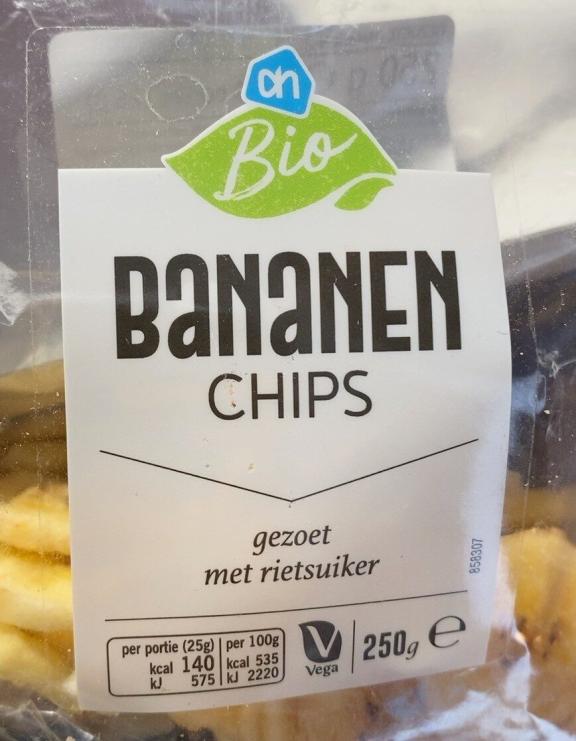
Source: kiliweb for Open Food Facts, licensed under CC BY-SA 3.0
Tip:
- Highlight clean-label data in your specification sheet. This helps you target Dutch buyers that want natural and healthier products. You can list your dried fruit’s nutritional score with the Nutri-Score system, which is often used in the Netherlands. You should also include oil details for banana chips (for example, coconut oil and RSPO-certified palm) in your technical sheet.
Germany: A discounter-dominated market
Germany is the third-largest European importer of dried tropical fruit and the largest consumer of dried tropical fruit after the UK. German consumption has significantly increased over the last five years, after leading European discounters (Lidl and Aldi) introduced dried mango into their regular offer. It is estimated that Germany imports more than 4,500 tonnes of dried tropical fruit. Dried mango is the most imported type of dried tropical fruit by far. It makes up more than 50% of imports, followed by dried bananas and plantains (40%).
Germany is the fast-growing market. Some types of dried tropical fruits (for example, dried natural mangoes and dried bananas with no added sugar) have experienced very high market growth. Until a few years ago, those products were sold mainly in specialised stores, but they are now being sold in all leading retail chains such as Lidl, REWE, ALDI and EDEKA. Sales of dried tropical fruit in Germany are forecast to increase at a high growth rate.
Figure 6: Private label of dried mangoes in Germany (by the leading German discounter Lidl)
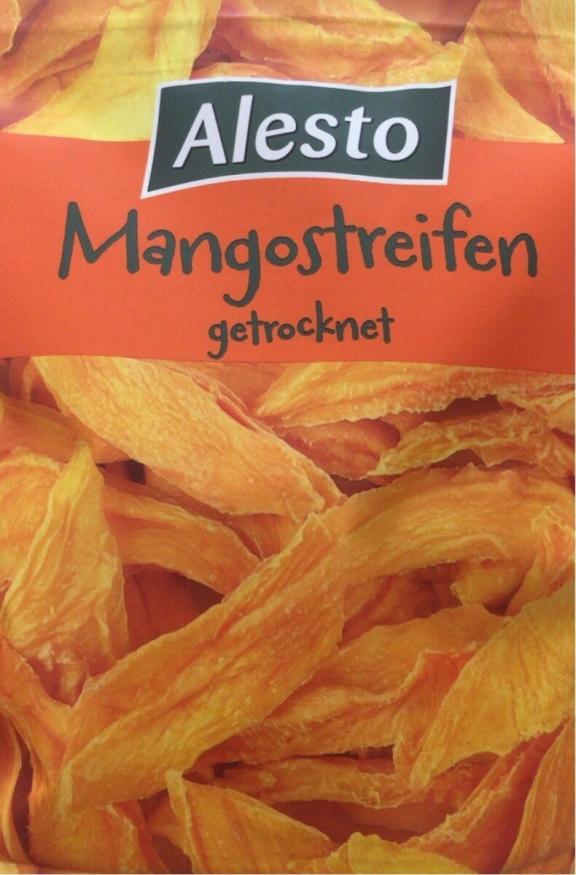
Source: kiliweb per Open Food Facts, licensed under CC BY-SA 3.0.
Germany is a particularly attractive market for organic dried tropical fruit. The country is the largest European market for organic food. Sales of sugar-free and preservative-free dried tropical fruit are also increasing. One of the market segments offering specific opportunities for suppliers of dried tropical fruit, is the fruit bar segment. Examples include Lubs and private labels of chains such as Alnatura, DM and BioMarkt. However, some fruit bars are produced from fruit purees rather than dried fruit.
Examples of German dried tropical fruit brands include Seeberger, Farmer’s Snack, Kluth and MorgenLand. Apart from snacks and previously mentioned fruit bars, dried tropical fruit is an important ingredient of breakfast cereal mixtures. The usage of sugar-infused dried tropical fruit in breakfast cereals is still larger than the application of natural dried tropical fruit. However, dried fruit without added sugar is expected to overtake sugar-infused fruit in breakfast cereals in the near future.
Tip:
- Find German traders of dried tropical fruit on the websites of the specialised German association (Waren-Verein) and in the German company directory (Wer liefert was).
Italy: A healthy snack demand and retail growth
Imports of dried tropical fruit to Italy have gone up and down over the last five years. It is estimated that imports have reached approximately 500 tonnes. Dried mango is the main product in the category, making up around 40% of the total dried tropical fruit market, followed by dried bananas and plantains (25%) and dried papayas (5%). A large share of the imports is sourced through the Netherlands as a transit country.
More and more Italian consumers see dried tropical fruit as a healthy snack. Data from 2024 shows that the dried fruit sector reached a value of around €877 million in supermarkets and grocery shops. Nutritious mixes and bars are popular as a convenient ‘on the go’ snack. For example, Coop’s ‘Healthy Food’ private label mixes dried mango and pineapple with nuts in low-sugar 40 g packs. These are marketed as high-fibre snacks.
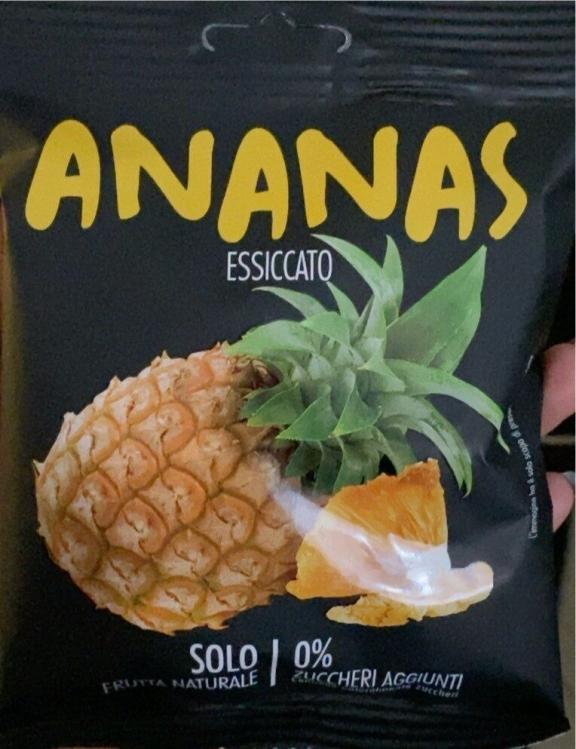
Sales are dominated by private labels by supermarkets such as Coop, Conad or Carrefour. A very popular way of selling dried fruit is in small discount packages of €1 per package (for 100 g of dried fruit). The leading independent brand is Noberasco, but there are more brands such as Semplicemente frutta (by Euro company), Life and Ventura. Italians use tropical dried fruits in cereals, desserts and simply as snacks. Retailers and producers have seen 17% growth in the sales of fruit snack bars and mixes.
Figure 7: Dried pineapple brand in Italy (by Euro Company)
Source: kiliweb per Open Food Facts, licensed under CC BY-SA 3.0.
Italy exports significant quantities of imported dried tropical fruit to other European countries. This re-export is led by the presence of strong brands (for example, Noberasco) in other European countries and the presence of strong Italian traders (for example, Besana).
Tip:
- Target your export for the Christmas sales, when the consumption of dried fruit in Italy is the highest. This means you need to be ready for the first shipments by October.
France: An ethically aware market
France is one of the fastest-growing markets for dried tropical fruit, with a strong emphasis on dried mangoes. Dried mango imports have sharply increased over the last five years, reaching around 1,500 tonnes. Burkina Faso is the main supplier. Aside from Burkina Faso, France is especially an attractive market for French-speaking suppliers of dried tropical fruit from West Africa (for example, Mali, Côte d’Ivoire and Benin).
Dried mangoes and dried bananas have approximately equal market shares of 45% each, followed by dried papayas (1%) and other tropical fruit (9%). The leading supplier of dried papayas is Thailand, followed by Vietnam. In the ‘other dried tropical fruit’ category, the most-imported product is dried tamarinds. These are mostly sold in Asian supermarkets, such as Tang Frères and Paris Store.
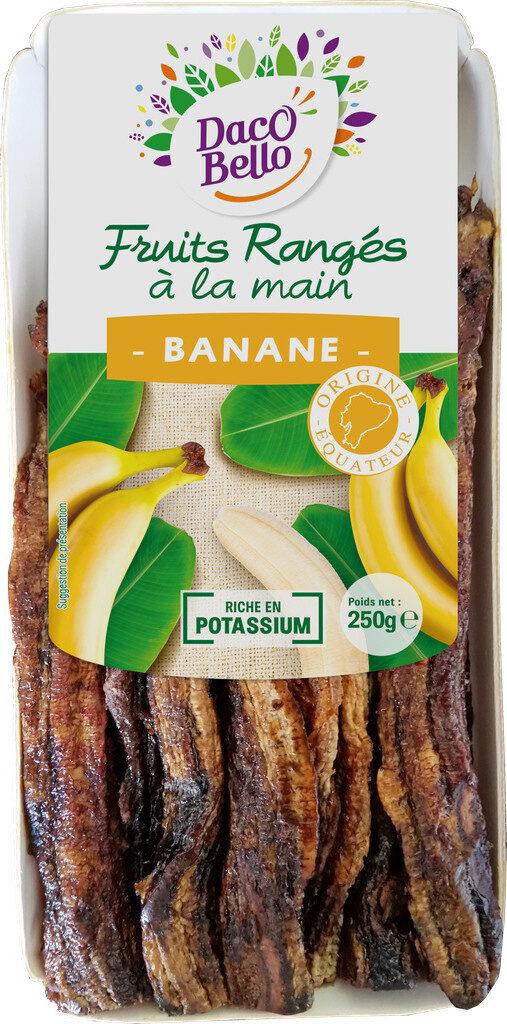
Private label brands of big retailers (for example, Carrefour or Auchan) are very strong in sales of dried tropical fruit in France. Leading independent private brands include Maître Prunille and Brousse Vergez. Some of the brands that have a strong presence in the organic segment include Juste Bio and Daco Bello. Dried organic fruit is mostly used in breakfast muesli. However, some breakfast cereal producers use tropical fruit from freeze-dried purees instead of dried tropical fruit.
Figure 8: Air-dried banana brand in France (Daco Bello)
Source: kiliweb per Open Food Facts, licensed under CC BY-SA 3.0.
Dried tropical fruit is also sold in French supermarkets as unbranded, per weight or in simple transparent retail packaging. Some dried tropical mixes are sold as an ingredient for home-made muesli. All supermarket brands (private labels) in France use nutriscore labelling to label packed food, including dried tropical fruit. Dried tropical fruit is usually labelled ‘C’, meaning that it has an average nutritional value. Muesli with dried tropical fruit as an ingredient can have an ‘A’ label depending on the composition.
A lot of dried tropical fruit is imported to France through the Netherlands. But an increasing number of companies are now sourcing dried tropical fruit directly from producing countries. Those companies are investing in ethical sourcing and trying to help local communities in developing countries. One such company is Agro Sourcing’s brand Pépite.
Tips:
- Contact the French association for research in the fruit and vegetable sector (CTIFL) to learn more about the French market.
- Consider investing in French-speaking staff for easier access to the French market if you are not from a French-speaking country.
Denmark: Sustainability and health drive demand
Danish imports of dried tropical fruit from developing countries have grown by 4% annually. They reached almost 400 tonnes in 2024. Total imports were over 1,000 tonnes as Denmark imports large quantities of dried tropical fruit from re-exporting countries such as Belgium, the Netherlands, Germany and Poland. There are no reliable data on import statistics. However, estimates show that dried papayas (mostly from Thailand) have a larger market share than in other European markets.
Denmark’s market is defined by its eco-conscious consumers. Organic food accounts for 11–12% of grocery sales. This is the highest in Europe. Danish consumers value natural, additive-free snacks. Many consumers actively look for organic and Fairtrade products. For example, Danish Rawbite bars are 100% organic. Smoothies and breakfast bowls with dried mango or pineapple are common, especially in urban and health-food stores.
Retailers like Coop (Irma, Kvickly) and Salling Group (Føtex, Netto) offer a wide range of tropical dried fruit. Retailers often pack and sell tropical dried fruit under their own private labels. But they also sell independent Danish brands (for example, Biogan) or imported brands (for example, Sunshine Delights). There is more pre-packed dried fruit on the market because buyers prefer products with eco-friendly labels and minimal packaging.
Tip:
- Draw attention to sustainable achievements in your offer of dried tropical fruit to Denmark. Danish buyers often appreciate organic or Fairtrade labelling and eco-friendly packaging.
4. Which trends offer opportunities or pose threats in the European dried tropical fruit market?
Consumers are becoming more interested in dried tropical fruit in Europe. The main reasons are increasing demand for healthy snacking together with product innovation. Also, sustainable and ethical production is becoming an important aspect for European traders and consumers.
To find out more about general trends, read our study about Trends on the European Processed Fruit and Vegetables Market.
Healthy snacking
A major trend that is in line with increased consumption of dried tropical fruit is healthy snacking. Consumers are searching for healthier alternatives for snacking between meals or even for snacks that can replace meals in full. Younger consumers who are taking more care of their general health and wellbeing no longer favour savoury snacks such as potato chips and other crisps. As a result, nuts and dried fruit are becoming increasingly popular as snacks.
Consumers are more often looking for flexible, light and convenient snacking options that they can eat on the go. According to the Mondelez State of Snacking report, consumers continue to replace meals with snacks and manage portions more intentionally. Around 60% of consumers say they prefer snacks to traditional meals. In the dried fruit category, the major drivers are ‘no sugar added’ dried fruit, smaller packaging formats (for example, dried fruit shots by Whitworths) and children’s formats (for example, Bear Fruit Rolls).
Clean label
Especially important for consumers are ‘clean labels’ on dried fruit packs. ‘Clean’ means that there are no additives used during the production process. Popular labels for dried tropical fruit packs are organic, gluten-free, sugar-free, ‘nothing added’, 100% fruit and similar.
According to Innova Market Insights, the clean label trend has shifted from ‘low sugar’ labels to ‘no added sugar’, as the top claim for new product launches. This trend is a good opportunity for developing country suppliers that produce tropical dried fruit with standard air-drying methods.
One of the new trends is production of additive-free dried tropical fruit. The main additives used to preserve the intense original fruit colour are sulphites. Producers that do not apply sulphites often use the claim ‘sulphur-free’. The problem connected with ‘sulphur-free’ products is darkening of the fruit, which makes the fruit less appealing to consumers.
Innovative processing technologies and products
Freeze-drying technology, consumption of fruit and bars, new breakfast options and innovative snacking products are some of the main influences on the dried tropical fruit market. Some examples are:
- Soft dried tropical fruit – producers are starting to use rehydration (similar to the prunes production process) to increase water content in some types of dried tropical fruits and make them easier to chew. Examples of ‘soft tropical fruit claims’ include Frubis soft dried mangoes and pineapples (Portugal), Seeberger soft mango (Germany) and Rapunzel organic soft dried mangoes (Germany).
- Fruit bars with tropical fruit – the popularity of fruit bars has increased across Europe over the last several years. The main reason is the natural sweetener function of dried fruit, allowing the making of sweet products without added sugar. The Swiss company Fruit Group AG, in collaboration with the Colombian manufacturing and marketing company Prime Foods, launched dried tropical fruit snack bars without additives to the European market.
- Fruit rolls, sticks and balls – these innovative fruit snacks are made by rehydrating fruit purees or by milling dried fruit pieces. Tropical flavours are popular and include Tropics (by HPW from Switzerland) and Sunvita (Hungary).
- Fruit chips – apart from bananas, other tropical fruits gradually also appear in the form of chips, like NSI pitahaya and mango chips.
- Freeze-dried tropical fruit – freeze dried fruit is one of the biggest trends in the snacking and breakfast cereals market segments. The most popular type in the tropical fruit category is freeze-dried mango. It is commonly produced from frozen mango cubes. Examples include Lolo snacks (Hungary), Freeze Dried Dragon Fruit Chips (by Soul Fruit, the UK) and Giving Tree (UK).
- Breakfast cereals, such as Seedheart (Germany) or Jordans (UK).
Sustainability and ethical production
Several sustainability initiatives are already active in the dried tropical fruit production countries. Several of which have already been mentioned in the previous chapters. These trends are approached in more detail in the CBI processed fruit and vegetables trends study. Generally, consumers and retailers are increasingly interested in sustainably produced fruit products, including dried tropical fruit. Major sustainability aspects related to tropical dried fruit include farmers’ and workers’ human rights, measuring carbon emissions and recyclable packaging.
Some of the companies that focus on ethical production source their products from a specific country and via a project in the country. Sometimes, they have a partnership with a company from the sourcing country. One example of a European company that works like this is Tropicks from Switzerland. This company sells a range of dried tropical fruit from Ghana in several European countries, such as in the Netherlands.
Tips:
- Promote the various applications and nutritional properties of dried tropical fruit. But avoid health or nutritional claims that are not substantiated by scientific evidence (nutritional analysis in case of nutritional claims). Check the Health News Blog of INC to find studies that have been published in scientific journals.
- Read the CBI Market Statistics and Outlook on Processed Fruit & Vegetables study to learn more about the general trade trends and the size of specific market segments.
- Check the websites of European trade shows and exhibitions to discover the newest trends. The most important trade fairs in Europe that are relevant to dried tropical fruits are SIAL (France, every even year in October), Anuga (Germany, every uneven year, in October) and BioFach (Germany; organic products, every year in February).
Autentika Global carried out this study on behalf of CBI.
Please read our market information disclaimer.
Search
Enter search terms to find market research