
Entering the European market for dried tropical fruit
Food safety certification, combined with reliable and frequent laboratory testing, helps create a positive image for dried tropical fruit suppliers wishing to export to Europe. Emerging suppliers can reap additional advantages through sustainable production methods and the implementation of corporate social responsibility measures. South Africa, Burkina Faso and Ghana are the leading suppliers of dried mango, while Ecuador is the main supplier of banana chips. Thailand is the leading supplier of sweetened dried tropical fruit.
Contents of this page
- What requirements must dried tropical fruit meet to be allowed on the European market and what certification does it need?
- Through which channels can you get dried tropical fruit on the European market?
- What competition do you face on the European dried tropical fruit market?
- What are the prices for dried tropical fruit in the European market?
1. What requirements must dried tropical fruit meet to be allowed on the European market and what certification does it need?
All food products sold in Europe need to be tested for safety. Apart from providing proof of compliance with the European food safety regulations, there is growing demand for sustainably processed tropical fruit. This chapter describes the most important dried tropical fruit market requirements. For a more general overview, read the CBI study about buyer requirements for processed fruit and vegetables.
What are mandatory requirements?
To export dried tropical fruit to Europe, you need to comply with strict limits on pathogens, pesticides and additives. Excessive or undeclared sulphite content leads to most border rejections. Make sure to monitor and lab-test every lot before export. New European Union (EU) Due Diligence and Corporative sustainability reporting directives mean that every supplier is accountable for upholding socio-environmental standards.
Make your own checklist to assess contamination risks along the supply chain
You should check the European Commission Regulation regularly to see the maximum levels for specific contaminants. It is updated often.
The most important contaminants you need check for are the following:
- Microbiological contaminants: the European regulation on microbiological criteria for foodstuffs sets limits for pathogenic micro-organisms, their toxins and metabolites;
- Heavy metals: the maximum level of cadmium for tropical fruit is 0.02 mg/kg of wet weight;
- Process contaminants: for banana chips, it is important to control the temperature and to use food grade oils to avoid contamination with polycyclic aromatic hydrocarbons (PAH), 3-MCPD and Glycidyl esters. For banana chips, the maximum level of Benzo(a)pyrene is 2 μg/kg while the limit for the sum of all PAHs is 20 μg/kg;
- Pesticide residues: the EU maintains a list of approved pesticides authorised for use and sets the maximum residue levels (MRLs);
- Packaging contaminants: plastic materials need to be in line with the European Regulation on Plastic Food Contact Materials. Special attention should be paid to the levels of Bisphenol A and Phthalates;
- Foreign bodies: prevent insect contamination with preventive measures such as strict checks before packaging, fumigation and temperature treatments. If you use fumigation, you should only apply officially approved fumigants. Ethylene oxide is banned as a fumigant in the EU.
Use only approved additives and processing aids
Dried tropical fruit needs to comply with the EU additives regulation. Sulphites are common additives used to prevent discolouration and increase shelf life. If sulphites are used, they need to be labelled as allergens. Using unauthorised additives or above-limit levels can lead to border rejections or product recalls. Over the last three years, the Rapid Alert System for Food and Feed has reported three market withdrawals of dried mangoes due to unlabelled and excessive sulphite content.
Check the levels of mineral oil hydrocarbons
Mineral Oil Saturated Hydrocarbons (MOSH) and Mineral Oil Aromatic Hydrocarbons (MOAH) are contaminants that can harm human health. There are no official limits yet, but they are expected soon. The proposed maximum MOAH level for dried tropical fruit is 2 mg/kg. However, the limit will likely be higher for banana chips. Germany has already set a benchmark level of 4 mg/kg. This is checked regularly. In 2025, RASFF reported a case of excessive MOAH content in banana chips imported from the Philippines.
Follow labelling rules
The bulk label should use coding for each lot. Labelling should indicate the product name, country of origin, moisture level, cut style, lot code, net weight and shelf life. Allergen warnings also need to be visible on bulk packaging. More details can be provided in the accompanying documents.
Product labelling for retail packaging needs to comply with the European Union Regulation on the provision of food information to consumers. This regulation defines nutrition labelling, origin labelling, allergen labelling and the minimum font size for mandatory information. Retail packaging must be labelled in a language that consumers in the European target country can understand.
Comply with the legislative requirements on sustainability
Some of the most relevant European laws and legislation related to environmental and social sustainability have been made part of the European Green Deal (EGD). The EGD includes legislative changes. It also has a timetable that explains when they will come into force. The most relevant specific legislations for tropical dried fruit are:
- Organic food regulation (all organic operators must have implemented changes before October 2025);
- Sustainability labelling of food products (under discussion);
- Corporate Sustainability Due Diligence Directive (in force);
- Packaging and packaging waste (from January 2030);
- Corporative sustainability reporting (from 2027 for the 2026 fiscal year for listed SMEs and voluntary for non-listed SMEs);
- EU Forced Labour Regulation (in force from December 2024);
- Empowering consumers for the green transition Directive (in force, but applied from September 2026).
Tips:
- Follow the Codex Alimentarius Code of Hygienic Practice for Dried Fruits. For dried tropical fruit, it is particularly important to control the occurrence of insects and other parasites.
- Read more about MRLs on the European Commission website on maximum residue levels. To be prepared for any new changes in the MRLs, read the ongoing reviews of MRLs in the European Union.
What additional requirements do buyers often have?
Food safety, quality and sustainability standards have become just as important as the mandatory requirements.
Quality requirements
In January 2025, the EU started to officially implement the marketing standards regulation for dried fruit and nuts. The label must state the country of origin. This was an important update compared to the previous version of the legislation, where it was enough to write ‘EU’ or ‘Non-EU’ as the origin. The United Nations Economic Commission for Europe (UNECE) standards (for dried bananas, mangoes, papayas and pineapples) are the basic standards for dried tropical fruit.
Major quality indicators are the following:
- Defect tolerances – fruit must be free of insects, mould, damage and blemishes. Based on defect tolerance, dried tropical fruit can be classified into three classes: ‘Extra’, ‘Class 1’ and ‘Class 2’;
- Moisture content – this varies depending on the type of dried tropical fruit. In general, the moisture content of natural dried fruit without added preservatives or sugars must be lower than that of fruit with added preservatives or sugar;
- Cut style and size – some types of tropical fruit can be dried whole (for example, physalis), but it is usually cut into different shapes and sizes (for example, slices, rings);
- Chemical parameters – the most important is the specification of additives used, but banana chips specification includes more complex analyses, such as the type of oil used, free fatty acids and peroxide value in the oil to ensure freshness;
- Organoleptic characteristics – colour, taste, aroma and texture.
Food safety certification
Although food safety certification is not obligatory under European legislation, it has become a must for almost all European food importers. Most established European importers will not work with you if you cannot provide some type of food safety certification.
The majority of European buyers will ask for certification recognised by the Global Food Safety Initiative (GFSI). The most popular certification programmes for dried tropical fruit, all of which are recognised by GFSI, are:
- International Featured Standards (IFS);
- British Retail Consortium Global Standards (BRCGS);
- Food Safety System Certification (FSSC 22000).
Invest in sustainability
European demand for sustainably sourced food in Europe is growing. To help consumers make more environmentally friendly choices, labelling systems are being introduced, such as Eco Score, Eco Impact, Planet Score and Enviro Score. Alongside the requirements related to environmental impact, there is growing demand for more transparent and fair supply chains.
One way to show that you take care of farmers and workers is to get certified with standards like Fairtrade, Fair for Life and Rainforest Alliance. Most European buyers will appreciate proof of social audits, such as SMETA (by SEDEX) and BSCI (by amfori).
Respect delivery terms
Initial transactions often use Letters of Credit for security on both sides. Once trust is established, many European buyers will push for open account terms. Examples are payment 30 days after the Bill of Lading date or 30 days after arrival. Payment terms of 30 days are standard in the Western European food trade. Sometimes importers agree to a compromise. For example, a small discount for paying at sight or a mixed term (10% advance, 90% on 30 days).
Understand retail chains’ requests
Very often, leading European retail chains have stricter requirements than the mandatory ones. Discuss these requirements to make sure that you can meet them. For example, Lidl requires IFS certification while most UK retailers will ask for AA BRCGS grade. Many retailers have stricter MRL limits and a ‘zero tolerance’ claim for many types of pesticides. In practice, this means some retail chains demand that there are no detectable residues of certain chemicals.
European retailers also want to check the product carbon footprint more often. For instance, the Dutch retail giant Ahold Delhaize has declared that, by 2025, it will ask all suppliers to report their Scope 3 GHG emissions. This means dried tropical fruit exporters could be asked to provide data on emissions from farming, processing and shipping. Most retail chains in Europe use nutrition labelling schemes, such as Nutri-Score, Keyhole and Traffic Light.
Tips:
- Read our study about buyer requirements for processed fruits and vegetables for a general overview of buyer requirements in Europe.
- Read more about the transport and storage requirements for dried fruit on the website of Cargo Handbook.
What are the requirements for niche markets?
You can find opportunities in the organic, ethnic or premium niches to avoid competition with leading suppliers in the main retail segments.
Consider organic certification
To market tropical dried fruit as organic in Europe, it must be grown using organic production methods. Growing and processing facilities need to be audited by an accredited certifier before exporters can put the European Union’s organic logo on the packaging or the logo of the standard holder. Examples of these logos are L’agriculture biologique (AB) in France, Bio Suisse in Switzerland and Naturland in Germany.
If you want to produce and export organic dried tropical fruit to Europe, you need to be aware of important new rules that may affect your business. The new EU organic regulation came into force in October 2025. This regulation comes with more than 20 secondary laws that regulate the production, control and trade of organic products in more detail. Some of the important secondary laws to be aware of are detailed organic production rules, the list of authorised substances for plant protection and the rules on documentation requirements for imports.
Consider halal and kosher certification
Islamic (halal) and Jewish dietary laws (kosher) set specific dietary restrictions. If you want to focus on Jewish or Islamic niche markets, you should consider implementing halal or kosher certification schemes.
Tips:
- Read the training materials on the new organic regulation (by the Alliance for Product Quality in Africa project). This will make it easier to follow the new rules.
- Consult the Sustainability Map database for information on a wide range of sustainability labels and standards.
2. Through which channels can you get dried tropical fruit on the European market?
Dried tropical fruits are used as a snack and as ingredients in the food processing industry in Europe. Approximately 30% of the total imported dried tropical fruit in Europe is used as an ingredient for further processing, while 70% is re-packed and sold by retailers, or used in the food service segment.
How is the end-market segmented?
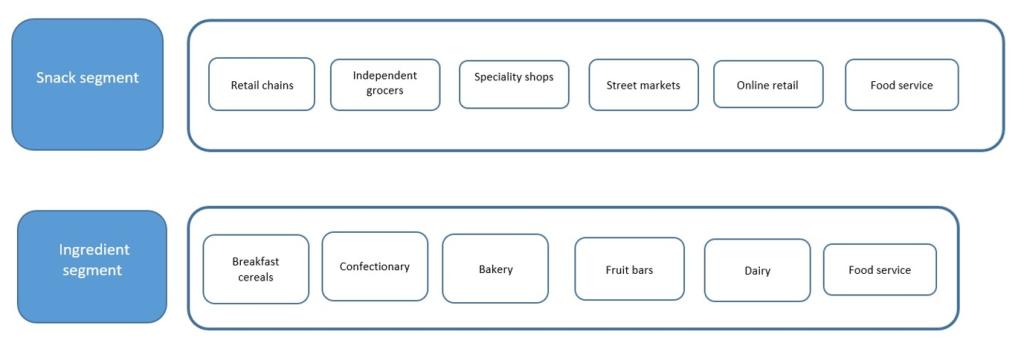
Figure 1: End-market segments for dried tropical fruit in Europe
Source: Autentika Global
Snack segment
Approximately 70% of imported dried tropical fruit in Europe is sold as snacks. The consumption of natural dried tropical fruit (dried mango, in particular) is increasing. But the large market share is still mostly accounted for by sugar infused dried tropical fruit.
Currently, the most popular dried tropical fruit is dried mango, followed by dried pineapple. The snack segment is served by packing companies, which repack and brand imported bulk tropical fruit. Many of these companies pack dried tropical fruit under private labels for the European retail chains. Some companies have their own brands. Usually though, the market is concentrated and a relatively small number of companies in each of the European countries supply the snack segments.
‘No sugar added’ and ‘preservatives-free’, are the main trends influencing the snacking segment. Dried tropical fruit (for example, mango, pineapple) has an enticing exotic flavour. It should also have a good balance of sweetness and tartness (not too sweet) and provide minerals, vitamins, phytonutrients and fibre. Consumers wishing to satisfy their sugar craving, still see sugar infused tropical fruit as less ‘unhealthy’ than chocolate and other sweet snacks.
Ingredient segment
The food processing segment accounts for roughly 30% of the European dried tropical fruit market. The most common dried tropical fruit ingredient users include the following:
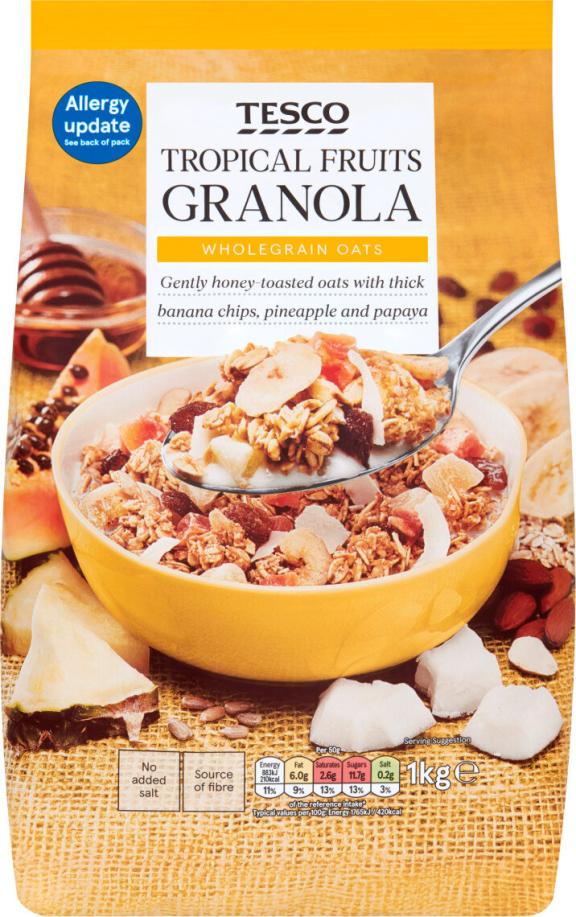
- Breakfast cereal industry: a major user of sugar infused dried tropical fruit. In order to meet consumer demand for products low in sugar, it is expected that breakfast cereal producers will increasingly use tropical dried fruit (which is infused with natural sweeteners such as concentrated fruit juice) instead of dried fruit that is sweetened with sugar syrup.
- Confectionary industry: mainly uses cut tropical fruit to produce sweet snacks. New product formulations increasingly use dried tropical fruit coated with chocolate and other sweet glazing ingredients.
- Bakery industry: uses pieces of raw dried tropical fruit in cookies, cakes and pastries. The bakery industry is still an important user of sweetened dried tropical fruit, such as cuts of dried mango, papaya and pineapple.
- Dried tropical fruit bars are available in an increasing number of varieties. Organic fruit bars are growing in popularity (especially in Germany). Naturally dried tropical fruit is used as the main fruit ingredient in some fruit bars, while others consist mainly of dehydrated fruit puree.
- Dairy industry: uses dried tropical fruit as ingredient in fruit preparations for ice creams with tropical flavours, or in fruit yoghurts.
Figure 2: Tropical fruits granola private label (by Tesco)
Source: kiliweb per Open Food Facts, licensed under CC BY-SA 3.0
Tips:
- Search the list of exhibitors of the specialised trade fair Fi Europe to find potential buyers for your dried tropical fruit within the food ingredient segment.
- Visit or exhibit at ISM Cologne, the leading European trade fair for sweets and snacks, to explore opportunities in the dried fruit snack segment.
Through which channels do products go to reach the end-market?
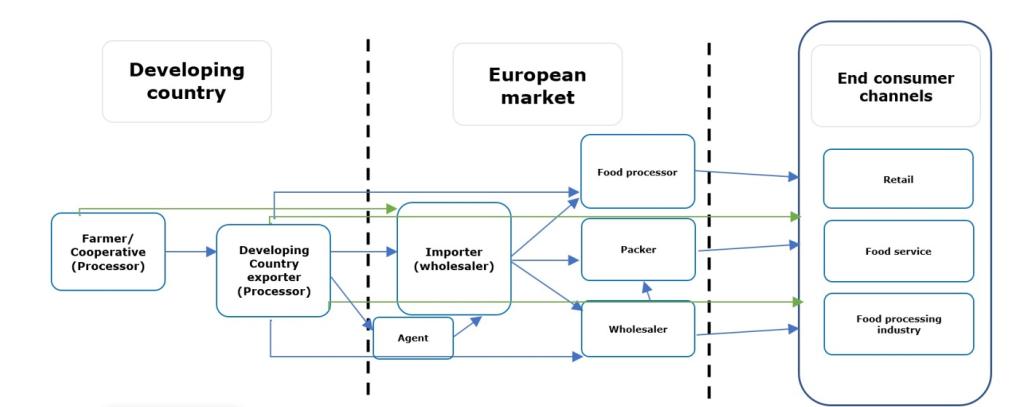
Specialised dried fruit importers represent the most important channel for dried tropical fruit in Europe. There are also several alternative channels, such as agents, food processors or food service companies.
Figure 3: European market channels for dried tropical fruit
Source: Autentika Global
Importers/wholesalers
In most cases, importers act as wholesalers. They very often sell dried tropical fruit to packing companies which package it for sale to consumers. Some importers also have their own processing and packing equipment, so they can also supply retail and food service channels directly. However, many important dried fruit brands import dried tropical fruit directly, instead of buying it through specialised importers.
Importers are usually quite knowledgeable when it comes to the European market. They closely monitor developments in dried tropical fruit producing countries. This makes them your preferred contact. They can inform you in good time about market developments and provide practical advice about exports. Dried tropical fruit importers often import other types of dried fruit and edible nuts as well. Offering other products in addition to dried tropical fruit can increase your competitiveness.
The position of the importers and food manufacturers are put under pressure by retailers. The higher demands imposed by the retail industry determine the supply chain dynamics from the top down. This pressure translates into lower prices, but also into added value in the form of ‘sustainable’, ‘natural’, ‘organic’ or ‘Fairtrade’ products. As a result, transparency in the supply chain is needed. To achieve this, many importers develop their own codes of conduct. They also build long-lasting relationships with preferred developing country suppliers.
Dried fruit packer
Most of the leading European dried fruit brands import dried tropical fruit directly. For new suppliers, the challenge is to make lasting relationships with well-known dried fruit companies, as they usually already work with selected suppliers. Established importers perform audits and visit producing countries on a regular basis. Many new contacts find they must offer the same quality at lower prices than their competitors, at the start of the relationship. Many dried fruit packers will request that you adhere to specific code of conduct, as they are under considerable pressure from the retail industry.
Agents/brokers
Agents involved in the dried tropical fruit trade typically perform two types of activities. Agents normally act as independent companies that negotiate on behalf of their clients and as intermediaries between buyers and sellers. Typically, they charge commissions ranging from 2% to 4% of sales prices for their intermediary services.
Another activity performed by these parties is the supply of private labels for European retail chains. For most developing country suppliers, it is very challenging to participate in the demanding private label tendering procedures. For these services, some agents, in cooperation with their dried tropical fruit suppliers, participate in procurement procedures put out by the retail chains.
Examples of dried tropical fruit agents in the leading European markets include: Kenkko (the United Kingdom), MW Nuts (Germany) and QFN (Netherlands).
Retail channel
Retailers rarely buy directly from developing country exporters. Recently, the retail sector has become increasingly polarised, seeing a shift towards either the discount or the high-level segment. Until recently, naturally dried tropical fruit was offered mainly in the high-end retail segments. However, in the last two years, dried tropical fruit has also been offered by several large European discounters (for example, ALDI’s ‘Simply Nature’ dried mango or Lidl’s ‘Alesto’ dried mango and dried pineapple).
The leading food retail companies in Europe differ per country. The companies with the largest market shares are Schwartz Gruppe (Lidl and Kaufland brands), Carrefour, Tesco, Aldi, Edeka, Leclerc, Metro Group, Rewe Group, Auchan, Intermarché and Ahold (Delhaize, Albert Heijn and several other brands).
Food service channel
The food service channel (hotels, restaurants and catering establishments) is usually supplied by specialised importers (wholesalers). The food service segment often requires specific packaging of dried tropical fruit in weights of 1kg to 5kg, which is different from the requirements for bulk or retail packaging.
World cuisines, healthy food and food enjoyment are the major driving forces in the food service channel in Europe. The fastest-growing business types tend to be new (healthier) fast food, street food and pop up restaurants, as well as restaurants serving international cuisines and sandwich bars.
Tips:
- Search the list of members of the European Trade Federation for Dried Fruit and Edible Nuts (FRUCOM), to find buyers from different channels and segments.
- Understand the pressure from retailers for sustainable products and increase your competitiveness by investing in different certification schemes related to CSR, organic foods or food safety. Having food safety certification is the minimum requirement if you want to tap into the retail segment.
What is the most interesting channel for you?
Specialised importers seem to be the most useful contact if you aim to export dried tropical fruit to the European market. This is specifically relevant for new suppliers as supplying established brands, or the retail segment directly is very demanding and requires considerable investments in the area of quality and logistics.
However, packing for private labels may be an option for the well-equipped and price competitive producers. Still, private label packing is often done by importers that enter into contracts with retail chains in Europe. In order to have full control of the processing, it is easier to pack dried tropical fruit for the snack segment within Europe. As the cost of labour in Europe is increasing, dried tropical fruit importers sometimes search for more cost-effective packing operations. This can be in developing countries, for example.
3. What competition do you face on the European dried tropical fruit market?
New suppliers of dried mango will face the strongest competition from Burkina Faso, Ghana and South Africa. Timini, Pacobanana, Diana, HPW and Lion Foods are strong supplying companies. Strengths of leading companies are food safety certification, consistent quality and organic product lines. Fresh tropical fruit also competes with dried fruit.
Which countries are you competing with?
Burkina Faso is the main dried mango supplier to Europe, followed by Ghana. Ecuador is the main supplier of dried bananas and plantains, followed by Costa Rica and Colombia. The leader in dried pineapples is Ghana, followed by Costa Rica. The Philippines is a strong supplier of fried banana chips. Thailand is the main supplier in niche Asian dried fruit, such as tamarinds, followed by Vietnam and India. Many other countries are also emerging on the European dried tropical fruit market.
*excluding sugar infused and candied dried fruit
Source: Autentika Global, Eurostat and industry estimations
Burkina Faso: supplier of organic dried mangoes
Burkina Faso has built a reputation as Europe’s top organic certified dried mango supplier. At the moment, it produces roughly 7,000 tonnes of dried mango every year. Most farms grow Kent or local varieties, and around 80% of their output meets organic standards. Burkina Faso has mobilised many smallholders into export quality production through farmer cooperatives and NGO projects. Its dryers, which are often gas-powered, deliver natural, unsweetened mango slices.
Mango growers are part of the Association Interprofessionnelle de la Mangue du Burkina (APROMA-B). It brings together organisations that are active in three links of the value chain: UNPM-B (production), PTRAMAB (processing) and APEMAB (marketing). The government authorised APROMA-B to import biopesticides to fight against fruit flies in 2023.
Burkina Faso’s weaknesses include its landlocked geography and infrastructure gaps. Export containers must be taken to a coastal port by road (often Abidjan or Lomé). This means added costs and delays. Weather and political instability (Sahel security issues) pose risks to stable supply. Still, large EU discounters sell private-label dried mango from Burkina Faso. No other supplying countries can currently compete with the organic volumes processed in Burkina Faso.
Several international projects have supported the mango sector. The ongoing Dry More project wants to develop at least one alternative dried product that helps dried mango processors produce all year round. However, the country is currently in the middle of a political and economic crisis.
Ecuador: the leading supplier of dried bananas
Ecuador has been the leading banana exporter for decades. Ecuador is home to the most highly developed banana industry in the world. The country also processes bananas into products such as banana puree, flakes, powder and chips. In Ecuador, green plantains are generally used for processing into chips, instead of bananas. Plantains are similar to bananas, they are locally popular and eaten cooked, steamed or fried. In Ecuador, the leading plantain variety used for processing and exporting is Barraganete.
Ecuadorian exports of dried bananas and plantains came to over 4,700 tonnes in 2024. The Netherlands was the main export destination, with a 36% export share, followed by the United States (26%), Colombia (13%) and Germany (8%). Europe is the main target market for Ecuador’s dried bananas export. It buys over half of the country’s total dried banana and plantain supply.
Ecuador’s perceived strengths include its stable year-round supply and good quality control. Ecuador’s banana cooperatives also produce some organic and Fairtrade banana chips. However, the cost of raw materials is rising because of stricter labour and environmental standards. Uganda is Ecuador’s main competitor and developed the offer of exporting naturally sun-dried bananas to Europe. However, the majority of European consumers are still not familiar with naturally dried bananas and consumption in Europe is much lower than that of banana chips.
Ecuadorian export companies receive considerable support from the governmental export promotion organisation Pro Ecuador. Pro Ecuador has more than 30 sales offices worldwide, helping companies form links with European companies. In addition, Pro Ecuador regularly arranges for Ecuadorian companies to participate in the major European trade events.
Ghana: supplier of dried mangoes and dried pineapples
Ghana is the leading supplier of dried pineapples and the second-largest supplier of dried mangoes to Europe. Exports of dried mangoes and pineapples from Ghana are estimated to be at around 2,500 tonnes. Keitt is the main mango variety used for drying. The main pineapple cultivars used for drying are MD2, Smooth Cayenne and a local sweet variety, Sugarloaf.
The Swiss–Ghanaian company HPW exports he largest quantities, followed by Bomarts and Agropal. You can read more about HPW in the section below. More money is being invested in the fruit drying sector. This is supported by several international development projects. The largest challenge for the sector is a lack of high-quality mangoes for processing. To maintain a stable supply, processors also import mangoes from Côte d’Ivoire.
Pineapple production is located in the coastal areas, the Accra plains, the Eastern and Central regions, and in the Volta region. Processing activities mostly take place in the Central and Eastern regions. The Ghana Export Promotion Authority (GEPA) supports exporters. In the pineapple sub-sector, exports get organisational support from the Sea-Freight Exporters Association of Ghana (SPEG). Dried fruits make up 9% of exported fruit products from Ghana, according to a value chain analysis of the Ghanaian fruit sector (PDF).
Thailand: the leading supplier of niche and sweetened tropical fruit to Europe
Thailand is the leading Asian producer of dried tropical fruit. During the development of pineapple canning industry in Thailand, food processors have mastered other types of fruit preservation methods. This includes drying and sugar preserving. Most of the dried fruit produced in Thailand is sweetened. Over the last couple of years many processors have also begun producing more and more naturally dried fruit without added sugar.
Thailand is also a leading exporter of Asian dried fruit, such as longans, tamarinds, durians and dehydrated sugared papayas. Exports of these types of dried tropical fruit from Thailand came to 143,000 tonnes in 2024. The main target market was China, which had a 70% export share, followed by Vietnam (13%) and India (2%). The main export product was dried longans, of which it had more than a 90% export share. Thailand is the world’s largest producer of dried longans. The northern provinces Lamphun and Chiang Mai produce particularly large amounts.
European consumers are not familiar with dried longans yet, but they are sold in Asian supermarkets more and more often. Dried longans are common in Chinese and Thai cuisines. They are added to desserts (sweet soups, sticky rice dishes, cakes) and savoury stews to add natural sweetness. They are also used as a key ingredient in traditional Chinese medicine and herbal infusions.
Apart from being the leader in naturally dried (and often sweetened) tropical fruit, Thailand is the world’s leading exporter of candied (sugar preserved) fruit. Exports of candied fruit came to more than 59,000 tonnes in 2024. The most popular candied fruit products from Thailand sold on the European market are sugar-preserved pineapples, followed by sugar-preserved papayas, ginger, mangoes and citrus peels.
Thai dried tropical fruit companies usually produce and offer products in three different ways: as fruit with a low sugar content (less than 10%), fruit with a normal sugar content (more than 10%) and fruit without added sugar. The addition of sugar is not perceived as ‘healthy’, by European consumers. It does however make dried tropical fruit softer and sweeter compared to naturally dried fruit. The European breakfast cereal industry and producers of fruit snacks use quite a lot of sweetened dried tropical fruit from Thailand.
Tip:
- Read the CBI studies on dried mango and dried pineapple to keep up-to-date with the European dried tropical fruit market.
Which companies are you competing with?
There are many companies around the world that produce, process and export dried tropical fruit. Some large dried fruit processors in Africa are the result of investments by European companies. The same cannot be said of Asian companies, which are established mainly by local investors. A brief overview of some leading companies in each supplying country is given below.
Timini
Timini is currently the largest producer of dried mangoes in Burkina Faso. Timini is a joint venture company. It was created in 2014 by a local company, Fruiteq, and South African firms MPAK Pty and Westfalia. They can produce 2,000 tonnes of dried mangoes per year. They are BRCGS, organic and Fairtrade certified. Timini highlights social impact, creating new jobs and natural drying. European buyers see Timini as a modern African supplier with good quality control.
Other interesting examples from Burkina Faso include Gebana (Swiss investment), Burkinature and Waka Group.
Pacobanana
Pacobanana is an Ecuadorian fruit processor that is known for dried banana products. It advertises itself as “dedicated to the production and export of dehydrated fruits […] especially the Ecuadorian banana”. Operating since 2012, Pacobanana sources from Guayas (bananas and mangos) and draws attention to sustainable farming. It offers whole banana chips, banana chunks, coins and fruit purees, all made from Ecuadorian Cavendish bananas. The company also processes other dried tropical fruit.
Diana Food
Diana Food is the leading processor and exporter of dehydrated bananas from Ecuador. Diana Food is part of the German chemical and food ingredients company Symrise. Diana Food has a long history but was acquired by Symrise in 2014. The company does not produce regular snacking products but focuses on the ingredient segment. Diana Food is the world’s largest supplier of banana ingredients, such as banana powder, flakes and pieces. These products can be used in the bakery, confectionery, culinary and baby food industries.
HPW
Most of the production and export of dried mangoes and pineapples in Ghana is arranged for with investments from Swiss company HPW. HPW is the largest mango and pineapple processer in Ghana and also one of the largest suppliers of dried mangoes in Europe. HPW cooperates closely with local farmers. HPW became a member of SIFAV and created the Special Initiative on Pineapple Production in Ghana. The aim of this project is to secure a supply of high-quality pineapple and to improve the standard of living of smallholder pineapple farmers.
Apart from exporting bulk-dried mangoes, HPW has created innovative dried tropical fruit snacks. A few years ago, HPW created 100% dried tropical fruit bars and recently developed 100% dried mango and pineapple fruit rolls.
Lion Foods
Lion Foods Co Ltd. is a major Thai processor. It is a particularly large producer of tamarind snacks. The company focuses on premium flavour and offers organic-certified tamarinds (no sugar added). It also produces coated Thai tamarind sweets and snacks. Lion Foods has EU-compliant facilities (IFS/BRC standards) and a reputation for consistent quality. It regularly exports to European speciality importers. Lion Foods specialises in exotic fruit cuts of uniform quality. In Europe, the Lion brand suggests authentic Thai flavours.
Tips:
- Read about major food trends on Diana Food to see how they fit into innovative product formulation trends.
- Visit leading European trade fairs regularly to meet competitors and potential customers. ANUGA, SIAL or Food Ingredients are just a few examples. For organic products visit Biofach, the world's largest trade fair for organic food and agriculture.
Which products are you competing with?
The main competing product is fresh tropical fruit. European consumers have become increasingly health-conscious. They prefer a healthy diet, which includes eating more fresh fruit and vegetables. This trend can influence the consumption of dried tropical fruit. This is especially if it is treated with artificial colouring, or has added sugars or preservatives. This makes fresh tropical fruits a strong competitor. It will likely be a major challenge for the European dried tropical fruit snacks market in the coming years.
Tips:
- Read the CBI’s studies on fresh fruit and vegetables to better understand competition from fresh fruit.
- Draw attention to the advantages of real fruit. For example, market your dried fruits as ‘no-sugar, no-additive whole fruit’ rather than sweets or bars with added ingredients.
4. What are the prices for dried tropical fruit in the European market?
Calculating margins according to final retail prices for dried tropical fruit is not very informative and will only give a very rough general idea of price developments. However, the CIF price is estimated to represent approximately 30% of the retail price of a pack of dried tropical fruit. If dried tropical fruit is used as an ingredient, estimating the added value is even more complicated, due to the number of different ingredients and the production process.
Prices also fluctuate due to differences in harvests, which change from year to year, and recently the strong influence of El Niño. In some cases, the prices of the materials used in the production process can also have an impact, such as the recent high price of coconut oil, which is used in the production of banana chips.
The most common end-market price ranges in Europe for selected dried tropical fruit are as follows:
- Dried mango: averaging around €30/kg, prices of organic dried mangoes are higher;
- Dried pineapples: averaging around €25/kg;
- Dried banana (banana chips): averaging around €12/kg.
Table 1: Breakdown of retail prices for dried tropical fruit
| Steps in the export process | Type of price | Price breakdown |
|---|---|---|
| Production of fruit or vegetables | Raw material price (farmers’ price) | 5–20% |
| Handling, processing and selling bulk product | FOB or FCA price | 20–30% |
| Shipment | CIF price | 35–50% |
| Import, handling and processing | Wholesale price (value added tax included) | 60% |
| Retail packing, handling and selling | Retail price (for average packaging of 250 g) | 100% (retail price as seen in stores) |
Tip:
- Subscribe to the Mintec portal, which is one of the most respected market information services for food ingredients. Subscribers have access to overviews of dried tropical fruit export prices, which are published regularly and updated frequently.
Autentika Global carried out this study on behalf of CBI.
Please read our market information disclaimer.
Search
Enter search terms to find market research