

The European market potential for baobab oil
The European market offers a lot of opportunities to exporters of baobab oil in developing countries. There is a growing demand for natural ingredients coming from both the conventional and the natural personal care sector. Europe has the largest cosmetics market in the world. There is growing demand from the anti-ageing skincare and sun care segments. Baobab oil is mainly used in these two product segments.
Contents of this page
1. Product description
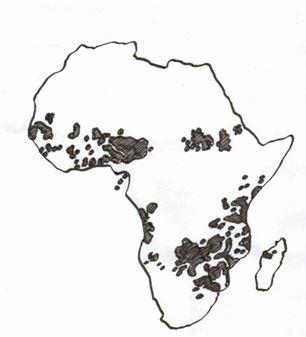
The Adansonia digitata tree which provides the kernel of the baobab seed from which baobab oil is extracted is native to Senegal, Zimbabwe, South Africa, Benin, Sudan, Kenya, Botswana, Madagascar, Angola, Namibia and Zambia. Commercial production of baobab oil mainly takes place in Zimbabwe, South Africa, Senegal and Sudan.
Figure 1: Distribution of baobab trees in Africa
Source: baobabstories.com
Baobab Oil is obtained from the kernel of the baobab seed. The production of baobab oil begins by cracking the fruit open and separating the seeds from the dry powdery pulp. The seeds are first hammer-milled to remove the hard outer coat from the kernel. They are then placed in a screw expeller and cold pressed from the kernel. The oil is then filtered for purity.
Baobab oil has properties that are ideal for a wide range of cosmetic products, encouraging companies to use it in their products. Baobab oil properties include:
- High antioxidant content, which protects the skin from free radical damage;
- High levels of Omega-6 to omega-9 fatty acids, which have anti-inflammatory effects;
- Vitamins, sterols and minerals content, which are all essential for maintaining healthy skin.
Other properties of baobab oil include its ability to:
- Rejuvenate skin cells and wound healing;
- Protect the skin from excessively high and low temperatures;
- Stay moist for a long time;
- Be an excellent moisturiser for the skin.
Table 1: Fatty acid composition of Adansonia digitata commercial oil
| Fatty Acids | Chemical Name | Percentage Detected (%) +- standard deviation |
| Pelargonic acid | Nonanoic acid, methyl ester | 0.05+-0.07 |
| Myristic acid | Tetradecanoic acid, methyl ester | 0.1+-0.14 |
| Palmitic acid | Hexadecanoic acid, methyl ester | 28.5+-0.42 |
| Palmitoleic acid | 7-Hexadecenoic acid, methyl ester, (Z)- | 0.25+-0.07 |
| Heptadecanoic acid | Heptadecanoic acid, methyl ester | 0.17+-0.04 |
| cis-10-Heptadecenoic acid | cis-10-Heptadecenoic acid | 0.58+-0.02 |
| Linoleic acid | 9,12-Octadecadienoic acid, methyl ester, (E,E)- | 0.18+-0.03 |
| Stearic acid | Octadecanoic acid, methyl ester | 5.85+-2.05 |
| Oleic acid | 9-Octadecenoic acid, methyl ester, (Z)- | 25.66+-0.95 |
| Linoleic acid | 9,12-Octadecadienoic acid, methyl ester, (Z,Z)- | 35.75+-0.35 |
| Linolenic acid | 9,12,15-Octadecatrienoic acid, methyl ester, (Z,Z,Z)- | 0.5+-0.00 |
| Elaidic acid | 9-Octadecenoic acid methyl ester (E)-, | 2.8+-0.00 |
| Arachidic acid | Eicosanoic acid, methyl ester | 0.7+-0.28 |
Source: Science Direct
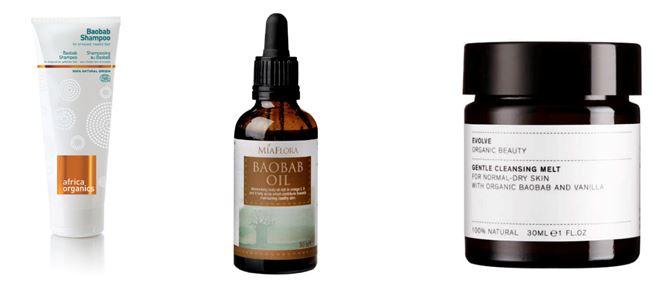
The main applications of baobab oil in the cosmetics industry are in body oils, face creams, moisturising lotions, massage oils, sun care products, bath oils, anti-ageing creams, face masks, shampoos, conditioners and nail moisturisers. Baobab oil is traded under the HS Code 15159090.
Figure 2: Examples of baobab oil products in the European cosmetics market
Source: Various
Tip:
- Check the website of the African Baobab Alliance for updates and news on the baobab sector. Here, you can find information on market players, as well as events related to the baobab sector.
2. What makes Europe an interesting market for baobab oil?
Europe is an attractive market for baobab oil because of growing demand for natural ingredients from cosmetics companies. They are moving to safer ingredients as consumers look to avoid synthetic ingredients in cosmetic and personal care products. The growing use of baobab oil in anti-ageing and sun care products also presents an opportunity for exporters of baobab oil in developing countries.
The European cosmetics market is the largest in the world. According to Cosmetics Europe, the market was valued at EUR 76.7 billion in 2020. The market contracted in 2020 because of the impact of the COVID-19 pandemic, but this was not the case for natural and organic personal care products. Natural ingredients are increasingly used in cosmetic products. Since they are considered safer for human health and the environment, European consumers are choosing personal care products with cleaner formulations.
This trend is generating demand for natural and organic personal care products in Europe. Figure 4 shows that the European market has been increasing at a steady rate. Ecovia Intelligence research shows the European market was valued at EUR 3.9 billion in 2019.
Demand for natural and organic personal care products is expected to continue to grow in the coming years. Consumers are increasingly seeking personal care products without contentious synthetic chemicals. Natural and organic personal care products are also being promoted by the media as well as by bloggers and celebrities. At the same time, the millennials (born between 1981 and 1996) and Generation Z (born between 1996 and 2010) are seeking greener and more sustainable personal care products.
One of the main segments in the personal care industry that uses baobab oil is anti-ageing products. According to Market Data Forecast, the European anti-ageing products market is expected to be worth USD 15.65 billion in 2021. The market is projected to grow at a compound annual growth rate of 5.17 percent until 2026 to reach USD 20.14 billion.
The ageing population in Europe is generating demand for anti-ageing products. Figure 5 shows the top 10 European countries with the highest share of ageing population (+65 years old). It is shown that Italy is leading with almost 23 percent. Greece and Portugal follow with 22.0 and 21.8 percent respectively. France, Serbia and Latvia have around 20 percent each.
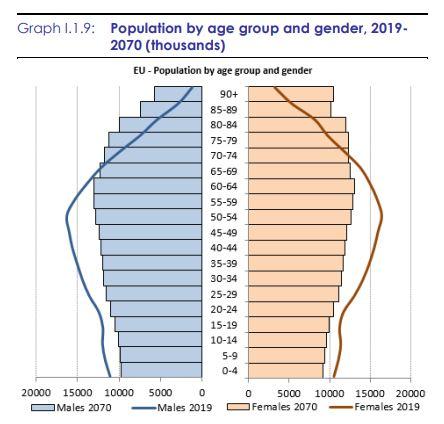
As European consumers get older, they start seeking anti-ageing skin care products. Some of the most common products are face creams, eye creams, serums and face masks. Important segments are anti-wrinkle products, anti-pigmentation products and anti-stretch mark products. This trend is expected to continue due to the current population pyramid of Europe. Figure 6 shows that the current population of Europe is getting older. It is shown that the birth rates are decreasing each year. With increasing life expectancy, the population of Europe will get older in the coming years.
Figure 6: EU Population by age group and gender 2019-2070
Source: European Commission, the 2021 Ageing report
Baobab oil also has applications in sun care products, thus providing a prospective segment to enter. The global sun care market was valued at USD 13.03 billion in 2019. It is forecast to grow at a compound annual growth rate of 3.5 percent to reach USD 16.84 billion by 2027. The European sun care market was worth USD 4.19 billion in 2019. The demand for sun care products is fuelled by the anti-ageing trend, which is expected to continue to grow in Europe.
The global baobab ingredients industry is expected to grow by 3.5 percent between 2018 and 2024 according to Global Market Insights. It is expected that the market will be worth USD 5 billion by 2024. The European cosmetics industry’s demand for baobab oil is driven by the growing popularity of natural personal care products. Baobab oil is used in specific segments of personal care products, such as anti-ageing and sun care products. According to industry sources, imports of baobab oil to Europe range between 20 tonnes and 40 tonnes.
According to the 2021 ABioSA Case Study on Baobab Oil, the international market for baobab oil is around 7 tonnes, while local trade of baobab oil in Southern Africa is around 11 tonnes. The low volumes suggest the baobab oil market is still underdeveloped. With increasing demand and rising awareness the market is expected to grow substantially in the future.
As consumer awareness of baobab oil is expected to rise in the future, the application and demand for baobab oil in personal care products should increase further. You can take advantage of trends such as increasing demand for natural ingredients and food ingredients becoming popular in personal care products on the European market.
Tips:
- Visit trade shows in Europe when looking for European buyers. Examples include BioFach and Vivaness.
- See the CBI report on which requirements to comply with when doing business with European buyers.
- Consider organic certification for your baobab oil. This can help you cater to cosmetics companies looking for high-quality ingredients. Exporters of organic baobab oil need to meet the EU organic standard.
- See the CBI report on tips for finding buyers for more information about building and maintaining relationships with European buyers.
3. Which European countries offer most opportunities for baobab oil?
The most prospective countries for baobab oil are the Western European countries. These include Germany, the UK, France, the Netherlands, Italy and Spain. These countries have the most important markets for cosmetic products in Europe; they also have substantial manufacturing sectors. In countries such as Germany, France and the UK, consumers are also familiar with baobab products.
Germany
Germany has the largest cosmetics market in Europe. According to Cosmetics Europe, the German personal care products market was worth EUR 14 billion in 2020. The German natural and organic cosmetics market was valued at EUR 1.4 billion, having a share of 10 percent of the total cosmetics market. The demand for natural and organic personal care products is set to continue. The main reason is the growing demand for natural & organic products in Germany.
The German population is also getting older. According to the German Statistical Office, there will be significantly more people of retirement age in Germany by 2035. The share of people aged 67+ will have increased by 22 percent by then. It will increase from 16 million to about 20 million between 2020 and 2035.
The average age of Germany’s population was just under 40 years in 1995. However, it was more than 44 years in 2017. According to Statista, the German anti-ageing products market was worth USD 1.5 billion in 2016. The increasing life expectancy of the German population is expected to boost sales of anti-ageing products.
Important German suppliers of baobab oil include The Essence of Africa, Terra Elements, Shea Thomme, AOT Organic Products, Biopurus and Africrops. German personal care companies that use baobab oil in their products include Apeiron, Martina Gebhardt and Guhl (KAO Group). Personal care products with baobab oil are sold by specialist retailers, as well as drugstores, pharmacies and mainstream retailers. Traders such as Henry Lamotte import baobab oil.
Germany is an interesting market for you to target as awareness of baobab in Germany is among the highest in Europe.
France
France has the second-largest personal care products market in Europe. In 2020, the market was worth EUR 11.5 billion. The French cosmetics manufacturing sector is the largest in Europe. The French natural and organic personal care products market was worth EUR 804 million in 2019. Consumer demand for natural and organic personal care products is expected to grow in the future, especially since many conventional brands are launching natural and organic lines.
According to IRI, the French anti-ageing products market was worth EUR 158.9 million in 2020. France also has an ageing population. According to the scenario of population projections published by INSEE in 2016, if demographic trends were maintained, France would have 76.4 million inhabitants by January 2070. Almost all of the population increase by 2070 would concern people aged 65 or over. By 2040, more than one in four inhabitant would be 65 or over.
Brands that have personal care products with baobab oil include Florassance, Nina B Cosmétiques & Nature, De Saint Hilaire, Emma Nöel, WAAW, Huiles & Sens, Ladrôme Laboratoires and Laboratoire Haut-Ségala. The French beauty retailer Sephora also uses baobab oil in private label products. Ingredients companies such as Biocosmethic and Naturochim are important suppliers of baobab oil to personal care companies.
France has a prospective market for you. The popularity of baobab oil is growing in France, as more cosmetics companies launch products.
The UK
The UK cosmetics market was worth EUR 9.8 billion in 2020, making it the third largest in Europe. The UK natural cosmetics market was valued at EUR 384 million in 2019. Despite the UK having one of the largest markets, Brexit (Britain’s exit from the European Union ) raises questions about future developments. Importers in the UK have faced difficulties, such as higher costs after the UK left the EU single market.
Important cosmetics companies that use baobab oil include Green People, Akoma Skincare, Naissance, Phyto Hair Care, Aromatic Natural Skin Care and Lush.
Britain’s exit from the European Union has disrupted supply chains for many natural ingredients. Since it will take some time to renegotiate trade deals with specific countries, trade with the UK may be negatively affected. Brexit has created uncertainty for suppliers of baobab oil. It may result in disruption of supply chains for natural ingredients.
Italy
The cosmetics market in Italy was worth EUR 9.7 billion in 2020, according to Cosmetics Europe. The natural and organic personal care products market has been growing at a healthy rate and was worth EUR 504 million in 2019. The Italian cosmetics market has a large number of domestic brands. Many are small companies that mainly focus on the Italian market. The large number of Italian companies means there are potentially more customers/users of baobab oil in the country.
One of the important suppliers of baobab oil to the Italian market is Baobab Fruit Company. The Baobab Fruit Company also supplies finished products on the Italian market. Other personal care brands that use baobab oil in their products include Allegro Natura, La Saponaria, Essenthya, Aessere, Eterea, Verdesativa, Phitofilos and Mater Natura.
Italy is a prospective market for you as it has a robust personal care sector with a growing demand for natural ingredients. Certified baobab oil may be interesting for Italian buyers.
The Netherlands
The Netherlands is an important entry point for natural ingredients to Europe. Tradin Organic is one of the most important traders in Europe. Other market players include personal care companies Chi and Natural Heroes.
You should target Dutch importers which usually re-export to other European countries. It is likely that the Netherlands will remain an important export destination for baobab oil in the future. Dutch buyers tend to re-export natural ingredients to other European countries.
Spain
The Spanish personal care market was valued at EUR 6.4 billion in 2020. Natural and organic personal care products are also becoming popular in Spain. It is estimated that the market was worth EUR 96 million in 2019. Aterimar is a leading importer of baobab oil in Spain. Other market players include the personal care companies Maese Pau and Terpenic Labs.
You should target Spanish importers. Spanish consumers are becoming more aware of baobab and there is growing demand for natural personal care products. Although the natural and organic personal care market in Spain is still developing, Spanish importers often re-export natural ingredients to other European countries. Target Spanish importers if you supply certified baobab oil and if you can supply larger volumes.
In conclusion, the most prospective countries for baobab oil are Western European countries. European consumers, especially those in Germany, the UK and France, are becoming more aware of baobab oil. Most products using baobab oil in Europe are natural personal care products. Demand for baobab oil is expected to continue to increase in the coming years. The main restraint to higher growth is relatively low consumer awareness of baobab.
Tips:
- Focus on Western European countries, as they import the highest volumes of baobab oil; these countries also have relatively high awareness of baobab oil. Western European countries also have the largest cosmetics markets, as well as robust manufacturing sectors.
- Consider supplying organic baobab oil when targeting country markets, such as Germany, Italy, the UK and France. These countries have the largest markets for organic products in Europe.
4. Which trends offer opportunities on the European baobab oil market
The popularity of natural and organic personal care products is increasing across Europe. There is also a growing demand for certified natural and organic ingredients, such as baobab oil. The ageing population is generating demand for anti-ageing products, presenting an opportunity to exporters of baobab oil in developing countries. However, the coronavirus crisis has caused some disruption in the supply of natural ingredients, including baobab oil.
Growing demand for natural and organic cosmetics
Europe has high consumer demand for natural and organic personal care products. Consumers view natural and organic products as safer since they are free from synthetic chemicals that are harmful to their health. This is one of the major drivers for the use of natural ingredients in cosmetics, such as baobab oil. The European natural and organic personal care products market is expected to continue to grow in the coming years.
The same development is occurring in the sun care sector. Studies have shown that conventional sunscreens can be harmful to marine life as well as human health. Consumers are looking for more natural sunscreens. An example of a company using baobab oil in sun care products is BIO:VÉGANE Skinfood; its Organic Baobab Moisturiser SPF 10 uses baobab oil to protect the skin.
This trend is encouraging European cosmetics companies to use certified natural and organic baobab oil. Thus, certified natural and organic baobab oil presents an opportunity to suppliers of baobab oil in developing countries.
Exporters of baobab oil should look to obtain natural and organic certification, such as NaTrue and COSMOS. NaTrue has over 60 members in more than 30 countries worldwide; it has over 6,000 products certified with the NaTrue label. In spring 2020, over 17,000 products in 60 countries were certified according to the COSMOS ORGANIC or COSMOS NATURAL standard. In addition, over 7,000 ingredients and 6,000 raw materials have the COSMOS CERTIFIED logo.
It is important to inform European buyers if you have certified ingredients. Baobab Fruit Company Senegal is a Senegalese company exporting NaTrue certified baobab oil to the European market.
Tips:
- Consider obtaining natural and/or organic certification for your baobab oil. Many European buyers seek natural and/or organic ingredients to meet increasing consumer demand for natural and organic cosmetics.
- See the CBI study on what trends offer opportunities for natural ingredients for cosmetics.
Increasing demand for anti-ageing cosmetics
Due to its rich antioxidant content, baobab oil is used by the cosmetics industry in anti-ageing personal care products. Europe has an ageing population which is spending more on cosmetic products. The European anti-ageing products market was worth USD 15.65 billion in 2021; it is expected to grow at a compound annual growth rate (CAGR) of 5.17 percent to reach USD 20.14 billion in 2026. The growing use of baobab oil in anti-ageing cosmetics presents an opportunity.
You should try to highlight its characteristics when marketing to cosmetics and personal care companies. As well as high levels of antioxidants, baobab oil has omega-6 omega-9 fatty acids, vitamins, sterols and minerals which are important active properties for anti-ageing cosmetics. It helps moisturise and protect skin and rejuvenates skin cells.
Tip:
- Keep informed about the latest developments in anti-ageing products, as this will enable you to identify new opportunities. One way is to read industry media, such as Cosmetics Design Europe and beauty blogs.
Increasing importance of ethical sourcing in baobab sector
Ethical sourcing is becoming more important in Europe. Consumers are demanding products that are produced in an environmentally-friendly way; consumers are also looking more closely at how raw materials are sourced. Personal care companies want to cater to changing consumer expectations by trying to ensure their products are made according to environmental and social standards. European buyers of baobab oil are therefore requesting suppliers to meet environmental and social standards.
Most major suppliers of baobab, such as South Africa, Zimbabwe, Malawi and Mozambique are signatories of CBD and Access and Benefit-Sharing (ABS). However, the level of upholding and compliance of ABS differs considerably between individual countries. Some companies that supply baobab products, including baobab oil also have third party certifications that pertain to ethical sourcing.
For example, the Zimbabwean company Bayoba is a leading supplier of baobab products in the world; it has both Fair Wild and UEBT certifications. Although Baobab is not on the CITES list of endangered species, there is an increasing conservation concern over the growing market demand for baobab. Baobab trees can be depleted locally if harvest is not well managed. With increasing demand for baobab products in Europe, it is expected that ethical sourcing will become more important for baobab products.
You should ensure that you abide by all compulsory regulations related to CITES. European buyers take the issue seriously and want to ensure that their raw materials, such as baobab oil are responsibly sourced.
Tip:
- See CBI Study on Market Entry requirements for baobab oil, where you can find more information on all mandatory and additional requirements you have comply with, in order to export baobab oil on the European market.
COVID-19 creates challenges for exporters of baobab oil
The global coronavirus pandemic has created a number of challenges for exporters in developing countries. The challenges exporters face are likely to remain for the foreseeable future as different states and governments around the world attempt to tackle COVID-19 with various measures.
Import and export restrictions on goods and quarantine and lockdown measures imposed by governments are key challenges exporters face, as they disrupt global supply chains. For example, some port authorities have forced ships carrying goods to observe 14-day quarantine periods whilst lockdown measures limit economic activity, such as agricultural production and processing. Prices of exporting goods have increased, with the cost of airfreight rising because of flight cancellations. Industry sources have also reported that shipping and transit costs of exporting baobab oil have increased considerably.
Ways to prepare for challenges created by COVID-19 include visiting the website of and contacting government ministries of trade in your country. They are likely to have the latest information about COVID-19 measures and may be able to provide export assistance. Other ways to prepare include speaking to logistic providers and determining the impact of the coronavirus on exporting goods before agreeing terms with European buyers, as well as speaking to buyers and keeping them updated.
Tips:
- Visit and review the information on the ITC Market Access Map’s COVID-19 Temporary Trade Measures for the latest information on trade measures imposed by states and governments globally. Doing so will give you the latest information on restrictions in your country and the country you are exporting to.
- Regularly visit the CBI website, as it provides news and information about exporting natural ingredients during the COVID-19 pandemic.
- Before agreeing terms with European buyers, carefully assess and factor in likely effects COViD-19 will have, such as longer delivery times or unexpected waits.
This study was carried out on behalf of CBI by Ecovia Intelligence.
Please review our market information disclaimer.
Search
Enter search terms to find market research