

9 tips on how to go green with natural food additives
The market for natural food additives has grown substantially in recent years as consumer demand for natural and healthy food options has increased. At the same time, consumers are becoming more aware of the impact of their food on the environment. The tips that follow show you how to make the transition to a green business by incorporating sustainable practices in production, processing, logistics and packaging. These tips will also show how to boost your environmental sustainability and make your business more attractive to sustainability-minded European buyers.
Contents of this page
- Use supply chain transparency to offer your clients a unique selling point (USP)
- Offer certified, traceable and deforestation-free products
- Set yourself apart from the competition: aim for nature positive, regenerative and ‘net zero’
- Know how EU green legislation will impact your export business
- Incorporate green principles in your code of conduct and connect with your producers
- Use green processing technologies
- Green your logistics: eliminate plastic packaging and use sustainable transport
- Implement circular economy practices and upcycling in your business
- Look for financial support to go green
1. Use supply chain transparency to offer your clients a unique selling point (USP)
One of the biggest opportunities for becoming more environmentally friendly in the natural food additives sector relates to full supply chain transparency. European companies demand more and more ingredients with clear product origins, production and processing conditions and environmental impact. Yet, large international traders cannot offer this, as it is challenging to keep track of their ingredients in such complex supply chains.
This is where you can make a difference. By offering clients full supply chain traceability, you can gain a competitive advantage. It also helps you prove that your ingredients meet important safety, quality and ethical standards. Buyers want to be sure that products are safe, high-quality, and made under fair working conditions. Being transparent helps build trust and gives buyers more reasons to choose your ingredients over others.
Opening up the ‘black box’ of your supply chain can have a decisive impact on your business and become your unique selling point.
Going green with full supply chain transparency can help you more easily establish trust-based and long-term business relationships with your European buyers. Full supply chain transparency also becomes your unique selling point (USP), as it differentiates your product from those of large traders and competitors. Showing your real commitment throughout the supply chain can make buyers more willing to support you in unforeseen or challenging situations.
The figure below illustrates a typical traceability system implemented at different steps of the natural ingredient supply chain, using annatto (Bixa orellana) as an example:
Figure 1: Example of a typical traceability system and its different steps
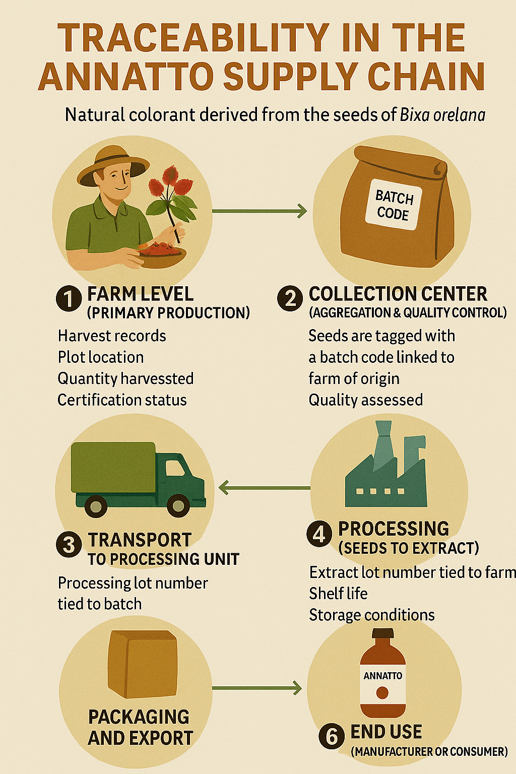
Source: ProFound, 2025
Take a look at the case of natural ingredient company Serendib Ingredients, founded in Sri Lanka. The company has developed an in-house traceability system that integrates data from suppliers, farms, and processors. This system provides complete product traceability, allowing buyers to access detailed information about the origin and journey of each ingredient. By integrating traceability with sustainable practices, Serendib Ingredients provides buyers with a transparent view of their supply chain, reinforcing trust and commitment to ethical sourcing. A key element of this system is a comprehensive database that offers single-check access to complete product traceability, showcasing Serendib's commitment to transparency and quality control.
Moreover, storytelling, together with efforts to reduce plastic packaging and greenhouse gas emissions, can strengthen your marketing strategy and business manifesto. This way, you can align with the marketing campaigns of many European food additive industry players, which are focusing on green production, nature positive and regenerative farming, zero-waste production, palm-oil free products and low-emissions transportation.
Standards and certification schemes can help you benchmark your situation. Table 2 below shows the areas on which the Fair for Life standard assesses companies on social and environmental sustainability.
Think about these aspects when telling your own story, and story, and share your story with clients. For example, how are you engaging in green and ecological production? How are you helping to conserve biodiversity, soil and water? How are you improving the climate resilience of your producers?
Describe where your ingredient is sourced, who is involved, under what conditions, and the traceability system you have in place. For this to work, be sure to document everything you do and give this information to your clients upon request.
Table 1: Fair for Life company performance rating
| Chapter | For Life CSR programme content | Maximum | Company rating |
|---|---|---|---|
| 1 | Core principles and values | 10 | |
| 2 | Commitment to and management of CSR policy | 10 | |
| 3 | Respect for human rights and decent working conditions | 10 | |
| 4 | Respect for the environment | 10 | |
| 5 | Local development and community relations | 10 | |
| 6 | Trading and supply chain relations | 10 | |
| 7 | Empowerment | 10 | |
| 8 | Traceability, transparency and respect for consumers | 10 | |
| 9 | Managing certification and performance | 10 | |
Total performance rating score | |||
Source: Fair for Life, 2023
Tips:
- To show clients what you can do, use storytelling strategies that help people visualise your product and company journey.
- In your promotional campaign, explain the main threats to relevant ecosystems and biodiversity and the concrete steps you are taking to prevent and mitigate them. Illustrate this with pictures of the people involved and the landscape.
- Make sure to provide evidence for your sustainability claims. This will also give you a big advantage over competitors.
- Consider promoting your products on distribution platforms for sustainably-produced ingredients, such as 1-2 Taste.
- Consider investing in digital traceability systems that allow you to track all the steps from raw material to product delivery. This way you can develop your USP and gain advantage over other suppliers. Learn more about digital traceability systems in CBI’s Tips on Going Digital Study.
2. Offer certified, traceable and deforestation-free products
Green certification is a key step for companies that want to showcase their commitment to environmental sustainability. Obtaining certification means meeting specific environmental standards such as organic, fair trade, or deforestation-free. These certifications not only increase your credibility and distinguish you from competitors, but they also help build trust with European consumers and buyers who are seeking greener alternatives.
Classic agricultural products such as fruits, nuts and oilseeds are destructive to forests and among the main drivers of deforestation if their production is not well managed. As the EU tightens environmental regulations, European importers will want detailed information about all the actors in their upstream supply chains. They will ask about your sourcing locations and about the impact of production and harvesting practices on the environment. This means you have to be able to provide proof of the origin of your product and of its sustainable/deforestation-free production.
In June 2023, the European Union adopted the Regulation on Deforestation-free Products (EUDR). This regulation aims to promote the consumption of products that are not linked to deforestation and forest degradation. It requires businesses to prove that the products they place on the EU market do not contribute to the destruction of forests, ensuring that the origin is traceable. It initially applies to palm oil, cattle, soy, coffee, cocoa, timber, rubber, and derived products (such as roasted coffee and chocolate). But the regulation has a broader ripple effect on other ingredients and sectors that are not explicitly listed through:
- Buyer requirements: European buyers are increasingly requesting deforestation-free documentation or traceability from all suppliers, not just those covered by the regulation.
- Voluntary alignment: Some companies are choosing to align their full supply chains with EUDR principles to maintain a consistent sustainability standard across all products.
From the end of 2025, the EU will use ‘high, standard or low risk’ categories for countries. Importers of products from higher-risk countries will face stronger checks and monitoring. Even if your product is not directly covered, more buyers now ask for deforestation-free proof or full traceability. Some companies follow the EUDR for all products to meet buyer needs and show they care about forests.
As an exporter of natural food additives, you can set up your own deforestation-free traceability system to meet strict EU sustainable supply chain requirements.
You can share how your business works with producers to improve quality and how production is helping to maintain natural vegetation and forests and supporting climate adaptation and biodiversity conservation efforts.
There are many different ways to set up a traceability system. If you are new to this, do not make it too complicated. All you need is a system that is easy for you and your suppliers to use, that documents where products are grown and who is involved.
It can help to assign codes to each producer and record the quantity of each batch, also giving it a code. This way, you can work with the code for each batch in later processing. You can keep records on paper, but it is much more efficient and ecologically sustainable if you save this data digitally.
A good idea if you are exporting to the EU is to add the geographic location of production areas to your traceability system. This lets you prove that your production is within established agriculture zones and is not causing deforestation or forest degradation.
If your production areas are near protected zones, maybe you can show that you are helping to conserve natural biodiversity by leaving natural vegetation alone and keeping it as a buffer zone. These are all positive features of your business that are part of going green, so share this information with your clients. Geographical mapping of production areas is also the basis for due diligence on land use (see Tips for being socially responsible).
Seaweed, for example, is widely used as a natural food additive in the form of carrageenan, agar, or alginate. It is also gaining attention not only for its functional properties but also for its environmental impact.
The ASC-MSC Seaweed Standard focuses on the health of the world’s aquatic ecosystem by promoting environmentally sustainable use of seaweed resources. Its MSC Chain of Custody certification (see page 12) guarantees that seaweed products come from a sustainable source.
For seaweed products to be sold as ASC or MSC-certified, the whole supply chain must be certified. European companies wishing to sell ASC and MSC-certified seaweed therefore need a traceability system for their whole supply chain, all the way to wild harvesting operations.
Tips:
- Read the step-to-step guide on implementing traceability systems, published by the Initiative for Sustainable Agricultural Supply Chains.
- Every product and supply chain has its own traceability challenges. There is no one-size-fits-all system, so it is common to adapt a system based on initial field trials. If you have more than one sourcing location, you can set up a traceability system in one area first to test its effectiveness and then make improvements before using it in other areas. Read our Tips to go digital to see which traceability platforms we recommend in agriculture.
- At first, you may have to invest time and money in training your suppliers and producers in how to use the traceability system. Look for potential funders such as non-governmental organisations or international development agency projects, which often offer support for setting up traceability systems.
- See if your client is willing to share the costs of setting up a traceability system.
- See our social tips to learn how to integrate smallholder producers into your traceability system.
- Read about the EUDR regulation and how it might affect your business. Consider implementing a Due Diligence System (DDS) to prove that your products do not pose a risk to deforestation.
3. Set yourself apart from the competition: aim for nature positive, regenerative and ‘net zero’
Sustainability is becoming mainstream in the European market, and buyers are constantly looking for new approaches to be sustainable. To stand out from the competition, many producers are starting to use a variety of labels, such as ‘carbon neutral’, ‘net zero’, ‘regenerative’, and ‘nature positive’.
But these claims are often made without backing them up with solid environmental footprint methods or certifications. When sustainability claims are made without proper evidence, this is known as greenwashing. To stop this, the EU has introduced rules like the Green Claims Directive, which makes companies explain and prove any green claims they make. With consumers demanding more transparency and cleaner labels, it is important to understand the meaning behind these terms and commit to following green standards. Therefore, working with suppliers who are truly committed to sustainable practices and able to communicate their unique approach can give your company a competitive advantage.
Explore sustainability concepts such as ‘nature positive’, ‘regenerative’, and ‘net zero’ practices
Look into production methods that are nature positive, regenerative and net zero. Nature positive practices focus on reversing biodiversity loss, restoring ecosystems and enhancing natural resources. These practices are essential to keen towards a more sustainable future. They are also in line with the Kunming-Montreal Global Biodiversity Framework, which sets a global Nature Positive goal that aims to reverse biodiversity loss by 2030. This framework pushes nations and businesses towards a nature-positive economy.
Regenerative practices go further by restoring soil health and actively creating systems that can regenerate themselves. A good case example is Symrise, a company which is now collaborating with farmers across the world to implement regenerative farming techniques such as longer crop rotation, cover cropping, and soil carbon sequestration. Symrise is a German global manufacturer and supplier of food ingredients and additives with activities in Africa, the Middle East and Asia, among others.
Net zero practices are also vital to sustainability. These practices focus on balancing the number of emissions produced with the ones that are removed from the atmosphere. The Science Based Targets initiative (SBTi) offers a clear framework to help businesses clarifying their long-term decarbonization plans. While complying with such standards is not mandatory, committing to SBTi can strengthen your credibility in the market.
If you export a natural ingredient that is wild harvested or obtained from a cultivated tree or shrub, you may already be using these methods without knowing it. If you export seaweed, you can highlight its contributions to carbon sequestration, habitat creation and marine biodiversity.
Get a clear picture of production conditions
It is a good idea to get a clear picture of the conditions under which your natural ingredients are produced (including cultivation, harvesting and processing) and any potential ‘green’ features in the supply chain. To do this, ask your producers to show and tell you about the full process from planting to harvesting. If you export an ingredient with some environmental benefit, highlight it in your production story.
A good case example of an exporter that brings these concepts together is Big Tree Farms, an Indonesian producer and exporter of coconut sugar and other natural food additives. By working closely with their producers, they have been able to transform how they think about land traditionally used for personal crop and food production. Producers now use ‘backyard’ land to regeneratively farm and export a wide range of natural ingredients such as cocoa, coconuts, mangosteen, mangos and ginger. Their ‘trees of life’ – coconut trees – provide crop cover by shielding the crops underneath from intense sunlight while also drawing in moisture. To learn more, watch Big Tree Farms’ video explaining how they operate and create value for communities and the environment.
Table 2 lists some examples of ecologically sustainable features that European natural ingredient brands and retailers promote in their marketing material.
Table 2: Ecologically sustainable features of natural ingredients promoted by several companies
| Natural ingredient/plant part used | Company | Sustainable features promoted |
|---|---|---|
Seaweed extract | Ceylon Aqua and Agri (Sri Lanka) |
|
| Vanilla extract | Symrise (Germany) |
|
Coconut sugar | Senikma Holdings (Sri Lanka) |
|
| Gum acacia | Fairtrade and Organic Gum Acacia (FOGA) (Sudan)
|
|
| Natural blue colourant | ScotBio (UK) |
|
Source: ProFound and Christine Woda, 2023
Determine your carbon footprint
The effects of climate change are becoming increasingly visible all over the world, and nations and businesses are expected to take actions to reduce its effects. Carbon footprint is a measure of the amount of carbon dioxide released into the atmosphere. The United Nations estimates that 31% of human-caused GHG emissions originate from the agri-food systems.
As a supplier of natural food additives, you are expected to reduce the carbon footprint of your supply chain. A valuable tool for this is a Life Cycle Assessment (LCA), a methodology for assessing the environmental impact of your product throughout the entire lifecycle. The knowledge that comes out from an LCA allows you to identify which stage has the most impact and take targeted actions. Figure 2 below shows the four phases of an LCA.
Figure 2: Overview of the four phases of a Life Cycle Assessment
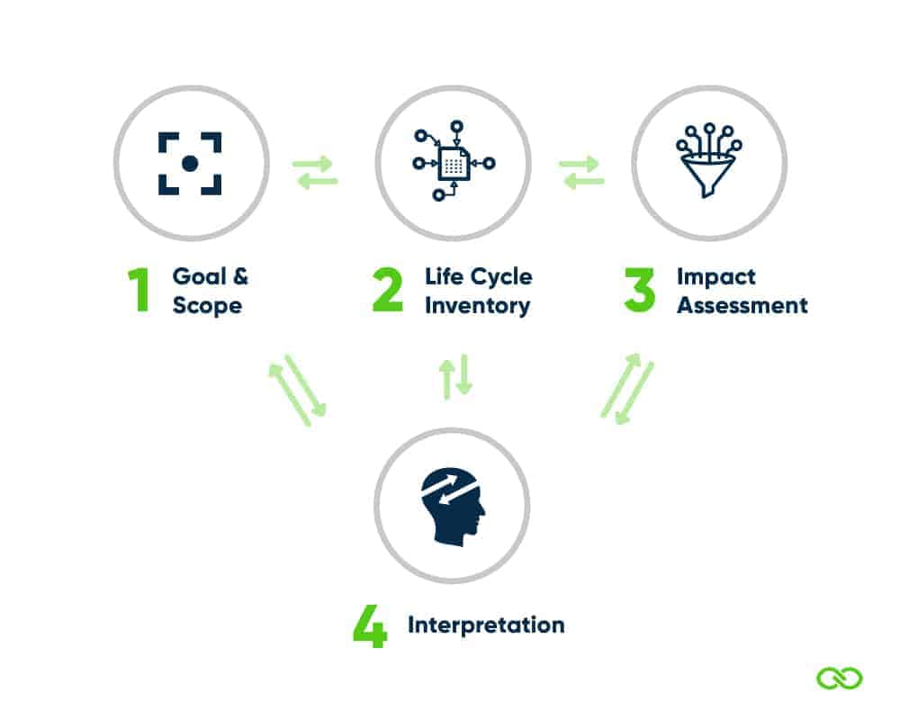
Source: Ecochain, 2024
No matter how high the initial carbon footprint of your product, there are always ways to reduce the environmental impact. For example, vanilla production can have a high carbon footprint due to the drying process. This process involves the use of energy-intensive technologies, such as electric dryers or fossil-fuel powered ovens. By substituting these technologies with a natural source of drying, such as solar drying or air drying, you can highly reduce the carbon footprint of your product.
Tips:
- Read about the LCA methodology and understand the benefits of it for your business.LCA is a methodology that assesses different impact categories. If you only want to know the carbon foot printing, measured in GHG emissions, you can consider starting with the PAS 2050 standard. Using PAS 2050 can increase your credibility in the European market and can help you quantify your carbon footprint.
- Consider some of the available databases, like CarbonCloud or FoodFootprint, as a starting point to estimate emissions and identify at least one improvement you could implement in the next six months.
4. Know how EU green legislation will impact your export business
In recent years, the EU has introduced new policies to promote sustainable and environmentally-friendly production. The most important change is the EU Green Deal. It outlines a plan for a climate-neutral Europe, including a roadmap to cut greenhouse gas emissions by at least 55% in 2030.
The EU Green Deal also aims to preserve and restore ecosystems and biodiversity, eliminate environmental pollution and create a circular economy. This is an economy based on the ‘3 R’s’ – to reduce, reuse and recycle waste – and on the use and recovery of renewable resources. Figure 3 gives an overview of the main aspects of the EU Green Deal that European companies have to apply throughout their supply chains.
In 2024, the EU published its new Corporate Sustainability Due Diligence Directive. With the establishment of this directive, the EU wants to ensure that large companies are hold accountable for their actions and consequences on human rights and the environment. Under this proposal, larger European companies are required to identify, prevent and mitigate adverse impact that arise throughout their supply chain. While the obligation does not directly affect most non-EU producers and suppliers, large EU companies might still ask their suppliers to provide more information about how their products are made and processed. This helps them demonstrate they are following the new due diligence obligations.
Firmenich, a leading supplier of flavourings to the European market, is a CDP supply chain member and requires its main suppliers to report their own environmental data and efforts to reduce greenhouse gas emissions via the Carbon Disclosure Project (CDP) questionnaire.
Another important regulation is the EU Deforestation Regulation, or EUDR, explained previously.
EU importers and food manufacturers will be holding suppliers outside Europe more accountable. As an exporter, you may be asked to provide information on what you are doing to preserve ecosystems. You will need to provide more transparency and traceability about your supply chain. The tips below explain how you can show your commitment to environmental sustainability.
Figure 3: EU Green Deal focus areas
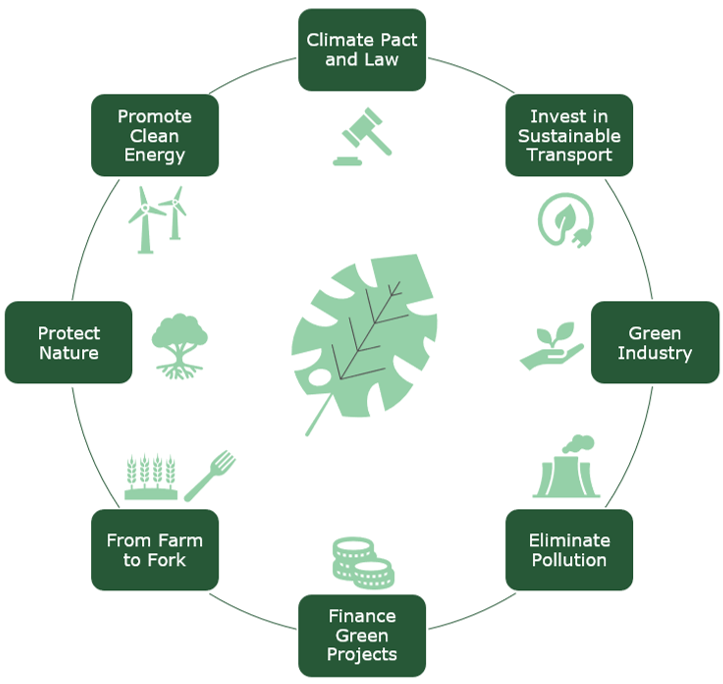
Source: ProFound, 2023
Tips:
- Read European companies’ sustainability reports to get a better idea of what they expect from suppliers. For example, Firmenich’s Environmental, Social and Governance (ESG) Report.
- Read the CBI study on The EU Green Deal – how will it impact my business?
- Read this World Economic Forum report to learn all you need to know about the EU Green Deal.
- Read about the Corporate Sustainability Reporting Directive, which requires large companies and listed SMEs to report on their commitment to environmental and social sustainability.
- Stay up to date on possible changes to the EU Green Deal. The EU regularly updates its policies, and by keeping track of these changes, you will stay informed about how they might affect your business.
- Improve your traceability system, so you can provide detailed information about how and when products were grown, where they come from, and how the land is managed.
5. Incorporate green principles in your code of conduct and connect with your producers
Incorporating green principles in your company’s Code of Conduct (CoC) is a key step to becoming greener. A code of conduct is a set of guidelines outlining the principles, values, and behaviours expected within a company. As a supplier, having a clear and effective CoC that includes green principles not only strengthens business relationships but also shows European buyers your commitment to sustainability.
Symrise, a major global manufacturer of flavours and fragrances, aims to address several Sustainable Development Goals (SDGs) through its operations. The company works directly with 7,000 farmers to create the best possible products.
Symrise says that one of the most important factors in its successful collaboration with producers is building trust: "Proximity to the farmers helps us achieve our goals, such as being able to trace the origin of the vanilla accurately while simultaneously maintaining excellent quality.". The company also reached out to middlemen who buy vanilla pods in local markets, employing them as inspectors and supervisors in Symrise’s supply chains.
Figure 4: Symrise’s sustainability commitments
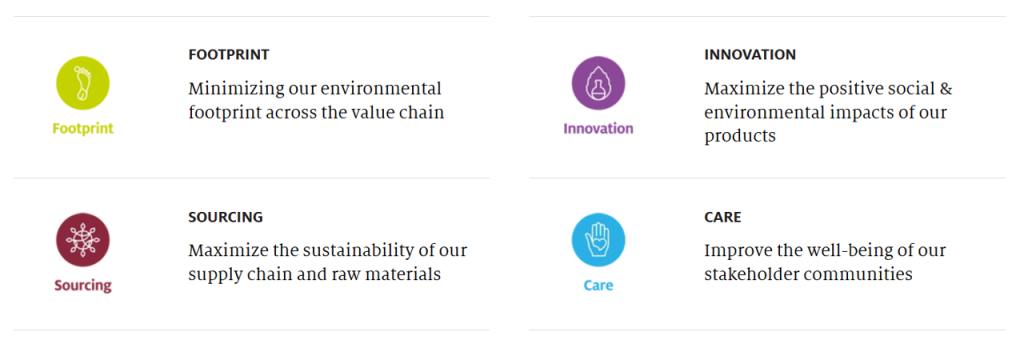
Source: Symrise, 2024
Your journey towards becoming a sustainable exporter of natural food additives starts with assessing conditions at the beginning of your supply chain. Although many leading companies and governments recognise the need for urgent action to promote sustainability and biodiversity conservation at the production level, they often have no information about what is doable. This is where you can make the biggest difference, because you are most closely connected to the producers.
As an exporter with the closest links to producers, you play a key role in promoting sustainable production methods in the supply chain. You can talk to producers and inform them about changes in EU requirements under the Green Deal. Discuss sustainable harvesting options with your producers. See what is possible for them and what challenges they see to greening production. Also consult with your European clients about how to make production more environmentally friendly and how you can do this together.
While this may sound like a significant effort, showing you are aware of environmental sustainability requirements will put your company in a stronger position. It will make you more attractive to European buyers looking to source sustainably cultivated natural ingredients for the food industry.
At the same time, it may require you to change your own buying practices, by reducing your dependence on local distributors and engaging more with producers and the production level. Working closely with producers will not only help you access new green markets, but will also benefit your business in other ways.
Some benefits for exporters of working closely with producers are:
- Building your story about going green: Working closely with producers lets you develop ways to truly make production more ecologically sustainable. This knowledge is the basis for telling your story about going green.
- Better quality control: Working closely with producers makes it easier to be sure that production meets your quality standard. It also reduces material waste.
- Saves costs: Working together on improving production processes can lead to a better use of raw material, higher productivity and cost savings for both parties.
- Faster delivery: Working closely with producers can cut delivery times and help you meet tight deadlines.
- Better knowledge of the competition: Closer collaboration puts you in a better position to compete with other local traders exporting the same product as you.
- Flexibility for adaptive management: Knowing what is happening locally will make it easier for you as an exporter to adapt to changing production conditions and to respond to any new market requirements.
Tips:
- Find out which farmers are interested in sustainable production, invest in annual audits and training to understand their sustainable production challenges and support them to become more sustainable.
- Find and support lead farmers who are knowledgeable about sustainable farming practices to manage demonstration farms, where other farmers can learn best practices.
- Involve farmers in environmental risk assessments to help them understand the risks and get their support in managing them.
- Explore the Codes of Conduct of different European companies, and how they report on their ecological and social impact. Check for example the Code of Conduct of Firmenich, one of the largest European flavour companies.
6. Use green processing technologies
Going green can make a difference at many steps of the production chain, from the production level to the post-harvest of your natural food additives. Potential areas of intervention include energy and water efficiency and waste management practices. Take a look at the International Fragrance Association’s (IFRA) Toolbox, which provides good practice resources and tools to help you reduce your greenhouse gas emissions (see Focus Area 2). Greening processing is important for natural food additives and should target steps such as the drying of seeds and other plant parts, extraction of fats and cleaning of gums and resins, which often rely on traditional methods using wood fuel as an energy source and chemicals for extraction.
Solar drying is a low-cost and environmentally friendly method for drying natural ingredients. Solar energy is also one of the most common green technologies available to irrigate crops. For further processing, you can use steam distillation, which involves passing steam through the plant material, and cold pressing, which is a mechanical method that presses plant material to release oils. Both of these methods can boost product quality, as they use only steam, water or heat and no solvents. This also lets you market your products as organic and get higher prices in international markets.
The first step towards introducing more sustainable processing practices is to look with your client at what areas of post-harvest processing can be made more environmentally friendly. Doing this step together is crucial as it can affect the quality of the final product.
A good example of steps European companies are taking is Firmenich’s Firgood Technology, a solvent-free extraction technology that provides 100% natural ingredients. Moreover, the waste resulting from this process is clean and can be upcycled. Although this is a very advanced technology, it may inspire you to come up with your own methods to make your processing cleaner.
Tips:
- Read about the 12 Principles of Green Chemistry to learn how to make a greener product.
- Read about the different methods for extracting essential oils.
- Though your budget may not be as big as that of many European companies, try talking to your clients in Europe about your ideas. They may be willing to partner with you to reduce plastic packaging and waste in the supply chain.
- Read about how solar energy is being used for crop irrigation in Rwanda.
7. Green your logistics: eliminate plastic packaging and use sustainable transport
The first step to reduce the environmental impact of a product is to understand which step of the supply chain has the highest carbon impact. This supply chain ranges from the extraction of raw materials to the disposal of waste. By identifying the highest impact stages, you can focus on ways to reduce emissions there.
The packaging stage offers clear opportunities for improvements. Many producers tend to use plastic as an affordable and widely available option. However, plastic pollution is a global problem, and consumers are becoming aware of that. Look into your options to use renewable, biodegradable and recyclable packaging to transport and export your ingredients. European governments are also taking action to combat the use of plastics in products. For example, Spain has imposed taxes on imports of plastic products. This means Spanish food manufacturers are taking steps to stop importing plastic-packaged materials. Find out about options for using renewable, biodegradable and recyclable packaging instead.
When considering bulk packaging, it is important to find options that are cheap and easy to scale. Some options could be large recyclable cardboard drums, reusable IBC (Intermediate Bulk Containers) totes, or flexible paper-based bulk bags. Metal drums, that can be cleaned and reused, have already been approved by the UN for hazardous and volatile oils. For other ingredients, such as powdered sweeteners and thickeners, options like wood paper and carton-based materials can be used.
More innovative alternatives like fibres made from algae and bamboo are possible, but costs need to be considered. They may not be practical and affordable for bulk packaging. Other glass and metal alternatives can be used depending on the ingredients, but their weight can counteract efforts to reduce freight weight to save transport fuel.
When it comes to transporting your ingredient, be creative. Frey&Lau has developed a way to reduce CO2 emissions by combining steps in their logistics. When they receive an order, they load their packaging waste onto the lorries that will deliver their final products. This way, they avoid transports with empty lorries. Together with their packaging supplier, they have also set up a processing plant to recycle their PE canisters. The canisters are shredded, cleaned and processed into new and inexpensive packaging materials. See if you can find other exporters operating near you with whom to share containers or group raw materials into single shipments. In view of the targets set by the International Maritime Organization (IMO) to reduce the carbon intensity of international shipping by at least 40% by 2030, these efforts should be a priority for exporters.
The EU is planning to introduce carbon pricing in the maritime sector and is setting targets for major ports to supply vessels with onshore power as a measure to reduce the use of fuels that pollute the environment and harm air quality. This means European companies will be paying more attention to their carbon footprints. For this reason, you should aim to use sea freight over air freight wherever possible. This is also more cost-effective and reliable, and there are fewer limits on the transport of hazardous materials.
Tips:
- Sea freight takes more time. Encourage your clients to plan ahead longer and avoid last-minute purchases that require air freight to arrive on time.
- Remember that not all products can share the same container, as some are sensitive to odours or other contamination.
- If you make changes to your packaging, check with clients first to be sure it meets their requirements and actually makes processing and handling easier.
- Read about the EU’s Fit for 55 climate goal.
- Check the UN Model Regulations on the Transport of Dangerous Goods for UN numbers and provisions regulating the transport of hazardous substances for options on packaging.
8. Implement circular economy practices and upcycling in your business
The circular economy plays an important part in EU Green Deal efforts to achieve a carbon-neutral economy by 2050. In March 2020, the EU introduced the Circular Economy Action Plan to support businesses that implement circular business models. These models aim to extend the lifecycle of resources, minimise waste and maximise resource utilisation. As an export business, you should consider taking circular economy steps to reduce the negative impact of your operations on the environment. This way you will also reuse waste material from your production process as a source of clean energy.
Firmenich (Switzerland), one of the EU’s largest flavour and fragrance companies, has set a zero-waste-to-landfill goal for all of its manufacturing and non-manufacturing locations by 2050. Its sustainability report states that "the way to a low-carbon economy is through sustainable production patterns that produce less waste".
A related concept is upcycling. This refers to using by-products or waste material to make new, higher-value products instead of throwing them away. A good example is the Peel Pioneers(Netherlands). They extract natural ingredients from fruit peels, such as oranges and lemons, that would otherwise be thrown away, and turn them into high-value essential oils for the food industry. Watch the video on Sustainability in Food Ingredients to learn more about how to turn traditional waste materials into high-value products.
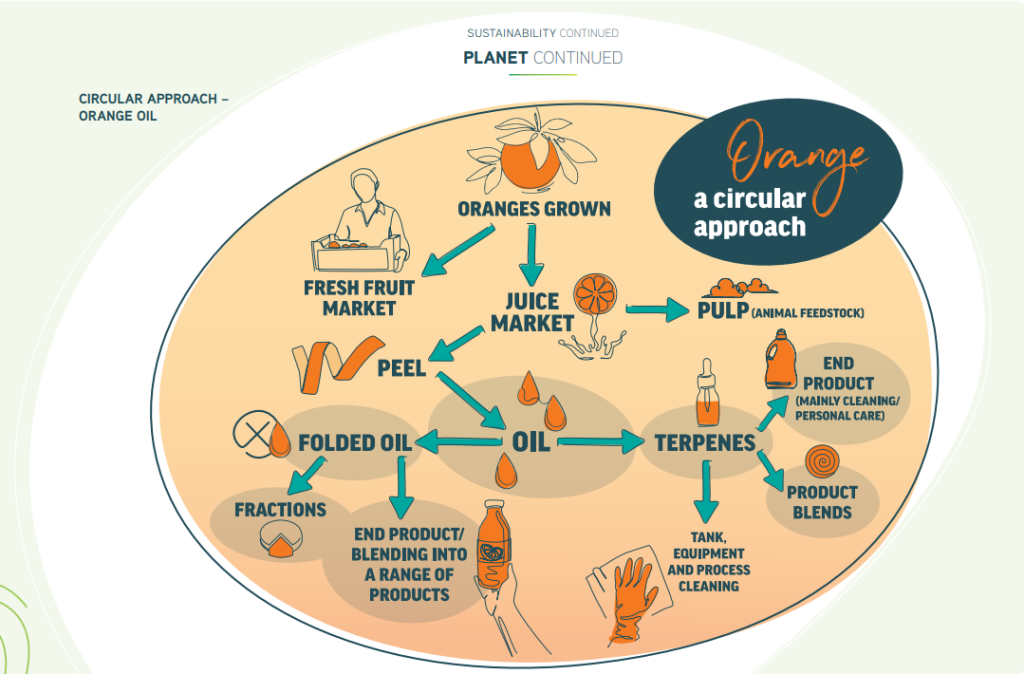
Figure 5 shows the circular approach of one large European flavour company, TREATT PLC. They use 100% of oranges, including the peel, pulp and any leftover seeds, which they upcycle into sustainable products that then generate added revenue for farmers and export businesses.
Figure 5: Example of a circular approach where nothing goes to waste
Source: TREATT PLC, 2022
Tips:
- Check the monitoring framework revised by the European Commission in 2023. In this way, you can easily monitor progress towards a circular economy.
- Read about the steps you can take for a good waste management system. For example, you can start by the amount and type of waste generated by your company at the production level.
- Check out the ISO 59040 standard for circular economy, which can help you implement, measure and assess your performance.
9. Look for financial support to go green
There are many organisations and private investors that offer financial support for efforts to go green. Many governments also have grant opportunities for businesses involved in exporting natural ingredients. These grants fund a variety of activities, including product development and supply chain management. For example, the International Climate Initiative (IKI) offers grants to businesses in developing countries that are working on climate change mitigation and adaptation and on forest and biodiversity conservation.
You and your suppliers can also apply for support from microfinance institutions, which provide smaller loans than development banks. Some of them finance small SMEs and farmers. Most importantly, microfinance institutions are expanding their support for companies committed to environmental protection and climate change adaptation. If you want to benefit from this support, you have to prove your willingness to become a green business.
You can also look into Public-Private Partnership (PPP) opportunities that offer support for green initiatives. For example, develoPPP is a German programme by the German Import Promotion Desk, that offers support to companies to implement sustainable initiatives in developing countries. Another example of PPP is Dutch Good Growth Fund (DGGF), an initiative by the Dutch Ministry of Foreign Affairs that encourages economic and social development in emerging markets.
Some more initiatives that you can look into for financial support are:
- Oiko Credit provides loans to organisations working on financial inclusion, agriculture and renewable energy in Africa, Asia and Latin America.
- Root Capital offers credit and capacity building for small and growing agricultural businesses around the globe.
- Impact Finance provides loans to companies within five subcategories: small-scale producers, agro-forestry, financial inclusion, circular industry and integrated farming.
- See the database of the Global Environment Facility (GEF), which has large funding opportunities for country-wide programmes and also provides funding for individual SMEs.
- Explore EU programmes that support countries with climate, environmental and energy efforts.
- Check with your local agriculture development bank if they offer loans for climate finance as well as for equipment purchases or other capital needs you may have.
Tips:
- It can be useful to learn more about how to ask banks for financing, for instance through this free e-course from the International Trade Centre.
- Read the Green index 3.0 to understand how financial institutions determine how ‘green’ they are. This framework is used by the green and inclusive finance sector to manage environmental performance.
- Do not limit yourself to one funding initiative. Apply for many opportunities to increase your chances of getting enough financial support.
Christine Woda and ProFound – Advisers in Development carried out this study on behalf of CBI.
Please review our market information disclaimer.
Search
Enter search terms to find market research
Do you have questions about this research?
Agroforestry has more positive effects on the environment and allows small family farms to depend on not just one species or crop, but a diverse set of crops to generate new sources of income.

Lastiana Yuliandari of Aliet Green (regenerative producer and exporter of organic coconut sugar and vanilla beans)