
The European market potential for stevia
Demand for stevia from the European food industry is growing. Stevia is used mainly as a sweetener in food and drink products, but it is also used in health products because of its beneficial properties. Growth is driven by rising awareness of stevia, as well as consumer demand for healthy products.
Contents of this page
1. Product description
Stevia rebaudiana (common name: stevia) refers to around 240 species of herbs and shrubs in the sunflower family Asteraceae. Stevia is obtained from the green leaves of the stevia rebaudiana plant species, and it is used as a sweetener and sugar replacer.
Stevia is native to subtropical and tropical regions in western North America to South America, in countries such as Brazil and Paraguay. Stevia is also grown in several Asian countries, such as the Philippines, Thailand, Indonesia and Malaysia. The humid environment in these regions is ideal for stevia cultivation.
Stevia has been used for more than 1500 years by the Guaraní people of Brazil and Paraguay as a sweetener in herbal teas. Recently, chemists have scientifically isolated stevia’s sweetening properties.
Figure 1: Stevia leaf and pure stevia extract
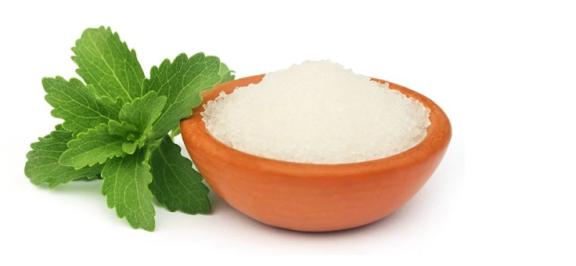
Source: Freepik
Stevia has zero calories, making it a popular sweetener in food and beverage products. It can be used as a powder, a liquid or as a leaf. The most common form of stevia is liquid. A growing number of liquid table top sweeteners in Europe are using stevia. The second most common form is powder. It is expected that the share of powdered stevia will increase in the future because of growing applications in the food and beverage industry. Most applications are in baked goods, dairy products, beverages, confectionery products and nutritional supplements.
Commercially available stevia extracts vary in composition with respect to the ratios of the steviol glycosides and other constituents. This is because the extract contains at least ten steviol glycosides in different concentrations. These include: Stevioside, Steviolbioside, Dulcoside A, Rubusoside (A, B, C, D, E and F).
These steviol glycosides differ in their sweetening power, taste and molecular structure. Stevioside is the largest part of the steviol glycosides in the plant. Stevioside and Rebaudioside A are responsible for the sweet taste of stevia extract.
Stevia leaf extract is traded under HS Code 2938909090, which refers to other glycosides, natural or reproduced by synthesis, and their salts, ethers, esters and other derivatives. This is the main focus of this study.
Stevia leaf powder is traded under HS Code 12119099, which refers to plants and parts of plants (including seeds and fruits) of a kind used primarily in perfumery, in pharmacy or for insecticidal, fungicidal or similar purposes, fresh or dried, whether or not cut, crushed or powdered - Other.
Figure 1: Examples of stevia products on the European market
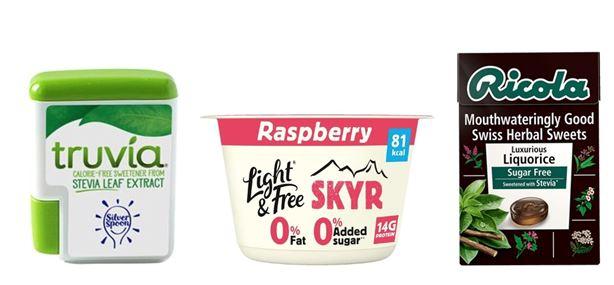
Source: Various
2. What makes Europe an interesting market for stevia?
The large European food and drink industry offers interesting opportunities for stevia suppliers in developing countries. Stevia has a wide range of applications in the industry, ranging from dairy and bakery products to confectionery, dietary supplements, snacks and table-top sweeteners.
Demand for stevia is driven by rising consumer demand for healthier and more natural food products, as well as alternatives for sugar. The political discussions around the use of sugar in food and beverage products in the EU Parliament and the evolving regulatory framework in the EU also stimulate demand for stevia in this market. The growing demand is translated into opportunities for stevia suppliers from developing countries.
The EU’s food and beverage industry drives demand for stevia
The European food and drink market is one of the largest in the world. According to Food and Drink Europe, the industry has a turnover of nearly EUR 1.1 trillion.
A few key facts provided by the sector association Food and Drink Europe reveal opportunities for stevia in the European industry. For example, soft drinks are considered the world’s most innovative food sector. The sector is an important end-using industry of stevia. In 2019, the per capita consumption of soft drinks in Europe was 244 litres. The countries with the highest levels of soft drinks per capita consumption were Germany (336 litres), Hungary (310 litres) and Belgium (272 litres). Other innovative sectors are dairy products, chocolate and biscuits, which are also relevant end-using industries for stevia sweeteners. Other important application areas for stevia are healthy bars and snacks, savoury snacks and sauces and botanical protein powders.
Natural sweeteners are increasingly used to replace sugar in food and beverage products. According to the 2020 New Nutrition Business Survey, two thirds of European consumers are trying to lower their sugar intake. Research has also found that European consumers are increasingly looking for products with no added sugars. This is linked to the fact that Europeans consider being healthy as the most important aspect of a sustainable diet, as reported by Food and Drink Europe.
The quest for healthier diets among Europeans has contributed to the growing use of sweeteners. At a global level, the natural sweeteners market size was estimated at USD 2.8 billion in 2020 and projected to reach USD 3.8 billion by 2025, recording an annual growth of 6.1% in this period.
Stevia is one of the most popular natural sweeteners. In 2021, the European market for stevia reached USD 150.8 million. The market is expected to grow by a compound annual growth rate of 9%, reaching USD 234 million in 2026. The global stevia market was worth USD 590 Million in 2020 and is expected to grow at an average annual growth rate of 8.6% until 2026, according to the IMARC group.
The major drivers of growth in the stevia market are rising consumer demand for healthier and more natural products, increasing rates of obesity and diabetes in Europe, and the growing popularity of flavoured soft drinks. Consumer awareness of stevia is rising in Europe, and the number of applications in food and drink products is growing. However, substitute sweeteners with similar properties such as barley malts, maple syrup, agave juice and coconut sugar present a threat to the stevia market.
A growing organic market in Europe
Consumer awareness of stevia is rising in Europe, and the number of applications in food and drink products is growing. European consumers are increasingly looking for healthier and more natural products, leading to an increase in the organic market. According to industry sources, although demand for conventional stevia leaves is still greater, organic stevia leaves and organic stevia extract are rapidly becoming very popular in food and beverages, as well as in nutraceuticals. The pure white-powder stevia extract cannot be characterised as 100% natural nor organic, thus organic brands cannot use it as an ingredient.
Europe has the second-largest market for organic products in the world, only behind North America. The organic food and beverage market in the EU grew at a strong rate from 2016 to 2020, reaching nearly EUR 45 billion as shown in Figure 3. Steady growth is expected to continue in the coming years.
Regulatory changes and industry commitment in the EU expand possibilities
After the approval of stevia extracts for use in the European Union in November 2011, the market has grown rapidly. Recent regulatory developments have favoured the increased use of stevia in ever-expanding forms and applications.
In October 2016, an amendment to the EU food additives regulation removed a rule whereby stevia blends were required to contain at least 75% stevioside or reb A. This move also added reb M to the list of permitted steviol glycosides. It also enabled food and beverage manufacturers to use a combination of the 11 approved steviol glycosides in any proportions in its products. This amendment allows further sugar reductions in food and beverage formulations and improvements in taste.
In 2021, a further amendment to the Food Additives Regulations included a new method for the production of Steviol glycosides (E960) and Rebaudioside via enzyme modification of Steviol glycosides from Stevia. The new process involves the bioconversion of purified stevia leaf extract (≥95% steviol glycosides) through a multistep enzymatic process.
Developments in stevia labelling also expand market opportunities. The new EU labelling update, from “Steviol glycosides (E 960)” to “Steviol glycosides from stevia (E 960)” provides consumers more clarity on the plant origin of the product, as well as greater transparency. The change is expected to affect consumer demand; currently, only around 25% of European consumers are familiar with the term “steviol glycosides”, while 64% recognise “stevia” – according to Cargill’s Ingredient Tracker. The update is expected to take place in January 2023.
In general, the push for the European industry to reduce added sugar is also fostering the demand for stevia. The Code of Conduct for responsible food business and marketing addresses the reformulation of products, specifically targeting sugar reduction. The code is paired with commitments from the Union of European Soft Drinks Association (UNESDA) to reduce average sugars in products by 10% by 2025.
In addition, the EU regulatory framework is being constantly updated with the aim of reducing the potential impact of sugars on human health, leading to new policies and legislation that favour the use of sugar alternatives.
Growing demand stimulates European imports
According to industry sources, demand for stevia is expected to continue growing in the foreseeable future. Awareness of stevia is increasing in companies; for example, Pepsi and Coca-Cola have started using stevia as a sweetener in their soft drinks. Other food and drink manufacturers are also using stevia in products such as yoghurts, confectionery products and processed products like ketchup.
Suppliers of stevia in developing countries should target the European market as it offers a wide range of opportunities for natural sweeteners. It is expected that demand for stevia will continue to rise over the forecast period as more food and beverage companies use alternative sweeteners. This will continue to offer supply opportunities to exporters in developing countries.
Figure 4 shows EU imports of HS Code 29389090, which includes other glycosides, natural or reproduced by synthesis, and their salts, ethers, esters and other derivatives. This HS code includes stevia, but not exclusively. As such, it is only an indication of stevia imports into the EU.
Figures 4 and 5 show that there was an increase in EU imports of glycosides under HS code 29389090 in terms of volume (figure 4) and value (figure 6) between 2017 and 2021. This trend is expected to continue in the coming years. Rising awareness of stevia and the growing health awareness among consumers is increasing demand for alternative sweeteners.
One development in imports is the growing share of intra-European suppliers in recent years. For example, in 2018, around 41% of European imports were sourced from within Europe, but this share increased to 45% in 2021.
This development follows a growing trend towards local sourcing among European buyers and food manufacturers. Sourcing locally offers food companies greater flexibility and control, and it can enable them to build relationships with suppliers in their region. It is also associated with lower costs and a lower environmental footprint. Local sourcing poses a challenge to exporters of stevia in developing countries.
The French stevia company Stevial is an example of a company that sources its raw materials as locally as possible. Although stevia is usually grown and processed in Asia and Latin America, the company sources from Southern Europe and North Africa. Most of its stevia is processed at its Stevia Natura facility in France. The company aims to source all of its stevia from Europe in the future. OVIATIS is another French company that sources stevia locally. There is also stevia production in Spain. For example, Biostevera is a Spanish company that produces stevia.
Tips:
- Connect with stevia associations such as the European Stevia Association, the International Stevia Council and the World Stevia Organisation if you are an exporter of stevia. These organisations are a good source of information on the stevia industry and the relevant regulations and standards.
- Visit trade shows such as Food Ingredients / Health Ingredients Europe, ANUGA and SIAL to connect with stakeholders in the European food and beverage sector. For the organic food sector, consider visiting BioFach.
- Read more about the European food and beverage market on the annual publication of the sector association Food and Drink Europe.
- Make sure to compete at the same level with European supplies. One way to compete is by adopting organic and fair trade standards, and/or quality management standards such as International Organization (ISO) 22000:2018, 9001 certification and Food Safety Systems Certification (FSSC 22000).
- Adopting standards or certification is perceived as a sign of quality by European buyers. Communicate them clearly in your marketing materials as well. Sunrise Nutrachem Group is an example of an established company in a developing country that has ISO 9001 certification.
- Read the CBI study Entering the European market for stevia for information about standards and certification for stevia as well as mandatory requirements to enter the European market.
- See the CBI study Tips for finding buyers on the European natural food additives market for valuable information on how to approach European buyers successfully.
3. Which European countries offer most opportunities for stevia?
France, Germany, Italy, the UK, Spain and the Netherlands can be considered the most promising European markets for stevia exporters in developing countries. These countries have the largest food and drink industries, and some of the largest organic markets in Europe. In addition, these are countries that have sizeable imports of products under HS code 29389090, which includes stevia. A large share of imports from those countries is supplied by non-European exporters. Note that France and Spain grow stevia in their countries, thus local suppliers can also pose competition.
Table 1: Food and beverages industry and organic market in the leading markets for stevia in Europe
| Country | Food and Drink Market, 2019, EUR billion | % Change 2018-2019 | Organic Food and Drink Market, 2020, EUR billion | % Growth 2019-2020 |
| France* | 213 | 0.0% | 13 | +12% |
| Germany* | 185 | -14% | 15 | +22% |
| Italy | 145 | +2.8% | 3.9 | +4.0% |
| The United Kingdom | 120 | +2.3% | 2.9 | +13% |
| Spain | 119 | +2.5% | 2.5 | +7.0% |
| The Netherlands | 76 | 0.0% | 1.3 | +12% |
Source: Food and Drink Europe 2021, UK Food and Drink Federation 2021 and FiBL 2022
Note: All figures are rounded
*2018 data
In 2021, France, Spain, Germany and the UK were the leading importers of glycosides, natural or reproduced by synthesis, and their salts, ethers, esters and other derivatives. The Netherlands and Italy were also among the 10 largest importers in Europe. Table 2 shows imports from these leading European markets for other glycosides, natural or reproduced by synthesis, and their salts, ethers, esters and other derivatives, under which stevia is usually traded, between 2017 and 2021.
Table 2: Imports of HS code 29389090, under which stevia is usually traded, in selected European markets, 2017-2021
| Country | tonnes in 2021 | % Change Volume (2017-2021) | EUR million in 2021 | % Change Value (2017-2021) | Main non-EU suppliers | Important Market Players |
| France | 2,724 | +9.1% | 60 | +3.1% | China (54%), India (15%), Morocco (10%) | Stevia Natura, Provia Sud, STEVIA SAS, Firmalis, Oviatis |
| Spain | 1,492 | +15% | 45 | +15% | China (46%), Morocco (0.9%), Hong Kong (0.8%) | Mercostevia, Azucares Prieto, Disproquima EPSA Aditivos Alimentarios |
| Germany | 1,348 | +29% | 39 | -2.3% | China (38%), Japan (11%), Switzerland (8.3%) | Betterfoods, Denk Ingredients, Stevia Group, Steviavida, Organic Stevia GmbH |
| United Kingdom | 525 | +1.5% | 25 | -2.7% | Malaysia (49%), China (19%), Thailand (7.1%) | Tate & Lyle, Prinova |
| Netherlands | 501 | +20% | 19 | +2.5% | China (51%), USA (10%), Thailand (6.3%) | Cargill, Hyet Sweet, HHOYA BV, Mattison, DSM |
| Italy | 245 | -3.9% | 15 | +20% | Venezuela (35%), China (33%), South Korea (6.4%) | Bio Mondo, Moralco |
Source: Eurostat and ITC Trademap 2022
France
France is the leading European importer of products under HS code 29389090, which includes stevia. French imports increased annually by volume (+9.1%) and value (+3.1%) between 2017 and 2021, amounting to 2,724 tonnes or EUR 60 million. Around 85% of French imports were supplied by non-EU countries, including China, India and Morocco.
According to Food and Drink Europe, France had the largest food and drink market in terms of turnover in 2019. France also holds a strong position on the European stevia market since the country approved the use of stevia sweeteners, particularly the Reb A strain, from 2009 onwards. This therefore presents an opportunity for stevia suppliers in developing countries. Stevia Natura is a leading stevia producer in France. Provia Sud and STEVIA SAS are other domestic producers of stevia. Firmalis is an important trader of stevia.
France has the second-largest organic food and drink market in Europe. The demand for organic products has been increasing over the last decade. Growth is expected to continue in the near future. Market growth is stimulating demand for organic stevia since many organic food and drink companies tend to use sugar alternatives. Consumers who buy organic products are health-conscious and seek natural products. The French company Oviatis supplies organic stevia extracts and leaves.
French demand for stevia is expected to increase further in the future. Growth is driven by rising consumer demand for healthier and more natural food and drink products, segments which provide opportunities for suppliers in developing countries.
Spain
Spain is the second-largest importer of products under HS code 29389090. Between 2015 and 2019, Spanish imports increased by an annual rate of 15% in both volume and value, amounting to 1,492 tonnes or EUR 45 million. Around half of Spain’s imports were supplied by non-EU countries, the main one being China, followed at a distance by Morocco and Hong Kong.
Spain has the fourth-largest food and drink market in the European Union. The organic food and drink market is also growing steadily each year. There is also some production of stevia in Spain, but local supply is supplemented by imports. Leading companies in Spain that handle stevia include Azucares Prieto, Disproquima and EPSA Aditivos Alimentarios.
Demand for stevia in the Spanish market is expected to grow. The major drivers are rising consumer awareness and growing demand for healthier and more natural food and drink products.
Germany
In 2021, Germany was the third largest European importer of products under HS code 29389090. Although German imports declined slightly by volume between 2017 and 2021 (at an annual rate of -2.3%), they increased strongly by volume (+29% annually), amounting to 1,348 tonnes or EUR 39 million. Nearly 70% of German imports were sourced from non-EU countries,
According to research of Mordor intelligence, Germany has the largest market for food sweeteners and that market is expected to increase in the next years, up to 2025. Stevia is the largest and fastest growing segment in the food sweetener market.
Major importers of stevia in Germany include Denk Ingredients and Stevia Group. There are also some suppliers of stevia extracts in Germany, such as Steviavida. Some of the mainstream food and drink companies that use stevia in their formulations include Dr. August Oetker Nahrungsmittel KG, Hengstenberg GmbH and Fritz-kola GmbH.
The German organic food market is the largest in Europe. There is also growing demand for organic stevia. Organic Stevia GmbH is a leading supplier of organic stevia. Betterfoods is a leading supplier of organic stevia leaves and organic stevia extract. In Germany, stevia can be purchased at mainstream retailers such as Rewe and Edeka. Organic stevia products are usually found at specialist retailers. German consumers have very high awareness and are familiar with the sweetener. Figure 6 shows that around half of German consumers have used stevia or have eaten a product containing stevia.
Suppliers of stevia from developing countries should target the German market as demand is expected to increase further. German consumers are aware of stevia and are seeking natural and high-quality food and drink products. German consumers are also environmentally conscious and since the use of stevia can reduce the environmental footprint of finished products, its use is likely to increase. Exporters of organic stevia should also consider targeting the German market because it has the largest organic food market in Europe.
The United Kingdom
The UK is among the top 5 importers of products under HS code 29389090 in Europe. Although its imports had a slight annual decline of 2.7% in value between 2017 and 2021, the country registered a slight annual growth of 1.5% in volume, totalling 525 tonnes or EUR 25 million. Around 87% of UK imports were supplied by non-EU countries, led by Malaysia (nearly half of total imports), and followed by China and Thailand.
The UK has one of the largest consumer markets in Europe. According to the UK Food and Drink Federation (FDF), the country’s food and beverage sector generated about EUR 120 billion in turnover in 2020. The industry is also highly committed to sugar reduction; FDF members are selling 22.6 billion fewer teaspoons of sugars than they were in 2015.
The UK market for organic food and drink is also growing. Rising consumer awareness and growing demand for natural and healthier food and drink products are major drivers. There is expected to be high demand for alternative sweeteners, such as stevia, in the future.
The UK is home to the headquarters of major European stevia company Tate & Lyle. The company has a portfolio of stevia-derived food additives. In 2019, Tate & Lyle launched a project in partnership with Sweet Green Fields and Earthwatch to assess the sustainability of its stevia supply chain. Another stevia importer is Prinova. Some of the major mainstream retailers in the UK, such as Tesco, are marketing stevia under their private labels.
Demand for stevia in the UK is also driven by regulations. In 2018, the UK government introduced its so called “Sugar Tax” on soft drinks. It was introduced as a way to tackle childhood obesity. Around 50% of soft drink manufacturers have reduced their sugar content because of this. This is likely to have influenced the imports of stevia into the UK.
Brexit (Britain’s exit from the European Union) has disrupted supply chains for ingredients such as stevia. It may take some time to renegotiate old and reach new trade deals with developing countries. Tariffs on goods imported into the UK may differ to those for European Union (EU) countries for HS code 29389090 under which stevia is usually traded in Europe. Thus, exporters of stevia in developing countries should use the International Trade Centre’s (ITC) Market Access Map to see if different tariffs apply when exporting to the UK.
Exporters of stevia from developing countries should target buyers in the UK. Demand for stevia is driven by rising consumer awareness, industry commitment, an evolving regulatory framework and growing demand for natural and healthier products.
The Netherlands
The Netherlands is among the 10 largest European importers of products under HS code 29389090. Between 2017 and 2021, Dutch imports increased in both volume (+20% annually) and value (+2.5% annually), amounting to 501 tonnes or EUR 19 million in 2021. A large share of 78% of imports were sourced from non-EU countries, led by China (more than half of total imports), followed by the USA and Thailand.
The Netherlands is a significant entry point of raw materials into Europe. This is partly because most raw materials are re-exported to other European countries. The Netherlands also has some significant processors of stevia. It is expected that the growth trend will continue in the coming years.
The European headquarters of Cargill, a leading stevia extract manufacturer, is located in the Netherlands. The company supplies a wide portfolio of stevia extracts, including Truvia Stevia Leaf Extract and ViaTech Stevia Ingredients. In 2019, the Cargill-DSM joint venture Avansya started commercial production of EverSweet stevia sweetener. Van Wankum Ingredients is a leading importer of stevia in the Netherlands. The Chinese stevia company Hyet Sweet has its European headquarters in the Netherlands. Other interesting companies active in the stevia market in the Netherlands are DSM (now part of the Firmenich group), HHOYA BV and Mattison.
The Netherlands is likely to remain an important country for imports of stevia from developing countries. Despite a relatively small food and drink sector, the Netherlands will remain an important entry point for raw materials into Europe.
Italy
Italy is also an important importer of products under HS code 29389090, especially when looking at import volume. Between 2017 and 2021, the volume of Italian imports increased by a staggering rate of 20% annually, but had a decline of 3.9% in value, amounting to 3,251 tonnes or EUR 12 million. Around 78% of Italian imports were supplied by non-EU countries, where Venezuela (35%) and China (33%) accounted for the largest shares, followed by South Korea and Japan.
The Italian food sweetener market has grown in recent years and is expected to continue growing until 2025. Italy has the third-largest food and beverage market in Europe. Some of the major suppliers of stevia in Italy include Bio Mondo and Moralco.
Italy also has one of the largest markets for organic products, which is growing at a steady pace. Italian consumers tend to seek high-quality natural products. In Italy, stevia products and sweeteners can be found at mainstream retailers. Organic stevia products are usually found at specialist retailers.
The Italian market offers good prospects for stevia exporters in developing countries. Organic certified stevia has good potential on the Italian market.
Tips:
- Focus on Western European countries when exporting stevia as they usually have the largest consumer markets and a robust processing and manufacturing food and beverage industry. In addition, because supply chains of stevia are already established in Europe, awareness of stevia products is relatively high among European buyers.
- Focus on stevia’s beneficial properties when approaching European buyers. For example, its low-calorie content is a great selling point.
- Use the International Trade Centre’s (ITC) Market Access Map to see if tariffs apply for HS code 29389090 under which stevia is usually traded in Europe as per the European country you are exporting to.
- Focus on creating long-term relationships with buyers. Larger buyers create partnerships with stevia producers. Be open to buyers visiting your facilities on a regular basis.
4. Which trends offer opportunities on the European stevia market?
Along with product development and innovation in Europe, the increasing demand for plant-based sweeteners and natural ingredients provides opportunities for exporters of stevia in developing countries.
Rising demand for plant-based sweeteners and natural ingredients
Food and beverage companies are moving to alternative sweeteners to reduce the calorific content without affecting taste. There is a growing demand for plant-based and natural sweeteners in the European market, a trend that is expected to continue. One factor behind this is the rising levels of obesity and diabetes in Europe.
Another driver behind growing demand for plant-based and natural sweeteners is that consumers are seeking sustainably-produced sweeteners. According to industry sources, stevia is about 5 times more efficient to grow than sugar. Since stevia is usually used as an extract, less of it is required to sweeten products. Stevia production also requires less land, water and energy.
In their study PureCircle showed that the carbon footprint of stevia was 79% lower than high fructose corn syrup, 55 percent lower than beet sugar, and 29% lower than cane sugar. The same study showed that the water footprint of stevia leaf extract was about 96% lower than that of cane sugar, 94% lower than high fructose corn syrup, and 92% lower than beet sugar.
To capitalise on this opportunity, exporters of stevia from developing countries should take note of the health and environmental benefits of stevia and display this on their company website and other marketing materials. Exporters should also inform European buyers of these benefits, because it makes them more appealing to do business with.
Tips:
- Educate yourself on how to increase the sustainability of your stevia production. For example, you can do this by reading this article on sustainable agriculture which provides information on methods of sustainable agriculture as well as its benefits.
- See the CBI news item on natural sweeteners and the CBI study on coconut sugar.
“Aspartame-free” products gain popularity
The increasing concerns over the safety profile of commonly used sweeteners among scientists and European consumers has led to their increasing substitution with natural sweetener alternatives. This is especially the case with the much-debated food additive aspartame.
Aspartame (E 951) is an intense, low-calorie, artificial sweetener. It is a white, odourless powder, approximately 200 times sweeter than sugar. It is used in the European food industry to sweeten a variety of foods and beverages such as drinks, desserts, sweets, chewing gum, yogurt, low-calorie and weight control products and as a table-top sweetener.
In spite of its wide applicability, the sweetener has been a long-debated product in Europe due to its safety profile. The European Food Safety Authority (EFSA) has kept the safety of aspartame under regular review; its scientific panels issued advice on new scientific studies related to this sweetener in 2006, 2009 and 2011, 2013. On all these occasions, it has concluded that the new scientific data did not give reason to review the safety evaluation of aspartame or to revise the acceptable daily intake (ADI).
But part of the scientific community still warns consumers of the potentially negative effects of the sweetener on human health, including brain lesions, cancer and neurological disorders. This concern has been assimilated by some companies in the European food industry. This generated a trend for “aspartame-free” products (see for example, Scandinavian chewing gum company True Gum), and has opened up opportunities for stevia and other natural sweeteners in products like soft drinks, chewing gums, etc.
Tip:
- Compare the different sweeteners used in various European end-industries such as soft drinks and provide potential buyers with a side-by-side comparison between currently used additives and stevia. This will allow you to communicate the safety and health profile of stevia by using benchmark ingredients.
Innovation provides opportunities
In recent years, there have been innovations involving stevia, resulting in many new food and beverage product launches. According to Mintel, new product launches with stevia rose by 27% in the European market in 2018. Product innovations provide opportunities to exporters of stevia in developing countries.
Increasing demand for natural and healthier products is driving demand for food and beverage products containing stevia. Thus, food and beverage companies are innovating to satisfy changing consumer demand for healthier alternatives to traditional sugars, a trend expected to continue.
Stevia is an alternative sweetener to traditional sugars, making it attractive to food and beverage companies. Prominent food and beverage companies launching products containing stevia include The Coca-Cola Co, Danone Group, Nestlé, PepsiCo, Unilever and Ricola.
There has been a lot of innovation in the stevia sector. Tate & Lyle, a leading European sugar company, launched Reb M stevia sweetener TASTEVA®. This sweetener is targeted at consumers seeking natural alternatives to traditional sugars. Such innovation has resulted in the food and beverages sector using new and innovative forms of stevia in their products. In October 2020, sweetener manufacturer SweetGen announced the commercial production of Bestevia® Reb I. This is a new type of glycoside produced from the stevia leaf.
To capitalise on this opportunity, exporters of stevia from developing countries should familiarise themselves with stevia’s beneficial properties as well as the advantages it offers to the food and drink industry; this is a major factor behind stevia innovation. Examples include stevia’s sweetening properties as well as the fact that it contains zero calories.
Tips:
- Make sure to provide clear and complete product specifications to potential European buyers. Take a look at examples of technical datasheets from companies like Tate and Lyle, Ingredion and Vehgroshop. Also pay special attention to the way you present your product and company to potential European buyers, including product specifications, certificates, packaging and Unique Selling Points (USP). Take a look at an example from the Canadian company GLG.
- Clearly inform European buyers about stevia’s beneficial properties and advantages when approaching them as this is likely to increase your chances of entering the European market. Check for example the marketing materials of Paraguayan company Real Stevia, which offers organic stevia. On its website, as well as its Instagram and Twitter accounts, the company highlights the possible applications and health benefits of stevia as a sugar substitute.
- Keep up-to-date with the innovation in the European food and beverage sector. Follow industry magazines such as Food Ingredients First, FoodNavigator and NewFood Magazine. Doing this gives you a better understanding of what is happening in the sector before approaching European buyers. It also gives you credibility as buyers view this favourably.
- See the CBI Trends study for natural food additives. Here you can find more information on European market trends and how to deal with opportunities and threats posed by them.
This study was carried out on behalf of CBI by Teresa Hüttenhofer and Gustavo Ferro.
Please review our market information disclaimer.
Search
Enter search terms to find market research
Do you have questions about this research?
Despite conventional stevia leaves demand still being greater, organic stevia leaves are becoming rapidly very popular. Our innovative and clean-label “organic stevia extract” requests have increased by 300% compared to 2021 facing great success in Food & Beverage, Tea and Nutraceuticals markets.

Zefan Ket,
Managing Owner at Betterfoods GmbH