
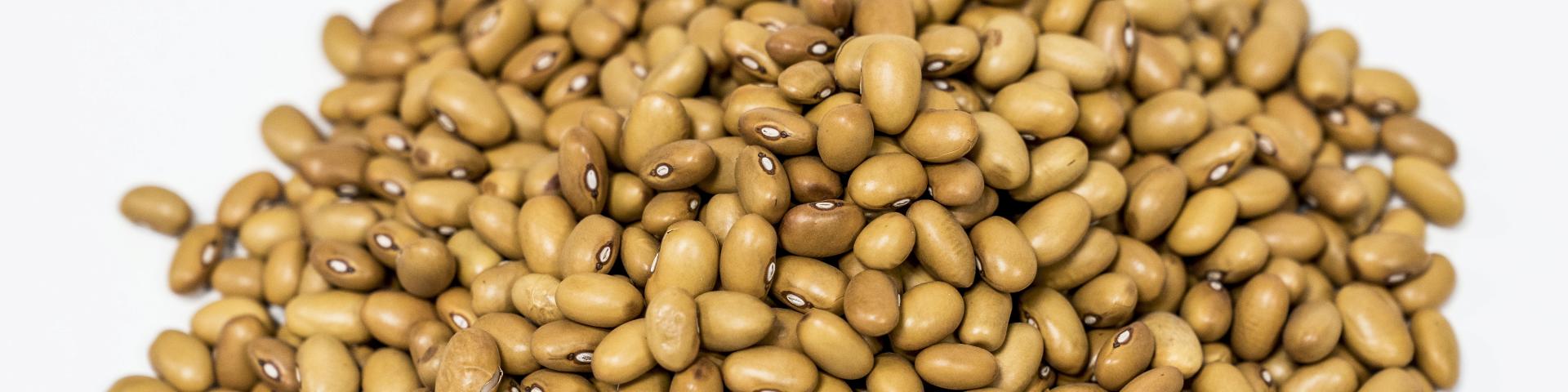
The European market potential for common dry beans
Dry beans imports went down slightly between 2020 and 2024. Italy, the United Kingdom and Spain are the main importers and consumers. They drive European demand. Imports are shaped by three trends: local cuisine, affordable ready-to-eat healthy food and the rise of plant-based diets. To match these trends, food processors offer canned beans and ready meals that contain beans.
Contents of this page
1. Product description: common dry beans
The common bean is native to the Americas. Its scientific name is Phaseolus vulgaris. It has been grown around the world for centuries. The common bean contains high levels of starch, protein and dietary fibre. Besides selling them dried, growers also market some varieties as snap beans. Snap beans include immature seeds and the pod. See the CBI study exporting fresh green beans to Europe for more information.
There are several varieties of common dry beans, with lots of subvarieties in different sizes and colours. Below is a list of common beans in the European market.
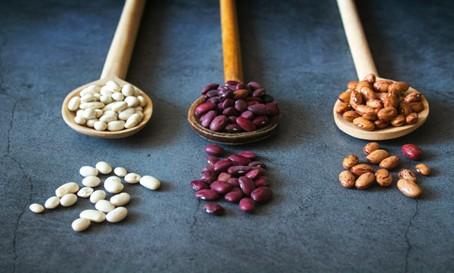
- Light-red kidney beans and dark-red kidney beans.
- White kidney beans, also called cannellini in Italy.
- White pea beans, also known as navy beans. They are small, white and oval-shaped.
- Pinto beans. They are beige with brown spots and closely related to red kidney beans.
- Small red beans, black beans and Great Northern beans. These are popular local dry bean varieties.
- Small, white, oval beans called haricots lingots and small, green, kidney-shaped beans called ‘flageolets’. These are more common in France.
- Cranberry beans, which are light beige or cream with maroon, red or pink speckles. They are also known as borlotti beans and are common in Italy.
- Caparrones, a small type of red kidney bean native to Spain.
- Light-speckled and red-speckled kidney beans, which are less common dry bean varieties.
This study looks at the exports of dry kidney beans. This is the most important type in the common dry beans category (Phaseolus vulgaris) and their subvarieties listed under the Harmonized System code 07133300: Kidney beans, including white pea beans (Phaseolus vulgaris).
Figure 1: Varieties of dry beans: red kidney beans, white kidney beans and pinto beans
Source: Unsplash, August 2025
2. What makes Europe an interesting market for common dry beans?
Europe is an attractive market for common dry beans because demand is higher than local supply. Consumers are eating more plant-based proteins for health and environmental reasons. Europe’s pulse production mainly focuses on feed crops, like peas, faba beans and lupins. Although some European countries produce dry beans for human consumption, these volumes are small. This means Europe depends on imports to meet most of its demand.
In 2024, around 484,000 tonnes of dry beans were imported into Europe. In volume, imports fell by an average of 3.2% per year between 2020 and 2024. In 2024, developing countries supplied 44% of Europe’s dry bean imports. European trading partners supplied 17%, and the rest of the world supplied 39%. It is clear from this that Europe is a net importer of dry beans and that developing countries play an important role as suppliers.
Source: UN Comtrade, June 2025
*Developing countries are the countries on the OECD-DAC list of ODA recipients, ‘Rest of the world’ refers to all other countries.
Demand for dry beans will probably increase with policy support and initiatives
Europe consumes less legumes than other regions. EU average intake of legumes is expected to reach around 11 g per day per person by 2029, compared to 22.7 g per day globally. Diets low in legumes in EU member states are linked to an estimated 130,000 preventable deaths. This causes people to lose two million years of healthy life. To address this, the EU has introduced school food policies, dietary guidelines, and public health campaigns that encourage people to eat more legumes.
Several countries have also started their own initiatives to promote legumes. In the United Kingdom, organisations like the Food Foundation and Food For Life encourage plant-based diets that include beans and other legumes. The BeanMeals Project raises awareness about beans through farming, growing and cooking activities. The Food Foundation also suggests policy measures to the government to encourage people to eat more plant-rich foods.
In France, the French Society of Nutrition recommends eating less meat and more legumes, including dry beans. Its dietary guidelines advise adults eat legumes once a day; around 65–100 grams of lentils, chickpeas, beans or similar products. Legume consumption has risen in France, but it is still below the recommended level. This means there is room for future growth.
In the Netherlands, the government started a national campaign to stimulate bean consumption called BEANDEAL. Another campaign is the ‘National Week Without Meat’. It encourages people to eat less meat in a week-long challenge. During this week, legumes are promoted as a healthy and sustainable alternative to meat. These campaigns help to make beans a normal part of daily diets and help higher demand in the long term.
EU policies and national campaigns encourage diets with healthier, plant-based and protein-rich foods. Dry beans fit into this trend because they are affordable, nutritious and rich in protein. Still, Europe’s own production focuses more on feed crops and less on common dry beans for food. This means that imports will still be essential to meet demand. This creates clear opportunities for dry bean exporters from developing countries.
Tips:
- Use the OECD-FAO Agricultural Outlook 2024-2033 report to understand global demand, the main supplying regions and trade flows for pulses. This helps you understand the strength of the competition and where your country stands.
- Check the annual EU agricultural outlook and the EU agricultural markets short-term outlook – summer 2025. These reports give projections and expert perspectives on EU demand, production and trade. You can use these to plan your export strategy.
3. Which European countries offer the most opportunities for common dry beans?
Italy, the United Kingdom, Spain, Portugal, France and Romania are the main importers of dry beans in Europe. Italy also exports processed beans to other European markets. The United Kingdom produces some kidney beans but volumes are small. This means that UK food companies import more than 50,000 tonnes of beans every year. Southern European countries like Italy, Spain, Portugal and Romania use beans in their traditional cooking, which helps keep demand steady.
Italy: A leading importer of conventional and organic-certified dry beans
Italy was the largest importer of dry beans in Europe in 2024, with a market share of 27.5%. It imported about 133,000 tonnes. Developing countries supplied 42.9% of this quantity. European partners supplied 9.3% and the rest of the world supplied 47.8. Imports went down by 1.5% per year between 2020 and 2024, mostly due to decreases in 2021 and 2022. Italy is the EU’s largest importer of organic dry beans, importing 6,500 tonnes in 2024.
The main suppliers of dry beans to Italy in 2024 were the USA and Canada. The US made up 29% of Italy’s imports, and Canada 18.6%. Of the developing countries, Argentina made up a share of 16.9%, followed by Egypt with 12.1%, China with 5.2% and Ethiopia with 4.9%. Important European suppliers included Poland (5.7%), Ukraine (1.4%), Portugal (1.2%) and Hungary (0.8%).
Most Italian households eat beans at least once a week. Cannellini (white kidney beans) and borlotti (cranberry beans) are most popular. They are used in many regional dishes, and people like them for their taste and nutritional benefits.
Italy leads Europe’s processing and canning of dry beans; Italian companies supply Italian consumers and other European markets. Exporters should focus on buyers who supply Italian processors and the brands La Doria, Sanniti and Cento. This will let them get the most out of this growing category.
Italy is a major market for organic certified beans. Many organic certified importers operate there. Italy is the EU27’s largest importer of organic dry beans. The country imported 6,500 tonnes in 2024. But imports of organic dry beans have been under pressure because of challenges in the organic food market, going down at a rate of 2.5% per year. Organic products are sold in supermarket chains and organic specialised retailers like Bio c' Bon and NaturaSì.
The United Kingdom: Traditional bean consumer with growth potential
In 2024, the United Kingdom (UK) was the second largest importer of dry beans in Europe, with a market share of 14.1%. Total imports reached around 68,400 tonnes. Imports fell by an average of 9.2% per year between 2020 and 2024. The UK produces some beans domestically, but the volumes are small. So, the market will continue to depend on imports.
Most of the UK’s dry beans imports came from Canada and the US. Canada supplied 78.2% of the UK’s imports, and the United States supplied 12.5%. Developing countries only made up 7.9% of imports. The main developing-country suppliers were Argentina (2%), China (1.7%), India (0.9%) and Turkey (0.8%).
Popular dry bean varieties include haricot/navy beans, kidney beans, pinto beans and black beans. In 2023, the United Kingdom developed varieties for the British climate, like Capulet, Godiva and Olivia. They are becoming more popular. Capulet beans look like imported navy beans. Godiva is a blonde bean, similar in size to kidney beans, and Olivia is a medium-sized black cannellini bean.
British consumers traditionally eat beans mostly as baked beans. But flexitarian and plant-based eating trends are now strong in the UK. About a quarter of adults have flexible plant-based diets. This creates more demand for healthy protein sources like dry beans.
The United Kingdom offers opportunities for organic certified beans. Organic kidney beans from Forest Whole Foods and Hodmedod’s, and snacks made with bean flour are targeted at consumers who want to eat more healthily. Specialised organic retail chains like Hodmedod's Wholefoods, Planet Organic and Whole Foods are the main sales channels for organic beans.
Spain: imports are needed to meet demand despite domestic production
In 2024, Spain was the third-largest importer of dry beans in Europe, with a market share of 10.7%. In 2024, imports of dry beans to Spain reached about 52,000 tonnes. Import volumes fell by an average of 9.2% per year between 2020 and 2024. They dropped sharply in 2023 (-21.4%) but grew again in 2024 (+16%).
In 2024, developing countries supplied 68.6% of Spain’s imports. The rest of the world accounted for 20.5%. Imports from other European origins made up only 10.9%. In 2024, Argentina and Egypt were the main suppliers of dry beans to Spain. Argentina made up 39% of Spain’s imports, and Egypt for 20.2%. From the rest of the world, the US supplied 10.9% and Canada 9.6%.
Dry beans have a strong place in Spanish culinary traditions, with dishes like fabada (Asturian white bean soup) and kidney bean and rice stew being popular examples. Spain also has several well-known local bean varieties. These include Mongeta del Ganxet, Faba Asturiana, Alubia de La Bañeza-León, Fesols de Santa Pau, Faba de Lourenzá, Judías de El Barco de Ávila and Garrofón. The dishes and varieties support a stable demand for both white and red kidney beans.
Many brands in the Spanish market focus on selling local beans. Legumbres Luengo, for example, sells imported dry beans as part of its general portfolio. It also offers a range of beans with a denomination of origin from Castilla and Leon and different of ‘high-end’ Castilian pulse brands, including beans.
Imported dry beans sold to end consumers are often sold through private labels in supermarkets. For example, Legumbres Penelas sells their own legume brands and packs for private labels. The company Autor Foods cans beans for private labels. Companies like these offer opportunities for exporters of dry beans.
The Spanish market for organic beans is small but growing. Organic dry bean imports performed much better than overall beans imports. They increased by 7.7% per year, reaching 401 tonnes by 2024. Organic beans are becoming more common in mainstream supermarkets. They are available in both bottled and dry formats. Specialised organic retailers like Veritas and online shops like bio-market.es are also important sales channels for organic beans.
Portugal: imports were consistent in the past five years despite local varieties
In 2024, Portugal ranked fourth in Europe for dry bean imports with 41,000 tonnes and had a market share of 8.4%. Imports grew at an average annual rate of 3.6% between 2020 and 2024. There were notable increases of 13.8% in 2023 and 11.6% in 2024. Portugal saw the largest import growth among the top six European importers since 2020.
Developing countries supplied 78.8% of Portugal’s imports. Imports from other European countries made up the lowest share of 7.4%, and the rest of the world accounted for 13.9%. In 2024, Portugal’s leading suppliers were Argentina and Ethiopia. Argentina made up 26.1% of imports, and Ethiopia’s share was 25.1%. Other major suppliers from the rest of the world included Canada (10.2%), Brazil (9.7%) and the US (3.6%).
Portuguese people eat more beans per person than most other European countries. Total pulse consumption was 4.5 kg per person in 2023/2024, of which 3 kg was dry bean consumption. The consumption of dry beans increased from 2.6 kg per person in 2019/2020. Dry bean consumption in Portugal is higher than the European average of approximately 1 kg per person per year. Portuguese consumers often buy red kidney beans, which are popular in dishes like feijoada, rice dishes (arroz de feijão) and soups.
Conventional beans can be found in popular supermarkets like Pingo Doce and Continente. There are many types of dry beans in retail in this market. There are local brands like Caçarola, Brazilian brands like Camil and a wide range of private label options.
The market for organic beans in Portugal is quite niche. At the moment, Portugal does not import organic dry beans from origin. They are often bought from other European countries. Organic dry beans can mainly be found in organic shops like Celeiro and organic e-commerce shops like Outros Montes. Mainstream supermarket chains also offer some possibilities for organic beans in dry, canned and bottled formats.
France: Nutrition Society recommends increased consumption of legumes
In 2024, France ranked fifth in Europe for imports of dry beans. It had a market share of 6.9%, and imported around 33,300 tonnes of dry beans. Imports went down by an average of 2.8% per year between 2020 and 2024. But the market experienced a 6.2% rise in 2022 and a 4.1% increase in 2023, before a sharp drop of 12.2% in 2024.
In 2024, other European countries made up a share of 50.4% of France’s imports. Developing countries supplied 29.7% of France’s dry beans. The rest of the world accounted for the smallest share: 19.9%. Belgium and Argentina were the leading exporters of dry beans to France with shares of 21.3% and 17.9%, respectively. Other key suppliers included Portugal, which had a market share of 15.8%, the US, with 11.8%, Egypt, with 8.3%, and the Netherlands and Canada, both with 8%.
Beans play an important role in French cuisine. Dishes like cassoulet, Provencal beans, white beans in red wine sauce and bean soup are popular. Because of the local cuisine, there is always steady demand for beans in France.
Over 35% of French consumers now believe legumes and pulses are some of the richest sources of protein. Two-thirds (66%) eat beans, grains, lentils and wheat weekly. Also, 23% of French people have started to eat more legumes recently, and 34% mentioned that nutritional benefits are an important driver of consumption. These trends show that demand for beans in the French market will stay strong.
French consumers value organic foods, including organic beans. French brands that sell organic beans include Jardin BiO étic, which offers processed organic haricot red kidney beans in 395 g packs, and Priméal, which offers dry organic flageolet beans in 500 g packs. These brands and private label options can be found in supermarket chains like Carrefour and Auchan, which have dedicated organic sections. Specialised organic retailers like Biocoop, Naturalia and La Vie Claire are also important sales points for organic beans.
Romania: consistent importer of dry beans
In 2024, Romania ranked sixth in Europe for dry bean imports, with a market share of 6%. The country imported approximately 29,200 tonnes of dry beans. Imports grew at an average annual rate of 0.6% between 2020 and 2024, with a significant increase of 17.6% in 2024.
Most of Romania’s dry bean imports came from developing countries, which supplied 85.6% of total imports. European countries made up 14.2% of the imports. The rest of the world contributed just 0.2%. In 2024, Egypt was the leading exporter of dry beans to Romania, with a market share of 74.6%. The other leading exporters from developing countries were Ethiopia (3.1%), Uzbekistan (1.5%) and Argentina (1%). Important suppliers from other European countries to Romania were Bulgaria (5.9%) and Poland (4.6%).
Beans are an integral part of Romanian cuisine, with dishes like fasole cu afumătură (smoky Romanian bean stew), ciorbă de fasole cu afumătură (bean soup with smoked meat), refried beans and fasole batuta (white bean dip). Common dry bean varieties in Romania include Ami, Ardeleana, Avans, Diva, Star and Vera. These beans belong to the broader family of Phaseolus vulgaris and are cultivated for consumption locally.
The Romanian market for organic foods is very small. This is also true of dry beans. Some specialised organic shops offer organic beans, like Bio Shop Romania. Unlike the other markets, it is not common to see organic beans in mainstream retail.
Tips:
- Exhibit at major trade shows for food products in Europe. This is a good way to connect with potential European buyers, like SIAL in France and ANUGA in Germany. Buyers from all over Europe attend these shows.
- Attend country-specific trade shows to target your preferred markets like Food & Drink Expo in the United Kingdom, Alimentaria in Spain, Expoalimenta in Portugal, TUTTOFOOD in Italy and INDAGRA.
- If you want to sell organic beans, take part in Biofach in Germany. This is the leading tradeshow for organic food in Europe. Anuga can also be a good trade show for organic beans, because it also hosts many organic companies.
4. Which trends offer opportunities or pose threats in the European common dry beans market?
There are some major trends that will influence dry beans imports into Europe in the coming years. These trends are consumer preferences for convenience formats, the shift towards plant-based, healthy and protein-rich foods, and the EU-wide rise in demand for organic food.
Lifestyle changes demand convenience in consumption
Consumers are more often choosing precooked or baked beans in cans, jars or bottles instead of raw dry beans, to save time. Busy lifestyles mainly drive this shift, because many working individuals struggle to find time to prepare beans. For this reason, many of the beans in the retail markets across Europe are canned or bottled. This is especially true of Western Europe. Cooked beans are also sold in pouches and tetra packs.
Cooked beans in jars or cans often have a natural flavour, so they are versatile ingredients. Some precooked beans also have sauces and seasonings to appeal to regional tastes and offer consumers variety, which helps sales.
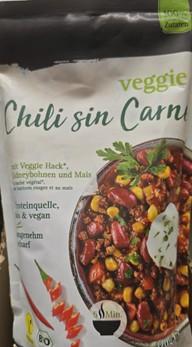
There are also many ready-to-eat meals made with dry beans. These are seen as convenient, quick and healthy. For example, products like Frosta Chilli con Quinoa Vegan, offer quick meal solutions. Bean-based snacks like roasted and salted fava beans and flavoured bean sticks are also becoming more popular.
A large share of the dry beans imported into Europe are processed into ready-to-eat formats. Exporters of dry beans should focus on processing companies or distributors that supply the processing industry to profit from this trend.
Figure 4: Ready-to-eat meals with beans, organic and vegan certified
Source: GloballyCool, August 2025
Consumers moving towards plant-based proteins: a trend
Almost 30% of European consumers look for plant-based options that have the same nutritional value as animal-based foods. Europe's plant protein market is expected to grow from $4.34 billion (USD) in 2025 to $5.85 billion by 2030 at an average annual growth rate of 6.2%.
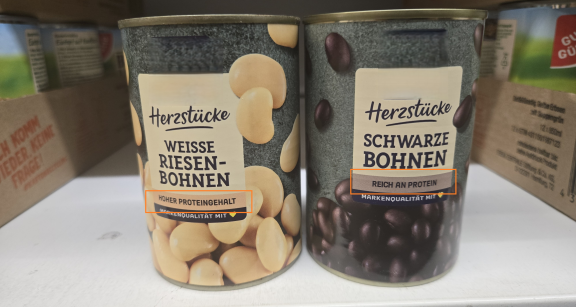
Consumers know that beans are a good source of plant-based protein. This trend drives bean consumption. To make the most of this trend, companies in the market are advertising the protein content of beans, especially in convenience products. Examples include Edeka’s private label in Germany and Albert Heijn’s private label in the Netherlands. Exporters of dry beans should focus on doing business with processors or importers supplying processors.
Figure 5: Black beans labelled as ‘Rich in Proteins’
Source: GloballyCool, August 2025
Organic food market facing challenges
The European organic food market was unstable between 2020 and 2024. In 2022, sales dropped sharply because of high costs and inflation. In 2023, the EU organic food market recovered and grew by 10.5%. It continued to grow in 2024 and 2025, but at a slower pace. But organic dry beans are still interesting because many new plant-based consumers choose organic products.
Countries like Germany and the Netherlands are interesting markets for organic beans. Italy led organic dry bean imports, bringing in 6,500 tonnes in 2024, followed by the Netherlands with 1,100 tonnes. Other importers of organic dry beans include Germany (600 tonnes in 2024), Belgium (580 tonnes), Spain (400 tonnes), France (130 tonnes) and Austria (110 tonnes). Only Belgium (+15% per year), Spain (+7.7%) and Austria (+50%) increased their organic dry bean imports.
This growth is the result of changing consumer preferences. More Europeans want to eat healthy and organic food. Organic bean products include LOTAO organic Chilli sin Carne in Germany and Jumbo organic White Beans in Tomato Sauce in the Netherlands. These products combine plant-based proteins with clear organic branding, which is popular with health-conscious consumers.
To deal with irregular demand in the organic market, exporters should stay in close contact with their buyers. They need to plan production and shipments together, so supply matches demand as closely as possible. This helps to avoid overproduction, storage problems and price pressures.
Mato Grasso Supply Ltd. is a Brazilian SME that sells organic beans to Europe, Asia, the Middle East and Africa. It sources beans from traditional and organic farms because it wants to promote sustainable farming and food security. It supplies non-GMO, pesticide-free beans. It sells organic beans, red kidney beans and black beans in wholesale format and pinto beans (carioca beans in Brazil) in packed retail format.
Tip:
- Read our study about which trends offer opportunities or pose threats on the European grains, pulses and oilseeds market for more information on factors that influence dry beans imports into Europe.
GloballyCool carried out this study on behalf of the CBI.
Please review our market information disclaimer.
Search
Enter search terms to find market research
Do you have questions about this research?
From a consumer perspective, there is still a lack of education on why eating pulses is beneficial. Pulses are an excellent source of plant-based protein and other nutrients, making them a healthy alternative or complement to meat. Greater awareness of these benefits plus their positive environmental impact could create significant growth opportunities for the European pulse market.

Piotr Goral, Co-owner, Sales & Purchasing at Seedea
B2B partner for the needs of organic producers, distributors and companies in the plant-based food sector.
Webinar recording
30 November 2021