
Entering the European market for common dry beans
Exporters need to meet the EU’s requirements for food safety, quality, packaging and labelling to enter the European market for dry beans. Working together with importers and wholesalers is best because they are deeply integrated into the European market’s supply chain. To compete effectively, it is important to focus on factors like pricing and consistent availability during business conversations with importers in Europe.
Contents of this page
- What requirements and certifications must common dry beans meet to be allowed on the European market?
- Through which channels can you get common dry beans onto the European market?
- What competition do you face on the European common dry beans market?
- What are the prices of common dry beans on the European market?
1. What requirements and certifications must common dry beans meet to be allowed on the European market?
Exporters need to follow specific rules and certifications to export dry beans to Europe. The General Food Law, which addresses food safety in the European Union (EU), applies to dry beans. Food safety and traceability are the most important factors that need to be considered in exports to Europe. Countries that do not comply will have strict audits on their shipments. Repeated non-compliance may lead to temporary bans on imports.
What are mandatory requirements?
Food safety and compliance standards are mandatory requirements for exporting dry beans to Europe. These include maximum residue levels for pesticides, heavy metals and mycotoxins, quality requirements, and packaging and labelling rules specific to beans and pulses.
Food safety and compliance
Exporters need to follow food safety and quality requirements to sell dry beans in the EU. Shipments are inspected at the port of entry or later on in the supply chain. Compliance is evaluated according to the EU’s General Food Law. Dry beans need to comply with the principles of the Hazard Analysis and Critical Control Point (HACCP) system adopted by the Codex Alimentarius Commission. The Codex Alimentarius Commission recommends that their food standards serve as a reference for international food trade.
If dry beans do not comply with the General Food Law, then this is reported through the Rapid Alert System for Food and Feed (RASFF). Between 2020 and 2024, ten issues with imported dry beans were reported through the RASFF. Most of these were related to mould and pesticide residue that was higher than the Maximum Residue Limits (MRLs). One of the notifications was about restricting distribution from Cameroon to Belgium because of pesticide residue levels that were too high.
Although there are no specific European Standards recommended for dry beans, it is best to follow the international standard for certain pulses in the Codex Alimentarius. This includes quality requirements for common dry beans (Phaseolus Vulgaris).
Control of pesticide residues
The European Commission has set up recommended maximum residue limits for pesticides, heavy metals and mycotoxins. Shipments of dried beans to Europe need to comply with these MRLs. The current MRLs for dry beans for import into the EU can be found in the European Commission Food Safety database. A general default MRL of 0.01 mg/kg applies if no pesticide is specifically mentioned.
Besides rules for pesticides, foods for infants and children also need to meet very strict limits for contaminants like heavy metals (lead, mercury, cadmium). This has been defined in Commission Regulation (EU) 2023/915. The regulations for organic production in the EU strictly prohibit the use of synthetic pesticides.
Table 1: Maximum levels of contaminants specific to dry beans, legume vegetables and vegetables
| Contaminant | Maximum set limit | Product | Criteria |
|---|---|---|---|
| Perchlorate | 0.05 mg per kg | Fruits and vegetables | |
| Lead | 0.1 mg per kg | Legume vegetables | Applies to wet weight and to the edible part after washing and separation |
| Cadmium | 0.02 mg per kg | Legume vegetables | Applies to wet weight and to the edible part after washing and separation |
Sources: Commission Regulation (EU) 2023/915, July 2025 and Commission Regulation (EC) No 2073/2005, March 2020
Quality requirements
To export dry beans to Europe, products need to comply with common quality standards. Exporters should follow specific buyer requirements and the FAO International standard for certain pulses (PDF) in the Codex Alimentarius. This includes quality requirements for dry beans.
Table 2: General quality standards for dry beans according to the Codex Alimentarius
| General |
|
|---|---|
| Purity and defects |
|
| Moisture |
|
| Discolouration |
|
Source: FAO / Codex Alimentarius standard for certain pulses (PDF), August 2025
Use correct labelling and packaging
Packaging for dry beans should keep the product’s hygiene, nutrition, processing integrity and sensory attributes. All containers and packaging materials need to be safe for their purpose. They may not release any harmful substances, unwanted smells or tastes into the beans.
The product name displayed on the label needs to match the commercial type of dry bean. For non-retail packaging, the required information should be provided either directly on the container or in accompanying documentation.
The container must show the following clearly:
- Product name;
- Lot identification;
- Net weight;
- Product shelf-life or best before date;
- Recommended storage conditions;
- Country of origin and the name and address of the manufacturer, importer or packer.
You can also replace the lot identification and manufacturer or packer details with a recognisable identification mark and clearly link this to the accompanying documents. Beans are usually shipped in sewn sacks that can be easily opened and inspected, or in clear plastic or polypropylene bags so the colour and quality can be inspected by eye. If sacks are used, they must be clean, durable and securely sewn or sealed to make sure the product is protected.
What additional requirements and certifications do buyers often have?
Food safety certifications based on Food Safety Management Systems (FSMS) are common additional buyer requirements. These are about meeting standards for production, supply chain management or activities, business practices for sustainability compliance, and compliance with REGULATION (EU) 2018/848 for organic certification.
Food safety certifications qualify imports
Food businesses must establish an FSMS grounded in the HACCP approach. This is an integral part of European Food Legislation. The European Commission has updated its guidance on HACCP implementation. They say there are positive outcomes from using it across food businesses.
Dry bean exporters can use an e-book published by the European Commission on Food Safety Management Systems and the European Commission’s 2022 guidelines on Food Safety Management Systems.
Exporters do not have to demonstrate HACCP compliance through certification or official checks. But exporters can adopt FSMSs like ISO 22000 to move towards compliance with HACCP principles and certifications. This will make the process of exporting into Europe easier. Other recognised certifications include FSSC 22000, BRCGS and IFS.
Sustainability compliance
As an exporter, you play an important role in the supply chain. As the source of dry beans to Europe, you are responsible for certain actions and need to follow ethical practices. This will often mean making certain declarations before setting up business relationships. Third-party sustainability certifications like BSCI, SMETA and FSA are important if you want to stay competitive in Europe.
Examples of companies in Europe that process dry beans and have made serious commitments to corporate social responsibility include Bonduelle Group and Coroos. Some of the main and relevant commitments of these companies that may influence their imports are:
- Encouraging a sustainable economy by using 0% virgin fossil plastics in packaging;
- Committing to organic cultivation and organic products;
- Contributing affordable and high-quality food;
- Encouraging diversified and sustainable agriculture.
What are the requirements for niche markets?
The main niche market for dried beans is the organic market. Many health-conscious consumers people are eating plant-based foods. These consumers often prefer organic foods. This means that organic certification creates opportunities.
Organic certification
The European Parliament’s and the EU Council’s Regulation (EU) 2018/848 (updated on 25 March 2025) outlines the rules for organic production and the labelling of organic products. Exported organic dry beans need to comply with the EU’s organic legislation.
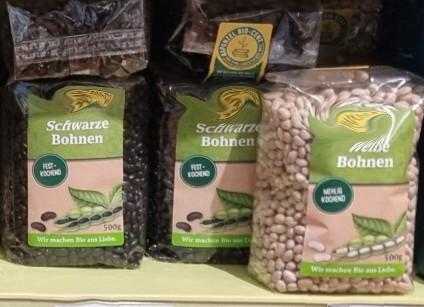
EU-approved certifiers must register the product in the TRACES (Trade Control and Expert System) electronic system and issue an Electronic Certificate of Inspection through the TRACES system. The certificate should be sent along with the organic dry bean shipment. It is required to clear customs at EU ports of entry. In Europe, organic dry beans are available in specialised organic retail outlets and online shops, and in organic sections of supermarkets.
Figure 1: Organic dried beans in a specialised retail outlet
Source: GloballyCool, August 2025
Tips:
- Read My Trade Assistant of Access2Markets to learn about market access requirements for dry beans.
- Read the Food Labelling rules in the EU and the European Commission’s food safety guidelines.
- Read The EU Ecolabel, a world-renowned scheme that promotes goods and services that demonstrate environmental excellence.
2. Through which channels can you get common dry beans onto the European market?
Some large food processors are also importers. They have started doing business with supermarket chains in Europe. They are the best way for exporters to get their dry beans onto the European market. These food processors include companies in the canning industry. These companies sell pre-cooked, baked and flavoured beans with sauces. They make sure there is consistent demand for exporters.
How is the end-market segmented?
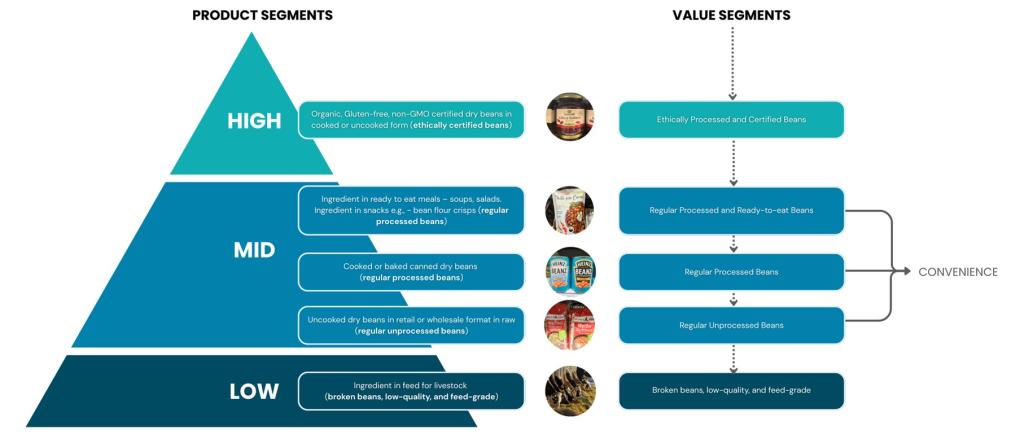
The end market is segmented with ‘convenience’ at the top. Processed and certified dry beans at this level appeal to specific ethnic groups and lifestyles. Unprocessed dry beans make up the mid-level. These are sold to the wider population, who prefer to cook their own beans. The lowest level is poor quality dry beans, which are used to make animal feed.
Figure 2: Market segments for dry beans in Europe
Source: GloballyCool, August 2025
Convenience
Dry beans in convenient formats for consumption are at the top of the product and value segments. These are ethically processed and certified beans that suit the diets of specific populations. Certifications include organic, non-GMO and gluten-free. They are the most expensive because the cost of production, processing and certification is higher than for dry beans in other segments.
The next level in the value segment is processed dry beans in ready-to-eat meals, like soups and salads. They have other healthy ingredients and value added beyond processing. This could include, for example, packaging to preserve the freshness of food. This is handy for a specific type of consumer that wants quick service.
The bottom level of the ‘convenience’ segment is the cooked, baked and canned segment. Dry beans for this level are sourced in bulk from importers, traders and wholesalers, or directly from food processors. The cost of these dry beans is cheaper in comparison. But adding value, like canning with sauces and preservatives, increases the price a little.
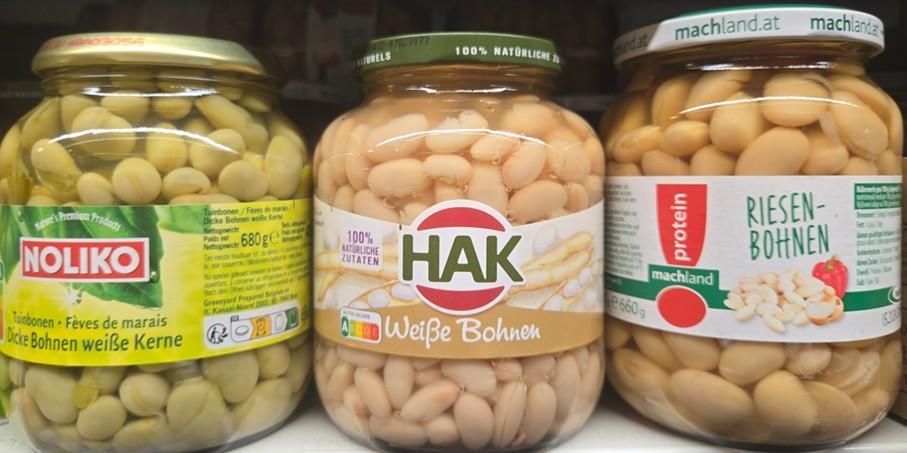
Figure 3: Bottled white beans, marketed as 100% natural ingredients and as a protein source
Source: GloballyCool, August 2025
Dried beans
The mid segment is dry beans in raw, uncooked and packaged form. These are used as ingredients across food service channels and end consumers’ recipes. The country of origin, quality, nutritional value and packaging set the price of the unprocessed dry beans in this segment.
Figure 4: Uncooked dry beans (Pinto beans and white beans) in a German supermarket
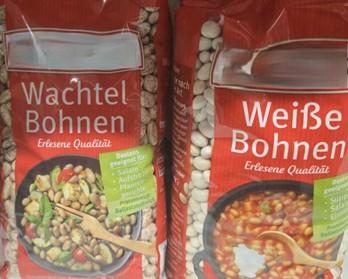
Source: GloballyCool, August 2025
Figure 5: Red kidney beans at a cultural food retailer
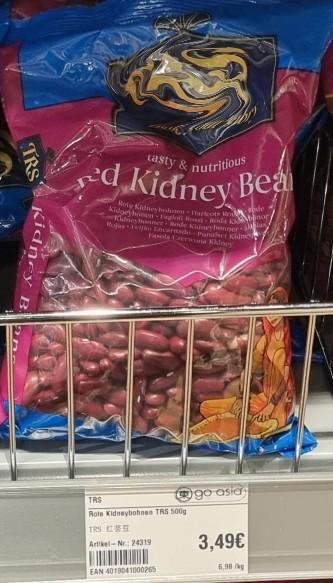
Source: GloballyCool, August 2025
Through which channels do common dry beans end up on the end-market?
Retailers and food service channels are at the end of Europe’s supply chain. They deliver canned, ready-to-eat meals and snacks, and uncooked dry beans to end customers. The flow of dry beans is from importers and food processors to retailers and end consumers.
Figure 6: European market channels for dry beans
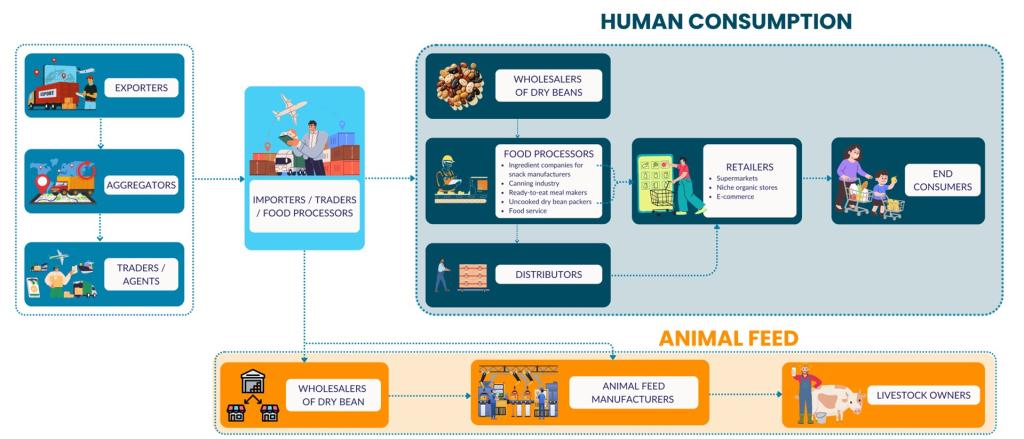
Source: GloballyCool, August 2025
Importers, traders, and wholesalers
The main point of entry into Europe is through importers or traders. Some importers also act as wholesalers to food processors. CIACAM in France and Lupa Foods and Brusco Food Group in the United Kingdom are examples of such importers.
Food processors and distributors
Food processors are ingredient companies for snack manufacturers, canning companies, ready-to-eat meal makers, raw uncooked bean packers and food service institutions. Canning companies are the largest users, followed by packers of uncooked dry beans in retail formats.
Canning companies and dry bean packers either work directly with retailers or with distributors in countries where they have no immediate presence. Bonduelle in France and Romania and Raimundo & Maia Lda in Portugal are examples of canning companies that import dry beans directly.
Most of the dry bean product sales to end customers are handled by retailers. Retailers mostly get their products from importers and distributors. Important retailers include Carrefour in Italy, Spain, France and Romania, Waitrose and Tesco in the United Kingdom, and Continente in Portugal. Organic dry bean products are found in dedicated sections of these outlets and sold through specialist organic retailers. Specialist organic retailers include Blife Srl in Italy, Beanstory and Hodmedod's Wholefoods in the UK, and Priméal in France.
Selection criteria for exporters
Importers choose suppliers based on several factors. One very important factor is price. But importers also demand consistent quality, reliable lead times and compliance with EU safety standards. Wholesalers need steady availability and quality to meet foodservice requirements. Retailers look for certifications (BRC, IFS), consistent packaging and presentation, and zero defect tolerance.
Table 3. Examples of important companies in Europe’s dry beans supply chain
| Country | Companies | Importer/Wholesaler | Processor/brand |
|---|---|---|---|
| Italy | Casibeans | X | |
| CAXA Srl | X | ||
| Blife Srl | X | X | |
| United Kingdom | Brusco Food Group | X | |
| Lupa Foods | X | ||
| AGT Poortman | X | ||
| Spain | Leugumbres Raúl | X | X |
| CO.LE.CE.SA.SA | X | ||
| Legumbres La Cochura SA | X | ||
| Legumbres Montes | X | ||
| Portugal | Raimundo & Maia Lda | X | X |
| Sabor a Mundo | X | ||
| France | CIACAM | X | |
| Bonduelle | X | X | |
| France Aligrain SAS | X | ||
| Romania | Profuraje Bio Impex | X | |
| Cris Fruct Concept | X |
Source: Globally Cool, August 2025
What is the most interesting channel for you?
Exporters should target importers of dry beans. They supply much of the rest of the supply chain. Examples of such importers include Raimundo & Maia Lda in Portugal and Brusco in the United Kingdom. These importers often trade in other commodities as well. This creates opportunities for exporters to sell dried beans and other legumes to the same buyer.
Large food processors like Bonduelle in France also import directly. They can be interesting channels to enter the market as well. To sell to them, exporters need to produce large volumes and work on contracts with fixed prices.
Tip:
- Visit the Food Ingredients Europe trade fair to learn more about the latest trends in the use of pulses as an ingredient and to create new business opportunities.
3. What competition do you face on the European common dry beans market?
Most competition comes from other exporters in developed countries because they have set up trade relationships with European importers. Canada and the USA lead exports to Europe, followed by Egypt, Argentina and Ethiopia. When it comes to products, alternative sources of plant-based proteins like soybeans, cowpeas and chickpeas compete across the dry bean value segments.
Which countries are you competing with?
In 2024, Canada led exports to Europe, followed by the USA. It is interesting that developing countries, particularly Egypt, Argentina and Ethiopia, follow Canada and the USA. These countries benefit from favourable trade agreements, tariffs and net production, which drives import demand in Europe.
Source: UN Comtrade, June 2025
*The EU, Switzerland, Norway and the United Kingdom
Canada and the United States of America
In 2024, Canada and the United States of America made up 38.5% of exports to Europe. Canada exported 111,708 tonnes to Europe, a 23.1% market share. Exports from Canada went down at an average annual rate of 4.6% between 2020 and 2024. In Europe, Canada’s exports to the United Kingdom made up a large share of 47.8%. This was followed by 22.2% to Italy, 5.7% to Greece, 4.9% to Belgium and 4.5% to Spain.
In 2024, the US exported 74,801 tonnes to Europe, a 15.5% share. Exports from the US grew by an average annual rate of 2.6% from 2020 to 2024. In Europe, US exports to Italy made up a significant share of 51.6%. This was followed by 11.4% to the United Kingdom, 7.5% to Spain, 7.5% to Belgium, 6.3% to the Netherlands and 5.2% to France.
In 2023, Canada harvested 740,800 hectares of dry beans and produced 339,315 tonnes of dry beans. Canada’s production grew by an average yearly rate of 1.7% between 2019 and 2023. In the same year, the US harvested 2,610,707 hectares of dry beans and produced 1,071,613 tonnes of dry beans. Production increased at an average annual rate of 3.9% between 2019 and 2023.
Egypt
Egypt is the only developing country supplier that had high export growth between 2020 and 2024. In 2024, Egypt exported 72,768 tonnes to Europe, a 15% share. Exports from Egypt went up at an average annual rate of 33.5% from 2020 to 2024. Exports from Egypt to Europe sharply rose from 32,953 tonnes in 2023 to 72,768 tonnes in 2024. This is mainly due to great import demand from Italy, Spain and France in 2024. In Europe, Egypt’s exports to Romania made up a significant share of 30%. This was followed by 22.2% to Italy, 16.5% to Bulgaria, 14.4% to Spain and 7.1% to Portugal.
In 2023, Egypt harvested 38,291 hectares of dry beans and produced 174,178 tonnes of dry beans. Production grew by an average yearly rate of 4.6% between 2019 and 2023. Egypt mainly exports white kidney beans. Egypt is a member of the Global Pulse Confederation and the International Centre for Agricultural Research in Dry Areas (ICARDA). Exporters from Egypt may ask for support from these organisations to develop climate-resilient beans and position their exports better in the European and North African regions.
Argentina
Between 2020 and 2024, Argentina’s exports to Europe went down by an average of 14% per year. In 2024, Argentina exported 67,188 tonnes to Europe, a 13.9% share. This drop is partly due to economic problems and difficult weather conditions. The 2024 drop was mainly because of severe frost. In Europe, Argentina’s exports to Italy made up a significant share of 33.4%. This was followed by 30.1%% to Spain, 15.8% to Portugal and 8.9% to France.
In 2023, Argentina harvested 572,364 hectares of dry beans and produced 792,564 tonnes of dry beans. Production went up at an average annual rate of 8.2% from 2019 to 2023. Argentina is one of the world’s biggest producers and exporters of dried beans. Black beans and white kidney beans are the main types exported.
Ethiopia
In 2024, Ethiopia exported 27,382 tonnes to Europe, a 5.7% share. Exports from Ethiopia went up at an average annual rate of 1.7% from 2020 to 2024. In Europe, Ethiopia’s exports to Portugal made up a majority share of 37.4%. This was followed by 23.7% to Italy, 10.7% to Belgium, 7.2% to Bulgaria and 7.1% to the Czech Republic.
In 2023, Ethiopia harvested 371,488 hectares of dry beans and produced 616,858 tonnes of dry beans. Production grew by an average yearly rate of 6.2% between 2019 and 2023. Ethiopia mainly exports white pea beans, as well as speckled and red kidney beans. Most production comes from smallholder farmers with very little support from cooperatives or other organisations.
Which companies are you competing with?
Key companies that export dried beans are concentrated in the United States of America and Canada. Some of these companies operate across both countries as well as Argentina, with direct purchase from domestic production and processing. This makes such companies competitive in pricing and lead time.
Companies from Canada
The Andersons is a leading Canadian supplier of food-grade beans. The company has been exporting white pea beans to Europe since the late 1930s. It also exports light and dark red kidney beans, and other types of pulses. It specialises in exporting non-GMO and organic products.
Companies from the United States of America
AGT Foods USA is one of the largest exporters of pulses from the United States. It has more than 45 facilities in the world's best pulse-producing regions and exports to over 120 countries. The main operating subsidiary of the company in Europe, which deals with dry beans, is AGT Poortman in the United Kingdom. It has a sales office in the Netherlands.
AGT exports adzuki beans, navy beans, black-eyed beans, black beans, red beans, broad beans, pinto beans, cranberry beans and kidney beans. The company offers organic varieties of adzuki, cannellini, haricots, navy and Great Northern beans. It also offers canned and packaged varieties of organic red kidney beans.
Kelly Bean Company exports domestically grown dry beans, like pinto beans, Great Northern beans, black beans, kidney beans, red beans, navy beans and cranberry beans. It is a long-term exporter for international and European markets. It has more than 85 years of experience in the dry edible bean industry. It has implemented an internally developed P.A.S.S. System, a GFSI-certified food safety and quality management system. It focuses on quality, like product grade, packaging and prewash to meet the food service channel’s needs.
Companies from Egypt
Global Exports is a leading exporter of dried white beans and cannellini beans. It exports to international markets, such as Africa, Europe, the Middle East, the UK and the USA. Its key strengths are 20 years of experience in international trade, a large sourcing base and flexible options for product choice and pricing. It has strong logistical resources and a background that makes easier and cheaper supply chain processes possible. It qualifies for certifications like ISO, BRC, GLOBALG.A.P., Kosher and Halal. Some of its products could be organically certified.
PEI Trade exports black-eyed beans, dry white beans and fava beans. It works with certified organic farmers. Its products are traceable and grown without pesticides, herbicides or synthetic fertilisers. The company partners with global wholesalers, importers, retail chains and B2B buyers. It offers custom packaging for private label sales for distributors, retailers and online businesses.
Companies from Argentina
BroadGrain Argentina is a leader in processing and distributing pulses and dry beans. Its facility in Argentina is equipped with advanced technology to procure, store, process, grade, and bag dry beans and pulses. It exports alubia beans, dark red kidney beans, black beans and cranberry beans grown in Argentina. The company has a direct presence in Canada, China, the United Arab Emirates, Argentina, Algeria and Nigeria.
ArgenCorps S.A. was founded in 2006. It is a leading exporter of common dry bean varieties, like adzuki, cranberry, black, alubia, dark red kidney, light red kidney and Great Northern. The company operates a HACCP-certified processing plant. Finished dry bean products are bagged in 25 kg, 50 kg and 50 lb polypropylene bags. The company guarantees traceability from planting in the field to the final export destination. It exports to European destinations including Italy, the United Kingdom, Spain, France, Portugal, the Netherlands and Greece.
Companies from Ethiopia
Founded in 2010, Alemu Nega Haile is one of the leading exporters of agri-food commodities and products in Ethiopia. It mainly exports pinto beans, red kidney beans and white pea beans. It exports these beans at 99% purity, 12–13% moisture content, and they are hand-picked and of high quality. These factors match closely with Europe’s food quality requirements for dry beans.
MSA Business Group exports to European countries, like Italy, France and Portugal. Black beans, light speckled kidney beans, red speckled beans and red kidney beans are some of the company’s major export items. The company’s strength is in contract farming and purchasing from suppliers. It works with more than 25,000 farmers through a contract farming arrangement.
Tips:
- Get listed in your country’s national associations for producers and exporters of pulses, legumes and dry beans and in promoting overseas offices in Europe.
- Make sure you have a direct presence in Europe to improve access to potential buyers.
Which products are you competing with?
Most consumers use the same types of beans they know from traditional recipes. But all other pulses are competitors for consumers who mainly want plant-based protein. Chickpeas and lentils are especially popular. Chickpeas, soy and pea proteins are the most popular ingredients in snacks, protein powders and other plant-based products.
Tip:
- Work with other producers to promote the protein content and other benefits of your beans. This helps consumers understand the advantages of your product and increases demand.
4. What are the prices of common dry beans on the European market?
European production is relatively small and expensive compared to exporting countries from Asia, Africa and the Americas. European growers cannot match the low prices offered by imports. Although some buyers are willing to pay more money for EU origin, they are still a minority in the market. This is why import prices largely determine the end consumer prices of dry beans in Europe.
Table 4: Examples of import and consumer prices of common dry beans in key importing countries
(September 2025)
| Key Importers | Import Prices per kg (in EUR) | Consumer Prices per kg (in EUR) | Examples for consumer prices at major retailers |
|---|---|---|---|
| Italy | 0.90 | 4.40 | Carrefour Italy |
| The United Kingdom | 0.90 | 4.60 | Tesco UK |
| Spain | 0.50 | 2.50 | Mercadona S.A. |
Source: Import prices calculated from value added in each stage of the value chain and consumer prices from retailers. Prices will vary throughout the year.
Price breakdown
Figure 8 shows the margins of various players in the value chain, using an average consumer price of €3.80 per kg and an average import price of €0.80 per kg.
*Using selected retail prices from Italy, the United Kingdom and Spain
Source: GloballyCool, August 2025
Tips:
- Use Tridge to compare bean prices in your target markets. This helps you set competitive prices, avoid selling too low or high, and improve your chances of finding new buyers.
- Assess demand and check prices and delivery times directly with your buyers. This helps you adjust to factors like inflation and changing demand, avoid overproduction and plan your supply better. You will then be able to offer stable prices, deliver on time and maintain strong long-term relationships with your buyers.
GloballyCool carried out this study on behalf of CBI.
Please review our market information disclaimer.
Search
Enter search terms to find market research
Do you have questions about this research?
Importers think that competitive price, consistent quality (size, colour, low defect percentage), compliance with EU safety standards, reliable lead times and proper documentation are key requirements. Retailers value certifications (BRC, IFS), product presentation, zero-defect tolerance, consistent packaging formats and sometimes ESG credentials. Wholesalers demand price competitiveness, steady availability and quality that meets foodservice requirements.

Piotr Goral, Co-owner, Sales and Purchasing at Seedea
A B2B partner for the needs of organic producers, distributors and companies in the plant-based food sector.
Webinar recording
30 November 2021