
Entering the European market for babywear
Europe is an interesting market for babywear, importing around €3.5 billion every year. However, setting up a successful business relationship with a European buyer is difficult. You will need to investigate the various European markets, sales channels and potential buyers so you can set realistic goals.
Contents of this page
The European babywear market is made up of the 27 member states of the European Union (EU), the United Kingdom and the 4 member countries of the European Free Trade Association (EFTA): Iceland, Liechtenstein, Norway and Switzerland. This market is changing because Europe’s population is getting older, and fewer babies are being born. In 2024, the EU fertility rate fell to around 1.34 children per woman, far below the replacement level of 2.1.
This means slower volume growth. Companies need to focus on higher-value products, premium quality, sustainability, and second-hand or circular fashion.
The most interesting EU babywear markets include:
- France: Higher birth rate and strong spending;
- Germany: Large market and premium demand;
- Poland: High population of young families;
- Spain: Big market despite low fertility;
- The Netherlands: Strong premium and sustainable segment.
The EU babywear market will become more competitive in the next 5 to 10 years. Companies that focus on premium products, sustainability, resale models and digital sales channels will perform better than brands that only focus on volume growth.
1. What requirements and certifications must babywear meet to be allowed on the European market?
There are several requirements that you need to meet when exporting babywear to Europe. Some are mandatory (both legal and non-legal). Others are voluntary, but meeting them can give you a competitive advantage. Some requirements only apply to certain niches in the babywear market.
What are mandatory requirements?
There are several legal requirements for exporting babywear to Europe, including those concerning product safety, the use of chemicals (REACH), quality, and labelling. Check the EU Access2Markets online helpdesk for an overview.
Follow these steps to ensure that your product complies with the relevant legal requirements:
- Make sure your product complies with the EU’s General Product Safety Regulation (GPSR: 2023/988) ensuring consumer safety. If your buyer supplied the product design, compliance is their responsibility.
- Make sure you follow the EU’s REACH Regulation. This restricts the use of chemicals in apparel and trims, including certain Azo-dyes; flame retardants; waterproofing and stain-repelling chemicals and nickel. Test input materials before production to prevent non-compliance.
- Pay special attention the safety standard that applies to children’s apparel: EN 14682. This contains requirements to ensure that cords and drawstrings are placed safely on apparel for children up to 14 years, including babies.
- Specify the material composition of every apparel item of that you export to the EU, in line with Regulation (EU) 1007/2011. Check the EU Access2Markets online helpdesk on how to do it.
- Do not violate any Intellectual Property (IP) rights and do not copy or share designs with other buyers. If your buyer provides the design, they will be liable if the item is found to violate a property right.
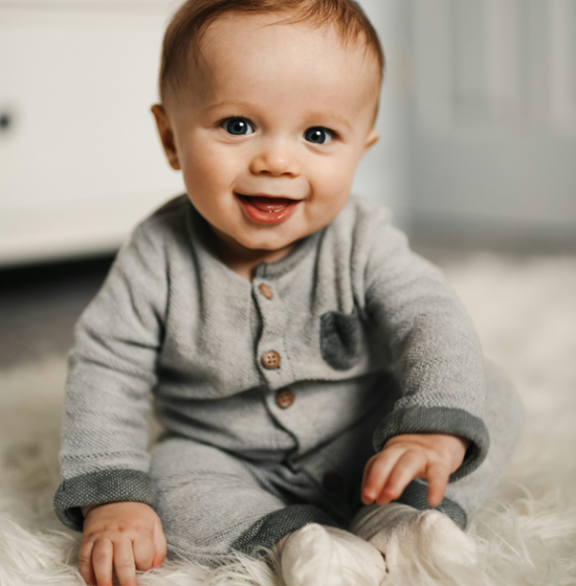
Figure 1: Pay attention to the special EU safety requirements for children’s wear
Source: Photo by Christian Bowen on Unsplash
Tips:
- Read the CBI study on buyer requirements for more information on the requirements you need to meet before you can export babywear to the EU.
- Familiarise yourself with the complete list of chemicals restricted by REACH. For more background information on the characteristics of all types of chemicals, check the freely accessible Chemexper database.
- Check the Q&A section on the website of the European Chemicals Agency for answers to the most common questions about REACH and the use of chemicals in apparel, accessories and trims.
- Check this practical guide published by Intertek to learn about the requirements for the use of buttons, cords and drawstrings laid down in EN 14682.
- Check Inditex’s Restricted Substances List to get an idea of the specific requirements buyers can have.
Non-legal mandatory requirements
Buyers may confront you with additional, company-specific terms and conditions. Such requirements are usually written down in a buyer manual. By signing a contract, you confirm that you will meet all the requirements listed in the manual. If a buyer does not have a manual, make sure all terms and conditions are clear and agreed beforehand. The following topics may be included in a buyer manual.
Payment terms
For first-time orders, European buyers may give you a down payment via bank transfer (for instance 30%). They will pay the rest (70%) after the order has been completed, again via bank transfer. Buyers may also give you a bank guarantee. This statement guarantees that the sum will be paid at a certain date.
Another payment method is the L/C (Letter of Credit). With an L/C the buyer’s bank must pay the supplier when both parties meet the conditions they have agreed upon. This is the safest payment method for a manufacturer. An L/C can also be used to get finance to purchase materials. However, many buyers no longer favour L/C payments, because they block their cash flow. Also, the administrative cost in case of changes in delivery terms is high. Be aware that L/Cs do not offer financial protection against bankruptcies.
For any further orders, most European buyers will ask for a TT (Telegraphic Transfer/Open Account) after 30, 60, 90 or sometimes even 120 days. This means you as a manufacturer finish the production and hand over the shipment to the buyer, including the original documents, before payment is due. The payment will be made after the number of days that you have agreed on with the buyer. Be aware that this agreement puts the full financial risk on the manufacturer.
Delivery terms
Free on Board (FOB) is the standard Incoterm used by buyers and sellers to agree on delivery of goods. With FOB, the buyer becomes responsible for the goods once you have delivered them to the vessel. Due to rising shipping costs and closure of shipping lanes, some buyers may ask you to agree on Delivered Duty Paid (DDP). This means you, as a seller, are responsible for the goods during the entire journey, except for unloading by the buyer. This is the riskiest Incoterm for you as a manufacturer, so beware!
Nominated suppliers
Some buyers may require you to source materials (fabrics, trims, labels, packing materials) from a specific supplier. This means that you are responsible for the ordering, delivery and payment of the materials (but not the quality, as this is confirmed beforehand by the buyer). This may negatively impact your flexibility, cost, speed and liquidity. Always discuss locally-available solutions with your buyer as an alternative.
Acceptance quality limit
To guarantee product quality, buyers may set an acceptance quality limit (AQL). This refers to the worst quality level that is still acceptable. For instance, AQL 2.5 means that your buyer will reject a batch if more than 2.5% of the items are defective. Defects are classified as critical, major and minor defects. Buyers will specify their expectations in the inspection protocols. Check industry network Eurofins’s website for instructions.
Garment care preferences
When selecting base materials for babywear, go for easy-to-care-for fabrics that can be machine washed at high temperatures (40°C minimum) without the risk of shrinkage or fading. This is one of the reasons for the widespread use of cotton in babywear.
Packaging requirements
Typically, your buyer will give you instructions on how to package the order. If you agree on delivering FOB, your buyer will clear customs in the country of import. It is their responsibility to ensure the instructions on the packaging meet EU import procedures. Always try to reduce the environmental impact (and financial cost) of packaging materials. Try using less packaging by putting more items in a polybag, or use materials made from recycled cardboard (including hangers) or biodegradable plastics (polybags).
Restricted substances
Ask your buyer if they use a Restricted Substances List (RSL). These lists are often inspired by the guideline on safe chemicals use from the Zero Discharge of Hazardous Chemicals (ZDHC) foundation. Download the ZDHC Conformance Guidance here.
Transparency
Supply chain transparency is important for the European apparel industry, motivated by ever stricter laws at EU and national levels. For instance, the EU’s Corporate Sustainability Due Diligence Directive (CSDDD) and the Corporate Sustainability Reporting Directive (CSRD) require larger apparel companies to report on how they manage social and environmental risks. Disclose information about your own operations to buyers, but also help them gain insight into their (and thus your) entire supply chain.
Equality
European buyers may require that you pay special attention to diversity and inclusion in your workforce. All individuals in your company should have equal opportunities, regardless of gender, race, religion or other characteristics.
To improve worker happiness, do more than offer bonuses or higher salaries alone. Cover basic needs, such as safety, fair treatment, social security, healthcare, daycare support, transportation and a living wage. Workers also need respect, open communication and opportunities for growth (training).
It is also important to understand younger generations. Young workers mostly want flexibility, freedom, learning opportunities and personal growth. This CBI webinar on improving worker happiness offers tips on how to offer this.
Animal welfare
If you use wool, animal welfare is an important concern. Buyers may require that you only use RWS-certified wool. If you use merino, many European buyers will require that you only use non-mulesing wool. Real down is used, but most buyers will only allow it if it is Responsible Down Standard (RDS) certified.
Regenerative agriculture
The use of organic cotton is popular among fashion brands throughout Europe. Efforts to make cotton production more sustainable have expanded to include ‘regenerative agriculture’. This is a concept focused on phasing out harmful fertilisers and pesticides and ‘regenerating’ nature, including biodiversity, soil health and water. Control Union has introduced the first certification for regenerative agriculture: regenagri.
Carbon footprint
Many European brands and retailers have committed to climate neutrality and CO2-reduction. Calculating the CO2-footprint of an apparel item is a complicated process. It starts with carefully measuring your emissions before reducing them. Several organisations have set benchmarks for certain materials and/or products. Check the CBI study Tips to go green for more information.
Recycling
The EU is introducing new legal measures to increase circularity, including new directives on durability and ecodesign of textile products and a ‘right to repair’. The EU is also working on an EU-wide EPR for apparel (extended producer responsibility), making companies responsible for the way their products are disposed of, recycled or repaired. Recycling and repurposing materials helps your buyers reduce waste and save resources.
Certification
Many European buyers require suppliers to get certified for sustainable and/or fair production or the use of sustainable materials. The following standards and certifications are most popular in Europe:
- In Europe, Amfori BSCI is almost a standard requirement for social and environmental compliance. The same applies to OEKO-TEX® STANDARD 100, but for product safety.
- Other popular standards include WRAP, SA8000, Sedex, B-corp, OEKO-TEX® STeP, GOTS, BCI and Recycled Claim Standard.
Tips:
- Check the CBI study ‘What requirements must apparel meet to be allowed on the European market” for a comprehensive overview of buyer requirements.
- Read the buyers manual carefully and don’t be afraid to negotiate terms and conditions (such as shorter payment periods or partial payments throughout production) before signing any agreement. Never agree to meet requirements you cannot realistically meet and never accept payment terms that are too risky.
- Do not take financial risks with new buyers. Check their credibility, insure your orders via an insurance company or insist on a Letter of Credit. If you agree to an extended payment, don’t forget to calculate and add interest.
- Consider factoring to finance materials. This means that you sell your order to a bank or factoring company that pre-pays you a certain percentage of the value of the order in exchange for a commission. The bank will perform due diligence on the buyer, which tells you if they are a trustworthy business partner.
- If inflation in your country is high, maximise local sourcing to cut costs. If your buyer has foreign nominated suppliers, try to advise about local alternatives. Also make sure that your buyers pay in USD or Euro. Getting paid in local currency will increase the risk of lower profits in case of inflation.
What additional requirements and certifications do buyers often have?
European buyers are looking for manufacturers that offer low minimal order quantities (MOQs) and flexibility and can deliver multiple product variations, including detailed designs and special decorations. Still, prices for babywear are far below those of adult styles. This means that you need to have a highly efficient manufacturing setup to meet the buyers’ expectations and still make a profit.
Product design and development
European buyers are always looking for special designs, materials or production methods that will help them stand out in the market. Features that are highly appreciated by European buyers of babywear can be categorised by focus on safety, comfort, convenience, durability and sustainability. Some features apply to more than one category.
| Safety | Comfort | Convenience | Durability | Sustainability |
|---|---|---|---|---|
|
|
|
|
|
Garment care preferences
When selecting base materials for babywear, go for easy-to-care-for fabrics that can be machine washed at high temperatures (40°C minimum) without the risk of shrinkage or fading. This is one of the reasons for the widespread use of cotton in babywear, especially organic or combed cotton. Merino wool is a comfortable, breathable fabric. However, it is only machine washable if it is superwash-treated, which prevents shrinking and pilling. In such cases, be careful to source OEKO-TEX® STANDARD 100 certified fabrics.
Printing
Prints are highly popular in babywear. There are basically 3 different techniques: lithography (plates and rollers on fabric), digital printing (inkjet or laser, ideal for detailed designs and small runs) and screen printing (using mesh or film). Buyers more and more often require non-toxic, water-based inks and strict compliance with restricted substance lists (RSLs) to ensure safety and sustainability. Avoid harmful chemicals, such as heavy metals, formaldehyde and phthalates. Expect buyers to ask for certification as proof.
From a sustainability perspective, digital printing uses less water, energy and chemicals than traditional methods. Durable prints that maintain colour and integrity after frequent high-temperature washing are also highly valued. Soft-touch prints that do not create stiff surfaces are preferred for comfort and breathability. Printing can be outsourced. However, having in-house printing and embroidery machines increases flexibility and allows better control over quality, safety and sustainable production.
Communication
Smooth communication is an implicit requirement all buyers have. Always reply to every email within 24 hours. Even if it is just to confirm that you have received the email and will send a more complete reply later. If you have a problem with a production order, immediately notify the customer and try to offer a solution. Another good tip is to create a critical path of every order and share it with your buyer. This file will help you to manage expectations, monitor progress and is the best guarantee of on-time delivery.
Flexibility
If you want to start a business relationship with a European buyer, be prepared to accept complicated orders first. Buyers will want to test your factory before giving you large, easy orders. Make sure at the start that a buyer will not continue to place only difficult orders with you and convenient orders elsewhere.
Expect a European buyer to require in their first order:
- High material quality and impeccable workmanship;
- Order quantities below your normal minimum order quantity (MOQ);
- A price level that is lower than you would normally accept for small-quantity orders.
To increase flexibility, factories may install a sample room (to produce small orders), a modular production set-up (an ‘island’ instead of a production line), or a U-shaped set-up, where employees can control several machines at the same time.
What are the requirements for niche markets?
The following niche categories offer opportunities for babywear manufacturers. The required qualities, styles and quantities may differ from mainstream production.
Sustainable fabrics
Ever more European babywear brands and retailers are using sustainable materials in their collections, driven by consumer preferences and legal measures. For instance, check out Swedish brand Polarn O. Pyret and C&A. This includes sustainable fibres such as certified organic cotton and recycled materials, and they are more and more often free of per- and polyfluoroalkyl substances (PFAS). Traceability is crucial. Buyers expect you to document supply chains and follow RSLs.
Durable designs
Sustainability is linked to the use of sustainable and traceable fabrics, trims and prints, but also to the longevity of a babywear item. Babies wear garments for a short time period. Many parents pass on babywear items to family and friends, or they are resold through second-hand shops and online.
You can design for durability and reuse by using high-quality fabrics, such as combed or organic cotton, applying reinforced parts, and choosing wash-resistant knits, prints and dyes. Neutral colours and timeless designs also improve second-hand appeal. ‘Grow-with-me’ garments that are adjustable or extendable are more and more popular in Europe. For instance, look at ILO and Kiabi.
Second hand
Brands and retailers are trying to benefit from the growing second-hand market. Many incentivise end consumers to return used garments by offering them discounts on future purchases. The second-hand products are then cleaned, repaired and re-sold. Check SELLPY, for instance, initiated by H&M. European buyers will appreciate your efforts to develop styles that can easily be cleaned, repaired (using stock fabrics and trims) or disassembled.
Premium babywear
Growth in the European babywear market is mostly found in either the premium segment or the value segment. European brands and retailers that sell premium babywear focus on high-quality, certified materials, such as long-staple cotton, organic cotton jersey, merino wool and, occasionally, silk blends. Superior comfort is also important; this can mean ultra-soft hand-feel, perfect stitching and excellent shape retention after washing. Design is typically minimalist and timeless, with subtle prints or refined detailing rather than loud graphics.
Value babywear
Order quantities in the value segment are large and FOB prices are low. However, European buyers still expect good quality, compliant apparel. Minimum requirements include adherence to REACH regulations, RSLs and basic product safety standards. Fabrics are typically cotton or cotton-polyester blends designed for durability and easy washing. Note that organic cotton is sometimes also required in the value segment. Check, for instance, Dutch value retailer Zeeman and Swedish fast-fashion giant H&M. Value babywear is characterised by simple, functional designs and strong compliance.
Licensed graphics
Many babywear collections in the lower-end market segments feature licensed graphics and characters from popular cartoons, books or brands, such as Pokémon or NASA. Such designs may only be used with permission from the copyright holder.
Gift and occasion babywear
There is a strong and growing market in Europe for baby gifts, meaning new, high-quality and unique clothing. This includes newborn sets and luxury packaging. Preferred fabrics are soft cotton, organic blends or fine knits. Designs required are often more decorative than everyday wear. Think of embroidery, subtle prints and themed collections (animals, nature, seasonal motifs).
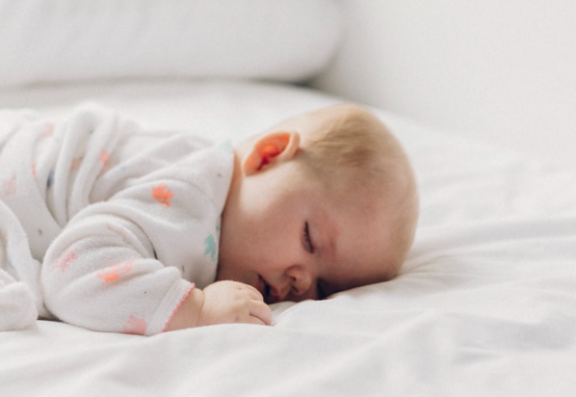
Figure 2: Understated designs made with sustainable materials are a growing niche
Source: Photo by Dakota Corbin on Unsplash
2. Through what channels can you get babywear on the European market?
Before you start to approach European babywear buyers, you need to determine what market segment fits your company best and through what channel(s) you want to sell your product.
How is the end-market segmented?
European babywear buyers can best be classified by price/quality level.
Table 1: Babywear market segmentation
| Consumer type | Price level | Fashionability | Material use | Order quantities |
|---|---|---|---|---|
Luxury consumer
| Very high retail prices | Highly fashionable, ‘adult’, subtle and unique designs | Luxury materials | Low order quantities |
Mainstream fashionable consumer | Medium retail prices | Practical, fashion-conscious designs | Medium-quality, sometimes organic materials | High order quantities |
Price-conscious consumer | Low or extremely low retail prices | Basic and functional styles, use of licensed graphics | Medium to low-quality materials | High order quantities |
Source: FT Journalistiek, 2026
Luxury consumers
High fashion consumers shop at luxury brands and retailers such as Galeries Lafayette and high-fashion brands such as Versace and Emilio Pucci. These consumers expect their babywear to represent a strong brand image and the latest fashion trends. Babywear brands in the luxury market require top-quality materials and manufacturing, the latest technical innovations and highly comfortable designs. This market is growing.
Fashion-conscious consumers
In the middle market, lifestyle brands such as Lacoste or Scotch & Soda sell collections created around a brand image with fashionable and comfortable designs. These brands offer a good-quality product for a mid to high-level price. Products must have the technical look of a high-end product, but retail prices are substantially lower. This segment is under pressure.
Price-conscious consumers
The budget market includes companies such as Primark and H&M, which cater to the price-conscious babywear consumers. Design and technical innovation are less important, but the item needs to give the impression that it is fit for its purpose and in line with the latest fashion trends. Prices are low and competition is heavy in this market segment, with regard to both retail and manufacturing. This market is growing.
Tips:
- Research your target market and buyer. Your added value lies in flexibility.
- Focus on working with stock fabric manufacturers that will enable you to deliver any MOQ requested.
- Build a database of international fabric suppliers that manufacture sustainable materials.
Through which channels does a product end up on the end-market?
Their place up the value chain determines how buyers will do business with you. Each buyer requires a specific approach. Always try to find out in what part of the value chain your buyer is operating, what challenges they face in the market and how you can contribute to their sales strategy.
Table 2: Sales channels in the European apparel market
| Sales channel | Who’s your buyer? | Requirements | Examples |
|---|---|---|---|
| 1 | European end-consumer | You can target European end-consumers directly with your own online shop (with promotion via social media), or indirectly via existing platforms. You will need to invest in an online shop, stock, order management and customer service. Your biggest challenges will be return policies and a lack of brand awareness.
Note that online B2C-platforms may require a percentage of each sale and/or a monthly fee.
You need a legal representative in Europe to ensure compliance with the EU’s General Product Safety Regulation (GPSR: 2023/988). |
|
| 2 | Online multi-brand platform | Online multi-brand platforms sell existing brands and often develop their own private collections, mostly value brands. They can detect market interest very quickly and will immediately react to sales data.
Usually, such companies will place a small test order first. If the item is selling well, they will place the actual production order. Fast delivery is a must. |
|
| 3 | Retailer | Apparel is sold by big retail chains in shops and online and by smaller boutique shops that can be found in almost every European city. Retailers sell existing brands and may order collections specially developed and manufactured for them. | |
| 4 | Brand | Apparel brands develop a collection 6 to 9 months in advance. You will need a sample room, as brands require salesman samples (SMS) of each collection style. Every salesman sample needs to be actual: it must look exactly like the product will in the shop. It may take many months before orders are placed. | |
| 5 | Intermediary | Agents, traders, importers and private label companies sell your product on to buyers up the value chain. They are extremely price focused and require flexibility in quantities and qualities.
Some are located near or in the production countries and primarily do sourcing and logistics, others work from Europe and also do market research, design and stock keeping. The commission rate is determined by the service level. |
Source: FT Journalistiek, 2026
Tips:
- Find potential buyers on the exhibitor lists of trade fairs for babywear such as INDX Kidswear (UK), Kind und Jugend (Germany) or Pitti Imagine Bimbo (Italy). For an overview of trade fairs, check TradeFairDates.
- If you plan to meet a buyer or potential buyer at a trade fair, check what collections they have and prepare matching or even improved samples. Also, work out the costing before you introduce your company and your samples to a potential buyer.
- Be on top of new technical developments in the market. Be an advisor as well as a producer to create advantages over the competition.
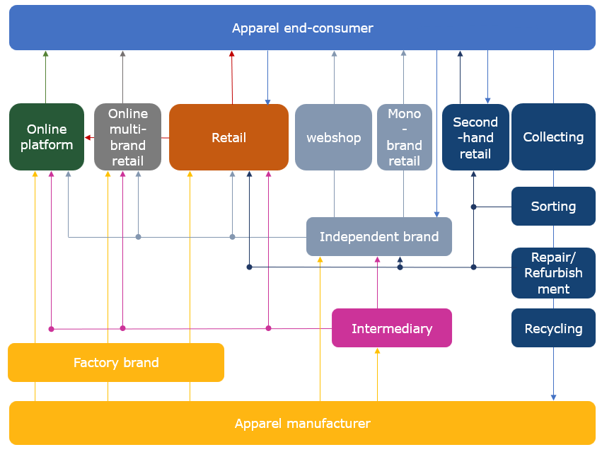
The figure below shows the many ways you can get your product on the European market, either via an intermediary, your own brand or other brands, retailers or online (multi-brand) platforms. Notice how, ideally, consumers can return their apparel items to the seller after use, to be reused, repaired, refurbished or recycled.
Figure 3: Apparel market value chain
Source: FT Journalistiek, 2026
What is the most interesting channel for you?
As you move higher up the value chain, your margin will increase, but so will the service level that your buyer will require from you. When you have little experience with exporting to Europe, intermediaries and brands are likely the best starting point for you. Such companies have the largest market share, they service every price/quality segment of the market and they are used to working with suppliers in different production countries worldwide.
Tips:
- Investigate every new (potential) buyer and check carefully if you meet their requirements. Don’t make promises you cannot keep. Read the CBI study 11 Tips for doing business with European apparel buyers.
- Focus on participating in niche trade fairs and target smaller companies with growth potential.
- If you are not sure which intermediary is right for you, consider using an ‘agent for agents’, such as Anton Dell.
- Otherwise, try to find intermediaries specialised in babywear by using an online search engine. Use keywords such as “full service”, “garment”, “agent”, “distributor” or “babywear” plus “solution”. Trader’s websites usually show the brands they are working with.
- Be on top of new technical developments in the market. Be an advisor as well as a producer to create advantages over the competition.
3. What competition do you face on the European babywear market?
Babywear is manufactured worldwide, so you will likely face stiff competition in this market. The most important ways to create a competitive advantage over manufacturers in other countries are: technical knowledge, service level, flexibility, efficiency and beneficial trade agreements.
Which countries are you competing with?
Table 3: Competing countries
| Country | Strengths | Weaknesses | Image in Europe | Future developments |
|---|---|---|---|---|
| Bangladesh | Scale, experience, low production and labour costs and the GSP. | Lower technical skill than China, relatively high MOQs and lags behind in compliance. | Fit for volume business. Inconsistent labour standards. | Remains strong in volume basics, but also invests in highly technical, sustainable production to address challenges in rising wages, energy costs and compliance. |
China | Scale, technical innovation, high efficiency, excellent customer service and local availability of materials. | Inconsistent quality standards, rising labour and production costs and no General Scheme of Preferences (GSP). | Flexible, service-minded and innovative. | Shifting toward high-value, technology-driven and sustainable manufacturing. China’s advanced supply chains, automation and innovation keep it central in sourcing strategies. |
| India | Price, quality, flexibility, availability of (organic) cotton | Lower service level than China. | Reasonable price/quality ratio | Improving compliance and automation, diversification beyond cotton. |
| Türkiye | High-quality, small quantities, fast delivery. European business culture and payment in euros. | Relatively high labour and production costs. | High flexibility but becoming expensive due to inflation and increasing costs. | The apparel industry is expected to grow when the local economy stabilises. Benefits from nearshoring and investments in automation. |
Source: FT Journalistiek, 2026
Tips:
- Study the countries you are competing with, compare their strengths and weaknesses to yours and advertise the competitive advantages of doing business with you. Besides the GSP, consider factors such as distance to Europe, ease of doing business and transparency.
- Check the freely accessible CSR Risk Check database to discover the social and environmental risks associated with apparel production in different countries, including your own. Use this information to mitigate risks and to advertise the advantages of sourcing from your country.
- Check if and how other countries benefit from the Generalised Scheme of Preferences on the EU’s website on international trade.
- Most online search engines will let you create a news alert on a topic, so you can automatically follow the latest developments in the apparel industry in a specific country.
Which companies are you competing with?
Crossing in Morocco is an apparel manufacturer that presents its company history, values, people and sustainability goals first on its website. Crossing has its own dyeing facility and offers design, printing and embroidery in house. The company is GRS, GOTS and BSCI certified and produces a broad range of garments, including baby- and kids wear for buyers in Europe.
AR Apparel in India has grown from a small factory into a vertically integrated operation with in-house knitting, printing and embroidery. It serves buyers around the world, including the EU. The company specialises in babywear, kids wear and organic cotton jersey and is Sedex and GOTS certified.
BLJ Apparels in Bangladesh is a private label manufacturer of babywear for buyers in the EU, USA and Japan. BLJ Apparels presents its people, values and mission on its website in a very professional way. The product portfolio is available with a click.
Tip:
- Check the free online database Open Supply Hub. This website lets you look up the suppliers of hundreds of European brands, including babywear brands.
Which products are you competing with?
Despite Europe’s declining birth rate, the babywear market is growing by an average of 0.8% per year. This is largely thanks to a growing European population (mostly immigration) and the increasing purchasing power of Europeans. For babywear, there is little competition from other product categories.
Adult fashion
Babywear designs may copy those of adult collections. One particular trend in which this is very obvious is called ‘mini-me’: parents and their children wearing identical or similar styles. If you are a manufacturer of babywear, you could experiment with developing adult styles that copy children’s styles and market both styles as a package. This may also open doors to other (adult) buying departments at the same company.
Tips:
- Consider expanding into childrenswear or try matching ‘mini-me’ collections. This makes you a more interesting partner for buyers that offer different categories.
- If you cannot compete on volume, low prices and efficiency, try to stand out in the market by using certified organic cotton, extra durability, adjustable sizing, premium comfort, low MOQs and fast delivery.
4. What are the prices of babywear on the European market?
The factory price of your product is influenced by many factors, such as the cost of materials, the efficiency of your employees and your overhead and profit margin. For a step-by-step guide on how to calculate the FOB-price of an apparel item, check this CBI study on cost price calculation.
The challenge of producing babywear at healthy margins
The challenge with babywear is that, although the average fabric consumption is less than for adult wear, the designs are often more complicated, compliance requirements are at least as high, order quantities are lower and so is the average FOB-price level. This makes it a challenge to make a profit.
Babywear needs to follow all standard EU regulations (REACH, GPSR, see above) and the special safety standard for children’s wear (EN 14682). There are also common additional buyer requirements, including OEKO-TEX® Standard 100 and GOTS. At the same time, quality expectations are very high. Fabrics must be soft, hypoallergenic and durable. Seams, trims and prints cannot cause irritation or safety risks. This makes manufacturing babywear labour-intensive.
To stay competitive, manufacturers typically need to improve efficiency and/or move towards premium markets. Try to standardise components across styles and reduce design complexity, and invest in a lean production set-up. This CBI study on operational efficiency will teach you how to apply such strategies in your factory. Otherwise, try to focus on niches, which typically offer higher Free On Board (FOB) prices.
The average cost breakdown of your FOB price (Free On Board) should look something like this:
Source: FT Journalistiek
Retail pricing
The retail price of an apparel item is on average 4-8 times the FOB price (this is called the ‘retail markup’). It follows that the FOB-price is on average 12.5-25% of the retail price of the product. Exceptions do occur. In the budget market, large European retail chains might only double the FOB price mark-up. Retailers mark up the FOB-price by 4-8 times because they need to account for (among other things) import duties, transport, rent, marketing, overhead, stock keeping, markdowns, and VAT (15-27% in EU-countries).
These percentages may vary per factory, per order and in time. Some factories accept lower profit margins during the off-season, or when order volumes are high. Percentages for labour versus fabrics may also differ, depending on the efficiency and wage level of the workforce and the price of the materials. Higher costs due to inflation, increasing taxes, sustainability requirements, lower quantities or near-shoring can lead buyers to adopt bigger margins as well.
Source: Eurostat, 2026
European average apparel retail prices compared
According to Eurostat’s 2025 comparison of retail prices for apparel in Europe, Denmark has the highest price point compared to the European average (133.4), and Bulgaria has the lowest (77.7). Note, however, that retail prices are only indirectly linked to FOB prices, as shown above.
Tips:
- Read the CBI study How to calculate the cost price of an apparel item to find the most suitable calculation method for your business.
- Check the CBI study 7 Tips on how to increase efficiency in an apparel factory to maximise your efficiency and increase profits.
FT Journalistiek carried out this study in partnership with Frans Tilstra and Giovanni Beatrice on behalf of CBI.
Please review our market information disclaimer.
Search
Enter search terms to find market research
Do you have questions about this research?
If your only unique selling points are product and price, you will have a lot of competition. A better strategy may be to find a niche. This usually means less buyers and smaller orders, but better prices. Anything can be a niche: a new product group, a special fabric, a new production method, new functionalities. Try to be creative.

Edwin van den Broek, fashion sourcing expert