
The European market potential for pistachios
The European market for pistachios is expected to grow stably in the long term. Changes in the consumption patterns of European consumers, including the rising demand for healthier snacking options are possible reasons for this growth. Novelty uses, such as Dubai chocolate, and interest in Eastern Mediterranean cuisine might also raise demand. Germany, Italy, Spain, France, Belgium and the Netherlands offer opportunities for low- and middle-income country suppliers.
Contents of this page
1. Product description: pistachios
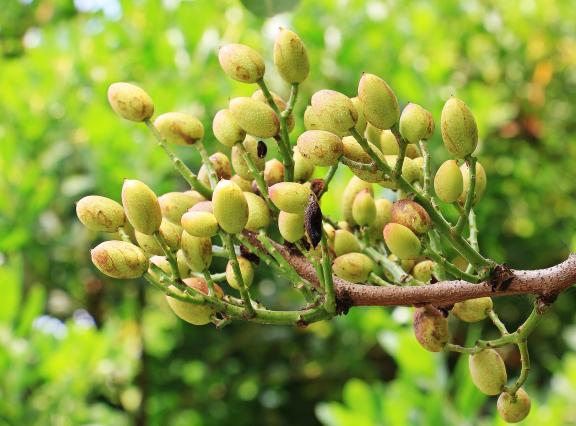
The pistachio tree (Pistacia vera L.) is a drought-resistant tree that grows in arid and semi-arid climates. It needs hot summers and cool winters. The tree can grow up to 10 metres tall and has a deep root system that allows it to survive drought conditions. Pistachio trees are dioecious, meaning there are separate male and female trees. Growers plant male trees among female trees for wind pollination. The pistachio tree is native to Western Asia and Asia Minor.
Production is concentrated in the United States, Iran and Türkiye. The European Union (EU) and Syria are smaller producers. Trees give a small crop after 5–6 years. They often reach full production after 10–12 years. Although it is known as a nut, botanically the fruit is a drupe. The edible part is an elongated seed. The hard shell protects the edible kernel. Shell colour and staining affect quality. Commercial varieties are selected for shells that split naturally at maturity. Varieties may differ in terms of how often their nuts split open.
The harvesting period varies by region. In Italy, for example, it generally takes place between late August and early October. Pistachios are often harvested with mechanical tree shakers. The nuts are then collected and processed. Late removal of the hull often leads to stained shells. Processors remove hulls, dry, sort, shell and pack pistachios.
Figure 1: Pistachio tree with pistachios
Source: Image by NoName_13 from Pixabay, Pixabay content license
Within this species, there are numerous commercial cultivars, including:
- Kerman: Predominantly grown in the United States. Recognised globally for its large size and high quality.
- Kale Ghouchi: Known for its large kernel and high yield, commonly grown in Iran.
- Antep: A variety primarily cultivated in Türkiye, recognised for its distinct flavour and texture. Antep accounts for 85% of pistachios grown in Türkiye.
- Fandoghi: The most widely grown variety in Iran. It is valued for its small, round kernels and rich, buttery flavour.
Pistachios from Bronte, Sicily, are known as ‘Bronte Pistachios’ or ‘Pistacchio Verde di Bronte PDO’. They have a Protected Designation of Origin (PDO) status. Their special colour, taste and fragrance are important to making unique ice creams, sauces, creams and sweets. Sicilian producers traditionally use them in confectionery and local cuisine. This shows how origin protection can support strong local varieties from low- and middle-income countries. Higher quality, well-known products can often command higher prices.
World pistachio production (in-shell basis) reached 1.09 million tonnes in 2025–2026 according to the United States Department of Agriculture (USDA). The 2025–2026 crop was 8% lower than the previous year.
Pistachios are widely recognised and traded under several common names, most notably ‘pistachio nuts’ or simply ‘pistachios’. In international trade, they fall under two Harmonized System (HS) codes. The 080251 code refers to in-shell pistachios (fresh or dried). The code 080252 is used for shelled pistachios (fresh or dried).
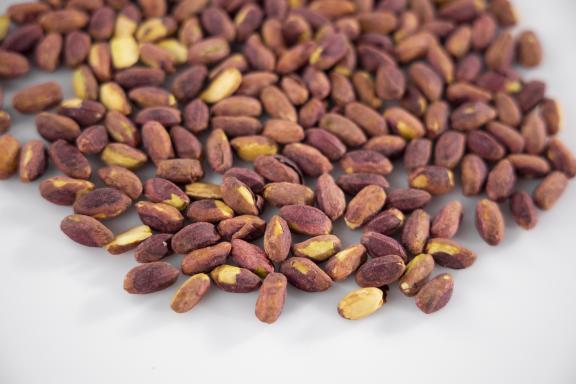
Figure 2: Shelled pistachio nuts
Source: Image by Engin Akyurt from Pixabay, Pixabay content license
Shelled pistachios are pistachio nuts that have had their hard outer shell removed. This makes them more convenient for consumption and use. They are usually available as:
- Raw: Natural and unroasted, often used in cooking and baking. They are a popular ingredient in salads, granolas and desserts.
- Roasted: These have been roasted to enhance their flavour. They are often consumed as snacks or used in recipes that benefit from their roasted taste.
- Flavoured: Shelled pistachios are sometimes seasoned with a variety of flavours, such as salt, chilli and garlic.
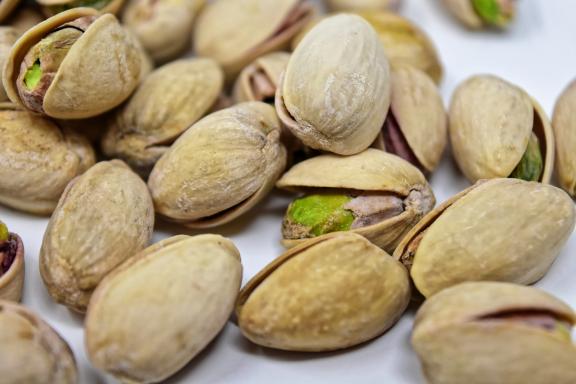
Figure 3: In-shell pistachio nuts
Source: Image by Alexa from Pixabay, Pixabay content license
In-shell pistachios are sold in their shells usually for:
- Snacking: They are enjoyed as a healthy and satisfying snack. The act of cracking the shells is part of the appeal for many consumers.
- Gifting: Pistachios are often sold in decorative packaging, usually during holidays and special occasions.
Pistachio nuts are also used to produce pistachio oil. Pistacia vera seed oil is extracted from the nuts. It is used in cosmetic products for its antioxidant and anti-inflammatory properties and as an edible oil.
The time of harvesting pistachio nuts is critical. A good indicator to determine the best time to harvest is when the hull slips from the shell. Harvesting too early or too late can reduce nut quality.
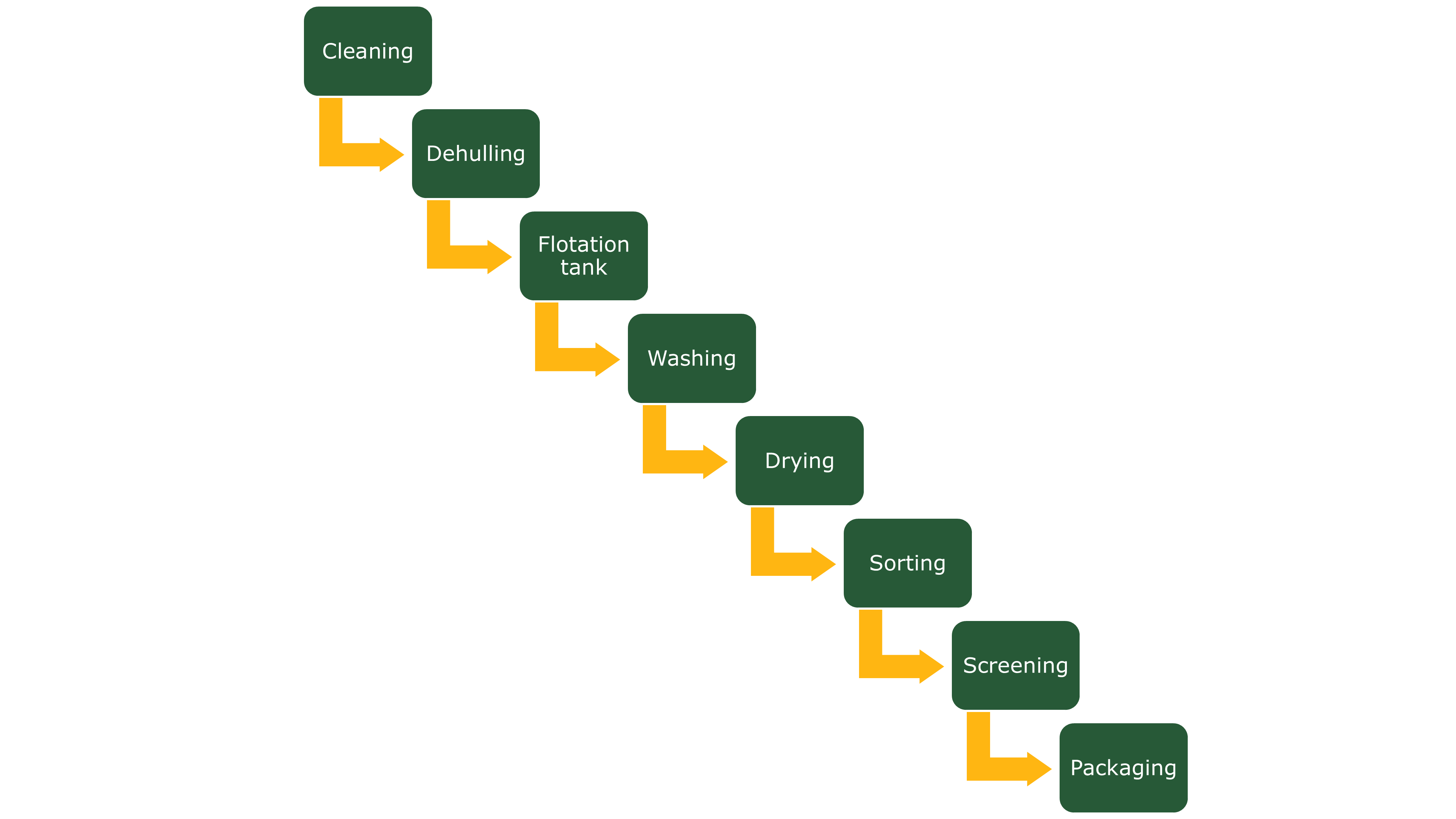
The processing of pistachios typically includes these activities, which can be organised in several ways:
- Harvesting: mechanical or by hand;
- Dehulling: removing the hulls from the nuts;
- Water sorting: blank and immature nuts are lighter and can float during separation;
- Drying: sun drying or machine drying;
- Separation: separating open-shell nuts from closed-shell nuts;
- Sorting: into quality grades;
- Packaging.
Processing differs by origin, equipment and cultivar. After removing the in-shell nuts from the tree, processing typically includes the steps shown in Figure 4. Read more about pistachio nut processing in descriptions provided by pistachio processors and growers like TGT Group, Top Nut and Agro Vivero del Mediterráneo.
Figure 4: Stages of processing raw pistachio drupes into kernels
Source: Autentika Global,2026
2. What makes Europe an interesting market for pistachios?
Pistachios sell well in Europe as snacks and food ingredients. They are used for snacking, usually in roasted and salted form. Shelled kernels are also used to produce pastes and creams for industry use. Pistachios are also an ingredient in numerous baked goods and confections, including Italian cannoli, French macarons and Turkish baklava. Pistachios are also used in Middle Eastern and Mediterranean cuisines.
Dessert makers use pistachio kernels, pastes, creams and flavours. Italy is particularly renowned for its pistachio gelato (ice cream) and torrone (nougat). The ‘Dubai-style chocolate’ trend raised interest in pistachio fillings in 2024 and 2025. The trend spread through European retail and bakery channels. Dubai chocolate is a crunchy mixture of chocolate, pistachio cream and a crispy dough called ‘knafeh’. FIX Dessert Chocolatier in the United Arab Emirates first introduced the treat in 2021.
Europe is one of the world’s largest pistachio markets. It is also the largest importing region. European imports of pistachios increased by an average of 9.8% in volume between 2021 and 2025. The annual growth rate is expressed as the cumulative annual growth rate, or CAGR. Due to Europe’s limited production and high demand, the EU pistachio trade balance remains negative. Thisresults in significant imports from the United States, Türkiye and Iran.
In 2025, 10% of all imports from outside Europe came from low- and middle-income countries. The European pistachio market is likely to keep growing over the next 5 years. Annual growth may reach 4–5%, but crop size and prices will cause yearly changes.
A range of factors lead to this increase, including healthy snacking trends, the launch of new pistachio products and the popularity of vegan diets. Food manufacturers also introduce new pistachio-flavoured products to attract consumers. Pistachios have high protein, mineral and mono-unsaturated fat content. The same research showed their benefits for heart health, weight management, blood sugar, exercise recovery and skin health.
In this study, the term ‘Europe’ refers to the 27 member states of the European Union (EU), plus the United Kingdom (UK) and EFTA countries (Iceland, Liechtenstein, Norway and Switzerland). The term ‘low- and middle-income countries’ refers to for countries on the OECD-DAC list of official development assistance (ODA) recipients.
The largest traded volumes are still bulk raw pistachios. In-shell nuts dominate many snack channels. Shelled kernels are more important for bakery, ice cream, chocolate and paste production. Exporters should decide which form matches their capacity best.
Processing operations, such as roasting and salting, usually take place in Europe. Some exporters also process to meet requests from European buyers. These exporters can offer products such as kernels, paste, diced kernels and roasted nuts.
The European market for pistachios is very concentrated. The 3 largest suppliers (USA, Türkiye and Iran) supply more than 86% of the total market. The largest supplier of pistachios to Europe is the United States, which accounts for 73% of total supply, followed by Türkiye (8%) and Iran (5%). Iran’s exports to Europe have been falling at an annual rate of 22%. This may create space for reliable suppliers with strong food-safety control. Türkiye’s exports to Europe have been rising at a rate of 3% per year.
Pistachio trees exhibit an alternating bearing pattern. They tend to produce a large crop one year followed by a much smaller crop the next year. This cycle can significantly affect overall yields and market supply. Some producers use stocks to smooth supply, but stocks cannot remove crop-cycle risk.
Source: Autentika Global, ITC, Eurostat, 2026
Tips:
- Consult the latest news from the European Pistachio Council (EPC). The EPC is a non-profit association committed to serving the interests of the European pistachio value chain. Members include American Pistachio Growers and the Iran Pistachio Association.
- Check out the CBI Export to Europe page to learn about exporting to Europe.
3. Which European countries offer the most opportunities for pistachios?
Europe is and will remain a major market for pistachios. This is because of the rising health and wellness trends and growing demand for on-the-go nutritious snacks. European consumers are also receptive to plant-based and premium products. Pistachios are also being added to baked goods more and more oftne.
Germany is a good market to focus on. Italy, Spain and Greece are also markets with constant demand. The three countries produce pistachios, but production, although increasing, is not sufficient to satisfy domestic demand. Belgium and the Netherlands are consumer and transit countries with specialised traders. Poland and France are rapidly growing consumer markets.
Source: Autentika Global, ITC, Eurostat, 2026.
Apparent consumption in Figure 7 is calculated as the difference between imports and exports for Germany, France and France. For Spain, Italy and Greece, it is calculated as the difference between imports and production on one side and exports on the other. These three south European countries are also pistachio producers. Estimated production for Greece in 2021–2023 is based on data from the Hellenic Statistical Authority (ELSTAT). ELSTAT has not released the final pistachio production figures for 2024or 2025 yet. Production data for Greece in 2024 and 2025 comes from the International Nut and Dried Fruit Council (INC).
*Apparent consumption includes pistachio production data from ELSTAT (2021-2023) and INC (2024-2025)
Source: Autentika Global, ITC, USDA, MAPA, ISTAT, ELSTAT, INC, 2026
The general trend in the 2021–2025 period was rising apparent consumption, in all countries except Greece. This is likely due to the different methodologies for calculating Greek production between the INC and ELSTAT. Apparent consumption is a rough tool as pistachio products can be re-exported in several processed forms. These may include pistachio paste and confectionery products.
Germany: The largest European importer
Germany is Europe’s largest and the world’s second-largest importer of pistachios after Vietnam. Germany’s import value of pistachios amounted to €615 million in 2025. This is 7.5% higher than the second-largest importer, Italy. German imports have grown slowly over the past 5 years. They increased in volume by 1.0% annually between 2021 and 2025, reaching 61,542 tonnes. In 2025, Germany imported 47,325 tonnes of in-shell pistachios and 14,217 tonnes of shelled pistachios.
Germany is also an important re-exporter of imported pistachios. Almost 22% of all imported pistachios are re‑exported to other European markets from Germany. Exports decreased at a rate of 5.7% per year between 2021 and 2023. Specialised traders and agents perform re-export activities. Many of these firms are located in Hamburg, which is home to Germany’s largest seaport. The main target markets for German export of pistachios are Italy (with a 24% share in 2025), followed by the Netherlands (15%), Spain (14%) and France (10%).
The German import market for pistachios is very concentrated. Germany imports 85% of all its pistachios from the United States. Iran supplies 6% of the German market. Iran’s pistachio exports to Germany have fallen by 27.6% per year since 2021. Türkiye’s exports to Germany have fallen by 9% per year over the past 5 years. Meanwhile, imports from Afghanistan increased by 75.6% per year to 932 tonnes in 2025. Imports from Syria rose by 106.5% per year to 928 tonnes in 2025.
More than three quarters of German imports are raw, unprocessed pistachios. After import, specialised companies commonly process pistachios before they reach the final user. The most common type of processing is roasting, but pistachio kernels are also cut into smaller pieces for use in various products. German roasters and processors include Intersnack (with five production facilities across Germany), OMNITRADE, Max Kiene, A.M.A. and Moll Marzipan. Jupiter Pistachios specialises in the import and export of pistachios, with a focus on premium quality and organic products.
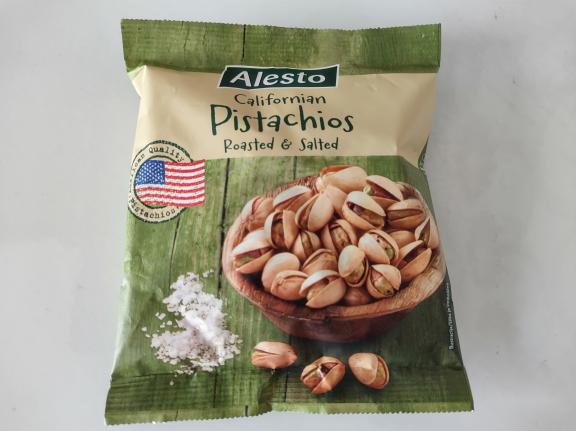
Leading pistachio snack brands in Germany include ültje (owned by Intersnack), Max (owned by Max Kiene), Seeberger and Kluth. Apart from independent brands, a lot of pistachios are sold under the brands of retailers. Leading private labels include Alesto (by Lidl), Trader Joe’s (by ALDI Nord), Farmer (by ALDI SÜD), K-Classic (by Kaufland), ja! and REWE Bio (by REWE) and Gut & Günstig and EDEKA Bio (by EDEKA). Examples of German retail pistachio brands in the organic segment include Alnatura and Rapunzel, which are also fair trade.
Figure 8: Roasted and salted in-shell Alesto pistachio nuts sold by Lidl
Source: Autentika Global
Pistachio is also used as an ingredient in ice creams, Dubai chocolate, cakes, yoghurts and other products in the German market. They are used in many foods and beverages, ranging from pistachio creams to pistachio lattes. Natural food brand KoRo launched a limited-edition pistachio-packed organic wafer in collaboration with professional footballer Mario Götze in 2024.
German consumption of pistachios is helped by a healthy snacking trend and their use by the food industry for confectionery and ice cream products. Pistachios are promoted as being high in mono-unsaturated fat, fibre and minerals. They also have a high antioxidant content.
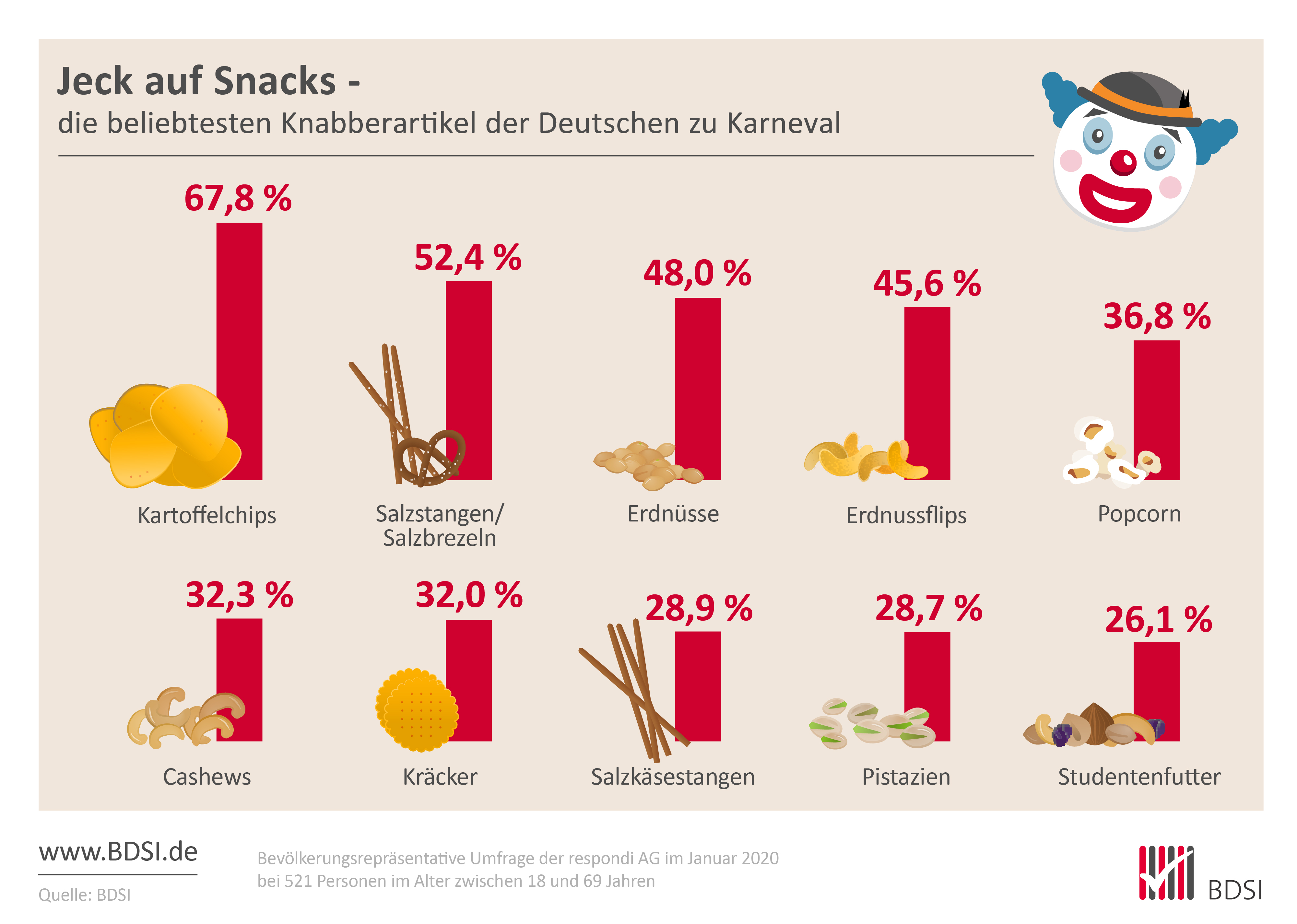
Pistachios are a top 10 snack for consumers during the festive season leading up to Lent, known as ‘Karneval’ in Germany. Germany’s food industry recently launched new, more premium pistachio ice cream products. These pistachio ice creams now include pistachio sauce and roasted pistachio pieces, according to the German Confectionery Industry Association (BDSI).
Tips:
- Find German traders of pistachios on the specialised trade promotion organisation Waren-Verein der Hamburger Börse and the German B2B platform wer liefert was (wlw).
- Contact the German Confectionery Industry Association (BDSI) for more information about the gourmet and pistachio nuts market in Germany.
- Inform yourself about trends and the production of tree nuts in the EU by reading the USDA Tree Nuts Annual.
Italy: A traditional ingredient pistachio market
Italy is a very promising market for pistachios. Consumers are traditionally aware of pistachios, and consumer awareness of health benefits raises demand. The country's culinary culture, combined with a growing interest in high-quality food products, provides significant opportunities for pistachio suppliers.
Among the 6 most important European consumer markets, Italy has one of the highest pistachio import growth rates. Italy’s annual imports increased by 17.1% in volume between 2021 and 2025. In value terms, imports rose by 28% in the same period. The country imported 47,460 tonnes of pistachios in 2025, which is 22,000 tonnes more than 2021. The apparent consumption of pistachios in Italy grew at a high annual rate of 15.7% between 2021 and 2025.
Most of the imported pistachios in Italy are consumed within the country, and less than 7% of the total imports are re-exported. In 2025, Italy imported most of its pistachios from the United States (50%) and Germany, which acted as a transit country (8%). Belgium, also a transit country, supplied around 8%, or 3,861 tonnes. The 2 largest low- and middle-income country suppliers were Türkiye (7%) and Jordan (3%).
Italy also produces pistachios, although volumes are small. Production is almost entirely concentrated in Sicily, especially in the province of Catania, where the Bronte PDO area is located.
Italy’s pistachio production is stable, at around 4,000 tonnes per year, according to the Italian National Institute of Statistics (ISTAT). Italy produced 4,149 tonnes of pistachios from a production area of 3,954 hectares in 2025.
Bronte, a town in Sicily, is famous for its premium pistachios, often called ‘green gold’. Pistachio farming in the Bronte area relies on traditional methods, including cultivation on rich lava soils and manual harvesting.
Bronte pistachios obtained a protected designation of origin (PDO) in 2010. The nut is grown on the slopes of Mount Etna, between 400 and 900 m above sea level. The PDO production area covers parts of the municipalities of Bronte, Adrano and Biancavilla, in the province of Catania. Volcanic soils and local growing conditions give the pistachio its distinctive green colour, shape and aroma. The local community also promotes the product through the Sagra del Pistacchio Verde di Bronte DOP specialty food event.
Bronte pistachios sell at higher prices than many imported pistachios and other non-PDO pistachios. They are sold whole, shelled, peeled or chopped, or processed into flour and pistachio paste. Italian suppliers also process Sicilian and Bronte pistachios into oils, spreads and pastes for pastry, chocolate and ice cream.
Figure 9: Soft serve ice cream with pistachio bits

Source: Image by randana1 from Pixabay, Pixabay content license
The Italian food retail industry is highly diversified and there are many retail channels. Hypermarkets, supermarkets, major discount stores and specialised stores coexist with family-owned grocery stores and open-air food markets. There is a large market for artisanal products in the packaged food market.
Leading retail brands include Noberasco, Ventura, Cameo, Life and Milani. Many roasted pistachio products in Italy are sold by supermarket private label brands like Coop, Conad and Carrefour. American brands are also promoted in Italy. Significant quantities are sold as unbranded snacks, measured and sold by weight. Italy’s Ekoterra Food offers pistachios that are cultivated organically in southeast Türkiye.
Processors like Marullo sell pistachio creams, pesto sauces, pâtés, flours and grains. They supply hotels, restaurants and retail clients. Mortadella Bologna PGI can be sold with and without pistachios. The pistachio version is more common in central and southern Italy.
Spain: A strong growth market
Spain is the 3rd largest importer and 3rd largest consumer of pistachios in Europe. In 2025, imports reached 23,477 tonnes. Imports increased by 11% per year between 2021 and 2025. Apparent consumption also increased at a rate of more than 8% over this period, reaching 41,829 tonnes in 2025. Spain’s pistachio industry generates nearly $1 billion (USD) in revenue. It is an attractive investment for farmers, companies and investment funds.
The United States is the leading supplier of pistachios to Spain (an 86% share in 2025), followed by Germany (5% share), Iran (4%) and Belgium (3%). Vietnam (105 tonnes) and Jordan (55 tonnes) supplied small volumes in 2025.
Spain is Europe’s largest pistachio producer, with 24,039 tonnes of pistachios harvested in 2024 according to Spain’s agriculture ministry (MAPA). Production amounted to 23,000 tonnes in 2025 according to the USDA tree nuts annual. Several regional and national groups promote the production and consumption of pistachios in Spain. These include:
- The Albacete Pistachio Growers’ Association (ASPPA);
- The Spanish Pistachio Association (ASOESPI);
- The Association of Pistachio Producers and Marketers (APPISTACO);
- The Association of Spanish Pistachio Producers of Castilla-La Mancha (ADIPE).
Most Spanish pistachios are produced in the Castilla-La Mancha region, which also shows the most significant growth.
Spain offers opportunities for pistachio exporters in both snacks and ingredients. Pistachios are widely sold as roasted and salted snacks in Spanish supermarkets. They also fit the Spanish habit of eating nuts as an aperitif or bar snack. Spanish household consumption of pistachios has grown a lot in recent seasons according to MAPA data.
The market also shows interest in premium pistachio products. Retailers sell pistachio creams, spreads, flavoured pistachios, filled biscuits and pistachio-based confectionery, such as pistachio nougat. Pistachio-flavoured drinks are also offered in Spain, but they are more niche and seasonal.
Pistachios are also used in Spanish ice cream, pastries and Christmas sweets. They are used in premium gelato, cakes, chocolate products and modern turrón varieties. This creates opportunities for suppliers of good-quality kernels, pieces, paste and other ingredient forms for Spanish processors, retailers and foodservice buyers.
Pistachios are predominantly sold by the private labels of Spanish supermarkets (for example Mercadona, Carrefour, Alcampo), discounters (for example Lidl, Aldi, Dia) and department stores (for example El Corte Ingles). Examples of independent brands include Borges, Frit Ravich, Wonderful and Campomar Nature (organic). There are also brands of regional pistachio products, such as Nazaries and Maná Pistachos Ecológicos (organic pistachio products).
Tips:
- Follow Spanish and global nut market updates from international food broker Secoex. If you are targeting the snack industry with your products, follow news about the Spanish snacks market from Spain’s snacks association La Asociación de Snacks. Check out their member list for potential leads to buyers.
- Check relevant trade statistics using tools such as ITC Trade Map and Access2Markets.
Belgium: A major transit country for pistachios
Belgium is the 4th largest European importer of pistachios. Although large in import volume, Belgian consumption is rather small. The bulk of imported pistachios are re-exported to other European markets. Belgium has many brokers that source and supply a wide range of nuts and nut-based products.
Belgian imports of pistachios increased by 13.5% in value and 9.5% in volume annually between 2021 and 2025. Pistachio imports reached 19,473 tonnes and €163 million in 2025. Belgium is a very concentrated market for pistachios. The country imports 93% of pistachios from the United States. Very small quantities are imported from low- and middle-income countries. Imports from Iran amounted to 273 tonnes, while imports from Cameroon totalled 8 tonnes in 2025.
In 2025, Luxembourg was the second-largest pistachio supplier to Belgium. Luxembourg supplied 458 tonnes. Belgium exported 1,671 tonnes of pistachios to Luxembourg for processing. After processing, retail-ready products are returned to Belgium for further trade. In 2022, Belgium imported more than 2,300 tonnes of pistachios from Luxembourg.
Belgian retail shelves include many private-label pistachios, especially under large supermarket brands such as Delhaize. However, branded products are also visible. Wonderful Pistachios is one of the clearest branded examples in Belgian retail, with several products listed by Carrefour Belgium. Wonderful Brands BV has a contact office in Ghent.
Belgium also has several relevant pistachio traders and processors. ABC NUTS, based in Belgium, imports, roasts and packs pistachios, including organic products. Nutfully, based in Brussels, is an established trading and brokerage company. It focuses on nuts and dried fruits and presents itself as a specialist in premium-quality pistachio products.
Ranobo is a Belgian wholesaler of nuts, seeds and dried fruit, with pistachio products for retail and foodservice. It has also expanded into industrial nut processing through the acquisition of Deco Foods. Fidafruit, based in Liège, packs and roasts dried fruits and nuts, including roasted, organic and industrial pistachio products.
Tips:
- Contact the federation of the Belgian food and drink industry (Fevia) to learn more about the Belgian pistachio market.
- Browse over 1,400 Belgian food companies on Fevia’s Food.be portal to find potential buyers for pistachios from different segments of the Belgian food industry.
France: A stable pistachio market
France is an important and relatively stable importer of pistachios. Between 2021 and 2025, French imports fluctuated between 7,900 and 11,100 tonnes. French imports reached 11,101 tonnes and €116 million in 2025. In 2025, France imported most of its pistachios from the United States (79%), followed by Spain (6%), Italy (5%) and Iran (4%). Türkiye exports 119 tonnes, while Jordan exports 40 tonnes to France.
French retailers sell many roasted and salted pistachios under private-label brands. Examples include Carrefour, Auchan and Intermarché. Branded pistachio snacks are also visible in retail. Examples include Daco Bello, Vico, Wonderful, Menguy’s, Maître Prunille and Sun. Yoonuts, formerly Juste Bio, is an organic and bulk-oriented brand.
Initia Food is a strong business-to-business (B2B) player. It imports and distributes pistachios from California, Türkiye and the Middle East, in both organic and conventional forms.
Commercial pistachio cultivation was recently resumed in France. The country currently has around 500 hectares under the crop, mainly in the Provence and Occitanie regions. This growing sector is supported by two bodies: the France Pistache union and the Pistache en Provence association.
The French food industry also uses pistachios as an ingredient. Pistachios are used in chocolate, confectionery, ice cream, bakery and pastry products. They also appear in specific regional charcuterie products, such as Lyon-style pistachio sausage. These uses create opportunities for suppliers of kernels, pieces, paste and other ingredient forms.
French consumer research shows that sustainability still matters, but price pressure is strong. Deloitte France found in 2025 that 76% of French consumers say sustainability and ethics affect their food purchases. However, the price remains the first buying criterion.
Tips:
- Learn more about the French pistachio market by contacting the French association for research in the fruit and vegetable sector (CTIFL).
- Follow French nut sector sources, such as the Syndicat National des Fruits Secs (SNFS) under the Alim Alliance organisation. Its 2024 sector document gives useful data on French retail sales of dried fruits and nuts.
The Netherlands: A large re-exporter of pistachios
The Netherlands is the 6th largest importer of pistachios in Europe. Over the last 5 years, Dutch imports of pistachios have increased by 23.7% on average per year. Imports amounted to 14,108 tonnes worth €148 million in 2025. Although Poland imported a larger volume of pistachios than the Netherlands, the value of Dutch imports was almost €10 million higher.
The Netherlands plays an important role as a trade hub in Europe, as approximately 70% of the imported pistachios are re-exported to other European countries. Poland is the leading destination for Dutch pistachio re-exports, accounting for around 3,800 tonnes per year. France is another large destination for Dutch re-exports. France imported more than 3,000 tonnes from the Netherlands in 2025.
The Dutch market for pistachios is dominated by the United States, which supplies 57% of the imports. In 2025, 24% of Dutch imports came from Germany, followed by Italy (10%) and Türkiye (2%). Imports from Iran amounted to 162 tonnes and 85 tonnes came from Thailand. There were no pistachio imports from Thailand between 2021 and 2024.
Dutch demand for pistachios is supported by healthy snacking and plant-based eating. Dutch people are eating more plant products, including unsalted nuts and legumes. They are also eating less red and processed meat. This supports demand for protein-rich nuts, including pistachios. The Dutch supermarket sector wants more plant-based protein sales, but progress slowed in 2025.
Dutch consumers also use pistachios as an ingredient. Pistachios are used in spreads, bakery products, desserts, ice cream, sauces and toppings. Retail group Albert Heijn sells 100% pistachio paste under its AH Terra plant-based range. It also sells organic pistachio nuts.
Private labels are very important in the Dutch retail market. USDA reports that Dutch consumers are moving from branded products to private-label products. The country’s 4 largest retailers, Albert Heijn, Jumbo, Lidl and Plus, all sell pistachios under their own labels.
Sustainable sourcing also remains relevant. The Sustainable Nut Initiative (SNI) supports traceability, risk-based action and continuous improvement in nut supply chains. SNI participants and partners are international players joining forces to address and mitigate sustainability issues in supply chains of nuts. The board currently consists of representatives of Intersnack, ofi, Lorenz, Alphonsa Cashew and Nuts2.
YouGov found that 31% of Dutch shoppers are Eco-active. It also found that 65% choose products with ingredients from sustainable sources. At the same time, many Dutch consumers remain price sensitive.
The Netherlands is an important trade and processing hub. It has strong logistics, specialised traders and a mature food-processing industry. Examples of Dutch pistachio importers, traders and packers include QFN Trading & Agency, Catz International, Nutland, Rhumveld, Global Trading and Agency (GTA), Delinuts, De NotenBeurs, Yme Kuiper and Tovano. Intersnack Nederland is also relevant because it supplies branded and private-label nut products to retailers.
Tips:
- Contact the Dutch Southern Fruit Association (NZV) to learn more about the Dutch pistachio industry. The website is in Dutch, but you can use your browser’s translation function to read it.
- Follow the Sustainable Nut Initiative for updates on traceability and sustainability in nut supply chains.
- Use the USDA Exporter Guide to the Netherlands. It gives practical information on retail, foodservice, food processing and market entry.
4. Which trends offer opportunities or pose threats in the European pistachio market?
Rising demand for healthy snacking, the popularity of the pistachio flavour and sustainable sourcing of plant-based food are the leading driving forces behind the growing consumption of pistachios in Europe.
To find out more about general trends, read our study about trends on the European processed fruit and vegetables market.
Healthy snacking supports demand for pistachios
European consumers want healthier snacks. A 2026 EIT Food survey found that 51% of European consumers want to eat more healthily. However, price and old habits stop many consumers from changing their diets.
This trend supports demand for unsalted, lightly salted and portioned pistachios. It also supports pistachios in snack mixes, yoghurt toppings, bakery products and snack bars. For exporters, this creates opportunities in retail snacks and food ingredients.
Nuts like pistachios have a good reputation amongst European consumers. Pistachio consumption is growing in the snack segment. Many consumers enjoy less processed snacks, and pistachios can be consumed in this less processed form.
Pistachios have a strong nutrition story that is attractive to consumers. They contain protein, fibre, no trans fats and mostly unsaturated fats. A 100 g serving contains about 20 g of protein and 10 g of dietary fibre, according to USDA nutrition data. Pistachios also contain significant amounts of minerals and vitamins. They have relatively high amounts of these compounds compared to other nuts.
European buyers prefer clear and safe claims that follow food labelling rules. In your labelling, focus on simple facts, such as protein and fibre, format and portion size. Pistachio suppliers also stand to benefit from the growing popularity of fortified protein snacks, which often use nuts.
Water and credible claims shape sourcing
Sustainability is important in the pistachio market. But buyers will ask for proof. The European Green Deal and Farm to Fork Strategy support healthier and more sustainable food systems.
Water management is one of the main issues in pistachio production. In 2026, the FAO reported that Iranian pistachio growers face water shortages, climate variability and aflatoxin risks. Research from 2026 also shows that water scarcity and climate change threaten pistachio production in arid areas.
Argentina’s Pistachos de los Andes shows how pistachio exporters can manage water more carefully in dry areas. The company uses drip irrigation and reports water use of 7,000–8,000 m3 per hectare per year. It also uses solar energy and composts pistachio shells and skins. Efficient irrigation can support export growth, but water use still needs to be monitored closely in desert regions.
The pistachio tree is, by nature, a drought-resistant plant. However, the precise application of water at certain times in its growth cycle is important to produce better pistachios. Recent research has shown that pistachio production is environmentally and economically sustainable in Mediterranean areas. This is true even for areas with 500 mm of annual precipitation with the addition of as little as 100 mm of additional irrigation per year.
There are new options for pistachio growers who wish to avoid the use of rodenticides. For example, American pistachio growers use predatory birds to protect orchards from rodents and nut-eating birds that destroy pistachio crops. Growers place nesting boxes in and around orchards as homes for owls and hawks that keep pests at bay.
Be careful with sustainability claims. New EU greenwashing rules make broad claims like ‘green’ or ‘eco-friendly’ risky without proof. Use clear claims that you can prove, such as organic certification, drip irrigation, renewable energy use or tested aflatoxin controls.
Pistachio flavour creates new ingredient demand
Pistachio is gaining greater attention as a flavour. The Dubai chocolate trend made pistachio fillings more visible in Europe in 2025 and led to increased demand for pistachios. FoodNavigator linked the trend to a 40% rise in Iranian pistachio exports to the United Arab Emirates in the 6 months leading up to March 2025.
This creates opportunities for exporters of green kernels, pistachio paste, splits and ingredient-grade pistachios. Be aware that sudden trends also create risk. Viral food trends can grow quickly, but they can also fade. Exporters should target several users, such as ice cream producers, bakeries, chocolate makers and nut processors.
Tips:
- Promote the various applications and nutritional properties of pistachios. Look at the INC news page to find news on relevant studies published in academic journals.
- Read the CBI’s study on demand for processed fruit and vegetables to learn more about trade trends and the size of specific market segments
- Visit the most important trade fairs in Europe that are relevant for pistachios. These include SIAL, Anuga and BioFach. Monitor product reformulation trends and initiatives for developing healthier snacks on the European Snacks Association website.
- Watch this 2023 recording of a round table on the sustainability of pistachio production. The round table with leading industry players was organised by the INC.
Autentika Global carried out this study on behalf of CBI.
Please review our market information disclaimer.
Search
Enter search terms to find market research