

The European market potential for olive oil
Europe leads the world in producing, trading and using olive oil. Volumes change with crops and prices, but demand stays steady. A better harvest and easing prices in 2025 can lift sales in the short term. Long term, slow growth is expected, led by EVOO. The best opportunities may be found in bulk supply for packers in Southern Europe and premium or organic oils for Northwestern Europe. While retailers are growing their private labels, single-origin lines are gaining attention.
Contents of this page
1. Product description: olive oil
Olive oil is obtained from the fruit of the olive tree (Olea europaea). Most olive oils are produced by physical and mechanical means through operations such as grinding, pressing, centrifugation and physical filtration. Olive oil can also be produced by chemical means, with the use of solvents. But those methods affect quality negatively.
Olive oil can be classified in several quality categories, depending on production method, composition and sensory characteristics. According to European Union (EU) standards, olive oil is classified in 8 categories:
Olive oil that can be sold directly to consumers:
- Extra virgin olive oil: A category of superior olive oils obtained directly from olives solely by mechanical means with acidity ≤ 0.8%. Sensory testing must confirm that it has no defects and that it is fruity;
- Virgin olive oil: Obtained directly from olives solely by mechanical means with acidity ≤ 2%. Sensory testing must confirm that it is fruity, although slight sensory defects are allowed;
- Olive oil composed of refined olive oil and virgin olive oils: Oil consisting only of olive oils that have undergone refining and oils obtained directly from olives with acidity below 1%;
- Olive pomace oil: Oil consisting only of oils obtained by processing olive pomace and oils obtained directly from olives with acidity below 1%.
Olive oil that cannot be sold directly to consumers:
- Lampante olive oil: Acidity above 2% and sensory defects. It must be refined to remove said defects;
- Refined olive oil: Obtained by refining lampante olive oil. It has low acidity (≤ 0.3%) and it is without aroma, flavour, or colour;
- Crude olive-pomace oil: Obtained from the extraction of residual olive paste;
- Refined olive-pomace oil: Obtained by treating olive pomace with solvents or other treatments. After refining, it can be mixed with virgin oils and sold to consumers as olive pomace oil.
The International Olive Council (IOC) standard is slightly different in defining chemical content. Also, the 2024 IOC trade standard recognises the category of “ordinary virgin olive oil”. Ordinary virgin olive oil has an acidity of no more than 3.3% and higher sensory defects compared to virgin olive oil.
Countries in the Mediterranean basin produce the largest volumes of olive oil. IOC estimates show the EU produced 1.97 million tonnes of olive oil in 2024/2025, responsible for 58% of the world’s output.
Spain is Europe’s largest producer of olive oil, responsible for more than 38% of the global share in 2024/25. The second-largest European producer is Greece with a global share of 7.4%. They are followed by Italy (6.6%) and Portugal (5.7%). Other leading producers from the Mediterranean basin include Türkiye (13.3%), Tunisia (10%) and Syria (3.1%).
Olive oil is blended and bottled in many countries around the world. Quality olive oil is produced by using healthy olives through mechanical crushing in safe conditions. Time and temperature are important quality factors in the process from harvesting to bottling. The idea that unfiltered oils are healthier than filtered ones is unfounded.
Producing 1 L of olive oil requires 4 to 5 kg of olives on average. Specific varieties, such as Taggiasca, require more olives per kg of produced oil. Processing methods also greatly affect olive oil yield.
When this study refers to ‘Europe,’ it includes the 27 member states of the EU, plus the United Kingdom (UK), Switzerland, Norway, Iceland and Liechtenstein. Developing countries are defined as the countries that are listed as official development assistance recipients. Growth is expressed through compound annual growth rates (CAGRs).
For statistical analysis, the following combined nomenclature codes are used:
Table 1: Products in the olive oil product group
| Combined Nomenclature Number | Product |
|---|---|
| 15092000 | Extra virgin olive oil (EU category 1) |
| 15093000 | Virgin olive oil (EU category 2) |
| 15094000 | Other virgin olive oils (EU category 3 – Lampante olive oil) |
| 15099000 | Other olive oils that are not chemically modified (EU categories 4 and 5) |
| 15101000 | Crude olive pomace oil (EU category 6) |
| 15109000 | Other oils (EU categories 7 and 8 – Refined olive pomace oil and olive pomace oil) |
Source: Autentika Global, Commission Implementing Regulation (EU) 2024/2522, 2025
One kg of olive oil is about 1.09 to 1.10 L in volume, because its density at 20 °C is 0.910-0.916 kg/L.
2. What makes Europe an interesting market for olive oil?
Europe is the world’s leading producer, consumer and exporter of olive oil. Around 4 million hectares in the EU are used mainly for growingof olive trees. European trade of olive oil makes up more than half of the global trade. European total imports of olive oil decreased by 5.6% annually between 2020 and 2024. Imports from developing countries fell by 3.6% annually in the same period. Most of the traded olive oil is produced in Europe. However, almost all imports from outside of Europe come from developing countries.
Demand for olive oil in Europe is mostly stable. But traded amounts go up and down due to production in the main supplying countries being unstable. Although global olive oil production in the 2023/2024 season fell by 7%, European production increased by 10%. When Europe can't produce enough by itself, increased imports from outside Europe are needed to satisfy European demand. Olive oil is more expensive compared to sunflower or palm oil, which negatively affects consumption during times of inflation.
Regular changes in European imports will continue to be influenced by olive crops and the price situation, rather than changes in demand. European olive oil production is expected to increase by 28.8% in the 2024/2025 crop year. As a result, short-term imports in the next 1-3 years are likely to fall by 3-4% per year. In the long-term, European demand is expected to increase, with imports expected to rise by 1% per year.
Consumption of extra virgin olive oil (EVOO) is predicted to grow the most. This is due to EVOO’s positive image regarding health benefits. Per capita consumption of refined and olive pomace oils will most likely decrease.
Source: Autentika Global, Eurostat, ITC, 2025
While European import volumes fell during the past 5 years, higher olive oil prices led to higher trade in terms of value. In 2024, the value of imports reached €8.1 billion, including intra-European trade. Import values increased at a rate of 23.5% per year between 2020 and 2024, as a result of price increases.
EVOO made up 63% of all imported volumes in 2024, while virgin olive oil (EU Cat. 2) made up 6% of imports and lampante oil (EU Cat. 3) made up 6%. Other olive oils that are not chemically modified made up 13% of imports. Crude pomace oil (EU Cat. 6) made up 8% and other oils (EU Cat. 7 and 8) made up 4%.
European countries import most of their olive oil from other European countries. In 2024, only 8% of Europe’s imports came from developing countries. The biggest share of intra-European trade is made up of bulk olive oil blended by the largest olive oil companies before bottling. Large volumes of bulk olive oil are moved across borders by the same companies for processing. For example, the world’s largest branded olive oil bottler, Deoleo, has facilities in both Italy and Spain. These exchange the company’s olive oil among themselves during processing.
Imports of lampante olive oil from developing countries accounts for 14% of Europe’s total lampante olive oil imports. Meanwhile, only around 9% of EVOO is imported from developing countries. Lampante olive oil has major sensory defects (taste and/or smell) and is cheaper compared to EVOO. As such, this oil cannot be sold directly to consumers and must be refined to remove its defects. Because of this, developing countries should focus on quality to get better prices in Europe.
Source: Autentika Global, Eurostat, ITC, 2025
EVOO is the most popular and most sold type of olive oil in the European retail segment. But just a small share is imported from developing countries. The leading importers of EVOO from developing countries are Italy and Spain. Both countries use this oil mostly for blending with their own oils.
In the short term, the European market for olive oil is likely to experience a 3-4% increase in sales. One reason for the expected higher consumption is a very good production season in 2024/2025. This is coupled with a drop in olive oil prices in 2025.
However, in the long term, the European market for olive oil is likely to increase at an annual growth rate of 1-2%.
*provisional, **estimate
Source: Autentika Global, International Olive Council, 2025
Tip:
- Read more about the World Bank’s outlook for key vegetable oils in 2025 and 2026 and price trends.
3. Which European countries offer the most opportunities for olive oil exporters?
Exporters of high-quality olive oil from developing countries may find opportunities in large European consumer markets, such as Germany and the UK. Those countries are not olive producers and consumption fully depends on imports. Also, there is an opportunity to offer premium olive oil. Italy, Spain and Portugal also offer opportunities for exporting bulk olive oil. Imported bulk oil is often refined or blended with domestically produced olive oil before bottling.
*provisional, **estimate
Source: Autentika Global, International Olive Council, ITC, 2025
Note: France is listed as a non-producing country for convenience. In fact, France produces and processes olives, but not enough to meet its own internal market demand.
France: A large consumption and a small local production
France is the third-largest importer of olive oil in Europe, after Italy and Spain. French imports of all types of olive oil reached 114,465 tonnes in 2024. The French olive oil import value reached the historically highest figure of €969 million in 2024. This high value was the result of increased prices, not a higher demand. EVOO makes up 72% of French olive oil imports, followed by virgin olive oil (22%) and other EU Cat. 4 and Cat. 5 olive oils (4%). French imports of pomace oils are insignificant, around 0.3%.
In 2024, France imported 66% of its olive oil from Spain, followed by Italy (16%) and Tunisia (5%). Tunisia is by far the leading developing country supplying to France, with a strong offer of organic olive oil. Algeria is also gaining share in the French market. Over the last 5 years, French imports from Algeria were increasing at an annual rate of 67% and reached 735 tonnes in 2024. Morocco is another emerging olive oil supplier to France, but its market share is only 0.5%.
Most of the olive oil imported by France is transported in bulk packaging, then blended and bottled by the leading olive oil companies. However, some of the leading brands are imported as bottled, mainly from Italy (such as Carapelli, Bertolli and Monini). The share of premium olive oil brands imported as bottled in France is small.
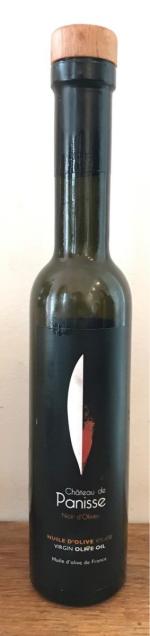
France produces olive oil mainly in Provence-Alpes-Côte d’Azur, Occitanie, Auvergne-Rhône-Alpes and Corsica. French olive oil is a small, premium niche sold mainly via short channels, such as mills/direct producers. Currently, 9 French olive oils have a protected designation of origin status. One special category of olive oil in France is black fruity oil produced from matured and fermented olives. This ‘black-fruity’ style (goût à l’ancienne/olives maturées) is a recognised French specialty.
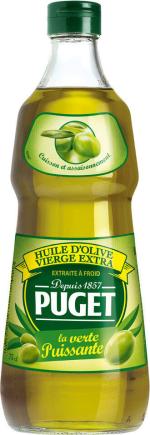
Most olive oil in France is sold through retailers, with private labels gaining market share. Industry and foodservice remain significant channels as well. The leading retail brand of olive oil in France is Puget (owned by Lesieur, part of the Avril Group). Avril Group also has a subsidiary in Morocco: Lesieur Cristal. Other brands with significant market share in France include Carapelli, Tramier and Monini.
Large volumes of olive oil are also sold under private labels, such as Carrefour, Leclerc and Auchan. In April 2025, private label products represented 36.5% of total sales value in the fast-moving French consumer goods sector. This strong growth of retailer brands is a trend that also includes olive oil.
Olive oil consumption in France is driven by the popularity of the Mediterranean diet and the healthy living trend. Organic olive oil is present in French retail, but the wider organic market has been soft since 2022. Nutri-Score nutritional labelling is voluntary in France but widely adopted. By January 2024, some 1,359 brands had adopted these labels. In March 2025, France introduced an updated Nutri-Score system. Olive oils typically get a B rating under the updated rules.
Figure 6: Puget olive oil (France’s leading brand)
Source: Photo by kiliweb for Open Food Facts (licensed under CC BY-SA 3.0)
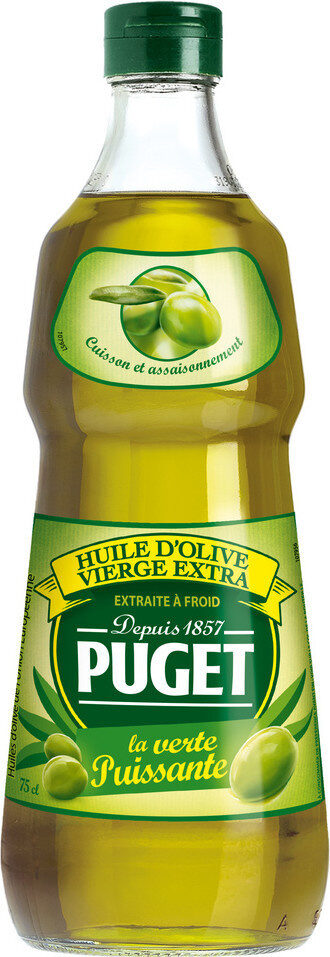
Figure 7: Black fruity (Le fruité noir) olive oil
Source: Photo by kiliweb for Open Food Facts (licensed under CC BY-SA 3.0)
Tip:
- To learn more about the French olive oil industry and market, visit the website of France Olive, the French olive interprofessional association.
Germany: The leading market for organic olive oil in Europe
Olive oil imports to Germany decreased, on average, by 5% annually between 2020 and 2024. In 2024, Germany imported 71,609 tonnes of olive oil worth €657 million. Of all imported olive oil to Germany, EVOO has an 79% share, followed by ordinary Cat. 4 and Cat. 5 refined oil and blends (12%), virgin olive oil (4%) and Cat. 7 and Cat. 8 other oils (4%).
Italy is the leading supplier of olive oil to Germany (with a 50% share in 2024), followed by Spain (28%) and Greece (13%). Among the top 3 olive oil suppliers to Germany, Spain has grown the fastest, at a rate of 0.2% per year. Developing countries account for 1.2% of Germany’s olive oil imports. The leading developing country supplier to Germany is Türkiye, followed by Tunisia.
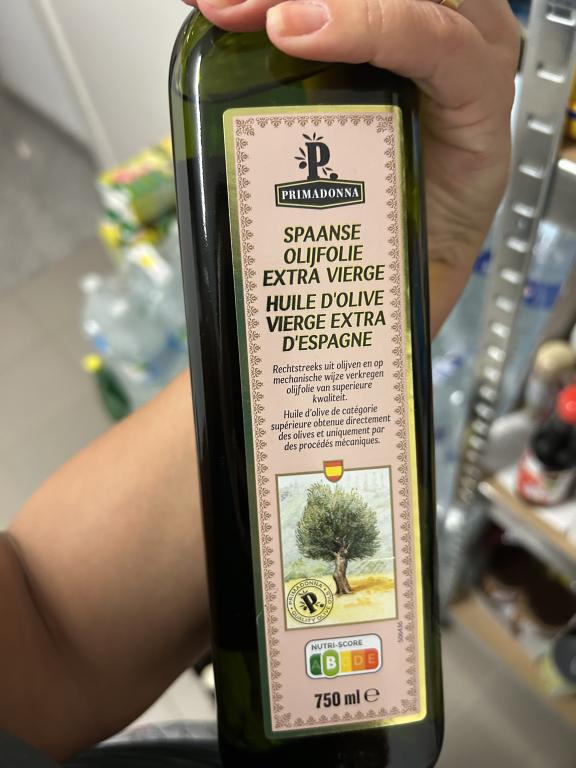
A large share of the olive oil sold in Germany is sold under private labels such as Primadonna, Deluxe, and Lidl Preferred Selection (by discounter chain Lidl), Cantinelle (by ALDI Süd), Aro (by Metro), REWE Feine Welt and ja! (by REWE), and EDEKA as well as Gut & Günstig (by EDEKA). Most private label oils are blends from different origins. Independent brands include Bertolli and Carapelli (Italian), Mazola (Spanish origin by Peter Kölln), Minerva, Minos and Jordan (Greek), Ybarra (Spanish) and La Española (by Feinkost Dittmann).
As the largest market in Europe for organic products, Germany provides opportunities for suppliers of organic olive oil. A large share of organic olive oils in Germany is sold under the private label brands of specialised organic retailers, such as Bio Markt, Alnatura, Tegut, Bio Company, ebl-naturkost and SuperBioMarkt. Leading retail chains also have organic private labels.
Figure 8: Primadonna olive oil
Source: Photo by municorn-calorie-counter-app for Open Food Facts (licensed under CC BY-SA 3.0)

Figure 9: Bio organic olive oil
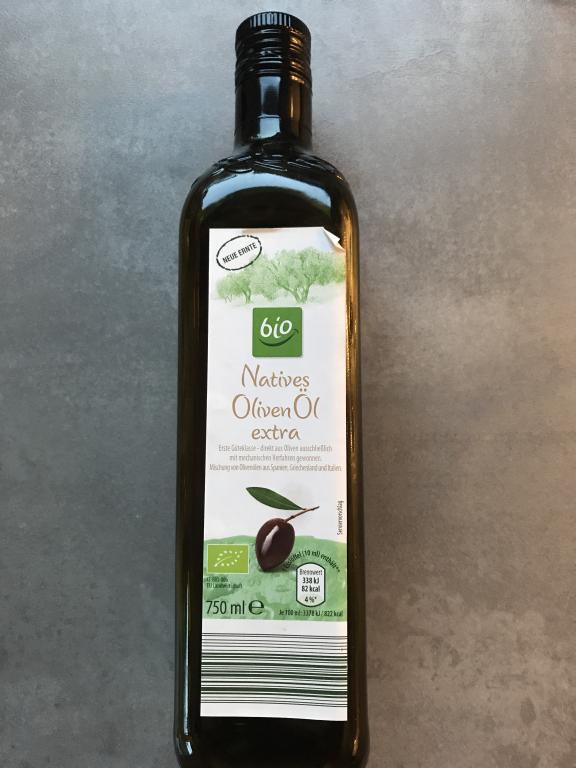
Source: Photo by joho345 for Open Food Facts (licensed under CC BY-SA 3.0)
Tip:
- To find more information about the German olive oil market, contact the Information Office Olive Oil in Germany.
The United Kingdom: The domination of private labels
Olive oil is an established commodity in the UK.
In 2024, UK imports of olive oil reached 66,413 tonnes, with a value of €545 million. Most imported olive oil in the UK is consumed within the country, without any major re-exports. Imports from developing countries account for 1.4% of all olive oil imports.
In 2024, EVOO represented 61% of the UK’s imports. This is followed by Cat. 4 and Cat. 5 refined and blended olive oils (30%) and Cat. 7 and Cat. 8 other olive oils (8%). The share of EVOO in the UK is slightly smaller compared to other large European markets. Bottling companies offer lower quality olive oil for cooking purposes at affordable prices. Olive-pomace oils and blends of refined olive oil and virgin olive oils are often promoted as suitable for cooking, while EVOO is promoted as suitable for fresh consumption.
The British olive oil market overall is quite concentrated. In 2024, the UK imported 72% of all its olive oil from Spain, followed by Italy (19%).
The UK’s olive oil imports from developing countries are rather small, making up just 1.4% of imports in 2024. Imports from developing countries did increase by 30% per year between 2020 and 2024, reaching 900 tonnes in 2024. Tunisia, with 334 tonnes, was the leading developing-country supplier, followed by Lebanon with 192 tonnes. The UK provides opportunities for Fairtrade-certified olive oil. A notable Fairtrade-certified olive oil available in the UK is Zaytoun, which sources its olives from Palestinian farmers in the West Bank. It is available from retailers such as Abel & Cole, Ethical Superstore and PlantX UK.
Large volumes of olive oil are sold under private label brands owned by retailers Tesco, Sainsbury's, ASDA and Morrisons. A leading independent brand is Filippo Berio. Filippo Berio sells EVOO as well as blends of refined olive oils and virgin olive oils (named “Classico”). Other independent brands include Napolina and Olivio (Princes Group) and Il Casolare (Farchioni Olii S.p.A).
Tip:
- Find information about the edible oil sector in the UK on the website of the National Edible Oil Distributors’ Association (NEODA).
Figure 10: Filippo Berio “Classico” extra virgin olive oil
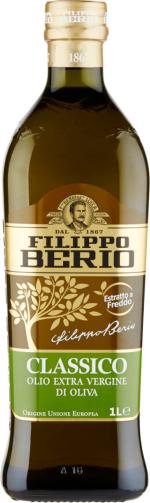
Source: Photo by kiliweb for Open Food Facts (licensed under CC BY-SA 3.0)
Figure 11: Pomace oil blend, packed in the UK
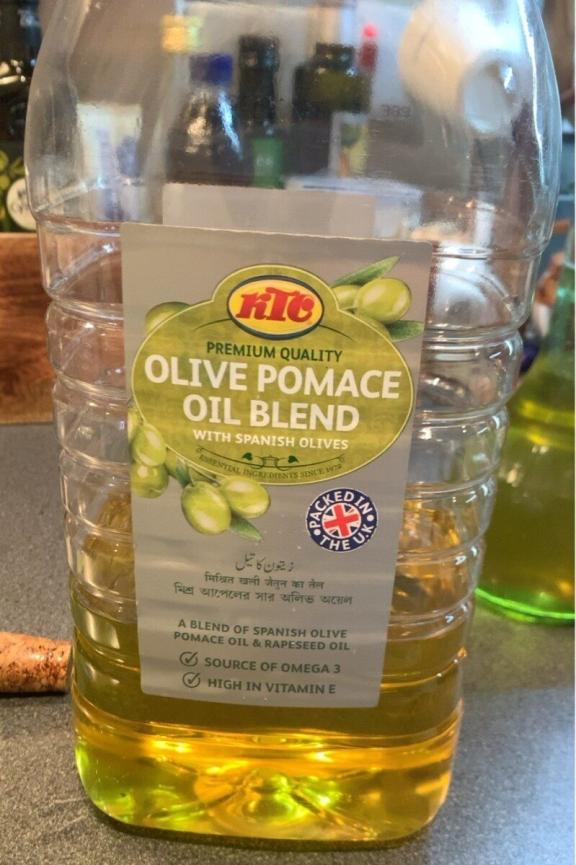
Source: Photo by kiliweb for Open Food Facts (licensed under CC BY-SA 3.0)
The Netherlands: A stable market and price-sensitive consumers
Dutch olive oil import volumes declined by 1% annually over the last 5 years, reaching 22,354 tonnes. Meanwhile, import values increased by 23% annually to €171 million in 2024. More than 4,800 tonnes were re-exported to other destinations, primarily to Belgium and the United States of America. In 2024, EVOO accounted for 55% of all imported olive oil in the Netherlands, followed by Cat. 4 and Cat. 5 refined olive oil and blends (33%), virgin olive oil (4%), and other Cat. 7 and Cat. 8 olive oils (4%).
In 2024, the Netherlands imported 69% of its olive oil from Spain, followed by Italy (20%), Germany (3%) and Belgium (2%). Imports from developing countries to the Netherlands amount to 4% of the total olive oil imports, with Lebanon as the leading supplier (143 tonnes in 2024), followed by Morocco (143 tonnes). Other emerging suppliers include Türkiye, South Africa and Egypt, but import volumes from these countries are still very low. In the Netherlands, people still buy more sunflower oil than olive oil because it is cheaper. Olive oil prices spiked in 2023-2024 before easing in 2025. In spite of Dutch consumers being price sensitive, the consumption of high-priced oils, such as premium, infused and organic, is growing.
More than 60% of all olive oil sold in the Netherlands is retailed under private labels. The leading retail chains that sell olive oil under their own private labels in the Netherlands include Albert Heijn (AH), ALDI (LaVilla), Jumbo (Jumbo) and Lidl (Primadonna). Sales of independent brands of olive oil in the Netherlands are mainly dominated by Bertolli, Monini and Carapelli.
Tip:
- To learn more about the Dutch olive oil market, contact the Netherlands Oils and Fats Industry (MVO).
Switzerland: A market dominated by Italian supplies
Switzerland’s olive oil imports have been falling at an annual rate of 3%, reaching 17,056 tonnes valued at €170 million in 2024. Approximately half of these imports are imported in retail packaging and the remaining half in bulk packaging. The Swiss market is focused on high-quality oils and 78% of the imports in 2024 were EVOO. More than half of the imported EVOO was imported already packed in retail bottles and ready for sale while the other half was imported as bulk packaging used for bottling, blending or for the food service segment.
The leading supplier of olive oil to Switzerland is Italy with a 47% share, followed by Spain (32%) and Greece (9%). Around 6% of Switzerland’s olive oil imports come from developing countries. The leading developing-country supplier is Tunisia with a 3.4% share, closely followed by Türkiye with a 2.4% share.
A large share of the olive oil sold in Switzerland is retailed under the private labels of leading retail chains, such as Coop (Coop) and Migros (Migros and Alexis). Leading brands in the Swiss market include Monini, Bertolli, Filippo Berio and Carapelli. Most of the olive oil sold in Switzerland is made of blends of oils from different origins. Retailers also sell single-origin olive oils.
Sales of organic olive oil in Switzerland are growing. They currently make up approximately 10% of the total retail sales. Organic olive oil is mostly sold under the private labels of supermarkets, such as Coop (naturaplan) and Migros (Migros bio). Leading independent organic olive oil brands include Rapunzel, Alnatura and Morga.
Tip:
- Contact the Swiss Olive Oil Panel (SOP) to learn more about olive oil quality in Switzerland.
Sweden: An importer of high-quality oils
Over the past 5 years, Sweden’s olive oil imports fell by 3% per year, reaching 10,528 tonnes in 2022, valued at €82 million. Most Swedish imports consist of high-quality olive oils needing no further refining or blending. In fact, there are very few companies in Sweden that engage in blending olive oils and a high share of imports consists of retail-ready oils. In 2024, EVOO accounted for 87% of all olive oil imported to Sweden, followed by Cat. 4 and Cat. 5 refined and blended oils (10%), and virgin olive oil (1%).
In 2024, Sweden imported 50% of its olive oil from Italy, followed by Spain (28%) and Greece (9%). Imports from developing countries are very small and account for 2.5% of its total olive oil imports. Lebanon is the leading developing-country supplier with 105 tonnes in 2024, followed by Türkiye (102 tonnes), the Palestinian Territories (38 tonnes) and Morocco (10 tonnes).
The largest quantity of olive oil in Sweden is sold as private labels. The ICA retail chain is the leading retailer (ICA and I love eco labels), followed by Coop (Coop and Änglamark labels) and Axfood (Eldorado and Garant labels). A leading independent olive oil brand in Sweden is Zeta. The brand is owned by Di Luca & Di Luca, a specialised supplier of Italian Mediterranean food and a distributor of the Italian olive oil brand Monini.
Swedish official statistics show that private label food sales increased by 11.6% in 2024. Private label products made up 24.6% of total food sales in Sweden in 2024.
Tip:
- Contact Open Trade Gate Sweden to get advice on exporting olive oil to the Swedish market.
4. Which trends offer opportunities or pose threats in the European olive oil market?
Consumer interest in olive oil in Europe has 3 main combined driving forces: growing popularity of the Mediterranean diet, increasing awareness of olive oil’s health benefits and the quality of certain types of olive oil. The promotion of single-origin premium olive oil, as well as sustainable and ethical production methods, are good aspects for emerging suppliers. On the other hand, sudden and large price swings of both conventional and organic olive oils is the main threat for suppliers who want to position their products in the mainstream segment.
Changes in olive production lead to large price swings and consumption of cheaper types of olive oil
Olive oil became much more expensive in 2023-2024 across the EU. In January 2024, EU olive oil prices were 50% higher than the year before. The price of olive oil in Europe started rising in early 2021. The energy crisis, caused by the war in Ukraine, increased production costs for olive farmers.
Source: Autentika Global, Eurostat, 2025
The already high general price inflation was made worse by a record low olive harvest in the 2022/2023 season. The crop was 40% smaller compared to the previous year, which led to a further increase of prices. According to Eurostat, year-on-year price growth for olive oil in the EU peaked at 52.4% in March 2024.
In order to fight price increases, processors and bottlers were forced to offer olive oils to consumers at more affordable prices. Those olive oils were various blends of refined olive oil and virgin olive oils.
In European supermarkets, blends of refined olive oil and virgin olive oils are usually promoted as “Light”, “Mild” or “Pure”. They are also promoted as oils suitable for cooking, baking and frying. These olive blends have a less intense flavour and have no effect on the taste of the meal. EVOO is used more in cold dishes, such as salads, or for drizzling over the finished meal.
Many leading brands in Europe have introduced blended oils over the last few years. Examples include Mild & Light and Classico (by Fillipo Berio), Tesco Light in Colour (private label), Extra Light Taste and Bertolli Cooking Olive Oil (by Bertolli), REWE Beste Wahl Olivenöl raffiniert (private label) and Anfora (by Monini).
Olive oil price increases in the EU gradually started levelling off in April 2024. Prices continued rising, but more slowly than before. This trend lasted until December 2024, when the annual rate of price increases dropped to 1.5%. In January 2025, olive oil prices in the EU fell by 5.4%, which was the first such drop since April 2021. Olive oil prices continued to decline in the first 9 months of 2025, reaching a maximum negative annual rate of change of 28.1% in September 2025.
The goal of these reductions is likely to lower the price and boost sales of EVOO and more premium oils in the next few years. This might offer opportunities to developing countries, which could tap into this trend.
A healthier eating trend and the popularity of Mediterranean food
Olive oil, especially EVOO, enjoys a good reputation amongst consumers in Europe. Olive oil is an integral part of the Mediterranean diet. Several studies indicate that a Mediterranean diet can help lower the risk of cardiovascular diseases, overall cancer incidence, neurodegenerative diseases, diabetes and early death. A number of European countries use the Mediterranean diet in their official dietary guidelines. For example, Greece’s national guidelines are based on Mediterranean eating habits, as are those of Portugal. Spain’s 2022 national guidelines are also aligned with the Mediterranean diet.
The rising popularity of food dishes that use olive oil also help drive consumption. These dishes often come from southern European cuisines, but also from the emerging popularity of the Middle Eastern and North African cuisines. Mediterranean dishes and olive oil use are also promoted by many celebrity chefs, as well as TV cooking and travel shows across Europe. Jamie Oliver, a celebrity chef in Europe, has recently published a cookbook called 5 Ingredients Mediterranean Recipes.
The IOC launched the Olive and Olive Oil Health Information System to provide an up-to-date database of all scientific reports related to the health effects of olives and olive oil. Several European Commission projects also promote the Mediterranean diet and olive oil consumption, including SWITCHtoHEALTHY, the Mediterranean Diet Virtual Museum and MedEat Research. Other organisations promoting Mediterranean food include the Mediterranean Diet Foundation and the International Foundation of Mediterranean Diet.
Several national olive oil trade associations constantly invest in the promotion of olive oil in Europe and abroad, such as the Spanish Olive Oil Interprofessional and the Italian Consortium of Olive Oil Producers (UNAPROL). In addition, the EU officially promotes the export of European food products including olive oil through the campaign and logo “Enjoy, it’s from Europe”.
According to the EU’s 2024-2035 agricultural outlook report, by 2035 the EU’s production of olive oil is expected to grow slightly, driven by yield increases.
Tip:
- Promote the various applications and nutritional properties of olive oil. However, avoid health and nutritional claims not backed by scientific evidence.
New olive oil flavours
The popularity of olive oils infused with aromatic ingredients, such as chilli and garlic, is on the rise. Some consumers make flavoured olive oils at home. But due to convenience, olive oil companies have expanded their product ranges with flavoured olive oils. Garlic and chilli are now established flavours, but new ones are also appearing on the market. These include lime, truffle, pesto, curry, rosemary, basil and smoked oil.
Many major competitions, such as London International Olive Oil Competitions, EVO International Olive Oil Contest, Monte Carlo Masters International Competition and Berlin GOOA, want to support innovation and the quality of infused olive oils. To do this, they have introduced a new category award for the best infused olive oils. Infused olive oils are segmented into three categories: herbs and spices flavoured, fruit flavoured, and others.
Tips:
- Check the websites of European trade shows and exhibitions to discover the newest trends. The most important trade fairs in Europe for olive oil trends and trade are SIAL, Anuga, Alimentaria, TUTTOFOOD and BIOFACH. By visiting those events, you can also learn about trending flavours sometimes reported by the international trend companies such as Innova Market Insights.
- Look at the winning olive oils from major olive oil competitions for new product ideas. Annual winner lists are published by Berlin GOOA, Monte Carlo Masters of Olive Oil, EVO IOOC and London IOOC.
The consumption of organic olive oil is on the rise
Organic food sales in Europe fell in 2022 but grew again between 2023 and 2025. The market contracted in 2022 because of the war in Ukraine, which led to rising energy prices and living costs. France and Germany are the largest markets for organic olive oil. Production varies with harvests, and droughts led to lower output in 2022/2023 and 2023/2024. Supply is expected to increase again when crops rebound, such as in the 2024/2025 season. Olives are the biggest permanent organic crop in Europe.
Tunisia is a leading exporter of organic olive oil. The price difference between conventional and organic olive oils has shrunk over the last years. In Q1 2025, Tunisia’s conventional EVOO prices were close to the prices of EVOO of Spanish origin, averaging €4.00/kg. The price of Tunisian organic EVOO was €4.30/kg.
Independent organic olive oil producers are exhibiting at leading European trade fairs more often. The world’s leading trade fair for organic food, BIOFACH, has introduced a competition for organic olive oil – the BIOFACH Olive Oil Award. Other organic food events with increasing participation of organic olive oil producers include Natural & Organic Products Europe, Organic Food Iberia, Free From Food Expo, Natexpo and Nordic Organic Food Fair.
Tips:
- Consider participating in specific organic food and olive oil events and competitions if you produce organic olive oil. Good exhibitions to consider are Biol (Italy), BIOFACH (Germany), Natural & Organic Food Show (UK),Sana (Italy), Natexpo (France) and Nordic Organic Food Fair (Sweden).
- Consult the FAO list of dietary guidelines and food guides from the European region to find new opportunities to market your olive oils or to research new markets.
Higher quality olive oils are entering the market
The current market share of premium quality organic olive oils in Europe is small but rising. Many independent brands of premium olive oil are coming up on the market. Until recently, premium olive oils were mainly sold in specialised shops or directly from producers. At present, some leading retailers are also introducing high-quality olive oil. In bigger European cities, retail chains have special booths with special or fine foods, where premium olive oils of independent brands are sold.
The number of single-origin olive oil introductions by retail chains is growing. An increasing number of wholesalers are also distributing oils connected to specific production regions, or even from single estates. Another indication of market ‘premiumisation’ is the appearance of monocultivar oils such as those from Monini, Nocellara, Frantoio and Coratina.
Celebrity chefs and olive oil experts influence consumers to select better quality olive oils. Olive oil tasting courses are becoming increasingly popular amongst European consumers. Specialised olive oil shops also inform consumers about the different types and qualities of olive oil through in-house tasting and information about production and origins. Specialised olive oil retailers are constantly looking out for new origins in Europe such as Croatia, Slovenia, Montenegro, Albania and Malta. But they also look at Morocco, Tunisia, Lebanon and Jordan.
A protected designation of origin (PDO) provides a further promotion of higher quality olive oils. Some 140 certified EVOOs are registered in the eAmbrosia designation register. This includes 118 PDOs and 22 PGIs from 7 different European and 1 non-European country. Italy has the largest number of registered olive oils (52), followed by Spain (33) and Greece (32).
Tips:
- Participate in international competitions if you aim to place your olive oil in the premium segment. You can find a list of award-winning olive oils from international competitions above.
- Consider placing a label on your olive oil showing where it was tested and by what panel. This may provide a strong competitive advantage.
Autentika Global carried out this study on behalf of CBI.
Please review our market information disclaimer.
Search
Enter search terms to find market research
Do you have questions about this research?
There are new opportunities arising for emerging countries. The global climate crisis results in lower yields in the main production regions in the Mediterranean. Buyers are looking to compensate the short falls from emerging countries. This trend is expected to manifest as demand is forecasted to outgrow supply. However, quality and investments in technology will remain key components to have accessibility to export markets.

Francesca de Ritis, Owner at Olio de Ritis
Webinar recording
8 November 2022