
The European market potential for dried figs
Europe is a large market for dried figs. It is shaped by tradition, health trends and dependence on imports. Consumption is steady in France, Germany, the UK, Italy, Switzerland and the Netherlands despite price pressures. Small drops in consumption are the result of lower supply. Türkiye dominates Europe’s supply. Other developing-country suppliers like Iran and Albania also play a role and can benefit from Europe’s dependence on imports. Despite recent drops in volume, import value is growing. This is driven by high dried fig prices and rising demand for healthy snacks.
Contents of this page
1. Product description: dried figs
Dried figs are the dehydrated fruits of the common fig tree (Ficus carica L.). Botanically, a fig is a cluster of many flowers and seeds inside a bulbous stem.
Figs have been cultivated in the Mediterranean for thousands of years. Today, they are an important dried fruit commodity in Europe.
Türkiye is the world’s largest supplier. It is responsible for around 70% of global dried fig production. Türkiye’s production and exports shape the global market. Developed producing countries (Greece, Spain, Portugal, Italy and the USA) are less competitive due to higher labour costs. Developing countries (for example, Iran, Morocco and Egypt) are growing their presence in the global dried fig market.
Figure 1: A fresh fig
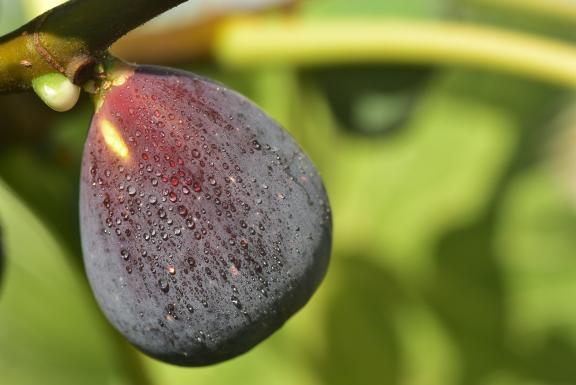
Source: Leopictures on Pixabay, Pixabay content license
When figs are harvested, they have a high moisture content. This can lead to rapid spoiling, and the fruit is highly perishable. To avoid spoilage, fresh figs are often dried to keep the quality. Dried figs are valued for their sweet taste and chewy texture.
Dried fig consumption has been increasing worldwide in recent years. Dried figs account for 6% of the overall dried fruit consumption in high-income economies. Central and northern Europe are large consumers. Demand is supplied entirely by imported dried figs. Countries in the south of Europe are important producers and consumers of dried figs. For example, ‘pan de higo’ is a traditional Spanish fig cake made by pressing dried figs and almonds into a sweet loaf.
The main variety used for drying is the Smyrna-type fig, called ‘Sarılop’ in Türkiye. It is also known as Calimyrna in California. The Sarılop/Calimyrna fig is popular due to its large size and sweetness. Other varieties include Black Mission, Brown Turkey, Kadota (Dottato) and Bursa Siyah.
Dried figs are used both as a standalone snack and an ingredient in food processing. Consumers often eat whole dried figs as snacks because of their naturally high fibre and sugar content. A white powder can sometimes be seen on some dried figs. This is called ‘bloom’.
Whole dried figs are typically dried until they have a moisture content of ≤26%. This means they are shelf-stable and wrinkled but still soft to bite. Some are sold as ‘soft’ or semi-dried figs. These soft figs have a higher moisture content and a tender, fleshy feel. Whole figs can be sold in their natural form (loose in bulk or pressed into layers). Some are strung into garlands or rings for presentation.
Solar and hybrid solar dryers are better than direct sun drying. Dryers help to lower contamination with bacteria and fungi. They also speed up drying time. This leads to less fruit waste. Open-air direct solar drying can lead to products that are contaminated with bacteria and mould spores.
After processing, dried figs are given commercial export names based on their presentation. These include layer, protoben, pulled, lerida, locum, garland, macaroni, baglama, cukulata and umbrella, based on the shape. Some of these formats are popular on the European market. Turkish dried fruit company Alkar offers a good visual overview of the more important presentations.
Figure 2: Dried figs
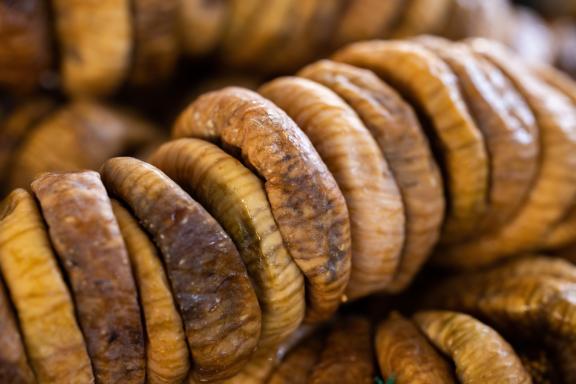
Source: Engin Akyurt on Pixabay, Pixabay content license
Producers also offer sliced figs and diced fig pieces. Diced dried figs are often between 4 and 10 mm in size. These diced and sliced figs are in demand with the cereal, bakery and snack industry. Bakers also use diced figs to make multigrain breads and cakes, especially in artisanal and health-oriented recipes.
Meanwhile, fig paste is a thick puree of dried figs. It is used as a filling for bakery goods like fig bars, fig rolls and cookies. In the food service segment, chefs create rich sauces and chutneys with dried figs and desserts with fig paste.
Figure 3: Dried figs in dried fruit and nut bars

Source: Autentika Global
In the World Customs Organization’s Harmonized System (HS) trade classification, dried figs fall under HS trade code 0804.20. This code is used for trade in figs (fresh or dried). The European Union’s (EU) Combined Nomenclature (CN) is a more precise tool for classifying the European trade in goods. The CN contains special EU-specific subdivisions. The CN code for dried figs trade is 0804.20.90.
In this study, the term ‘Europe’ is used to mean the 27 EU states, the United Kingdom (UK) and the EFTA countries (Iceland, Liechtenstein, Norway and Switzerland). ‘Developing countries’ refers to nations on the 2025 OECD-DAC list of aid recipients. The annual growth rate is expressed as the compound annual growth rate (CAGR).
2. What makes Europe an interesting market for dried figs?
The European dried fig market is stable and large thanks to a tradition of consumption and the popularity of Mediterranean cuisine. European consumers eat a wide range of dried fig products. However, they rely on imports for much of their supply. Domestic production in Spain, Italy and Greece only covers some of Europe’s demand. The three countries produced 17,100 tonnes of dried figs in 2024/2025 according to the International Nut and Dried Fruit Council (INC).
At the moment, Türkiye dominates Europe’s supply. Türkiye also meets up to 60% of the world’s dried fig needs. Other developing countries, like Iran, Albania and Afghanistan, are becoming more important.
Source: Autentika Global, Eurostat, UK Trade Info, ITC, 2025
Increasing health consciousness amongst European consumers has also helped demand. Dried figs are rich in fibre, antioxidants, vitamins and minerals. Because they are minimally processed, they have become more popular as a healthy snack. At the same time, figs’ natural sweetness fits well into Europe’s trend of eating less processed sugar. Dried figs are also valued in plant-based and vegan diets.
Some European food traditions contribute to steady demand for dried figs. In Italy, for example, dried figs are a common winter treat and frequently used in festive baked goods. Dried figs are a common Christmas treat across Europe so demand usually rises during the winter holiday season.
Europeans often consume dried figs as ingredients in breakfast cereals, bakery products and energy bars. This means that there is stable demand from bakeries, cereal makers and confectioners.
France and Germany were the top importers from 2020 until 2024. France alone imported 8,268 tonnes in 2024, slightly more than Germany’s 7,239 tonnes. The United Kingdom (UK), Italy, Switzerland and the Netherlands are further behind in terms of volume. All countries have shown double-digit percentage drops in imports in comparison to 2020. The main reason for this is the falling supply of dried figs, which prevents consumption from increasing.
Source: Autentika Global, ITC, UK Trade Info, Eurostat, 2025
Every key European market saw a negative compound annual growth rate. European dried fig imports peaked in 2021, then declined across the board. 2021 was an exceptional year. Imports jumped in Germany and Italy as buyers stocked up to meet demand. However, this spike did not last long. In 2022, European imports fell sharply. For example, France’s imports dropped 14%, as did Germany’s, partly due to supply shortages and high cost.
Several factors can explain Europe’s recent dried fig import decline. On the supply side, weather and harvest issues reduced availability. On the demand side, high prices and changing consumer habits also affected purchases. Poor weather has affected Türkiye’s fig harvests. In the 2021/2022 season, a summer drought in the Aydın region shrank the fig crop by 12%. The 2023/2024 harvest was also lower, leading to a 5% drop in exports. With less product to sell, Turkish exports to nearly all destinations fell.
The supply crunch, combined with global inflation, have caused fig prices to rise. In 2023, the average import price for figs (fresh or dried) hit $4,825 per tonne (USD), up by 42.7% from 2022. This was a huge price spike in a single year. Because of these high costs, European buyers have scaled back orders. Demand for Turkish dried figs remained lower throughout 2024 because of the high prices.
Imported volumes were mostly lower between 2020 and 2024. Europe’s dried fig imports still rose in value because each imported tonne cost more. For example, France’s import volumes were at their highest in 2021. However, the value of imported dried figs was highest in 2024. This suggests that French buyers spent more money for fewer figs in 2024. Similar trends were also seen in other European markets.
Source: Autentika Global, ITC, UK Trade Info, Eurostat, 2025
Despite falling volumes, market rankings stayed stable. France maintained its position as Europe’s largest dried fig importer, only just ahead of Germany. The UK remained third largest, importing slightly more than Italy. Switzerland, with its small population, ranked fifth. No country overtook another in this group. This suggests the decline was spread evenly.
Dried fig production in Türkiye in 2024/2025 was much lower than expected. This indicates that European volumes might stay limited in the short term. In the long term, dried fig consumption will probably rise at 1–2% per year, as dried figs continue to appeal to health-conscious buyers.
Tips:
- Make sure you meet European quality and safety standards. Strict food safety regulations apply to dried figs in Europe. Contamination with aflatoxin and ochratoxin (toxic moulds) is a major problem. Make sure your figs are properly dried, sorted and lab-tested (using methods like UV light scanning).
- Attend major trade fairs, such as SIAL (Paris) and Anuga (Cologne), to meet European buyers and learn about market preferences.
3. Which European countries offer the most opportunities for dried figs?
France and Germany are the two main importers of dried figs. Other important buyers include the UK, Switzerland, Italy and the Netherlands. These countries are important consumers, but they are also often home to important dried fig importer firms and leading brands. Examples include Germany’s Farmer’s Snack and Seeberger, Italy’s Besana, and Gebana in Switzerland. These companies distribute dried figs in several European markets.
France: a leading importer of non-European dried figs
France is Europe’s largest importer of dried figs. In 2024, France imported 8,268 tonnes of dried figs at a value of €43.4 million. France’s strong market position makes it an attractive target for exporters from developing countries. Demand is high and consistent. Import volumes declined by 4.4% per year between 2020 and 2024. Value imports rose by 4.5% in the same period.
The French dried fig market is expected to stay strong. Demand for dried fruits has been resilient, as affordable healthy snacks even during periods of high inflation. French importers have had to cope with lower Turkish supply in recent years.
In the long term, over the next five years, France will probably maintain its position as the most significant fig market in Europe. One disadvantage is that the French population is ageing. Older consumers generally eat fewer snacks. However, this is balanced by a nationwide shift towards natural foods. By 2030, the French dried fig market is expected to grow around 5% per year in value.
French buyers like good quality. They often prefer soft, high-grade figs. In French retail, dried figs are often marketed as ‘figues moelleuses’ (soft figs). They are sold as Lerida figs (flat-layered figs, pressed into boxes) or Baglama figs (tied in strings or rings). Figs are a steady part of French food culture, for example, paired with cheese or used in breads and desserts.
France is Europe’s second largest organic food market, and organic dried figs are widely available. Many dried figs in French supermarkets carry the EU organic label (AB).
About 88.3% of French dried fig imports in 2024 came from developing countries. Türkiye alone accounts for 88% of dried fig exports to France per year. 11.7% of imports were from EU and EFTA countries, mostly from Spain. Côte d'Ivoire supplied just 10 tonnes (0.1%) of dried figs to France in 2024. Iran exported 6 tonnes of dried figs to France in the same year.
French importers are often looking for new sources and products. This opens room for exporters with new offerings. For example, a French supplier exclusively imports wild organic dried figs from Andalucía, Spain, marketed as Figuettes Sauvages d’Andalousie. These are marketed as dried figs produced without additives, pesticides or irrigation. This type of marketing is attractive to consumers who want more natural fruit products. Exporters can try offering unique varieties or products, such as premium mountain figs or organic soft figs.
In the mainstream market, importers like Agidra and Palimex supply big retailers with bulk and packaged figs. They will ask suppliers for competitive prices, reliable volumes and compliance with strict EU food safety standards. In the high-end segment, gourmet importers look for exceptional taste and certification. French companies like Brousse & Fils focus on long-term partnerships with fig growers in Türkiye to ensure top quality.
Germany: Europe’s second-largest dried fig importer
Germany was Europe’s largest dried fig importer. It imported 7,771 tonnes in 2023. However, for the other four years of the 2020–2024 period, Germany fell behind France. In 2024, German dried fig imports amounted to 7,239 tonnes. German imports by volume fell by 1.9% on average every year between 2020 and 2024.
In value terms, German dried fig imports increased by 7% annually between 2020 and 2024. Imports reached €43.9 million in 2024. This was slightly higher than the total value of dried fig imports into France the same year.
Similar to France, Germany imports 88.7% of its dried figs from developing countries. Türkiye dominates supply. It exported 6,139 tonnes to Germany in 2024. This represents 85.9% of German imports. German imports from Europe amounted to 797 tonnes in 2024, or 11.2% of the total share. Most of these imports were from Austria. Other developing-country suppliers include Iran, with a 2.4% share, and China, with just 0.2%.
In the next one or two years, Germany’s dried fig demand will probably stay steady. However, prices may go up or down with global supply. Germany’s dried fig market is expected to grow moderately over the next decade. The global dried fig market is expected to expand at around 5% annually.
Many Germans consume dried fruits as snacks and baking ingredients. Muesli and bread often contain dried figs, and figs are a popular natural sweet treat. Another factor that boosts fig demand is Germany’s Turkish diaspora. It is the largest outside Türkiye. Over 3 million people of Turkish descent live in Germany. Their culinary traditions support fig consumption. Turkish grocery stores in Germany sell dried figs year-round.
The German market is very competitive. As a result, suppliers that prioritise quality and certification have better chances. Germany has Europe’s largest organic food sector. German organic retail sales was valued at €16.08 billion in 2023. German consumers spent €191 per person on average on organic products in 2023. This is higher than the EU average of €84. Major organic retailers like Alnatura and Bio Company offer organic dried figs sourced from countries like Türkiye under the EU organic logo.
Most conventional dried figs are imported through specialised importers and wholesalers. Companies like Seeberger and Zieler & Co. import Turkish figs and pack them under German brands.
Be aware of consumer preferences regarding fig presentation and quality. Follow the example of large German brands that know local market expectations. Seeberger sells its dried figs as gourmet figs (delikatess feigen). The company also promotes their honey-sweet taste and softness and points out that they have no added sugar. This emphasis on natural quality speaks to German consumers’ expectations.
Germany is also an exporter of dried figs. It mainly exports imported products to other European countries. Some of the dried fig shipments that arrive in Hamburg and Bremen are re-exported to neighbouring countries.
United Kingdom: large demand in winter months
The United Kingdom (UK) is the third largest importer of dried figs in Europe. The country accounted for 3,497 tonnes of imports by volume in 2024. UK dried fig imports decreased by 2.9% every year between 2020 and 2024. However, this was the smallest drop seen of the six largest European importers.
Looking at value, UK imports grew at the fastest rate of all the top European importers. UK imports rose by 9.7% annually between 2020 and 2024. They reached €16.2 million in 2024. Like Germany and France, the UK also imports around 90% of dried figs directly from developing countries. Türkiye was the biggest supplier in 2024. It made up 88% of the import market share. Greece accounts for 5% of UK imports. Meanwhile, Iran supplies 0.9% and Afghanistan provided 0.4%.
The UK has no local fig production and depends entirely on imports. One famous British product is the fig roll. It uses dried fig paste as a filling. Because fig rolls have always been popular, there is a steady demand for dried fig paste. Dried figs are also a common ingredient in British Christmas puddings, fruitcakes and mincemeat recipes. This helps boost seasonal demand in winter.
UK public health campaigns encourage replacing sugary treats with fruits. This also benefits dried fig consumption as part of the ‘5 a day’ fruit and vegetables recommendation. Major UK supermarkets stock ready-to-eat soft dried figs year-round, often in resealable packs. Some of the dried figs retailers use the ‘5 a day’ campaign, like this offer for Whitworth’s figs.
The UK’s grocery sector is dominated by large supermarket chains. Many of these chains offer dried figs under their private labels and branded versions. Examples include Tesco, Morrisons and Sainsbury’s. They often source dried figs through established importers or wholesalers.
The Brand Reputation through Compliance Global Standard (BRCGS) food safety certification is often needed to do business with UK supermarkets. BRCGS requires that exporters’ processing facilities meet British retail standards. Since Brexit, the UK has had its own import requirements. These are mostly aligned with the EU’s rules. The UK still enforces EU-style limits on contaminants like aflatoxins.
The organic market is growing in the UK, although it is smaller than Germany or France. Obtaining Soil Association organic certification for figs can open doors to organic retailers and health food stores across Britain.
In the next couple of years, UK demand for dried figs is expected to be stable or grow modestly. The post-Brexit and post-Covid-19 economic climates have put pressure on consumers. In the long term, major growth is unlikely as the UK is a mature market. However, dried figs will probably remain an important and stable niche. By 2030, dried fruit consumption in the UK is expected to rise due to a stronger focus on plant-based eating and natural snacks.
Italy: a producer and consumer of European dried figs
Italy is an important consumer and producer of dried figs. This makes it somewhat unique among the largest European importers. Exporters need to consider that Italian consumers already have certain preferences for figs, that shape market demand.
The production area in Italy devoted to figs has fallen since the 1940s. Figs used to be grown on more than 50,000 hectares according to statistics from 1939–1942. In recent years, Italian fig orchards have faced challenges from heat waves and drought. The reported production area in 2022 amounted to just 1,490 ha.
Figs are grown in southern regions like Puglia, Calabria and Campania. Some these figs are dried by local artisans. Cilento in Campania has a protected geographical origin (PGI) for the White Cilento fig. These figs are traditionally sun-dried. However, domestic dried fig production cannot satisfy consumption.
Italy imported 3,157 tonnes of dried figs in 2024, valued at €20.5 million. Italy’s dried fig imports fell by 4% annually between 2020 and 2024. Import value rose by 8.9% every year during the same period.
Although Türkiye is the primary source of dried figs for the Italian market, it is not as dominant as it is in Germany, France or the UK. Türkiye accounts for 63.1% of Italian imports, followed by Greece with 22.4%. Other developing countries have very small shares in the Italian market.
Italian consumers are used to consuming figs. They are part of Italian cuisine, especially in the south. During the Christmas and New Year holidays, it is customary to enjoy dried figs stuffed with almonds or walnuts in various dishes. Examples of such desserts include panforte (a fruit cake from Tuscany) and cuccidati (Sicilian fig cookies).
There is a noticeable end-of-year seasonal spike in Italian demand for dried figs. However, there is also steady base consumption throughout the year. This is because Italians eat dried figs as snacks and use them in baking. Chopped dried figs are sometimes added to bread or Italian biscuits.
Sales of organic products in Italy made up 3.5% of retail sales in 2023. Organic retail sales increased by 5% in 2023 compared to 2022. Exporters with EU organic certification will find that Italian importers are keen to add organic dried figs to their assortments. Other niches in Italy are the Slow Food movement and regional speciality markets. The slow food movement promotes local food traditions and fair, clean and regenerative food production.
At the mass-market level, Italy’s largest dried fruit companies (for example, Noberasco and Manuzzi) play a large role in distribution.
In the short term, Italian demand for dried figs will be stable. Economic changes have some effect. If dried fig prices rise too much, Italian households may buy slightly less in non-holiday periods. However, the cultural role of figs means that a baseline demand is safe. In the longer term, imports may go up if domestic fresh fig growers continue to struggle. Italy will probably remain a strong market for dried figs. However, it will not be a high-growth one because it is a mature market.
Switzerland: a high-value market for dried figs
In 2024, Switzerland imported about 1,903 tonnes of dried figs worth €14.5 million. Although the country only has 8.7 million inhabitants, it is Europe’s fifth largest dried fig importer. Imports fell by 5% every year between 2020 and 2024. However, value imports rose by 5.3% per year in the same period.
Switzerland imports 94.1% of its dried figs from Türkiye, while 5.7% comes from European suppliers. Most European dried fig imports come from Spain, while Iran accounted for 0.2% of Swiss imports in 2024. Dried fruits are a common snack for Swiss hikers and skiers who want natural energy. Figs are also used in Swiss breakfast muesli and trail mixes.
Figure 7: Dried figs used in breakfast muesli

Source: Autentika Global
Swiss consumers have some of the highest incomes in Europe. They are a good consumer base for quality and added-value figs. Almost 12% of retail sales are organic according to 2023 data.
Switzerland’s two leading retailers, Migros and Coop, have strong sustainability commitments and organic food offerings. Coop’s Naturaplan and Migros Bio are organic store brands that often offer dried figs. There are also opportunities in the Swiss cheese industry. Dried figs are used to create unique cheeses, such as Tomme aux Figues.
Swiss quality expectations are very high. Dried figs are inspected carefully because they can be contaminated with mycotoxins like ochratoxin-A and aflatoxin. In 2022, Swiss labs found several fig shipments from Türkiye, Spain and Afghanistan that exceeded toxin limits. This led to the fig shipments being destroyed.
Swiss consumers are used to and trust the Bio Suisse organic standard. It goes beyond EU organic requirements. Another key standard is Max Havelaar (Fairtrade). It stands for fair trade, better prices and decent working conditions. Dried fig exporters that can provide organic and/or fair trade certification will find Switzerland a receptive market.
Switzerland’s dried fig demand should remain steady or grow at a rate of 1–2% per year in the short term. Economic conditions usually have limited impact on food habits due to the high average income. One of the important factors to be aware of is the availability of organic supply. If organic fig production in Türkiye falters, Swiss buyers may face shortages. Exporters with organic supply can find opportunities by stepping in to fill gaps.
Long term prospects are positive. The focus on food quality, health and sustainability will only increase. There is growing focus on products’ carbon footprints. Dried figs are transported by sea or land but not airfreighted. This can be a good selling point.
The Netherlands: growing imports and re-exports
The Netherlands is an important consumer market for dried figs. However, it is also one of the world’s largest trading hubs for dried fruits and nuts. In 2024, the Netherlands imported 1,800 tonnes of dried figs at a value of €10.2 million. Dutch imports have fallen by 5.4% on average over the past five years, like other leading European importers. In terms of value, dried fig imports increased by 3% per year between 2020 and 2024.
The Netherlands hosts many specialised import companies for nuts and dried fruits. One example is Tradin Organic, which imports organic figs from Türkiye and the USA. It offers figs whole, diced or as paste for different industries. Another Dutch firm, Nutland, trades large volumes of dried fruits, including figs, for the European market. This trade infrastructure makes the Netherlands an attractive target for developing-country exporters.
Dutch importers appreciate unique origins. For example, some Dutch shops now sell flattened Afghan dried figs as a speciality. This shows the openness to new developing-country sources beyond the traditional Turkish supply. However, Türkiye accounts for 80% of Dutch dried fig imports. Small volumes are also imported from Iran and Afghanistan.
Dutch consumers consume dried figs in breakfast cereals, as snacks with cheese and for home baking. Dried figs are often sold under supermarkets’ private labels. One of them is Aldi. It sells dried figs under its Trader Joe’s label. They are also sold in health retail shops like Holland & Barrett. Dried figs are also available from e-commerce retailers. De Notenshop offers mini figs, conventional and organic dried figs and fig pieces, while Mijn Natuurwinkel offers regular and wild dried figs.
Tips:
- Visit UK trade shows like the Speciality & Fine Food Fair and IFE London. This can help you connect with importers that service supermarkets, independent stores and the foodservice sector.
- Keep an eye on European regulations that affect dried fig trade. This includes food safety standards and bilateral tariffs and trade agreements. Most dried figs enter the EU duty-free or with minimal tariffs.
- Provide clear information on your dried fig grades. European importers pay premium prices for large, uniform figs with intact skin and a light colour.
- Try to diversify away from whole figs. Many European buyers in the food industry look for value-added fig products.
- Plan your export season around Europe’s demand cycles. Ship in time for the winter holiday season. Most large orders from importers will be placed in late summer to early autumn.
4. Which trends offer opportunities or pose threats in the European dried fig market?
Europe’s dried fig market faces risks and opportunities. High inflation, higher fig prices and tighter budgets have reduced demand in recent years. Climate change threatens supply in Türkiye, Europe’s main supplier. However, the low carbon footprint of dried figs is an advantage, as buyers look for sustainable products.
Economic slowdown and food inflation
Europeans have been buying fewer dried figs, partly due to economic conditions. High food inflation and tighter household budgets in 2022 and 2023 made consumers cut back on non-staple foods.
Dried fruits are often seen as a healthy yet optional purchase. They can even be seen as a luxury if prices go up. In the UK, for example, food price inflation hit a 45-year high in 2023. This led to the fall in UK dried fig imports in 2024. Similar effects of inflation have been seen on consumer spending across Europe in recent years.
Consumers likely switched to cheaper snacks or fresh fruit when dried fig prices rose. The Covid-19 pandemic initially boosted demand for shelf-stable foods like dried fruit in 2020 and 2021, but some of that demand disappeared as fresh produce became more available. In Germany, for example, total dried fruit consumption fell from 1.4 kg per capita in 2022/2023 to 110,000 tonnes or 1.3 kg per capita in 2023/2024. This category includes raisins, dates, dried figs and other dried fruits. It is yet to be seen if this decline will lead to long-term changes in snacking habits. While many health-conscious consumers eat dried figs as a natural source of fibre, others avoid dried fruit due to its high natural sugar content.
Climate change could change global dried fig production
Climate change is affecting fig production in Türkiye and in other countries. This, in turn, affects European markets through tight supply, lower product quality and price swings. In major fig-growing regions, weather patterns have become less predictable. Producer regions are exposed to longer droughts, heatwaves and heavy rains.
Türkiye has faced unusually hot, dry summers followed by sudden rain spells that spoil crops. A United Nations (UN) report on desertification worldwide estimated that 88% of Türkiye’s territory is at risk of climate change. These concerns led Turkish authorities to approve a national climate law in 2025. It includes a net-zero emissions target for 2053.
Unfavourable climate conditions have led to more figs spoiling. Spoilage also affects mould growth. This leads to more shipments being rejected at European borders for quality issues.
Climate-related disruptions are a large threat for exporters. They cause uncertainty for producers and buyers. This means that exporters are at risk from both sides. One big problem is that smaller supply volumes and poor quality could make European importers view dried figs as a risky commodity if problems persist.
This also means new opportunities can appear for developing countries that produce dried figs. European buyers want to diversify dried fig sources to ensure a steady supply. If Türkiye’s crop is poor one year, more figs might be sourced from Iran or other origins. In the longer term, climate change might shift where figs can be cultivated.
Scientists are studying figs to identify varieties that cope better with heat and drought, since figs tolerate drought better than many other fruit crops. A Mediterranean research project called FIGGEN has been researching fig genetics in Tunisia, Türkiye and Spain to find resilient strains that could help farmers adapt to the warming climate.
Some fig varieties could become an even more important crop in semi-arid regions. This depends on whether they can endure conditions that other fruits cannot. Farmers in developing countries that rely on hardy fig varieties may see figs as more important as climate pressures mount. This would mean European market supply could continue, possibly from new areas.
Low carbon footprint gives dried figs a boost
Dried figs may have an advantage over fresh fruit when it comes to the carbon footprint. Transporting dried figs by sea freight is relatively efficient. French dried fig trader Agro Sourcing found that international transport accounted for only around 7% of total carbon emissions in its dried fruit supply chain. Most emissions came from on-farm agriculture and processing.
The climate impact of shipping dried figs to Europe is low. Figs are processed locally and then shipped dry after the water has been removed from the fruit. There is also no need for energy-intensive refrigeration or air freight. When the dried fruit arrives in Europe, it is not reconstituted with water, like reconstituted orange juice, for example. This means that the efficient transport properties are also true of local distribution.
Thanks to their tough skins and flexible shape, dried figs can be packed tightly and in recyclable packaging. This makes very efficient transport possible throughout the entire supply chain.
Iran’s Salam Royan Rastak Co. (Azil brand) exports organic Kalleh Ghochi dried figs produced in the Fars and Estahban regions. Its fig tree plantations are rain-fed, not irrigated. This saves water. After picking, the growers dry the figs in the sun. This means that locally-produced figs are very energy and water efficient.
Tips:
- Be prepared to discuss your carbon footprint and improve energy efficiency in drying. This can mean using dryers that rely on solar, hybrid solar or another renewable energy source. Environmentally-minded buyers who also desire high fruit quality may be interested in this.
- Invest in better drying techniques and sorting technology to avoid high rejection rates for quality issues. Even simple improvements can reduce contamination problems, such as drying on raised trays, using moisture monitors and hand-sorting to remove defective fruits.
Autentika Global carried out this study on behalf of CBI.
Please review our market information disclaimer.
Search
Enter search terms to find market research
Do you have questions about this research?
European buyers, especially those in retail and manufacturing, are pretty rigorous when it comes to certification. Traceability is a big deal now, especially for organic and private-label buyers in Europe. It is no longer enough to say where the figs came from. You need to prove it with documentation, testing reports and full lot traceability. Buyers also expect third-party micro, heavy metal, mycotoxin and pesticide residue analyses with every shipment.

Burak Bardakci, Sales & Procurement Manager at Bata Food
The retail market is the most important market for dried figs in Europe. All supermarkets sell dried figs around Christmas time. Many Europeans like to eat dried figs at this time because they are seen as a holy fruit, a sign of abundance and heaven. Supermarkets give figs a lot of space on their holiday shelves. UK food makers use fig paste in seasonal treats such as fig-filled biscuits.

Neset Kececiogullari, Vice Managing Director of Sales at K.F.C.Gida