

10 tips on how to go green in the natural ingredients for health products sector
European green legislation requires sustainability throughout supply chains. Buyers need documents proving sustainable practices from all natural ingredient suppliers. Going green helps you make sure can keep your market access. It also reduces costs and lets you charge premium prices. This guide offers practical strategies for implementing EU-compliant sustainability strategies. It covers regulations, and how to establish traceability, adopt green technologies and access financing.
Contents of this page
- Stay informed about EU Green Legislation to protect your export business
- Build direct partnerships with producers to strengthen your export business
- Implement traceability systems to meet buyer requirements and protect your business
- Measure and communicate your carbon footprint to win climate-conscious buyers
- Differentiate yourself by committing to sustainable production methods
- Use green technology for processing to reduce costs
- Avoid plastic packaging and apply sustainable transport solutions
- Implement circular economy practices and upcycling within your business
- Check options for financial support in going green
- Formalise your green commitment and use it as your competitive advantage
1. Stay informed about EU Green Legislation to protect your export business
European green legislation has changed how natural ingredients reach the European market. There are three major regulations that will affect your business:
European Union (EU) Deforestation Regulation (EUDR)
Regulation (EU) 2023/1115 requires proof that no deforestation (cutting down or burning trees) has happened because of the products. It applies to cocoa, coffee, palm oil, cattle, timber, rubber, soy and their by-products. Even if your ingredient is not listed, many European buyers are applying these standards to other natural ingredients in advance.
Buyers will ask for these things more often:
- Plot-level traceability (the exact location where ingredients are grown);
- Production areas’ geo-coordinates;
- Proof of non-deforestation after December 2020;
- Evidence of legal compliance.
European importers are fined heavily if they cannot prove compliance. They will pass these requirements on to you.
Corporate Sustainability Due Diligence Directive (CSDDD)
The CSDDD applies to European companies, but it affects suppliers directly. Your buyers need to identify and address environmental and social risks in their supply chains. Buyers will ask you about:
- Your environmental and social due diligence processes;
- Whether you can prove supply chain transparency;
- How you monitor and reduce the negative effects of your business operations.
Suppliers who can answer these questions will have a competitive advantage. Those who cannot risk losing business.
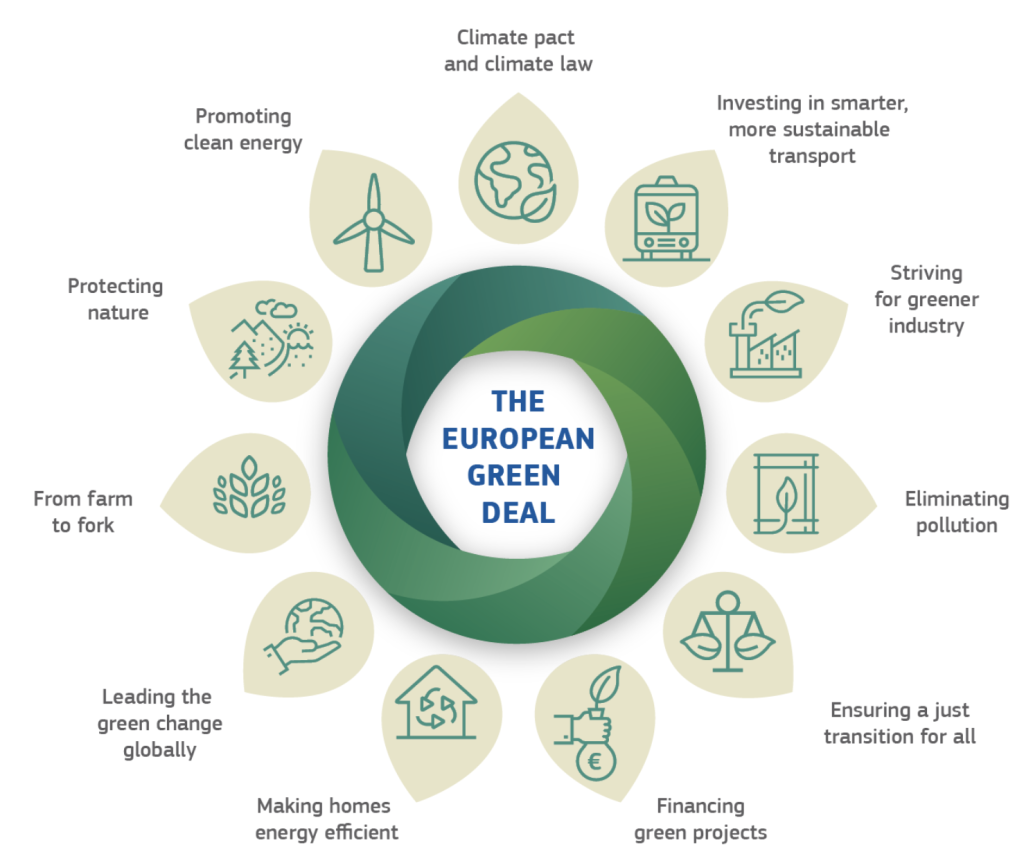
European Green Deal (EGD)
The EGD is the overall policy framework for the EU’s sustainability transition. The Green Deal drives multiple sector-specific regulations. These cover the Circular Economy, Chemical Strategy, Digital Product Passports and resource efficiency. Natural ingredients exporters will face stricter limits on harmful chemicals and pesticides and increased demand for sustainable raw materials. There will also be higher requirements for transparency and data sharing.
These regulations create a lot of first-mover opportunities. Most suppliers in developing countries are unprepared for the EUDR’s traceability requirements. This means those who implement compliance systems now will get an immediate competitive advantage. European buyers are urgently seeking suppliers who can provide documented, deforestation-free sourcing. Buyers also want to see complete transparency throughout supply chains.
Figure 1: The European Green Deal aim’s to accelerate the EU’s green transition
Source: European Commission, 2025
Tips:
- Learn about the Convention on International Trade in Endangered Species of Wild Fauna and Flora (CITES). This is an agreement between governments to ensure that international trade in wild plants does not pose a threat to the survival of the species.
- Read the sustainability reports of European companies to find out more about what they expect from suppliers.
- Read the CBI study on the EU Green Deal and how it could affect your business to learn about the evolving sustainability requirements in the European Union for agricultural products.
- Read this report by the World Economic Forum to understand the main implications of the EU Green Deal.
- Prepare documentation on your environmental and social due diligence processes. Buyers will request this information during audits and contract negotiations.
2. Build direct partnerships with producers to strengthen your export business
European buyers are more and more interested in knowing exactly where ingredients come from, who produces them and under what conditions. Building direct, long-term partnerships with producers helps you meet these demands while creating a stronger, more resilient business.
Direct producer partnerships benefit your export business in three ways:
- Meeting EU requirements: Direct producer relationships give you the traceability data, geo-coordinates and production documentation that the EUDR and CSDDD require. This means it is easier to prove your supply chain is deforestation-free and socially responsible.
- Quality control: When you work with producers directly, you can implement quality standards from the start, provide training and make sure harvests are consistent. This reduces quality issues and rejections.
- Gaining a competitive advantage: European buyers prefer suppliers who have long-term producer relationships. It shows reliability, transparency and a commitment to sustainability, which is what the European Green Deal requires.
Leading companies in Europe are building direct partnerships. Tradin Organic is a Netherlands-based ingredient supplier that illustrates how direct partnerships create value for European buyers. For their organic coconut oil from the Philippines, they partner with over 2,500 smallholder farmers. They provide multi-year contracts ensuring price stability, technical training on organic farming methods, full traceability from individual farms to the final product, and support for organic certification costs. This model allows Tradin Organic to guarantee quality and sustainability while ensuring a reliable supply.
In terms of supply, establishing direct relationships with producers gives natural ingredient suppliers a major advantage in the European market. Many natural ingredients are challenged by fragmented supply chains that lack traceability. European buyers 'more often require verified sustainable sourcing with documented social and environmental impact. Suppliers who invest in producer relationships and certification can access premium market segments that pay higher prices.
Baobab Exports demonstrates this approach well. The company built its business by creating direct partnerships with women’s cooperatives across Zimbabwe and South Africa. This grew them from a small local trader to a preferred supplier for premium European markets. Their certified FairWild supply chains command premiums over untraceable baobab. European buyers like Unrooted and Aduna work with Baobab Exports because they have documented their social and environmental impact.
If you invest in traceable, certified producer relationships, it gives you direct market access and premium pricing. This is true whether you export baobab, moringa, hibiscus or any other natural ingredients
However, building direct producer partnerships comes with major risks that you need to plan for. The biggest challenge is the time and money required before seeing any returns. Producer training, certification support and setting up a traceability system can be expensive. It may also take two or three years before you can market certified products. During this period, you should invest while your producers learn new methods and wait for certification.
Tips:
- Map your producer network in its entirety: document names, locations, GPS coordinates and production volumes. This data is essential for EUDR compliance and will be requested during buyer audits.
- If you can, invest in long-term relationships and not one-time transactions. Offer multi-year contracts, fair pricing and advance payment options. This creates loyalty and ensures consistent quality.
- Visit your producers regularly. Face-to-face relationships build trust, help you identify quality issues early and show European buyers that you genuinely know your supply chain.
- Find out which farmers are interested in sustainable production. Invest in annual audits and training to understand what makes it hard for them to produce sustainably, and help them become more sustainable.
3. Implement traceability systems to meet buyer requirements and protect your business
Traceability is a legal requirement and necessary to stay competitive. European buyers need to prove their supply chains are deforestation-free and socially responsible. As their supplier, you need to provide detailed documentation that shows exactly where your ingredients come from, who produced them and under what conditions.
The EUDR requires plot-level traceability with geo-coordinates for all products that enter the EU. Without this data, your buyers cannot legally import your products, meaning you lose market access entirely. Beyond legal compliance, complete traceability proves you have nothing to hide. It shows professional management and reduces buyer risk. Companies with transparent supply chains consistently win contracts over competitors that cannot document their sourcing.
Traceability also protects you if any problems arise. If quality issues or contamination occur, traceability helps you identify the source of the problem quickly. You can then isolate affected batches and protect your reputation. Without it, a single problem can destroy your entire business relationship. Fully traceable products also help you get higher prices because buyers pay more for ingredients they can trust and verify.
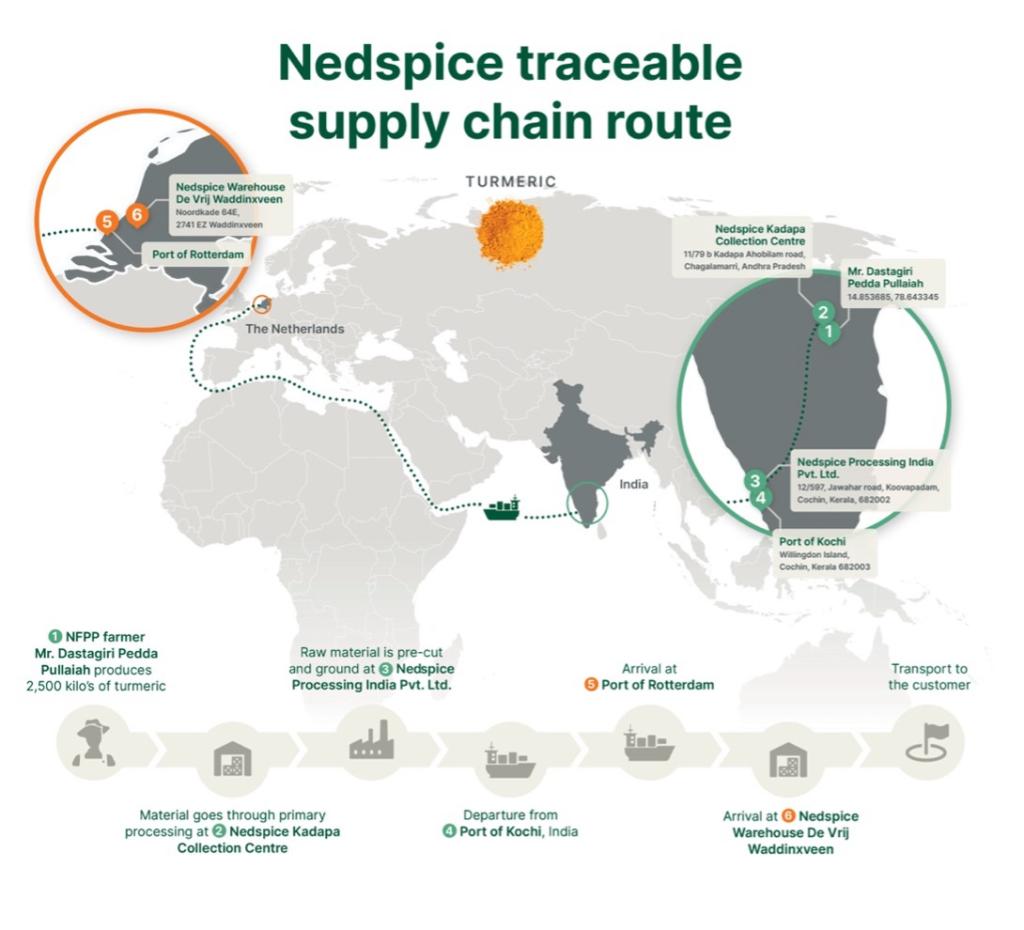
Nedspice is a global spice supplier based in the Netherlands. It shows exactly what EU buyers require from all natural ingredient suppliers. Visit their online turmeric traceability tracker to see the standard you should work toward. For each turmeric shipment, Nedspice provides the names of individual farmers, the exact geographic coordinates of each farm and production dates. It also gives processing facility locations with coordinates, quality control data at each stage of the supply chain, and certification status. Buyers can access this information through Nedspice’s online portal. It proves the turmeric is deforestation-free and meets EUDR requirements.
Figure 2: Nedspice traceable turmeric supply chain route
Source: Nedspice, 2025
This level of transparency has made Nedspice a preferred supplier for major European food companies. For suppliers, partnering with buyers like Nedspice offers clear benefits. Through the Nedspice Farmers Partnership Programme (NFPP), over 2,300 farmers in Vietnam receive price premiums, cultivation training and market information through the NFPP app. Farmers that commit to the programme receive the market price plus a price premium for their products, along with price protection programmes. This results in loyal farmers who can count on fair prices, while Nedspice has long-term relationships and a traceable supply.
Video 1: Nedspice NFPP programme in Vietnam
Source: Nedspice Corporate, 2018
Despite the benefits of traceability, many exporters fail to implement it. This is because they underestimate the burden of ongoing data management and challenges with verification. Collecting GPS coordinates once is simple. But maintaining updated records as producers join, leave or expand their plots requires constant attention. Incomplete or inaccurate data creates serious risks. European customs may reject shipments if traceability documentation is incomplete or inconsistent. False claims about sustainability may result in contract termination or damage to your reputation that will destroy your business.
Table 1 provides simple steps to help you build a system that meets EU requirements.
Table 1: Step-by-step traceability implementation for natural ingredient exporters
| Step | What to do | Tools you need |
|---|---|---|
| 1. Create a producer registry | List all producers, including their names, locations, GPS coordinates, production area sizes and contact information. Assign each producer a unique ID number. | Excel spreadsheet or notebook |
| 2. Track production batches | Give each harvest a unique code (Producer ID + Harvest Date). Record the harvest date, quantity, quality grade and which producer supplied it. | Simple logbook, spreadsheet or mobile app |
| 3. Collect GPS coordinates | Visit each production site once. Record the exact location coordinates and take photos to verify the site. | Free smartphone apps (like Maps.me, Google Maps, GPS Essentials) |
| 4. Document the supply chain | Keep purchase receipts from producers. Photograph production processes and storage. Create a movement log that shows when products move between locations. | Camera phone, basic filing system |
| 5. Link batches to exports | Create a simple chain: producer batch, processing batch, final product batch, export shipment. Make sure to document which batches go into which final products. | Spreadsheet or notebook |
Source: ProFound, 2025
As your business grows, affordable digital tools can help. WhatsApp Business collects photos and information from producers. Google Forms creates simple data collection forms. Specialised traceability apps like Sapelli and FairFood’s Trace platform offer more functionality for a reasonable fee.
Tips:
- Ask your current European buyers for their traceability templates before you build your own system. Many buyers have standard forms that show exactly what data they need. This prevents you from collecting incorrect information and ensures your system meets their requirements from the beginning.
- Start traceability with your top 20% of producers who supply 80% of your volume. Fully document these major suppliers first, then expand gradually. This approach ensures faster compliance while keeping costs manageable. It also allows you to test your system before scaling.
- Read the Initiative for Sustainable Agricultural Supply Chains article to learn how to set up a traceability system in natural ingredients supply chains.
4. Measure and communicate your carbon footprint to win climate-conscious buyers
Once you have traceability systems in place, use that data to measure your environmental impact. European buyers require carbon footprint calculations more often so they can make informed sourcing decisions. Major supplement brands like Puori (Denmark) and Garden of Life (Switzerland, owned by Nestlé) prioritise suppliers that can document their greenhouse gas emissions across their supply chains. Understanding your carbon footprint helps you identify reduction opportunities, communicate environmental benefits and stand out from competitors who cannot provide emissions data.
Different natural ingredients and production methods have different carbon footprints. Table 2 compares the relative carbon impact of common health product ingredients.
Table 2: Comparison of carbon impact of natural ingredients for health products
| Processing method | Relative carbon impact | Example ingredients |
|---|---|---|
| Wild-harvested, sun-dried | Very Low (baseline) | Baobab, wild herbs |
| Cultivated, sun-dried | Low | Moringa, dried herbs |
| Mechanical pressing (cold) | Low-Moderate | Coconut oil, seed oils |
| Conventional drying (fuel) | Moderate | Most dried botanicals |
| Steam distillation | Moderate-High | Essential oils |
| Spray-drying | High | Fruit/vegetable powders |
| Freeze-drying | Very High | Premium botanical extracts |
| Solvent extraction | Moderate-High | Concentrated extracts |
Source: ProFound, 2025
There are four main sources of emissions:
- Agricultural production (fertilisers, machinery, irrigation);
- Processing (energy for drying, extraction, grinding);
- Transportation (sea freight, trucking, cold chain);
- Packaging (plastic, glass, labels).
Every stage offers opportunities for reduction, no matter where you start. If you produce high-emission ingredients, such as freeze-dried powders or solvent extracts, consider switching to renewable energy for processing. You should also look at optimising extraction efficiency to reduce waste, and investing in carbon offset programmes for unavoidable emissions. If you produce low-emission ingredients, such as those wild harvested or dried in the sun, document and market this advantage. Measure your carbon savings over synthetic or intensive alternatives. Use your small carbon footprint as an important feature to stand out to climate-conscious buyers.
Tip:
- Use free carbon calculators like Cool Farm Tool or ADEME Agribalyse to estimate your footprint. Simple estimates are better than not having data at all.
5. Differentiate yourself by committing to sustainable production methods
The EUDR means you need to prove that your production does not cause deforestation or ecosystem degradation. The CSDDD means buyers will audit your environmental practices. They do not use suppliers that cannot show they use sustainable methods. European consumers more and more demand products with verified low environmental effects. This requires buyers to use suppliers that have documented sustainable practices.
Sustainable production also leads to measurable business benefits. Soil management improves, water-efficient methods reduce costs and protect against drought. Biodiversity protection leads to improved crop resilience and premium buyers. These practices create a stronger, more profitable business.
However, transitioning to sustainable production methods creates operational and financial risks that you need to prepare for. The organic conversion period can last up to three years. During this period yields may drop while you put new practices into place. You need to stop using conventional pesticides and fertilisers as soon as possible. However, beneficial insects and soil health take time to develop. During this transition, production costs often increase while you cannot charge organic price premiums.
Despite these challenges, there are several production methods you could consider implementing. A few are provided below.
- Soil health management: Healthy soil produces better crops with less input. Implement crop rotation (change which crops you plant each season), plant cover crops between harvests and add compost or organic matter to your soil. These methods reduce the need for chemical fertilisers and pesticides by 30–40% while you keep getting the same yields. You save money on inputs while protecting soil quality for future harvests.
- Water efficiency: Water scarcity (not having enough water) affects many areas where natural ingredients are produced. Simple improvements make a big difference. Install drip irrigation systems that deliver water directly to plants’ roots instead of spraying them generally. Spread mulch (dried plant material) around your crops to keep the soil moist. These two methods used together reduce water use by 30–50% and often improve yields. This is because plants receive water more efficiently.
- Biodiversity protection: Create buffer zones (protected areas) between your production areas and natural forests or waterways. Plant different crops together rather than only planting one crop across all your land. Leave some areas for wild plants and insects. These help your crops grow by limiting the numbers of pests and pollinating flowers.
- Carbon footprint reduction: Plant trees throughout your crops (agroforestry) to capture carbon from the air. Replace chemical fertilisers with compost or organic alternatives, as chemical fertilisers create a lot of emissions. Use solar drying instead of fuel-powered equipment.
Explore concepts like ‘nature positive’, ‘regenerative production’, and ‘net zero’. These focus both on preventing loss of biodiversity and renewing biodiversity. The aim is to increase biomass and to use less fossil fuel in the production system. If you export a natural ingredient that is wild-harvested or harvested from a cultivated tree or shrub, you may already be doing this without knowing. For example, if you export seaweed, you can highlight that it is good for carbon sequestration and share how it helps to create habitats and increase biodiversity in the sea.
Table 3 shows how you can highlight the sustainable features of your natural ingredient. Once you have done this, make sure that you include the good environmental features of your natural ingredient in your marketing campaigns and in your unique sales proposition (USP) to your clients.
Table 3: Promotional environmental features of natural ingredients by various companies
| Natural ingredient and plant part | Company | Environmental or sustainability feature promoted |
|---|---|---|
Seaweed extract | The Seaweed Company |
|
| Baobab powder | Baobab Exports LTD |
|
| Moringa powder | Ganopur |
|
Source: ProFound, 2025
Martin Bauer Group (Germany) is a leading supplier of botanical ingredients. It sources over 24 products that are FairWild certified and works directly with harvesters to implement sustainable wild-harvesting practices. Their FairWild certified supply chains ensure sustainable collection rates that maintain plant populations, protect fragile ecosystems, respect customary land rights and stay traceable from harvest to export. This approach meets the CSDDD’s requirements while securing premium prices from European buyers.
Regenerative agriculture
Regenerative agriculture aims to increase carbon storage and improve soil health and water-holding capacity. It also wants to increase crop resilience and improve nutrient density.
Regenerative agriculture includes things like:
- No-till or minimum tillage. Use of cover crops, crop rotations, compost and animal manure for increased soil fertility;
- Reducing chemicals and using methods that conserve water and soil (horizontal cropping to avoid erosion);
- Avoiding slash-and-burn farming, and introducing permanent production systems through intercropping, mixed plantations and agroforestry systems;
- Increasing the genetic biodiversity of the target species;
- Making sure that the management of wild-harvest systems complies with sustainable harvest quotas;
- Saving some parts of the production area to conserve biodiversity and to let plants grow naturally;
- Encouraging people to use well-managed grazing methods that increase plant growth, soil carbon deposits and the productivity of all pasture and grazing land;
- Training producers in rural waste management, and checking options to reduce greenhouse gas emissions.
- Think about using these methods to produce your ingredients.
6. Use green technology for processing to reduce costs
How you process natural ingredients greatly affects your environmental impact and marketability. European buyers audit supplier processing practices more because the CSDDD requires them to address their supply chains’ environmental effects. Green processing technologies reduce your costs while making your ingredients more attractive to sustainability-focused buyers.
Cold pressing, rather than chemical extraction, is a simple, cost-effective and sustainable alternative. Many natural oils can be extracted through mechanical cold-pressing, such as coconut, baobab and moringa, rather than using chemical solvents like hexane. Cold pressing requires minimal energy and produces no chemical waste. It also preserves more nutrients and bioactive compounds and commands price premiums. This is because European buyers want ‘natural’ and ‘non-chemically processed’ ingredients for health products more often.
Solar drying is another low-cost and environmentally friendly method for drying natural ingredients. Instead of using wood-fired or diesel-powered dryers, solar drying racks eliminate fuel costs and produce cleaner, chemical-free products. Marketing your product as naturally processed attracts higher prices.
For example, FairOils has two ginger-growing projects in Tanzania and Madagascar. They get ginger oil through hydro-distillation. Heat for this distillation comes from biomass boilers, which are powered by their own bio-waste briquettes. As part of their sustainability strategy, FairOils has solar panels at all its processing facilities. These panels are a clean, reliable source of energy.
FairOils’ investment in solar power and biomass boilers have given it a measurable, competitive advantage. Their energy costs dropped compared to competitors that use diesel-powered processing. This likely improved profit margins. More importantly, their ‘solar-processed’ marketing message resonates with European buyers. These green processing credentials may have helped FairOils secure contracts with major European essential oil buyers.
Green technology does not get adopted when exporters underestimate technical challenges and operational complexity. Solar dryers sound simple, but they need specific weather conditions. They should also have regular maintenance and trained operators who understand how to dry different ingredients. Equipment breakdowns in remote locations can stop production for long periods of time if spare parts or technical support are unavailable locally. Ask your buyers before you implement green processing technologies. Many buyers provide technical support to suppliers transitioning to sustainable methods.
Tips:
- Look carefully at your current processing methods and identify any areas where you can introduce environmentally friendly methods.
- Check if you can use water recycling systems to reduce the amount of water that is wasted in your processing.
- Read the International Renewable Energy Agency’s (IRENA) report about how renewable energy can be used in the agri-food system.
- Document your green processing methods with photos, energy consumption data and emission calculations. Include this in your sustainability reports for buyers.
7. Avoid plastic packaging and apply sustainable transport solutions
The European market is moving towards recyclable and low-impact packaging fast. Under the new EU Packaging and Packaging Waste Regulation (PPWR), all packaging on the EU market needs to be reusable or recyclable by 2030. There are also goals for cutting packaging waste and increasing recycling rates. Plastic packaging should contain a minimum amount of recycled plastic, and 55% of plastic packaging waste needs to be recycled by 2030.
As an exporter of natural ingredients for health products, this means buyers will expect packaging that is easy to recycle in EU systems (mono-material, not complex multi-layer mixes). It should have recycled content where possible and use no more material than is absolutely necessary (reduced weight and volume).
Instead of avoiding plastic, European rules now focus on better plastic and better design. For example, you could use mono-material PE or PP sacks and liners that match common EU recycling streams or use paper sacks with limited plastic layers. Glass and metal are still options for high-value extracts. But they are heavy and increase transport emissions and costs. So they are less suitable for bulk, low-value ingredients.
There is growing interest in bio-based and compostable packaging. However, the EU has been clear that these materials need to fit local waste systems. They should not create confusion or involve greenwashing. If you use bio-based, biodegradable or compostable plastics, such as algae, bamboo, or cardboard-based materials, make sure you can explain how they should be collected and treated in Europe.
At the same time, transport emissions are coming under tighter control. On 1 January 2024, the EU Emissions Trading System (EU ETS) was extended to maritime transport. This means ship operators need to pay for a growing share of their carbon emissions. In 2025, the FuelEU Maritime regulation also started pushing for the use of cleaner fuels in ships. These measures have already increased shipping costs for high-emission fuels and encouraged more efficient, lower-carbon shipping.
This makes good planning and logistics even more important. Sea freight is still much less carbon-intensive than air freight. However, buyers more often will expect to see that you ship full containers, avoid unnecessary rush air shipments and select carriers that offer more sustainable options.
Tips:
- Check the UN’s approved metal drum, which can be cleaned and reused. This is especially useful if you are exporting hazardous and volatile oils.
- Align with your buyers’ packaging policies. Ask European clients for their packaging or PPWR guidelines. Ask which materials and formats they want.
- Use reusable drums and intermediate bulk containers (IBCs). Choose United Nations (UN) approved metal or plastic drums that can be cleaned and reused in certified reconditioning sites, especially for hazardous or volatile oils. This reduces packaging waste and supports the EU’s reuse targets for transport packaging.
- Remember that not all products can share the same container, because some products are sensitive to smells or other contamination.
8. Implement circular economy practices and upcycling within your business
Another important part of the EU Green Deal is the circular economy. This is about reducing waste and using resources in the most efficient way. This means you should try to use every part of the raw material that you source. IFF, a global manufacturer of fragrances and flavours, have created a new product using an extraction process from the root of turmeric. This new product, ‘Turmeric Root Ultimate’, is an example of a by-product that can be created from waste material, which would usually be thrown away.
Using the principles of the circular economy in your business can help reduce negative impacts on the environment. The example from IFF also shows how waste materials can be used to generate more income for farmers. The methods of the circular economy encourage businesses to see waste as a valuable resource.
This aspect of environmental sustainability is also known as ‘upcycling’, which is when you turn waste material into new products. Many European companies are now part of the Upcycled Food Association, a mark that highlights a company’s commitment to sustainability through the production of food by-products. In 2022, IFF announced its first wave of 10 products that achieved the UFA’s Upcycled Certified Program.
A good waste management plan helps you cut costs, use resources efficiently and create new products from waste. This is how you can get started in five clear steps:
- Check what you throw away: Do a simple waste audit at your production site. Collect and weigh waste for a week. Sort it into categories like organic waste, packaging, plastics and production leftovers.
- Set goals and priorities: Use your audit results to decide where you should act first. Set clear goals. For example: ‘Reduce packaging waste by 20% in six months’ or ‘Reuse all by-products from processing within one year.’
- Train your team: Explain your plan to your staff and producers. Show them how to separate materials, reuse leftovers and report waste correctly. Small posters or colour-coded bins help everyone follow the system.
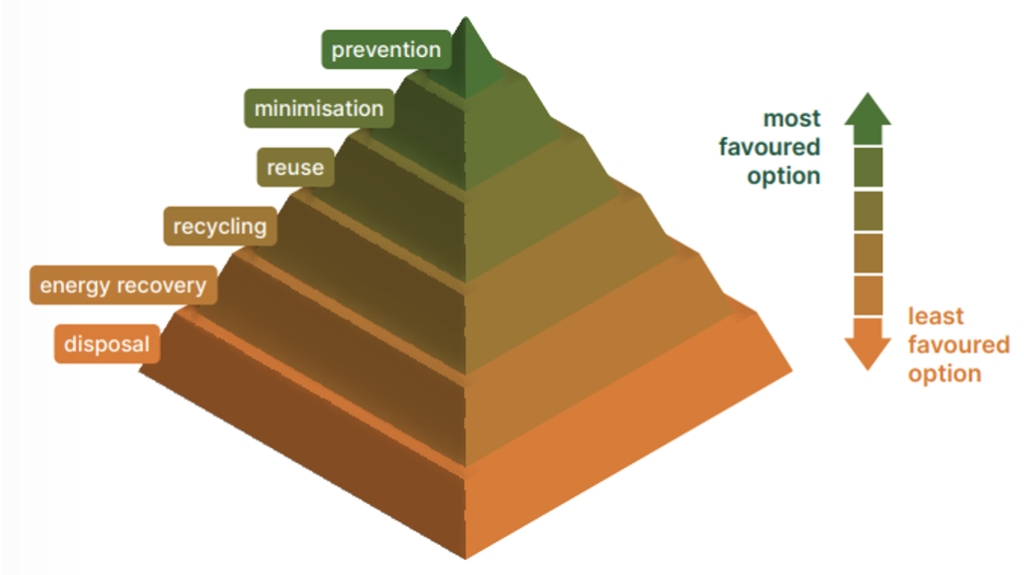
- Reduce, reuse, redesign: Use less packaging or switch to recyclable options. Reuse containers, sacks or by-products (such as husks, pulp, shells) in new ways. Work with local partners who can use your by-products in animal feed, compost or new products.
- Recycle and track progress: Set up bins for different waste types and label them clearly. Partner with a local recycling company or collection centre. Record how much waste you reduce or recycle every month, as this will help you show your progress to buyers.
Figure 3: Graphic showing the ‘waste hierarchy’
Source: Nedspice Sustainability Report, 2021
9. Check options for financial support in going green
Going green requires major upfront investment. This creates financial pressure, especially for SMEs that operate on thin margins. Equipment upgrades, certification fees, producer training and traceability systems have high upfront costs that small exporters must commit to before they can generate any additional revenue. SMEs often underestimate these costs and run out of working capital mid-transition. Banks can refuse loans for green projects because they consider agricultural SMEs in developing countries to be high-risk, leaving exporters to finance the transition themselves from their operating profits, diverting cash away from working capital.
Luckily, there are numerous financial support options specifically for suppliers who want to implement sustainable practices. Governments, development banks and green financing facilities offer grants, low-interest loans and technical assistance to help natural ingredient exporters go green.
You can apply for support from microfinance institutions, which provide smaller loans than development banks. These Lending institutions are offering more support to companies that focus on environmental sustainability and climate change adaptation. However, to receive support from these institutions, you must show you are committed to building a green business. Applications require complete environmental sustainability plans.
Several major sources provide green financing. For example, development finance institutions, such as the European Investment Bank, African Development Bank and International Finance Corporation (IFC), offer accelerator programmes for incubator support to help SMEs achieve their environmental goals. Many also offer 'green' loans and financing investments that support sustainable projects. These long-term loans typically offer reduced interest rates.
Microfinance institutions provide smaller loans accessible to SMEs and farmers. Here are some other options for financial support:
- Oiko Credit offers loans to organisations that work in financial inclusion, agriculture and renewable energy in Africa, Asia and Latin America.
- Root Capital offers credit and other services to small and growing agricultural businesses all over the world.
- Impact Finance offers loans to companies that focus on 5 categories, including small producers, agroforestry, financial inclusion, circular industry and integrated farming.
- Check the database of the Global Environment Facility (GEF), which offers serious funding opportunities for country-wide programmes. GEF also offers funding to individual SMEs.
- Explore EU programmes that help countries to work on climate, environment and energy.
- Check your local Agriculture Development Bank. They may offer loans to finance climate projects, to buy equipment or to meet your other financial needs.
There are also crowdfunding and green investment platforms that connect suppliers with investors to buy equipment or meet other financial needs. Crowdfunding platforms like Kickstarter, Indiegogo or region-specific platforms allow you to raise capital from consumers and investors who support sustainable businesses.
Tips:
- Use the ITC’s free e-course on approaching banks for green loans. It explains how to present your green business case to financial institutions, increasing your chances of approval.
- Read the Green index 3.0 to understand how financial institutions work out how ‘green’ they are. The index is a tool used by the green and inclusive finance sector to manage its environmental performance.
10. Formalise your green commitment and use it as your competitive advantage
European buyers more and more require suppliers to have a written Green Code of Conduct that formalises their environmental commitments. Under the CSDDD’s requirements, buyers need to verify that suppliers have a systematic environmental management system and not just ad-hoc actions. A code of conduct shows you take sustainability seriously and provides the foundation for all your marketing claims.
Your green code of conduct should be a simple document that outlines your environmental commitments and practices. Include these minimum standards:
- A statement that covers your approach to emissions, waste, water use and biodiversity protection.
- Specific measurable targets, like ‘reduce packaging waste by 30% by 2027’, ‘achieve 100% supply chain traceability by 2026’ or ‘reduce fertiliser usage by 25% by 2028’.
- Requirements that you work with your producers to meet, such as sustainable harvesting practices and environmental compliance.
- Your monitoring process explains how you track progress and report to stakeholders.
Large buyers of natural ingredients for health products, like Nestlé, publish detailed Codes of Business Conduct that cover environmental and social requirements for suppliers. This is only an example of a comprehensive corporate document, but you can adapt its main principles. You could include commitments to legal compliance, resource efficiency, waste reduction and continuous improvement. Keep your code of conduct practical, and start with a simple, two-page document that you can implement and verify.
Once formalised, use your code of conduct as a competitive advantage. European companies generally source from large international traders that often cannot provide supply chain transparency or documented environmental commitments. You can win business by offering what they cannot. This includes full traceability from production to export and documented sustainable practices backed by your code of conduct. You should also look into communicating about your environmental journey transparently.
Explain how you work with producers to conserve biodiversity and improve soil health. Also tell them how your processing reduces your environmental footprint and how you minimise packaging waste and transportation emissions. Refer to your code of conduct when you discuss your commitments. This shows buyers that you have systematic policies in place and not just good intentions.
This transparency aligns with European food industry marketing campaigns that emphasise regenerative farming, zero-waste production and low-emission transportation. However, only make claims you can prove. Never make your environmental benefits look bigger or better then they are. Unverifiable claims damage your reputation and risk you being accused of greenwashing. Instead, you should use your code of conduct, backed by measurements and documentation, to protect you by formalising what you do.
Tips:
- In your promotion campaign, explain the main threats to ecosystems and biodiversity, and explain very clearly and specifically what you are doing to stop this. Use evidence, for example, photos of the people involved, the landscape, endangered animals and the environment.
- Think about promoting your products on distribution platforms that highlight sustainably produced raw materials, like 1-2 Taste.
- Share your green journey with buyers through quarterly updates with photos and data. Transparent suppliers get longer contracts and better prices.
ProFound – Advisers In Development carried out this study on behalf of CBI.
Please review our market information disclaimer.
Search
Enter search terms to find market research
Do you have questions about this research?
Environmental sustainability drives everything we do in our business. We actively use solar energy and rainwater harvesting to minimise environmental impact. Our packaging features eco-friendly Kraft pouches and recycled boxes. Sea freight reduces carbon emissions. We practice circular economy through composting organic waste and treating wastewater to rejuvenate our plantation.

Sahan Clive Bakmiwewa, CEO and Director of Silk Route Ventures