
Entering the European market for seaweed or marine algae
To enter the European market for seaweed you must meet the mandatory requirements set by the European Union. Also consider meeting the common additional requirements that European buyers and niche markets have, as this will help you enter the European market. Seaweeds are used by a number of end-user industries. The health products industry is the largest segment for spirulina and chlorella. Importers are the most prospective channel for exporters in developing countries. China is established as the major supplier of edible seaweeds or marine algae, such as spirulina.
Contents of this page
- What requirements must edible seaweed for health products comply with to be allowed on the European market?
- Through what channels can you get edible seaweed on the European market?
- What competition do you face on the European seaweed market?
- What are the prices for edible seaweed on the European market?
1. What requirements must edible seaweed for health products comply with to be allowed on the European market?
What are mandatory requirements?
As an exporter of spirulina and/or chlorella from a developing country your spirulina and/or chlorella can only be exported to the European natural health product market if you comply with the European Union’s (EU) mandatory legal requirements for natural ingredients for health products. Non-compliance will result in your spirulina and/or chlorella not entering the European market for natural health products.
If your spirulina and/or chlorella is used in food supplements, you must be complaint with EU food supplement legislation and the European General Food Law.
Tips:
- See the CBI study ‘What requirements must natural ingredients for health products comply with to enter the European market?’. This study provides further guidance on mandatory as well as broader market entry requirements for this sector.
- Visit the Access to markets Portal (previously known as the EU Trade Helpdesk) for more information on import rules and taxes in the European Union.
- Contact Open Trade Gate Sweden if you have specific questions regarding rules and requirements in Sweden and the European Union.
Contamination
You must also comply with the EU’s food safety requirements, which specifically cover topics, such as maximum Residue Levels (MRLs) for pesticides and polycyclic aromatic hydrocarbons (PAH); contaminants in food and microbiological contamination of food, food hygiene, food irradiation, traceability and extraction solvents.
According to Regulation (EC) No 629/2008 the maximum limits for trace metal elements in food supplements in Europe are:
- lead (3 mg/kg),
- cadmium (1 mg/kg for food supplements in general and 3 mg/kg for food supplements containing seaweed)
- mercury (0.1 mg/kg).
Tip:
- Always send European buyers uncontaminated spirulina and/or chlorella in accordance with the set maximum levels, as buyers regularly test for spirulina and/or chlorella. Failing to do so could end of your business relationship with buyers who expect high quality.
Documentation
European buyers of spirulina and/or chlorella expect exporters to provide them with well-structured and organised product and company documentation because they use this to verify if you meet their requirements. One buyer commented: “we require a lot of documentation from the suppliers to make sure that the goods meet our specification”. Additionally, when asked if documentation was important, a buyer replied: “100 percent yes… we always get it for everything”.
You must therefore provide buyers with documentation when trying to establish yourself in the European market. Doing so gives you credibility, as it makes you look organised and well-prepared, which is key to forming long lasting relationship with buyers.
European buyers of spirulina and/or chlorella for health products expect exporters to provide them with a Safety Data Sheet (SDS), Technical Data Sheet (TDS) and Certificate of Analysis (CoA). Table 1 shows what is contained in the SDS, TDS and CoA, to help you prepare these three pieces of documentation.
Table 1: What is contained in the Safety Data Sheet (SDS), Technical Data Sheet (TDS) and Certificate of Analysis (CoA)
| Safety Data Sheet (SDS) | Technical Data Sheet (TDS) | Certificate of Analysis (CoA) that matches |
| Product description | Product description | Data mentioned in the TDS |
| Product classification | Product classification | Pre-shipment samples approved by buyer |
| Hazard identification | Quality analysis | Contractual agreements with buyer |
| Information on safety measures | Information on applications | |
| Certificates |
Ensure you have a well-prepared SDS, TDS and CoA, respectively, for your spirulina and/or chlorella and have them ready for European buyers. When approaching buyers, inform them of any documentation you have.
Tips:
- Ensure your documentation is up to date and always readily available, as European buyers expect this.
- Review examples of technical documentation for edible seaweed, such as the Safety Data Sheet (SDS), Technical Data Sheet (TDS) and Certificate of Analysis (CoA).
Convention on Biological Diversity (CBD)/Access and Benefit-Sharing (CBD)
To export spirulina and/or chlorella to the European market you must comply with the requirements on using plant resources agreed under international treaties and protocols within the Convention on Biological Diversity (CBD). This is because the CBD is a part of EU law. Additionally, it is likely your own country is also a signatory, meaning you need to comply to meet your national laws.
The Nagoya Protocol’s Access and Benefit-Sharing (ABS) provides guidelines for accessing and utilising genetic resources and traditional knowledge, as well as the fair and equitable sharing of benefits. Similar to CBD, European companies need to comply with ABS legislation. ABS is also likely to be a part of your country’s regulations. As an exporter of spirulina and/or chlorella to the natural health product sector, make sure you abide by ABS.
In recent years, there is growing consumer awareness and demand for more environmentally-friendly products, and this trend is set to continue. This is leading European buyers to seek ethically sourced ingredients, something which is likely to become more important in the future.
Tips:
- Visit the Convention on Biological Diversity (CBD) website as it provides useful information on CBD and ABS, including country profiles.
- Consider ethically sourcing your spirulina and/or chlorella, as this is something European buyers are increasingly seeking.
- Inform buyers if your spirulina and/or chlorella is ethically sourced and display this information on your company website and marketing materials, as this will make you more appealing to buyers.
What additional requirements do buyers often have?
Quality requirements for seaweed
Quality is important to European buyers of spirulina and/or chlorella. For example, when asked what they look for in a new supplier from a developing country, one buyer answered, “first it’s the quality”, with another buyer commenting that “quality is the main focus”.
Buyers have additional buyer requirements which go further than mandatory legislation and standards for spirulina and/or chlorella. These additional buyer requirements are outlined in buyer specifications. They can concern your spirulina and/or chlorella’s active ingredient content and moisture contents along with its levels of contaminants and residues.
Speak to European buyers to find out their specific requirements, and meet those requirements. Buyers expect you to provide structured company and product information, including Technical Data Sheets, to prove you meet their requirements. You should therefore be prepared to provide this.
Contamination that affects quality is a key issue in seaweed production. Contamination by other species, cyanotoxins, bacteria or metallic trace elements is a key issue in spirulina and/or chlorella seaweed production. You should therefore ensure your spirulina and/or chlorella is not contaminated. Additionally, spirulina is also prone to contamination by cyanobacteria or cyanotoxins. So you should systematically check the level of contamination by cyanobacteria during the various stages of production.
Buyers will analyse your product
To ensure products meet their requirements and to ensure it is not adulterated and contaminated, European buyers regularly test products they purchase, usually on a per batch basis. For example one buyer of spirulina and chlorella revealed “we analyse the product… we test in our facilities with our stuff”, with another buyer stating “we undertake very stringent testing”.
Products not meeting specific buyer requirements could result to buyers rejecting their order, bringing financial costs as well as the possible termination of your business relationship with them. For example, as one buyer explained “all imported products are tested and if they are not up to the required standard they are sent back… because customers demand the finest ingredients”. Thus, always send buyers a product that meets their quality requirements and that which is not adulterated and contaminated.
Tip:
- European buyers usually require potential suppliers to provide them with samples which they test when deciding whether or not to business with them. For example one buyer commented “we also take the testing of samples, so the suppliers have to be able to supply us with free samples”. Thus, always send buyer’s high quality samples as it is likely to increase your chances of entering the European market.
Spirulina and/or chlorella of a consistently high quality is important to European buyers, as it is key to the manufacturing of natural health products. Buyers therefore prefer a high-quality product across all orders in suitable packaging as per order volumes. For example, in plastic and aluminium foil bags that can hold 25 kilograms for an order of that size.
The importance of quality in the health products sector is expected to increase in the future. Quality is very important to European health product manufacturers who want to ensure they meet consumers’ needs.
Tips:
- Only agree to meet specific requirements European of buyers if you can meet them. Because failing to do so could end your business relationship with them.
- Have up-to-date documentation that is readily available. Buyers expect this, as they use documentation to assess the quality of your product.
Labelling and packaging requirements
To export your spirulina and/or chlorella on to the European market you must comply with the following labelling requirements:
- The name, address and telephone number of supplier
- Product name
- Batch code
- Place of origin
- Date of manufacture
- Expiry date
- Weight
- Recommended storage conditions
If you export organic spirulina and/or chlorella, your labelling must include the name and/or code of the inspection body and the certification number.
European buyers demand spirulina and/or chlorella of the highest quality. If you fail to package your product correctly, its quality will probably decline. This may lead to buyers rejecting the product they ordered, and negative financial consequences for you, and it could also end your business relationship with them. So consider preserving the quality of your spirulina and/or chlorella by using appropriate packaging materials and complying with general requirements. This includes always taking the following steps:
- Use packaging materials that do not react with your spirulina and/or chlorella. Because if you use packaging materials that are reactive to spirulina and/or chlorella, its quality will decline.
- Use clean packaging materials. Because if you use packaging materials that are contaminated, with bacteria for example, your spirulina and/or chlorella will probably also be contaminated and its quality will then decline.
- Ensure that certified organic spirulina and/or chlorella is physically separated from conventional spirulina and/or chlorella to prevent contamination.
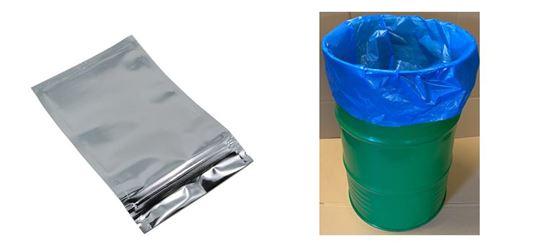
Packaging materials for edible seaweed can vary. For chlorella and spirulina powder, aluminium foil bag with double plastic bags are used. Waterproof bags are also used for safety. Depending on the quantity, drums are also used to contain sealed bags of edible seaweed.
The EU is committed to environmental sustainability and sustainable growth, something it has made clear in its Circular Economy Action Plan and the European Green Deal. It has set key priorities, such as reducing waste and increasing recyclability.
The EU is therefore putting increasing pressure on European businesses to reduce their waste and increasing recyclability through targets and policies. Thus, environmental sustainability is becoming more important to European buyers, a trend that is expected to continue. You should therefore consider using recycled and/or recyclable packaging materials.
Figure 1: Examples of packaging
Source: Various
Tips:
- Check the section on labelling and packaging guidelines in Access2Markets for further information about labelling requirements. Information is presented under ‘product requirements’.
- Only agree to meet specific packaging requirements of European buyers you can meet them. Failing to do so could end your business relationship with them.
- Offer a wide range of packaging sizes when exporting spirulina and chlorella. It is common to offer packaging options ranging from 1kg-25kg and above.
- Consider using recycled and/or recyclable packaging materials, as environmental sustainability is becoming increasingly important to European buyers. Read the guide on packaging to reduce environmental impacts for further information and guidance on ways to do this.
Payment terms
Payment is central to all trade and presents risks to all parties involved. As an exporter of spirulina and/or chlorella, minimise your risks while working to meet the needs of European buyers. You can do this by performing risk assessments of available payment terms before trading with European buyers.
There are several methods of payment. However, for both importers and exporters, Letters of Credit (LC) are considered the safest payment term. This is because an LC lets both parties contact a neutral arbitrator, usually a bank, to resolve any issues. For the exporter, the chosen bank is a guarantor of full payment as long as goods have been dispatched. In such instances, to avoid further losses, exporters should find new buyers and pay for the return of dispatched goods.
Based upon their needs, importers and exporters can choose from several LC payment terms. These include standby, revocable, irrevocable, revolving, transferable, un-transferable, back to back, red clause, green clause and export/import. For exporters, standby LC is considered the safest, with it being frequently used in international trade. This is because it provides security to both importers and exporters who have little trading experience with each another. Other payment terms include cash in advance, documentary collections and open account.
Tips:
- Minimise your risks while working to meet the needs of European buyers.
- See the CBI study on tips for organising your export of natural ingredients for health products to Europe because it provides guidance on available payment terms used in this sector.
Delivery terms
When agreeing delivery terms with European buyers, you must carefully consider three important factors: delivery time, volume and cost. Failing to meet agreed delivery terms could end your trading relationship with European buyers.
- Delivery time - European buyers prefer shorter delivery times. Air cargo is usually faster than sea freight. Air freight is also more reliable in regards to on time delivery. It is important to be aware that the global COVID-19 pandemic has generally made delivery times longer.
- Delivery volume/ quantity of order - Larger quantities are often cheaper to ship by sea. With lower volumes, air freight can be less expensive, as margins get smaller.
- Cost of delivery method - It is estimated that sea freight is usually 4-6 times cheaper than air freight. This applies to larger volumes. It is not likely that price of your cargo will increase substantially, if you increase the volume. Note, due to COVID-19 the cost of air freight has increased, this is likely to change once passenger flights are fully are fully operational again.
The COVID-19 pandemic has created logistical challenges for exporters in developing countries. Higher transport costs and delays are two of the main challenges facing exporters. For example, a European importer of spirulina and chlorella commented that “we are now facing massive price hikes on freight, delays with containers and vessel sailings, port congestion and longer lead times”. Challenges for exporters are likely to continue for the foreseeable future as different states and governments around the world tackle COVID-19 with various measures.
Tips:
- Keep in mind the three important factors of delivery time, volume and cost when determining which delivery terms are the most suitable for your business needs. Remember there will be tensions and trade-offs, particularly when you are doing business for the first time with a European buyer.
- Visit the Freightos website and use the Freightos freight calculator to get instant international freight rate price information for shipping freight by ship and air. Doing so will allow you to make a more informed decision before agreeing delivery terms with buyers.
- See the CBI study on tips for organising your export of natural ingredients for health products to Europe, which provides guidance on delivery terms used in this sector.
What are requirements for niche markets?
Organic ingredients
Across Europe there is growing consumer demand for organic products, a trend expected to continue. Many European buyers are therefore demanding organic ingredients, including spirulina and chlorella, for their natural health products. This was also mentioned by buyers in interviews. So as an exporter of spirulina and/or chlorella, consider getting organic certification, as it will increase your chances of entering the European market.
To market your natural ingredients as organic on the European market, you must meet European Union regulations. You can find information on the EU organic certification on the IFOAM website. Although the UK left the European Union in January 2021, the EU has agreed to recognise the UK as equivalent for organics until 31 December 2023.
Figure 2: EU organic logo

Source: ec.europa.eu
Tips:
- Ensure you have a Certification of Inspection (COI) that is up-to-date to with the latest changes made by the EU, which came into force on 3 February 2020. This is because it is a mandatory requirement of the EU if you want to trade organic ingredients on the European market.
- Inform potential buyers if you already have a COI. You should also display it and the organic certification logo on your company website and marketing materials. This will make you more appealing to buyers. FEBICO is a company in a developing country doing this.
- Consult the ITC Sustainability Map for a full overview of certification schemes used in this sector.
Environmental and social standards
European consumers and retailers are increasingly putting pressure on companies to ensure that their products are made according to environmental and social standards. European buyers of spirulina and/or chlorella are therefore requesting suppliers meet environmental and social standards.
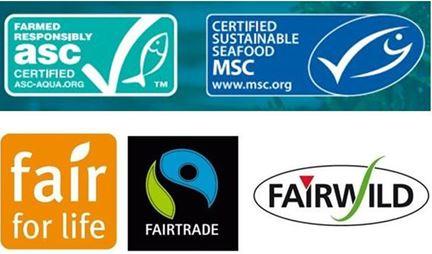
As an exporter, one way you can do this is by gaining verification and certification that proves you meet environmental and social standards. With regard to environmental and social sustainability, consider meeting the environmental and social standards outlined in the ASC-MSC Seaweed Standard set by the Aquaculture Stewardship Council. In addition, also consider meeting UNCTAD BioTrade Initiative and implement the BioTrade Principles. To show you meet social standards, consider FLO Fairtrade certification or meet FairForLife standards.
Figure 3: Logos of environmental and fair trade certifications
Source: Various
Tips:
- Acquire verification and certifications that prove your spirulina and/or chlorella for health products meets environmental and social standards. Doing so will help you find opportunities in the European market.
- Inform potential buyers if you have certifications that prove you meet environmental and social standards, and display them on your company website and marketing materials. This will you more appealing to European buyers.
- See the CBI study ‘What requirements must natural ingredients for health products comply with to be allowed on the European market?’. It provides useful information on broader requirements for this sector.
- Demand for natural ingredients such as spirulina and/or chlorella to meet environmental and social standards is predicted to increase over the coming years. Consider investing in such standards. Writing a business case for it can help you in this decision.
- See the CBI study on the European market potential for edible seaweed, which provides useful information about trends offering opportunities on the European market.
2. Through what channels can you get edible seaweed on the European market?
The commercial production of edible seaweed such as spirulina and chlorella is found in countries in Asia, Africa, North and Latin America, as well as Europe. Spirulina and chlorella have a wide range of applications. However, their main applications are in the health food sector because of their nutritional properties.
How is the end-market segmented?
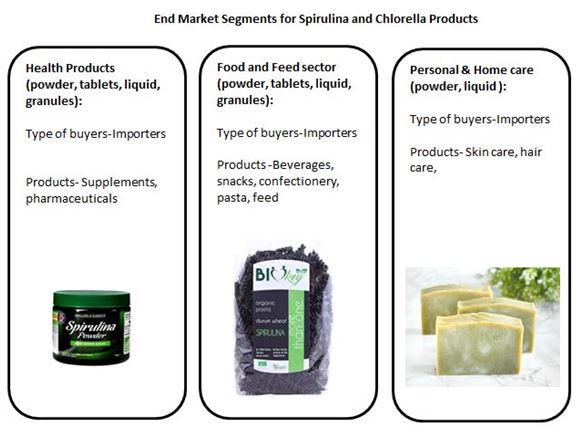
The European market for spirulina and chlorella can be segmented by end-user markets. These include the health products, food and feed and cosmetics sectors. Figure 1 gives examples of seaweed products in the European marker by end-user segments.
The commercial production of edible seaweed such as spirulina and chlorella is found in countries in Asia, Africa, North and Latin America, as well as Europe. Spirulina and chlorella have a wide range of applications. However, their main applications are in the health food sector because of their nutritional properties.
How is the end-market segmented?
The European market for spirulina and chlorella can be segmented by end-user markets. These include the health products, food and feed and cosmetics sectors. Figure 4 gives examples of seaweed products in the European market by end-user segments.
Figure 4: Examples of seaweed products in the European market
Source: Various
Health products industry
Spirulina and chlorella are mainly used in the health products sector. Demand for spirulina and chlorella is growing in Europe. The European market for spirulina is forecast to grow at a compound annual growth rate of 8.7% to 2025. According to Market Data Forecast, the global chlorella market is expected to grow at a compound annual growth rate of 6.4% to reach USD 210.5 million by 2025.
Spirulina and chlorella are mainly used in the health products sector. This is due to their pharmacological properties, which include anti-microbial, anti-cancer, metalloprotective properties. Spirulina also acts as an immunostimulant and has antioxidant effects because of its high content of protein, polysaccharide, lipid, essential amino and fatty acids, dietary minerals and vitamins. Chlorella is in high demand because of its health properties; it has the ability to help the human body rid itself of heavy metals and ash content. Spirulina and chlorella are usually sold in powdered form or as tablets. It is also used as a colourant in the pharmaceutical industry.
The increasing popularity of health and wellness products and vegan and vegetarian diets is expected to ramp up the demand for highly nutritious algae, such as spirulina and chlorella. Exporters of spirulina and chlorella should capitalise on the demand for high-quality edible seaweeds on the European market.
Many importers face quality problems due to cheap spirulina and chlorella imported from China. European importers therefore place a lot of emphasis on quality because of stringent EU regulations and the consumer demand for high-quality products. This factor is expected to become even more important in future.
As an exporter of spirulina and/or chlorella from a developing country, you must provide European buyers with a product of the highest quality, as this is essential to the manufacturing of natural health products. Speak to buyers to find out if they have specific requirements concerning the nutritional qualities of spirulina and/or chlorella and consider meeting those requirements.
Food and feed industry
Spirulina is a natural source of green and blue colouring, and is used as a natural dye in the food industry. Spirulina can also enhance the nutritional content of food products when added as colourant, texturising agent, gelling agent, and/or prebiotic. Chlorella is also used as feed for animals due to its nutritional properties.
Cosmetic industry
The cosmetics industry uses spirulina as a colourant and for its antioxidant properties. Chlorella is also a source of several beneficial active properties, meaning it is well suited to the cosmetics industry. The application of spirulina and chlorella in the personal care sector has been gaining traction.
This Study focuses on seaweeds used in the health products sector.
Tips:
- See the CBI study on the European market potential for edible seaweed, which provides useful information and guidance on entering the European health product market for spirulina and chlorella.
- Educate yourself on spirulina’s benefits and/or chlorella’s benefits in the health products sector. You can do this by doing basic online searches. Following this, promote their respective benefits on your marketing materials and your website.
- Visit trade fairs to see if the industry is open to your product, get market information and find potential buyers. Trade fairs will also give you the chance to speak to end-users and distributors, and to gauge your competition, especially the way they are marketing their products. See the CBI study on tips for finding buyers in the natural ingredients for health products sector for an overview of trade fairs in this sector.
Through what channels do seaweeds end up on the end-market?
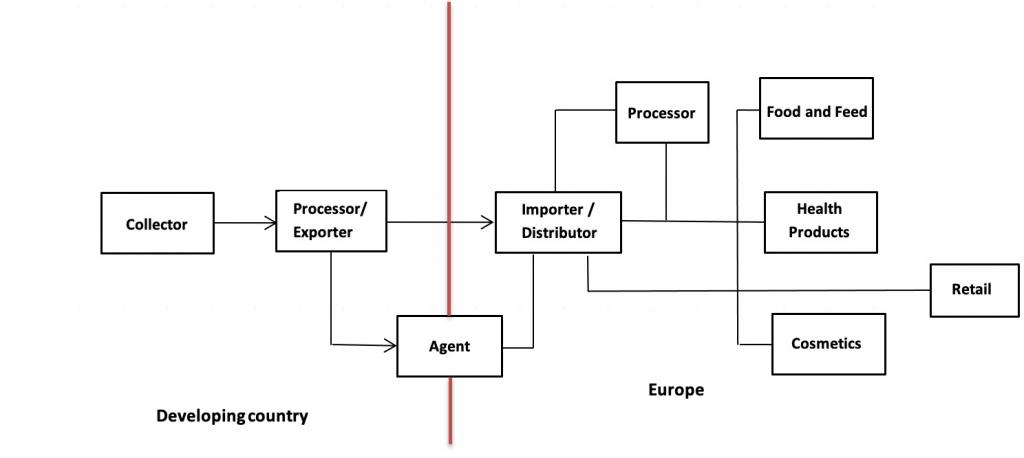
Figure 5 shows the export value chain for edible seaweeds, such as spirulina and chlorella. In developing countries, seaweed powder is mostly processed though grounding/milling, after which it is then exported. Spirulina and chlorella for health products mostly enters the European market in a dried and ground form.
Figure 5: Export Value Chain of Edible Seaweed
Source: Ecovia Intelligence
Importer/Distributor
The majority of spirulina and chlorella is imported onto the European market through importers/distributors that supply spirulina and chlorella to health product industry. Important importers/distributors include Nexira and Bio Import Europa. Bio Import Europa imports and distributes both organic and conventional chlorella, while Nexira only imports and distributes organic spirulina. European importers/distributors sometimes package spirulina and chlorella in Europe. Chlorella and spirulina products are mainly sold at specialist retailers.
Agent
An export agent is a firm or an individual that undertakes most of the exporting activities on behalf of an exporter, usually for a commission. Agents can be found in developing countries as well as in Europe. However, it is not that common for companies to use agents in the European market. As an exporter from a developing country, you can work with agents who represent and act on your behalf on the European market.
Tips:
- Be prepared to send high-quality samples to prospective buyers, who will test them when assessing whether you are a credible exporter of spirulina and/or chlorella. Doing so will increase your appeal and therefore give you an advantage when it comes to entering the European market.
- Consider expanding your spirulina and/or chlorella portfolio by using organic spirulina and/or chlorella, for example, as this will help you find a wider range of customers as some importer/distributors only import organic products. Other reasons for expanding your product portfolio include it giving you more attention on the market, thus making you stand out from your competition.
- Be prepared to meet potential buyers who are interested in purchasing larger volumes if you are able to supply such volumes.
What is the most interesting channel for you?
As an exporter of edible seaweed like spirulina and/or chlorella in a developing country, importers/distributors are the most interesting channel for you. Importers/distributors supply natural health products manufacturers that package spirulina and chlorella that they then supply to wholesalers or to the retail sector.
Importers/distributors usually focus on requirements such as the minimum volume requirements, speedy delivery and quality of products. Most importers/distributors are located in Western European countries and regularly visit/exhibit at trade shows, where they are looking for new suppliers. Examples of importers/distributors include Nexira, Bio Import Europa and Dr. Behr GmbH.
Tips:
- See the CBI Study Tips for finding buyers in the natural ingredients for health products sector for useful information and guidance on finding buyers in channels you can enter through. In particular, importers/distributors, who are the most interesting channel for you.
- See the CBI study on tips for finding buyers in the natural ingredients for health products sector for an overview of trade fairs in this sector. This study provides guidance on how you can find buyers for the channel you are targeting.
- Visit trade shows to connect with European buyers. You can use this opportunity to get contact details and network with buyers that source edible seaweed. Examples include Vitafoods, Nutraceuticals Europe, and Health Ingredients Europe.
3. What competition do you face on the European seaweed market?
What countries are you competing with?
The countries listed here share two key similarities. Firstly, these countries have well established spirulina and/or chlorella industries, and secondly they have supportive governments.
China
China is the world’s largest producer of spirulina and chlorella. Spirulina and chlorella imported from China is traded at a competitive price levels, also because Chinese suppliers of spirulina and chlorella are also capable of supplying large quantities. This is important to European buyers who demand larger volumes. Smaller suppliers of spirulina and chlorella from developing countries may find it difficult to compete with Chinese suppliers.
European buyers have reported positive experiences with importing spirulina and chlorella from China, as suppliers are able to provide a good quality product and are reliable. For example, one buyer commented that they have had “no big quality issues or reliability issues”.
Taiwan
Taiwan is one of the largest major producers of chlorella. One of Taiwan’s key strengths is the positive safety records of its exports. Many Taiwanese producers offer organic certified chlorella and spirulina. The quality of Taiwanese chlorella is considered high. Taiwanese suppliers are also able to supply larger quantities of edible seaweeds like chlorella and spirulina. This is important to European buyers who require high quality products as well as to those demanding larger volumes.
European buyers have a favourable perception of Taiwan and report positive experiences with importing spirulina and chlorella from Taiwan, as exporters are reliable and able to provide good quality products.
Japan
Japan is one of the world’s largest producers of chlorella. Japanese producers use advanced chlorella production methods, such as autotrophic production. This means that chlorella grows in open ponds and semi-closed tubular photobioreactors or inclined cascades. Japan is a part of the EU-Japan Centre for Industrial Cooperation. This is because one of the partnership’s main aims is to help Japanese exporters of micro-algae like chlorella to reach the European market.
However, the Japanese chlorella industry faces challenges with a key one being the EU placing restrictions on all food items from specific parts of Japan. This is because of fears of contamination of food items after the Fukushima nuclear power station disaster. However, the EU has started to ease restrictions, with the exception of a few items. Nevertheless, European buyers may still have an unfavourable perception of Japan because of this.
India
India is the second most important supplier of spirulina. The Indian spirulina industry is developing, which is one of India’s key strengths. This is because farmers are choosing to cultivate spirulina as there is a fixed market, and it is a regular income generating crop compared to other crops which are subject to weather uncertainties. Another of India’s key strengths is its government promoting the spirulina industry. For example, India has conducted a joint effort with many government agencies covering all aspects of spirulina production, from simple cultivation to large-scale commercial farming. India’s other strengths include low costs, government support and polices along with the development of rural areas.
European buyers have a favourable perception of India because English is widely spoken there and because of the reliability of Indian exporters. However, there can be issues with quality.
South Korea
South Korea also produces chlorella. One of Korea’s key strengths is that the chlorella, which is widely grown there, is of good quality. For example, South Korean chlorella is considered as some of the cleanest and purest varieties. This attracts European buyers who demand good quality products and perceive South Korea favourably.
South Korea’s other strengths include its Free Trade Agreement with the European Union, which makes it easier for exporters to reach the European market. The government also supports the agricultural industry. As a result, it could become easier for South Korean producers to export chlorella to the European market. However, challenges that South Korea faces include an ageing population and tensions with its neighbour North Korea.
Chad
Chad is a country that has been harvesting and producing spirulina for centuries. Spirulina is cultivated in natural ponds and lakes. The production and commercialisation is supported by various governmental and non-governmental organisations. For example, The European Union funded a cultivation project in Chad to help its spirulina industry.
However, Lake Chad is shrinking in size due to drought. This can potentially threaten the spirulina industry in near future. This could be an issue for European buyers who require a continuity of supply. While production of spirulina in lakes and ponds may require less investment, it also gives producers less control over weather conditions. Suppliers of edible seaweed from developing countries should consider investing into artificial tanks, which may help them maintain regular supply throughout the year.
Tips:
- Find out if your country has programmes helping exporters like you harvest, cultivate, process and export spirulina and/or chlorella. You can do this by contacting government ministries of trade in your country because they often have information about this along with providing assistance to help you export your spirulina and/or chlorella.
- Consider joining the organisations who offer a range of assistance to exporters of spirulina and/or chlorella from developing countries. For example, the Chinese Microalgae Industry Alliance and Chinese Algae Industry Association can offer various kinds of assistance.
- Take advantage of trade deals in your country. For example, exporters from South Korea can use the benefits of their country’s free trade agreement with the European Union to export.
- See CBI study on the European market potential for edible seaweed to gain insights on the biggest exporters of seaweed.
What companies are you competing with?
Several established companies export spirulina and chlorella to the European market. These companies market themselves as being able to deliver high-quality spirulina and/or chlorella in accordance with common European buyer requirements and requirements for niche markets.
The selected companies highlighted below share two key strengths: they meet various standards and certifications proving they supply high quality products and they have a professional website. Their websites include sections informing prospective buyers who they are, how they source and process their spirulina and/or chlorella, as well as technical details and the certifications they hold, accompanied by professional photographs.
Chinese companies
Hainan Diaisheng Microalgae is a large producer and trader of spirulina products, such as spirulina food powder and feed powder, as well as phycocyanin to the European market. One of the company’s key strengths is its ability to prove the high quality of the spirulina it exports to the European market. For example, Hainan Diaisheng Microalgae’s spirulina products holds ISO 9001:2015, FSSC 22000 and HACCP certification.
Taiwanese companies
FEBICO is also able to prove the high quality of the spirulina and chlorella it exports to the European market, which is one of its key strengths. For instance, its spirulina and chlorella production facility has HACCP and ISO 22000 certification and meets Good Manufacturing Practice (GMP) standards. Another of FEBICO’s key strengths, is that it exports organic spirulina and organic chlorella that is EU organic and Naturland certified.
Japanese companies
One of Sun Chlorella’s key strengths is its ability to export high-quality chlorella to the European market. Sun Chlorella achieves this by manufacturing its products in a certified factory that meets dietary/food supplement Good Manufacturing Practice (GMP) standards.
Another of Sun Chlorella’s key strengths is its commitment to meet good environmental and Corporate Social Responsibility standards. For example, Sun Chlorella supports tree planting projects and it is establishing an environmental Corporate Social Responsibility management system.
Tips:
- Ensure you always provide European buyers of spirulina and/or chlorella for natural health products with the finest quality products because this is something they expect.
- Consider acquiring certification that proves the high quality of your spirulina and/or chlorella products, such as ISO 9001:2015, FSSC 22000 and HACCP certification, along with meeting Good Manufacturing Practice (GMP) standards. This will make you more appealing to buyers.
- Consider acquiring certification that proves you meet and uphold social and environmental standards. For example, MSC-ASC Seaweed Standard is a scheme that pertains to sustainable sourcing of seaweed.
- Organic is becoming increasingly popular in the European market. As such, consider acquiring certification for your spirulina and/or chlorella products. For example, European Union (EU) Organic certification.
- Ensure you have a professional website with well-prepared content that clearly informs prospective buyers of your key strengths. For example, the certification you hold showing the quality of your products along with your commitment to upholding environmental and social standards.
What products are you competing with?
Moringa
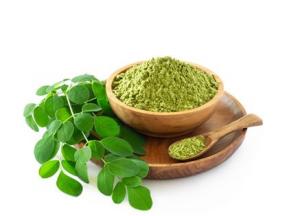
Moringa oleifera leaf powder is a product competing with spirulina and chlorella. Moringa is native to India, with most of its production occurring there. The moringa plant is also cultivated across developing countries in tropical and sub-tropical Africa, Asia, islands in the Pacific and the Caribbean, and South America.
One of Moringa’s key strengths is its ability to grow in a wide range of soils and in extremely dry regions where rainfall is limited. Other key strengths of moringa are that it is drought resistant, grows very fast and is highly nutritious. Moringa is used in food supplements because of its wide range of health benefits. It has high levels of vitamins E and K, as well as iron, calcium and potassium.
Another of moringa’s strengths is that it is a rich source of protein. However, moringa does not have as much protein as spirulina. Weaknesses of moringa include a lack of consumer awareness about its benefits along with the European moringa market being underdeveloped. The European food supplement market and global moringa products market are both expected to increase in the coming years. Thus, moringa could potentially become a greater threat to spirulina and chlorella in the future.
Figure 6: Moringa
Source: Rostovtsevayu/Shutterstock.com
Sacha inchi
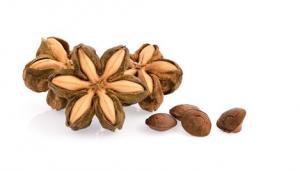
Sacha inchi is a product competing with spirulina and chlorella. Sacha inchi is native to Peru, Ecuador and Colombia. It has been cultivated and used as a food source by natives in the Amazon rainforest for 3,000 years. Sacha inchi is also cultivated in South-East Asia, particularly in Thailand. One of sacha inchi’s key strengths is that it is a rich source of protein, omega 3, 6, and 9, vitamin E, vitamin A and fibres. It is also easy to digest and unlikely to cause allergies or irritation.
Sacha inchi is one of very few plant foods that provides adequate amounts of omega fatty acids. It can therefore meet the demands of vegan and vegetarian market, which is another of its key strengths. However, a key weakness of sacha inchi is its lack of environmental and social sustainability and its lack of availability. Another key weakness of sacha inchi is a lack of its awareness amongst consumers and formulators of natural health products.
Figure 7: Sacha inchi
Source: Akepong Srichaichana/Shutterstock.com
Barley grass
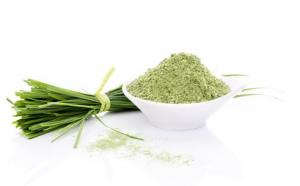
Barley grass powder derived from hordeum vulgare (commonly known as barley) is a product competing with spirulina and chlorella. Barley is cultivated in several countries around the world. Russia, Australia, Germany, France and Ukraine are the largest producers. One of barley grass powder’s key strengths is that it has high levels of the same important nutrients that spirulina provides and in particular vitamin B1 and calcium.
Recent research shows that barley grass powder is the best functional food to provide nutrition and eliminates toxins from cells in human beings. Recent years have seen growing consumer awareness about the health benefits of barley grass. As such, barley grass powder is a threat to spirulina and chlorella. However, climate change is a key issue the barley grass industry faces as it is sensitive to extreme drought and heat. This is one of its main weaknesses.
Figure 8: Barley grass
Source: Eskymaks/Shutterstock.com
Tips:
- Position yourself against competing products, by highlighting the strengths of company and those of spirulina and/or chlorella to European buyers. For example, its high quality, as well as any certifications your company has.
- Familiarise yourself with products competing with spirulina and/or chlorella that are available on the European market. Learn about their strengths and weaknesses; for example by reading the CBI study on moringa.
- Research how spirulina and chlorella compare against competing products. Ensure you use this information in your marketing materials and when approaching European buyers. Examples include blogs and websites that deal with these issues.
- Build a marketing story for your spirulina and/or chlorella which places emphasis on its key strengths. Taiwanese company FEBICO is a company that does this as it clearly informs prospective buyers about its spirulina and chlorella’s strengths.
4. What are the prices for edible seaweed on the European market?
The prices of edible seaweeds such as spirulina and chlorella depend on various factors. Factors include origin, form, drying process, quality, contamination, certification, packaging, capacity and quantity. Spirulina prices decreased between 2012 and 2016 and increased slightly in 2017. However, since then prices have decreased and are now relatively stable. The average FOB market price of spirulina powder is about USD 8-10/kg. Spirulina tablets are priced at about USD 9-12 per kilogramme. Chlorella powder FOB market prices ranges between USD 10-15/kg, while tables are priced at about USD 14-20 per kilogramme.
Interviews with European buyers and importers of spirulina and chlorella suggest its market price has increased since the global COVID-19 pandemic because of the disruption it has caused to supply chains. Particularly in terms of increased transportation costs and delays in receiving orders. For example, an importer of spirulina and chlorella commented that “we are now facing massive price hikes on freight, delays with containers and vessel sailings, port congestion and longer lead times”. Disruption to supply chains is expected to continue because of lockdown and quarantine measures introduced during the COVID-19 pandemic.
The price of high-quality spirulina and chlorella is expected to increase in the future because of lack of supply and quality issues.
Tips:
- Factor in the implications of COVID-19, particularly increased delivery costs, in your price calculations. If you don’t do so, you will end up with financial loses.
- Be open to offering discounts to European buyers who order your spirulina and/or chlorella in bulk, as they are used to receiving discounts when making larger orders. To avoid making loses, include the discounts you offer in your original price calculations, so that you don’t sell at a lower price than your cost price.
- Certification schemes can allow you to charge a premium for your edible seaweed. Make sure you can justify your price with relevant certifications.
This study was carried out on behalf of CBI by Ecovia Intelligence.
Please review our market information disclaimer.
Search
Enter search terms to find market research