

10 tips on how to go green in the natural ingredients for cosmetics sector
European consumers are becoming more aware of the environmental impact of the cosmetic products they use. This has increased the demand for and interest in sustainable beauty products. As consumers expect more information about a product’s impact on the planet, plant and producer, industry players are needing more information about production, processing, logistics and packaging. This study highlights how you can prepare to make your business more environmentally friendly whilst ensuring that it will remain competitive and attractive to European buyers.
Contents of this page
- Check the implications of green legislation and requirements on your business
- Turn biodiversity into a business value
- Collaborate on location with your producers to achieve green production
- Offer traceable and deforestation-free products
- Differentiate yourself from the competition
- Use a green technology for processing
- Green your logistics: Avoid plastic packaging and apply sustainable transport solutions
- Implement circular-economy practices and upcycling within your business
- Check options for financial support in going green
- Bring all these tips together and offer your clients a unique selling point (USP)
1. Check the implications of green legislation and requirements on your business
In the EU, several policies are in place to promote sustainable, green production. The main policy is the EU Green Deal. This plan for a climate-neutral Europe includes a roadmap containing actions aimed at reducing greenhouse gas emissions by at least 55% by 2030. The EU Green Deal further aims to preserve and restore ecosystems and biodiversity, to achieve zero pollution of the environment and to implement the concept of circular economy. This concept is based on the '3 R’s' (Reuse, Reduce, Recycle) for waste, as well as on the use of renewable resources and recovery.
The scope of the EU Green Deal is broad, and not all of its provisions are directly mandatory for all EU importers. This is because the broad policy framework sets out a vision with clear objectives for achieving a more sustainable and climate-friendly Europe. Some regulations related to the European Green Deal may nevertheless be relevant for SMEs operating within the natural ingredients sector.
One important regulation is the Corporate Sustainability Due Diligence Directive (CSDDD). This directive took effect in 2024. It requires large European companies to spot, prevent, reduce and report on negative human rights and environmental impacts in their operations and value chains, including suppliers in non-EU countries. The CSDDD applies to EU companies with more than 1,000 employees and a turnover above €450 million. It also applies to some non-EU companies operating in the EU. Although this does not directly include SMEs, many will feel the effects as suppliers to bigger companies. To keep your business relationships, you may need to provide environmental data and prove efforts to prevent deforestation, pollution and damage to ecosystems.
A practical consequence of CSDDD for exporters, is the company Cultivator Natural Products, an Indian exporter of several herbs, botanicals, and vegetable oils, integrates due diligence into its business by prioritising sustainability in all its operations. The company follows organic farming methods to reduce negative effects on both the environment and local communities. These practices help protect biodiversity and support small farmers. In addition, the company shows its commitment to responsibility and openness by sharing annual reports on its sustainability efforts. These reports are available on its website and explain the company's progress, projects, and goals in line with international standards for responsible sourcing and trade. Another EU regulation aims to ensure that products imported to the EU have not contributed to deforestation or forest degradation (EU Deforestation Regulation, EUDR). Within the natural ingredients sector for cosmetics, the EUDR is of relevance for palm oil, cocoa, coffee and their derivatives. In these supply chains, EU importers will be required to document the origin of their products and demonstrate that they are not related to deforestation. In addition, for natural cosmetic ingredients that are not covered by the EUDR, clients from Europe may ask about origins and production conditions within the context of due diligence for ecological sustainability. It is, therefore, best to prepare to respond to such inquiries.
Even if your ingredient is not listed in the EUDR, you should expect European buyers to ask more questions because of broader due diligence requirements. They may ask for details about where you are, how you buy your products and your contributions to sustainability. Being open and ready can make you a preferred supplier.
These regulations will oblige importers to assess the production conditions of suppliers from outside the EU. This will increase the need for accountability, traceability and transparency. As an exporter, you may be asked to provide information on what you are doing to protect the environment (for social safeguards, see Tips to become a socially responsible exporter) and to adapt to certain requirements when doing business with European clients.
Video 1: The European Green Deal explained
Source: European Union
Tips:
- Read our study about Which trends offer opportunities or pose threats on the European market for natural ingredients for cosmetics?
- Read the 2024 Biodiversity Barometer by the Union for Ethical Biotrade (UEBT) to understand how consumer preferences and brand expectations about biodiversity have changed in the cosmetics sector.
- Watch Preferred by Nature’s 2025 webinar EU Deforestation Regulation: Exploring the latest interpretations and updates to learn how to comply with EU due diligence and EUDR requirements.
- Take a look at the EU Corporate Sustainability Due Diligence Directive (CSDDD) FAQ to understand how this law affects non-EU suppliers in practice.
- Ask your import partners about their expectations around due diligence and the EU Green Deal, and about how you can prepare for and benefit from these regulations, together.
- Read our study to see how the EU Green Deal could impact your business.
2. Turn biodiversity into a business value
Biodiversity has become a basic priority for both consumers and regulators. New European rules, like the EU Nature Restoration Law, mean that biodiversity conservation is now a really important business issue. Exporters who can show how their sourcing protects or helps biodiversity will stand out to brands that are under pressure to meet biodiversity-linked targets.
Many natural ingredients are harvested from biodiverse ecosystems, from shea trees in dry forests to resins in semi-arid woodlands. Mapping these ecosystems, documenting the species preserved and showing traditional knowledge can form the basis of an interesting story for your buyer.
Several cosmetics companies are making biodiversity a priority in their sourcing strategies. One interesting example is L’Occitane Group, which partners with over 10,000 women in West Africa to source shea butter sustainably. Through its Shea Butter Collection, including bestsellers like its iconic hand cream, L’Occitane is showing its commitment to preserving dry forest biodiversity and protecting shea trees from harvesting for charcoal. These efforts also help to protect pollinator habitats and support long-term community livelihoods.
Figure 1: The cosmetic shift – an overall increase in the understanding of biodiversity means that consumers now expect action from brands to better serve people and the planet

Source: Convention on Biological Diversity, 2021
Bunge runs the 'Where Life Grows' programme to sustainably source shea from parklands across Ghana and Burkina Faso. This initiative protects native tree biodiversity while improving women’s livelihoods through training and education. See Bunge’s Shea Sustainability Programme.
Another example is the L’Oréal Group, which has integrated biodiversity protection into its long-term sustainability strategy. As part of its global biodiversity goals. the company is committed to restoring 1 million hectares of degraded ecosystems by 2030. Through its Solidarity Sourcing programme, L’Oréal supports sustainable agriculture and empowers local communities. One concrete case is its shea butter sourcing in Burkina Faso, where over 22,000 women benefit from improved income and sustainable harvesting practices. These efforts contribute to preserving dry forests, supporting biodiversity and increasing climate resilience.
Including biodiversity protection in your code of conduct or traceability documentation builds credibility. It also helps to attract buyers with strong environmental, social and governance (ESG) commitments.
Tips:
- Include biodiversity as a principle in your code of conduct with suppliers.
- Look at examples from brands like L’Occitane or L’Oreal that include biodiversity standards in sourcing protocols.
- Talk about biodiversity benefits in your marketing story (e.g., habitat protection, pollinator corridors).
- Read L’Occitane’s biodiversity strategy.
- Shea-based brands now communicate how conserving tree habitats ensures future crop productivity and climate resilience.
- Find local biodiversity hotspots around your sourcing areas.
- Work with local NGOs or use mapping tools like UNEP-WCMC’s Spatial Planning Tool to support claims.
- Use storytelling visuals to show how your business supports species and ecosystems. For example, share how producers changed from slash-and-burn to agroforestry with different types of plants.
- Read the Biodiversity in the Cosmetic Sector factsheet to bring your practices in line with global priorities.
3. Collaborate on location with your producers to achieve green production
To begin your journey as a sustainable supplier of natural ingredients for cosmetics, you must assess the environmental conditions at the very beginning of your supply chain. This is what your international clients require, as they often lack information on what is possible in the production of natural ingredients for cosmetics. The area where you can make the greatest difference is at the beginning of the supply chain, specifically at the production level. At this point, you often possess far greater knowledge than European companies and consumers.
As an exporter with the closest relationship to the producer, you play a key role within the supply chain in terms of promoting sustainable harvesting and production methods. For example, you could contact producers and communicate the new requirements of the EU Green Deal. You could also discuss the options for sustainable harvesting and the market opportunities, as well as the challenges that producers might envision with regard to meeting them. At the same time, you should discuss with your European client the possible improvements that could be made for environmentally friendly production and how they could be achieved together.
Although this may seem like a lot of work, demonstrating awareness of environmental sustainability requirements could place your company in an excellent position. It could help you become more attractive to European companies that are interested in sourcing sustainably cultivated natural ingredients for cosmetics.
Note that demonstrating awareness and discussing these themes is not enough. It may be necessary for you to change your current purchasing practices (for example, by reducing your dependence on local distributors and increasing your engagement with the producers at the level of production). In addition to providing access to new green markets, close collaboration with producers offers several further benefits for your business.
The following are several ways in which exporters could benefit from working closely with producers:
- Creating your story of going green. Working closely with producers allows you to develop feasible concepts for improving production for ecological sustainability. This knowledge forms the basis of your story about going green.
- Better quality control. Working closely with producers makes it easier to ensure that the production meets the given quality standard. This reduces material waste.
- Cost savings. Working together to improve production processes can lead to better use of raw material, higher productivity and cost savings for both parties.
- Faster delivery. Working closely with producers can reduce delivery times and facilitate meeting tight deadlines.
- Better knowledge of competition. Closer collaboration could place you in a better position to compete with other local traders who may be trading in the same product as you.
- Flexibility for adaptive management. Knowing what happens on the ground makes it easier for exporters to adapt to changing production conditions and react to new market requirements.
One example of an export company working well with producer communities is SD Fores, a company trading in Siam Benzoin gum from Laos. After experiencing several years of purchasing through local traders, SD Fores decided to engage directly with the producers. They invested in re-establishing direct partnerships with the production villages, offering training on quality standards and direct purchase. These efforts improved quality and yielded benefits for both parties. The fully traceable production generated new business partnerships with European clients, with whom they tested pilot experiences for the production of Benzoin gum in regenerative agriculture systems. Producers have traditionally used slash-and-burn techniques to prepare the land, resulting in negative impacts on soil and biodiversity. This method has been replaced with the new concept of growing Benzoin trees in agroforestry with coffee, which allows soil and biodiversity to recover. In addition to improving various ecological aspects, therefore, the collaboration has enhanced the producer’s economic opportunities through product diversification.
In Africa, a similar approach is seen with Maison Karité, a Spanish natural cosmetics brand sourcing unrefined shea butter from women’s cooperatives in Ghana. The company works with around 70 women, supporting them through capacity building initiatives and co-investing in improved equipment for shea butter processing. Maison Karité promotes organic, fair, and handmade sourcing, and places a strong emphasis on traceability and environmental preservation. Their collaboration not only improves product quality and access to international markets, but also enhances the economic independence of women producers, aligning with sustainable development and biodiversity goals.
Tips:
- Prepare for a field trip. Go to the areas where your raw material is being produced, and meet with producers. Work alongside them as equal partners, and ask them to show you the production process, including how the plants are grown, as well as the energy sources and other inputs used.
- Encourage producers to reflect on challenges associated with environmentally friendly production and ideas for improving. Demonstrate that you will communicate options and problem areas to your clients abroad in order to find joint solutions that benefit all stakeholders.
- Communicate transparently about your objectives for improving product quality, including the social and environmental aspects for enhanced market options with shared benefits for all actors. This is important, as some actors in the supply chain may not want to share information about where or how the production takes place for fear of being passed over in the supply chain.
4. Offer traceable and deforestation-free products
Classic agriculture products (such as fruits, nuts and oilseeds) can be destructive to forests, and they are one of the main drivers of deforestation. As EU regulations on environmental sustainability become stricter, European importers will want to know the origins of your products and their impact on forests. They will ask you for this information, and you must thus be able to prove the origins of the products you are selling.
To this end, you could set up your own traceability system: an instrument that allows you to prove the origins of your products and the conditions under which they were produced. This kind of system makes it possible to share how your business engages with producers to improve quality and how the production contributes to maintaining natural vegetation and forests, adaptation to climate change and biodiversity conservation.
There are many different ways to set up a traceability system. If you are not experienced in this, do not make it too complicated. It is sufficient to design a system that is easy to apply with your suppliers and that documents where the products are grown and who is involved. It is helpful to assign a unique code to each producer and annotate the volume participation in each batch, which also receives its own code. These batch codes can be used during further handling. Although traceability can be documented by hand on paper, it is much more efficient to enter the data into digital files.
Figure 2: Traceability System Diagram

Source: UNIDO
For exporters of natural ingredients for cosmetics, it is very important that they can track these products. The EU Deforestation Regulation EUDR was adopted in 2023 and is now fully enforced. It requires that products such as cocoa, palm oil and coffee, along with their derivatives, are proven to be deforestation-free.
To meet these requirements, EU buyers must now collect geolocation data – such as GPS co-ordinates – for the plots or forests where ingredients are cultivated or harvested. As a supplier, you play a very important role in providing this data. But also, in confirming that your products were not sourced from land that was deforested after 31 December 2020.
Even if your natural ingredient is not listed in the EUDR, buyers may still require traceability and environmental due diligence. This helps them meet sustainability targets or corporate responsibility commitments.
If your raw materials come from agroforestry systems or wild collection near protected areas, this can become a really good selling point. It shows that your production not only avoids harm but may also actively support biodiversity conservation and climate adaptation. These benefits are very useful for brands that sell nature-positive or regenerative beauty products in Europe.
Tips:
- Run field trials with small producer groups to design a realistic, low-cost traceability system that shows where and how your cosmetic ingredients are sourced.
- Test digital tools like FarmTrace, Sourcemap, or GeoTraceability for collecting plot-level data and linking it to your ingredient batches.
- Ask European clients to co-invest in traceability. Many brands want to support data collection, especially for ingredients linked to strong sustainability claims.
- Train producers and middlemen in basic geolocation mapping, harvest documentation and sustainability indicators such as tree age, habitat type or carbon storage.
- Integrate traceability with your certifications, such as Fairtrade, FairWild or COSMOS, and use this to tell your story. In this way, you show buyers exactly how your ingredients support forest preservation.
5. Differentiate yourself from the competition
As sustainability becomes mainstream in the European market, buyers are always looking for new approaches to sustainability. This also sets them apart from their competitors. Working with suppliers who are truly committed to sustainable practices and are able to communicate their unique approaches may translate into a competitive advantage for your company.
Explore concepts like ‘nature-positive’ and ‘regenerative production’
Consider exploring concepts like ‘nature positive’, ‘regenerative production’ and ‘net zero’. Stated simply, these concepts refer to halting and reversing the loss of biodiversity, increasing biomass and reducing the use of fossil energy in the production system. If you are exporting a natural ingredient that is harvested wild or obtained from cultivated trees or shrubs, you may already be contributing to these concepts without even knowing it.
Develop a clear picture of production conditions
It is advisable to develop a clear picture of the production conditions (cultivation, harvesting and processing) associated with your natural ingredients, as well as of features that could potentially qualify them as green products. If you have a raw material that offers a specific environmental advantage, you could take advantage of this feature and highlight it in your production story. Several examples of ways in which European cosmetics brands and retailers are highlighting the sustainability aspects of their natural ingredients in their promotional materials are displayed in Table 1.
One example of a company that has worked on its sustainability proposition is the Pelere Group, a Ugandan exporter of shea butter. The company worked closely with female harvesters and communities to improve the harvesting process of shea nuts. As a result, farmers have refocused their activities from environmentally destructive practices (burning shea trees for charcoal) to the sustainable harvesting of trees and the long-term conservation of the forest. To this end, the company communicated that the trees should be preserved in order to ensure income opportunities for their children and future generations. The farmers are now operating sustainably and preserving the forest in the process.
Table 1: Promotion of the environmental features of natural ingredients for cosmetics by various companies
| Natural ingredient | Plant part used | Examples of companies including environmental features in their marketing campaigns | Promotional feature relating to ecological sustainability |
|---|---|---|---|
| Avocado Oil | Fruit pulp (flesh)mainly and seeds | Cinnabar Green (Kenya) |
|
| Jojoba oil | Seed of a shrub grown in arid regions | Weleda (Germany) |
|
Shea butter | Seed of a tree growing in dry regions | OKA Cosmetics (Burkina Faso) |
|
| Frankincense oil and myrrh | Resin/gum of small trees | Arbor Oils of Africa (Kenya), which has a detailed understanding of the habitat, biodiversity and production system |
|
| Illipe butter | Tree seed from tropical rainforest | Forestwise (Indonesia/Netherlands) ‘#Stop Deforestation – choose rainforest value’ |
|
Source: ProFound and Christine Woda, 2025
Regenerative agriculture
Regenerative agriculture aims to increase carbon storage, soil health, water holding capacity, crop resilience and nutrient density.
Practices associated with regenerative agriculture include:
- No-till or minimum tillage. Application of cover crops, crop rotations, compost and animal manure to increase soil fertility.
- Reduction of chemical inputs and implementation of measures for water and soil conservation (horizontal cropping to avoid erosion).
- Avoidance of slash-and-burn practices and shifting to permanent production systems through intercropping, mixed plantations and agroforestry systems.
- Increased genetic biodiversity of the target species.
- Ensuring that wild-harvesting systems are managed in line with sustainable harvest quota.
- Preserving spaces within the production area for biodiversity conservation and allowing spontaneous vegetation.
- Promotion of well-managed grazing practices that stimulate plant growth, soil carbon deposits and the overall productivity of pastures and grazing lands.
- Training producers in rural waste management and exploring options for reducing greenhouse gas emissions.
Consider including these practices in the production of your ingredients.
Tips:
- Become familiar with the details of the production system for the natural ingredients you export and map out their features in relation to sustainable, nature-positive production.
- Participate in the Lush Spring Prize programme, which celebrates and encourages projects that promote social and environmental regeneration and particularly those focused on sustainable agriculture and food production.
Remember that even if the production systems for your natural cosmetic ingredients are already contributing to biodiversity and climate conservation, you can always do better. For example, consider the possibility of promoting regenerative and nature-positive production amongst your producers.
6. Use a green technology for processing
Going green is not limited to the production level. It also concerns the post-harvest processing of natural ingredients. Green technologies use energy and resources more efficiently, produce less waste and reduce the ecological footprint of the final product. For natural cosmetics ingredients, typical processing steps include the drying of seeds or other plant parts, the extraction of fat and the cleaning of gums and resins. Processing is often done in a traditional way, based on the use of fuelwood as an energy source and chemicals for extraction.
You must consider implementing more sustainable processing practices. As a first step, examine your energy source and options for saving energy through solar drying techniques. In addition, assess your water-consumption level and options for completely eliminating water from your processing. Many European companies as the French brand Orveda are currently developing 'waterless products'.
It is important to analyse these steps together with your client, as cosmetics companies depend on homogenous quality. Any change in the processing could potentially affect the quality of the final product.
Figure 3: Emerging trends in green extraction techniques

Source: Muhammad Usman et al., 2023
One example of a company utilising a green processing method is Crozier Green Business, a local trader of Styrax gum in Honduras. Traditionally, producers heated the gum on an open fire to clean and filter it. The gum often got burnt, however, impacting its smell and subsequent quality for the perfumery industry. Together with the export company, Polco, Crozier Green Business developed a simple method for cold-filtering the gum. With this method, the gum is now warmed in the sun and then filtered. This reduces the use of fuelwood and increases the quality of the product.
Another example of a company utilising a green processing method is Forestwise, a producer and exporter of illipe butter, which is obtained from the seeds of a tree in Indonesia. Traditionally, the seeds were smoke-dried on an open fire. In the process, plant fat was contaminated by carcinogenic substances, and the producers (mainly women) were exposed to smoke. The company trained producers in the solar drying methods for seeds. The elimination of firewood reduced the producer’s workload, improved health conditions and contributed to the company’s climate-mitigation efforts. The solar-dried product is now free of any contamination, and it can be exported as organic. Forestwise is now able to position itself in higher market segments with better prices for producers.
Tips:
- Aim to improve your understanding of how waste is processed and various options for using waste as compost or fertiliser. You could highlight such efforts in your marketing story.
- Develop all improvements for green technology in partnership with your client. This will ensure that the final product continues to meet your client’s quality standards, and it could help to increase the product quality. Your client may have useful knowledge on technical improvements that you could implement. Brainstorm together.
- Collaborate with European companies. Many are willing to contribute to Sustainable Development Goal 17: ‘Partnerships for sustainable development’.
7. Green your logistics: Avoid plastic packaging and apply sustainable transport solutions
Plastic pollution is still one of the biggest global environmental challenges, and cosmetics packaging is still a big contributor. Several European countries, including France, Germany and Spain, have now introduced or expanded plastic packaging taxes and extended producer responsibility (EPR) schemes. These measures make importers financially responsible for the waste their packaging generates, which directly influences their sourcing preferences.
According to the 2023 Sustainability in Packaging report by McKinsey & Company, 60-70% of global consumers across all regions – including Europe – say that they are willing to pay more for products with sustainable packaging, particularly in personal care and cosmetics
Although consumers do not see how raw materials are exported, your clients in Europe will appreciate your efforts in relation to sustainable packaging. For this reason, it would be wise to consider options for using renewable, biodegradable and recyclable packaging. These options include innovative fibres, such as algae, bamboo, wood-based paper and carton-based materials. Although glass and metal may also work, the weight of these materials may offset efforts to reduce shipping weight to save fuel in transports.
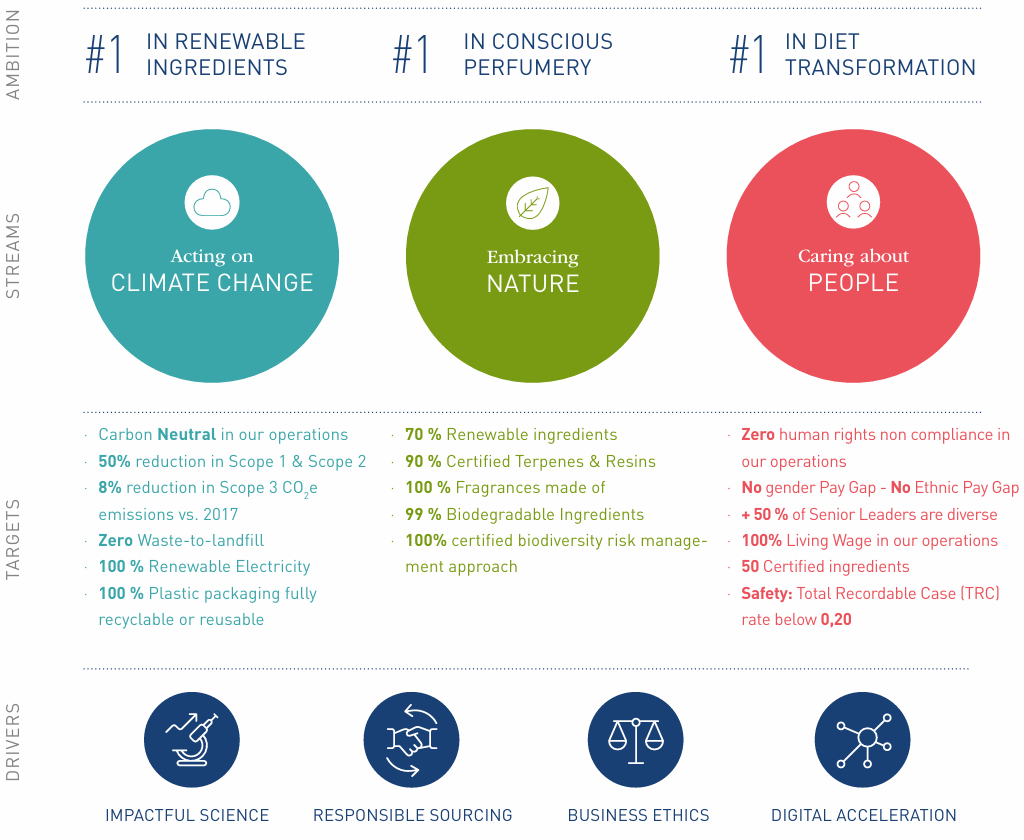
Large European companies are also taking steps in this regard, and they are incorporating their efforts into their Corporate Social Responsibility (CSR) policies. A global leader in the flavour and fragrance industry, the Firmenich company has developed circular solutions to ensure that their packaging can be reused and recycled. These goals are captured in their Environmental, Social & Governance (ESG) ambitions (see Figure 2 for more information). Although you may not have the same financial power as many European companies, try to discuss your ideas with your clients in Europe. They might be willing to join forces with you to reduce plastic packaging and waste along the supply chain.
At the same time, European importers are more often demanding lower-emission shipping options.
Making sure that transport solutions are sustainable is another important step in going green and reducing the carbon footprint of the supply chain. Whenever possible, choose sea freight over air freight. The European Environment Agency (EEA) says that the carbon emissions of shipping are about 30 times lower than those of air transport for the same distance travelled.
As a step further, innovative approaches like consolidated shipments, optimised routing and greener port operations are becoming more important.
As an exporter, using smart packaging design (lightweight, biodegradable, reusable) and co-loading strategies can make you much more competitive. Even low-tech solutions, such as reducing package size or increasing shipment density, can make a big difference to emissions.
Figure 4: Firmenich’s ESG Ambitions, 2025–2030
Source: Firmenich, 2023
Tips:
- Look into using reusable industrial containers, such as reconditioned metal drums or IBC tanks, which can be cleaned and returned in closed-loop systems. This is even more relevant for volatile essential oils. Learn more from Greif's reusable drum solutions and Schutz’s IBC reuse programmes.
- Encourage your clients to start using forecast-based planning and longer procurement cycles to minimise their dependence on air freight. Early co-ordination is very important for sea freight, which reduces emissions but requires more lead time.
- Before changing packaging, plan a joint review with your client to make sure you are in line with their handling, labelling and end-of-life recycling standards. Buyers may now follow EPR or voluntary plastic pacts.
- If you can, join container pooling or reverse logistics initiatives (moving goods from the customer back to the producer for reuse, recycling or proper disposal, such as returning packaging or containers for cleaning and refill) in your region to reduce single-use packaging and save transport costs.
- Use digital tools such as EcoTransIT or BigMile to calculate and share the carbon footprint of your logistics choices. This can improve your marketing and client reporting.
8. Implement circular-economy practices and upcycling within your business
The EU Green Deal places strong emphasis on the circular economy as a key component of efforts to achieve a carbon-neutral economy by 2050. In March 2020, the EU introduced the Circular Economy Action Plan, which outlines how it intends to support businesses in the implementation of circular business models. The updated CEAP 2.0, rolled out between 2023 and 2024, puts stronger focus on sustainable product design, mandatory recycled content, and consumer right-to-repair, aiming to make circularity the norm across all sectors - including packaging, plastics, and cosmetics ingredients.
As part of these ambitions, the European Commission aims to:
- Promote 'product-as-a-service' models and reverse logistics;
- Ban the destruction of unsold goods; and,
- Push for full transparency on sustainability claims.
The aforementioned company, Firmenich (Switzerland), one of the EU’s largest flavour and fragrance companies, has set a goal to reach zero waste-to-landfill at all manufacturing and non-manufacturing locations by 2050. As stated in Firmenich’s sustainability report, "the way to a low-carbon economy is through sustainable production patterns that produce less waste".
It is important to be aware of how Europe’s largest and most influential cosmetics companies are approaching the issue of environmental sustainability. As an exporter, you can take steps to optimise waste streams and show your commitment. If you do this, your business is likely to be more attractive to European businesses, who will continue to increase their financial contributions to green projects.
One of the most important trends in recent years is the concept of ‘circular economy’, which refers to efforts aimed at minimising waste and maximising the utilisation of resources. By implementing circular economy concepts within your export business, you could reduce the negative impact of your operations on the environment whilst using waste material from the production process as a source of clean energy in your business. Put simply, circular economy practices encourage businesses to use waste as a resource instead of disposing of it.
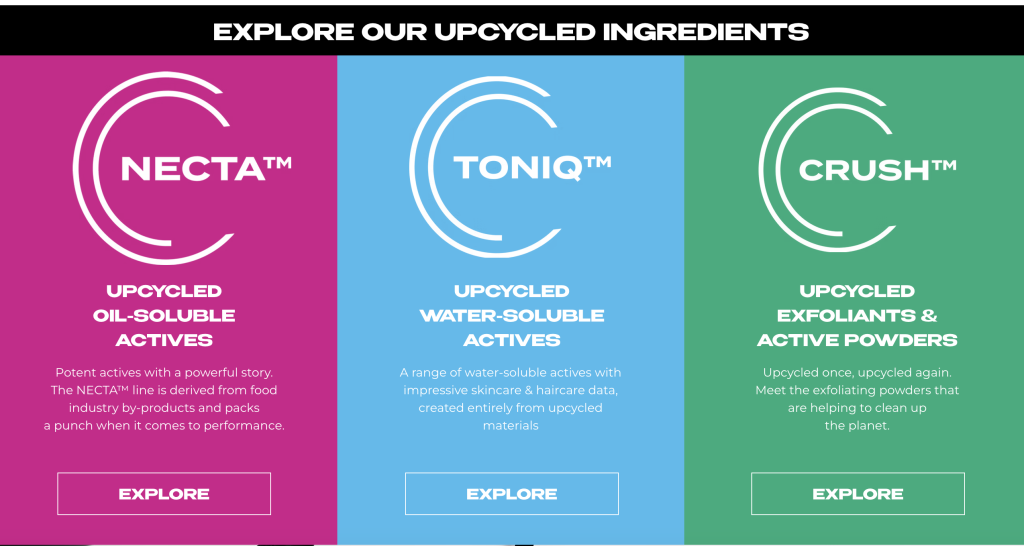
Another emerging concept, ‘upcycling’, refers to taking by-products or waste materials and turning them into new, higher-value products instead of disposing of them. Upcycling can generate additional revenue for farmers and export businesses. In Europe, the use of materials derived from food waste in cosmetics is showing growth. For example, The Upcycled Beauty Company developed the Upcycled Ingredient Directory – a searchable directory of upcycled ingredients comprising of actives, functional ingredients and so much more, from manufacturers all around the globe.
Figure 5: Examples of upcycled ingredients for cosmetics
Source: The Upcycled Beauty Company, 2025
Upcycling is closely related to having an adequate waste management system. The following are several steps you could take to implement a waste management system in your company:
- Conduct a waste audit: The results could provide insight into the amount and type of waste generated by your company. The audit could be done at the production level.
- Develop a waste management plan based on the audit: It should set out your objectives, goals and actions aimed at minimising waste generation and maximising recycling.
- Educate your employees and producers on your waste management policies: They should be aware of your plan.
- Implement waste reduction initiatives: Examples include reducing packaging and reusing materials.
- Set up a recycling programme: This will make it possible to separate recyclable materials from waste.
These measures could help to reduce your environmental footprint, whilst demonstrating your commitment to sustainable business practices. There are many different ways to use waste from production processes. Try to make the most of the options available.
Rugofarm, a Burundian producer and exporter of patchouli, have expanded their operations and are now harvesting eucalyptus. Although the wood is used as charcoal for cooking, the leaves often go unused and are disposed of. Rugofarm are currently working with 1,500 families to extract essential oil from the eucalyptus, thereby turning a typical waste product into a high-value by-product. This provides extra income for producers, their families and the export ventures of Rugofarm.
Tips:
- Book a free consultation with Food Tech Brainport on 1-2-Taste EU’s platform to get a better idea of how you can upcycle your products and expand your product portfolio.
- Learn more about how upcycling advances zero-waste beauty in this article in Cosmetics & Toiletries.
About greenwashing
In parallel, the EU is cracking down on greenwashing. The Directive on Green Claims, adopted by the European Parliament in 2024, requires that all environmental claims made by companies are backed by verifiable scientific evidence, and prohibits vague or misleading terms like 'eco-friendly' or 'climate-neutral' without proof.
As an exporter this means:
- Any claims about circularity, recyclability, or upcycling must be documented and auditable.
- Avoid generic claims like 'sustainable' or 'natural' unless supported by data, certifications, or clear methodology.
Being transparent and specific, for example, by saying "this oil is extracted from upcycled shea kernel residue using zero water" is more credible than using vague green wording.
9. Check options for financial support in going green
To support your efforts in going green, there are many opportunities for finding organisations or private investors who would be willing to provide financial support. Many governments offer grants to businesses involved in exporting natural ingredients for cosmetics. These funds are provided for a variety of activities, including product development and supply chain management. For example, the International Climate Initiative (IKI) offers grants to businesses in developing countries who acting to mitigate and adapt to climate change, as well as to conserve forests and biodiversity.
The following are several other initiatives that you could consider for financial support:
- Oiko Credit provides loans to organisations active in financial inclusion, agriculture and renewable energy in Africa, Asia and Latin America.
- Root Capital provides credit and capacity-building to small and growing agricultural businesses around the globe.
- Impact Finance provides loans to companies focusing on five sub-categories: small-scale producers, agro-forestry, financial inclusion, circular industry and integrated farming.
- Consult the database of The Global Environment Facility (GEF), a fund that provides grants and financing opportunities for country programmes and, in some cases, for individual SMEs.
- Explore EU programmes to support countries in the area of climate, environment and energy.
- Contact your local Agriculture Development Bank. They might offer loans for climate finance, as well as for equipment purchase and other capital needs you might have.
Tip:
- Learn more about how to approach banks for financing (for example, by taking this free e-course from the International Trade Centre).
10. Bring all these tips together and offer your clients a unique selling point (USP)
European cosmetics companies usually purchase their raw materials from large international traders, who have the advantage of access to nearly limitless stock. In most cases, however, these traders do not trace product origins, conditions of production or impact on the environment. You can make a difference in this regard by offering your clients a fully traceable supply chain and a story about the production of your products.
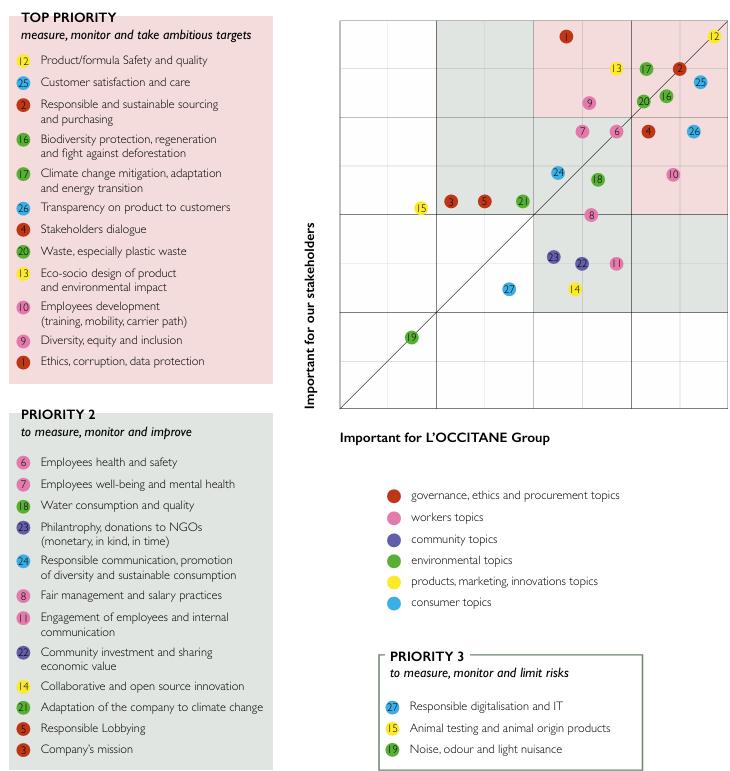
Opening up the ‘black box’ about production background could be a decisive turning point for your business, which could become your USP. Tell your story in your own unique way, and share it with your clients, possibly using Figure 4 as a reference. The figure shows how the L’OCCITANE Group prioritise activities based on their own vision of ESG, as well as the demands that their stakeholders have for them. The closer the dot is to the upper right corner, the more important this element is for L’OCCITANE and their stakeholders. You could use this diagram to help make strategic changes within your business in order to align more closely to the main goals of cosmetics companies in the European market.
Elements to include in your story could relate to how you are engaged in green and ecological production, your contributions to the conservation of biodiversity, soil and water, and how you support the improvement of local livelihoods. Explain where your products are sourced, who is involved, under what conditions and how your interventions contribute to sustainability. For this to work, it is crucial to document these aspects and provide evidence of them to your clients.
You can further incorporate your efforts to minimise waste and to avoid plastic packaging and greenhouse gas emissions into your marketing strategy and company manifesto. This is consistent with the focus of many current marketing campaigns in the European cosmetics sector with regard to green production, nature-positive and regenerative farming, zero-waste production, palm-oil free products and low-emission transport.
Figure 6: Priorities for L’OCCITANE
Source: L’OCCITANE, 2022
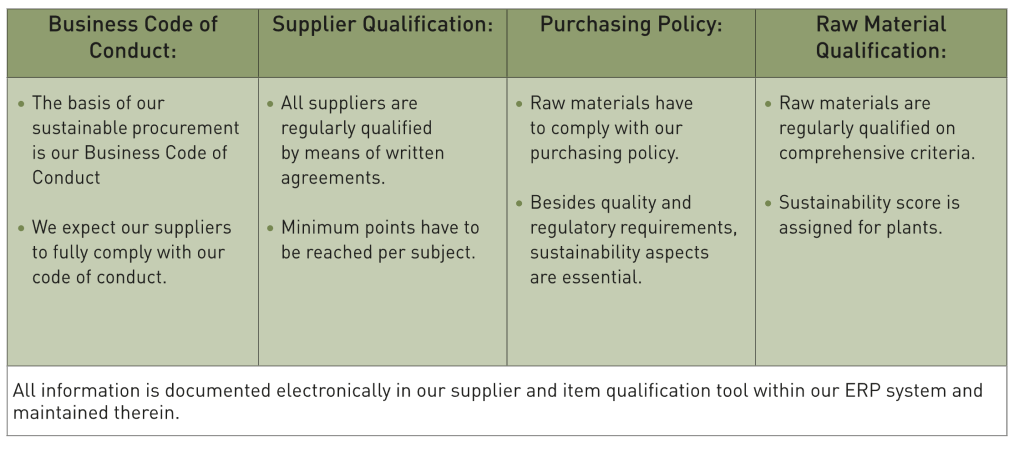
Figure 7: Examples of important elements for suppliers of sustainable raw materials
Source: Lipoid Kosmetik
Canaan Palestine, a producer and exporter of a range of cosmetics ingredients, are working with more than 1,000 family farms across 43 different villages. They engage with these communities year-round, and they are committed to building long-term partnerships based on the principles of fair trade, which ensure transparency, fair payment, fair prices and purchase guarantees from their producers. They further ensure the application of regenerative agricultural practices to bring about "reciprocity between people, plants, animals, insects and microorganisms". Watch the video on their website to learn how they communicate their activities through storytelling marketing techniques.
Tips:
- Adapt your promotion strategy through storytelling on your company’s website as well as on social media. Read this blog to learn the 5 rules of brand storytelling
- In your promotional campaign, explain the main threats to related ecosystems and biodiversity and provide a concrete explanation of how you contribute to halting these threats.
- Show the people involved, along with pictures of the landscape, endangered animals and the environment.
- Be sure to provide evidence to support your sustainability claims. This could give you a unique advantage over your competitors.
- Think about promoting your products through distribution platforms and companies that highlight sustainably produced raw materials, like Lipoid Cosmetics.
ProFound – Advisers In Development carried out this study on behalf of CBI.
Please review our market information disclaimer.
Search
Enter search terms to find market research
Do you have questions about this research?
Our styrax gum is a product that comes from sustainable forest management, respecting the ancestral rights of indigenous people, their knowledge and practices. That is why we have implemented the ICF 006-2018 agreement which regulates the legal production and marketing of styrax, which guarantees the sustainable use of our forest for an estimated 30 years.

Kenia Elizabeth Crozier, Crozier Green Business, Honduras