
The European market potential for seaweed hydrocolloids
There is an increasing demand for seaweed hydrocolloids in the European food market. Seaweed hydrocolloids have a wide range of applications in the food sector, due to their thickening and stabilisation functionality. Growth is driven by increasing consumer demand for health and better-for-you products. It is expected that demand for seaweed hydrocolloids will continue to rise.
Contents of this page
1. Product description
Seaweed hydrocolloids, also known as “seaweed industrial gums” or “seaweed extracts”, are extracted from seaweeds and fall into 3 categories:
- Carrageenans;
- Agars; and
- Alginates (in food applications, mainly sodium alginate)
Alginates are extracted solely from brown seaweeds, whilst agars and carrageenans are extracted only from red seaweeds. Seaweed hydrocolloids are cultivated from a wide variety of seaweed species from around the world, with Indonesia, the Philippines, and China being the largest producers. Seaweed hydrocolloids are used for various purposes in food, including gelling, thickening and stabilising, and for pharmaceutical and biotechnological applications.
Carrageenans are polysaccharides derived from red seaweed with a wide range of applications, including food, pharmaceuticals, cosmetics, printing, and textiles. Carrageenans are used in processed foods for stabilisation, thickening, and gelation in mainly meat, ice cream, desserts, and dairy products.
Carrageenan is primarily produced through aquaculture-based seaweed farming, with Eucheuma (24%) and Kappaphycus (68%) species accounting for more than 90% of global output. There are 3 major types of carrageenan found in red algae: kappa (κ)-, iota (ι)-, and lambda (λ)-carrageenan. Kappaphycus alvarezii is the most common kappa-carrageenan source, and it is primarily farmed in Asian countries such as Indonesia, the Philippines, Vietnam, and Malaysia. Depending on the extraction method, carrageenan can be classified into 3 distinct grades, known as alkali treated cottonni (ATC), semi-refined carrageenan (SRC), and refined carrageenan (RC).
Refined carrageenan is obtained by extra treatments, such as filtering and purifying procedures, which are necessary to eliminate residual components such as cellulosic materials. The main producers of refined carrageenan are the USA, France, Denmark, and the Philippines. PGC ("Philippines Grade Carrageenan"), now an acceptable substitute for refined carrageenan in a range of applications, is the RC produced in the Philippines.
There are 4 major extraction processes that are used to produce carrageenan: Alcohol Precipitation Process Gel Press/KCI Precipitation, Danisco Process (PES), and Alkali Modified Seaweed Flour Process (AMF). The PES and AMF processes are the most cost-effective, as they require lower capital and produce high-quality kappa carrageenan.
Agars (or agar-agars) are gelatinous substances derived from the cell walls of red seaweed, of which the Gracilaria type dominates. As a food additive, agars are mainly used for their gelling properties. These functional properties make it a suitable replacement for animal-based gelatine in, for example, chilled dessert products.
Alginates are present in the cell walls of brown seaweeds. Alginates are commercially available in 3 forms:
Calcium alginate, sodium alginate, and potassium alginate. They are commonly used in several industries, including food, pharmaceuticals, dental applications, and other non-food applications. Sodium alginate is often used in the food industry as a thickening agent (for sauces, salad dressings, thickening fruit drinks, etcetera), stabiliser (in ice cream), film-forming agent (for sandwich cakes, frozen fish, meat, etcetera, to prevent water penetration, and candy anti-adhesive packaging, and fruit preservation) and water-holding agents (for frozen products and dairy products’ frozen sweets). Potassium alginate is often used as a low-salt alternative to sodium alginate.
The seaweed hydrocolloids agar and carrageenan are traded under separate HS Codes. This report examines agar and carrageenan applications in the European food industry. Please note that sodium alginate, which is also a seaweed hydrocolloid, is not included in the import and export statistics.
|
HS Code |
Description |
|
13023100 |
Agar-agar, whether or not modified |
|
13023900 |
Mucilages and thickeners derived from vegetable products, whether or not modified (excl. from locust beans, locust bean seeds, guar seeds and agar-agar) |
Tips:
- Familiarise yourself with the beneficial properties and advantages that agar/carrageenan/alginate bring to the food industry; showing application know-how is important.
- Display detailed product information on your company website and marketing materials, such as Latin names of seaweed species used as raw material, and the type and grade of your seaweed hydrocolloid.
2. What makes Europe an interesting market for seaweed hydrocolloids?
Demand for seaweed hydrocolloids is driven by the increasing consumer demand for health and better-for-you (for example, low fat) foods. Seaweed hydrocolloids have a unique functionality to reconstruct the texture of these food products. It is important that seaweed hydrocolloid suppliers have a lot of application know-how to support European food manufacturers.
Seaweed hydrocolloids find a vast market in European food and beverages
The European food and drink market is 1 of the largest in the world. According to Food and Drink Europe, the industry has a turnover of nearly €1.1 trillion. Seaweed hydrocolloids are used as a food additive in many food products like chilled desserts, ice cream, bakery products, meat products, etcetera. The dosage or inclusion rate of the seaweed hydrocolloid food additives range by application is relatively low at some 0.2% on average, meaning 100 grams of the end product can contain 0.2 grams of seaweed hydrocolloid.
For food and drink applications, it is expected that global seaweed hydrocolloid consumption will show growth of around 5% per year towards 2028.
The global carrageenan industry is estimated to process up to 104,125 tonnes of carrageenan per year and has been forecast to grow by 3.8% a year towards 2030. The market value was valued at €872 million in 2021 and is projected to reach €1,320 million by 2030 at an annual rate of 5.4% from 2022 to 2030. Europe leads the global carrageenan market with a 34% share. The semi-refined processing technology segment dominated the market with a revenue share of over 50% in 2022. This is related to its low cost compared to other methods. The rising demand for plant-based thickeners and stabilisers to replace synthetic and animal-derived ingredients in food and beverage applications is expected to drive the product demand.
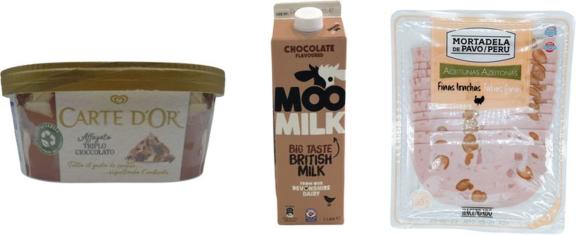
Figure 1: Examples of carrageenan-based products in Europe
Source: Mintel GNPD
The global Agar Market size was valued at €300 million in 2021 and is expected to grow to € 423 million by 2028; it is estimated to grow at an annual rate of 5.1% from 2021 to 2028. Based on form, the agar market is segmented into powder, flakes, and other forms, of which powder is the biggest market. The global agar market is concentrated, with the global top 3 manufacturing companies holding a share of about 50%. Also, by region, the market is concentrated, with Asia-Pacific being the largest market, with a share of about 67%, followed by Europe, with a share of about 23%. Global agar key players include Green Fresh Group, ROKO, and Hispanagar. In terms of product application, food grade is the largest segment, with a share of about 92%.
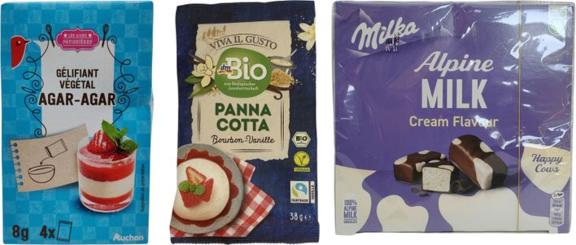
Figure 2: Examples of Agar-based products in Europe
Source: Mintel GNPD
The European alginate market is expected to reach €362 million by 2030, showing an average annual growth of 4.1%. Major players are based in Europe, like Prinova Group, Algaia, CEAMSA, A2 Trading, and Dupont, or in Japan, like KIMICA. Most alginate is used in non-food applications like dental care and wound care. In food applications, sodium alginate is the main form of alginate used. Other types of alginate include alginic acid, calcium, ammonium and potassium salts, and propylene glycol alginate, an ester of alginic acid.
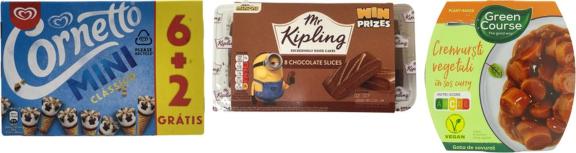
Figure 3: Examples of alginate products in Europe
Source: Mintel GNPD
Europe is an important destination in the seaweed hydrocolloid trade
In 2022, European trade of seaweed hydrocolloids was 68,856 tonnes, of which 31,933 tonnes came from developing countries. Please note that since 2020, United Kingdom imports are not included. Excluding the UK in 2018 and 2019 (6,997 tons and 6,928 tons, respectively) shows a European average annual imports’ growth rate of 4.8% between 2018 and 2022.
Source: Eurostat, 2023
In 2022, €409 million worth of seaweed hydrocolloids was imported into Europe, and an extra €304 million was traded within the EU. Comparing the values from Figure 5 with the volume of Figure 4, we see a big value change in 2022, and we can conclude that the prices in 2022 have increased. Industry sources confirm that this is a delayed result of COVID-19, the impact of the Chinese industry and seasonal changes. Prices in Indonesia, the world’s leading seaweed processor, are driven by dynamics in the Chinese seaweed processing industry and seasonal production patterns in Indonesia.
Source: Eurostat, 2023
European innovation and new product introductions
Europe is a big target market for seaweed hydrocolloids because of its food processing industry. There is a lot of product development with seaweed hydrocolloids, and the number of product launches is the highest in Germany, followed by the UK, France, Spain and Italy. After a less innovative Covid period, innovation started to recover in 2022.
Source: Mintel GNPD
Carrageenan and processed Eucheuma seaweed are authorised as food additives in the European Union (EU). They are listed as E407 (carrageenan) and E407a (processed Euchema seaweed) in Regulation (EC) No 1333/2008 on food additives. Specific purity criteria have been defined in the Commission Regulation (EU) No 231/2012.
The application of seaweed hydrocolloids is steady across a number of food categories. Chilled desserts and ice cream are the leading applications, followed by dairy (flavoured milk, spoonable yoghurt, processed cheese, and so on) and processed meat (including meat substitutes).
Source: Mintel GNPD
Most seaweed hydrocolloid-based food products are launched in the 5 European countries with the largest populations. According to an analysis of product launch data by Mintel GNPD, the industrial use of seaweed hydrocolloids is concentrated. The top 30 food and drink companies account for one-third of all product launches that are formulated with seaweed hydrocolloids.
The biggest food innovators using seaweed hydrocolloids are Unilever, Ben & Jerry's, Nestlé, Mondelez International, Molkerei Alois Muller and Groupe Danone. In addition, there are big retail chains with private-label products containing seaweed hydrocolloids, like Lidl, Aldi, Albert Heijn, and Carrefour. Private-label products account for about 30% of seaweed hydrocolloid-based product launches.
Table 1: Overview of the key data for the most attractive target countries
|
Country |
Import volume (2022, tonnes) |
Export volume (tons) |
Local production Yes/no |
Net consumption (tonnes) |
Growth in import volume (2018-2022, %) |
Import value (€ million) |
Number of product launches |
|
Germany |
16,275 |
6,751 |
No |
9,525 |
11.7% |
153 |
496 |
|
The UK |
n.a. |
n.a. |
No |
n.a. |
n.a. |
n.a. |
446 |
|
Spain |
10,701 |
16,051 |
Yes |
n.a. |
4.4% |
137 |
319 |
|
France |
5,902 |
6,676 |
Yes |
n.a. |
0.7% |
57 |
429 |
|
The Netherlands |
6,749 |
5,790 |
No |
959 |
10.5% |
65 |
203 |
|
Denmark |
6,045 |
1 |
Yes |
>6,044 |
8.1% |
83 |
117 |
|
Poland |
3,979 |
570 |
No |
3,409 |
-2.7%* |
40 |
214 |
Source: Multiple sources (Eurostat and Mintel GNPD)
Tips:
- Visit (local) trade shows when looking for buyers and observing trends in applications. Examples include Food Ingredient Exhibition, Veggie World, and Anuga.
- See the CBI study 8 Tips for finding buyers in the European natural food additives market, which provides valuable information on how to increase your chances when approaching European buyers.
- Seaweeds are also consumed as a natural healthy food. For more information about the seaweed market, please see the CBI report, the European market potential for seaweed.
3. Which European countries offer the most opportunities for seaweed hydrocolloids?
The top 6 seaweed hydrocolloid European importing countries (in volume and value) are Germany, Spain, France, the Netherlands, Denmark, and Poland. These countries offer the most opportunities for exporters of seaweed hydrocolloids from developing countries. Besides the imports from developing countries, France, Spain, and Denmark also have local production. European seaweed production comes mainly from wild seaweed rather than aquaculture, and is more expensive than the products from Asia.
Source: Eurostat, 2023
Source: Eurostat, 2023
Germany: major user in dairy and ice cream and re-exporter of seaweed hydrocolloids
Germany has a large population of 83 million people. This makes Germany the largest consumption market in Europe. Apart from that, Germany is a major re-exporter of food ingredients and processed foods.
In 2022, Germany imported 16,275 tonnes of seaweed hydrocolloids, worth €153 million, and exported 6,750 tonnes, resulting in a net consumption of 9,525 tonnes. This includes carrageenan and agar and excludes alginates. Germany sources 49% of its seaweed hydrocolloid imports directly from the producing developing countries. The ingredients were mostly sourced from India (2,789 tonnes), China (2,559 tonnes), Indonesia (1,247 tonnes), and the Philippines (1,159 tonnes). Since 2018, the total import volume showed an average annual growth rate of 11.7%.
According to Mintel GNPD data, 2,500 seaweed hydrocolloid-based products were launched in Germany in the last 5 years. 70% of this being carrageenan, 20% alginate, 15% agar. Most seaweed hydrocolloid is used in desserts, ice cream, cakes, iced coffee, flavoured milk, and meat substitutes, together accounting for more than half of the number of product launches.
Analysis of the seaweed hydrocolloid-based food and drink product launches in Germany shows that private label products take a big share of 33% of the product launches. These data also show that German retailers (for example, Lidl, Aldi, Penny Markt, Kaufland Warenhandel, Edeka, Rewe, and Netto Marken) are big users of seaweed hydrocolloids in their private-label products. These retailers outsource manufacturing of their private label products to manufacturers, which sometimes produce these private label products in addition to their own branded products. Branded products are marketed by Unilever, Dr. August Oetker, Ehrmann, and Mokerei Alois Muller, amongst other retailers.
In 2022, 35% of the German seaweed hydrocolloid-based products were marketed as sustainable products. The companies mentioned above, all have a strategy for more sustainable product development. For example, Unilever developed a compass for a sustainable strategy. Dr. Oetker focuses on sustainability for both people and the environment. The intentions are summarised in a charter.
Examples of German seaweed hydrocolloid importers:
- Roeper buys natural raw materials from all over the world. The company has both agar and carrageenan in the portfolio.
- Norevo is an established and globally operating family business, that specialises in trading and processing natural raw ingredients, including agar.
- Ottmer Food is a sales partner for international producers who target German and European Industries in the areas of food, flavour, fragrances, cosmetics, and dietary supplements.
- Biesterfeld is the distributor for CPKelco.
Spain: Producer, re-exporter, and seaweed hydrocolloids consumer for ice cream, desserts and meat products
Spain is the 4th largest European country by population, with 47 million people living in Spain.
In 2022, Spain imported 10,700 tonnes of seaweed hydrocolloid worth €137 million. Spain sources 85% of its seaweed hydrocolloid imports directly from the producing developing countries: China (4,978 tonnes), the Philippines (2,289 tonnes), Indonesia (807 tonnes,) and Chile (739 tonnes). Since 2018, the total import volume has shown a yearly growth of 4.4%. Spain is also a local producer of agar. A big company producing this is Ceamsa. However, seaweed hydrocolloids produced in Asia are produced at a much lower cost.
According to Mintel GNPD data, almost 2,000 seaweed hydrocolloid-based products were launched in Spain during the last 5 years. Of these products, 78% is carrageenan, 20% alginate, 8% agar, and 3% is labelled as processed euchema seaweed. Most seaweed hydrocolloid is used in meat (replacements), ice cream, desserts, sauces, meals, and cakes.
The Spanish retail market is concentrated, with the largest retailer being Mercadona. Carrefour, which is a French company, is the second biggest private label company. On average, some 32% of the seaweed hydrocolloid-based food and drink product launches in Spanish retail are private label products. The Mintel GNPD data analysis shows that for Spanish seaweed hydrocolloid-based consumer products, ”ethical” and ”sustainable” are the most important claims.
Examples of Spanish seaweed hydrocolloid producers or importers:
- Roko is a local producer of agar. According to the company, Industrias ROKO is now recognised as an international reference in the agar industry and the largest manufacturer in Europe, exporting its products to every continent.
- Ceamsa (Compañia Española de Algas Marinas (CEAMSA)) was established in 1966. The company produces, develops, and distributes a wide range of natural hydrocolloids (carrageenan, pectin, fibre, alginate, and refined locust bean gum), which can be used in the food and non-food industry.
- Hispanagar is 1 of the world's leading manufacturers of purified seaweed extracts. The company started working with agar in the 1950s. Algae from oceans all over the world are processed through various extraction and purification techniques.
The Netherlands: re-exporter and seaweed hydrocolloid consumer for dairy and meat substitutes industries
The Netherlands is a major trade hub for food ingredients in Europe because of the harbour in Rotterdam. While the size of its population and respective domestic consumption are relatively small, the importing wholesalers in the Netherlands play a large role in the processing and, particularly, re-export of seaweed hydrocolloids to other European countries.
In 2022, the Netherlands imported 6,749 tonnes of seaweed hydrocolloids worth €65 million. The Netherlands sources 63% of its seaweed hydrocolloid imports directly from the producing developing countries, mainly coming from the Philippines, India, and Indonesia. Since 2018, the seaweed hydrocolloid import volume has shown an average annual growth of 10.5% a year.
In 2022, the Netherlands exported 5,790 tonnes of seaweed hydrocolloids. These trade figures show that the Netherlands uses a relatively small share of 14% of all imported volume for local consumption and processing into food drink products, while the largest share is re-exported.
According to Mintel GNPD data, the use of seaweed hydrocolloids in food and drink products in the Netherlands is quite concentrated. Meat substitutes, ice cream, desserts, cakes, and flavoured milk together account for more than half of the product launches. The biggest industrial users are local food processors like Unilever, including brands like ‘de Vegetarische Slager’, Mars, Ben & Jerrys, Arla Foods, and Friesland Campina. Of these seaweed hydrocolloid-based product launches, private label accounts for 37% of the products. Retail chains such as Albert Heijn (AH label), Jumbo, and Lidl are leading in private label use.
Friesland Campina is a Dutch dairy company that exports its products all over the globe. The company is believed to be a relatively big seaweed hydrocolloid user for their dairy drinks and dessert products. Responsible purchasing is important to the company, but that is not the only goal. Friesland Campina prefers to have an overview of the entire chain of raw materials purchased. By 2025, the goal is that 95% of key raw materials will be traceable back to the source.
Of the consumer product launches, most seaweed hydrocolloid-based product claims are focused on being ”ethical” and ”sustainable”. In addition, because of the use in meat replacements, ”vegan” and ”plant-based” are also common positioning claims.
Examples of Dutch seaweed hydrocolloid importers:
- Will & Co is a company which is a distributor of raw materials (biobased) chemicals for industrial applications and food ingredients. Currently being a distributor for carrageenan of Marcel Carrageenan- Philippines and GPI-Canada.
- Amstel Products was founded in 1999. In 2004, Amstel Products started producing technical gelatine and starch under its own label. Nowadays, the company offers an extensive range of food ingredients, including carrageenan and several hydrocolloid gums, to the global food and drink industry.
Denmark: seaweed hydrocolloids consumer for the ice cream, bakery, and meat industry
The population of Denmark is 5.8 million people.
In 2022, Denmark imported 6,045 tonnes of seaweed hydrocolloids worth €83 million. Denmark sources 67% of its seaweed hydrocolloid imports directly from the producing developing countries China and the Philippines. According to Eurostat, Denmark exported only 1 tonne of seaweed extracts in 2022, virtually using all imports for local processing. Since 2018, the total imports showed an average annual growth of 8.1% a year. CP Kelco, a large carrageenan processor, has its headquarters located in Denmark. Another local processor is Dupont (formerly Danisco).
According to Mintel GNPD data, 950 seaweed hydrocolloid-based products were launched in Denmark in the last 5 years, 73% of this being carrageenan, 25% alginate, 8% agar, and 3% labelled as processed euchema seaweed-based products. Most seaweed hydrocolloid is found in ice cream, meat replacements, cakes, desserts, and flavoured milk, together accounting for more than half of the number of product launches.
Denmark has some of the world’s largest and most successful companies in many sectors of the food industry. For example, the world’s second-largest meat exporter, Danish Crown, is based in Denmark, along with the sixth-largest dairy company, Arla Foods. These are also found to be the main innovators using seaweed hydrocolloids as ingredients. In Denmark, the private label use of the ingredients accounts for 26%, the remaining being used in branded products.
In 2022, 40% of the seaweed hydrocolloid-based products were marketed as a sustainable product. All Danish dairy companies are members of the Danish Dairy Board. This board published an overview of sustainability.
Examples of Danish seaweed hydrocolloid importers:
- Danish Crown is such an example. Being transparent is what is most important for ingredient suppliers. For this company, ”from farm to fork” is important. Ingredients such as seaweed hydrocolloids form only a minor share of their products, but the supply of these ingredients has to be transparent.
- Eurogum is an example of a company active as a Danish seaweed hydrocolloid importer. Eurogum belongs to the Bang & Bonsomer Group, and is an independent Danish manufacturer of carrageenan and alginate, used by the food industry. Products are traded under the brand Eurogel.
France: producer, trade hub, for seaweed hydrocolloids and consumer for the dessert, ice cream, and meat processing industries
With 65 million inhabitants, France has the second largest population in the EU, which largely explains its major role in the European seaweed hydrocolloids market.
In 2022, France imported 5,902 tonnes of seaweed hydrocolloids worth €57 million, of which most comes from the EU and only 1,540 tonnes (or 26%) from developing countries. Since 2018, the total import volume has shown an average annual growth of 0.7%. In 2022, France exported 6,676 tonnes of seaweed hydrocolloids, which is more than the imported volume. France also has local production of seaweed and hydrocolloid extraction, and a large player is Cargill. France houses the port of Marseille, which is 1 of the EU’s largest seaports. This port is the fourth largest in Europe, contributing to France’s role as a hub.
France is also a producer of agar. An example of a French company which produces this is Sobigel. In addition, France is also a producer of alginates. Algaia is an example of a French company which produces this.
Mintel GNPD data analysis shows that in French seaweed hydrocolloid-based consumer products, ”sustainable” seems to be the most important positioning. In 2022, 44% of the product launches are positioned as clean label, including no additives or preservatives and no chemical products. 23% of the product launches were positioned as ”sustainable”, while 19% were ”organic”. Seaweed hydrocolloids are mainly found in French desserts, meat, ice cream, and bakery products.
France houses a number of large retail chains, such as Carrefour, Delhaize, Auchan, and Intermarche, which all take up a large part of the domestic food and drink sales. Private-label products account for 27% of seaweed hydrocolloid applications, with the remaining share being used for branded product formulations.
In France, seaweed hydrocolloids are mainly found in desserts, ice cream, meat (replacements), cakes, and cream products.
Examples of French seaweed hydrocolloid importers:
- Ingredience is a supplier of food ingredients which distributes to French food manufacturers the product ranges of exclusive partners (Hydrosol, Olbrichtarom, Ceamsa, Sternchemie, Vestkorn, LBG Sicilia, Roko, Planteneers).
- Kalys selects and supplies functional ingredients for and to the food industry. Since 1994, their quality and traceability of the products rely on regular audits of suppliers, by Kalys and third parties (ISO 9001, ISO 22000, BRC and/or IFS certifications). Their expertise in texture led them to select and develop a line of natural food texturing agents like agar, alginate, and carrageenan.
Poland: seaweed hydrocolloids consumer for the ice cream, dessert, and meat industries
With 38 million inhabitants, Poland has the fifth largest population in the EU, which largely explains its major role in the European seaweed hydrocolloids market.
Being the sixth largest European seaweed hydrocolloid importer, in 2022, Poland imported 3,979 tonnes of seaweed hydrocolloid worth €40 million. 1,130 tonnes were directly imported from developing countries (28%) and 48% from other EU countries. Since 2018, the total import volume has shown an average annual decline of -2.7%, but it should be remarked that until 2022, the volume was stable.
In 2022, Poland exported 570 tonnes of seaweed hydrocolloid, resulting in a local consumption of 3,409 tonnes. This means that 86% of the imported volume is used for local processing into food and drink products.
In terms of the number of seaweed hydrocolloid-based product launches, the ice cream industry is the most innovative, followed by dessert, meat and meat replacements, and chocolate. Mintel GNPD data analysis shows that in Polish seaweed hydrocolloid-based consumer products, ”sustainable” seems to be the most important positioning; 32% of the product launches showed this positioning. In 2022, 15% of the product launches are positioned as ”clean label”, including ”no additives or preservatives” and ”no chemical products”.
Looking at the industrial applications for seaweed hydrocolloids, private label accounts for 27%, with the remaining share being used for branded product formulations.
Example of a Polish seaweed hydrocolloid importer:
- Radea represents carrageenan suppliers as the sole agent or distributor, and focuses on the meat processing industry. The company offers customers technical and marketing support, including access to laboratories.
4. Which trends offer opportunities or pose threats on the European seaweed hydrocolloid market?
A growing demand for natural and sustainable products is driving the growth of seaweed hydrocolloid demand. Transparency throughout the value chain for both environmental and human health safety is important.
Clean Label and the continuing growth in natural ingredients
Demand for natural ingredients in Europe is growing. Food companies are reformulating their products with natural ingredients in response to this trend. Unfortunately, seaweed hydrocolloids have an E-number and are therefore not considered as a clean-label ingredient. A clean food label means that the product is natural, minimally processed, preservative-free, and has a transparent and short list of ingredients.
Most functional alternatives to seaweed hydrocolloids, however, also have an E-number and seaweed hydrocolloids have the advantage of being plant-based, which is another major trend in the European food industry.
Tips:
- Read more about opportunities for natural food additives in plant-based foods.
- To be a successful player in the seaweed hydrocolloid market, sustainability and transparency about the origin and the production process are key.
- Seaweed hydrocolloids are functional ingredients in food and drink products. A partnership with an importer with strong application capabilities and network is highly recommended.
Sustainable sourcing and transparency – in line with global health trends – is vital
Sustainable sourcing is a key trend in Europe. Consumers want to know where their food and ingredients come from, who has produced the ingredient, under which conditions, and how this impacts the planet. Consumers are becoming more aware of the impact of what they buy on people and the environment. They have growing concerns about global issues, such as climate change, and expect suppliers to take more Corporate Social Responsibility (CSR).
Non-Governmental Organisations (NGOs) have often taken a lead in stimulating companies to improve their CSR and source sustainably. Together with leading brands and manufacturers, they originally focused on commodities, which allowed them to maximise impact. Nowadays, manufacturers are also applying their sustainable sourcing strategies to ingredients which they only use in small amounts, such as seaweed hydrocolloids.
The production of seaweed hydrocolloids is very “energy and water intensive”. Production with wind and/or solar energy would be the ultimate best, but at the moment, this is not feasible in developing countries like the Philippines. However, various varieties of seaweeds not only grow fast, but their cultivation also does not require fertilisers, land degradation, or deforestation. In addition, seaweeds provide a number of environmental benefits, like macroalgae, which are great carbon dioxide sinks and these form a good habitat for fish. Suppliers of seaweed hydrocolloids can refer to these benefits to position their products as sustainable products.
An example of a company showing transparency in safety and sustainability solutions is Gelymar, a global leading carrageenan company with facilities in Indonesia and Chile. The company operates with an Environmental Management System based on international standards (ISO 14001; OSHAS 18001), which aims at the continuous improvement of working conditions and the reduction of environmental impact. Gelymar plays an active role in promoting the safe use of hydrocolloids and sustainable farming methods through its participation in Marinalg International, as well as its role as a founder and directive member of COPRAM, a Chilean association of seaweed farmers that promotes public and private actions to guarantee the sustainability of Chilean algae resources.
Certain manufacturers in Europe are becoming interested in the climate footprint of their ingredients. It is possible to calculate the climate footprint of seaweed hydrocolloids through a Life Cycle Assessment (LCA). For example, carrageenan produced in Denmark currently has a climate footprint of 7.9 kg CO₂e/kg. Sodium alginate currently has a climate footprint of 21 kg CO₂e/kg. The climate footprint of sodium alginate is assessed from the cradle to its stage of delivery. This study includes all steps of the life cycle as applicable, from the production of agricultural inputs through agriculture or aquaculture, production of non-agricultural ingredients, fishing or hunting activities, transports, processing, packaging, storage, and distribution, up until the product reaches its stage of delivery in the supply chain.
Tips:
- If you are interested in climate footprints, start with an LCA and do a full analysis of your own production process.
- Look for potential partners to improve sustainability. Use available programmes and subsidies from governmental or non-governmental organisations for investments in sustainability. For more information, see websites such as the Netherlands Enterprise Agency or the German Ministry for Economic Cooperation and Development.
Hydrocolloids fit well with vegan and plant-based food trends
The European market for plant-based foods grew by 21% between 2020 and 2022, to reach a record €5.8 billion. Seaweed hydrocolloids are derived from plant material and are considered as vegan food ingredients, and, therefore, sometimes good alternatives for chemical and animal-based ingredients like gelatine. Gelatine is commonly made from animal collagen, while, for example, agar is made from red algae, which makes it a popular vegetarian substitute for gelatine.
Tip:
- Promote your products as plant-based instead of vegan, this prevents the focus on the vegan niche market rather than the overall healthy food market.
Climate change is a serious threat to the seaweed farming industry.
Although demand for carrageenan is expected to rise steadily in the coming years, the growth and development of red algae has experienced various challenges, like environmental factors and the emergence of diseases. Seaweed production has provided food and income to many coastal communities across the world. However, climate change poses a major threat to the global seaweed sector.
Tip:
- Try to find more sustainable solutions to bring down the energy consumption while processing seaweed. Learn about the goals that are set globally and learn from carrageenan research and solutions of other industries.
Monique van der Wouw of Wouw Food Market Analysis and Kasper Kerver of ProFound carried out this study on behalf of CBI.
Please review our market information disclaimer.
Search
Enter search terms to find market research