
The United Kingdom’s market potential for coffee
The UK is a major importer of green coffee. As a traditionally tea-drinking country, coffee consumption is still growing in both volume and value. Premiumisation, including a still-growing demand for specialty coffee, is driving the value growth. The UK is considered Europe's largest specialty coffee market. Though consumption market is growing, imports are declining.
Contents of this page
1. Country description: United Kingdom
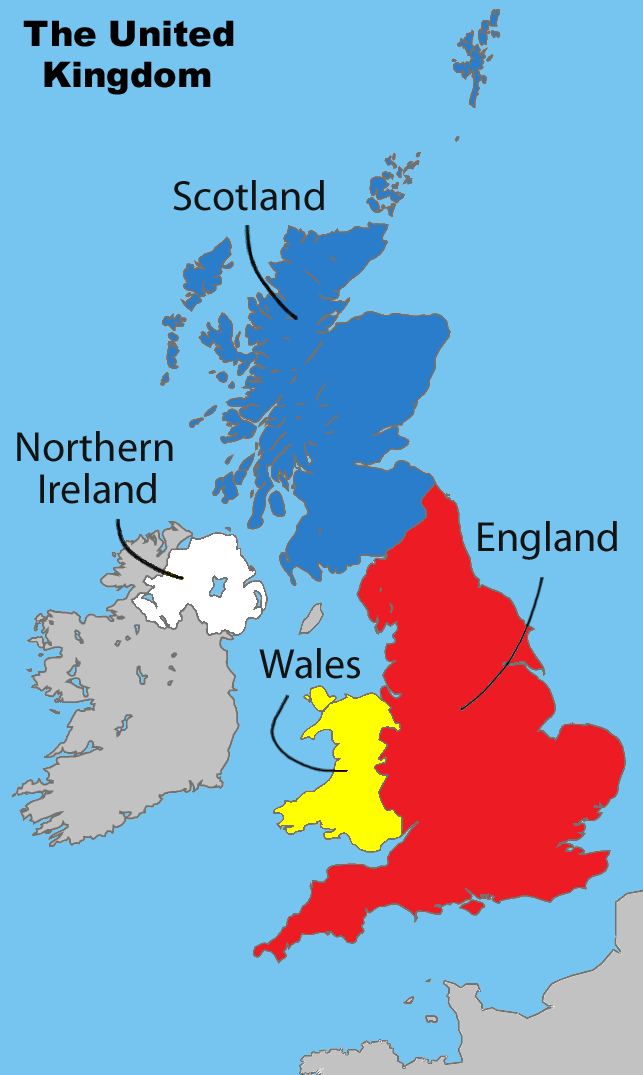
The UK is an island nation situated off the northwestern coast of mainland Europe. Its distinctive geography means it is surrounded by water, primarily the Atlantic Ocean, the North Sea, the English Channel, and the Irish Sea. This island status has historically shaped its development and defence.
While an island, the UK shares a land border with one country: the Republic of Ireland. This border runs across the island of Ireland, connecting Northern Ireland (which is part of the UK) with the Republic of Ireland. To the east, the UK is separated from continental Europe by the English Channel and the North Sea, with France being the closest continental neighbour across the Channel.
The nation comprises four distinct countries: England, Scotland, Wales and Northern Ireland. Each has its own unique cultural identity, traditions, and sometimes distinct administrative systems. This contributes to the rich diversity of the UK as a whole. Its geographical position has made it a significant maritime power and a gateway between Europe and the Atlantic.
Important sectors driving this economic strength include finance, services, manufacturing and advanced technology. Its strategic position off the coast of mainland Europe, combined with major trading hubs like London, Liverpool and Southampton, supports extensive international trade.
Figure 1: Countries in the UK
Source: Wikimedia Commons, 2008

The UK used to be part of the EU. In 2020, after a lengthy negotiation process, it left the EU (Brexit). However, its legislation remains very similar to that of the EU, though there are some differences.
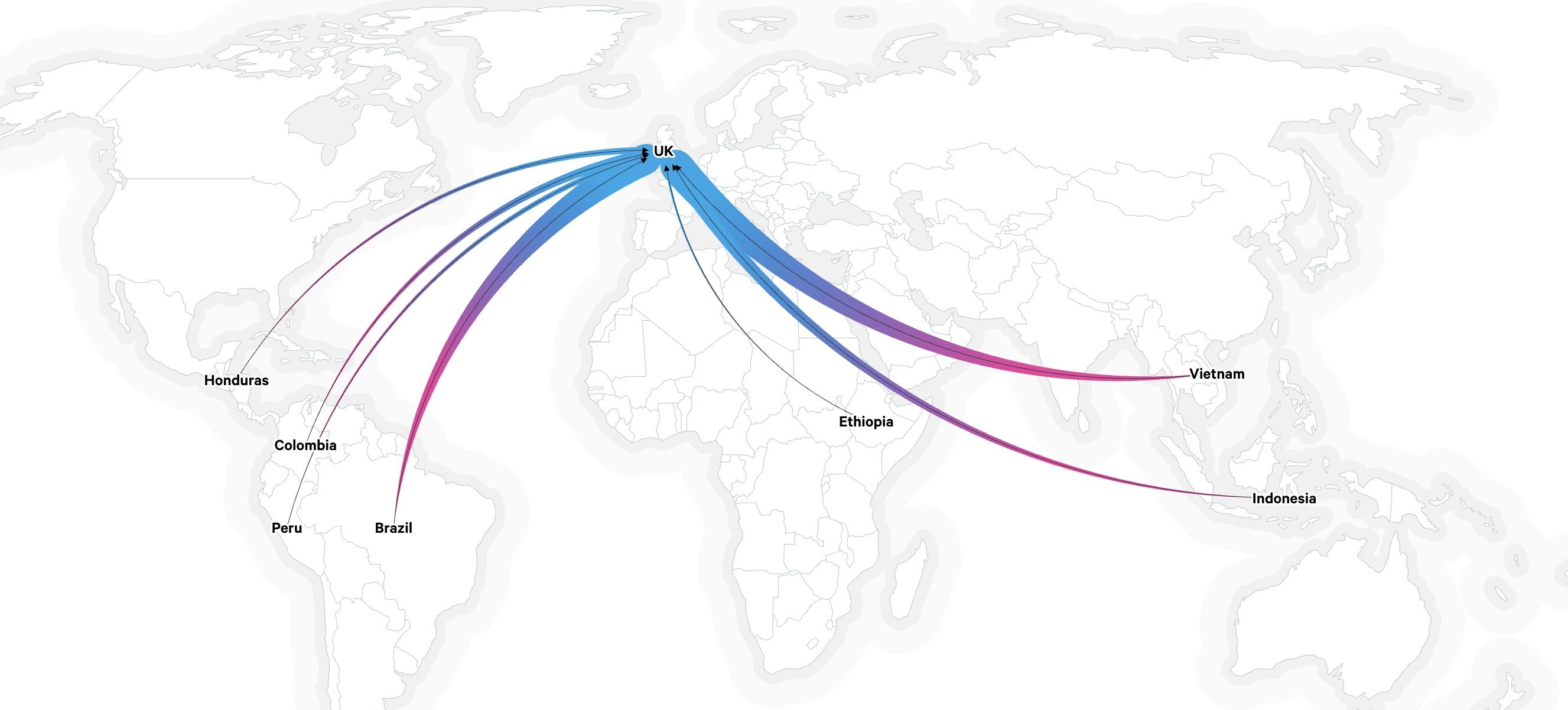
The UK is a main importer of green coffee. Brazil, Vietnam, Colombia, Indonesia, Peru, Honduras and Ethiopia are its key suppliers.
Figure 2: Main trade flows of green coffee into the UK
Source: Resource trade, 2024
Tips:
- Find out which coffee companies operate in the UK to target potential business partners. You can find lists of roasters and specialty cafés on the website of the European coffee trip and Coffee Blog.
- Find more information on the British Coffee Association (BCS) website. The association publishes sector news and national events.
- Learn about the main European markets by reading the CBI country studies. These include the Spanish market, German market, French market, Swiss market, Scandinavian market, and many others.
2. What makes the UK an interesting market for coffee?
The UK is a major importer of coffee, sourcing almost all of its supply directly from producing countries. Most of these imports are used to support the domestic roasting industry, as the country engages in only limited re-exports. While coffee consumption within the UK continues to grow, exports of roasted coffee to other countries have declined.
UK: Europe's 8th-largest green coffee importer
By volume, the UK is Europe's 8th-largest importer, according to 2025 statistics. Import volumes from producing countries lifted from 154,000 tonnes in 2024 to 165,000 tonnes in 2025. This is about one-7th of the imports of Europe's largest importer, Germany (1.1 million tonnes in 2025).
British imports vary from year to year, but the overall trend over the past 10 years has been downward. Roasting in the UK for the EU has declined since Brexit. Roasted coffee exports varied between 25,000 – 28,000 tonnes before Brexit, dropping to an all-time low of 4,000 tonnes in 2024.This is partly caused by Brexit but also by stringent legislation. British legislation made it difficult to upscale or modernise roasting facilities in the UK. This caused JDE Peet's and Nestlé to move part of their soluble coffee production to other European countries. In 2025, roasted coffee exports slightly recovered to 14,000 tonnes.
Source: ITC Trademap, 2025
The UK offers a very large consumption market
The UK offers a vast consumption market for roasted coffee. Around 98 million cups of coffee are consumed daily. The country especially offers a large market for soluble coffee. 80% of British households also purchase soluble coffee. Ground coffee and single-serve coffee are becoming more and more popular.
The UK also has a large out-of-home market. In 2025, the UK counted over 11,000 coffee shops. Large brands present are Costa Coffee (2,671 stores), Greggs (2,610 stores) and Starbucks (1,354 stores). 80% of the British population visits a coffee shop once a week, and 16% visits a coffee shop daily.
Besides these large chains, the UK hosts a very large number of independent mid-sized roasters, of which most have their own cafés. These roasters often have a large regional presence, supplying local cafés and restaurants. Examples of such companies are Black Sheep Coffee (London), 200 Degrees (Nottingham) and Blank Street Coffee (Cambridge).
The UK is the world's 7th-largest importer of roasted coffee, based on 2024 statistics. In Europe, the country ranks 5th, just behind the Netherlands. In 2025, the UK imported 51,000 tonnes of roasted coffee.
The large British consumption market offers limited opportunities for exporters of roasted and soluble coffee in producing countries. In 2025, almost all roasted coffee was imported from European countries like Germany (14,000 tonnes), Italy (13,000 tonnes) and Switzerland (6,000 tonnes). Brazil exported 295 tonnes of roasted coffee to the UK in 2025. For Vietnam, this amount was 85 tonnes. King Coffee, part of Trung Nguyen, is a Vietnamese company that sells coffee in the UK, with coffee roasted in Vietnam.
In 2025, the UK was the world's 4th-largest importer of soluble coffee (HS code 210111) and ranked 3rd in Europe. It imported 29,800 tonnes of soluble coffee in 2025, up from 14,000 tonnes in 2021. However, most of this coffee enters the UK via European partners in Germany and Spain. Only a small share is imported directly from origin, such as Vietnam (3,000 tonnes) and Brazil (2,000 tonnes).
The UK sources most green coffee from producing countries directly
In 2025, 96% of coffee imports came directly from producing countries. Brazil (50,000 tonnes) is by far the largest supplier of green coffee, followed by Vietnam (32,000 tonnes), Colombia (15,000 tonnes), Honduras (9,000 tonnes) and Peru (7,000 tonnes).
Long- and short-term projection
The UK has a consumption market that, unlike those of other Western European countries, is not yet fully saturated. The UK traditionally is a tea-drinking country, and coffee consumption is still lower than in other European countries. Coffee consumption volume in the UK is still growing.
Most growth, however, comes from premiumisation. This means a growth in value, not volume. The specialty coffee segment is growing, and the ready-to-drink (RTD) coffee market is growing even faster. The growing specialty coffee market offers opportunities for producing country exporters, as described later in this study. The opportunities for the growing RTD market are unclear though. The coffee used in RTD coffees is often of low quality, although there are RTD coffees of premium quality available.
In the long term, the British coffee imports are under pressure due to expected global shortages. The global demand for coffee will likely grow, due to a growing consumption mainly in Asia. At the same time, supply will likely be lower due to climate change and an aging farmer population. You can read more about this in our study on demand for coffee.
Tips:
- When visiting a trade fair, prepare well. Make sure you have defined your goals, be prepared to share your story and promotion materials, and follow up afterwards. You can read more tips in this practical guideline on how to navigate a coffee conference.
- Read our study on demand for coffee for detailed information about the European trade in green coffee.
- Look on the UK Trade Info website to find British companies trading coffee.
3. Which coffees offer the most opportunities for the British market?
British consumers value quality and sustainability. As a result, certified coffee products have a strong presence in the market. Major certifications include Rainforest Alliance, Fairtrade and organic. Many products carry more than one certification.
Grown demand for Rainforest Alliance
Despite a 5% Rainforest Alliance reduction in coffee production worldwide, the demand for Rainforest Alliance-certified coffee increased in 2024. In 2023-2024, global Rainforest Alliance-certified imports rose from 864,000 tonnes to over 1 million tonnes. This growth mirrors the demand in Europe, which grew from 615,000 tonnes to 751,000 tonnes.
The UK also contributed to this growth. British imports of Rainforest Alliance-certified coffee rose from 28,500 tonnes in 2023 to 42,200 tonnes in 2024. In 2022, imports amounted 32,400 tonnes. The UK ranks as Europe's 4th-largest Rainforest Alliance importer – slightly more than Belgium, which ranks 5th. Chartley Coffee, Vidya Global Limited, Omwani Coffee Company and Covoya (speciality coffee) are British companies that buy Rainforest Alliance-certified coffee.
Fairtrade is well-known among consumers
Fairtrade is the best-known certification standard in the UK. 84% of the British population recognised the logo in 2024. In Belgium, for example, this was 65% in 2022. Fairtrade green coffee sales reached nearly 12,000 tonnes in the UK in 2024, about 5% of the total consumption market. This is comparable to Germany, Europe's largest Fairtrade market. Fairtrade coffee is mostly sold in supermarkets. Raw Bean is a British roaster working with Fairtrade-certified coffee.
The UK offers a large market for multi-certified and organic coffee
In 2024, 71% of Fairtrade coffee sold in the UK was also certified organic, exceeding 8,500 tonnes of British coffee imports. The share of UK coffee that is certified organic but not Fairtrade-certified is currently unknown. By comparison, imports of Sweden – Europe's 3rd-largest importer of organic coffee – reached 12,437 tonnes of organic coffee. This includes both Fairtrade organic and non-Fairtrade organic coffee.
Dr. Wakefield, Mercanta, Coffee Quest and Sucafina are traders with a strong presence in the British organic coffee market. Union Hand-Roasted, Roastworks and Rave are roasters also working with organic coffee.
2nd-party standards gain importance
Many major coffee companies have developed their own sustainability programmes, known as company standards. Most company standards intend to establish a baseline for sustainable purchasing, but are often less demanding than independent 3rd-party programs like Rainforest Alliance and Fairtrade. Many company standards are recognised by the Global Coffee Platform, according to its equivalence mechanism. Louis Deyfus Company Responsible Sourcing Program is widely used by global buyers, including those supplying the UK.
Next to company standards, there are independent verification systems that are used by roasters or trading companies, such as Enveritas. Enveritas verifies coffee for many large coffee companies, including JDE Peet's. To be verified by Enveritas, the buyer needs to meet the standards' requirements, while certification of the producer or exporter is not required. Because Enveritas is issued by a roaster or trading company, it is often considered a 2nd-party standard, just like the company standards.
No figures exist on how much of British coffee imports comply with any 2nd-party standard. However, globally these standards are more and more common. In 2020, according to the Global Coffee Platform, 4.4% of all coffee sales complied with a 2nd-party standard. By 2023, this share had grown to 21%. 2024 and 2025 statistics are lacking.
The share that complies with a company's standard varies by company. The important standards also differ by producing country. Enveritas Green and Louis Dreyfus' company standards are widely used by companies that source from Brazil.
The UK has a vibrant specialty coffee culture
In the vibrant British coffee market, much of the coffee is sold via coffee shops. Some coffee chains focusing on specialty coffee are Monmouth Coffee Company, Origin Coffee, Colonna and Kiss the Hippo Coffee. The UK also hosts many specialty coffee events, like the Manchester Coffee Festival and the London Coffee Festival.
The UK has many companies that import speciality coffee, like Falcon Coffees, Mercanta, Osito Coffee, Covoya, Caravela, Ally Coffee, Royalty Specialty Coffees, Café Direct and Raw Material Coffee. In 2025, these companies together accounted for 11.2% of all known international green coffee shipments into the UK. Note that the size of specialty coffee shipments is often smaller than conventional coffee shipments. However, specialty coffee is often traded by conventional coffee traders as well.
Tips:
- If you offer rare coffees, reach out to British specialty coffee traders or specialty coffee roasters, who value innovation and unique cup profiles. British specialty coffee lovers have a high interest in trying new flavours.
- Invest in cupping facilities: a lab and skilled graders. By better understanding the quality and value of your product, you learn the buyer's language and are better positioned to negotiate the right price.
- Check the website of the British Specialty Coffee Association for information on the sector and upcoming events.
- Be critical towards your investments in coffee quality. Although the specialty coffee sector is often regarded as sustainable, the payment is not always worth the extra investments. Especially in the lower-specialty segment, the FOB-to-retail-ratio is often lower for specialty coffee exporters than for conventional coffee exporters.
- Read our study on Exporting specialty coffee to Europe to learn more about the specialty coffee market. Also read our studies on certified coffee, multi-certified coffee, organic coffee and relevant social certifications to identify more opportunities in these markets.
4. Which trends offer opportunities or pose threats in the British coffee market?
The European coffee market is changing, and the British coffee market with it. Most trends apply to the entire European region. These trends are described in our study on trends in the European coffee market.
Premiumisation is the reason for growth on the British consumer market
Most growth in the British coffee sector comes through a greater demand for higher-quality coffee. Premium coffee brands experience high growth turnover numbers. Based in both the UK and Colombia, Caravela is a company profiting from the increasing demand for specialty coffee; it exports its premium coffee to the UK and other countries across Europe.
Not only is the higher-quality coffee segment growing, but so is the ready-to-drink (RTD) market. RTD coffees are often expensive. These drinks contain many other ingredients besides coffee, like milk and sugar, and many are iced coffees. These ready-to-drink coffees often tap into other trends too, such as using plant-based milk alternatives or adding protein. The top-3 coffee enhancements are vitamins, proteins and collagen. This creates opportunities for suppliers of lower-quality coffee: as coffee is only one of many ingredients in RTDs, its quality is usually less important.
Growing demand for single-origin coffee
The demand for single-origin coffee is growing. Single-origin coffee allows consumers to know where their coffee comes from. It can also offer a unique flavour profile. British consumers associate single-origin with sustainability and quality. The trend is picked up by consumers drinking coffee at-home and at cafés. One company focussing on sourcing single-origin coffee is Origin Coffee. One producer supplying Origin coffee is Carmen Lúcia Chaves de Brito.
Decline of the middle specialty segment
A defining trend in the British coffee market is the growing polarisation between ultra-premium 'super-specialty' coffee and more price-competitive specialty blends. This goes alongside the gradual erosion of the traditional middle specialty segment. Demand is increasing at the very top end of the market for highly exclusive coffees, like competition-grade, experimental or 'super-specialty' lots scoring 89+. At the same time, many cafés and roasters are shifting toward cheaper blends to cope with rising costs. As a result, single-origins and micro-lots in the mid-high specialty range (roughly 84–86 points) are becoming harder to sell at prices that reflect their higher production costs.
This hollowing out of the middle is strongly linked to economic pressure. Rising rents, higher minimum wages and higher green coffee prices mean many UK coffee shops struggle to pass costs on to consumers. To remain viable, they choose coffees that are 'good enough' in quality more and more often, often scoring closer to 80–83. While still being clearly superior to conventional blends, most consumers continue to accept lower-quality specialty coffees. Storytelling, branding and darker roasting help mask this downward shift in quality. This allows roasters to maintain their price, even as cup quality subtly declines.
For producers in the middle-specialty segment, this can be challenging. While many Arabica producers can achieve coffees graded 80–83 points when conditions like soil quality and altitude are suitable, producing coffee of slightly higher quality often requires significant investment with limited additional returns. So for producers in the middle-specialty segment, it is important to discuss potential quality investments carefully with buyers. Another option is to explore buyers in alternative markets like Germany, where the middle-specialty segment is larger.
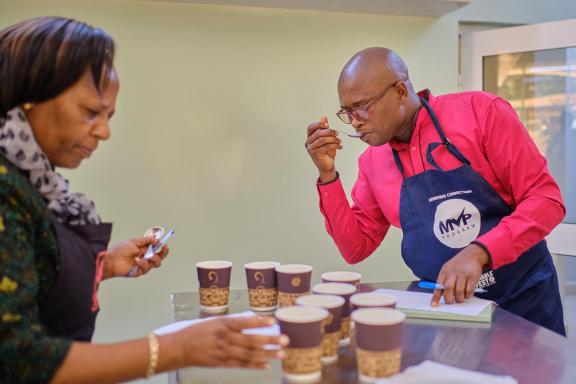
Figure 4: Sensory assessment of specialty coffee
Source: Ethos Agriculture, 2023
Tips:
- Read our study on exporting specialty coffee to Europe for more information on the grading and assessment of specialty coffee.
- Read more about legislation in our studies on organising your exports, requirement for exporting coffee and entering the British coffee market.
- Read our study on exporting roasted coffee to learn more about the possibilities and impossibilities of tapping into this market.
- Inform yourself on how to engage with sustainability trends. Read our tips to go green, become socially responsible and become EUDR compliant, and our study on the green deal.
Molgo Research carried out this study in partnership with Ethos Agriculture on behalf of CBI.
Please review our market information disclaimer.
Search
Enter search terms to find market research
Do you have questions about this research?
The British coffee market has undergone a dramatic and positive transformation over the past 30 years. London is now a global hotspot for specialty coffee, innovation and quality, exemplified by major coffee festivals and a vibrant café culture. The UK offers one of the most forward‑thinking and innovative coffee markets in Europe.

Gerd Mueller-Pfeiffer, CEO of International Coffee Consulting, former CEO of Nestlé Germany