
The Belgian market potential for cocoa
Belgian chocolate is famous around the world. "Belgian chocolate" must be produced in Belgium in order to be called as such, making it an important export product for this country. Belgium is Europe’s second largest cocoa bean importer and has a large chocolate industry. The processing market in Belgium is dominated by Barry Callebaut, Cargill and Puratos. Sustainability is very important in the country.
Contents of this page
1. Country description: Belgium
Belgium is a European country with a population of 11.9 million. Despite its small population, Belgium has the world’s 22nd highest Gross Domestic Product (GDP). The country borders the Netherlands, Germany, Luxemburg and France.
Foreign trade is essential for Belgium. The main export products are in the chemicals industry, vehicles and transport equipment, mineral products and machinery and electric equipment. Chocolate is also a major export product.
The Port of Antwerp-Bruges is Europe’s second largest seaport after Rotterdam in the Netherlands. It is an important connection for imported goods to the rest of Europe. It is also Europe’s second largest port for the import of cocoa beans, after Amsterdam in the Netherlands.
Figure 1: Belgium is a country in Western Europe
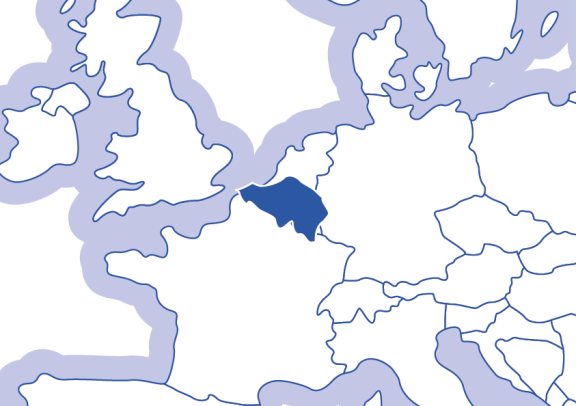
Source: Design by Bart Wortel
This study focuses on the Belgian market for import of cocoa beans (HS codes 1801) and cocoa paste, butter and powder (HS codes 1803, 1804 and 1805).
2. What makes Belgium an interesting market for cocoa?
Belgium was the second largest importer of cocoa beans in Europe after the Netherlands in 2025. 97% of the beans came directly from producing countries. Total imports dropped slightly between 2021 and 2025, but they are expected to grow again in the coming years. Almost two-third of imported cocoa beans are re-exported to other European countries. This makes Belgium an interesting way to access other European markets as well.
Belgium is the second largest importer of cocoa beans in Europe
Cocoa beans are the most attractive product to enter the Belgian market with, even after taking re-exported beans into account. Belgium imported 301,000 tonnes of cocoa beans from producing countries in 2025. This was 97% of the total volume of beans imported by Belgium.
Total bean imports were relatively steady from 2021 to 2024 but went down by 5% in 2025. The total drop from 2024 to 2025 was 24,000 tonnes. However, total European cocoa bean imports dropped by 10% from 2024 to 2025, so Belgium’s decline was lower than the rest of Europe.
A large share of beans imported into Belgium are shipped forward within Europe. In 2025, 61% of the beans (191,000 tonnes) were re-exported to other countries, mostly to Germany and France. This made Belgium the largest bean re-exporter in Europe in 2025, ahead of the Netherlands at 97,000 tonnes re-exported.
For exporters, this means that at least 61% of imported beans will end up in products in countries other than Belgium. However, this also means that 120,000 tonnes of beans remain in Belgium for further processing, which is still a large volume. This makes Belgium an interesting country for access to both the Belgian market and the European market for beans.
Source: Eurostat 2026
Semi-finished products are mostly imported from other European countries
Belgium imports large volumes of semi-finished cocoa products (paste, butter and powder). However, almost all these products are imported from non-cocoa producing countries. In 2025, only 1,000 tonnes (1% of all imported cocoa paste) came from producing countries. Volumes were even smaller for butter and powder, with 900 tonnes (1%) of butter and 50 tonnes (less than 1%) of powder imported from producing countries.
It could be difficult for exporters to compete on cocoa paste, butter and powder. The Belgian market for cocoa paste, butter and powder is dominated by supply from other European countries. The Belgian chocolate sector is structured around these import channels. This makes it difficult for producing countries to enter this part of the supply. It is more interesting for exporters and producer groups to focus on exporting beans.
Source: Eurostat 2026
Belgium has a large chocolate industry
Belgium is world famous for its chocolate and has a large chocolate industry. Chocolate production and exports are a major part of the Belgian economy. Each year, Belgium produces over 800,000 tonnes of chocolate. The Biscuit, Chocolate, Pralines and Confectionery branch represents 11% of the annual turnover of the Belgian food sector.
The Belgian chocolate market is growing quickly. Production value has gone up by 90% from 2016 to 2024. Production volume has grown by 22% during the same time.
The term ‘Belgian chocolate’ refers to chocolate produced according to the rules of the Belgian Chocolate Code. The code says that Belgian chocolate is chocolate for which the complete process is done in Belgium. It was developed to protect the reputation of Belgian chocolate and to inform buyers. This is why chocolate produced in Belgium is unique compared to other European countries.
The Belgian Chocolate claim is not legally protected by Belgian legislation, but it is agreed on by members of the Choprabisco Association. There is also EU legislation in place on the provision of food information to consumers. This legislation says that food labelling is not allowed to mislead the buyer.
Thanks to the popularity of Belgian chocolate, Belgium is the world’s second largest chocolate exporter behind Germany. While a lot of the Belgian chocolate is exported, Belgium is also a major chocolate consumption country. Belgians eat about 5.6 kg of chocolate per year per person. This is relatively high compared to other European countries. However, Switzerland (8.8 kg), Austria (8.1 kg) and Germany (7.9 kg) have higher consumption per person.
Figure 4: An example of Belgian Chocolate
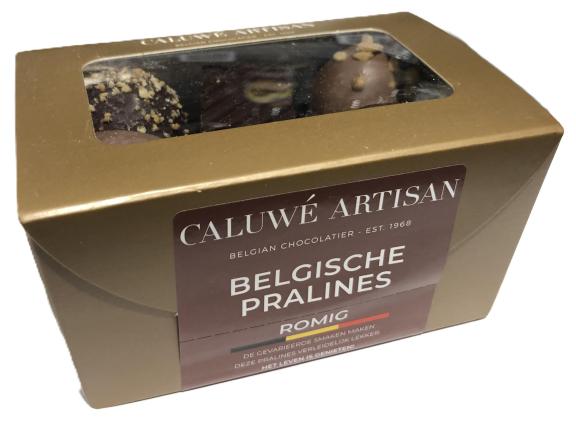
Source: Long Run Sustainability
Most Belgian chocolate is produced by a few major multinational processors. Barry Callebaut, Cargill and Puratos dominate the Belgian chocolate market. Together, they make up over 90% of all chocolate produced in Belgium. Barry Callebaut’s Wieze factory is the largest chocolate factory in the world. Cargill has large chocolate production facilities in Mouscron. Puratos has several factories in Belgium.
Chocolate production is expected to grow in Belgium. Companies are investing in future growth. In 2026, Barry Callebaut committed to investing €250 million in the Wieze factory to enhance their operations as the largest chocolate factory in the world. Belcolade (a subsidiary of Puratos) expanded its chocolate factory in Erembodegem. However, Cargill cut jobs in 2024 as part of a restructuring.
Other multinational chocolate manufacturers also have factories in Belgium. Like the Netherlands and Germany, Belgium is an attractive location for chocolate factories. This is due to the large cocoa ports and easy access to other markets in Western Europe. Mondelēz has production facilities in Herentals and Namen. Ferrero has production facilities in Arlon. However, a large part of this chocolate production is exported to other markets outside Belgium. Working with these companies will not help exporters gain access to the Belgian market specifically, but to multiple European markets (potentially including Belgium).
Tips:
- Use your web browser’s translation function to read website links in this study in your own language.
- If you want to enter the Belgian market, the best way is to work with Barry Callebaut, Cargill or Puratos. These companies produce over 90% of the chocolate for the Belgian market and a large share of the exported ‘Belgian Chocolate’. Read more about how to trade with these companies in the CBI study Entering the Belgian market for cocoa.
- Belgium is a good way to enter the European market for mainstream brands. Mondelēz and Ferrero have chocolate factories in Belgium. If your cocoa beans are suitable for the mainstream market, then these companies might be interesting to work with.
- See the Choprabisco website for more information about the Belgian chocolate industry. Visit the European Commission’s Trade Department website to learn more about the EU’s trade policy and relations with the rest of the world. The Access2Markets page has useful information to help exporters from producing countries with importing into the EU. If you search for cocoa with the search bar at the top, you can see the latest news and developments for cocoa imports.
3. Which cocoa products offer the most opportunities on the Belgian market?
Belgian chocolate has an international reputation for quality. Bulk beans are the largest import product. The market for specialty cocoa is small but growing. The demand for certified and ‘sustainable’ cocoa is rising and has a large share on the Belgian market.
Belgium is an interesting market for bulk beans
Bulk bean imports are the most interesting market in Belgium. Bulk cocoa is standard quality and it is traded in high volumes. It follows international prices set in the London and New York futures markets. A large part of these volumes are mainstream, bulk cocoa beans and a lot of ‘Belgian chocolate’ is made with these beans (rather than specialty cocoa). The value of Belgian Chocolate is mostly added in the refined chocolate making process.
The main import county for Belgium is Côte d’Ivoire, which supplied 45% of the beans from producing countries in 2025. It was followed by Nigeria (14%), Ecuador (13%), Ghana (10%) and Cameroon (6%). The shares per origin have changed a lot since 2021. Ghana has gone down a lot and has been overtaken by Nigeria and Ecuador.
Barry Callebaut, Cargill and Puratos do not report volumes per origin country and target market, but the most important origin countries are probably similar to this list. You can read more about Belgium imports per country and the link to these three companies in the CBI study Entering the Belgian market for cocoa.
Figure 5: Cocoa beans
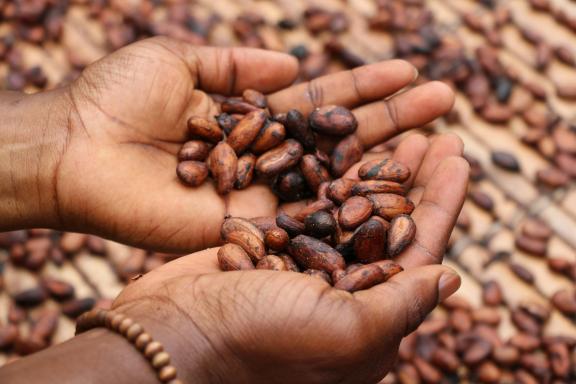
Source: Photo by Etty Fidele on Unsplash
Belgium has a large demand for certified cocoa
Belgium is an interesting market for Fairtrade, Rainforest Alliance and Organic certified cocoa. In 2024, 78% of chocolate produced in Belgium was covered by a certification scheme or corporate sustainability scheme (Business to Business, B2B). Of this, 86% of chocolate was sold by Beyond Chocolate members (Business to Consumers, B2C). This percentage has increased every year since 2018, except for a small drop in the B2C share in 2024 because new members joined the initiative. This share includes independent third-party certification schemes, like Fairtrade, Rainforest Alliance and Organic, but it also includes company-led sustainability schemes.
Source: Beyond Chocolate Annual Report 2024
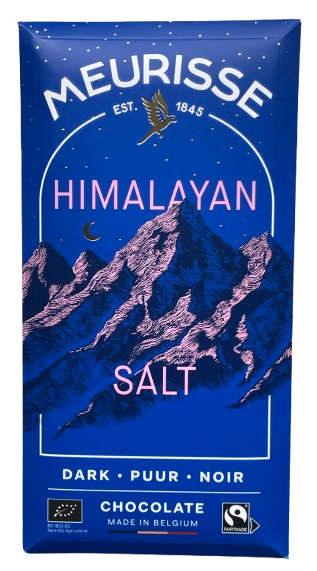
Fairtrade has become a lot more popular in Belgium over the last few years. The retail market share for Fairtrade cocoa went up from 5% in 2018 to 23% market share in 2024. 6,338 tonnes of cocoa beans were sold under Fairtrade terms for 157 Fairtrade certified chocolate brands. Examples of Fairtrade brands include Galler, Guylian, Belvas, Belfine, Meurisse and Oxfam Fair Trade.
Figure 7: Meurisse chocolate
Source: Long Run Sustainability
Belgium is also an interesting market for Rainforest Alliance cocoa. Belgium imported 30,900 tonnes of Rainforest Alliance cocoa in 2025. There were 128 companies registered in 2025, which is 5% of all companies registered with Rainforest Alliance worldwide. Examples of Rainforest Alliance brands include Leonidas and Neuhaus.
Read more about how to join certification schemes in the CBI study Exporting certified cocoa to Europe.
Belgian companies prioritise company programmes
Belgian companies promised that 100% of chocolate produced or sold in Belgium would be certified or covered by a corporate sustainability scheme by 2025. This promise was made by Beyond Chocolate members, which cover most of the Belgian chocolate market. Since this goal could also be met with corporate sustainability programmes, Belgium was also an interesting market for cocoa sourced through those programmes.
Beyond Chocolate reports that 78% of chocolate produced in Belgium was certified or part of a corporate scheme in 2024. The combined volume of Rainforest Alliance and Fairtrade (30,900 tonnes and 6,338 tonnes) is 37,238 tonnes. This is about 12% of total Belgian bean imports. This means the corporate scheme share is much larger than the certified share. This share is expected to keep growing in both the short and long term.
Company sustainability programmes are not considered certification programmes, since they are not independently developed and audited. They are often less complex and less transparent than certification schemes. The standards are usually not publicly available.
The biggest chocolate producers are Barry Callebaut, Cargill and Puratos. You can read more about their in-house sustainability schemes in the CBI study on Entering the Belgian market for cocoa. Other reporting partners that have their own sustainability schemes include Baronie with Cémoi’s Transparence cacao, Mars Cocoa for Generations, Mondelēz Cocoa Life, Nestlé Cocoa Plan, Ofi AtSource and Tony’s Chocolonely.
Traders and brands could approach farmer groups about becoming part of their company programmes. This could lead to a long-term commitment and partnerships with the brands or traders. However, be sure to ask detailed questions before agreeing to become part of a programme. Make sure that the conditions and financial incentives are attractive enough to make the commitment. Ask for clear details about the requirements and expectations.
Organic cocoa is showing potential for more growth
Belgium was the EU’s second largest organic cocoa importer, importing 11,500 tonnes in 2024. This was 27% of all EU organic cocoa imports. The main exporting countries were the Dominican Republic (responsible for 4,500 tonnes), the Democratic Republic of Congo (3,000 tonnes), Peru (2,000 tonnes), Uganda (700 tonnes) and Ecuador (400 tonnes). PRONATEC is one of the main importers of organic cocoa in Belgium.
The EU market for organic cocoa is growing. Market awareness is high, and consumer demand is on the rise. However, higher prices and the cost of living are putting pressure on demand. New EU regulations are also affecting supply. Not all organic cocoa producers comply with the new regulations, and administrative and operating costs are rising.
Because of high prices and strong demand for conventional cocoa, some organic cocoa is being sold as conventional cocoa. The result is that organic cocoa production and imports have gone down over the past few years. The EU only imported about half of the 2021 organic cocoa volume in 2024. These figures do not include non-EU countries, like Switzerland, Norway and the UK.
Belgian organic cocoa imports have been going up and down, but overall levels are much higher than they were in 2021. There has been a slight drop in recent years, but not nearly as strong as the overall drop in EU imports. This is a positive sign for the Belgian organic cocoa market.
Source: TRACES 2026
High-quality cocoa is interesting for boutique and artisan chocolate
There is a small segment of boutique, artisan bean to bar chocolate products. Although this segment is small, Belgium boutique chocolate has an international reputation for quality. The market is growing. More small-scale artisanal chocolate makers join Choprabisco’s federation every year.
Many companies in this segment have already established supply chains. This makes it difficult for producers or exporters to become part of those supply chains. It is possible that some small brands want to expand, which could be an opportunity for producers and exporters. Some new companies might want to set up direct supply chains.
Many small, boutique brands also buy from the main three chocolate suppliers. Puratos is especially active in this segment. Their customers are in the market segments Industry, Food Service, Retail and Artisans. To specify their business, Puratos works with many artisans. They have a large network of innovation centres around the world and a large team of technical advisors.
Belgian premium chocolate makers play a role in the development of craft chocolate in Belgium, for example David Maenhout. Although the volumes are very small, it could be an interesting market for exporters with high-quality, specialty cocoa.
Cocoa derivative imports are small but could be interesting
As explained in the section on semi-finished products, almost all paste, butter and powder is imported from non-cocoa producing countries. Imports from producing countries are very small.
Only a few countries exported more than 100 tonnes of paste and butter in 2024. For cocoa paste, they were Vietnam (which imported 700 tonnes), Côte d’Ivoire (100 tonnes) and Ghana (100 tonnes, rounded to the nearest hundred). For cocoa butter, this only included Malaysia (800 tonnes), although most of the cocoa beans used were probably produced outside Malaysia. There were none for cocoa powder.
However, there could be opportunities for export. Total volumes are low in most years, but there are exceptions. For example, Côte d’Ivoire exported 4,400 tonnes of cocoa butter to Belgium in 2021, and Ghana 1,200 tonnes in 2022. Ghana and Côte d’Ivoire also exported larger volumes of cocoa paste previously. This means there could be opportunities for cocoa paste and butter exports.
Belgium is not an interesting market for cocoa powder. Its total imports from producing countries for the past 5 years were only 500 tonnes.
Tips:
- The most effective way to access the Belgian market is to connect with the supply chain of Barry Callebaut, Cargill or Puratos. If they are not the first buyer of your cocoa, you could also sell to exporters that sell to them. Speak with potential buyers about the supply chains that they can sell through.
- For exporters, consider getting Fairtrade and Rainforest Alliance certified. This is usually easier than certification for producers. Exporters usually need to have a license to buy and sell certified cocoa. However, discuss this with the farmer groups and buyers that you work with first. Read the CBI studies on certified cocoa, organic cocoa and specialty cocoa to learn more about specific market dynamics and opportunities. Speak to your buyers to make sure that there is demand for certified cocoa.
- Consider organic certification and whether this is possible for you. It takes time and effort to switch to organic certification. Check the Nitidae report about the transition towards organic cocoa production, the Naturland guide about growing organic cocoa and the ICCO manual for Pesticide Use in Cocoa for more information about organic production.
- There is large and increasing demand for certified cocoa in Belgium. Use the Rainforest Alliance certificate database to search for certified companies in Belgium as potential buyers. Use the filters on the left to filter for Belgium and cocoa. Check the Fairtrade Business Catalogue for Fairtrade and organic certified chocolate companies in Belgium. You could have an advantage as an exporter if you can already export certified cocoa.
4. Which trends offer opportunities or pose threats on the Belgian cocoa market?
Sustainability is on the rise
The market for cocoa that is either certified or part of a company sustainability scheme is growing. This is partly thanks to the Belgian cocoa initiative Beyond Chocolate, the partnership for a sustainable Belgian chocolate industry. Partners in the initiative are working to make long-lasting improvements to the living conditions of cocoa farmers and their families in the cocoa-growing regions relevant to the Belgian industry.
Beyond Chocolate is a voluntary partnership, but its members have made several commitments that are interesting for producers and exporters. These include:
- 100% of chocolate produced or sold in Belgium should have been certified or covered by a corporate sustainability scheme by 2025;
- All members will comply with the Cocoa & Forest Initiative(CFI) in Cote d’Ivoire and Ghana;
- Deforestation due to cocoa growing for the Belgian chocolate sector should have ended by 2025;
- Cocoa-growing households supplying to the Belgian market are able to earn at least a living income by 2030 at the latest.
Beyond Chocolate members are a good representation of the Belgian chocolate market. Its members cover approximately 75% of the Belgian consumer market (business to consumer) and 90% of the market share for the production of couverture chocolate (business to business). Beyond Chocolate had not yet reported the 2025 data when this study was published, so it is not yet clear if the targets have been achieved.
Retailers are leading the way with sustainability commitments in Belgium. Most large retailers are making commitments to buying cocoa for a Living Income Reference Price. This is an estimated price that should allow farmers to earn a living income. Lidl has made this commitment to Way To Go. Colruyt has made a commitment to their Boni brand. Aldi has committed to Choco Changer, and Ahold Delhaize to Delicata.
Lidl, Aldi, Ahold Delhaize, Colruyt and Carrefour are the five largest buyers of Fairtrade certified products in Belgium. These five retailers generated the most Fairtrade premium in Belgium in 2025 and are seen as ‘Fairtrade Frontrunners’. Aldi, Lidl and Carrefour have headquarters outside Belgium. Decisions on sourcing and sustainability are usually made outside Belgium. This makes it difficult for producers or exporters to enter these supermarkets through Belgium. Colruyt and Ahold Delhaize have a presence in Belgium.
The ‘sustainable’ share has increased significantly over the last years, mostly driven by these commitments. In 2024, 91% of the cocoa was sourced as certified or through a corporate sustainability program. External research done for Beyond Chocolate confirms that sustainability is expected to keep growing in the Belgian chocolate market.
For exporters, this could mean extra opportunities to sell their cocoa if it is certified or part of a company sustainability scheme. The decision to join a corporate sustainability scheme is market driven. This means that cocoa producers should only join a corporate sustainability scheme (company programme) if they have made sure there is demand with the buyer of that programme.
Consumers are becoming more interested in the story behind the chocolate
Storytelling is a way to communicate clearly about your product and get the attention of your audience. Storytelling makes the buyers of the products feel more connected to the company behind the product. These stories should be accurate, authentic and appealing. They can be used to link the consumers with the producers of the cocoa in the final product. This is why there should be a direct link between the final product and the producers.
More brands are becoming interested in telling the story behind the cocoa in their products. This is especially true of boutique and specialty chocolate. However, as a producer or exporter, it is not easy to link your story to a brand. It can be difficult to develop direct relationships with Belgian chocolate brands. Most brands will buy their cocoa or chocolate through Barry Callebaut, Cargill or Puratos.
One way to work directly with brands is to offer a unique sustainability story that the brand can tell. The cocoa could still be shipped by one of the main traders or processors, but this could give an exporter or producer the chance to build a direct relationship with long-term benefits.
One chocolate company that has links to cocoa production is Galler. Galler has an agroforestry project in Côte d’Ivoire. They work together with Yeyasso, the co-operative operating on the land where the project will take place. The project includes planting more than 50,000 trees. Galler works with the Directorate General for Development Cooperation and Beyond Chocolate and several technical partners. Read their Corporate Social Responsibility Report for more detail.
Another example is Belfine, which supports 175 cocoa farmers in the village Tigorikro in Côte d’Ivoire. This is done through their Route de Cacao sustainability programme.
Neuhaus is an example of a company that has a fully traceable supply chain from cocoa farmer to their factory. Neuhaus has invested in a cocoa farmin the Guayaquil Region of Ecuador. The cocoa is Rainforest Alliance certified and is fully traceable through the Identity Preserved model. This means the cocoa from this source is kept separate from all other cocoa throughout the supply chain, until the final product.
One example of a retailer (supermarket) is Colruyt. All own-brand chocolate bars and seasonal products will comply with the ‘living income’ principle. In Nicaragua, Colruyt supports a project where they buy cocoa directly from 200 young farmers in the La Campesina cooperative. They work with several partners on this project. They help provide training and guidance to make quality, sustainable products. This project gives local youth extra motivation to continue cocoa farming.
The price of chocolate has increased
The price of cocoa went up steeply from $2,000–3,000 per tonne in 2023 to up to $12,000 per tonne in 2024 and 2025. Cocoa prices dropped again in 2026, but they are still going up and down. This makes it hard to predict the prices long term.
Prices are higher and more variable because of many different factors. The main reason is that production in Côte d’Ivoire and Ghana has gone down. Droughts, fires and the impact of climate change are affecting production. Bad weather conditions and El Niño are affecting the amount of cocoa that is produced. Years of underinvestment in cocoa production have prevented farmers from making the necessary investments in their farms. In Ghana, illegal mining (galamsey) is destroying cocoa farms and making farms less productive.
With the cost of cocoa increasing, chocolate companies have increased the price of chocolate. This also happened in Belgium, where chocolate prices increased by 44% in 2025. Some chocolate brands have also reduced the size or the cocoa content of their products. One example is Milka bars made by Mondelēz, which were reduced in size from 100 grams to 90 grams. Milka also reduced the cocoa content in their Easter eggs, which were not fully filled in 2026.
The rising cost of living and inflation could cause a change in demand from European consumers to lower-cost chocolate products. This could reduce demand for organic or specialty cocoa, which already represents only a small share of the market. Demand could shift to commercial, bulk cocoa.
Importers are becoming less reliant on Côte d’Ivoire and Ghana
The share of beans per exporting country of beans has shifted over the last 5 years. Imports from Ecuador (+24,000 tonnes) and Nigeria (+21,000 tonnes) went up between 2021 and 2025. At the same time, imports from Côte d’Ivoire (-40,000 tonnes) and Ghana (-26,000 tonnes) went down. This means that the relative shares of these countries have also changed.
Experts say this is mainly because of the changes in global production and not a strategic change in sourcing. Chocolate is made with specific recipes, but a large part of that recipe is bulk cocoa. Only a small part has to come from specific countries or have a specific taste profile. A lot of the cocoa from these four countries is bought in bulk, and it can be used as substitutes for each other. Côte d’Ivoire and Ghana have produced less cocoa in the past few years, while Ecuador and Nigeria have more. Belgium imports available bulk cocoa, so it is aligned with global bulk cocoa production.
Source: Eurostat 2026
Cocoa intended for re-export has fewer sustainability requirements
Demand for ‘Belgian chocolate’ is high outside Western Europe. However, many importers of Belgian chocolate do not have the same sustainability demands. This makes it difficult for producers of Belgian couverture to sell their products as certified or covered by a corporate sustainability programme. That is why some of these volumes will still be sold as conventional cocoa (non-certified).
For producers and exporters, this means there is still a market in Belgium for cocoa that is not certified or part of a programme. There is still demand for conventional bulk cocoa. Since the cocoa will enter the EU market before being re-exported, it will still need to comply with EU regulations like the EUDR. However, there might be extra sustainability demands on these volumes.
Tips:
- Check the list of companies that are members of Beyond Chocolate. Each member is committed to buying 100% of their cocoa as part of a certification programme or company sustainability scheme. Around 57% of the consumer market is now covered by Beyond Chocolate members.
- Keep in mind that over 90% of the chocolate produced in Belgium is produced by Barry Callebaut, Cargill or Puratos. This means the most relevant schemes are Fairtrade and Rainforest Alliance for certification, and Cocoa Horizons, Cocoa Promise and Cacao Trace for company schemes.
- Beyond Chocolate also co-finances projects. Check the website for opportunities. There was a call for proposals in 2023.
- Check the Enabel website, the Belgian development agency. Enabel publishes useful information about cocoa production and imports on the Belgian market. Food.be also has interesting cocoa news and updates.
- For more information about how to tell your sustainability story, read the CBI study 9 tips to become more socially responsible in the cocoa sector.
Long Run Sustainability carried out this study in partnership with Ethos Agriculture on behalf of CBI.
Please read our market information disclaimer.
Search
Enter search terms to find market research
Do you have questions about this research?
For a small country like Belgium, chocolate is a powerful part of its economic activity. And with great power comes great responsibility.
Charles Snoeck, Beyond Chocolate Programme Manager at IDH