
Entering the Belgian market for cocoa
Three companies dominate the Belgian cocoa market: Barry Callebaut, Cargill and Puratos. They supply 90% of the couverture in Belgium. The largest exporters of cocoa beans to Belgium are Côte d’Ivoire, Nigeria, Ecuador and Ghana. Most imported cocoa is re-exported as cocoa beans, derivatives or Belgian chocolate. It is therefore important that the cocoa meets Belgian requirements, European Union (EU) requirements and possibly also requirements for other European countries.
Contents of this page
1. What requirements and certifications must cocoa meet to be allowed on the Belgian market?
There are many requirements and certifications that are relevant for exporting cocoa to Belgium. These requirements can be mandatory (this means you need to comply with them for entry into Belgium) or voluntary (this means your buyers can ask for them). They can be required by the EU (this means they are the same for all EU countries) or required by Belgian law (this means specific to Belgium).
This study only describes the requirements specific to Belgium. Read the CBI study on buyer requirements for cocoa for more details about the requirements and certifications relevant to Europe in general.
What are mandatory requirements?
Cocoa exported to Belgium needs to comply with EU regulations. The exact requirements depend on many factors, like company size and position in the supply chain. Sometimes your buyers also need specific information from you.
Legal rules necessary for entry to Belgium
Legal rules for entry into Belgium are set at the EU level and apply to all EU countries. Important regulations include the EU Regulation on Deforestation-free Products (EUDR), the Corporate Sustainability Due Diligence Directive (CSDDD) and the Corporate Sustainability Reporting Directive (CSRD).
See the CBI study 8 tips on how to become EUDR-compliant in cocoa for more information about the EUDR. You can read more about all relevant social and environmental regulations in 8 tips to go green in the cocoa sector and 9 tips on how to become more socially responsible in the cocoa sector.
Quality requirements for Belgium
Quality requirements are also mostly decided at the EU level. There are some small differences at the country level.
One example is fumigation. Cocoa beans can become infested at origin by pests. If they are not treated, these pests can survive shipment to chocolate factories in Europe. Treatment can be done throughout the supply chain and is often done in Europe to stop their spread. Sulfuryl fluoride is a fumigant that has been registered for use on stored cocoa in Belgium. Read Cocoa Beans: Chocolate & Cocoa Industry Quality Requirements and the Pesticide Use in Cocoa Practical Manual for more details.
It is important to comply with food safety laws. EU food laws are set by the General Food Law (Regulation No 178/2002) at the EU level. The regulation has been written into Belgian law in its food legislation. The FASFC (Federal Agency for the Safety of the Food Chain) oversees hygiene standards.
Labelling and packaging requirements for Belgium
The labelling on cocoa beans exported to Belgium should comply with the general food labelling rules of the European Union.
The EU has defined rules for cocoa and chocolate products in Directive 2000/36/EC. This is written into Belgian law in the Commodities Act Decree on cocoa and chocolate products. The labelling requirements include rules on minimum cocoa content for labelling a product as ‘chocolate’. This includes typically local products, such as sprinkles and chocolate flakes with low cocoa content.
There are strict obligations on the weight and disposal of packaging in Belgium. These are only relevant for exporters who put more than 300 kg of industrial/commercial packaging on the Belgian market per year. This includes targets of 80% recycling and 85% recovery of waste. You can find more details in the Cooperation Agreement on the prevention and management of packaging waste.
Payment and delivery terms for Belgium
Payment and delivery terms can be different depending on the exporting and importing country. The EU’s website Access2Markets has all the necessary information on tariffs, taxes, requirements, trade barriers and more. You can search this website for the taxes and tariffs relevant for export from your country to Belgium. In 2026, the relevant taxes and tariffs for cocoa bean exports (1801) from Côte d’Ivoire, Nigeria, Ecuador and Ghana were 0% tariffs and 6% Value Added Tax (VAT).
Intellectual property (IP) rights for Belgium
The term ‘Belgian chocolate’ refers to chocolate produced according to the rules of the Belgian Chocolate Code. According to the code, Belgian Chocolate is chocolate for which the complete process of mixing, refining and conching is done in Belgium. This code was developed to protect the reputation of Belgian chocolate manufacturers and their products, and to inform buyers. The claim is not legally protected by Belgian legislation, but it is agreed by members of the Choprabisco association.
Figure 1: Example of labelling of Belgian Chocolate

Source: Long Run Sustainability
What additional requirements and certifications do buyers often have?
There are many additional requirements or expectations that European buyers can have. Sometimes they want certification against a Voluntary Sustainability Scheme (VSS), like Fairtrade or organic. Buyers can also have expectations around the quality of the chocolate and the packaging design. When buyers import cocoa, they often also want assurance regarding sustainability.
Voluntary Sustainability Schemes
Certification standards, like Rainforest Alliance and Fairtrade, are important on the Belgian chocolate market and have a large market share. The supply chain standards apply to all consumer countries. There are no requirements different or specific to Belgium. See the CBI study on certified cocoa for more information on certification requirements.
Belgium has high demand for cocoa from a corporate sustainability programme. Cocoa traders, processors and manufacturers havbe developed these programmes. They are not seen as certification programmes, since they are not independently developed or audited. They are often less complex and transparent than certification schemes. The standards are not usually publicly available. The most important corporate sustainability programmes for the Belgian market are: Cocoa Horizons by Barry Callebaut, Cacao-Trace by Puratus and Cocoa Promise by Cargill.
Being part of a certification or corporate sustainability programme can help producers or exporters get access to the Belgian market. However, only 39% of the cocoa beans that were imported into Belgium in 2025 remained there for further processing. The share of cocoa re-exported to other European countries or outside Europe could lower demand for certification.
Supplier Code of Conduct
Many chocolate manufacturers and brands have supplier codes of conduct. This includes the three main chocolate makers in Belgium: the Puratos Supplier Code of Conduct, the Barry Callebaut Supplier Code of Conduct and the Cargill Supplier Code of Conduct. These supplier codes deal with different topics, like human rights and environmental protection. Make sure that you comply with their supplier codes of conduct so you can get access to the Belgian market through these companies.
What are the requirements for niche markets?
Organic
To market your cocoa as organic in the European market, it needs to comply with the regulations of the European Union for organic production and labelling. EU Organic is the minimum legislative requirement for marketing organic cocoa in the European Union. There are no specific requirements for the Belgian market. See the CBI study on Exporting organic cocoa to Europe for more information.
Tips:
- Use your web browser’s translation function to read website links in this study in your own language.
- Check the EU’s website Access2Markets. It has all the trade information you need to know, like tariffs, taxes, procedures, requirements, rules of origin, export measures, statistics and trade barriers. Enter the product code (1801 for cocoa beans), origin country and destination country to search for the relevant details for your country.
- For the full buyer requirements, read the study on buyer requirements for cocoa beans on the European market. This includes details about mandatory European legislation on food safety, food hygiene and food contaminants (like cadmium and pesticide residues), food labelling and packaging. It also explains extra requirements for quality, CSR and certification.
- Check which companies are part of Beyond Chocolate. Speak with your buyers to see if they sell to companies with brands that need more certified cocoa or cocoa that is part of a corporate sustainability scheme. If this is the case, speak with your buyers to see if it could be worth joining a certification scheme, your buyer’s corporate sustainability scheme or the brand’s scheme.
2. Through which channels can you get cocoa on the Belgian market?
You can get your cocoa onto the Belgian market through different channels. Cocoa beans are mainly used for processing in four different industries: confectionery, food, cosmetics and pharmaceutical. Most cocoa is sourced for chocolate confectionery.
How is the end-market segmented?
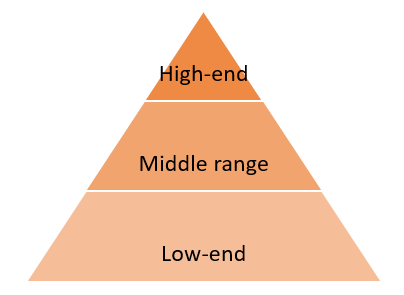
The chocolate produced and sold in Belgium is segmented by quality. The segments are low-end, middle range and high-end.
Figure 2: Segmentation of the Belgian cocoa market
Source: Long Run Sustainability
Bulk: low-end segment
The low-end segment is for cheap chocolate products, which usually have lower cocoa content. Most of these products are produced by large chocolate manufacturers. Most cocoa is imported in bulk from West Africa. Bulk cocoa is available in high volumes, low value and standard quality. Rainforest Alliance certification is common for this segment.
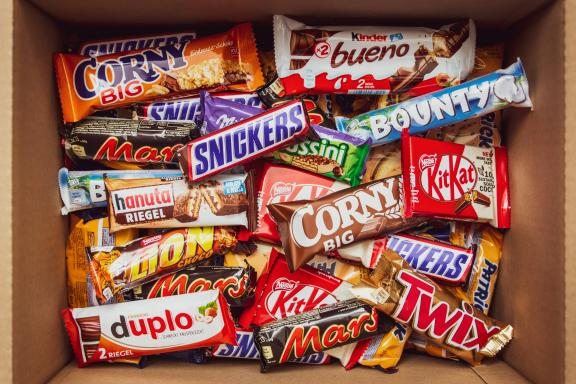
Consumers buy the products as large multinational or private label chocolate products in supermarkets. These are mostly sold as private labels of the retailers or branded products. Private label brands include Boni (Colruyt), Classic (Carrefour) and Delicata (Ahold Delhaize). Branded products include KitKat, Smarties and Rolo (Nestlé), Mars, Snickers and M&M (Mars), Cadbury and Milka (Mondelēz), Kinder (Ferrero) and Reese’s (Hershey).
Figure 3: A selection of low-end segment chocolate products
Source: Photo by Denny Müller on Unsplash
Many chocolate bars sold at retailers are in the low-end segment. At Belgian retailer Colruyt, these products typically cost around €1.00–2.00. See the table below for examples.
Table 1: Examples of low-end segment chocolate products sold at Colruyt in 2026
| Product | Retail price | Retail price per kg |
|---|---|---|
| EVERYDAY milk chocolate (200 g) | €1.42 | €7.10 |
| Koetjesreep | €1.99 | €11.06 |
Source: Colruyt retail prices in 2026
Middle-range segment
The middle-range segment includes chocolate products of a higher quality, which often also contain certified cocoa. Storytelling and the origin of the cocoa beans are important in this segment. The certified beans do not need to physically be in the product for storytelling. Many brands and retailers buy mass balance cocoa. This means that the certified cocoa might not physically be in the final product. Brands and retailers can support specific farmer groups and benefit from doing so by marketing their product as more sustainable if they buy mass balance cocoa.
Cocoa beans for the middle range segment can still be purchased in bulk at mainstream quality. The cocoa production process and the higher amount of cocoa in the final product influence the quality of the chocolate. Using higher quality non-cocoa ingredients also improves the chocolate quality.
Multinational brands in the middle range segment include Lindt (Lindt & Sprüngli), Côte d’Or (Mondelēz), Ritter (Ritter Sport) and L’Atelier (Nestlé). Regional brands Tony’s Chocolonely (the Netherlands) and Godiva (Belgium) are also in the middle-range segment. See the table below for examples.
Table 2: Examples of middle-range segment chocolate products sold at Colruyt in 2026
| Product | Retail price | Retail price per kg | Packaging |
|---|---|---|---|
| Lindt Excellence smooth dark 78% (100 g) | €3.19 | €31.90 | 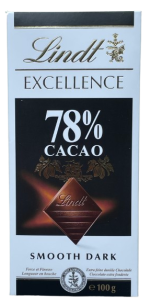
|
| Côte d'Or milk hazelnut (180 g) | €2.99 | €16.62 | 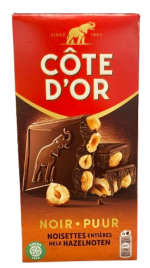
|
| Tony's Chocolonely milk caramel sea salt (90 g) | €2.99 | €33.23 | 
|
| Ritter Sport milk hazelnut (100 g) | €1.49 | €14.90 | 
|
Source: Colruyt retail prices in 2026. Photos: Long Run Sustainability
High-end segment
The high-end segment includes specialty and craft chocolate products. These are often made with fine flavour cocoa and usually have a high cocoa content. Chocolate makers in this segment are usually smaller and more specialised. Belgian bean to bar chocolate makers include Coup de Chocolat, Mi Joya and Millésime Chocolat.
Bean to bar is an example of a high-end product. The cocoa beans usually come from a single origin. They can be fully traced throughout the supply chain. This helps to tell the story behind the product in a way that is attractive to consumers. The high-end segment usually has higher standards for sustainability as well. This helps to tell the story behind their product in a way that consumers like. Certification is not necessary, but these products can be sold with Fairtrade and organic certification.
Tips:
- Find out which bean to bar producers fit your unique selling points and organisation. For example, for Belgian Patisserie Zuut, the focus is on honest and good treatment of producers. Read the CBI study Exporting bean to bar chocolate to Europe for more information.
- Read the CBI study 7 tips for finding buyers on the European cocoa market for more background information about how the cocoa market is segmented.
Through which channels does cocoa end up on the end market?
There are two main ways that cocoa products and chocolate end up on the Belgian market:
- Chocolate sold in Belgium (business to consumer);
- Couverture produced and sold in Belgium (business to business).
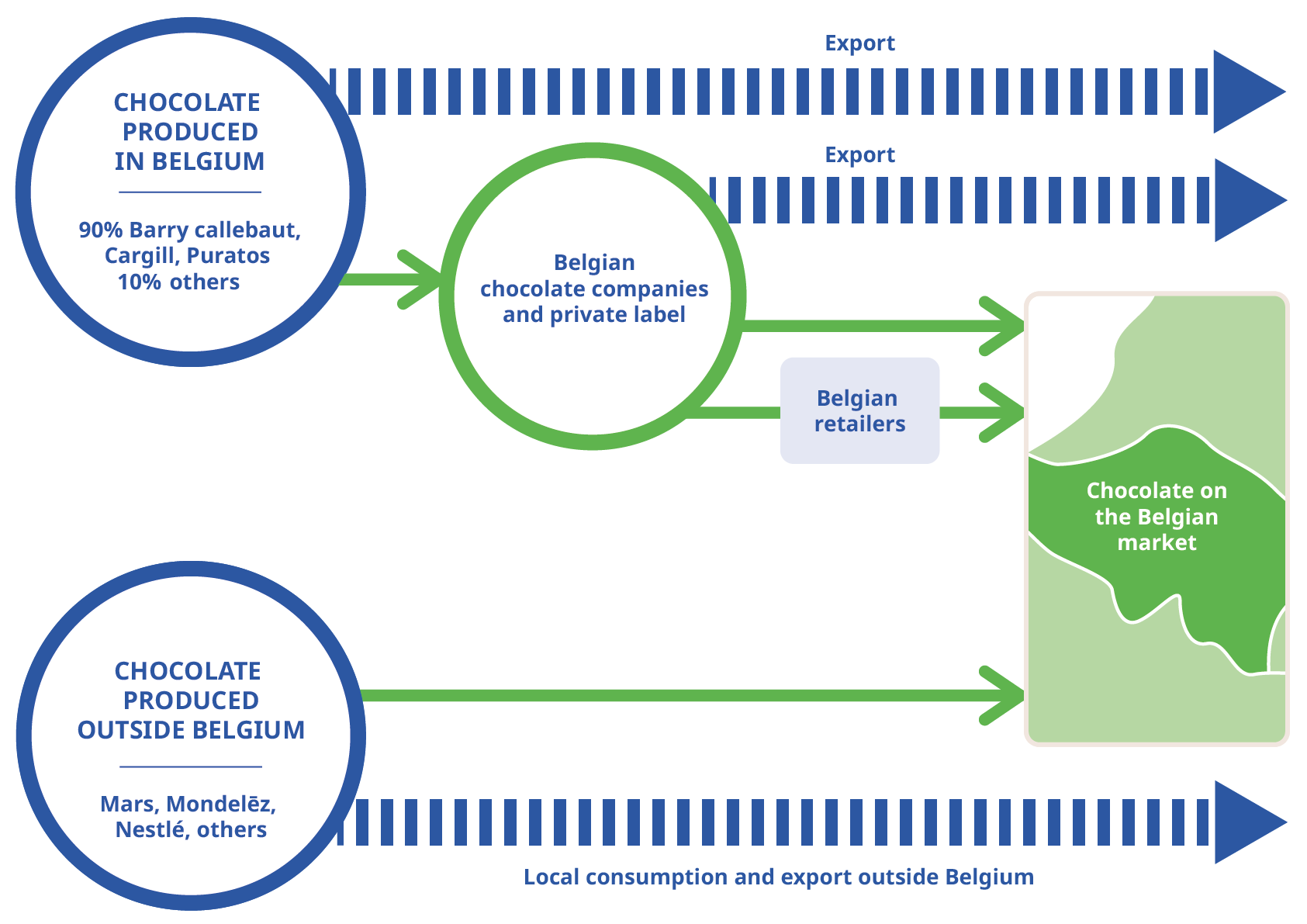
Chocolate is sold on the Belgian market by manufacturers and retailers. Some manufacturers produce their own chocolate and others buy bean products or couverture from suppliers. Some of the chocolate sold on the Belgian market is produced in Belgium, but a large share is produced in large factories in other countries and exported to Belgium.
Couverture produced in Belgium is used for chocolate products sold in Belgium and other countries.
Figure 4: How chocolate ends up on the Belgian market (simplification)
Source: Beyond Chocolate and Long Run Sustainability. Design by Bart Wortel.
Suppliers and processors
The main channel to enter the Belgian market is through couverture suppliers. Chocolate produced in Belgium is either exported to other countries or sold on the Belgian market, mainly through brands, chocolatiers and retailers.
Barry Callebaut, Cargill and Puratos are the main suppliers of cocoa and chocolate to the Belgian market. Together, they are responsible for 90% of the chocolate produced in Belgium. 78% of the chocolate produced by these companies contained cocoa that was certified or part of a corporate sustainability programme in 2024. This share will probably keep rising, since these companies are committed to sourcing 100% through a certification or corporate programme by 2025.
Baronie and Fuji Oil also produce couverture in Belgium. Fuji Oil has European headquarters and a production site in Ghent. Baronie has sites in Bruges, Lokeren and Veurne. Natra is a supplier that sells chocolate products in Belgium but does not produce there.
Large multinational brands
It is difficult to enter the Belgian market through multinational brands. Much of this segment is produced by multinationals in other European countries. This includes KitKat bars from Nestlé, Mars bars from Mars and Milka bars from Mondelēz. These are often produced in large factories and exported to multiple countries. The products could end up in Belgium, but they could also end up in another country. Producers and SME exporters that supply the cocoa have no control over where the final product is sold.
Most large multinational brands are produced outside Belgium. One exception is Ferrero, which produces Kinder chocolate in a factory in Belgium. These products are sold in Belgium and exported to Europe and the USA. Mondelēz has production facilities in Herentals and Namur, and produces Cote d’Or chocolate in Belgium. Nestlé, Mars and Lindt & Sprüngli do not have chocolate factories in Belgium. If you want to sell cocoa to these brands, it will need to be sold to importers and factories in other countries.
Smaller Belgian chocolate brands
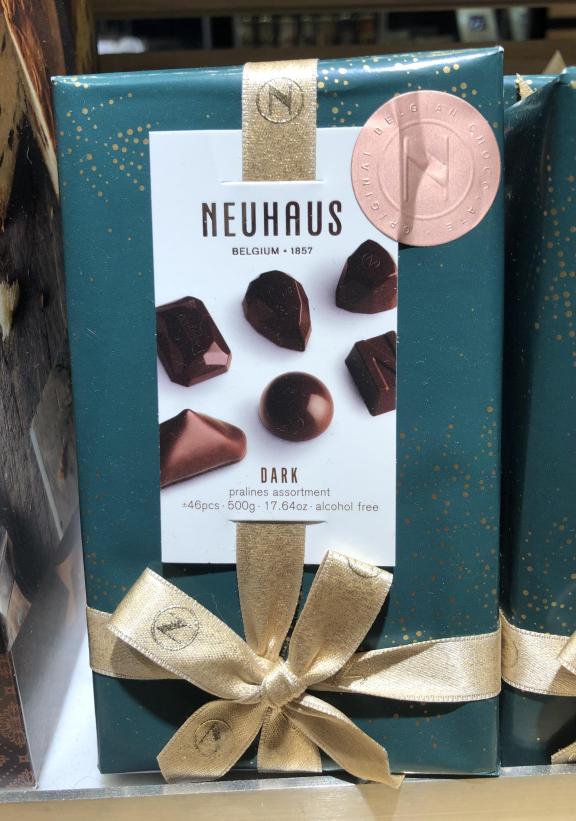
There are a lot of smaller chocolate brands in Belgium. In 2026, there were 187 companies listed as chocolate companies. Many of the more sustainability-minded brands are members of Beyond Chocolate. Membership has grown a lot, with 90 signatories in 2026. Belgian chocolate companies include the Belgian Chocolate Group, Galler, Guylian, Hamlet, Leonidas, Ovidias and Neuhaus.
Smaller Belgian brands mostly buy mass balance couverture or chocolate from one of the three large suppliers of Belgian chocolate. The best way to sell to these brands is through one of these suppliers.
Some small companies have relationships with specific co-operatives, like Galler, Neuhaus and Belfine. See the CBI study The Belgian market potential for cocoa for more details.
Figure 5: Neuhaus Chocolate
Source: Long Run Sustainability
Supermarket brands
Five retailers dominate the Belgian food retail market: the Colruyt Group, Ahold Delhaize, Carrefour Belgium, Aldi and Lidl. Together, they account for 82% of the Belgian market. Colruyt Group is the largest retailer with 29% market share, followed by Ahold Delhaize with 19%.
Growth of the retail sector has stagnated in Belgium in recent years. Retailers still announce expansion plans, but there has been limited growth. The market share of own brands is still growing. However, some retailers are phasing out their budget brands. The cheapest own brand chocolate products can be phased out, but the own brand chocolate segment is still growing overall.
Private label chocolate
There is a market for private label Belgian Chocolate for other markets than retailers. One of these markets that is unique to Belgium is the airport market. Brussels airport is the world’s largest sales outlet for chocolate. Private-label chocolate is also sold to shops and other outlets of ‘Belgian Chocolate’. One example of a private-label chocolate producer is the Belgian Chocolate Group (BCG). BCG produces Belgian Chocolate products for private-label partners. They also have their own brand called The Belgian.
Private-label chocolate manufacturers are mainly focused on price. Many will ask suppliers for a quote and choose the cheapest option. They are not usually interested in the sustainability story behind the chocolate. However, if a customer asks their supplier for a certified product and/or a sustainability story, then they can make further inquiries. One example is Action Group which is 100% Fairtrade for all own brand cocoa products.
High-end and specialty chocolate products
Bean to bar brands have direct relationships with producers and usually have high standards for sustainability. One example is Belvas, which uses 100% certified Fairtrade and organic cocoa. Their projects in Peru and Côte d’Ivoire help pay farmers a good income, without intermediaries. Another example is Kim’s Chocolates.
These companies often have long-standing relationships with suppliers. That is why it can be difficult for producers and exporters to become part of these supply chains. Equitable is another small brand that is 100% Organic certified.
Deremiens, Millésime Chocolat, Coup de Chocolat and Legast are examples of Belgian brands and specialty chocolate makers that produce high-end products. They mainly sell these products through specialty brands and shops. Examples of Belgian specialty chocolate makers and shops include Hilde Devolder Chocolatier and Rob The Gourmets’ Market.
Tips:
- Attend trade fairs in Europe to meet potential buyers. Interesting trade events include Chocoa, Salon du Chocolat and Biofach (organic products). Attending such events can give you more insight into Belgian buyers’ preferences around origin, flavour and sustainability certification. If you understand the market better, you can make sure that your product meets their requirements and level of demand.
- For more tips on finding the right buyer for you, see the CBI study Finding buyers on the European cocoa market.
What is the most interesting channel for you?
Barry Callebaut, Cargill and Puratos are the main importers of cocoa
Belgian chocolate producers are the most interesting channel for producers and exporters. The most important players are Barry Callebaut, Cargill and Puratos. To enter the Belgian market, exporters and producers will probably need to work with one of these companies.
All three companies have employees and offices in producing countries. As the largest chocolate company in the world, Barry Callebaut is a major cocoa bean exporter from producing countries to Belgium. Barry Callebaut also owns local exporters in producing countries. These include Société Africaine de Cacao (SACO) in Côte d’Ivoire, Société Industrielle Camerounaise des Cacaos (Sic-Cacaos) in Cameroon, Nyonkopa Cocoa Buying Company in Ghana, BC Nigeria Cocoa & Chocolate in Nigeria, PT Papandayan Cocoa Industries in Indonesia and Biolands International in Tanzania.
Large traders and importers have specific demands for cocoa. Their demands are about the quality and taste profile of the cocoa, the available supply, delivery terms, sustainability aspects and compliance data. Importers need consistent and reliable quality and volumes. Producers and exporters are only attractive to importers if they can meet these demands. Buyers want the assurance that suppliers will fulfil any contract signed.
Small sustainability-minded brands could be interesting
Small, sustainability-minded brands can be a smaller but interesting channel for producers and exporters. These companies sometimes work with or support cocoa farmers. Working with them can be done directly or indirectly through their suppliers. These relationships are usually long-term (over several years), so it is worth investing in setting up these relationships. See the section on smaller Belgian chocolate brands above for more information about these brands.
Retailers are increasing their sustainability shares
Supermarkets are another interesting channel, especially those based in Belgium (Ahold Delhaize and Colruyt). These supermarkets already have relationships with specific producers and could be interested in working with more producers in the future.
For exporters, it is important to note that retailers buy chocolate from private-label manufacturers, who buy their cocoa from their suppliers. Many of their cocoa products are supplied through the main importers channel. It is difficult and to develop a direct relationship with a retailer and it does not happen often. It is usually done through their supply chain, and their suppliers recommend producers. To get access to retailers, it is important to focus on the main importers in Belgium and build relationships with them.
Tips:
- Talk to Fairtrade or Rainforest Alliance. Maybe they can help you find buyers for your cocoa. Find the contact details on the Rainforest Alliance contact page and the Fairtrade contact page.
Contact the local offices of Barry Callebaut, Cargill or Puratos directly to discuss the possibilities. Make sure that you can meet the terms of the contract. Avoid non-compliance with your contract to make short-term gains, as this could damage your reputation in the long run.
3. What competition do you face on the Belgian cocoa market?
Competition is often high for bulk cocoa with low added value. This segment is dominated by large suppliers and cooperatives that can deliver large volumes so they can compete on price. It is difficult for small and medium-sized companies to compete with this segment. The level of competition is lower in the specialty cocoa market. There is more focus on quality, taste and sustainability in this segment.
Which countries are you competing with?
The main export county of cocoa beans to Belgium in 2025 was Côte d’Ivoire, which supplied 45% of the beans from producing countries. It was followed by Nigeria (14%), Ecuador (13%) and Ghana (10%). Belgium also bought beans from Cameroon (6%) and Peru (3%). Together, they made up 90% of imports from producing countries.
The speciality market makes up less than 10% of the global market. Specialty cocoa is mainly sourced from Latin America and the Caribbean, where Ecuador is the world’s main exporter of fine flavour cocoa. Only a small share of Belgian imports were fine-flavour or specialty cocoa.
Belgian imports of paste, butter and powder from producing countries were very low compared to bean imports. No producing country exported significant volumes to Belgium. Instead, Belgium imported their paste, butter and powder from other European countries, like the Netherlands, Germany and France.
Source: Eurostat 2026
This study looks at Côte d’Ivoire, Nigeria, Ecuador, Ghana, Cameroon and Peru as the most important sources for cocoa for Belgium.
Côte d’Ivoire: Still the largest supplier
Côte d’Ivoire has historically been the largest supplier of cocoa beans to Belgium. However, imports fell from 174,000 tonnes in 2021 to 135,000 tonnes in 2025. This was largely due to lower cocoa production in Côte d’Ivoire. Because lower production is expected for the coming years as well, imports from Côte d’Ivoire will probably stay lower in the short-term.
Côte d’Ivoire has well-established cocoa supply chains. The export market in producing countries is dominated by multinationals. In Côte d’Ivoire, ten companies handle two-thirds of all exports. Barry Callebaut, Puratos and Cargill have a strong presence. They are closely linked to cocoa producers and cooperatives.
A lot of cocoa produced in Côte d’Ivoire is Rainforest Alliance or Fairtrade certified. This is a common market entry requirement for large manufacturers and retailers that operate in mainstream markets. The country is the largest producer of both Rainforest Alliance and Fairtrade certified cocoa.
Despite these voluntary certification efforts, there are widespread sustainability issues in the cocoa sector. For example, cocoa farming is seen as a main driver of deforestation, which contributes to climate change and biodiversity loss.Child labour also remains a significant problem in both countries. An estimated 1.5 million children work in cocoa production in Côte d’Ivoire and Ghana.
Nigeria: Passed Ghana as the second largest supplier
The main origins for bulk cocoa are in Central and West Africa. Côte d’Ivoire and Ghana have traditionally been Europe’s main source for bulk cocoa bean imports. However, distribution is changing. Europe is starting to import less from Côte d’Ivoire and Ghana while buying more from Nigeria. Imports from smaller African origins are also growing.
International processors and exporters dominate the Nigerian market. This is partly due to the advantages they have compared to local exporters. These advantages include better access to funding and technology and better interest rates. Companies like Barry Callebaut and ofi have offices in Nigeria.
However, Nigerian exporters also have a relatively large market share compared to exporters in Côte d’Ivoire and Ghana. Local processors include FTN Cocoa Processing and Ile-Oluji. An example of a local exporter is Sunbeth Global, which exports up to 35,000 tons of cocoa per year. Other large Nigerian exporters include Olatunde International (20,000 tonnes), SAO Agro (20,000 tonnes) and Starlink (20–25,000 tonnes). This could provide opportunities for Nigerian producers and exporters to export directly to Belgium.
The risk of deforestation is high in Nigeria. According to the United Nations, Nigeria has the highest deforestation rate in the world. Maps of classified forests are not always updated. This can make it difficult to determine legal compliance for the EUDR. Some companies and farmers are mapping cocoa plots to prepare for the EUDR. If exporters can supply cocoa with geolocations and prove that it comes from legal sources, then this would help them get access to the EU market after the start of the EUDR.
Ecuador: Becoming more important
Latin America plays an important role in Belgian imports of cocoa beans, but in much smaller volumes than West Africa. Latin American countries are known for their high shares of fine flavour cocoa in total production, and for their organic cocoa production.
Ecuador is Belgium’s largest supplier from Latin America with 40,000 tonnes of beans in 2025. This volume is a large increase from only 16,000 tonnes in 2021. Up to 75% of Ecuador’s cocoa exports can be considered fine flavour, which makes it the world’s largest fine-flavour cocoa producer. Ecuador heavily promotes the origin of its cocoa beans. However, experts say that much of their volume is exported to Belgium as bulk Forastero cocoa to help replace the lower volumes coming from Côte d’Ivoire and Ghana.
The European Union regulation limiting cadmium levels in cocoa products has had a big effect on Ecuador. Cadmium contamination is high in some cocoa-growing regions in Ecuador. This has already led buyers to source from alternative origins.
Ecuador has the fifth largest area for organic cocoa production in the world. However, not much of this organic cocoa is exported to Belgium. In 2025, Belgium imported just below 400 tonnes of organic cocoa from Ecuador. Most organic cocoa from Ecuador enters the EU through the Netherlands.
Oversupply from Latin America (especially Ecuador) is a possibility in the future. Many new farms are being created in response to the higher cocoa prices, especially in Latin America. When these farms start to supply cocoa in 3–5 years, it is possible that this will lead to an oversupply of cocoa. The effects could already be seen through the drop in prices in 2026.
Ghana: Decreasing but still a large player
Imports from Ghana have dropped a lot, from 55,000 tonnes in 2021 to 29,000 tonnes in 2025. This is mainly due to a drop in production in Ghana. There are many reasons for this drop. One is illegal mining (galamsey), which is destroying cocoa farms and making farms less productive. Droughts, pests and disease, and the impact of climate change are also affecting production. Years of underinvestment in cocoa production have stopped farmers making the necessary investments in their farms.
Cocoa production is expected to keep going down in the short term. The country is investing in the cocoa sector, which could lead to rises in production again in the longer term.
Cocobod is the regulating body in Ghana. It regulates the sale and export of cocoa through the CMC and LBCs. This makes it more difficult for exporters to control the volumes exported from Ghana. Export is dominated by multinationals and includes two of Belgium’s main importers: Cargill and Barry Callebaut. Puratos does not have a presence in Ghana.
Cameroon: Export is increasing
Cameroon supplied about 17,00 tonnes of cocoa beans to Belgium in 2025. This volume has almost doubled since 2021, when exports to Belgium were 9,000 tonnes.
Cargill and Olam exported 84% of all beans in 2022, and Barry Callebaut represented 89% of all cocoa processing. With the large presence of Cargill and Barry Callebaut, many of the imports from Cameroon are probably covered by these two companies. The Puratos programme is not active in Cameroon. In 2024–2025, Cameroon was temporarily removed from the Cargill Cocoa Promise network due to a legal dispute with their local strategic sourcing partner.
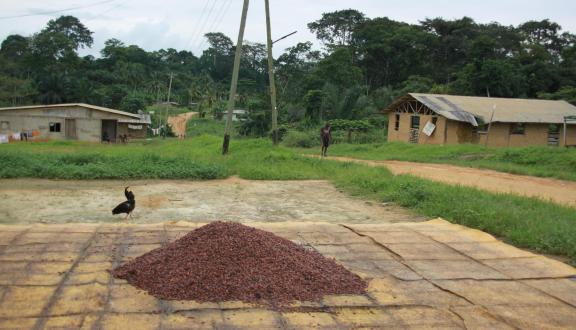
The Cameroonian government and cocoa producer associations have launched programmes to improve nationwide post-harvest techniques to improve cocoa quality. Cameroon is recognised as a fine flavour origin by the ICCO, but the percentage of production has not been determined.
Figure 7: Cocoa drying in Cameroon
Source: Long Run Sustainability
Peru: Important for organic cocoa
Peru is an important source of organic cocoa. It represents about a quarter of Belgium’s total bean imports from the country. In 2024, Peru had the fourth largest area for organic cocoa production in the world. Peru is the third largest exporter of organic cocoa to Belgium behind the Dominican Republic and the Democratic Republic of Congo. In 2024, Peru exported 2,000 tonnes of organic beans to Belgium.
Peru has issues with pesticide use. There is contamination from non-organic cocoa farms and other crops, like bananas. Pesticide use is encouraged and incentivised by the local government.
Tips:
- Know who your competitors are. Actively promote your company on your website and at trade fairs. Read the CBI study How to do business with European cocoa buyers to find more tips on how to market your cocoa.
- Explore support programmes to improve your crop and crop productivity. Refer to your national ministry of agriculture and other local programmes. Also check if there are local support programmes in your region managed by the Food and Agriculture Organization (FAO), the International Finance Corporation (IFC), the Landscape Alliance or any other organisations.
Which companies are you competing with?
Since most chocolate in Belgium is produced by Barry Callebaut, Cargill and Puratos, it is also useful to look at where they source their cocoa. Barry Callebaut and Puratos report the origins for cocoa produced under their sustainability scheme. Note that these are global purchases for each company and not purchases specifically for the Belgian market. Purchases for the Belgian market could be different.
- For Cocoa Horizons (Barry Callebaut), Côte d’Ivoire is also the largest country of origin (51%), followed by Ghana (31%), Cameroon (8%) and Indonesia (4%). This is based on the number of producers that delivered Horizons cocoa in 2024–2025. This only includes Cocoa Horizons cocoa but not all cocoa sourced by Barry Callebaut.
- For Cacao Trace (Puratos), Côte d’Ivoire is also the largest country of origin (54%), followed by Papua New Guinea (15%), Vietnam (7%) and the Philippines (7%). Ghana is not part of Cacao Trace according to the 2022 annual report. This is based on the number of farmer families reached.
- For Cargill Cocoa Promise, Côte d’Ivoire is the largest country of origin, with 84% of the farmer organisations in their programme, followed by Ghana at 13%. This is based on the total number of farmers in the Cargill Cocoa Promise in 2024–2025.
Some other multinationals that trade cocoa to Belgium are Cocoa Source, ECOM Trading and Ofi (Olam).
Tips:
- Check the website of industry network organisations to find buyers in Belgium. These networks cover a large part of the Belgian market. Beyond Chocolate members cover 75% of the Belgian consumer market and 90% of the business-to-business market. Choprabisco has over 170 members, making up 90% of the industry’s turnover. The food.be platform lists 187 companies in the chocolate category. Read the CBI studies What is the demand for cocoa on the European market and 7 tips for finding buyers on the European cocoa market for more information on local competitors for the European market.
- Build long-term relationships. Whether you work with an importer or directly with a chocolate maker, it is important to start and build a strategic and sustainable relationship with them. This will help you manage market risks, improve the quality of your product and reach a fair quality/price balance. For more guidance, read the CBI study on doing business with European cocoa buyers.
Long Run Sustainability carried out this study in partnership with Ethos Agriculture on behalf of CBI.
Please read our market information disclaimer.
Search
Enter search terms to find market research
Do you have questions about this research?
For a small country like Belgium, chocolate is a powerful part of its economic activity. And with great power comes great responsibility.
Charles Snoeck, Beyond Chocolate Programme Manager at IDH