
Preparing for EUDR compliance: Practical digital traceability tools ready for use
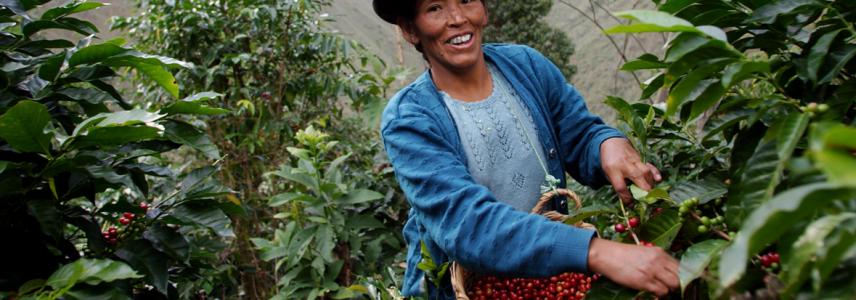
In the Netherlands, a major European hub for agricultural products, reliable supply chains are essential to maintaining trade flows and protecting businesses from legal and reputational risks. In this insight, we explain how CBI supports exporting companies with practical digital solutions and how they can use them to respond to changing EU regulations. We zoom in on coffee, cocoa, palm oil, soy, cattle, rubber, and wood exports, where stricter traceability rules and digitalisation now create opportunities for more sustainable trade.
Exporting products to the European Union (EU) means that you must meet more and more regulatory requirements. On top of that, the procedures and documentation involved in meeting these requirements are becoming more digitalised. Instead of seeing these as obstacles, you could embrace them as incentives. Digital traceability systems make supply chains more transparent and efficient. They help European importers reduce risks and build trust with their business partners.
One of the most important recent developments is the European Union Deforestation Regulation (EUDR). That resulted in a challenging year for many producers and SME exporters of coffee, cocoa, palm oil, soy, cattle, rubber, and wood. The EUDR reflects how more consumers and buyers in Europe and around the world want to know exactly where products come from - from the country of origin to the shop shelf. It is not yet clear when the new rules will come into effect, but when they do, certain products can only be exported to the EU if they meet strict anti-deforestation and production requirements.
This means that responsibility is shared across the entire supply chain. Many Dutch importers, traders and other European buyers now depend on reliable information from their suppliers. For these suppliers, providing traceable, verifiable data is no longer just a compliance requirement. It has become a key condition for maintaining business relationships with EU partners.
Compliance as a competitive advantage
Digital solutions play a crucial role in meeting these traceability demands. So, CBI has developed a Digital Solutions for EUDR Compliance guide. "The trend toward more traceability, and therefore more digitalisation, is here to stay," says CBI programme manager Rebecca Groot. "SME exporters must remain up to date with this and other policy frameworks, such as the Corporate Sustainability Reporting Directive (CSRD) and the Corporate Sustainability Due Diligence Directive (CSDDD)."
CBI designed the Digital Solutions for EUDR Compliance guide specifically for producers and SME exporters of coffee, cocoa, palm oil, soy, cattle, rubber, and wood. The guide contains a lot of information on how to meet – and benefit from – the new anti-deforestation and production legislation. The guide offers practical tips and digital tools to prepare for the new rules for farmers, cooperatives, SME exporters, business support organisations, and governments.
The guide explains:
- What data they must collect;
- How to use mapping and traceability software; and
- Where to find digital solutions that make EUDR compliance more efficient and transparent.
"The goal is to enable compliance, first," says Rebecca. "But using digital tools for traceability can also give businesses in low- and middle-income countries a competitive edge, making their supply chain more efficient, inclusive and sustainable. That is the broader goal. It ties in with our mission: To support the transition towards sustainable production and trade."
What the EUDR requires
The EUDR has 2 main requirements for products such as coffee, cocoa, palm oil, soy, cattle, rubber, and wood. These products must:
- Originate from land that has not been deforested after 1 January 2021; and
- Be produced in accordance with relevant legislation in the country of production.
The EUDR also states that European importers and traders must submit a Due Diligence Statement (DDS). The purpose of this statement is to demonstrate compliance through validated geolocation data, legal documentation, and traceability records. That means producers and SME exporters must have access to accurate geodata, legal verification tools, and traceability systems. Products derived from the regulated products are also included.
Tailored for different stakeholder needs
The Digital Solutions for EUDR Compliance guide offers customised guidance in the form of specific tool recommendations, data collection checklists, and legal documentation templates. To make sure these important tools and insights reach the right people, CBI identified 5 stakeholder groups:
- Farmers;
- Farmer groups;
- SME exporters;
- Business support organisations; and
- Governments.
"We have outlined which data each of these stakeholder groups needs to collect, and how they can manage it effectively," Rebecca explains. "We have mapped a wide range of digital tools. These can assist different players with different compliance tasks. From mapping farms and validating legality and non-deforestation status to ensuring traceability throughout the supply chain."
Collaboration is key
The CBI guide provides practical advice for selecting digital tools based on stakeholder roles, budget, and technical capacity. For example, farmers working independently on EUDR compliance can use free mapping apps, which are described in the guide (see Chapter 2.1 and Category 1). Farmer groups can use the guide to explore opportunities to market their EUDR compliance to (new) buyers. "Each stakeholder group has distinct needs. But it is vital to remember that collaboration in collecting and transferring data is key," Rebecca notes. To ensure that digitalisation benefits all, CBI promotes inclusive approaches that address access gaps for smallholders, women, and youth.
Traceability tools for effective mapping and monitoring
The tools in the guide can be broadly grouped into 5 categories:
1. Basic field mapping tools
The primary focus of these tools is on gathering, visualisation, and utilising local-level spatial data, as well as basic mapping functionalities. Farmers and cooperatives can use them to mark farm boundaries. They include GPS Field Area Measure, Mappt Lite, Locus Map and Google Maps / Earth.
2. Professional mapping and spatial analysis tools
More advanced users, such as Geographic Information System (GIS) professionals, environmental scientists, researchers, enterprises and governments interested in advanced multi-layered geospatial modelling, can carry out detailed land assessments using satellite imagery with tools like ArcGIS by Esri, Blue Marble Geographics, MapSwipe, QGIS, QField and Ground.
3. Satellite-based environmental monitoring
These tools focus on real-time monitoring and large-scale analysis of land changes over time. They can be used by large corporations, governments, environmental organisations, and agribusinesses interested in regular, high-resolution monitoring and analysis of land cover and include Satelligence, LiveEO, Space Intelligence, Gras and Whisp.
4. Farm sustainability and traceability platforms
These platforms are designed for the agricultural sector. They focus on mapping and monitoring good agricultural practices and traceability to ensure sustainable practices. They can be used by agricultural stakeholders like cooperatives, farmers and aggregators. We have looked at platforms such as Farmforce, Farmerline's Mergdata, Enveritas, Smallholdr, KoltiTrace, eProd and INATrace.
5. Supply chain and risk management solutions
These tools operate at a broader organisational level, connecting multiple tiers of the supply chain. They trace the movement of goods, ensuring visibility and risk analysis from production to consumer. With these tools, users can identify risks such as deforestation, labour issues, and reputational risks in sourcing practices. They are aimed at corporate stakeholders seeking to manage supply chain risks, enhance transparency, reduce reputational risks, and include solutions such as Sourcemap, KoltiTrace, TraceX and Osapiens.
Real-world case studies
Across all 5 stakeholder groups, players can gain a better understanding of the complex data flow that can contribute to improving traceability by exploring CBI's real-world case studies. The cases provide real-life examples of how farmers, cooperatives, and SME exporters across various countries have adopted digital tools and processes to meet traceability requirements. They also include challenges users may face along the way and how to overcome them. The studies showcase best practices in several areas:
- Collecting and managing geolocation data;
- Integrating traceability platforms;
- Coordinating between value chain actors;
- Navigating legal documentation requirements.
For instance, in the coffee and cocoa sectors, CBI partners have implemented tools such as farm mapping apps, blockchain-based traceability systems, and AI-powered risk assessment platforms to improve visibility and control over their supply chains.
Accessible via the CBI Market Information Portal
The Digital Solutions for EUDR Compliance are part of the wider CBI Market Information Portal. This portal offers divers documentation, enabling SME exporters of various sectors to understand the expectations of EU buyers, sustainability trends, and regulatory developments. Insights on digitalisation are an important part of these market information services. CBI also offers videos, webinars, and sector-specific reports. "With tools like these, SME exporters have multiple ways to engage and learn," observes Rebecca.
Here are a few examples related to digitalisation and (sustainability) legislation:
- Tips to go digital;
- The YouTube Market Information Overview;
- The EUDR Coffee Sector Webinar;
- Our research on the Spanish coffee market;
- 8 tips on how to become EUDR-compliant in cocoa;
- Trend analyses in the Fresh Fruit and Vegetable Sector, such as increasing sustainability requirements or changing consumer preferences;
- Articles on the EU Green Deal offering insight into Europe’s sustainability agenda, of which the EUDR is a key component.
Digitalisation as a core EU market requirement
The Digital Solutions for EUDR Compliance guide is not a stand-alone solution, but one of the many ways in which CBI boosts digitalisation as a key to contributing to trade relationships between SME exporters and partners in the Netherlands and the EU.
For example, on our ‘Tips to go digital’ web pages, CBI offers advice and discusses digitalisation benefits in many different sectors. "We combine insights on digital innovation with practical support, market intelligence and capacity building, which means that digitalisation is a cross-cutting theme in various CBI activities," explains Rebecca. "Our approach goes beyond supporting individual SME exporters. We facilitate collaboration between farmers, SMEs, Business Support Organisations, local governments, and Dutch/European buyers to build the enabling environment needed for digital traceability to thrive – and for economies to become more sustainable."
Prepare now, stay competitive
Rebecca concludes that with the Digital Solutions for EUDR Compliance, CBI sends a clear message: "There may be a lack of clarity about the EUDR. But SME exporters cannot afford to delay preparing for the strict traceability requirements that the EU market is implementing. By keeping ahead of the game, they can accelerate responsible supply chain management and transparency and gain a competitive advantage." She adds, "The EUDR is just one example of how traceability boosts access to the EU market by supporting SMEs become a reliable business partner for Dutch and European buyers. SME exporters who invest in traceability today will be ready for tomorrow’s requirements: They will be equipped to meet not only EUDR requirements, but broader buyer expectations."
More information
Would you like more information about digital tools for EUDR compliance or guidance tailored to your sector? Email us, explore sector studies, or watch our market insights video. You can also download the EUDR Digital Solutions Factsheet and Case Studies from our website.