
The European market potential for spice mixes
European consumers’ increased interest in ethnic cuisines, healthier foods and home cooking has boosted demand for spice mixes. The European market for spice mixes is very competitive, especially for consumer-packaged products. Most spice mix imports come from other European countries, because European importers mainly import single spices and mix them in their production facilities in Europe. To enter the market for spice mixes, you must add value to your product and/or reduce export costs per kg of spice mix.
Contents of this page
1. Product description: spice mixes
Spices are widely used in food and drinks for flavour and in cosmetics and household products for fragrance. They are also added in both traditional and modern medicine. Spices can be used fresh, dried, or as extracts. For more information on the use of spices in medicine, read our studies on natural ingredients for health products.
This study focuses on spice mixes, which are combinations of 2 or more different types of spices. Spice mixes have their own dedicated code in the Harmonised System (HS): 091091. The data in this study cover the European Union (EU), EFTA countries (Iceland, Norway and Switzerland), and the United Kingdom (UK).
Figure 1: Spice mixes in a high-end supermarket in Berlin, Germany
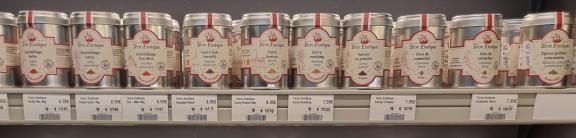
Source: GloballyCool, February 2025
2. What makes Europe an interesting market for spice mixes?
European imports of spice mixes are growing. These mainly come from European suppliers. They import full container loads of different spices that they mix at their facilities in Europe.
Source: UN Comtrade (August 2025)
After dipping in 2022, European imports of spice mixes have bounced back. Overall, production increased from 66,600 tonnes in 2020 to 74,900 tonnes in 2024, at an average annual growth rate (CAGR) of 3.0%.
Developing-country suppliers play a small role in the European spice mixes market. This is because many mixes are sold in relatively small volumes. As an example, a typical spice mixes manufacturer in Europe produces hundreds or thousands of kilograms of different mixes. They import full container loads of various spices, but most of their mixes are sold in volumes ranging from a few hundred kilograms to a tonne. These are sold to various clients, each of whom purchase a range of spice mixes in even smaller quantities.
Some mixes that sell in larger volumes and to more clients are Cajun mix, curry masala and barbecue mixes. Sales of many exotic spice mixes, such as berbere from Ethiopia, are significantly more limited in terms of volume and number of clients.
For full container loads, transportation, administration and testing costs are minimal per kilogram. These costs rise rapidly when smaller amounts are traded. This means that when a spice mix is exported to Europe in amounts of a few hundred kilograms, its price will be considerably high. It is cheaper to manufacture that spice mix in Europe from single spices that have been imported in full container loads and mixed by a European company.
Due to the cost structure, the export of spice mixes from developing countries is only feasible for a few suppliers. These suppliers can either reduce export costs or add significant value to the product. To reduce costs, consider consolidating shipments of products. You could supply different spice mixes to the same buyer or combine them with single spices or even other products. Value addition is possible in many ways. You can, for example, promote the product as a truly authentic spice mix that is blended at origin. Note that the market for such authentic spice mixes is very small, as only a few consumers are willing to pay the premium price.
Tips:
- Start exporting single spices. Then offer spice mixes that can be shipped together with your single spices to keep export costs at acceptable levels.
- Read more about the general developments in the spices and herbs market in our study What is the demand for spices and herbs on the European market?.
- Visit or participate in trade fairs to test if the market is open to your product, acquire market information and find potential buyers. The most relevant trade fairs in Europe are Food Ingredients Europe, Biofach (for organic products), SIAL and Anuga.
- Read our 10 tips on how to find buyers on the European spices and herbs market and 7 tips on how to do business with European spices and herbs buyers for how to become a successful exporter to the European market.
3. Which European countries offer the most opportunities for spice mixes?
The UK is Europe’s largest importer of spice mixes from developing countries, with a 39% share in 2024. Germany follows with 19% and the Netherlands with 16%. As Europe’s main importers, these are interesting focus markets. Other promising leading markets are France with 5.6%, Belgium with 3.8% and Sweden with 2.4%.
Source: UN Comtrade (August 2025)
The UK: Where curries are as common as traditional British dishes
Since Brexit, the UK has imported its spice mixes mainly from developing countries. This now makes the UK Europe’s leading importer of spice mixes from developing countries (71% in 2024). These imports dipped from 6,200 tonnes in 2020 to 3,100 tonnes in 2023 but rebounded to 4,500 tonnes in 2024, translating to a CAGR of ‑7.5%.
The main reason for the UK’s substantial imports of spice mixes is its high consumption of curries. The UK has a large diaspora from India and Bangladesh. This has made curries a very popular dish in the UK. In 2016, the most recent count, the country had about 12,000 curry houses. These restaurants account for much of the spice mix sales in the UK, in addition to sales through ethnic food shops.
The UK’s leading suppliers of spice mixes are India and Pakistan. But the widespread consumption of Indian curries in the UK does not automatically imply large direct imports of spice mixes from India. There are 3 reasons for India’s leading role:
- The historic relationship between the UK and India, and particularly the large diaspora, has resulted in many relations between Indian suppliers and buyers in the UK;
- Many consumers in the UK, both Indian diaspora and native British, prefer authentic spice mixes made at origin using the original recipes;
- Indian suppliers have the technological and logistical capacity to supply relatively small orders of spice mixes according to the quality standards of the UK.
Interestingly, the UK’s exports were low compared to other large importers. This shows that the country has a large domestic market for spice mixes, either for consumption or processing. On average, the UK exported 2,000 tonnes between 2020 and 2024.
Many players in the European ingredients trade regard the UK as the most innovative market where trends start and new, exotic ingredients are first adopted. Reasons for this high level of innovation include economic and cultural factors. The high purchasing power in the UK allows people to spend more money on food and dining than in many other countries. The UK also maintains strong relations with different countries around the world.
Apart from the large diaspora from India and other former British colonies, many consumers are accustomed to products from faraway countries. To illustrate, both the Indian diaspora and native British people visit curry houses. The wide exposure to products and recipes from countries across the world makes consumers in the UK more receptive to exotic products. This also means that there is a large market for various spice mixes.
The UK’s spice companies are united in the Seasoning and Spice Association. Its members represent 95% of all labelled herb and spice product sales in the UK. Spice mix manufacturers in the UK include EHL Ingredients and Dani Organics. Dani Organics specialises in organic food ingredients and has a large network of farmers who supply a wide range of spices. Like many manufacturers, they mainly import single spices and then steam-sterilise, grind and blend them in their UK processing facility. They also make customised mixes for clients.
Germany: A major consumer market and re-exporter
Germany is a net exporter of spice mixes, as the country imported an average of 9,100 tonnes and exported 15,800 tonnes of spice mixes between 2020 and 2024. The main export markets for Germany’s spice mixes are its neighbouring countries, with the Netherlands leading and followed by Belgium and Austria. Likewise, Germany’s main suppliers are the Netherlands and Poland.
Germany’s imports of spice mixes from developing countries grew from 1,800 tonnes in 2020 to 2,200 tonnes in 2024, at a CAGR of 6.1%. These mainly come from India, and over 99% of the volume is conventional product, meaning that most spices available in German organic supermarkets are blended/mixed in Germany.
Figure 4: Spice mixes in a German organic supermarket
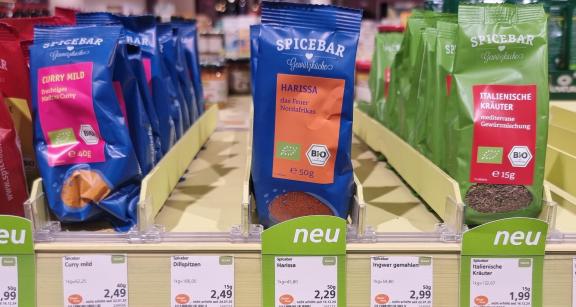
Source: GloballyCool, February 2025
Germany is the largest consumer market in Europe. The country is also a major re-exporter of food ingredients and processed foods. Many spice importers and food manufacturers in Germany supply their products throughout all of Europe. Germany has a very large food industry, which uses extensive amounts of various spices. It produces large amounts of convenient processed foods. This includes sauces and marinades, ready-to-eat meals and processed meat products. Spice companies are organised in the German Spice Association.
Value for money is important in the German retail market, as reflected in the large market share held by discounters. The leading spices manufacturer, Fuchs, dominates the market for low-end spices. The brands Fuchs, Ostmann, UBENA Spices and BioWagner are all owned by Fuchs. Fuchs also packages spices for several German private labels. The main private labels in Germany are Kania (by discounter Lidl), Le Gusto (by Aldi Süd and Aldi Nord), Gut & Günstig (by Edeka) and REWE Beste Wahl (by REWE).
The Netherlands: Trade hub for spices
The Netherlands is Europe’s overall leading importer of spice mixes. Despite having a small population and limited domestic consumption, the Netherlands is a major trade hub for spices in Europe. Importing wholesalers in the Netherlands play a large role in the processing and, particularly, the re-export of spices and spice mixes to other European countries.
Between 2020 and 2024, the Netherlands imported on average 12,200 tonnes of spice mixes per year and exported 14,500 tonnes. This makes the country a net exporter of spice mixes. Belgium and Germany are the largest export destinations for Dutch spice mixes. Outside the EU, the largest export destinations are Curaçao and Bonaire, Sint Eustatius and Saba. This can be explained by their relationship to the Netherlands: Curaçao is an independent country within the Kingdom of the Netherlands, and Bonaire, Sint Eustatius and Saba are special municipalities of the Netherlands.
Most Dutch spice mix imports come from European countries. Imports from developing countries grew from 560 tonnes in 2020 to 1,900 tonnes in 2024 (about 11% share), at an impressive CAGR of 35%. These mainly come from India, followed by Lebanon.
The Dutch Spice Association in the Netherlands strongly supports sustainable sourcing. The association is committed to Corporate Social Responsibility. A leading group of spice importers in the Netherlands established the international Sustainable Spices Initiative (SSI).
Retail chains like Albert Heijn, Aldi and Jumbo control much of the spice mix retail sales in the Netherlands. The leading independent brands of spice mixes in the Netherlands are Verstegen and Euroma. Euroma has a large presence in both the food industry and the retail market. For the development of spice mixes, Euroma analyses market trends and works closely with clients on taste and concept development. They have a strong product development department with a sensory panel. Concept development includes branding and packaging design.
France: A major user of spice mixes
France has the second-largest population in the EU. With their traditional use of spices in cooking, the French consume relatively large amounts of spices. Another reason for France being an interesting export market is its well-established gastronomy sector. France has the highest number of Michelin restaurants in the world. Restaurants with Michelin stars are known to be the world’s best for fine dining. This is interesting for spice mix exporters as Michelin restaurants tend to have a high interest in trying new and innovative food products.
France’s port of Marseille is the fourth largest in Europe. Despite this, France’s role in the European market for spice mixes is smaller than that of Germany and the Netherlands. Its imports of spice mixes from developing countries tend to fluctuate. Overall, they grew from 500 tonnes in 2020 to 650 tonnes in 2024, at a CAGR of 6.3%. These imports mainly came from India, followed by Sri Lanka and China.
Like many Western European markets, the retail market in France is highly concentrated. France houses a number of large retail chains like Carrefour, Delhaize and Intermarché, which all take up a large part of the domestic sales of spices and spice mixes.
Belgium: An important entry point for spice mixes to the European market
Belgium is Europe’s second-largest overall importer of spice mixes. It mainly sources them from European countries. Home to Europe’s second-largest port, Antwerp, the country functions as a trade hub for the region. Like the Netherlands, Belgium does not have a large domestic market. This means a large percentage of imports are re-exported. Between 2020 and 2024, Belgium imported on average 8,300 tonnes of spice mixes per year and re-exported 3,100 tonnes.
Belgium’s imports of spice mixes from developing countries dropped from 450 tonnes in 2020 to 250 tonnes in 2023. It bounced back to 440 tonnes in 2024. This translated to a CAGR of ‑0.6%. These imports mainly come from India.
The country’s spice companies are united in the Belgian Spice Association. Evlier is a Belgian importer of spices and spice mixes. The company specialises in the sourcing, grinding and blending of spices. It uses a network of distributors to supply its products to food manufacturers and retailers in Belgium. European Spice Services is a distributor of spices, with warehousing in Belgium. This group of companies specialises in sourcing large volumes of spices and is a member of the Sustainable Spices Initiative.
Belgium has many retailers, mostly large, well-established companies with stores in several European countries. The retailers with the largest number of stores in Belgium are Aldi, Carrefour, Spar, Lidl and Delhaize. Of these retailers, only Delhaize is Belgian. The others are German, French or Dutch.
Sweden: Promising market for spice mixes imports
Sweden is the 13th-largest overall importer of spice mixes, at an average of 1,700 tonnes per year in 2020-2024. These imports mainly came from European countries. The country’s diverse culinary landscape and health-conscious consumer base could provide opportunities.
Sweden’s imports of spice mixes from developing countries tend to fluctuate. Overall, they grew from 240 tonnes in 2020 to 280 tonnes in 2024, at a CAGR of 3.3%. These imports mainly came from Pakistan and Turkey.
Swedish spice companies are organised in the Arom- och Kryddföreningen i Sverige (Association of the Swedish Flavour and Spice Industry). For example, Nordic Spice is a leading wholesaler and manufacturer of spices, herbs, marinades and sauces. It supplies large volumes to food suppliers and retailers across Sweden. The largest retail chains are ICA, Axfood and Coop.
Sweden’s ethnic food retail market has grown strongly in recent years. Some cities even have dedicated ethnic spice outlets.
Figure 5: Spice mixes in a Swedish ethnic spice outlet
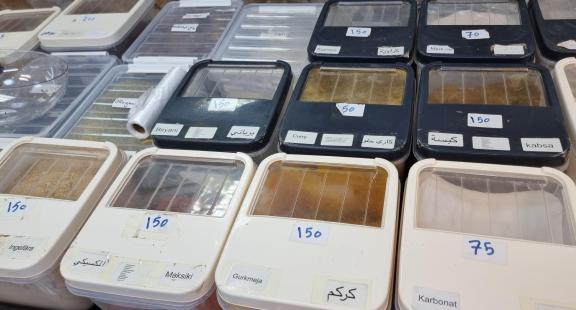
Source: GloballyCool (May 2025)
Tips:
- Explore the member lists of national associations such as the German Spice Association, the Seasoning and Spice Association (UK), the Royal Dutch Spices Association (the Netherlands) and the National Union of Processors of Pepper, Spices, Herbs and Vanilla (France).
- See our study on market statistics & outlook for spices and herbs for more information about general trade developments within the European spices sector.
- Specifically, check the trade statistics of your interest via tools such as ITC TradeMap or Access2Markets. Use HS code 091091 to analyse the trade in spice mixes.
4. Which trends offer opportunities and threats in the European spice mixes market?
European consumers are trying to eat healthier. They want spice mixes that are authentic and easy to use, and come in ready-to-cook packaging. Telling the story of your spice blend’s origin, tradition or sustainability can add value.
Search for healthier ingredients
European consumers are searching for healthy ingredients. According to the WHO, nearly 60% of Europeans are overweight and 57 % say they are actively trying to eat healthier. Ingredients like salt (sodium), sugar and synthetic additives are being replaced more and more with healthier alternatives that add flavour, like spices. Consumers are also experimenting with a variety of spices and herbs that are said to have health benefits, like cinnamon, ginger, turmeric and garlic.
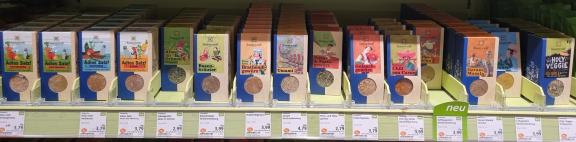
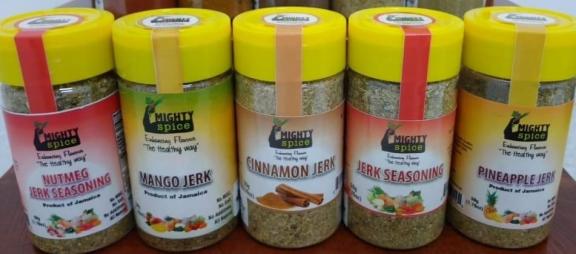
Many products in Europe contain a large percentage of salt, which is exactly the type of ingredient that consumers are trying to avoid. In many European countries, salt reduction initiatives (based on the EU’s salt campaign) aim to reduce salt intake. Brands are trying to limit the percentage of salt in new products. For example, spice brand Santa Maria launched a range of five spice mixes with no added salt for the most common dishes in 2023. Also, a few suppliers from developing countries focus on the healthy aspect of spice mixes, using recipes without salt and MSG. One notable example is MightySpice from Jamaica.
Figure 6: Range of healthy spice blends without salt in a German health food store
Source: GloballyCool (February 2025)
Food manufacturers are creating healthier foods, for example, by adding other ingredients like spice mixes. However, they may need support to develop products that are both healthy and tasty. To achieve this, they can partner with companies that have research and development capacity to identify consumer expectations. These companies can help develop spice mixes with matching flavour profiles and test products with sensory panels. They can also provide advice on the processing characteristics of the spice mix when used as an ingredient in a finished or semi-finished product.
Tips:
- Offer low-salt or salt-free spice mixes. For more information, study FoodDrinkEurope’s Guidance for Industry to Reduce Sodium in Food Products.
- If you can supply directly to food manufacturers, show them how they can make healthier products with your spice mixes without compromising on taste.
- If there is a study done on the health properties of your spice mix or a major component, show this to buyers to let them know about the potential benefits of your product.
- Do not make health claims, as EU legislation does not allow this. Rather than stating ‘this spice mix will reduce the chance of disease X’, state ‘this spice mix can be part of a healthy diet’.
Growing popularity of ethnic cuisines
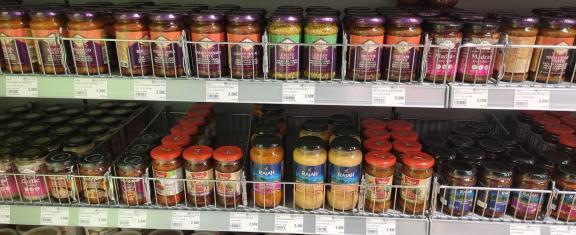
Ethnic cuisines are gaining popularity across Europe. Consumers are curious about new tastes, partly because of travel, social media and cooking shows. Its also in part because of Europe’s increasingly multicultural population. Younger generations in particular are less tied to traditional local food and are open to trying global flavours. A select group of consumers is willing to pay a premium price for new and ethnic flavours.
Figure 7: International cuisine – sauces shelf in an Asian supermarket in Germany
Source: GloballyCool (February 2025)
Middle Eastern and Mediterranean food is in strong demand, helped by its healthy image and use of fresh herbs and spices. Blends like za’atar, ras el hanout, baharat and harissa are already well-known. Asian cuisines are also very popular, from Indian curries and tandoori to Thai curries and Chinese five-spice, with both mild and spicy versions.
Latin American food remains popular, especially Tex-Mex and BBQ-inspired dishes with seasonings like taco mix, adobo and chimichurri. African flavours are newer in the market but are growing in popularity as adventurous consumers look for fresh tastes. Blends like dukkah, peri-peri, berbere and suya spice are attracting interest. At the same time, fusion cooking is on the rise. Here chefs and brands mix exotic spices with familiar European herbs to create something new.
The uniqueness of a spice mix depends not only on its composition, but also on the story behind it. This can contain elements of its region of origin, its traditional use, the people growing the spices, or a combination. European companies often add a story to their products to make them more unique. For example, Euroma’s range of Original Spices offers a variety of spice and herb mixes from different world regions and provides background information. Their range includes Caribbean spice, Chinese 5-spice and Thai green curry.
Figure 8: Spice mixes by MightySpice from Jamaica
Source: GloballyCool (July 2025)
Convenience and home cooking
European shoppers want flavour and convenience. They need spices in formats that save time and reduce effort in the kitchen. Spice mixes are perfect for this. Both pandemic-related lockdowns and rising costs have boosted consumer interest in home cooking. Cooking at home allows people to experiment with flavours and learn at home. Products like spice mixes in jars, single-serve sachets, ready-to-cook kits and marinade packs make this easier.
Glass jars, tins or refillable packs work well for premium or everyday blends. Consumers like them because they are resealable, have attractive shelf appeal, and can be sustainable. Single-use or small multi-use sachets are popular because they are easy to store, measure and use. They suit smaller households and consumers who want to try new flavours without buying large packs. Ready-to-cook kits and marinade/rub packs (for meat, fish or plant-based protein) save time for busy families and young professionals.
Tips:
- Make sure you can market your product according to the demand in the European market. Identify this demand by checking which of your spices or herbs are used in popular mixes. Have a look at the websites of European spice companies like Verstegen and Euroma (Netherlands), and Fuchs (Germany).
- Create spice mixes that are authentic and easy to use, and come in ready-to-cook formats.
- To add value, tell the story of your blend’s origin, tradition and/or producers. Your buyers can use this in their marketing.
Sustainable sourcing remains high on the agenda of food manufacturers
Sustainable sourcing is key in Europe. Consumers are becoming more and more aware of how their decisions when buying things impact people and the environment. They have growing concerns about global issues such as climate change and social conditions in supply chains. They expect suppliers to do more about corporate social responsibility (CSR). Non-governmental organisations (NGOs) have often taken the lead in stimulating companies to improve their CSR and source sustainably.
Together with leading brands and manufacturers, NGOs originally focused on commodities like coffee, cocoa, tea and sugar to maximise their impact. The spices market has only recently come to the attention of initiators of sustainability schemes. A good example of the involvement of NGOs and leading companies in the spices sector is the Sustainable Spices Initiative (SSI). Some of the main sustainability issues in the spices sector that SSI recognises are:
- Farmers often face poverty and food insecurity;
- Excessive agrochemical use;
- Concerns around spices production, especially about long-term supply, food safety and traceability due to poor agricultural practices, lack of adequate processing facilities, and growers switching to high-value crops or jobs.
Transparency and traceability
In line with sustainable sourcing, transparency in spice supply chains is becoming increasingly important. Consumers do not simply accept brands’ sustainability claims. They often demand proof, leading to more transparent supply chains. Some brands tackle these demands by providing QR codes on their packaging. These show consumers exactly where their product was produced and by whom, and what price was paid. Other companies provide pictures, stories or the exact production location on their packaging.
A benefit of this increased demand for transparency is that it helps trace any mistakes or faulty batches back to the producer. This makes it possible to guide producers in offering higher quality.
Organic
Demand for organic spice mixes is growing slowly. Overall organic retail sales in Europe reached almost €55 billion in 2023, making it the world’s second-largest region for organic retail sales (after North America). The largest national markets for organic foods are Germany (29% of the European market in 2023, with organic retail sales of over €16 billion), France (at €12 billion) and Switzerland (at €4.2 billion).
Organic certification strengthens the perception of your product’s natural and healthy characteristics. It can also help give them a premium price. Demand for organic products in other categories, such as fresh fruits and vegetables, is stronger. This is partly due to the low dosage of spices in many food products. European organic regulation allows products with at least 95% of organic ingredients to be labelled as organic. This means many food manufacturers do not prioritise the sourcing of organic spices.
However, certification bodies are becoming stricter about the use of non-certified ingredients in organically certified food products. Certification bodies state that since the availability of organic spices is increasing, European organic regulation for organic labelling should now be fully applied to demand 100% organic content for spices. This could boost demand.
If you want to sell your spices as organic in Europe, they must be grown using organic production methods that comply with EU organic legislation. Growing and processing facilities must be audited by an accredited certifier. However, Europe’s updated standards are making it harder for small-scale farmers to gain or maintain organic certification.
For example, Zanzibar spice farms now struggle to meet stringent EU standards. They have traditionally grown crops like cloves, cinnamon and nutmeg without using chemicals. Under new ‘zero residue’ standards, even tiny traces of chemicals can make spices fail organic checks. Sometimes these traces get into the product from nearby farms, shipping or storage. Because of this, many small Zanzibari farmers risk losing their organic status. For them, the new rules mean higher costs, more testing, and sometimes needing outside help to stay certified. Without it, they may lose access to organic markets and have to sell their spices at lower prices in other markets.
Tips:
- Promote sustainable and ethical aspects of your production process and the transparency of your supply chain. This means that you should be able to prove and communicate a traceable chain back to the raw materials. The more detailed and transparent this information is, the more consumers and buyers will appreciate it.
- Read the FiBL’s/IFOAM’s latest version of the publication World of Organic Agriculture (2025) to learn more about the global and European organic sector.
- Make a cost-benefit analysis to determine if organic production is worthwhile for you. Carefully assess your capacity to apply organic farming principles. Productivity during the conversion to organic farming tends to decline, sometimes by as much as 30%. The conversion phase usually takes 2 years, so take this into account when investing in organic production, as a higher price will be generated only after this period.
- Read our study on What requirements must spices and herbs comply with to be allowed on the European market?, for sustainable and organic (certification) requirements.
- If you have organic certification, try to combine it with other sustainable initiatives (dual certification) to increase your competitiveness.
Concerns over adulteration affect spice mixes imports
Spice adulteration is a serious concern in Europe, especially for ground and blended spices. With increasing demand and climbing costs of raw materials and transport, the pressure to deliver stable volumes at acceptable price levels rises. These developments cause some suppliers to adulterate their products. A recent EU study shows that many spices imported to Europe are adulterated with unwanted substances. Some are rather harmless, like leaves from other plants. Other adulterants, such as unauthorised food additives, are a potential health threat.
Concerns over the adulteration of spices cause European buyers to take action to preserve their reputation as suppliers of pure and authentic spices. Together with laboratories, they are constantly looking for better technologies to detect adulterants, such as High-Performance Liquid Chromatography coupled with High Resolution Mass Spectrometry (HPLC-HRMS) and Site-Specific Natural Isotope Fractionation studied by Nuclear Magnetic Resonance (SNIF-NMR®).
However, high-tech laboratory testing is expensive and only financially feasible for large volumes. To keep the costs of testing, administration and transport to a minimum, European importers mostly buy full container loads of single spices. This may negatively affect smaller suppliers and the market opportunities for spice mixes.
Tips:
- Watch our masterclass on food fraud and study the UK Spice and Seasoning Association’s guidance on authenticity of herbs and spices, on how to assess and protect your products against supply chain vulnerabilities.
- Build honest, responsive relationships with buyers to stand out as reliable. Share tests and be open if issues arise.
- Read our study What trends offer opportunities or pose threats on the European spices and herbs market? to learn more about current trends in the European market.
GloballyCool carried out this study on behalf of CBI.
Please review our market information disclaimer.
Search
Enter search terms to find market research
Do you have questions about this research?
Health is driving briefs now; less sodium, no additives, bold flavour from real spices. Our jerks and curries contain no salt, but have not lost their soul. That’s why our European buyers are so happy with our mixes.

Pauline Mighty, Managing Director of MightySpice, Jamaica