
The Dutch market potential for spices and herbs
The Netherlands offers strong opportunities for exporters of spices and herbs. This is because it combines local demand with a large re-export role. Dutch buyers serve food manufacturers, spice blenders, foodservice suppliers, retailers and buyers in other European countries. The 6 spices with the best opportunities are curcuma, cinnamon, nutmeg, cloves, cardamom and cumin seeds. These products stand out because of their import volume, growth, Dutch share in EU imports and relevance for Dutch buyers.
Contents of this page
1. Country description: The Netherlands
The Netherlands, also often called Holland, is a small and densely populated country in northwestern Europe. It plays an important role in the European trade in spices and herbs. This is because of its strong position in importing, processing, warehousing and re-exporting. The country borders Germany, the European Union's largest consumer market, and Belgium. It is also close to France and the United Kingdom.
- Population: 18.13 million (at the end of 2025).
- GDP: €1.186 trillion.
- GDP per capita: €63,092 (#4 in the EU).
- Language: Dutch, but English is widely spoken in business.
- Important regions: Rotterdam port area and the wider logistics cluster, Amsterdam/Schiphol (main airport) area, and The Hague as the government centre.
Figure 1: Location of the Netherlands in Europe
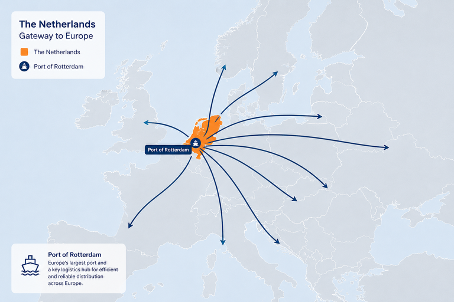
Source: Globally Cool, 2026
Other facts:
- European spice trade hub: 116,400 tonnes of spices and herbs imported in 2025, of which 66,000 tonnes (57%) came from low- and middle-income countries;
- Diversified sourcing: main suppliers from low- and middle-income countries were India, Vietnam, Indonesia, Peru, China and Brazil;
- Strong re-export role: Dutch companies supply other European markets, especially Belgium, Germany and Spain;
- Important organic and sustainability role: the Netherlands is the third-largest EU27 market for organic spices and herbs and is active in the Sustainable Spices Initiative, a sector-wide platform for spices, herbs and dehydrated vegetables.
2. What makes the Netherlands an interesting market for spices and herbs?
The Netherlands is interesting because Dutch buyers serve both the Dutch market and other European markets. This means that a Dutch buyer can give exporters access to more than one destination. The country is especially relevant for spices and herbs, where Dutch companies import a high share of the total European Union (EU) volume from low- and middle-income countries.
The Netherlands is one of Europe's main entry points for spices and herbs
Dutch imports from low- and middle-income countries reached 66,000 tonnes in 2025. This was lower than the 73,000 tonnes imported in 2021, but higher than the low point of 62,700 tonnes in 2023. These changes show that the market is large but not stable from year to year. Imports can change because of buyer demand, harvests, weather, quality problems, food safety controls and price changes in origin countries.
Source: Eurostat, 2025
In 2025 the Netherlands had a 16% share of EU imports from low- and middle-income countries. EU imports reached 423,300 tonnes, while Dutch imports reached 66,000 tonnes. This confirms that the Netherlands is one of the main European entry points for spices and herbs from these countries.
Specialist spices offer a strong route into Europe through Dutch buyers
The Dutch market has a high demand for several specialist spices. In 2025, the Netherlands made up around 42% of EU imports of nutmeg from low- and middle-income countries. It also made up around 42% of cardamom imports, 37% of curcuma imports, 34% of clove imports and 32% of cinnamon imports.
These shares show that the Netherlands is not only a market for large-volume products. It is also an important route for smaller specialist spices that need experienced importers, careful quality control and links to several European buyers.
Source: Eurostat, 2025
Black pepper is still the largest spice import by the Netherlands from low- and middle-income countries. However, the Dutch share of EU black pepper imports was around 19% in 2025. This is lower than the Dutch share for several specialist spices, which is why this study focuses on products with a clearer Dutch opportunity profile.
Dutch food companies create demand for several spices and herbs
Some spices and herbs are likely to be used by Dutch food companies instead of being re-exported to other European markets. This is evident when Dutch imports are much higher than Dutch exports. The difference (called 'apparent use' in Table 1) is not the same as real consumption, but it gives a useful signal of products that may be used by spice blenders, food manufacturers, foodservice suppliers and retailers in the Netherlands.
Table 1 below shows which products offer most opportunities based on apparent use in the Dutch market. Dried onion, ground chillies and paprika, curcuma, dried garlic, black pepper and cumin seeds are likely to be demanded by Dutch food companies. Nutmeg, cloves and cardamom are more strongly linked to trade and re-export. So exporters should decide whether they want to target Dutch processing demand or use Dutch buyers as a route to other European markets.
Table 1: Average apparent Dutch use of spices and herbs, 2021-2025, tonnes
| Product | Average imports (A) | Average exports (B) | Average apparent use (A-B) |
|---|---|---|---|
| Dried onion | 12,655 | 5,442 | 7,212 |
| Dried chillies and paprika (ground) | 10,410 | 5,606 | 4,804 |
| Curcuma | 7,217 | 4,447 | 2,770 |
| Dried garlic | 17,816 | 15,420 | 2,396 |
| Black pepper | 15,026 | 12,682 | 2,344 |
| Coriander seeds | 2,841 | 1,268 | 1,573 |
| Cumin seeds | 3,764 | 2,380 | 1,384 |
| Other spices | 7,695 | 6,356 | 1,339 |
| Cinnamon | 5,432 | 4,533 | 899 |
| Juniper berries and anise seeds | 2,682 | 2,061 | 621 |
| Thyme | 888 | 454 | 434 |
| Dried sweet pepper (whole) | 732 | 314 | 418 |
| Fenugreek | 672 | 291 | 381 |
| Dried chillies (whole) | 1,494 | 1,148 | 346 |
| Nutmeg | 2,122 | 1,785 | 337 |
| Cloves | 1,219 | 897 | 322 |
| Mace | 453 | 266 | 187 |
| Curry | 1,214 | 1,095 | 119 |
| Vanilla | 316 | 253 | 63 |
| Bay leaves | 138 | 81 | 58 |
| Saffron | 65 | 32 | 33 |
| Cardamoms | 1,007 | 998 | 9 |
| Mix of ground spices | 12,748 | 13,293 | -545 |
| Mix of whole spices | 325 | 1,343 | -1,018 |
Source: Eurostat, 2025
Note: Ginger is excluded because export data includes fresh ginger and the import data was modelled to focus on dried ginger.
Dutch food companies are important buyers of ingredients. In 2024, the Dutch food industry included more than 9,045 companies, with net sales of €114 billion and 162,000 jobs. The sector is also strongly international, with 62% of its products sold abroad. Germany, France and Belgium are among the main destination markets for Dutch food products.
Dutch spice and food companies have different roles. Nedspice is active in sourcing, processing and distributing spices, herbs and dehydrated vegetables. Verstegen focuses on processing, product development and consumer-packed spices. Spicemasters combines trading with access to its own grinding capacity. Van der Does Spice Brokers works as a broker, while Bieze Food Group uses spices and herbs in convenience foods, salads, meals and chilled food concepts.
Dutch buyers can give access to wider European markets
Many spices and herbs imported into the Netherlands are sold again to other European countries. This is especially clear for products like cardamom, nutmeg, cloves and black pepper, where Dutch export volumes are relatively close to import volumes. For exporters, this means the Netherlands should be seen not only as a consumer market but also as a distribution route.
This trade role can be useful for specialist spices. Dutch buyers often handle several origins and sell to several European destinations. So a strong Dutch partner can help exporters reach buyers in countries like Germany, Belgium, France and Spain through a single business relationship.
Tip:
- Choose Dutch business partners if you want broad access to the European market. Dutch importers often understand the needs of different European buyers and can help distribute products beyond the Netherlands. This is especially useful for exporters that supply bulk herbs and spices for processing, blending or packing in Europe.
The best opportunities are found in products with size, growth or a strong Dutch share
The Netherlands imports large volumes of dried garlic, dried onion, black pepper, curcuma and cinnamon. These products are interesting for exporters that can supply bulk volumes, consistent quality and reliable documents. They are also relevant for suppliers that can meet strict food safety requirements.
The Netherlands, as mentioned, has a strong position in many smaller specialist spices. Nutmeg, cardamom, cloves and mace have lower volumes but a high Dutch share of EU imports. These products are relevant for exporters that can offer strong quality control, traceability and reliable supply.
The remainder of this study focuses on the top-6 products with the clearest combination of import volume, growth, Dutch share in EU imports, supplier opportunities and Dutch buyer relevance: curcuma, cinnamon, nutmeg, cloves, cardamom and cumin seeds.
Outlook: Stable demand but strong influence from supply
The Dutch spices and herbs market is expected to remain stable in the short term. Moderate Dutch economic growth supports demand, but imports will also depend on harvests, weather, quality, food safety controls and prices in origin countries. In the longer term, the Netherlands is expected to remain an important European route for spices and herbs because of its import scale, processing knowledge and re-export links.
3. Which products offer the most opportunities on the Dutch spices and herbs market?
Most opportunities can be found in products that combine Dutch import volume with growth, a strong Dutch share in EU imports, a spread of supplier countries or clear demand from Dutch food companies. The 6 selected products are curcuma, cinnamon, nutmeg, cloves, cardamom and cumin seeds. Black pepper is not included even though it’s the largest Dutch spice import. This is because it is a mature and highly competitive product with a lower Dutch share in EU imports than several specialist spices.
Source: Eurostat Comext, April 2026
Curcuma: strong 2025 growth and good demand from food companies
Curcuma imports from low- and middle-income countries grew from 5,400 tonnes in 2024 to 7,500 tonnes in 2025. This was one of the clearest short-term increases in Dutch imports of spices and herbs. The increase also made curcuma the second-largest spice imported to the Netherlands (behind black pepper). Between 2021 and 2025, imports grew by 4% per year. India and Peru dominate Dutch imports. In 2025, India supplied 3,700 tonnes and Peru supplied 3,500 tonnes, resulting in a rather balanced supplier base.
A considerable part of the curcuma imports is used domestically in food production. On average, volumes reach 2,800 tonnes/year. This equals roughly 150 grams per person/year. Curcuma, also called 'kurkuma' or 'geelwortel' in Dutch, is used in curry powders, South Asian and Middle Eastern-style dishes, and as a natural colourant in food products. This indicates demand from spice blenders and food manufacturers, not only from retail spice buyers.
Organic curcuma imports also show a strong Dutch position. In 2024, the Netherlands imported around 2,000 tonnes of organic curcuma, compared with about 3,900 tonnes for the whole EU. This means that the Netherlands accounted for around 50% of EU organic curcuma imports. Peru was by far the main Dutch supplier, with around 1,800 tonnes in 2024. India was much smaller in organic curcuma, with around 100 tonnes. The data does not distinguish between fresh and dried curcuma, so these figures should be interpreted carefully.
Cinnamon: the 2025 recovery shows renewed opportunities
Cinnamon became more interesting again in 2025 because Dutch imports recovered strongly. Imports from low- and middle-income countries rose from 3,800 tonnes in 2024 to 5,600 tonnes in 2025. This brought Dutch imports back to about the same level as in 2021. Over the whole period, apparent Dutch consumption of cinnamon averaged around 900 tonnes/year. This equals roughly 50 g per person/year.
Indonesia and Vietnam are the main suppliers of cinnamon to the Netherlands. In 2025, Indonesia supplied 2,800 tonnes and Vietnam supplied 1,600 tonnes. Madagascar (600 tonnes), China (300 tonnes) and Sri Lanka (200 tonnes) supplied smaller volumes. This gives exporters from different origins a role in the Dutch market.
The supplier countries also have different product positions. Indonesia and Vietnam mainly supply cassia-type cinnamon. Sri Lanka and Madagascar are more relevant for Ceylon cinnamon. Organic cinnamon imports were about 300 tonnes in 2024, with Vietnam, Madagascar, Sri Lanka and Indonesia as important origins.
Cinnamon is used in bakery products, breakfast products, desserts, hot drinks, spice mixes and sweet snacks. In the Netherlands it is also important in traditional products like 'speculaas', gingerbread and other seasonal bakery products. Cassia cinnamon is often used in standard food products and spice mixes. Ceylon cinnamon is more relevant for premium, organic or speciality products.
Nutmeg: specialist spice with a strong Dutch position
Nutmeg is attractive because the Netherlands has a strong position in EU imports. In 2025, the Netherlands imported 1,900 tonnes of nutmeg from low- and middle-income countries, almost the same volume as in 2021. The Netherlands accounted for around 42% of EU imports of nutmeg from these countries. In 2021-2025, the Dutch used around 340 tonnes of nutmeg per year, which equals roughly 20 g per person/year.
Indonesia is the main supplier of nutmeg to the Netherlands, supplying 1,500 tonnes in 2025. Vietnam and Grenada supplied smaller volumes. This makes the Dutch market important for Indonesian suppliers, but the market also offers opportunities for smaller origins that can offer reliable quality.
Food safety is important for nutmeg, which has been linked to mycotoxin risks in European controls. Suppliers need strong control of drying, storage, testing and documentation. Organic nutmeg imports were small in 2024, at around 20 tonnes, and consisted mainly of crushed or ground nutmeg from Vietnam.
Nutmeg is used in savoury dishes, sauces, soups, potato dishes, meat products, bakery products and spice mixes. In the Netherlands, it is a familiar spice in home cooking and food manufacturing. It is often used in small quantities because of its strong flavour.
Cloves: strong growth and opportunities for several origins
Cloves offer opportunities because Dutch imports grew strongly in 2021-2025, with imports from low- and middle-income countries increasing from 700 tonnes to 1,100 tonnes. This equals growth of 12% per year, the strongest growth among the selected products.
The Netherlands also has a strong position in European clove imports. In 2025, it accounted for around 34% of European Union imports from low- and middle-income countries. Madagascar supplied 500 tonnes, Indonesia 300 tonnes, Comoros 200 tonnes and Vietnam 70 tonnes. This gives multiple origins a position in the Dutch market.
Cloves are mainly a trade and distribution product in the Netherlands, but they are also used in spice blends, desserts, meat dishes, gingerbread, mulled wine and essential oils. Organic clove imports were small, at around 20 tonnes in 2024. Sri Lanka and Tanzania were visible suppliers of organic whole cloves to the Netherlands.
Over 2021-2025, the Dutch use of cloves averaged around 320 tonnes/year. This equals roughly 18 g per person/year. Cloves are used in spice blends, desserts, meat-based dishes, gingerbread and mulled wine. They are also used for essential oils.
Cardamom: Small and volatile, but a strong Dutch share in EU imports
Cardamom stands out because of the Dutch share in EU imports. In 2025, the Netherlands accounted for around 42% of EU cardamom imports from low- and middle-income countries, reaching 900 tonnes in 2025; this is below the 1,100 tonnes imported in 2021 (−6% per year).
Guatemala is the main supplier of cardamom to the Netherlands, at 700 tonnes in 2025. Tanzania, India and Honduras supplied smaller volumes. European demand is linked to ethnic markets, traditional recipes and higher-end single-origin products. The per capita use in the Netherlands is relatively low, with less than 1 g per person/year. In the Netherlands, cardamom is used in bakery products, desserts, tea, coffee drinks, spice mixes and ethnic food products.
Organic cardamom imports into the Netherlands were small in 2024, at around 15 tonnes, with Tanzania as the main organic supplier. At the European Union level, Guatemala was the largest organic supplier, followed by Tanzania and India.
Cumin seeds: Growing imports and demand from Dutch spice blenders
Cumin seeds are interesting because they combine import growth with demand from Dutch spice blenders and food companies. Dutch imports from low- and middle-income countries reached 3,600 tonnes in 2025, up from 3,000 tonnes in 2021. This equals a growth of 4% per year.
In 2025 the Netherlands accounted for around 28% of EU cumin seed imports from low- and middle-income countries. This shows the country’s relevant position in the European cumin trade. For organic cumin seeds, the Netherlands played an even larger role with 41% of EU organic cumin imports.
India is the main supplier of cumin seeds to the Netherlands, supplying 2,800 tonnes in 2025. Syria, Egypt, Vietnam and Türkiye supplied smaller volumes. In 2024, the Netherlands imported around 110 tonnes of organic cumin seeds, with Egypt as the main supplier, followed by India and Türkiye. Dutch import and export data suggest that part of the cumin imported into the Netherlands is used by local spice blenders, food manufacturers and ethnic food suppliers.
In 2021-2025, the Dutch used around 1,400 tonnes of cumin seeds per year. This equals roughly 75-80 g per person/year. Cumin is used in curry powders, spice mixes, meat seasonings, sauces and Middle Eastern, North African, Indian and Mexican-style foods. Organic cumin also shows a strong Dutch position.
Figure 5: Spice mixes for a wide range of applications in a Dutch supermarket
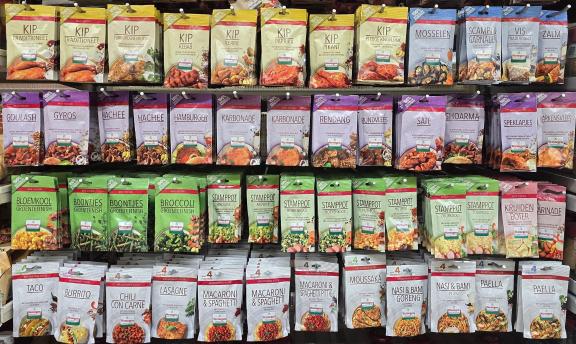
Source: Globally Cool, June 2026
Tips:
- Use CBI's curcuma factsheet before approaching Dutch buyers. It explains uses in curry powders, South Asian and Middle Eastern-style dishes, and natural food colouring.
- Check CBI's cinnamon factsheet to understand product types and competition. It helps compare your offer with suppliers from Indonesia, Vietnam and Sri Lanka.
- Consult CBI's nutmeg and cloves factsheets to understand buyer requirements. For nutmeg, focus on aflatoxin control. For cloves, look at the low-pesticide supply.
- Use CBI's cardamom factsheet to understand demand and competition. It explains the role of Guatemala and India, and opportunities for certified suppliers.
- Review CBI's cumin seeds factsheet to understand demand and market entry. It links demand to Asian, North African and Middle Eastern cuisines.
4. Which trends offer opportunities or pose threats on the Dutch spices and herbs market?
Dutch consumers often choose food products based on price, convenience and sustainability. Spices and herbs benefit from interest in international cooking, healthier food, clean-label products and origin stories. At the same time, buyers are becoming stricter about food safety, traceability and responsible sourcing. Exporters that combine good prices with safe products, reliable supply and a clear sustainability story are in the best position.
Food safety and reliable supply are key to buyer trust
Dutch and European buyers pay close attention to food safety, documents and stable supply. This is important because spices and herbs can be affected by pesticide residues, mycotoxins, plant toxins, polycyclic aromatic hydrocarbons (PAHs) from smoke, microbiological risks and foreign matter. These risks can be caused by farming practices, drying, storage, transport or processing.
The Rapid Alert System for Food and Feed (RASFF) data indicates that some products require additional attention. Between 2023 and 2025, cumin had the highest number of EU alerts among the products listed in this study, mainly linked to pesticides and plant toxins. Nutmeg showed a different risk pattern, with alerts mainly linked to mycotoxins. The Netherlands reported 30 cumin alerts and 19 nutmeg alerts in this period, which is notable given its role in these products.
At the same time, buyers need a reliable supply. In several spices, harvest problems, quality issues or low availability can quickly affect prices and sourcing decisions. This means that exporters are not only judged on price: Dutch buyers also want suppliers that can deliver safe, consistent and well-documented products.
For exporters, the message is clear. Invest in pesticide control, drying, storage, testing and traceability before shipment. Suppliers that can combine food safety with a stable supply are more likely to become long-term partners for Dutch buyers.
Tips:
- Monitor RASFF alerts for your product and origin, so you know which risks buyers may be watching closely.
- Use the European Spice Association's Quality Minima Document to check buyer expectations on quality, contamination and documentation before offering spices and herbs to Dutch importers.
Sustainability and traceability are becoming stronger buyer requirements
Sustainability is becoming part of regular sourcing in the Dutch spices and herbs sector. Buyers increasingly want to know where products come from, how farmers are treated and how environmental risks are managed. This is especially relevant in supply chains with many smallholder farmers or collectors.
The Sustainable Spices Initiative brings together companies from the spices, herbs, dehydrated vegetables, food industry and retail sectors. Its members aim to increase sustainable sourcing and strengthen due diligence processes. The initiative focuses on environmental issues such as carbon, agrochemical use, water and biodiversity, and on social issues like child labour prevention and living income.
European regulations will make this trend more important. The EU Corporate Sustainability Due Diligence Directive entered into force in July 2024 and aims to make large companies address human rights and environmental impacts in their global value chains. The EU Forced Labour Regulation will apply from 14 December 2027 and will ban products made with forced labour from the EU market.
Organic products are part of this wider sustainability trend, but they remain a niche in the Netherlands. Statistics Netherlands reported that organic food accounted for 3.5% of supermarket food spending in the first half of 2025, up from 3.2% in the first half of 2024.
Figure 6: Spices and herbs in an organic supermarket
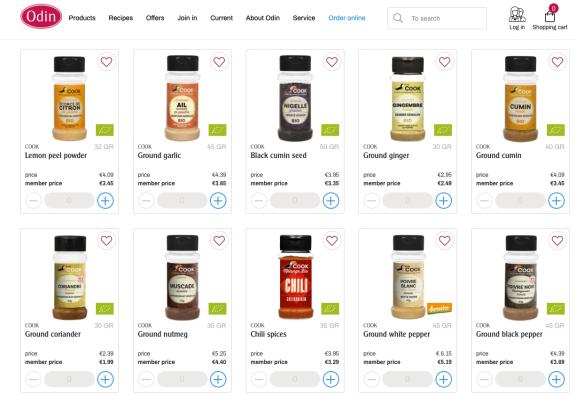
Source: Globally Cool, June 2026
Packaging also fits into the sustainability trend, especially for suppliers of consumer-packed spices or foodservice packs. The new EU Packaging and Packaging Waste Regulation aims to reduce packaging waste and make packaging more reusable or recyclable. For most exporters from low- and middle-income countries, however, the priority is not retail packaging: it is to supply safe, traceable and responsibly produced bulk products that Dutch buyers can process, blend, pack or re-export.
Tips:
- Start collecting basic farm-level data, because buyers may ask for more traceability even before they ask for certification.
- Identify the main risks in your supply chain, such as pesticide use, child labour, forced labour, farmer income, water, deforestation, biodiversity and weak traceability. This helps you answer buyer questions more professionally.
- Use the ITC Standards Map to compare sustainability standards before choosing one. The tool helps you compare standards and avoid investing in a scheme that your target buyer does not accept.
- Read KPMG's organic enablers report to understand the main barriers and growth drivers in the Dutch organic market.
- Consider organic production only if you can manage the full process, including separation, documentation, residue control and certification. Without this control, organic claims can lead to rejected shipments or loss of buyer trust.
Price pressure makes it important to prove value
Dutch consumers remain price-conscious. Deloitte's 2025 supermarket consumer research found that price, convenience and sustainability influence where consumers shop. Many consumers compare prices more carefully because food prices have risen.
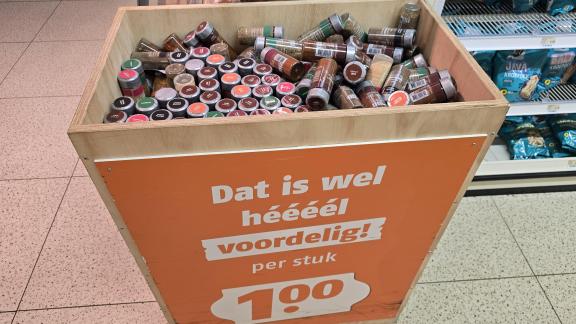
This also affects the retail market for standard spices and herbs, although the role of private label is more limited than in several other food categories. The main products, such as black pepper, paprika, cinnamon, curry powder and mixed herbs, are available under both brands and private labels. In practice, Dutch consumers may choose cheaper options, buy smaller packs or compare prices between retailers. This creates price pressure in the standard segment, especially for commonly used spices and herb mixes.
Figure 7: Private-label-packed spices and herbs promoted at €1 per item in a Dutch supermarket
Source: Globally Cool, June 2026
At the same time, branded products remain important in spices and herbs. Consumers often recognise brands like Euroma, Verstegen and Silvo/McCormick, and may trust them for taste, quality and recipe inspiration. This means that price matters, but it is not the only factor.
For exporters, the main lesson is that Dutch buyers need competitive prices, but also stable quality, reliable supply and clear product documentation. And price pressure is both an opportunity and a threat. Efficient suppliers can become attractive partners for importers, processors and packers that serve large retail or food-industry customers. Suppliers that offer basic products without a clear advantage will face strong competition from established origins.
Tips:
- Know whether your product competes as a standard commodity or as a differentiated ingredient. If you supply basic spices, focus on efficiency, consistent quality and reliable delivery. If you target a premium segment, explain clearly why your product deserves a higher price.
- Combine cost competitiveness with clear added value. This can be a specific origin, stronger flavour, better colour, higher oil content, organic certification, reliable residue control or a strong sustainability profile. Buyers will only pay more when the difference matters and is useful for their own market.
International flavours and clean labels support demand for spices and herbs
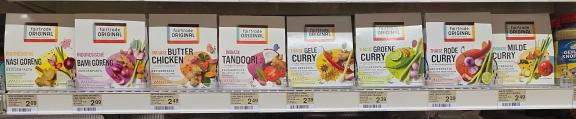
Dutch consumers are increasingly familiar with international cuisines. Supermarkets, restaurants, meal-kit companies and food manufacturers are using more flavours inspired by Asian, Middle Eastern, African and Latin American cuisines. This supports demand for spices like chilli, ginger, turmeric, cumin, coriander, cardamom, cinnamon, cloves, nutmeg, paprika and pepper.
Figure 8: Spice mixes for a range of international dishes
Source: Globally Cool, June 2026
Global flavour trends confirm this development. McCormick's Flavour Forecast, published since 2000, tracks flavour trends around the world. In 2025, McCormick highlighted aji amarillo, a South American chilli pepper with fruity and tropical notes, as its flavour of the year. In its 2026 forecast, the company continued to focus on global flavour inspiration, sauces and ways to make simple dishes more exciting.
Spices and herbs also benefit from the growing interest in natural ingredients and clean-label food. Clean label means that a food product has a short and simple ingredient list, with ingredients that consumers recognise and understand. Spices and herbs fit this trend because they can add flavour, colour and character without artificial flavours, colours or other additives.
They can also help food manufacturers improve the taste of products with less salt, sugar or saturated fat. This is relevant in the Netherlands, where the Dutch National Approach to Product Improvement encourages the food sector to reduce salt, sugar and saturated fat in processed foods.
For exporters, the biggest opportunity lies in products with a clear flavour identity and high quality. Single-origin pepper, distinctive chilli varieties, high-colour turmeric, strong ginger and authentic spice blends can help buyers develop new products. However, most mainstream buyers still prefer blending and packing in Europe because they want control over recipes, allergens, labelling and food safety.
Tips:
- Prepare a short flavour description that buyers can use in product development. Also, support buyers with background information on local cuisine and its traditional uses. Buyers can use this information in product development and marketing.
- Visit trade fairs to see how spices and herbs are used in food products. Useful events are Fi Europe, Anuga, SIAL Paris and PLMA's World of Private Label. For organic spices and herbs, BIOFACH is especially relevant.
- Offer samples in different forms if relevant, such as whole, crushed, ground or steam-treated. This helps buyers test which form works best in their recipes or production process.
- If you offer spice blends, provide full ingredient information, allergen information and stable recipes. This helps buyers assess food safety, labelling risks and recipe stability.
More suppliers from origin countries use the Netherlands as a gateway to Europe
Some exporters and trading companies from origin countries have an office, sales base or strong trading partner in the Netherlands. They use the Netherlands as a gateway to the wider European market. This fits the Dutch role as an import, storage, processing and re-export hub for spices and herbs. For European buyers, this can be attractive because they can work with companies close to the market while maintaining strong links with the origin.
Companies with clear origin links, like Trianon Spices with Tanzania, Unispices Wazaran with Indonesia and Kütas with Türkiye, illustrate how the supply chain does not always move from an exporter in the origin country to a fully Dutch importer. In some cases, origin-linked companies are already closer to the European market. For exporters from low- and middle-income countries, a Dutch office or strong Dutch partner can help them reach European customers faster.
Tip:
- Explore whether a Dutch sales office can help you reach more European buyers. A local presence can make communication, logistics and buyer follow-up easier, but only if you have a stable supply, good documentation and clear added value for European customers.
Globally Cool carried out this study on behalf of CBI.
Please review our market information disclaimer.
Search
Enter search terms to find market research
Do you have questions about this research?
Dutch food companies are looking for ingredients that help create tasty, recognisable and convenient products. Spices and herbs can support this, but suppliers need to offer stable quality, clean test results and full traceability.

Eva van der Haar, chair of the Royal Dutch Spice Association
For Bresc, innovation is about translating international flavours into practical solutions for chefs, foodservice and industry. Herbs, spices and fresh flavour ingredients play an increasingly important role in this, because they make products distinctive and recognisable.

Gert-Jan van der Wouden, NPD Manager at Bresc Produits Culinaires