
Entering the Dutch market for spices and herbs
The Netherlands is an important European trade hub for spices and herbs. Dutch companies import, process, blend, pack and re-export products to other European markets. This creates opportunities for suppliers from low- and middle-income countries. To enter the Dutch market, exporters need safe products, stable quality, reliable supply, strong documentation and clear traceability.
Contents of this page
- What requirements and certifications must spices and herbs meet to be allowed on the Dutch market?
- What are the requirements for niche markets?
- Through which channels can you get spices and herbs on the Dutch market?
- What competition do you face on the Dutch spices and herbs market?
- What are the prices of spices and herbs on the Dutch market?
1. What requirements and certifications must spices and herbs meet to be allowed on the Dutch market?
As a member state of the European Union (EU), the Netherlands follows EU legal standards and requirements. For a full overview, see CBI's Buyer requirements for spices and herbs or check the specific requirements for your product in Access2Markets. In some cases, Dutch buyer requirements go beyond the general European rules.
What are mandatory requirements?
The most important legal requirements for spices and herbs are linked to food safety. Products must be safe, traceable and correctly labelled. The main risks are pesticide residues, contaminants, microbiological contamination, plant toxins, mycotoxins, foreign bodies, allergens and food fraud. Phytosanitary rules may also apply, depending on the product form, origin and Combined Nomenclature (CN) code.
In the Netherlands, official controls are carried out by the NVWA and Dutch Customs. Checks can take place at the border or later in the supply chain. If a product or origin shows repeated problems, the EU can increase the frequency of checks. This can happen due to pesticide residues, aflatoxins, Salmonella or pyrrolizidine alkaloids.
Pesticide residues need to be controlled carefully
Pesticide residues are one of the main concerns for spices and herbs. The EU has set maximum residue levels (MRLs) for pesticides in food. Products above these limits cannot be sold in the EU. For dried spices and herbs, residue control needs extra attention because drying can concentrate residues. Control pesticide residues before harvest through correct pesticide use, spray records, pre-harvest intervals and integrated pest management.
Dutch buyers may ask for lower residue levels than the legal EU limit. This is common when they supply retailers, food manufacturers or strict markets in other European countries. Always agree on the required residue level before production or shipment. Ethylene oxide is not accepted in the European market and should not be used for fumigation. Steam sterilisation or other approved heat treatments are often preferred when microbiological risk needs to be reduced.
Contaminants and microbiological risks should be avoided
Contaminants and microbiological risks are also important. Buyers pay close attention to aflatoxins, ochratoxin A, lead, polycyclic aromatic hydrocarbons, pyrrolizidine alkaloids, Salmonella and foreign matter. These risks often start during cultivation, drying, storage or transport. Spices such as nutmeg need extra attention for mycotoxins, while cumin and dried herbs like oregano can be sensitive to plant toxins from weeds. Use clean drying methods, avoid smoke contamination, keep products dry and test high-risk lots before shipment.
Phytosanitary rules need to be met where needed
Phytosanitary rules protect plants in Europe from pests and diseases. They are most relevant for fresh herbs, seeds for sowing, plants, living plant parts and some unprocessed plant products. Many dried, crushed or ground spices are mainly checked under food safety rules. Still, exporters should always check the rules for their product code and origin. Some products require a phytosanitary certificate to enter the EU.
Buyer quality specifications
Legal safety is not enough. Dutch buyers also expect stable quality. Quality is usually defined in the Product Data Sheet or buyer specification. Common parameters are moisture, water activity, ash, acid-insoluble ash, essential oil content, particle size, colour, aroma, taste and purity. Many buyers use the European Spice Association Quality Minima Document as a reference.
Cleanliness and authenticity are very important. Spices and herbs should be free from visible mould, insects, insect fragments, stones, soil, glass, metal, foreign odours and other foreign matter. Products must not be mixed with cheaper plant material, fillers, undeclared additives or unauthorised colours. Ground products are more sensitive to fraud than whole products, so buyers may ask for extra checks for high-value or high-risk products.
Follow labelling and documentation rules
Bulk labels must include product name, net weight, lot or batch number, country of origin, best-before date, storage conditions, and name and address of the producer, packer, exporter or importer. For retail packs, EU food information rules apply. Spice mixes need extra attention because they may contain allergens like mustard, celery, sesame, gluten or nuts. You must also be able to trace each lot back to the supplier, farmer group, collector, field or processing batch.
Tips:
- Check pesticide limits in the EU MRL database before production and shipment. This helps you avoid rejected lots and gives buyers more confidence in your residue control.
- Test high-risk lots before shipment in a laboratory accredited under ISO/IEC 17025. This helps you prove that your product meets buyer and EU food safety requirements.
- Keep drying, storage and transport facilities dry and clean. This reduces the risk of mould, Salmonella, insects and foreign matter.
- Ask your buyer to approve the Product Data Sheet before shipment. This helps prevent disputes about quality, product form, labelling or documentation.
What additional requirements and certifications do buyers often have?
Dutch buyers usually ask for requirements beyond the legal minimum. They want proof that you can manage food safety, quality, traceability and sustainability. The exact requirements depend on your product, your role in the supply chain and the buyer's end market.
Obtain food safety certification
If you clean, grind, blend, steam-treat, pack, repack or store spices and herbs, Dutch buyers often expect a recognised food safety system. The most common standards are FSSC 22000, BRCGS Food Safety and IFS Food. These schemes are recognised by many food manufacturers, importers, spice processors and retail suppliers.
HACCP is the basic food safety approach. It is important, but may not be enough for larger buyers. Smaller traders may accept a HACCP-based system, but professional Dutch buyers often prefer certification recognised by the Global Food Safety Initiative.
Prepare for sustainability requirements
Sustainability is becoming a regular part of supplier approval. Dutch buyers want to know how suppliers manage labour risks, pesticide use, biodiversity, soil health, climate risks, farmer income and traceability.
The Sustainable Spices Initiative is important in the Dutch and European spice sector. SSI promotes sustainable sourcing in global spice supply chains. It does not use one single certification system, but works with existing sustainability standards and tools. If your buyer follows SSI, check whether your standard is accepted before you invest.
Rainforest Alliance/UEBT can be relevant for herbs, spices, herbal infusions and wild-collected ingredients. It is mainly useful when buyers want consumer-facing claims on biodiversity, ethical sourcing or traceability. It can be relevant for products like vanilla, pepper, cinnamon, cardamom, cloves, oregano, thyme, rosemary and wild-collected botanicals.
Communicate well with Dutch buyers
Good communication is also part of being a reliable supplier. Dutch buyers usually communicate in a direct and practical way. They expect fast replies, clear documents and early warnings when there is a problem. This is especially important when there are delays, failed tests or quality issues.
Tips:
- Ask your buyer which certification they accept before you invest. This prevents you from spending money on a scheme that does not help you enter the buyer's supply chain.
- Keep certificates, test reports, specifications and traceability records ready. Buyers can approve you faster when the basic documents are complete and up-to-date.
- Use the SSI Sustainable Sourcing Catalogue to check which sustainability standards are relevant. This helps you choose a standard that matches buyer expectations.
- Tell buyers early if a shipment, document or test result causes problems. Early communication helps protect trust and gives both sides time to find a solution.
- Read Octagon Professionals' blog on Dutch business culture and etiquette for more practical tips on doing business in the Netherlands.
2. What are the requirements for niche markets?
Niche markets can offer better value, but they also ask for extra proof. Important niches are organic, Fairtrade, biodynamic, biodiversity, wild collection, and single-origin and clean-label products. These claims do not replace basic food safety: buyers will still expect safe, consistent and traceable products.
Organic certification is the most common niche requirement
Organic spices and herbs are used in consumer packs, herbal teas, organic spice mixes, health foods and food manufacturing. To sell spices and herbs as organic in the Netherlands, products must comply with EU organic rules. Production and processing must be certified by an authorised control body.
Organic and conventional products must be separated during harvesting, drying, cleaning, storage, transport and packing. Each organic shipment entering the EU needs an electronic Certificate of Inspection in TRACES. Without this certificate, the product cannot be released as organic. Dutch organic importers must also be certified by Skal Biocontrole.
Use Fairtrade and provenance only with clear buyer demand
Fairtrade can be relevant when the supply chain is based on smallholder farmers or producer organisations. It is most common in ethical, organic or premium channels. For herbs and spices without a fixed Fairtrade Minimum Price or Premium, the Fairtrade Premium is set at 15% of the commercial price.
Provenance and single-origin claims can also create value. Premium buyers may ask for proof of origin, harvest year, production area, farmer group, variety and sensory profile. This is relevant for products like pepper, vanilla, cinnamon, saffron, turmeric, cloves and speciality dried herbs. Clean-label buyers may ask for products without undeclared additives, carriers, preservatives, colourants or anti-caking agents. This is especially relevant for spice mixes, ground spices and value-added products.
Tips:
- Only choose organic, Fairtrade or another niche scheme when there is clear buyer interest. Certification can be costly, so it should match a real market opportunity.
- Keep organic and conventional products fully separated. This is needed to protect organic certification and avoid losing the organic status of a shipment.
- Make sure your Dutch importer is Skal-certified before shipping organic products. Without a certified organic importer, the product cannot be sold as organic in the Netherlands.
- Do not make organic, Fairtrade, sustainable, single-origin or clean-label claims unless you can prove them. Unsupported claims can damage buyer trust and may lead to legal or commercial problems.
3. Through which channels can you get spices and herbs on the Dutch market?
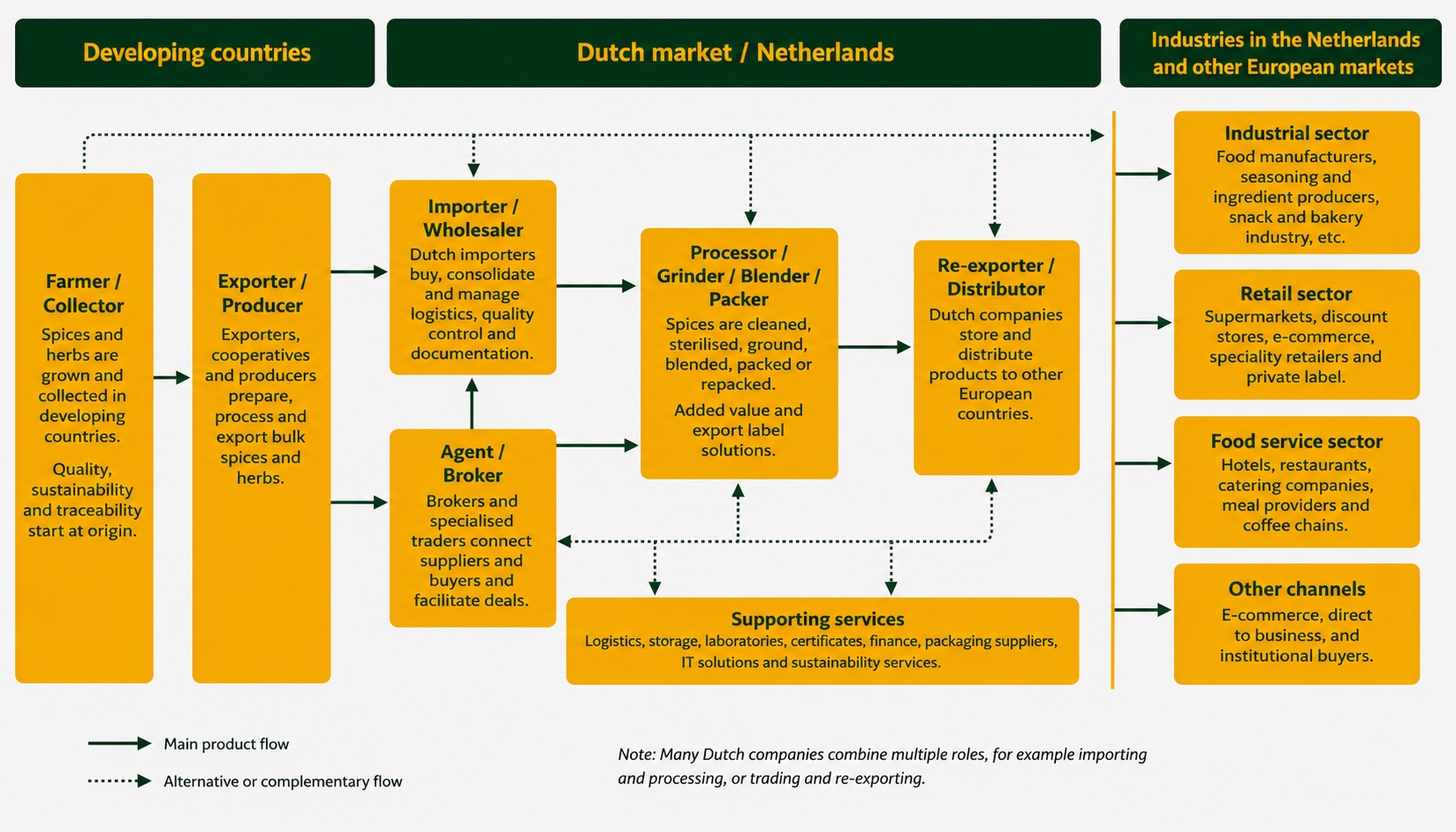
The Netherlands is an important trade and processing hub for spices and herbs. Dutch companies import spices and herbs from many origins, process or pack them when needed, and sell them to buyers in the Netherlands and other European countries. For exporters from low- and middle-income countries, the most realistic entry points are usually importers, brokers, processors and packers. Direct sales to supermarkets, restaurants or food manufacturers are possible, but less common for new suppliers.
Figure 1: The Dutch market channels and end markets for spices and herbs
Source: Globally Cool, 2026
How is the end market segmented?
The Dutch end market for spices and herbs can be divided into 3 main segments: industrial food manufacturing, retail and foodservice. These segments use spices and herbs in different ways. They also have different needs for quality, packaging, product form, documentation and delivery.
Industrial sector
Industrial food manufacturing is the largest and most relevant segment for many exporters. Large food manufacturers in the Netherlands include Unilever Food Solutions, Zwanenberg Food Group and Vion Food Group. These companies show how spices and herbs can be used in products like soups, sauces, meat products, snacks, ready meals and meat alternatives. They usually do not import directly from origin countries. They often buy through importers, spice processors, grinders, blenders or ingredient suppliers that can guarantee food safety, stable quality and correct documentation.
This segment is important because the Dutch food industry is large and export-oriented. Many food products made in the Netherlands are sold in other European countries. This means that spices and herbs used in Dutch factories may end up in products sold across Europe. For exporters, this creates opportunities when they can supply consistent bulk volumes that meet strict food safety and quality requirements.
Retail sector
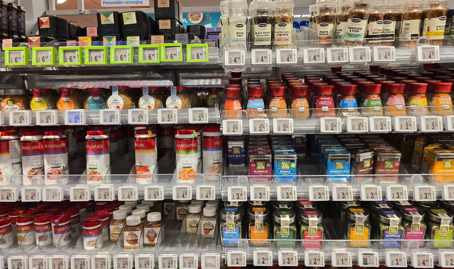
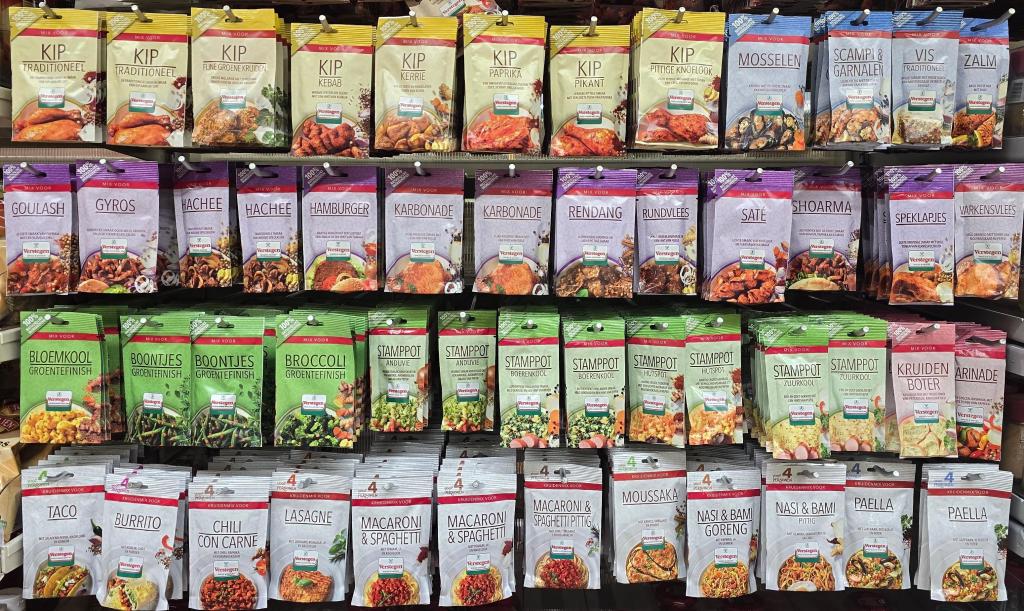
Retail is the visible consumer market for spices and herbs. It includes supermarkets, discount stores, online shops, organic shops and ethnic retail. In supermarkets, spices and herbs are mostly sold as branded or private-label consumer packs. The main food retailers in the Netherlands are Albert Heijn, Jumbo and PLUS. Leading retail brands are Silvo/McCormick, Euroma and Verstegen. Supermarkets usually do not buy directly from exporters in origin countries: they buy from brands, private-label packers or suppliers that can manage packaging, labelling, food safety and delivery.
Figure 2: Shelf in a food retail outlet
Source: Globally Cool, June 2026
The share of private label is relatively limited compared to other food categories. Over 80% of the stock-keeping units (SKUs) in the spice and herbs shelves are often branded products, and most supermarket outlets have a limited range of brand options.
Organic and specialised retail are smaller, but relevant for exporters with certified or premium products. Organic consumer packs are mainly sold through organic retail chains like Odin and Ekoplaza; both chains also offer online ordering. Ethnic retail can also be relevant for products used in South Asian, Middle-Eastern, African, Latin American and Southeast Asian cooking. These routes are usually supplied by specialised importers, wholesalers or packers, not directly by exporters.
Foodservice sector
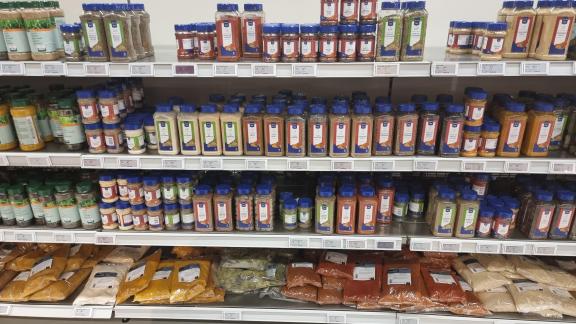
Foodservice is a smaller but useful segment. It includes restaurants and coffee chains, hotels, caterers, institutions, meal services and cash-and-carry outlets. Foodservice buyers need larger packs than consumers, but smaller and more flexible packs than food manufacturers. Common pack sizes can range from a few hundred grams to several kilograms. Foodservice spices and herbs are usually supplied by wholesalers, packers or professional channels of spice companies, and are often also part of a ready-made mix or product. Important foodservice wholesalers in the Netherlands are Sligro, Bidfood Netherlands and HANOS.
Figure 3: Typical shelf in a cash-and-carry foodservice outlet
Source: Globally Cool, May 2025
The foodservice segment is interesting because chefs and caterers use many international flavours. This can support demand for products like cumin, cardamom, cinnamon, cloves, nutmeg, chilli, turmeric, oregano, thyme and spice mixes. However, foodservice buyers also need reliable delivery, clear labelling and stable quality. For most exporters it is better to reach this segment through a Dutch importer, wholesaler or foodservice supplier.
In practice, channels overlap. For example, the organic retail chain Odin states that it delivers not only to consumers but also to companies, schools, childcare, institutions, foodservice and associations.
Tips:
- Decide which end market fits your product before approaching buyers. Industrial buyers, retail suppliers and foodservice suppliers each need different volumes, pack sizes, quality specifications and documents.
- Use food fairs and retail visits to understand how spices and herbs are used in the Netherlands. This helps you explain where your product fits, for example in spice mixes, ready meals, organic retail or ethnic food.
- Do not approach supermarkets first if you are a bulk exporter. Supermarkets usually buy from brands or packers, so importers, processors and private-label suppliers tend to be more realistic first contacts.
Through which channels does a product land on the end market?
Spices and herbs usually pass through several companies before reaching the final user. An exporter may sell to a Dutch importer, broker, processor, grinder, blender, packer or food-industry supplier. These companies may then sell the product to food manufacturers, retail brands, foodservice suppliers or buyers in other European countries.
Importers and wholesalers
Dutch importers and wholesalers are central in the Dutch spices and herbs trade. They buy products from origin countries, arrange logistics, check quality and food safety, and supply different customers in Europe. Examples are:
- Nedspice
- Spicemasters
- Spice Route Sourcing/PepperDesk
- Arasco Food
- De Monchy Natural Products
- Dutch Organics
- High Quality Organics (the European division of this US company)
- Hottentot Spices
- Korf Food Products
- Trianon Spices
- Unispices Wazaran.
Some of these companies are closely linked to sourcing and processing in origin countries, while others focus more on trade, warehousing and distribution in Europe.
Some Dutch importers work with a broad range of spices and herbs from several origins. This makes them useful for exporters from miscellaneous origins and of a wide range of products. Other companies are more specialised. High Quality Organics and Dutch Organics focus more on the organic segment. Trianon Spices has a clear link with Tanzania, while Unispices Wazaran is strongly linked to Indonesia. This shows that exporters should not only look for 'an importer', but for a buyer that fits their product, origin and certification profile.
Agents, brokers and trading houses
Agents, brokers and trading houses connect suppliers in origin countries with buyers in the Netherlands and other European markets, often without taking ownership of the product. They add value through market knowledge, sourcing, contracts, quality information, logistics and risk management. Catz International, Van der Does Spicebrokers, AVS Spice Brokers Europe and Keyzer & Company fit well in this group. These companies are useful for exporters that want access to several buyers but do not yet have direct relationships in Europe. Several of them have a product range broader than spices alone, also including seeds and dehydrated vegetables.
Processors, grinders, blenders and packers
Processors, grinders, blenders and packers add value after import. They clean, sterilise, grind, blend, pack and repack spices and herbs. Some sell to food manufacturers, while others supply retail, foodservice, private label or niche markets. This group is broad, so it is useful to divide it into several types of companies:
- Spice processors, grinders and blenders: Some companies have a clear focus on processing spices and herbs. They may grind, blend, clean, sterilise or pack products for industrial buyers, foodservice or retail. Companies like Mouw Maalderijen, Arva Specerijen, Epos, Natural Spices and Solina/Jadico are relevant for exporters that supply bulk spices and herbs for further processing in the Netherlands.
- Retail brands and private-label suppliers: Other companies operate closer to the consumer market. They develop spice mixes, seasoning concepts and consumer-packed products for supermarkets, discount stores, online retail or private label. Examples are Euroma, Verstegen and Silvo/McCormick as leading brands in the Dutch food retail channel. Smaller players are Van Beekum Specerijen and De Molukken/Nenco, which is especially relevant for ethnic retail channels.
- Specialised and niche companies: The Netherlands also has companies with a clear segment focus. Royal Polak Spices is linked to cinnamon and bakery applications. Dutch Spices focuses on allergen-controlled ingredients and spice mixes. Vehgro, Organic Flavour Company and Dutch Organics are more relevant for organic-certified spices and herbs. These companies can be interesting for exporters with certified, specialised or smaller-volume products.
- Outsourced dry-ingredient processors: Some companies do not have a clear spices and herbs profile, but are still relevant. They mix, dose, pack or process dry powders and ingredients for other food companies. Spices and herbs can be part of these mixes, for example in seasonings, soups, sauces, snacks, bakery products, meat products and ready meals. Huijbregts Groep is an example of an outsourced dry-ingredient processor. These companies are usually not the first buyers for single-origin spices, but they can be part of the wider industrial channel.
This structure also shows that the Dutch processing landscape is not one single group. Some companies focus on bulk processing, some on retail products, some on organic or specialist markets, and others on outsourced dry-ingredient services.
Re-exporters, distributors and overlapping roles
The Netherlands is an important re-export hub for spices and herbs. Dutch companies often import products in bulk, store them, and sell them to buyers in other European countries. Some products are also cleaned, ground, blended, packed or repacked before re-export.
Re-export is usually not done by a separate type of company. Many Dutch importers, processors and packers also distribute products to markets like Belgium, Germany, France and Spain. Some large exporters from origin countries also use the Netherlands as a sales base or gateway to Europe.
Roles in the Dutch market frequently overlap. One company can import, process, pack and re-export. Another company may buy through a broker and sell to a grinder, blender, food manufacturer or retail packer. So exporters should check what role a buyer plays in the chain and which customers it serves.
Tips:
- Ask potential buyers what role they have in the chain. This helps you understand whether they buy for trade, processing, retail packing, foodservice or re-export.
- Ask buyers what product form they need before sending an offer. Whole, crushed, ground, steam-treated, untreated, blended and packed products all have different quality and documentation needs.
- Match your offer to the buyer's customers. A retail packer may need different packaging and labelling information than an industrial blender or a broker.
What is the most interesting channel for you?
For most exporters from low- and middle-income countries, importers, brokers and processors are the most realistic entry points. They understand Dutch and European buyer needs, including quality, food safety, documentation and traceability. They can also help you reach different end markets, such as food manufacturers, retail packers, foodservice suppliers and buyers in other European countries.
The best channel depends on your offer. Bulk suppliers usually fit best with importers, brokers or processors. Organic, ethnic, speciality or smaller-volume products may need a more specialised buyer. Suppliers with strong technical documentation can also approach processors, grinders, blenders and packers.
Tips:
- Start with importers, brokers or processors if you are new to the Dutch market.
- Prepare strong documents, including specifications, test results, traceability details and food safety certificates.
- Use the Royal Dutch Spice Association member list to find companies that fit your product, volume and certification profile.
- Visit Food Ingredients Europe to meet Dutch spice companies and understand how your product can be used in ingredients, blends and food manufacturing.
- Read the CBI tips for finding buyers on the European spices and herbs market for more tips.
4. What competition do you face on the Dutch spices and herbs market?
Competition on the Dutch spices and herbs market is strong. The Netherlands buys from many origins, and Dutch buyers can switch suppliers when price, quality or food-safety risks change. For a steady position in the Dutch market, expect to work closely with importers, brokers, processors or packers.
Which countries are you competing with?
The main non-European suppliers to the Netherlands are India, China, Vietnam and Indonesia. India has a broad position and is especially strong in curcuma and cumin seeds. China has a mixed profile, with strong positions in dried garlic, dried onion, dried chillies and paprika, and other processed spice and vegetable products. Vietnam is important for pepper and cinnamon, while Indonesia is especially relevant for nutmeg, mace, cinnamon and cloves.
Other relevant competitors are Peru for curcuma; Egypt for dried onion, cumin and miscellaneous dried herbs; and Türkiye for oregano, laurel leaves and some other herbs; Madagascar and Comoros for cloves; and Guatemala for cardamom.
Table 1: The main non-European origin countries of selected spices and herbs, import volume in 2025, in tonnes, comparison between the Netherlands and the rest of the European Union
| 2025 imports from low- and middle-income countries | Curcuma | Cinnamon | Cumin seeds | Nutmeg | Cloves | Cardamom |
|---|---|---|---|---|---|---|
| Netherlands total (% of EU total) | 7,400 (37%) | 5,600 (32%) | 3,600 (28%) | 1,900 (42%) | 1,100 (33%) | 900 (43%) |
| Netherlands top suppliers |
|
|
|
|
|
|
| Rest of EU total | 12,700 | 12,000 | 9,100 | 2,600 | 2,200 | 1,200 |
| Rest of EU top suppliers |
|
|
|
|
|
|
Source: Eurostat, April 2026
Figure 4 shows that India, China and Vietnam are the largest non-European suppliers of spices and herbs to the Netherlands. Indonesia, Peru, Egypt and Türkiye are smaller overall, but important for specific products like cinnamon, nutmeg, curcuma, dried onion and garlic, cumin, oregano and other herbs.
Source: Eurostat, April 2026
India: Broad supplier with strong positions in curcuma and cumin
India is one of the most important suppliers of spices and herbs to the Netherlands. In 2025, it supplied large volumes of curcuma, cumin seeds, dried onion, dried chillies and paprika, spice mixtures and several smaller products. For the six focus products, India is especially important in curcuma and cumin. Dutch imports from India reached 3,700 tonnes of curcuma and 2,800 tonnes of cumin seeds in 2025.
India's role is broad, though the country is not the main supplier for every product. It has smaller positions in cinnamon, nutmeg, cloves and cardamom. This means that India is relevant for exporters with different product types, but the strongest opportunities are in products where India already has a clear Dutch market position. For cumin, food-safety control is especially important because RASFF alerts show a strong pesticide risk signal for cumin in Europe and the Netherlands.
China: Mixed supplier with strong positions in dried vegetables and capsicum products
China has a mixed profile in Dutch spices and herbs imports. It is not a leading supplier for the 6 main imports to the Netherlands, except for a smaller role in cinnamon. However, it is very important in other products, especially dried garlic, dried onion, dried chillies, paprika and dried sweet pepper. This makes China relevant in the wider Dutch spices and herbs market, even if it is less central for products like nutmeg, cloves or cardamom.
China's strength is mainly in larger-volume, processed or semi-processed products. Dutch imports of dried garlic from China reached 7,500 tonnes in 2025, while dried onion imports from China reached 1,100 tonnes. China also supplied 1,500 tonnes of dried chillies and paprika. So for exporters from other countries, China is an important competitor in terms of volume of products. Competing with China may require a clear difference in quality, origin story, certification, variety, service or reliability.
Vietnam: Important supplier of cinnamon and a growing origin of other spices
Vietnam is an important supplier to the Dutch spices and herbs market. Its strongest position is in cinnamon, where it supplied about 1,600 tonnes to the Netherlands in 2025. Vietnam is especially relevant for ground cinnamon and cassia-type products. It also supplied smaller volumes of curcuma, cumin, cloves, cardamom and nutmeg.
Vietnam's role is not as broad as India's or China's, but it has a clear position in selected products. In 2025, it was one of the two main cinnamon suppliers to the Netherlands, together with Indonesia. It also supplied around 250 tonnes of ground nutmeg, showing that it is growing in some smaller spice flows. For Dutch buyers, Vietnam can be relevant where suppliers can offer stable quality, processing capacity and reliable delivery.
Indonesia: Specialist supplier for nutmeg and cinnamon
Indonesia has a strong specialist role in the Dutch spices and herbs market, as the main supplier of nutmeg to the Netherlands. In 2025, Dutch nutmeg imports from Indonesia reached about 1,500 tonnes, equal to around 80% of Dutch imports of nutmeg from low- and middle-income countries. Indonesia is also very important in cinnamon, especially cassia cinnamon. In 2025, it supplied about 2,800 tonnes of cinnamon to the Netherlands.
Indonesia's supply can be volatile. Dutch cinnamon imports from Indonesia were weak in 2023 and 2024, but recovered strongly in 2025. This recovery was mainly visible in ground cinnamon. Indonesia is also a relevant supplier of cloves, although Madagascar and Comoros are also important in this product. For nutmeg, food-safety control is very important. Dutch RASFF notifications show that mycotoxins are the main risk for nutmeg from Indonesia, so drying, storage and testing are important for suppliers.
Tips:
- Use the Spices Board India website for information on Indian spice production, exports, quality control and export promotion.
- Check the Vietnam Pepper and Spice Association. This is the most relevant sector body for pepper and other spices, including export news and member companies.
- Use the China Chamber of Commerce of Import & Export of Foodstuffs, Native Produce and Animal By-products for more information about Chinese production of garlic, onion, dried vegetables and spices.
- Check the Indonesian Ministry of Agriculture and its estate-crop information. Indonesia is especially relevant for nutmeg, cloves and cinnamon.
Which companies are you competing with?
Dutch importers buy from exporters that can guarantee reliable supply, consistent quality and strong food-safety control. Successful competitors are not only large companies: they are companies that understand buyer needs, manage risks at origin and offer clear documentation. The examples below show different ways in which exporters from supplying countries compete on the Dutch market.
SBS Laxmi
SBS Laxmi is an Indian spice company that supplies whole and ground spices to international buyers. The company is relevant for cumin and curcuma, two products in which Indian suppliers have a strong position in Europe. Its competitive strength is based on product focus, access to Indian spice-growing areas, and the ability to supply processed spices to meet different buyer needs.
Vinasamex
Vinasamex is a Vietnamese spice company with a strong focus on cinnamon and star anise. The company works with farmer groups and certified production areas, presenting itself as a supplier of organic and sustainable spices. This makes it a relevant competitor for exporters targeting Dutch buyers who look for traceability and certification.
Its strength is not only the product itself, but also the story behind the product. Vinasamex links sourcing, farmer cooperation, processing and certification, which helps it reach buyers that want more control over origin, quality, and social or environmental standards.
Unispices Wazaran
Unispices Wazaran is an Indonesian spice company with a strong focus on nutmeg, mace and other Indonesian spices. It is relevant for the Dutch market because it combines Indonesian sourcing with a European presence. This helps the company stay close to buyers while keeping control over products at the origin.
The company's strength is its specialist focus. Nutmeg requires strong control of drying, storage and food safety. By focusing on a limited group of products, Unispices Wazaran can build knowledge, buyer trust and quality systems around these risks.
Tips:
- Study successful competitors from your country or region. Check how they present quality, certifications, processing capacity, traceability and export experience.
- Do not compete only on price. Dutch buyers also look for reliable supply, clean test results, good documentation and fast communication.
- Build closer links with farmers or collectors. Better control at origin helps prevent pesticide residues, mycotoxins and quality problems.
- Be clear about your product focus. Buyers trust suppliers more when they show strong knowledge of specific spices, grades, forms and risks.
- Invest step-by-step in value addition. Cleaning, grading, steam treatment, grinding, packing or certification can make your offer more attractive.
Which products are you competing with?
Most competition comes from the same spice or herb from another origin. Dutch buyers compare suppliers on price, food safety, quality, form, documentation and reliability. For example, Indian cumin competes with cumin from Syria, Türkiye and Egypt. Indonesian (cassia) cinnamon competes with cinnamon from Vietnam and China. Curcuma from India competes strongly with curcuma from Peru. Competition may also come from complete spice mixes packed at origin and exported to the Netherlands.
Figure 5: Za'atar spice mix from Syria in an ethnic retail outlet
Source: Globally Cool, June 2026
In some uses, dried herbs, garlic and onion also compete with fresh herbs and vegetables. Food manufacturers may also use spice mixes, extracts, pastes or flavour preparations in recipes, sauces, snacks and ready meals.
5. What are the prices of spices and herbs on the Dutch market?
Import prices differ strongly by product, origin, form and quality. Whole, ground, steam-treated, organic or certified products can all have different prices. So import prices should be seen as a rough market signal, not as final sales prices. They also do not show the full value added after import, such as cleaning, sterilising, grinding, blending, packing or retail branding.
Average import prices in the Netherlands are lower than in the rest of the EU
Table 2 compares Dutch import prices with the rest of the EU for the 6 focus products. The rest of the EU means EU imports minus Dutch imports. Prices are average import prices in €/kg in 2025. Volumes are imports from low- and middle-income countries.
Table 2: Average import prices of selected spices, Netherlands and rest of EU, 2025, €/kg
| Product | Main origin | NL price 2025 | Rest-of-EU price 2025 | What the data show |
|---|---|---|---|---|
| Curcuma | India | 2.57 | 2.52 | Dutch and rest-of-EU prices are close for Indian curcuma. |
| Curcuma | Peru | 1.69 | 2.44 | The Netherlands imports Peruvian curcuma at a lower average price. The inclusion of fresh curcuma in the statistics may explain this. |
| Cinnamon | Indonesia | 4.37 | 5.08 | Dutch prices are lower for Indonesian cinnamon. This fits the Dutch role in bulk Indonesian cassia. |
| Cinnamon | Vietnam | 2.95 | 3.19 | Dutch and rest-of-EU prices are closer for Vietnamese cinnamon. |
| Cumin seeds | India | 4.32 | 4.1 | Dutch and rest-of-EU prices are close for Indian cumin. |
| Nutmeg | Indonesia | 7.31 | 7.97 | Dutch prices are slightly lower for Indonesian nutmeg, reflecting the hub function. |
| Cloves | Madagascar | 7.2 | 7.55 | Dutch and rest-of-EU prices are close for Madagascan cloves. |
| Cardamom | Guatemala | 18.55 | 20.76 | Dutch prices are lower for Guatemalan cardamom. |
Source: Globally Cool, June 2026
The table shows that Dutch import prices are often lower than in the rest of the EU. This mainly reflects the Dutch role as a bulk import, processing and re-export hub. Dutch buyers often import larger lots for further processing or distribution. As a result, exporters may need to offer larger and more stable volumes than when supplying smaller or more specialised buyers in other EU countries.
Price developments from 2021 to 2025 were volatile. This is normal in spices and herbs, because prices react quickly to harvest size, quality problems, shipping costs, food-safety risks and buyer demand. Cumin prices increased strongly in 2023 and 2024 before slowing down in 2025. Cinnamon prices were lower in 2025 than in the previous high-price years, helped by renewed supply from Indonesia. Cardamom prices stayed high, reflecting the smaller and more concentrated supply base.
For exporters, the Dutch market is competitive on price – but not only on price: Dutch buyers also compare suppliers on food safety, quality, traceability, documentation and reliability. A supplier with clean test results, stable quality and strong communication can be more attractive than a cheaper supplier with uncertain delivery or food-safety risks.
Tips:
- Compare your export price with Dutch and EU import prices, but always check whether the product form, origin and quality are comparable.
- Use free sources like Eurostat Comext and ITC Trade Map to follow import values, volumes and unit prices.
- Ask buyers what drives the price: origin, quality grade, pesticide risk, steam treatment, grinding, organic certification or packaging.
- Do not compete only on price: strong documentation, clean test results and reliable supply can help you defend a better price.
Globally Cool carried out this study on behalf of CBI.
Please review our market information disclaimer.
Search
Enter search terms to find market research
Do you have questions about this research?
Our own production in the Netherlands gives us flexibility. We can source raw materials from different origins, manage quality close to the market, and process them into the forms and specifications that food manufacturers and other buyers need.
Marjon Otten, Manager Operations at The Spicemasters Group