

The European market potential for dried oregano
Europe offers a steady market for oregano, with growth supported by the popularity of Italian food, the Mediterranean diet and the clean-label trend. The Netherlands is especially interesting because it is a major European hub for the trade in herbs and spices. Germany is a large market with strong demand for both conventional and organic herbs. The UK is another major consumer market, with significant imports.
Contents of this page
1. Product description: dried oregano
Oregano belongs to the Lamiaceae (mint) family. The main culinary oregano is origanum vulgare, also called wild marjoram. It is native to the Mediterranean area and western Asia, and has spread to other temperate regions. It is a woody-based perennial herb with upright stems and small, opposite, oval leaves.
Oregano leaves are usually dark green to grey-green, but colour can vary by origin and drying method. The herb has a warm, strong, aromatic smell. Its flavour is typically pungent and peppery, and can be slightly bitter. Quality and flavour can vary by species, cultivar, growing area and drying method. Soil, climate and altitude all affect oregano's aroma and essential oil content.
Oregano is very popular in Mediterranean cooking, especially in Italy and Greece. It is widely used in tomato dishes, such as pizza and pasta sauces. Dried oregano is also common in herb and spice blends (for example Italian-style blends), marinades, dressings and meat seasonings. In supermarkets, oregano is often sold as a single herb, but it is also used in many other products.
Beyond food, oregano is used in other industries too, such as cosmetics and household products, mainly for fragrance or as a botanical ingredient. Oregano essential oil is distilled from the plant material and is used in several applications.
This study focuses only on the exports of dried oregano to the European market. For fresh herbs, including oregano, see the CBI study Exporting fresh culinary herbs to Europe.
There is no Harmonised Standard (HS) code specific to dried oregano. HS code 0910 99 covers 'other spices'. It excludes major spices like vanilla, cinnamon, cloves, nutmeg, mace, cardamom, anise, star anise, fennel, coriander, cumin, caraway, ginger, saffron, turmeric and mixed spices. It also includes several dried herbs, like oregano, thyme, bay leaves and fenugreek.
In the European Union, oregano under this heading is mainly reported under 2 Combined Nomenclature (CN) lines: 0910 99 91 and 0910 99 99. Because there is no CN code only for dried oregano, it is hard to measure exact import volumes into Europe. This is why research on the dried oregano trade often relies on estimates and primary research. In the statistics below, we refer to this trade flow as 'oregano and other dried herbs'.
Table 1: CN codes for dried oregano in the European Union
| CN code | Product description |
|---|---|
| 09109991 | Spices, neither crushed nor ground (excl. pepper of the genus Piper, fruit of the genera Capsicum or Pimenta, vanilla, cinnamon, cinnamon tree flowers, cloves whole-fruit, clove stems, nutmeg, mace, cardamom, anise seeds, badian, fennel, coriander, cumin, caraway, juniper berries, ginger, saffron, turmeric 'curcuma', thyme, bay leaves, fenugreek seeds, and mixtures of various types of spices) |
| 09109999 | Spices, crushed or ground (excl. pepper of the genus Piper, fruit of the genera Capsicum or Pimenta, vanilla, cinnamon, cinnamon tree flowers, clove whole-fruit, clove stems, nutmeg, mace, cardamom, anise seeds, badian, fennel, coriander, cumin, caraway, juniper berries, ginger, saffron, turmeric 'curcuma', thyme, bay leaves, fenugreek seeds, and mixtures of various types of spices) |
Source: Eurostat, February 2026
Because these trade codes include several dried herbs and spices, the figures in this study should not be read as exact oregano volumes. They are the best available indicators of trade flows for oregano and related dried herbs. For this reason, the analysis combines official trade statistics with sector interviews and company-level insights.
Sector interviews confirm that Türkiye is by far the main supplier of dried oregano to Europe. Turkish oregano is the reference product for many European buyers thanks to its volume, flavour profile, and established supply chain. So changes in Turkish production, crop quality and export availability have a strong effect on the European market. A weak Turkish season can quickly lead to tighter supply, higher prices, and greater interest in alternative origins like Greece, Albania, Egypt and Peru.
Turkish industry sources indicate that the official TurkStat statistics on oregano (which were used for this study too) may underestimate or distort actual oregano flows because some oregano moves through free trade zones or is registered under broader product categories.
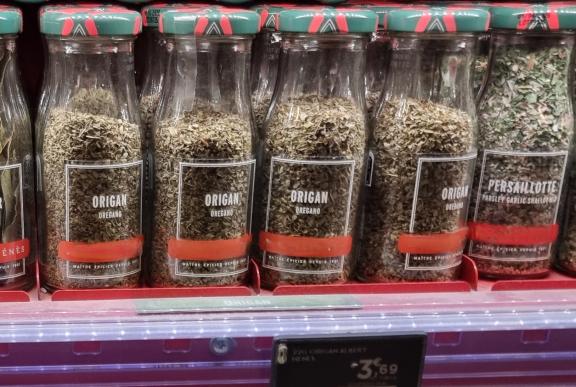
Figure 1: Dried oregano in a glass bottle in a French supermarket
Source: Globally Cool, February 2026
2. What makes Europe an interesting market for dried oregano?
Europe is an attractive market for dried oregano thanks to a large and stable demand. Oregano is widely used in Mediterranean food, home cooking, food manufacturing and herb mixes. European production cannot meet all demand, so buyers also import oregano from outside Europe. Demand is also supported by the growing interest in natural ingredients, clean-label products and healthier food.
Oregano is a staple herb in Mediterranean cuisine, especially in Italy, Greece and Spain, and is used both at home and by the food industry. It is also common in blends like 'Mediterranean herbs' and, in some recipes, 'herbes de Provence'. This makes the European demand for oregano strong and reliable.
Several European countries produce oregano, including Greece, Spain, Italy, France and the Balkan countries. However, consumption is high and local supply cannot meet all needs. This is why Europe also imports oregano from outside the region.
Under the broad trade code for 'oregano and other dried herbs', imports from low- and middle-income countries have remained fairly stable overall in recent years. These figures do not represent oregano alone, but they give the best available statistical indication of the wider trade flow in which dried oregano is included.
Many European consumers are more health-conscious and prefer natural flavouring. Oregano is often linked to health benefits. Many also want to avoid artificial additives and preservatives (the clean-label trend), which supports demand for dried herbs. So besides strong traditional use, demand for oregano is growing for health reasons.
Source: Eurostat Comext, March 2026
Sector interviews confirm that pure oregano volumes are considerably lower than this broad statistical category suggests. Still, demand for oregano itself remains stable due to its use in retail, the food industry, foodservice and herb mixes.
Outlook for the European oregano market
European demand for dried oregano is expected to remain stable in the short term, but supply may still fluctuate. Sector interviews indicate that the 2025 Turkish oregano season was affected by dry weather, lower acreage, field yield losses and frost damage. This caused a tight supply and helped push up prices. For 2026, supply is expected to improve because rains have raised water tables and supported the crop. However, the same rains also increased weed growth, which may make PA (pyrrolizidine alkaloids) compliance more difficult.
In the long term, European demand for oregano is likely to grow slowly. Oregano is widely used in Mediterranean food, sauces, pizzas, herb mixes and convenience foods. The main risk for buyers is not weak demand, but the availability of oregano that meets European food safety and documentation requirements.
Tip:
- See our study What is the demand for spices and herbs on the European market? and find out why Europe is an attractive market for herbs.
3. Which European countries offer the most opportunities for dried oregano?
The most promising European markets for dried oregano include large consumer markets and major trade hubs. The Netherlands is the main hub, importing for re-export across Europe. Germany is a large end market with strong food processing and organic demand. The UK is a major consumer market with strong demand for Italian-style flavours.
Poland is growing fast and gaining importance as a processing hub for other EU markets. Belgium is smaller in volume but important for blending, packing and private-label supply. Hungary is smaller and volatile, but relevant due to its processing sector and regional trade role.
Source: TurkStat, March 2026
The 6 countries below were selected based on available trade data for imports from Türkiye, the leading global supplier of dried oregano. This is the most practical statistical indicator available for identifying relevant European markets for dried oregano. However, these figures should be interpreted as import or entry-market indicators, not always as final consumption data. Some countries, especially the Netherlands, act as trade hubs and re-export part of their imports to other European markets.
Sector interviews suggest that large consumption markets like France and Italy may be more important than direct Turkish export statistics alone indicate. Still, they are less visible in the selected dataset because part of their supply may enter through other European hubs.
Year-to-year changes in these markets often reflect the availability of EU-compliant Turkish oregano rather than changes in underlying demand. When PA-compliant oregano is scarce or expensive, buyers may reduce direct imports from Türkiye, source through another European hub or temporarily use other origins.
The Netherlands: A trade hub for spices and herbs in Europe
The Netherlands is an important European trade hub for spices and herbs. This makes it a major destination for oregano. The Netherlands was the largest importer for most of the last 5 years. Import estimates peaked at 1,090 tonnes in 2024 and fell to 781 tonnes in 2025. Volume changes relate to the availability of EU-compliant oregano in Türkiye. In 2022, for example, there was very little oregano free of PA, which affected imports. The drop in 2025 also relates to stricter EU controls on oregano from Türkiye due to previous non-compliance with PA residue limits.
The Netherlands plays a major role in European trade in herbs and spices and has consistently been one of the three largest importers in the region. Dutch importers re-export around 80% of their oregano and other dried herbs, especially to other European countries like Germany and Belgium. This means that Dutch import volumes should not be interpreted as Dutch consumption alone: part of the oregano entering the Netherlands is likely used by food manufacturers, blenders and packers in other European countries.
Most dried oregano on the Dutch market is sold in its conventional form. This includes retail and industrial sales of food preparations. Companies operating in the Dutch herbs and spices sector are represented by the Koninklijke Nederlandse Specerijenvereniging (KNSV), the national spice association. The organisation currently has over 40 members, all listed in its membership directory. Major Dutch importers that include oregano in their product range are Catz International, Euroma and Verstegen.
Organic oregano
As a trade hub with big players in the spices and herbs market, the Netherlands is attractive for organic oregano. In the Dutch market, organic oregano is available mainly through specialised retailers, including organic supermarket chain Ekoplaza and Dille & Kamille, a retailer focused on sustainable home and household products.
Market outlook
In the short term, the Netherlands will likely stay an important entry point for dried oregano into Europe. This is because, for many manufacturers, it is more practical to buy several herbs and spices in smaller volumes from a specialised importer rather than import each spice directly. Demand should remain stable, supported by everyday use in home cooking and in food manufacturing. At the same time, buyers will continue to focus on food safety and compliance. If products fail to comply, total imports might drop, but not because of weak demand.
In the long term, the Dutch oregano market is likely to grow slowly, mainly because herbs and spices align well with healthier, more natural eating habits. More ready meals, sauces and seasoning mixes can also support demand.
United Kingdom: Italian food, an all-time favourite
The UK is a major consumer market for herbs and spices, making it an important destination for dried oregano. Imports of oregano and other dried herbs into the UK were volatile over the last 5 years. Imports ranged from 593 tonnes in 2021 to 597 tonnes in 2025, so the overall level remained broadly stable. However, imports dropped to 382 tonnes in 2023 before recovering in the following years. These extreme changes are not due to issues in demand but to problems with the supply of oregano from Türkiye, which experienced quality issues in 2022 and 2023.
The UK is a big consumer and industrial market. Italian cuisine is the third most popular food choice, which has a direct impact on the use of oregano in the industry and households. All supermarkets carry conventional dried oregano, mostly under their private label and other popular brands like Schwartz (McCormick). This is because it is a widely used herb in British households. Similarly, you can find many products containing oregano, such as convenience foods, sauces and bread rolls.
Several companies import and distribute spices for the British internal market, like British Pepper & Spice and Bosse Interspice, which supplies seasoning mixes to the food industry. The UK is also home to major manufacturers of seasonings and foods containing spices and herbs, like AB World Foods, which produces and sells sauces and seasonings across Europe.
The Seasoning and Spice Association (SSA) represents British spice and herb companies. It currently has 22 members that import spices and herbs directly from their countries of origin and are active suppliers to end consumers and the food industry.
Organic oregano
Organic oregano is not widely present in British retail. It is mostly sold online or at specialised retailers like Planet Organic. Some companies specialising in organic ingredients, like Dani Organics and Steenbergs, carry oregano in their portfolios. Most British spice and herb companies focus on conventional products, yet the UK is still one of the main markets for organic food in Europe. So it offers relatively good opportunities for organic oregano compared to other markets.
Market outlook
In both the short and the long term, demand for dried oregano in the UK is likely to grow moderately. Growth is supported by high use of oregano in home cooking and in ready-made sauces, seasoning mixes and meal kits. British brands keep investing in sauces and seasonings that offer convenience and 'authentic' flavours, which help herbs like oregano.
Germany: Large consumer market interested in organic foods
With its 84 million inhabitants, Germany is Europe's largest market for spices and herbs. German imports of oregano and other dried herbs from Türkiye started at 460 tonnes in 2021 and ended at 428 tonnes in 2025 – an overall slight decline. Imports dipped to 383 tonnes in 2022, then peaked at 540 tonnes in 2024 before easing again in 2025. As in the Netherlands and the UK, these changes reflect the availability of suitable oregano from Türkiye.
Germany's large food industry makes it an important market for oregano. Many food manufacturers use oregano in a broad range of products, from frozen foods and sauces to processed meat products. Alongside these manufacturers, several spice and herb companies specialise in serving this segment with tailored blends and seasonings. Markland Ingredients, for example, supplies the food industry with ingredients, including spice and herb mixes.
Germany is also one of the largest consumer markets in Europe. This makes it an important market for both standalone herbs and herb blends. A leading player in the German market is Fuchs Gruppe, which supplies spices and herbs to the food industry and the foodservice sector. The company also owns some of Germany's best-known spice and herb brands, including Ostmann, Fuchs, Bart, Wagner and Ubena. The group likewise offers spices and herbs through private-label products.
Germany is one of Europe's leading markets for organic spices. Oregano is widely sold in both organic and conventional forms. This is largely because it is a popular herb among consumers and so also enjoys strong demand in the organic segment.
Organic oregano
Of all the high-potential markets for oregano, Germany offers the most opportunities for organic-certified products, as it is the largest European market for organic food. Organic spices and herbs are mainly sold through specialised organic retail chains like Alnatura as well as drugstore chains like Rossmann and Müller. At the same time, they are also widely available in mainstream supermarket chains, including REWE and EDEKA.
Market outlook
Germany's demand for dried oregano is likely to remain stable or grow slightly. Oregano is already widely used in home cooking and the food industry. In addition, Germany’s salt-reduction efforts in some product groups encourage manufacturers to use more herbs and spices as natural flavour alternatives. In the long term, the German seasoning and spices market is expected to keep growing, supported by interest in flavour, international cuisines and natural ingredients.
Poland: Fast-growing importer with a strong processing industry
Poland is a fast-growing market for herbs and spices in Central Europe. Polish imports of oregano and other dried herbs from Türkiye increased almost by 3 times, from 62 tonnes in 2021 to 183 tonnes in 2025. Imports peaked at 327 tonnes in 2024, then eased in 2025. Importers like Saporum source high-quality spices and herbs directly from the origin more and more often to serve the local market, including oregano from Türkiye.
Poland's expanding food industry is an important driver of oregano demand. Oregano is widely used in processed foods like sauces, ready meals, seasonings and meat products. Baster Herbs & Spices, for example, imports herbs – including oregano – and supplies ingredients to pharmaceutical and tea producers.
Poland is also becoming more and more important as a processing and service hub for herbs and spices, serving both the local market and other European buyers. GROTEX is one company that imports and exports spices and herbs and offers services such as mixing, grinding, and crushing for domestic wholesalers, packaging plants, and processors, including customers in other European countries.
Oregano is also a staple in Polish cuisine, frequently used in soups, sauces and hearty meat dishes. It is used both as a single herb and in mixes, which keeps retail demand stable. Prymat is a popular Polish consumer brand of spices and herbs, selling oregano. This company serves the food retail, foodservice, and food-processing industries.
Market outlook
In the short term, demand for dried oregano in Poland is likely to grow further, supported by the expanding food industry and rising retail sales of seasonings. Imports may still vary from year to year due to stock management and changes in the availability of oregano that meets EU buyer and legal requirements.
In the long term, the market is expected to keep growing. Poland plays an important role in the supply chain of many European companies. This, along with overall European trends leading to higher consumption of spices and herbs, should support stable opportunities for suppliers that can offer consistent quality, good traceability, and reliable food safety controls.
Belgium: Private label is leading in the retail sector
Belgium is a smaller importer of oregano and other dried herbs than the Netherlands or Germany. Belgian imports from Türkiye declined from 339 tonnes in 2021 to 174 tonnes in 2025. The drop was strongest up to 2023 (122 tonnes), with a slight recovery in 2024 and 2025. This suggests stable demand, but also more cautious buying and possible shifts in sourcing or stock management. Belgium's role is not only importing for local consumption – it is also a strong base for sourcing, processing and distributing herbs and spices to food manufacturers and foodservice companies across Europe.
Several Belgian companies cover different parts of this chain. Spice Services focuses on sourcing food-safe dried vegetables, herbs and spices from selected suppliers in origin countries and supplying industrial buyers. The Spice Factory (ISFI) primarily produces and packs herbs and spices for private-label and foodservice customers. STOP Spices specialises in value-added mixes, including spice blends, functional mixes, and marinades for processed food, foodservice and retail.
These companies not only supply Belgian clients, but they also serve buyers in other European countries through cross-border supply chains. This helps explain why Belgium remains an important hub for herbs and spices, even as direct import volumes fluctuate from year to year.
In Belgian supermarkets, dried oregano is sold under private-label brands as well as some well-known brands like the Dutch Euroma and the Swedish Santa Maria. Oregano is mostly available in conventional retail form. Organic oregano is available in specialised retail chains like Bio-Planet and Ekoplaza.
Market outlook
In the short term, Belgian demand for dried oregano is likely to remain stable. Belgium's food industry and foodservice sector will continue to use oregano in sauces, ready meals and seasoning mixes. Imports may still fluctuate each year.
In the long term, Belgian demand for dried oregano is likely to grow slowly, in line with wider European demand. Belgium should remain an important hub because many Belgian blenders, packers and ingredient suppliers are closely integrated into European supply chains. These buyer-supplier relationships are often long-term, which supports stable trade flows.
Hungary: Strong processing base but unstable import volumes
Hungary shows the most extreme year-to-year changes in imports of 'oregano and other dried herbs' from Türkiye. Imports were 486 tonnes in 2021 and 435 tonnes in 2022, but collapsed to 21 tonnes in 2023. Volumes stayed low in 2024 (39 tonnes) and recovered partly to 137 tonnes in 2025. This suggests that not only Hungarian consumption but also trade flows and sourcing decisions play a big role.
Hungary has several companies that import, process and sell spice and herb mixes for the food industry, foodservice and retail. When supply is tight and prices rise, buyers may reduce direct imports from Türkiye and instead buy through other EU hubs. When supply improves and prices become more competitive again, imports can increase quickly.
Several companies show how the market is organised. Prymat, from Poland, has a Hungarian subsidiary that imports and processes spices and herbs, including oregano, for the local market. It markets well-known local brands like Lacikonyha and Cavalcad. Hungary's strong paprika sector also shapes the wider spice market: Házi Arany is known for paprika products and sells other spices and herbs, including oregano, both as single ingredients and in mixes. A relevant player is Szilasfood, which imports and manufactures retail spices and herbs, selling its own Lucullus brand and producing private label products. Böllér focuses on the butcher's segment, supplying spice and herb mixes to the meat industry plus selling stand-alone spices for the foodservice segment. Oregano is not a core herb in traditional Hungarian dishes. It is more common in international cooking and in Italian-style meals, and it can also be used as an alternative to similar herbs such as marjoram.
Market outlook
In the short term, the Hungarian market for dried oregano is likely to remain unstable. This is because many buyers can switch sourcing routes quickly, for example by importing through another EU hub when prices, lead times or compliance risks change. If supply from Türkiye is tight or expensive, Hungarian companies may reduce direct imports and buy through EU traders instead. When supply improves, imports can recover fast.
In the long term, demand in Hungary is likely to grow slowly, in line with wider European demand for herbs and spices. However, import volumes may still look volatile, because part of the trade depends on logistics choices and re-export flows in Central Europe. Suppliers that offer stable quality, clear documentation and reliable delivery will have the best chances of building long-term relationships with Hungarian blenders, packers and food industry buyers.
4. Which trends offer opportunities or pose threats in the European dried oregano market?
Several trends influence European demand for dried oregano. Italian cuisine remains very popular, and oregano is widely used in pizzas, pasta sauces, spice mixes and convenience foods. Health and clean-label trends support greater use of herbs as natural flavourings, linked to the Mediterranean diet. At the same time, sustainability is becoming more important for buyers, so certified oregano can offer an advantage.
Italian food: All-time favourite
Italian food is among the most preferred cuisines in Europe. From spaghetti bolognese for the kids and supermarket frozen pizzas to fine dining in the city, Italian cuisine is present in all segments. Since oregano is used often in Italian cuisine, it is widely used across segments, including ready-to-eat Italian dishes like pizza, home cooking and Italian restaurants of different price levels.
Italian food is very present in convenience foods
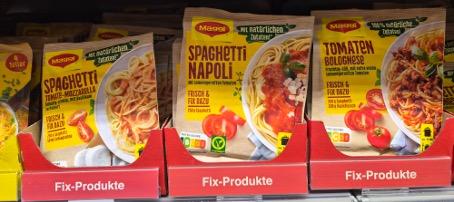
Consumers in Europe are very fond of convenience food products that spare them time and deliver flavour. In Europe, Italian food is probably the most represented cuisine in this segment, including frozen pizzas, ready-made tomato sauces and frozen vegetables, though this varies by country. These products often contain oregano.
Besides this, consumers are looking for 'clean' or natural ingredient lists more and more often in ready-to-eat products. This has boosted the use of spices in the food industry, including Italian-inspired products, and so also effects oregano use.
Figure 4: Instant pasta sauces containing oregano
Source: Globally Cool, February 2026
Home cooking
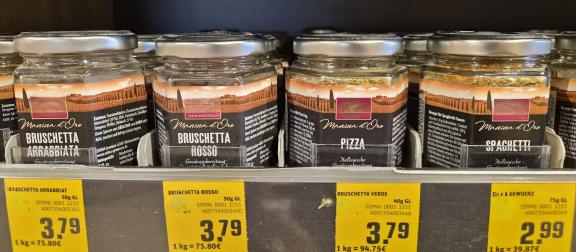
Spice mixes are growing in the at-home spice segment, where Italian cuisine is also widely represented. Brands selling spice mixes often have at least one 'Italian Herbs' mixture that contains oregano. Other common Italian-inspired spice mixes are pizza herbs, pasta, bolognese and pesto, all containing oregano. These mixtures are quite successful, which is why many retailers offer them under their private label, from discounters to higher-end retailers.
Figure 5: Spice brand offering 4 different Italian mixes with oregano
Source: Globally Cool, February 2026
Even though European consumers are interested in trying new authentic cuisines, their love for Italian cuisine seems stable. For this reason, as one of the main herbs of Italian cuisine, oregano is expected to have strong demand in Europe across the food industry, retail and foodservice sectors.
Health through food and the Mediterranean diet
Oregano is also benefiting from growing consumer interest in natural ingredients and Mediterranean-style diets. In addition to its flavour, oregano is often associated with natural health benefits due to compounds such as carvacrol and thymol. This does not mean that food products can make health claims freely, but it does strengthen oregano's image as a natural and functional culinary herb.
Still, the link between food and health has also motivated people to change their current diets. The Mediterranean diet is among the European eating patterns or diets more widely recognised for its health benefits. It gained popularity in the 1960s, when researchers found that people in the Mediterranean region, in countries like Italy and Greece, have better cardiovascular health than people in the USA and Northern Europe.
The Mediterranean diet is a way of eating based on the traditional cuisine of countries bordering the Mediterranean Sea. This diet focuses on whole, plant-based foods like fruits, vegetables, whole grains, legumes and nuts, with olive oil as the primary fat, regular fish consumption, and seasoning with herbs and spices. This reduces the risks of heart disease, stroke, type 2 diabetes and premature death.
Oregano is an important ingredient in the Mediterranean diet. It has anti-oxidant, anti-microbial, anti-inflammatory and analgesic properties which contribute to its health benefits. It is used to flavour many dishes, from tomato sauces and pizza to roasted potatoes and lamb dishes.
As more and more consumers adopt this eating pattern, they use oregano more often, either as a single spice or in spice mixtures to recreate Mediterranean dishes. At the same time, many healthy convenience foods are advertised as Mediterranean-inspired and are seasoned with Mediterranean herbs, like these frozen fish fillets or this high-protein pasta dish.
Certified oregano according to the SSI basket of standards
Sustainability is becoming more important in Europe. Public concern, new rules and company policies all push buyers to prove that oregano is produced responsibly. As a result, more importers prefer certified oregano to show compliance with social and environmental standards.
European herb and spice companies are working together to improve sustainability through the Sustainable Spice Initiative. This is a network of mainly European companies and organisations, together with their suppliers. Its members aim to make the mainstream spices sector more sustainable. SSI has set sourcing targets by volume: 25% sustainable sourcing by 2025 and 50% by 2030.
For many SSI members, certification is the main way to show progress. SSI uses a 'basket of standards' that it accepts as equivalent proof. These include SAI Platform FSA, GLOBALG.A.P with add-ons (GRASP or GGFSA), Rainforest Alliance, UEBT - Sourcing with Respect, Fair for Life, AtSource and McCormick Grown for Good. Oregano certified under one of these schemes can help European buyers meet their targets. SSI has around 64 member companies and non-profit organisations, including Nedspice, Associated British Foods, McCormick, Verstegen, Unispices, Euroma and Sabater.
For suppliers, this means certification can improve market access. A good example is the Turkish company Kütas, a major oregano producer, which uses McCormick Grown for Good to supply McCormick. Kütas also supports farmers with training and resources, so they can meet the standard and deliver consistent quality. For oregano, farm-level training is critically important because PA compliance starts with weed control and field management, not just testing at the export stage.
Tips:
- Read our study What trends offer opportunities or pose threats on the European spices and herbs market? to get to know all the main current trends in the spices and herbs sector.
- Read our news item Sustainability: Essential to success in the European spice sector to gain more insights into sustainability and free tools that can help you.
- Read our tips to go green in the spices and herbs sector and identify how to profit from the sustainability trend.
- Read our tips to become socially responsible in the spices and herbs sector and understand how to support your growers.
Globally Cool carried out this study on behalf of CBI.
Please review our market information disclaimer.
Search
Enter search terms to find market research