

Entering the European market for dried oregano
Europe buys dried oregano for the food industry, retail and foodservice sectors. Exporters must meet limits on contaminants and pesticide residues, with pyrrolizidine alkaloids (PAs) being a major concern. Türkiye is the main supplier, but has faced challenges meeting PA limits. This has created opportunities for cost-competitive suppliers that can meet European safety, quality and documentation standards.
However, competing with Türkiye remains difficult as Turkish supply is plentiful. Alternative suppliers must set themselves apart through compliance, traceability, consistent flavour and reliable documentation.
Contents of this page
- What requirements and certifications must dried oregano meet to be allowed on the European market?
- Through which channels can you get dried oregano on the European market?
- What is the most interesting channel for you?
- What competition do you face on the European dried oregano market?
- What are the prices of dried oregano in the European market?
1. What requirements and certifications must dried oregano meet to be allowed on the European market?
Dried oregano must meet the general requirements for spices and herbs, including mandatory requirements and additional buyer requirements. Buyer requirements range from quality standards to specific certifications, such as organic and halal.
This section focuses mainly on European Union (EU) rules, as they are the most detailed and widely used as a reference by European buyers. When targeting these markets, exporters should also check specific requirements for the UK, Switzerland, Norway and Iceland.
What are mandatory requirements?
Dried oregano that enters Europe must be safe. The EU, the UK and other European countries set limits for contaminants and pesticide residues. In practice, many exporters use EU rules as their primary reference, as they are detailed and widely followed by European buyers. Important risks for dried oregano include PAs, microbiological contamination, pesticide residues, polycyclic aromatic hydrocarbons (PAHs), mould toxins and mineral oils. If dried oregano exceeds the legal limits, it can be rejected, withdrawn from the market and reported in the Rapid Alert System for Food and Feed (RASFF).
Contaminant control
Contaminants are substances that are not added on purpose. They can enter oregano during growing, drying, storage, transport, packaging or from the environment. Because contaminants can affect food safety and quality, the EU has set maximum levels for certain contaminants.
Pyrrolizidine alkaloids
PAs are among the main contaminant risks for dried oregano in Europe. They are natural plant toxins that can enter oregano when PA-producing weeds grow in or near the field and are harvested together with the crop. This risk is higher when weed control is weak or when harvesting is not selective.
The EU has set a specific maximum level for PAs in oregano. For dried oregano, the limit is currently set at 1,000 µg/kg. Due to repeated non-compliance, oregano has received extra attention from buyers and authorities.
To reduce PA risk, focus on prevention and control at the farm level, not only at the export stage. Important measures include:
- Good weed management, including manual and mechanical control where possible.
- Clear harvesting instructions, including avoiding field edges with heavy weed pressure.
- Strong traceability per field and harvest lot.
- Regular laboratory testing, especially when sourcing from multiple growers or collecting from wild areas.
Industry interviews confirm that PA risk cannot be solved only at the final export stage. Large exporters test intensively, but the real control point is the field. Exporters should identify risky fields, train growers to recognise PA-producing weeds and separate lots with different risk profiles. If you source from many smallholders, you need a system to trace each lot back to the field or supplier group.
General limits for dried herbs for mycotoxins (such as ochratoxin A) and processing contaminants (polycyclic aromatic hydrocarbons) also apply to oregano.
Microbiological contaminants
Regulation (EC) No 2073/2005 sets microbiological criteria for food. It does not define specific limits for dried oregano, so the general limits apply. The main microbiological concern for oregano is Salmonella, which must be absent from herbs and spices.
Pesticide residues
The EU sets maximum residue levels (MRLs) for pesticides in food and feed of plant origin, as set out in Regulation (EC) No 396/2005. An MRL is the highest amount of pesticide residue allowed in a product. Products exceeding these limits are withdrawn from the European market.
When checking pesticide limits (MRLs) for dried oregano, start from the MRL for fresh oregano. Under EU Regulation 396/2005 (Article 20), you can adjust this limit to reflect the higher concentration observed during drying. To ensure everyone uses the same approach, the European Spice Association has published a standard for 'dehydration factors'. For oregano, the factor is 6. This means you multiply the fresh oregano MRL by 6 to estimate the maximum level for dried oregano.
Adulteration
In a 2021 analysis, oregano was identified as the most vulnerable herb, with 48% of samples at risk of adulteration, most often with olive leaves. This has alerted authorities and buyers to the potential for low-quality products entering the market. This type of contamination is reported in the RASFF and can trigger a product recall.
For this reason, companies selling oregano might have to provide more proof of compliance in the future, as buyers want to avoid any additional costs and delays at customs.
Official controls
Dried oregano entering from outside the EU is regularly checked. These checks can take place at the border or at a different point in the supply chain. If a batch is not compliant with EU food safety legislation, the non-compliance will be registered on the Rapid Alert System for Food and Feed (RASFF). In 2025, there were 14 notifications for oregano in the RASFF database, concerning, for example, high levels of PAs, often originating in Türkiye but also in Greece and France; Salmonella in oregano from Egypt; and chlorpyrifos in oregano from Albania.
When a country's oregano is frequently non-compliant, the EU might impose additional checks or block further shipments. Currently, controls for PAs on dried oregano from Türkiye have been raised to 30% of shipments since January 2025, following several non-compliances in past oregano shipments from this country.
Exporters should also use the correct customs code and product description. Sector interviews indicate that some exporters try to avoid PA checks by using alternative tariff codes or less strict entry points. This is risky. If authorities detect incorrect classification or non-compliance, shipments can be rejected and companies may face penalties. Correct classification, transparent documentation and pre-shipment testing are safer long-term strategies.
Tips:
- Use the correct customs code and product description for dried oregano. This reduces the risk of extra checks, delays, rejection or penalties at the border.
- Keep field-level traceability records, especially when sourcing from multiple small growers. This helps you identify risky lots and gives buyers more confidence in your control system.
- Test high-risk lots before shipment and share recent PA test results with buyers. This shows that you manage food safety risks before the product reaches Europe.
- Never blend non-compliant oregano into compliant lots. This can damage buyer trust and create serious legal and reputational risks.
Labelling
Dried oregano must be labelled in accordance with EU regulations. Bulk packs should show:
- Name and variety of the product;
- Net weight in the metric system;
- Shelf life of the product or best-before date;
- Recommended storage conditions;
- Lot identification number or identification mark;
- Country of origin;
- Name and address of the manufacturer, packer, distributor or importer, or identification mark;
- Batch details, which may also be included in the Product Data Sheet.
Oregano for retail sale must comply with Regulation (EU) No 1169/2011 on food information. This regulation sets the minimum information required, the minimum font size per item, and other requirements related to food labelling.
Figure 1: Consumer label of dried oregano
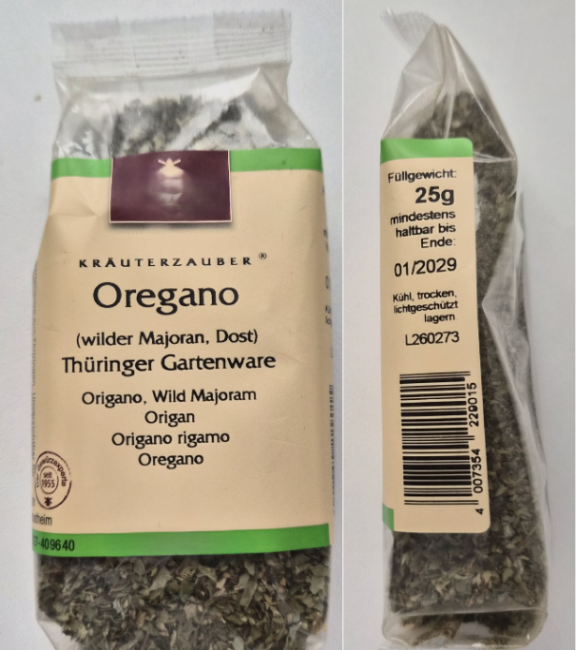
Source: Globally Cool, April 2026
Tips:
- Train farmers and field staff to recognise PA-producing weeds. This is one of the most effective ways to prevent PA contamination before harvest.
- Test oregano regularly for PAs, pesticide residues and microbiological risks. Share recent test results with buyers to show that your product is controlled before shipment.
- Keep oregano separated from other plant material during harvesting, drying, storage and transport. This reduces the risk of adulteration and protects your buyer relationship.
- Use GLOBALG.A.P. principles for good agricultural practices. This can help you improve pesticide use, traceability and farm-level control.
What additional requirements and certifications do buyers often have?
European buyers often set requirements for product quality, food safety certification, packaging, and social and environmental sustainability.
Quality requirements for oregano
The quality of dried oregano is very important. The ESA Quality Minima Document from the European Spice Association has specific parameters that define the quality expected by European buyers.
- Cleanliness or purity: This document states that herbs must be free from off-odour, off-flavour and foreign matter. However, requirements can vary per buyer and may include more specific indicators. Maximum ash content is 10%, acid-insoluble ash maximum is 2%.
- Moisture content: Maximum moisture is 12%.
- Volatile oils: Minimum volatile oil content of 1.5 ml/100g.
- Bulk density and jar filling: Buyers who pack oregano for retail may also look at how the product fills a jar. Clean, high-quality oregano with larger leaves is often lighter and bulkier than older or lower-purity material. This means that fewer grams may fit in the same jar. Some older buyer specifications may still be based on denser material. Discuss jar-filling requirements with buyers before shipment, so you do not need to break or crush good-quality leaves only to meet an outdated specification.
The ISO has also published a standard for dried oregano: ISO 7925:1999.
Food safety certification
European buyers want you to have a food safety system certification. They usually expect suppliers to have a certification recognised by the Global Food Safety Initiative (GFSI), such as Food Safety System Certification (FSSC 22000). Other recognised certifications are BRCGS and IFS. ISO 22000 is widely recognised but might not be accepted by all buyers, as the GFSI does not recognise it.
Large buyers looking to establish a long-term partnership will probably visit your site and audit your facilities in person.
Packaging requirements
Dried oregano is often exported in bulk, mostly between 10 and 15 kg. The dimensions of the chosen packaging must align with standard pallet sizes (800 mm x 1,200 mm and 1,000 mm x 1,200 mm).
Dried oregano for retail is available in various packaging, from glass containers to plastic pouches. For retail packers, cut size, leaf structure and bulk density can be as important as the external packaging. A product that is visually attractive and pure may still need adjustment if it does not fit the buyer's jar or sachet format.
Figure 2: Retail packaging types of dried oregano
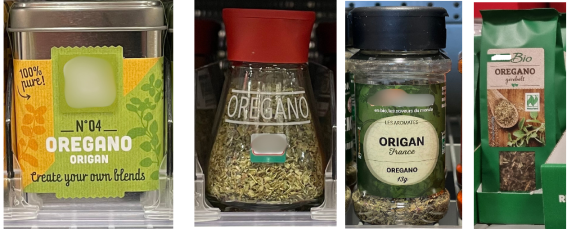
Source: Globally Cool, June 2025
Sustainability compliance
Social and environmental sustainability matter to European buyers, authorities and consumers. Many large European herb and spice companies have set targets for sustainably sourced products and for better transparency in their supply chains.
Since 2022, the European Spice Association (ESA) has developed a Code of Conduct for responsible sourcing. Many European spice and herb companies are ESA members, so you may be asked to align with this guidance.
Several major companies have also joined the Sustainable Spice Initiative (SSI). SSI uses a basket of standards that it accepts as proof of sustainable sourcing. These include:
- SAI Platform FSA
- GLOBALG.A.P. plus add-ons (GRASP or GGFSA)
- Rainforest Alliance
- UEBT
- Fair for Life
- AtSource
- McCormick Grown for Good
Buyers who follow SSI targets may ask you to be certified under one of these schemes.
Tips:
- Ask your buyer which sustainability standard from the SSI basket they accept. This helps you avoid investing in a certification that your target buyer does not need.
- Start with the standard that best fits your supply chain. For example, GLOBALG.A.P. may be useful for farm-level control, while Rainforest Alliance or Fair for Life may be more relevant for social and environmental claims.
- Follow the ESA Quality Minima Document when preparing your product specification. This helps you speak the same technical language as European buyers.
- See CBI’s study on organising your spices and herbs exports to Europe for more information about payment and delivery terms.
What are the requirements for niche markets?
Some market segments in Europe have additional requirements, often through certification schemes. The most important one for oregano is organic certification.
Organic certification
To sell dried oregano as organic in the EU, it must be grown and processed in accordance with EU organic regulations. Besides implementing the standards, the field and facilities must be audited annually by an accredited certification body.
Figure 3: Organic-certified oregano or mixes with oregano from a single organic shop in Germany
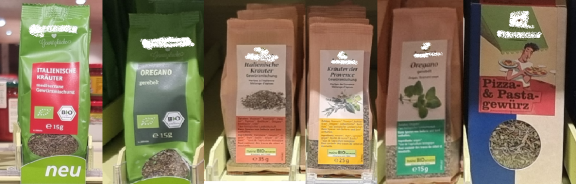
Source: Globally Cool, February 2026
Religious certification
Islamic (halal) and Jewish (kosher) dietary rules set specific restrictions. If you target these niche markets, consider getting halal or kosher certification.
Tips:
- Read CBI's study on the requirements that spices and herbs must comply with to be allowed on the European market to get a complete overview of all the requirements, including organic certification.
- Consult the ITC Standards Map to get an overview of the relevant certification schemes and their requirements.
2. Through which channels can you get dried oregano on the European market?
Dried oregano is sold through several channels to supply different end segments. The main segments are the food industry, food retail and foodservice, as well as non-food users that apply oregano in other products. In most cases, dried oregano enters the European market through specialised importers.
How is the end market segmented?
The end-market segments for dried oregano include the food industry, food retail, foodservice, and other industries like cosmetics and health products.
Figure 4: End-market segments for dried oregano in Europe
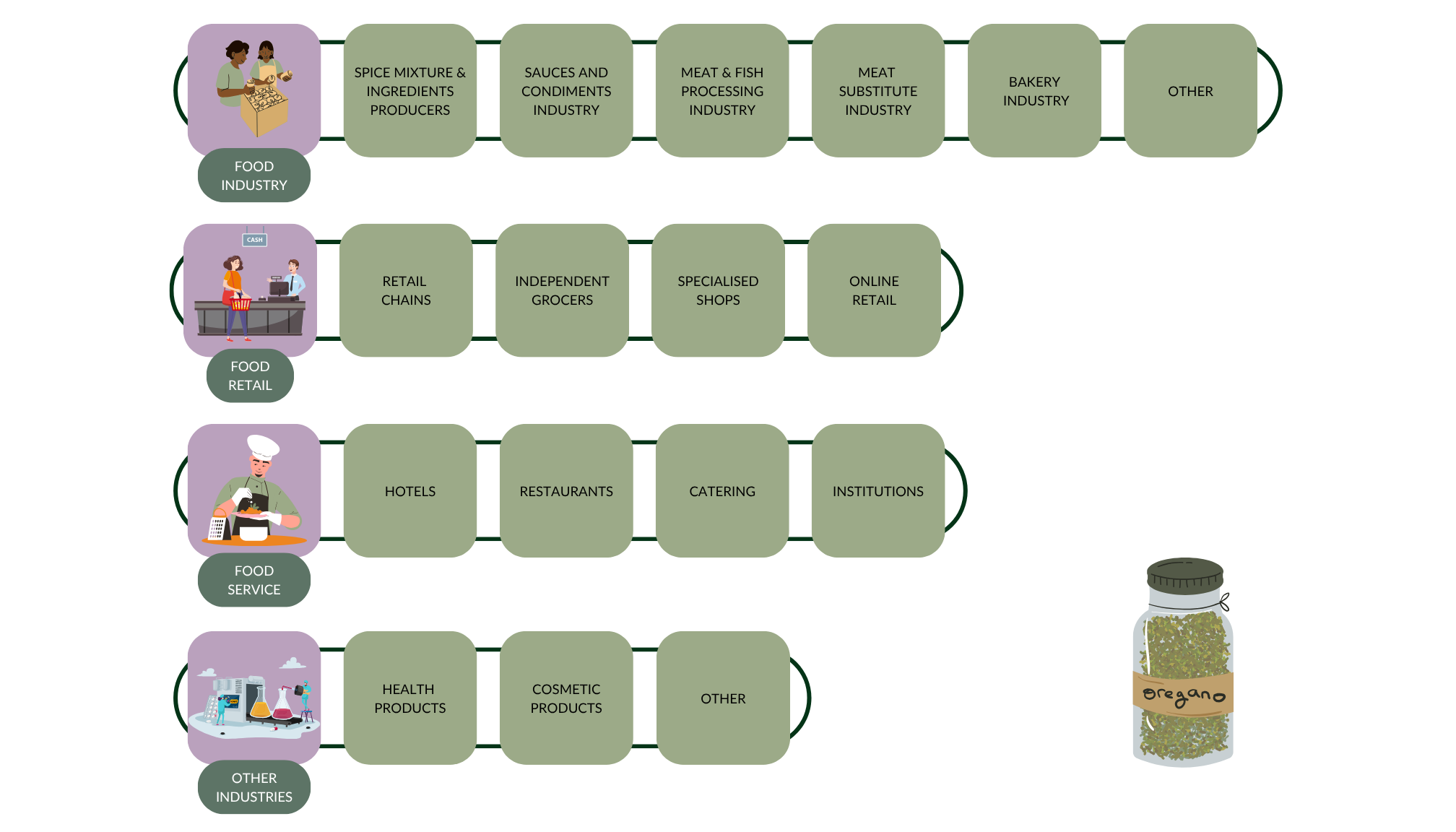
Source: Globally Cool, May 2026
Food industry
The food industry is the biggest end segment for dried oregano in Europe. It includes spice blenders and ingredient producers, manufacturers of ready meals, sauce and condiment producers, and meat processors. Dried oregano is used either as a standalone herb or as part of herb and spice mixes, such as Italian herbs, pizza herbs and Mediterranean herbs. Packaging varies by buyer, but common formats include bulk bags weighing 10–15 kg.
In processed foods, oregano is widely used in products such as pizzas, pasta dishes and other Italian-style ready meals. The German company Dr. Oetker produces almost 3 million frozen pizzas a year in its German facilities, some of which contain oregano.
Oregano is also common in convenience products such as instant sauce powders (Maggi's tomato-zucchini gratin mix), marinades and ready-made sauces (McCormick's Scampi Seafood Sauce, Oro di Parma's pizza sauce with oregano).
The meat industry is another important user. Meat processors often buy oregano as part of customised seasoning blends for sausages, minced meat products and marinated meats. These blends are usually supplied by specialised seasoning and ingredient companies that tailor recipes to the customer's product and target market. Companies like Friedrich Ingredients focus on selling spice mixes and other flavouring solutions to the meat industry. Glanbia, from Ireland, also sells flavouring solutions, including preparations containing herbs like oregano, for various food industry applications.
Food retail
Another important end segment is food retail. Retailers sell dried oregano in small jars or sachets, as well as in blends with other herbs and spices. Oregano is sold through supermarket chains, independent shops, specialised stores and online retailers.
Most retail sales still happen in physical shops. Large grocery chains across Europe stock oregano as a standard herb. Retailers usually sell both branded products (Germany's Ostmann, Poland's Prymat) and private-label oregano. Private label can be packed by the same large spice companies or by specialised repackers that focus on retailer programmes. Some of the biggest retail chains in Europe are REWE, EDEKA and Lidl (Germany), Tesco and Sainsbury's (UK), E.Leclerc, Carrefour (France) and Mercadona (Spain).
Specialised shops also sell dried oregano. These include dedicated spice shops, organic supermarkets and ethnic food stores. Some organic retail chains of interest are Alnatura and Denn's (Germany), Ekoplaza (Netherlands) and Planet Organic (UK). In ethnic retail, oregano is sometimes sold in packs that are filled and labelled in the country of origin.
Foodservice
The foodservice segment covers restaurants, hotels, caterers and other organisations that prepare meals for customers. These buyers often purchase through specialised wholesalers and cash-and-carry chains like Transgourmet, Selgros and Metro Cash & Carry. These distributors may buy oregano directly from exporters, but more often they source through large bulk importers.
Foodservice buyers usually need pack sizes between retail and industry. Because of this oregano is often sold in medium packs, typically 150 g to 1 kg. These suit professional kitchens and help balance ease of use with shelf life.
Other industries
Dried oregano is also used to produce essential oils and botanical extracts that serve a variety of industries.
Tips:
- Pick your target segment first, then book the right fair. Food-ingredient buyers shall reserve a stand or visitor pass for Fi Europe. Retail private-label buyers should register for PLMA, Amsterdam. Food-service distributors and chefs can best be targeted through Sirha in Lyon and Internorga in Hamburg.
- Explore non-food options. Download and study CBI’s guides: Exporting Natural Ingredients for Cosmetics to Europe and Exporting Natural Ingredients for Health Products to Europe. They map regulations, buyers and price points—use them to shape your pitch before contacting prospects.
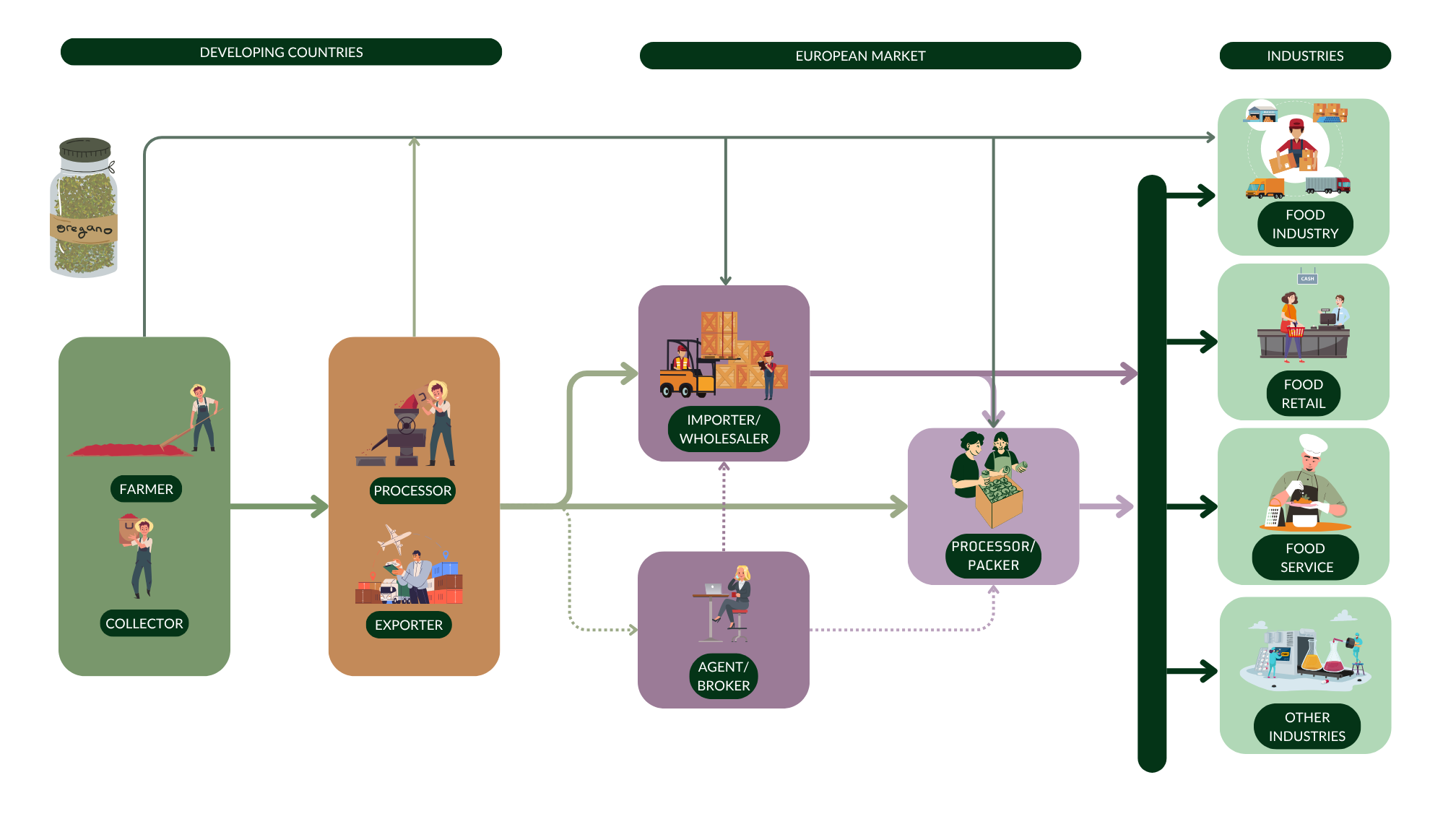
Through which channels does dried oregano land on the end market?
Dried oregano can reach the European market in several ways. Importers/wholesalers and processors/packers are the main channels for exporters in low- and middle-income countries.
Figure 5: Market channels for dried oregano to Europe
Source: Globally Cool, May 2026
Importers and wholesalers
Importers and wholesalers for dried oregano in Europe often focus on one of the following roles:
- Specialised herb and spice importers: These companies focus mainly on herbs and spices. They import in bulk and often add services (such as cleaning, sorting, cutting, grinding, blending and quality control). They supply other businesses (such as food manufacturers, foodservice distributors and packers). One such company is Husarich (Germany).
- Seasoning and blend suppliers for the food industry: These companies develop and supply customised seasoning mixes and functional blends, mainly for meat processors, sauce producers and ready-meal manufacturers. They buy oregano as an ingredient and combine it with other herbs, spices and additives. One example is Epos (Netherlands).
Broadline ingredient importers and traders: These companies trade a wide range of food ingredients. Herbs and spices are part of a larger portfolio, often alongside grains, pulses, seeds, dried vegetables and powders. They supply manufacturers, wholesalers and sometimes foodservice. One such company is Brusco Food Group (UK).
Specialised importers also play an important role in managing compliance risk. They often understand origin-specific problems such as PAs, adulteration and microbiological contamination, and can advise exporters on documentation, testing and specifications. For new exporters, these buyers may be more accessible than direct supply to retail packers or large food manufacturers.
Processors and packers
Processors and packers specialise in conditioning spices and herbs, making mixes, and packaging the mix or the standalone herb in smaller retail or foodservice packaging. They might sell under their own brand or do private label for retailers. They often import directly, especially for a widely used herb like oregano. Some examples are Verstegen (Netherlands) and Fuchs Gruppe (Germany).
Agents and brokers
Agents and brokers support the trade in herbs and spices by connecting suppliers with buyers for a commission. In dried oregano their role is relatively small, estimated at under 5% of total trade. Examples are Van der Does and AVS Spice.
Tip:
- Have all the necessary documentation in place when talking with a potential client. Bring your specification sheets and certificate of analysis.
3. What is the most interesting channel for you?
For most exporters of dried oregano from low- and middle-income countries, the most interesting channel is selling to specialised herb and spice importers in Europe. These buyers purchase in bulk, know the product well and supply many end segments, including the food industry, retail packers and foodservice. They also understand origin risks and can guide you on the specifications that European customers expect.
Another attractive channel is seasoning and blend suppliers that sell to the food industry. This channel can offer stable demand because these companies use oregano as a regular ingredient in 'Italian' mixes, meat seasonings and sauce products. However, they often have stricter requirements on cut size, colour, taste consistency and food safety documentation.
Tips:
- Target specialised importers first if you sell bulk oregano and want to enter Europe faster.
- Target blend suppliers if you can guarantee consistent quality and provide strong documentation.
- Search the member list of the European Spice Association to find buyers from different channels and segments.
4. What competition do you face on the European dried oregano market?
Türkiye is widely considered the leading global supplier of oregano and is a major source for the European market. Some oregano is produced in Europe, notably in Greece, Italy and France, but this production does not fully meet European demand. Additional non-European suppliers include Egypt, Morocco and Peru.
Which countries are you competing with?
Europe relies strongly on oregano from the Mediterranean region and nearby origins. Türkiye is by far the main supplier and price-setter. Greece and Albania are also important suppliers of Mediterranean-type oregano. Egypt is growing as an alternative source of large-scale herb production. Peru and Chile are smaller but relevant South American suppliers, especially for buyers looking to diversify. Morocco can also supply Mediterranean herbs, but appears to play a smaller role in oregano than Türkiye, Greece, Albania or Egypt.
Source: Globally Cool, based on sector interviews, 2026
The data for Figure 6 are industry estimates for finished oregano supply, not official trade statistics. Because official statistics do not isolate dried oregano, the country analysis also combines trade data, company information and sector interview estimates.
Türkiye: World's leading oregano supplier
Türkiye is the world's leading producer and exporter of oregano, and the leading supplier of oregano and other dried herbs to Europe. European imports from Türkiye were 2,930 tonnes in 2021 and 2,286 tonnes in 2022, dropping to 1,757 tonnes in 2023. Volumes recovered in 2024, reaching 2,805 tonnes, then dropped again in 2025 to 2,122 tonnes.
These figures should be interpreted as reported European imports under the selected statistical lines, not as the full picture of Turkish oregano exports. Industry sources show that actual Turkish oregano exports to Europe may be higher, as some trade (up to 30% of the volume) moves through free trade zones or is registered under broader product categories. The largest Turkish oregano exporters estimated Turkish oregano exports to Europe at roughly 3,000–4,000 tonnes in a normal year, with wider variation possible depending on crop size, prices and trade routes.
Türkiye combines suitable Mediterranean growing conditions with a mature sector for medicinal and aromatic plants. European buyers value Turkish oregano for its strong aroma, consistent quality and good colour, which suits spice blenders and food processors. The Turkish variety Origanum vulgare L. subsp. hirtum, also known as Istanbul oregano, is highly valued for its high carvacrol content, a compound known for its health benefits.
The Turkish oregano market experienced exceptional price volatility in the 2025-2026 season. Sector interviews indicate that the 2025 crop was affected by dry weather, lower field acreage, yield losses and frost damage. This reduced availability and pushed raw-material prices sharply upward. Stockholding and panic-buying added extra pressure to the market.
The 2026 outlook is more positive. Regular rains raised water tables and helped reduce the effects of drought. Industry sources estimate Turkish finished oregano supply at 11,000–12,500 tonnes in 2026, compared with 8,500–10,000 tonnes in 2025. However, higher supply does not automatically mean more EU-compliant supply. Stronger weed growth may increase the risk of PAs, while buyers also check for pesticide residues, nickel and mineral oil hydrocarbons such as MOSH/MOAH.
Because of this, Türkiye's main challenge in Europe is food safety compliance. Increased attention to PAs and other contaminants has led to stricter controls, which can increase costs and lead times. For this reason, Türkiye's competitiveness depends not only on output but also on strong residue control, traceability and clean post-harvest handling.
Greece and Albania: Mediterranean suppliers of high-quality oregano
Greece and Albania are important suppliers of Mediterranean-type oregano. Greece has a strong image for oregano because the herb is closely linked to Greek cuisine and Mediterranean food culture. Greek oregano is often associated with a strong aroma and high quality. Albania is also relevant because it supplies wild-collected and cultivated herbs to European buyers.
These origins are attractive for buyers who want a Mediterranean flavour profile and shorter regional supply chains. However, supply can vary due to weather, labour availability and harvest conditions. Exporters from low- and middle-income countries should see Greece and Albania as quality and origin competitors, not only as volume competitors.
Egypt: a growing alternative supplier of oregano
Egypt is becoming a more relevant alternative origin for oregano, though official trade data should be read carefully. European imports from Egypt under the broader category 'oregano and other dried herbs' were stable at around 600–700 tonnes per year in 2021–2024, before increasing to 1,040 tonnes in 2025. However, sector interviews suggest that oregano was likely only a small share of these volumes in most years. As a result, the figures show Egypt's broader role in herb exports, not exact oregano exports.
Egypt's role in oregano is expected to grow strongly. Industry sources estimate Egypt's finished oregano supply at around 2,500–3,000 tonnes in 2026. This suggests the country is becoming a more important alternative origin, especially for European buyers who want to diversify away from Türkiye.
An important driver is Egypt's investment in large-scale herb production. Desert farming is expanding, supported by projects that prepare new land, drill deep wells and install centre-pivot irrigation. This production model can also support compliance. New desert fields often have fewer weeds and less legacy contamination, which can make it easier to manage risks like PAs and pesticide residues.
For European buyers, Egypt can be attractive because it may offer larger volumes at competitive prices while also improving control over food safety risks. However, Egyptian oregano is still developing as an origin. Some buyers note that Egyptian oregano may differ from Turkish oregano in flavour profile and product identity. This is especially where cross-pollination with marjoram or seed-based propagation affects consistency. So exporters in Egypt should focus not only on volume and compliance but also on botanical identity, flavour consistency and buyer-specific specifications.
Peru and Chile: Smaller South American suppliers
Peru and Chile are smaller South American suppliers of oregano. Their role is still limited compared with Türkiye, Greece, Albania or Egypt, but they are relevant for buyers that want to diversify their sourcing. Peru has a specialised production base in the south, especially in Tacna, where oregano is grown in inter-Andean valleys.
For European buyers, South American oregano can offer supply diversification and organic potential. However, as the flavour profile may differ from Turkish or Greek oregano, buyers using oregano in industrial blends may test it carefully before changing origin.
Which companies are you competing with?
In Europe, your main competition comes from Turkish oregano exporters, as Türkiye is the dominant supplier. You also compete with exporters from Egypt, Morocco and Peru. These are gaining importance as alternative origins for European buyers.
Kütas Group: Leading oregano exporter from Türkiye
Kütas Group is one of the leading Turkish processors and exporters of oregano. The company sources oregano mainly from the Denizli region, the centre of Turkish oregano production, and works with around 8,000 growers. Some growers are part of the Kütas Herb Club, through which the company provides agronomic support and field-level assistance.
Kütas sees PA control as a core competitive advantage. The company conducts intensive in-house testing and states that it can conduct around 220 PA tests per day. According to Kütas, each container may be analysed over 80 times across the supply chain. This would be very expensive if outsourced to external laboratories, so in-house testing helps the company reduce costs while maintaining control.
Kütas also uses field-level traceability and separates product flows for different destination markets. Products for Europe are kept separate from products for markets where different treatments or standards apply. The company positions product integrity as a major strength and states that it does not blend non-compliant batches into compliant lots.
Talianis and Bidaj: Mediterranean oregano specialists from Greece and Albania
Talianis from Greece and Bidaj from Albania show how Mediterranean suppliers compete in oregano. Talianis processes and exports Greek oregano and other herbs, using Greece's strong origin image for aromatic Mediterranean herbs. Bidaj is an Albanian family company that supplies dried medicinal and aromatic plants, including oregano. Both companies compete by offering regional oregano with a clear Mediterranean identity. For exporters from other origins, they show the importance of product focus, origin story, consistent quality and reliable documentation.
Spice Kingdom: Scaling oregano with modern desert farming
Spice Kingdom is a family-run Egyptian grower, processor and exporter of dried herbs and spices. It supplies several dried herbs, including oregano.
A major strength is its modern desert farming model. Spice Kingdom leases land in new desert schemes and uses GPS-guided planting, mechanical weeding and mechanised harvesting. These practices can help reduce contamination risks because desert fields start with fewer weeds, and the product can be harvested without touching the soil. This supports control of issues like PAs and microbiological risks.
Spice Kingdom also competes through food safety and certification. The company lists certifications, including BRC, ISO 22000, kosher, halal, organic (EU/NOP) and social/supply chain schemes like Sedex/SMETA. It also reduces microbiological risks through steam and ozone-based sterilisation and uses sorting technology to remove foreign materials.
Aromático Inversiones S.A.C
Aromático del Perú (Aromático Inversiones S.A.C.) is a Peruvian exporter based in Tacna, Peru's main oregano region. The company was founded almost 20 years ago and focuses on export-quality dehydrated oregano. It also exports other products like olives and ginger, which helps it serve buyers with a broader portfolio.
Aromático is a visible player in Peru's oregano export sector. In a 2024 export update, it was listed among the leading exporters, with sales of about US$1.999 million. Europe is an important destination for Aromático, with Spain as a major market.
Tip:
- Focus on a niche like organic oregano or opt for sustainability certification according to the SSI basket to get a place in the market.
- Show proof of how you control residue levels and adulteration. This will help you stand out from the competition.
Which products are you competing with?
Dried oregano is difficult to replace fully because it has a clear role in Italian-style food, Mediterranean dishes, pizzas, pasta sauces and herb mixes. Still, buyers can switch between different origins, quality levels and product forms. In some recipes, they can also use similar herbs or herb blends.
Oregano from different origins
Your main product competition comes from oregano from other origins. Turkish oregano is the main reference product for many European buyers because it has a strong aroma, good colour and a well-established supply chain. Greek and Albanian oregano can compete on Mediterranean-origin image and flavour profiles. Egyptian and Peruvian oregano may compete on price, volume, organic potential or supply diversification.
This means that exporters should not only sell 'oregano': they should explain the flavour profile, volatile oil content, colour, cut size, purity, origin and compliance level of their oregano. Buyers who use oregano in industrial blends need stable quality, as small flavour differences can affect the final product.
Other Mediterranean dried herbs
Oregano also competes with similar dried herbs, especially in herb mixes and food manufacturing. Marjoram is the closest alternative because it has a mild, sweet and aromatic flavour. Thyme, basil and rosemary can also be used in Mediterranean-style dishes, but they do not have the same flavour as oregano.
These herbs are not direct substitutes for classic oregano in recipes. However, food manufacturers can adjust recipes when prices are high, supply is tight or quality is inconsistent. This makes price, availability and reliable quality important competitive factors.
Fresh oregano
Fresh oregano has a similar origin and flavour, but it tastes greener and usually less intense than dried oregano. Fresh herbs are often sold as potted products in Northern European markets. However, fresh oregano is less common than fresh basil or parsley.
Dried oregano remains the standard choice for most industrial and retail uses. It has a long shelf life and a stronger flavour, plus it is easy to use in sauces, pizzas, some long-cooking dishes and seasoning mixes.
Mexican oregano
Mexican oregano is a different plant from European oregano. It is usually Lippia graveolens and belongs to the verbena family, not the mint family. In Europe, it is a niche product for Mexican-style dishes and ethnic food channels, not a direct substitute for mainstream Italian or Mediterranean herb mixes.
Tip:
- Learn more about the fresh oregano market in the CBI study on exporting fresh herbs to Europe.
5. What are the prices of dried oregano in the European market?
While dried oregano from Türkiye was estimated at an average 2025 FOB (Free on Board) export price of around US$3.90/kg, prices can move sharply from season to season. Sector interviews show that the 2025-2026 Turkish crop saw exceptional price increases due to limited availability, stockpiling and panic buying. As a result, EU-compliant oregano with strong documentation can trade at much higher levels in tight supply years.
Dried oregano retail prices are much higher. They range from around €63/kg in Germany to around €190-€192/kg in the Netherlands and France, with the UK, Belgium and Bulgaria also showing high per-kg shelf prices. This difference between bulk export prices and retail shelf prices may appear substantial. But it reflects the full cost build-up after export – including:
- Freight and import handling;
- Storage;
- Quality control;
- Processing;
- Retail packaging;
- Distribution;
- Sales and marketing;
- Retailer margins;
- Taxes.
Food retail prices
Supermarkets usually sell dried oregano in small packs of around 15-40 g. Private-label oregano tends to be cheaper than branded products. In large European supermarkets, retail prices for dried oregano typically range from about €60/kg to €190/kg.
Prices at the lower end can reflect private-label products or larger packs sold in ethnic shops. Higher prices are usually linked to branded products, premium packaging and stronger quality positioning. Organic oregano often sells at higher prices, with typical retail prices of around €120/kg to €400/kg.
Table 1: Consumer prices of dried oregano in large European supermarkets, per kg
| Country | Lowest price per kg | Average price per kg |
|---|---|---|
| Netherlands | €86.00 | €189.62 |
| United Kingdom | £78.57 | £109.30 |
| Germany | €74.17 | €91.97 |
| Poland | €32.42 | €65.27 |
| Belgium | €29.93 | €112.56 |
| Hungary | €27.96 | €105.59 |
Source: Globally Cool, May 2026
Note: These are indicative online prices for selected dried oregano products in supermarkets. Pack sizes, brands, promotions and organic products can strongly affect the price per kg.
Price breakdown
Figure 7 provides an indicative price breakdown for dried oregano sold in European supermarkets, assuming a retail price of €110/kg. The calculation assumes that dried oregano is imported at €4,000/tonne. While the resulting margins may appear high, they reflect a range of costs incurred along the supply chain – including processing, retail packaging, inventory management, testing and food safety certification, taxes, sales and marketing, transport and distribution.
Source: Globally Cool, June 2026
Tip:
- Subscribe to an agri-food price reporting agency like Tridge to have access to recent prices.
Globally Cool carried out this study on behalf of CBI.
Please review our market information disclaimer.
Search
Enter search terms to find market research
Do you have questions about this research?
Strong demand for oregano is still there, but Europe increasingly requires proof of compliance. For exporters, the real competitive advantage is not only growing oregano but controlling it through field management, testing, traceability and product integrity.

Onur Boz, General Manager of Kütas Group