
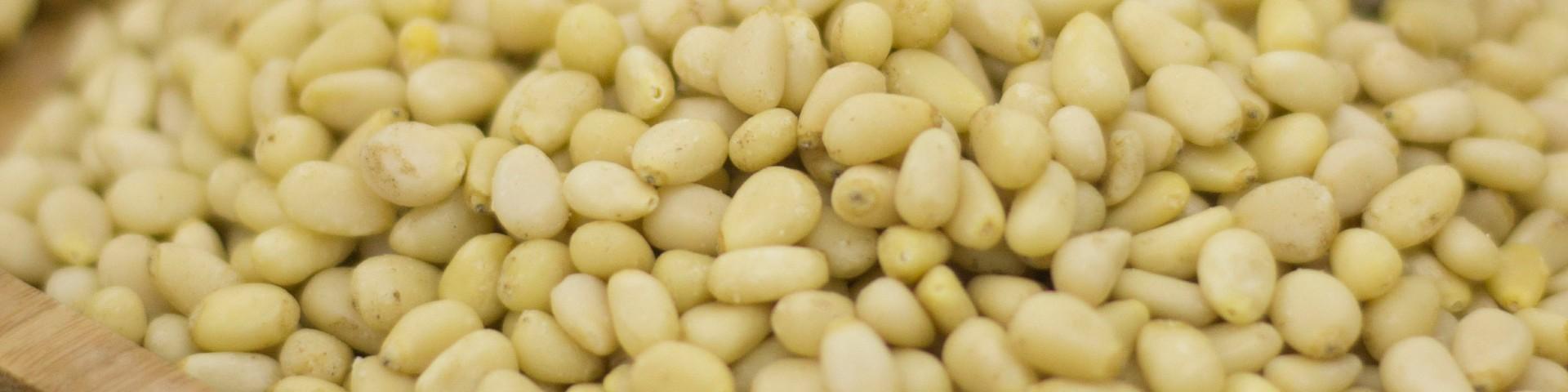
The European market potential for pine nuts
Europe is an attractive market for pine nuts because it depends on imports and uses pine nuts as a high-value cooking ingredient. Demand is supported by pesto, Mediterranean cooking, premium retail, foodservice and plant-based diets. The best opportunities can be found in Italy, Germany, Spain, the Netherlands, France and the United Kingdom. Future opportunities will depend on providing a reliable supply, clear origin, traceability, organic certification and credible sustainability stories.
Contents of this page
1. Product description: pine nuts
Pine nuts are edible kernels found inside the cones of pine trees (Pinus species). Around 30 species produce edible seeds, but only a few are important in international trade.
- Korean pine (Pinus koraiensis): Native to northeast Asia, including China, the Korean Peninsula, Japan and the Russian Far East. China supplies about 70% and Russia 30%.
- Siberian pine (Pinus sibirica): Native to Russia and parts of Central Asia. Russia supplies about 70%, Mongolia 25% and Kazakhstan 5%.
- Italian stone pine (Pinus pinea): Native to the Mediterranean region.
- Chilgoza pine (Pinus gerardiana): Native to the northwestern Himalayas, especially eastern Afghanistan, northern Pakistan and northwestern India. Afghanistan and Pakistan are the largest exporters.
Most pine nuts are harvested from forests rather than plantations. Pinecones are usually collected manually, by climbing trees or using long tools, although tree shakers are used in some areas. Processing normally includes the following steps:
- Drying the cones using the sun or heat so that they open and release the in-shell nuts;
- Breaking and cleaning the cones to separate the nuts;
- Shelling after soaking, grading by size and cracking with specialised machinery;
- Cleaning, sorting and packing the kernels.
Pine nuts are widely used in prepared foods. Pesto is made with pine nuts, basil, garlic, olive oil and cheese; it has contributed a lot to their popularity in Europe. They are also used in sweet and savoury snacks, bakery products, confectionery, sauces, salads and premium food preparations.
The statistical analysis mainly uses Combined Nomenclature code 08029200, covering fresh or dried shelled pine nuts. It therefore focuses on kernels ready for consumption. In-shell trade is only analysed here for pine nut-processing countries where it is most relevant.
This study provides information on the European pine nut market for producers in low- and middle-income countries. ‘Europe’ refers to the 27 European Union member states, the United Kingdom, Switzerland, Norway, Iceland and Liechtenstein. ‘Low- and middle-income countries’ refers to the countries on the official development assistance recipient list.
2. What makes Europe an interesting market for pine nuts?
Europe is an attractive pine nut market because it depends on imports and uses pine nuts as a high-value cooking ingredient. Consumption is much lower than for most snack nuts, but prices are among the highest in the international nut trade. European CIF import prices often exceed €20/kg, around 4 times those of almonds or cashews. According to the INC, Europe consumed 12,500–13,000 tonnes in 2024, making it the largest consuming region, slightly ahead of China and far ahead of the United States and Australia.
Source: Autentika Global and ITC Trade Map, 2026
European import statistics should be interpreted carefully. As pine nuts are mostly wild-collected, annual changes in trade value may reflect harvest conditions, supply and origin prices as much as European demand. Between 2022 and 2025, European imports of pine nut kernels grew by around 1% per year, reaching 15,800 tonnes, worth €304 million, in 2025. Low- and middle-income countries supplied about 67% of the total.
Demand is supported by culinary tradition and modern food trends. Pine nuts are part of the official Pesto Genovese recipe, their best-known European use. They are also used in salads, pasta, sauces, bakery products and desserts. Germany’s Chefkoch platform lists more than 5,000 pine nut recipes, showing their uses in everyday cooking.
Tip:
- Do not present pine nuts as an ordinary snack nut. Position them as a premium cooking ingredient, and support your offer with ideas for pesto, sauces, salads, bakery, confectionery and foodservice.
3. Which European countries offer the most opportunities for pine nuts?
Pine nut suppliers from low- and middle-income countries have the best opportunities in Europe’s largest consuming markets. The largest markets are Italy, Germany, Spain, the Netherlands, France and the UK. These countries can be divided into 3 groups:
- Italy and Spain import pine nuts to supplement domestic production and support their trade in pine nuts.
- Germany and the Netherlands have high consumption, but also re-export significant quantities to other European markets.
- France and the UK mainly import pine nuts for domestic consumption.
Smaller but fast-growing markets can help exporters diversify sales. Imports grew by 8% per year in Belgium and Greece, 10% in Denmark, 53% in Bulgaria and 43% in Cyprus. Although volumes are below those of the 6 leading markets, these countries offer additional opportunities.
Source: International Nut and Dried Fruit Council (INC), 2026
Italy: Home of pesto sauce
Italian imports of pine nut kernels increased at an elevated annual rate of 11% between 2021 and 2025. Italy increased its imports of pine nuts from 2,300 tonnes in 2021 to 3,100 tonnes in 2025, at a value of €72.8 million. In 2025, to support its processing industry, Italy also imported almost 600 tonnes of in-shell pine nuts, mostly from Spain. The leading supplier of pine nut kernels to Italy was China, with a 36% import share, followed by Germany (22%), Spain (17%), Türkiye (12%) and the Czech Republic (7%).
Import statistics do not fully show the origin of pine nuts sold in Italy. Germany mainly transits Chinese pine nuts, while the Czech Republic re-exports Russian-origin kernels. Spain supplies in-shell pine nuts and re-exports Chinese kernels. Based on these trade flows, more than 70% of pine nuts sold in Italy are estimated to be of Chinese origin; Türkiye accounts for around 11%, Italian production and kernels processed from Spanish in-shell nuts for 9%, Russia for 7% and other origins for 3%.
Italy is a strong market for pine nuts because the ingredient is linked to traditional food, especially pesto, but also to baking, confectionery, and premium home cooking. The Italian market is strictly segmented between the local industry and cheaper, imported pine nuts. The official Pesto Genovese recipe underlines that pine nut kernels must be from Pinus pinea and produced in the Mediterranean area.
Italy offers opportunities for exporters that can supply pine nuts to companies that produce for supermarket private labels, although it is not an easy volume market. Some premium producers such as Il Pesto di Pra and Pesto Fiore keep Italian pine nuts in their recipes. On the other hand, retailers such as Coop Italia and Esselunga sell pine nuts of different origins in organic, premium and local-origin formats.
However, price pressure is strong. Some mainstream pesto brands use cheaper substitutes, such as cashew nuts and almonds, so exporters should expect the best opportunities with buyers that value authenticity, quality, origin and traceability.
Figure 3: Private label Italian pine nuts by Coop
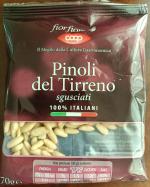
Source: Photo by efabrizio75 per Open Food Facts under the Creative Commons Attribution-Share Alike 3.0 Unported license
Fairtrade seems weak for pine nuts in Italy, based on the reviewed public examples. Mediterranean quality, year-of-harvest freshness, food safety and clear lot traceability make for a stronger commercial story. Pariani is a useful example of strong origin-based segmentation. The company offers different pine nut products, but clearly separates Italian pine nut paste, Pinus sibirica pine nuts and foreign pine nut paste. This suggests that sustainability alone will not replace origin segmentation in the Italian market.
In the short term, Italy should remain attractive for suppliers that can serve premium, organic and traceable demand. However, mainstream manufacturers will continue to compare pine nuts with cheaper alternatives because of high prices. In the longer term, Italy is expected to remain one of the most important European markets for pine nuts, as the ingredient is closely linked to Italian food culture. The market will stay divided between authentic premium demand and cost-driven substitution.
Tips:
- Be aware of market segmentation in Italy. Prepare one offer for premium buyers based on clear origin, year-of-harvest freshness and lot traceability, and another offer for industrial buyers based on stable quality, reliable volumes and competitive prices.
- Visit TUTTOFOOD to meet Italian traders and processors or Marca by BolognaFiere to connect with suppliers to retail chains.
Germany: A stable market with strong organic demand
The import of pine nuts into Germany fluctuates. It mostly depends on the production in China, although demand is constant. After a temporary decrease in 2024, imports increased to 4,900 tonnes in 2025 at a value of €87.7 million. Approximately 7% of pine nuts imported into Germany are certified organic. The leading supplier to Germany in 2025 was China, with an 88% import share, followed by Mongolia (4%), Türkiye (3%), the Russian Federation (3%) and Italy (2%).
The largest share of pine nuts in Germany is sold in the retail segment, followed by foodservice. The food industry is not a large user, as products using pine nuts as an ingredient (e.g. pesto) are more often imported than processed locally. Specialised importers supply all these segments. Most pine nut importers also trade a wide range of nuts, but they sometimes have narrow specialisations, such as Kedr Export and Kruse, Hess & Co.
A large share of pine nuts in German retail is sold under private labels such as Alesto by LIDL, REWE Beste Wahl by REWE, GUT&GÜNSTIG by EDEKA and FARMER NATURALS by ALDI. Pine nuts are usually not supplied to retailers by exporters directly, but through specialised traders and packers that take part in retailers’ annual procurement tenders. After signing contracts with retail chains, these companies commonly import, pack or repack pine nuts under the retailer’s private label. In addition to private labels, branded products are also present in German retail, including Seeberger, Farmer’s Snack, Maryland and Kluth.
Germany offers a specific opportunity for certified organic pine nut suppliers. It is the largest consumer of organic pine nuts in Europe, accounting for roughly 33% of the total European organic pine nut consumption. In 2024, Germany imported 310 tonnes of organic pine nuts. Organic pine nuts are sold through mainstream supermarkets as private-label products, such as EDEKA Bio, as well as through specialised organic retailers, such as BioMarkt and Alnatura, and in drugstore and health and beauty chains, like dm and Rossmann.
Figure 4: Certified organic pine nuts (Alnatura brand)
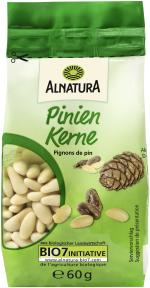
Source: Photo by org-alnatura per Open Food Facts under the Creative Commons Attribution-Share Alike 3.0 Unported license
Tips:
- Find German companies that trade in pine nuts through the Waren-Verein website.
- Consider organic certification if you want to target the German pine nut market. Many pine nuts are collected from wild forests, but this does not automatically make them organic in the eyes of European buyers. Organic certification can help prove the product’s natural origin and make it easier to supply organic retailers, brands and specialised importers.
- To increase your chances in the organic German market, opt for advanced certification schemes, such as Naturland and Demeter.
Spain: A pine nut processor
Spanish imports of pine nut kernels fluctuate, mainly because the market depends heavily on harvests in China, Spain’s leading supplier. In 2025, Spain imported over 1,150 tonnes of pine nut kernels, worth €21 million. China accounted for 75% of Spanish imports, followed by Portugal with 17%. Germany and Italy each accounted for 3%. Spain is also an important processing hub. It is the largest European importer, and the second-largest global importer of in-shell pine nuts. These nuts are shelled and further processed in Spain before being sold locally or re-exported.
Spain is an interesting market for pine nuts, as it is both a consumer market and a country with its own pine nut processing tradition. Specialist companies, such as Piñonsol, Biopiñón, and Fruits Secs Cortal, show that Spain combines a long tradition in pine nut production with specialised processing. A variety of Spanish traditional dishes use pine nuts as an ingredient, including Panellets de pinyons (a Catalan marzipan sweet), Coca de Sant Joan (a festive sweet bread) and Espinacs a la catalana (a Catalan-style spinach recipe with pine nuts).
Spain promotes pine nuts as a traditional local ingredient, but domestic production is not high enough to meet demand. Consumption therefore depends heavily on imports. Large companies like Importaco and Borges BAIN promote Spanish origins in their offer, but many pine nuts, especially private-label products, are imported and repacked in Spain. Retailers such as Carrefour and Mercadona sell pine nuts in several segments, from lower-priced imported private labels to higher-priced Spanish-origin, branded and organic products.
Figure 5: Retail brand pine nuts (from the company Frutos Secos San Blas)
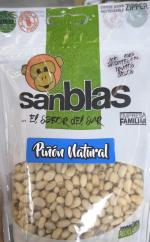
Source: Autentika Global
In the short term, Spain is likely to offer mixed opportunities for new suppliers. Retail assortments include imported and organic pine nuts, for which there is stable demand. However, Spain also has experienced specialist processors and strong local-origin positioning. So new suppliers will need a clear added-value offer, such as reliable off-season supply, organic certification or competitive industrial volumes.
In the longer term, Spain should remain relevant as both a consumer market and processing/redistribution base, especially for suppliers that can build partnerships with Spanish processors and packers.
Tips:
- Visit Alimentaria in Barcelona to meet Spanish importers, processors, packers and retailers. Also consider Salón Gourmets for premium buyers, Organic Food Iberia for organic products and PRIVEL for private-label contacts.
- Be very clear about species, origin, grading and flavour profile. Spanish buyers can compare imported pine nuts with domestic Mediterranean products.
The Netherlands: A distribution hub with strong connections with Chinese supply
Dutch imports of pine nuts have been relatively stable over the last 4 years, with year-to-year fluctuations mainly reflecting changes in annual harvests in China. In 2025, the Netherlands imported around 1,500 tonnes of pine nuts, with a total value of €26.3 million. China was by far the largest supplier, accounting for 71% of Dutch imports, followed by Germany with 26%, mainly as a transit country. Thanks to the strategic position of Rotterdam, Europe’s largest seaport, and the strong presence of specialised nut traders, the Netherlands also plays an important role as a redistribution hub. Over 40% of imported pine nuts are re-exported to other European markets.
The Netherlands is an important target market for suppliers from low- and middle-income countries. It is both a consumer market and a distribution platform for Europe. Despite high re-exports, the Netherlands is one of Europe’s largest pine-nut-consuming markets. The main risk for new and emerging suppliers is that the Dutch market is very price-driven. Premium pine nuts, such as Pinus pinea, are rarely sold to consumers directly. Suppliers should therefore compare their prices and market position carefully with Chinese pine nuts, which dominate the market.
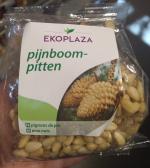
In Dutch retail, private labels make up most of the pine nut offer. Large retailers like Albert Heijn, Jumbo and Lidl mostly sell Chinese pine nuts. The premium segment is mainly limited to organic certified pine nuts. These are sold as organic private labels by mainstream retailers, but also through specialised shops such as Ekoplaza and Holland & Barrett. Specialised bulk traders, including Rhumveld and Nutland, supply both conventional and organic pine nuts, while some traders focus more on organic products, such as DO IT Organic.
Figure 6: Private label organic pine nuts in the Netherlands (by Ekoplaza)
Source: Photo by sebleouf with additional modifications by bertusdendroef per Open Food Facts.
In the short term, the Dutch market is attractive for exporters that can supply bulk volumes and provide complete technical documents, with a focus on traceability, sustainability and good labour practices. In the long term, the Netherlands will remain important because of Rotterdam’s strong logistical role and the well-developed network of Dutch nut traders. Imports of organic pine nuts are expected to grow.
Tips:
- Use the PLMA’s World of Private Label trade show in Amsterdam to find private label buyers, importers and traders. After registering, use the official Show Navigator to look through the exhibitors and products before the fair, and prepare for meetings in advance.
- Prepare complete technical documents before contacting Dutch buyers. Include origin information, traceability, process-flow notes, main food safety checks and proof of good labour practices. Dutch traders often expect clear and detailed product information.
The United Kingdom: An innovative market for retail, ingredients and foodservice
Over the last 4 years, UK imports of pine nuts increased at an average annual rate of 4%. In 2025, imports reached 1,200 tonnes, with a value of €19.8 million.
The import structure is very concentrated. China supplied almost all imports, with around 97% of total imports, followed by Italy, Afghanistan and the United States with small shares. As in other European markets, annual changes are mainly caused by changes in the Chinese supply. Demand is stable and growing, mostly due to the popularity of Mediterranean diets and the healthy eating trend.
The United Kingdom offers good opportunities for exporters that can work through strong local importers or distributors. There are many pine nut importers in the UK, but only a few are strong importers directly from origin, and many import from European traders. Those importers also often act as packaging companies and pack pine nuts for private labels of retailers, such as Tesco, Sainsbury’s, ASDA and Morrisons. Private labels dominate the UK’s retail market, and the presence of independent brands is decreasing.
The UK also seems to be using more pine nuts as an ingredient and in foodservice. Pine nuts are used in products like pies, spreads and dips, muffins, vegan snacks, pasta dishes and salads.
In the long term, premium retail, online grocery and foodservice should continue to offer opportunities, especially for organic and Mediterranean-style products. However, exporters should not treat the whole of the UK as a single regulatory market.
Organic imports into Great Britain from outside the EU, EEA and Switzerland need a British certificate of inspection and a UK-based importer certified by an approved control body. Northern Ireland follows separate rules and requires an EU certificate of inspection through TRACES NT.
Tips:
- Find UK buyers through the Nut and Dried Fruit Trade Association and at the International Food & Drink Event in London. These are useful places to identify nut importers, packers, private-label suppliers and foodservice buyers. For organic products, also check the Natural & Organic Food Show in London.
- Do not approach the UK only as a retail market. First target UK importers and packers that already supply private labels, food manufacturers and foodservice. They can help with buyer access, packing requirements, traceability and UK organic import rules.
France: A diversified market for cooking, organic and speciality products
Over the last 4 years, the French market for pine nuts has increased at an annual rate of 4%. Since 2022, imports have increased by 150 tonnes, reaching 1,156 tonnes in 2025, valued at €20.6 million. Similar to other European markets, China dominates supply. However, there are many other origins gaining market share in France. In 2025, France imported 75% of its pine nut kernels from China, followed by Germany (10%), the Czech Republic (6% as a transit country for imports from Russia), Spain (3%), the Netherlands (2%) and Russia (2%).
Germany and the Czech Republic are transit countries for pine nuts of Russian origin. This means that the real share of Russian pine nuts in France is higher than shown by direct imports, probably over 10%. France is also increasing imports from some emerging origins, such as Kazakhstan and Mexico, although volumes are still small.
Retail packs of pine nut kernels are sold in all main French retail chains under private labels, such as Tablier Blanc by E.Leclerc, Carrefour Original and Carrefour Bio by Carrefour, and Paquito by Intermarché. Several companies also supply pine nuts in bulk or in packed form and sell them under their own commercial brands. Examples include Vahiné, La Fourche and Transgourmet. In France, pine nuts are used more as a cooking ingredient than a snack product.
In France, pesto is sold under international brands, many of them Italian. Some of these products use cashew nuts as a cheaper alternative to pine nuts. It is also produced locally as an artisanal product. Several French companies make pesto with pine nuts and highlight the French origins of some of the ingredients. Examples include L’Épicurien, Jean Martin and Conserverie Au Bec Fin. As pine nuts are often imported, French origin is usually linked to local production or locally grown basil rather than to the pine nuts themselves.
Organic products are important in France. In its 2025 Barometer of organic products in France, Agence BIO reported that organic purchases might start to grow again after several difficult years. In the short term, this creates opportunities for exporters that can offer organic certification, strong food safety control and clear traceability. In the long term, France is likely to remain attractive for premium and speciality suppliers, but exporters should expect price checks from retailers and competition from mainstream imported pine nuts.
Tips:
- Prepare product documents in French or both French and English. Include clear information on origin, traceability, allergens, food safety tests, residues, packaging and lot numbers. This is especially important because France imports pine nuts from several origins, and buyers may ask questions about quality and origin.
- Use French trade fairs to find buyers. SIAL Paris is the best first choice for importers, distributors, foodservice buyers and food processors. Natexpo is more relevant for organic pine nuts. CFIA Rennes can also be useful for finding food processors that use pine nuts as an ingredient.
4. Which trends offer opportunities or pose threats in the European pine nuts market?
Mediterranean and plant-forward cooking keeps pine nuts relevant
Pine nuts are a common ingredient in Mediterranean cooking. The updated Mediterranean diet pyramid by the Italian Society of Human Nutrition places more importance on plant-based foods, such as fruit, vegetables, legumes, whole grains and olive oil. Pine nuts fit into this trend well because they are a natural, plant-based ingredient and can be used in vegan and modern healthy diets. The European Commission also describes the Mediterranean diet as more than food. It links it to sustainable living, rural development, local products, biodiversity and cultural heritage.
Pine nuts are a classic ingredient in pesto and are also used in pasta, salads, cakes and premium ready meals. European retailers promote pine nuts and inspire consumers with recipes for home cooking. For example, REWE in Germany uses pine nuts in pesto pasta recipes. Albert Heijn in the Netherlands offers ingredients and provides instructions for making pesto. Waitrose in the UK lists pasta dishes such as miso pesto pasta with spinach and pine nuts. Carrefour in France sells pine nuts as a product ideal for pesto, while El Corte Inglés in Spain includes pine nuts in pasta with pesto.
Italian retail pages also keep pine nuts closely linked to pesto, for example through Il Pesto di Pra’ at Esselunga and pesto products listed by Coop Italy.
The trend is also supported by changes in eating habits. EIT Food reported that over half of all Europeans want to eat more healthily. At the same time, many consumers are careful with highly processed foods. In another study, EIT Food found that 54% of European consumers avoided plant-based substitutes because they wanted to avoid ultra-processed foods. This is important for pine nuts as they are a simple ingredient used in cooking, not a processed meat or dairy substitute. ProVeg also reported that 51% of European meat eaters reduced their meat intake in 2023, with Germany, France and Italy leading the way.
Exporters should show how their pine nuts could be used in the kitchen. They should offer stable size, clean colour and fresh taste for pesto makers, deli producers and premium retail packers. They can also share recipe ideas and serving suggestions with buyers. If the origin has a strong story, exporters should use it. Where possible, pine nuts should be linked to Mediterranean, premium or plant-forward cooking, not only to healthy snacking. Current retail examples still show cooking as the main route to the market.
In the short term, pine nuts should keep their place in premium home cooking and foodservice. Demand is likely to stay strongest where Mediterranean cooking is already well-known, especially in Italy, Spain and France. It should also remain visible in countries with strong premium recipe cultures in retail media, such as Germany, the Netherlands and the UK. A much higher consumption increase is expected in Eastern Europe, where consumption is increasing fastest.
In the long term, pine nuts should continue to benefit from plant-forward cooking and Mediterranean food culture. However, this will probably stay a premium ingredient trend and not a mass-market one. The main threat is that pine nuts are expensive and can be replaced by cheaper nuts or seeds in some recipes. Exporters that connect the product to specific uses, good flavour and trusted origin are more likely to grow than exporters that only compete on price.
Tips:
- Link pine nuts to Mediterranean and plant-forward cooking. Present them as a natural premium ingredient for home cooking and foodservice, not only as a healthy snack. Use simple product stories based on taste, origin, traceability and reliable quality.
- Sell pine nuts by use, not only by grade. Show buyers where the product fits best: pesto, salad topping, pasta, deli products, bakery, premium ready meals and restaurant dishes. Retail and recipe examples across Europe still link pine nuts closely to cooking use.
High prices split the market between real pine nuts and cheaper substitutes
Europe’s pine nut market is splitting into 2 price segments. One is a premium segment in which buyers still value visible pine nuts, authentic recipes and origin. The other segment is price-driven and uses smaller amounts of pine nuts, or mixes them with cheaper nuts, such as cashews.
This is particularly evident with pesto. Mainstream pesto often reduces the pine nut content or combines pine nuts with cheaper nuts. In France, Panzani green pesto sold by Carrefour lists cashew flour and only 0.5% pine nuts. In Spain, Eroski pesto uses cashews and pine nuts, while De Cecco pesto sold by Eroski uses cashew flour and 3% pine nuts. In the UK, Tesco classic green pesto is made with cashew nuts and pine nuts. Sacla organic basil pesto sold by Waitrose also combines cashew nuts with pine kernels.
At the same time, premium products still keep the pine nut story prominent. Carrefour sells a more premium Pesto à la Genovese, which lists 5.1% pine nuts and uses basil from Provence. Spanish food media still presents pesto as a classic Ligurian sauce made with basil, pine nuts, cheese and olive oil, even though it explains that modern versions may use other nuts such as pistachios, walnuts or almonds.
This split is happening because pine nuts are expensive, and buyers are under strong cost pressure. For several years, some Chinese and Russian pine nut offers were sold below €20/kg, but recent price inflation has increased consumer prices and made buyers more careful. This was linked to several factors, including smaller crops, higher labour and transport costs, import duties on imports from Russia, currency changes and wider trade disruption resulting from Russia’s war in Ukraine.
Current retail examples show high prices. In the UK, Waitrose sells pine kernels at £45/kg and Duchy organic pine kernels at £50/kg. In the Netherlands, Albert Heijn organic pine nuts are sold at €54.90/kg. In Germany, dmBio organic pine nuts are sold at €82.50/kg. This makes pine nuts difficult for many mainstream recipes, especially when retailers want to keep pesto affordable.
The wider grocery market also supports the split. The McKinsey State of Grocery Retail Europe 2026 reports that price pressure is easing, but 46% of shoppers still actively look for ways to save money. At the same time, premium and high-quality food is slowly recovering. McKinsey reports that the net intent to buy premium or high-quality food improved from -5% in 2023 to 3% in 2026. This supports a divided shelf: cheaper recipes for price-sensitive buyers and more authentic premium products for buyers who are ready to pay more.
The main threat for exporters is substitution. If buyers only see pine nuts as a cost item, they may reduce the content or replace part of the recipe with cheaper nuts. The best opportunity is at the premium end of the market. This includes visible kernels, better taste, good colour sorting, reliable species and clear origin. Exporters should decide which side of the market they want to serve early on.
In the short term, mixed-nut and low-pine formulations are likely to remain common in mainstream pesto and pasta sauces. Premium lines should continue to grow slowly, especially in Italy, France, Spain, the UK and premium retail channels in Germany and the Netherlands.
In the long term, the split is likely to remain. Premium retail and deli producers will still need real pine nuts for product credibility and recipe quality. However, substitution pressure will probably stay high in lower-price products. Exporters that only compete on raw price will face the biggest risk.
Tips:
- Choose your market position early. Decide if you want to serve premium buyers who value real pine nuts, clear origin and better quality, or cost-led buyers who accept mixed-nut formulas. These two segments now behave very differently.
- Look at pesto labels in each target market. France, Spain and the UK already show large differences in pine nut content and the use of cheaper nuts, such as cashews. This gives a quick signal of where price pressure is strongest.
Climate pressure and traceable origin stories make sustainability more important
Sustainability is no longer a niche topic. Climate stress, unstable harvests, price changes and a small but visible organic segment are already shaping buyer decisions for pine nuts. At the same time, buyers are paying more attention to the origin of pine nuts and to labour conditions along the supply chain, including the safety of harvesters who climb trees and workers in processing factories. This creates risks for exporters, but also opportunities for suppliers that can show clear origin, reliable quality and a credible sustainability story.
Climate risks are becoming a direct business issue for pine nuts. A 2025 study on Portugal’s pine nut value chain found persistent problems, including yield variability, price volatility and limited innovation. A 2025 iForest study on western Anatolia found that drought limits the growth of stone pine trees, especially at lower elevations. Another study on stone pine provenances under climate change points to the need to reduce growth loss. For exporters, this matters because pine nuts depend on forest ecosystems, long production cycles and weather-sensitive cone yields.
The wider organic market is also paying more attention to sustainability. Imports of pine nut kernels to the EU from non-EU countries reached 1,123 tonnes in 2022 but decreased to 800 tonnes in 2024 due to inflation. The organic market share of pine nuts in Europe fluctuates around 7–8% annually. Germany is the leading organic pine nut importer with a 39% share, followed by the Czech Republic (32%), the Netherlands (17%), France (4%), Latvia (3%), Italy (3%), Belgium (1%) and Lithuania (1%).
China is the largest supplier of organic pine nuts, with a 56% import share, followed by Russia (27%), Kazakhstan (14%) and Mongolia (3%).
Source: EU analytical briefs, 2026
Labour conditions are also becoming part of the sustainability discussion, especially when pine nuts are collected from tall trees. A reported case from China, where a pine nut harvester in a hydrogen balloon drifted hundreds of kilometres after the balloon became untethered, shows why worker safety can become a buyer concern.
Traceability is also important as pine nut supply chains can be complex. For example, Meihekou in China is a large pine nut processing centre that sources raw material from several Chinese provinces and from other countries, including Russia, Mongolia, Pakistan and Kazakhstan.
The most visible new business models are based on origin, traceability, local value and social impact. The Afghan Jalghoza pine nuts sold by Warfair are one such example. Warfair states the nuts come from the Hindu Kush mountains. They are collected and shelled by hand, and sorted and packed by Afghan women at Ziba Foods. Ziba Foods presents its products as sustainably sourced from Afghan family farms and village cooperatives. The company employs a majority-female workforce at its Kabul facility. This example matters because it connects premium origin, European retail use and a social-value story that buyers can understand quickly.
Another Europe-facing example is the Lord of the Himalayas from Pakistan. The company says it offers certified organic pine nuts through a supply chain that links Himalayan collection areas, a processing unit in Lahore and a sales office in the UK. It also says that its products are supplied across the UK and Europe. For other exporters, the lesson is clear: organic positioning works better when linked to a clear supply-chain story and a real Europe-facing sales setup.
There are also early signs of circular-economy opportunities. A 2024 study explored the possible use of pine nut skin by-products, including their nutritional profile and potential recycling value. A 2025 study on nut residues as biomass found that using nut residues for energy could reduce carbon emissions compared to fossil fuels. These models are still early and are not the main business opportunity for pine nut exporters yet. However, they show that by-products, shells and skins may become more important in future sustainability discussions.
In the short term, climate-linked supply risks will remain high. The organic pine nut segment should continue to grow, although from a small base. Exporters with stable supply, clear traceability and a credible premium story should find the best opportunities in Germany, France, Italy, the UK and premium retail channels in the Netherlands.
In the long term, sustainability is likely to become a more important buying factor. Climate adaptation, forest protection, local value addition, better traceability and the use of by-products can all help suppliers strengthen their market position. Exporters that prepare for these topics early will be better placed as buyers start to value pine nuts that are not only premium, but also traceable, responsible and resilient.
Tips:
- Do not promise more than the crop can deliver. Climate risk, drought and yield changes are serious business issues in pine nuts. Give buyers early crop updates, explain possible supply limits and plan volumes carefully. This will help you protect buyer trust.
- Use sustainability claims that buyers can check. Claims about organic production, wild harvesting, origin, village processing, women’s employment, worker safety, renewable energy and by-product use are stronger than general claims like ‘eco-friendly’ and ‘sustainable’.
Autentika Global carried out this study on behalf of CBI.
Please review our market information disclaimer.
Search
Enter search terms to find market research
Do you have questions about this research?
Pine nut demand has grown significantly since around 2011, as consumers have become more familiar with their taste and incorporated them more frequently into home cooking. While demand continues to increase, growth has slowed in recent years due to poor harvests and rising prices, which have affected consumer purchasing behaviour.

Antonina Blanc, Responsable Export & Développement Commercial at From Wild International s.r.o. (Czech Republic)