
Entering the European market for passion fruit juice
European buyers look closely at compliance, consistency and supply reliability when sourcing passion fruit juice. The best opportunities are often in industrial ingredient channels and in specialised import networks that understand tropical juice products well. At the same time, exporters face strong competition from established suppliers in Peru, Ecuador and Vietnam. Good positioning, stable quality, sufficient volumes and a competitive price strategy are therefore also essential for market entry.
Contents of this page
- What requirements and certifications must passion fruit juice meet to be allowed on the European market?
- Through which channels can you get passion fruit juice on the European market?
- What competition do you face on the European passion fruit juice market?
- What are the prices of passion fruit juice on the European market?
1. What requirements and certifications must passion fruit juice meet to be allowed on the European market?
The CBI study on buyer requirements in the European processed fruit and vegetable market is a practical general source of useful information. This study covers specific details related to passion fruit juice.
What are mandatory requirements?
Passion fruit juice imported into European countries must follow relevant general food laws, hygiene rules for food and traceability rules that apply across the food chain. This means that the exporter and the European importer need a clear traceability system, batch coding, recall procedures and food safety management. For juice processors, this normally means keeping records that link each lot to the raw fruit, the processing date, the plant, packaging and laboratory checks.
The juice must also follow legal limits for pesticide residues, contaminants and relevant microbiological criteria. The term Europe in this study refers to the EU countries, EFTA countries and the United Kingdom (UK).
Contaminant control
The Commission Regulation (EU) 2023/915 sets maximum acceptable limits for contaminants in food products. Between 2021 and 2025, there were no reports of passion fruit juice-related notifications European Rapid Alert System for Food and Feed (RASFF). However, as trade in passion fruit is based on smaller volumes than for orange and other major juices, this also influences the number of reported detections.
Pesticide residues
Even though the final juice product is processed, residue risks can still come from raw passion fruit. Because of this, exporters need a testing plan that covers the pesticides used in the supply chain.
While there were no residue alerts for passion fruit juice, the RASFF published 15 notifications for pesticide contamination of fresh passion fruit shipments. An additional 3 alerts were filed under the alternative fruit name maracuyá.
Research reveals that pesticide residues mainly develop on the outer peel. However, good fruit handling, proper peel removal and timely harvesting can minimise this risk.
Figure 1: Yellow passion fruit variety
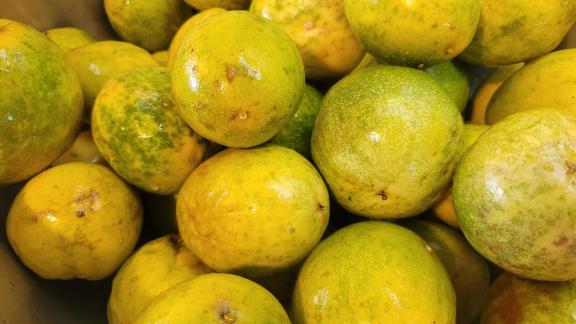
Source: Maracuyá (frutos), by Horacio Cambeiro, CC BY-SA 4.0 license
.jpg)
Other contaminants
Passion fruit juice contamination can happen because of packaging corrosion, excessive use of preservatives, or materials migration from packaging into the product.
In its regulation on food contaminants the EU has maximum allowed limits for arsenic, lead and inorganic tin in juices, including passion fruit juice. European buyers therefore often require tests for the presence of heavy metals in juices.
For passion fruit juice, the maximum allowed lead content is 0.03 mg/kg. The maximum allowed inorganic tin content is 100 mg/kg. For concentrated juices, this maximum level applies to the reconstituted juice. The maximum level for inorganic arsenic is 0.02 mg/kg for concentrated fruit juices and for reconstituted and fruit nectars.
In 2023, the RASFF system published a notification about high cadmium content in a shipment of passion fruit from Colombia. Passion fruit juice manufacturers should therefore monitor their raw material supply carefully.
Product composition
Under the EU fruit juice rules, a product must fit the legal definition of fruit juice, fruit juice from concentrate, concentrated fruit juice, water-extracted fruit juice or fruit nectar. The label must clearly say when the juice comes from concentrate and when it is a mixture of fruits. The minimum juice and/or purée content for passion fruit nectar is 25%. The minimum Brix level for reconstituted passion fruit juice and fruit purée is 12 °Bx.
Figure 2: A 100% juice multivitamin product containing passion fruit concentrate
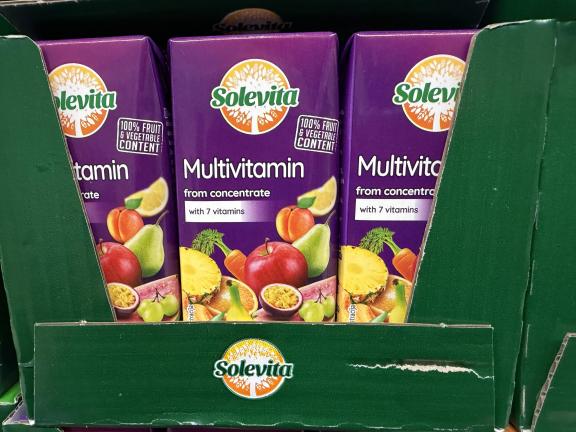
Source: Autentika Global, 2026
In 2024 the EU approved Directive (EU) 2024/1438 to add new reduced-sugar juice categories. The new rules apply from 14 June 2026. Exporters who want to develop reduced-sugar passion fruit juice for Europe should already update their recipes, claims and labels where needed in order to meet these rules.
Tariff barriers
Exporters need to be well informed about tariffs facing their company and competitors in other countries.
Tariffs may also depend on export price. For example, if the price of passion fruit juice (Brix below 67 °Bx) imported from Brazil is above €30 per 100 kg (product code 2009.89.7390), a 10.5% EU tariff applies. If the price is below €30 per 100 kg and there is no added sugar (product code 2009.89.9790), then an 11% EU tariff applies. However, there are no EU tariffs on passion fruit juice from Peru, Ecuador, Colombia or Vietnam.
Tips:
- Determine the correct tariff code with your passion fruit juice buyer before you quote. Test the juice before shipment, not after arrival.
- Use the My Trade Assistant for Goods module on Access2Markets to find specific tariffs when exporting juices to the EU.
- Consult the EU Food Additives database and read the EU Fruit Juice Directive to be informed about authorised substances, as well as about processing aids.
What additional requirements and certifications do buyers often have?
Most European buyers do not stop at following legal requirements. For passion fruit juice, they usually ask for a recognised food safety management scheme and quality standards.
Buyers in premium passion fruit juice niches also have additional requirements. They often want a stronger flavour profile, a clear origin story, and reliable sensory consistency.
For both NFC and concentrate, authenticity is very important. Quality expectations may differ from customer to customer. In general, the most important tests include microbiology, residues, and sensory variation, including taste, colour, acidity and off-notes.
Quality requirements
The European Fruit Juice Association (AIJN) publishes detailed reference guidelines for juices which are available for AIJN subscribers. There is a specific AIJN guideline for passion fruit juice that defines the quality parameters used to check if a product is acceptable.
In recent years, suppliers have reported a shift toward lower Brix levels in Peruvian origin, mainly due to climatic and regional factors. Industry sources confirmed that this trend is currently under discussion within AIJN. A reduction of the reference Brix guideline is likely to be considered (from the current 12.4 °Bx to 10.5 °Bx).
For passion fruit concentrate, buyers focus especially on:
- Correct Brix and concentration consistency;
- Acidity profile and flavour retention;
- Absence of dilution or other authenticity concerns;
- Colour and aroma preservation through evaporation.
These parameters are managed through strict raw material selection and variety and maturity control. After harvesting, they are also managed through proper pasteurisation, hygienic processing, analytical testing, traceability, and reference to AIJN/Safe-Global-Fair (SGF)-style quality expectations. Seasonality is managed by blending carefully and by maintaining tighter process controls.
The British Soft Drinks Association (BSDA) published its own Fruit Juice Technical Guidance for the UK market. It serves as guidance on current UK fruit juice legislation, including quality and authenticity considerations.
Food safety certification
The most common schemes are BRCGS Global Standard Food Safety, IFS Food and FSSC 22000. These Global Food Safety Initiative (GFSI)-recognised certification programmes are not part of European law. Still, they are widely used in retail and private label supply chains. They are popular because they help buyers assess food safety, traceability, supplier approval, food fraud prevention, site hygiene and corrective action in a structured way.
SGF certifications are designed to improve fruit juice safety, quality and competition through industrial self-regulation. These schemes certify fruit-processing companies, packers, bottlers, traders, brokers, transport companies and cold stores. For bulk juice suppliers, the International Raw Material Assurance (IRMA) is an important part of the SGF certification system because it focuses on raw materials and semi-finished products before they reach bottlers.
Packaging and labelling requirements
Retail packs must follow the food information rules. The full list of requirements for passion fruit retail juice formats is in Regulation (EU) No 1169/2011 on the provision of food information to consumers.
Exporters also need the right tariff code and customs documentation. This is because import duty, origin rules and VAT treatment depend on product classification and origin of the goods.
All materials made from plastic that is intended to come into contact with passion fruit juice must follow European regulations on plastic materials. This includes Regulation EC No 1935/2004 and Regulation EU No 10/2011.
Tips:
- Consult guidelines on how to implement Hazard Analysis Critical Control Points (HACCP) principles that need to be implemented by suppliers to Europe.
- Visit the European Juice Summit, a global forum for knowledge sharing and a unique networking opportunity.
- Consult technical sheets for passion fruit juice from leading suppliers to see how to prepare such documentation. Examples are the passion fruit juice concentrate specification sheet sold by Prodalim Group and the technical specification sheet for aseptic passion fruit juice NFC from Peru’s Pacific Fruit.
What are the requirements for niche markets?
The main niche requirements for passion fruit juice are organic, fair trade or other responsible sourcing claims, and premium quality positioning.
Organic and sustainably produced passion fruit juice
Organic juice entering the EU must follow Regulation (EU) 2018/848 on organic production and labelling of organic products. This niche is strongest in organic food markets that are already large or mature.
The passion fruit plant is very sensitive to climate impact, and organic production is harder to manage for production systems that are not fully optimised. Consider organic production only if there is a market willing to pay for the organic premium.
One consulted industry source described demand as growing but still niche compared with conventional product. That said, organic passion fruit juice is usually constrained more by supply reliability, certification discipline, and residue risk management than by end-user interest alone. In other words, demand exists and is growing, but the supply side often remains the harder part.
Fair trade certification can help juice in more premium consumer-facing drinks, smoothies or private label ethical ranges. However, a high cost of conventional juice products can lead to lowered interest from buyers. Brands like Nuff make their NFC juice from Rainforest Alliance-certified passion fruit grown in southern Vietnam.
The new EU packaging and packaging waste regulation now sets life-cycle sustainability requirements for packaging. It will apply from mid-2026.
Tip:
- Read the IFU’s Global Juice Sustainability Reports from 2025 and earlier to get a better understanding of sustainability issues impacting passion fruit juice.
2. Through which channels can you get passion fruit juice on the European market?
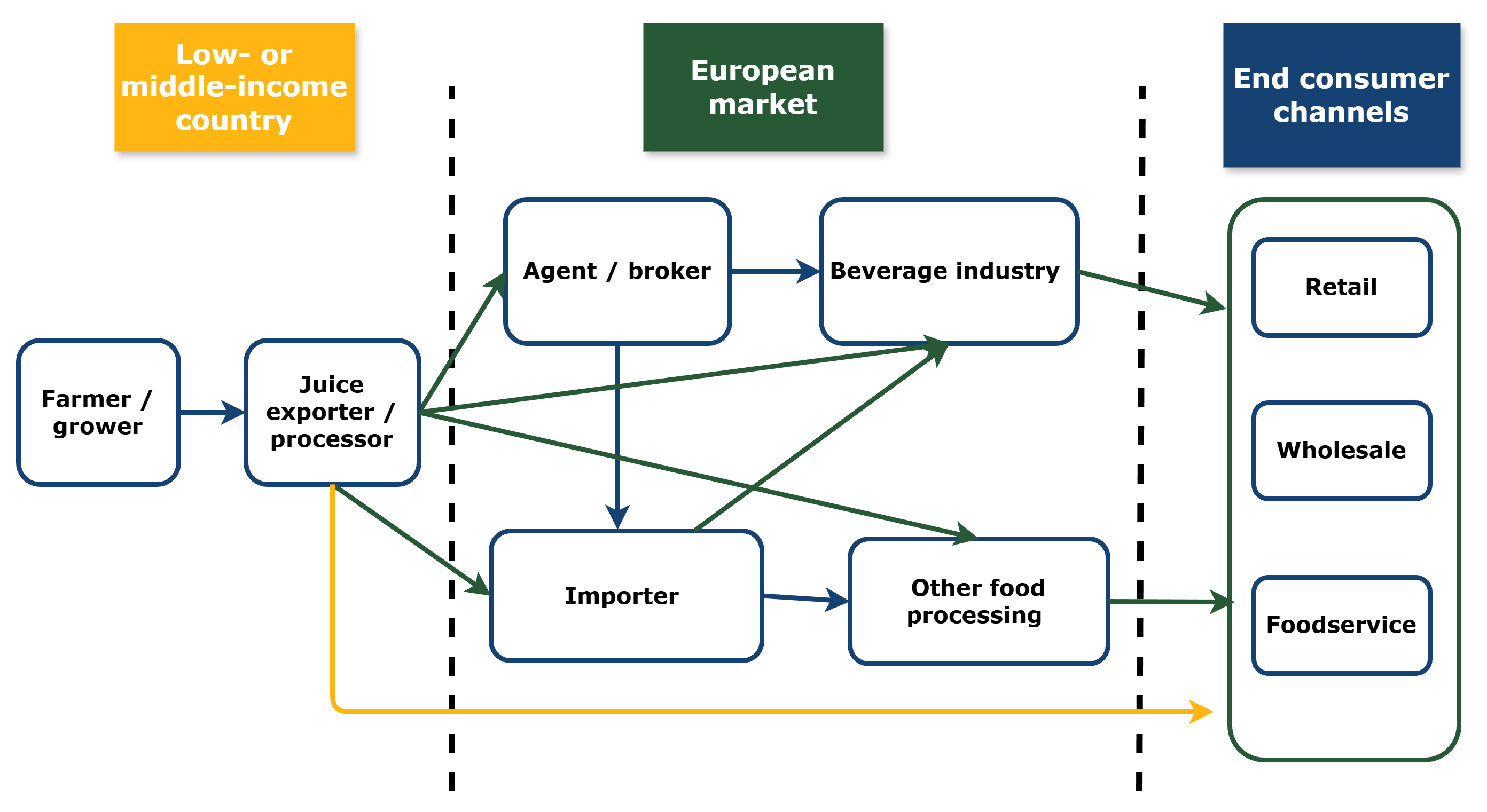
Retail chains usually do not import passion fruit juice directly. Instead, specialised bottling companies pack juices as private labels or as their own brands. These companies can import juices directly or use specialised juice and ingredient importers.
How is the end market segmented?
In Europe, most passion fruit juice is sold to industrial processors and ends up in different product forms in the retail channel. Passion fruit juice is used by the food and beverage industry as an ingredient in product formulations.
Figure 3: End-market segments for passion fruit juice in Europe
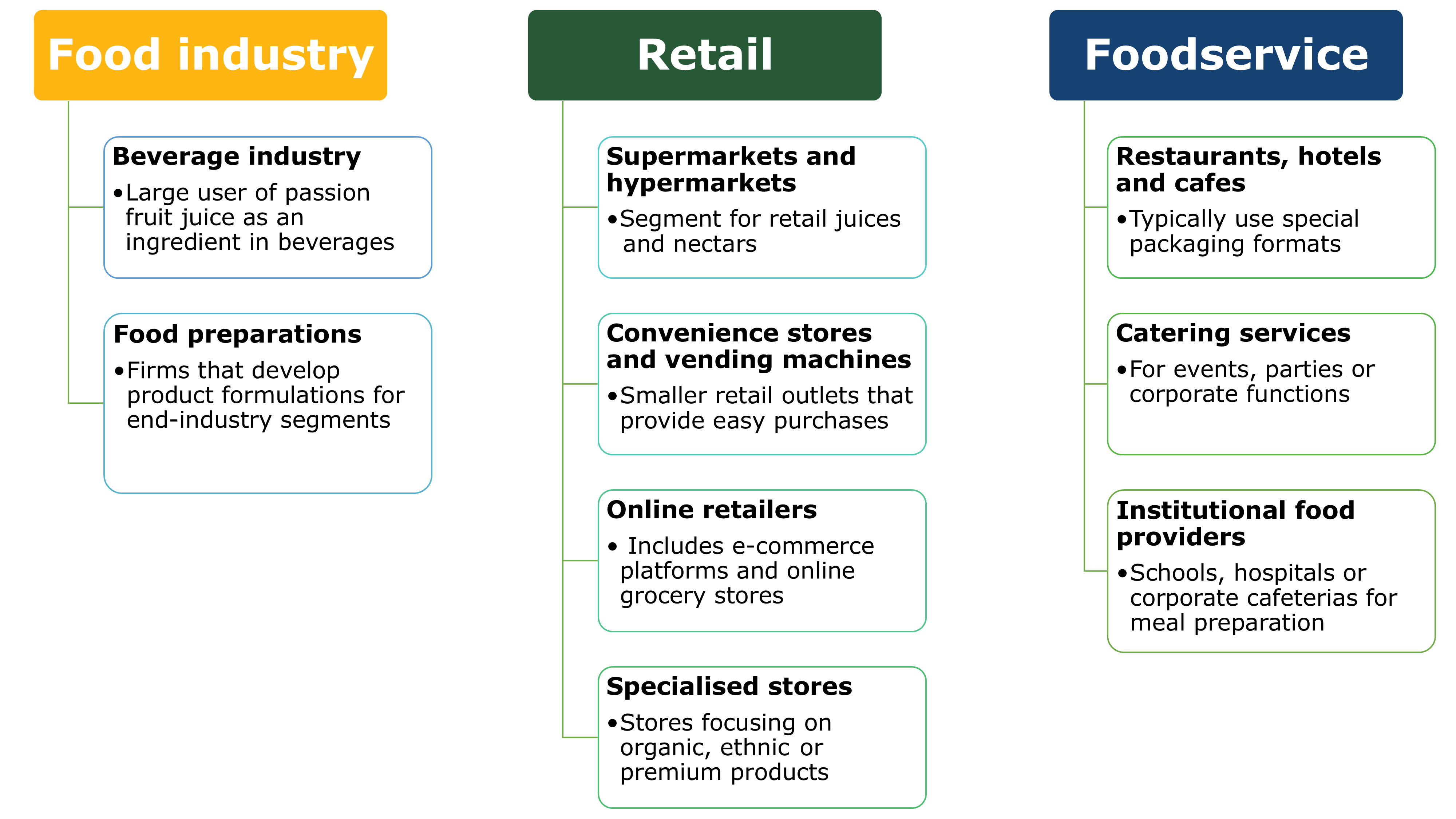
Source: Autentika Global, 2026
Food industry (industrial ingredient segment)
The industrial ingredient segment is the main route for most suppliers. In this segment, exporters sell aseptic juice, concentrate, purée or NFC material to processors and ingredient specialists, not to final consumers.
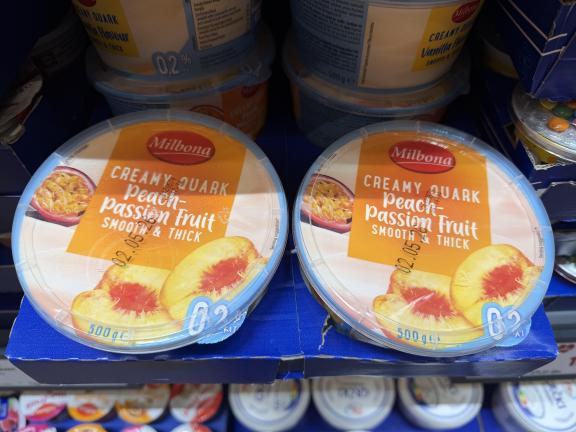
Companies like Döhler, SVZ and Austria Juice use passion fruit juice as an ingredient across beverages, smoothies, dairy, dairy alternatives, ice cream and other food & drink applications. This route is especially important because the fruit has a strong aroma and high acidity. This means that European manufacturers often use it to improve blends rather than sell it as a mass single-fruit drink.
Figure 4: Creamy quark dairy product with passion fruit juice from concentrate
Source: Autentika Global, 2026
This segment is the most attractive for exporters with bulk volumes, stable quality and professional documentation. Buyers in this channel are very strict about quality. Be prepared to provide detailed specifications on Brix, acidity, colour, microbiology, traceability and authenticity. Also prepare to address buyer expectations for consistent year-round supply.
Retail segment
In this segment, passion fruit is sold to consumers mainly as part of juices, smoothies or tropical multi-fruit blends. It is less common as a mainstream 100% single fruit juice. For example, Rauch sells Happy Day Maracuja with 25% passion fruit juice from concentrate, while Pfanner sells a passion fruit drink with a 15% fruit content.
Europe’s large branded and private-label players shape this market segment. Eckes-Granini is a leading fruit beverage supplier in Europe. Its granini brand sells juices and nectars across markets. Coca-Cola-owned innocent sells juices, smoothies and shots. Refresco produces private-label and branded juice products for retailers and brand owners.
Foodservice (premium and speciality segment)
The highest quality is the most important for this segment. Passion fruit is not like orange or apple juice. Supply chains are thinner and quality can vary by season, variety and supplier. The customer base tends to be stricter because the juice is often used as a high-impact ingredient.
For NFC destined for Europe, exporters look at 4 areas: food safety, authenticity, sensory consistency and processor reliability.
Restaurants, cafés and bars buy juices in different packaging, often in 0.2 litre or 0.7 litre glass bottles. Voelkel offers organic, Demeter-certified passion fruit-based drinks. These are often packed in glass bottles, focusing on high-quality, directly pressed juices and natural ingredients. Vitamont offers organic 100% tropical juice blends with passion fruit juice, also in glass bottles.
Within the premium space, a separate speciality sub-segment serves chefs, bartenders, pastry makers and premium foodservice buyers. Here, passion fruit is valued for its intense flavour, colour and acidity. Itoften appears as a purée or high-fruit preparation rather than as a standard bottled juice.
Premium French brand MONIN promotes passion fruit syrup for cocktails, lemonades and smoothies. For gastronomy professionals, Les Vergers Boiron and Ponthier offer passion fruit purées, including organic or 100% variants. This channel is smaller than retail, but is higher-value and can grow faster because it depends more on menu innovation and dessert applications.
Tips:
- Seek ingredient buyers first if you can offer aseptic concentrate, purée or NFC juice in industrial packs with stable Brix, acidity and traceability. This is the most natural fit for passion fruit in Europe.
- Move into the premium niche only if you can prove your claims well. Organic, Fairtrade or Fair for Life buyers will expect audited systems, not just a good story.
- Study the sourcing rules of large European processors and bottlers. Companies linked to the Sustainable Juice Covenant and SGF give a good signal of the standards that serious buyers now expect.
Through which channels does a product land on the end market?
Passion fruit juice is mostly imported to Europe through specialised juice and ingredient importer companies. Some of these importers have processing and blending facilities. Other market channels are agents, traders, and even ethnic food importers.
Importer (wholesaler/ingredient supplier)
Importer firms serving the beverage sector often import passion fruit juice in bulk containers. These importers may be trading entities that simply resell the juice without further processing. Other importers have processing facilities and offer solutions for the food sector or bottling firms.
To supply Europe, it is important to see how your price and quality compares to that of leading suppliers from Peru, Ecuador and Vietnam.
Importers usually have a strong understanding of the European passion fruit juice and tropical juice market. They also monitor the situation in major supplier countries. This real-time knowledge of the market makes them a good first point of contact in Europe for suppliers.
Passion fruit juice wholesalers and suppliers include:
- Verbruggen Juice Trading B.V.;
- SVZ;
- Prodalim;
- Steffen Lafrenz (STL Fruits);
- Synerjuice;
- Ariza;
- Santos Enterprise Food;
- Döhler;
- Agrana;
- Grünewald (Ernteband Fruchtsaft);
- Carrière;
- THOMS;
- Saprex Handels;
- Juice Trade.
Bösch Boden Spies is a German importer of natural raw materials from fruits as well as functional ingredients to the European food industry and retail trade.
Figure 5: European market channels for passion fruit juice in Europe
Source: Autentika Global, 2026
Agent/broker
Agents are not as important for the passion fruit juice trade as for some other fruit- and nut-processing industries. Agents act as middlemen between buyers and sellers and negotiate on customers’ behalf. They usually have fees that range between 2% and 4% of the total contract value for their services.
Retail and foodservice
Retailers rarely import passion fruit juice directly. This is understandable, as it lies outside their main competencies. However, some large retail chains, like Germany’s Lidl and Kaufland (through their parent group’s Schwarz Gruppe’s subsidiary Mitteldeutsche Erfrischungsgetränke), have their own bottling operations. Other examples are ALDI, EDEKA and France’s Intermarché.
Some specialised suppliers are important points for reaching hotels, restaurants and establishments, like Holland Bazaar and Kiril Mischeff. Such suppliers include convenient packaging formats of passion fruit juice for HoReCa establishments in their offer.
What is the most interesting channel for you?
For small or medium-sized exporters, specialised tropical juice importers with deep knowledge of this market are the best channel to approach European customers. These importers are knowledgeable about European buyers’ specific juice quantity and quality requirements. They also have in-depth knowledge of import rules, such as product certification, labelling and packaging.
Tip:
- Consider becoming a member of the juice industry self-control body SGF and implementing the Voluntary Control System. There are many membership benefits that might help open doors in the European market.
3. What competition do you face on the European passion fruit juice market?
The passion fruit juice market is dominated by a handful of producers in South America and Southeast Asia.
Which countries are you competing with?
The 3 largest passion fruit juice exporters to Europe are Peru, Ecuador and Vietnam. Brazil and Colombia are the most relevant secondary origins.
Because passion fruit juice is hidden inside broader European trade statistics for ‘other fruit juices’, the exact volumes and values cannot be determined precisely from European trade data.
Source: Autentika Global, Dian, BCE, ASEANstats, Exportemos, Comex Stat, industry sources, 2026
Figure 6 shows the combined passion fruit juice exports from Peru, Vietnam, Ecuador, Brazil and Colombia, based on exporter country data. Vietnamese data for 2025 is based on directional estimates from the industry.
Publicly available passion fruit juice trade data in countries of origin is not always fully accurate. Trade codes sometimes mix fresh fruit, frozen, juice and concentrate. Leading industry players also find it very difficult to isolate precise figures. Vietnamese trade data is particularly challenging, as product classifications and naming are inconsistent and data can be fragmented.
Figure 6 shows the combined tonnages for passion fruit juice NFC and passion fruit juice concentrate. NFC means ‘not from concentrate’ or already at drinking strength. Passion fruit juice concentrate is very thick, so factories must mix it with water to dilute it.
To compete with established suppliers, new suppliers must offer a reliable year-round raw material supply and industrial-scale processing. Consistent microbiological and pesticide compliance, documentation, traceability, and the ability to meet EU authenticity expectations is also important. New origins must offer both scale and consistency.
Peru: Biggest passion fruit juice exporter to Europe
Peruvian passion fruit growers harvested 90,841 tonnes of the fruit in 2024. Production has been growing at an average rate of 3.16% over the past few years. This performance is due to a sustained improvement in productivity, with yields rising from 8.34 to 13.17 tons per hectare during the period analysed.
In 2024, an estimated 2,146 growers were involved in commercial production. The main producing regions were Lima department with 43,992 tonnes (49.25% of the national total), followed by La Libertad with 18,657 tonnes and Piura with 11,740 tonnes.
Most passion fruit exports from Peru are in the form of juice. The juice segment accounts for about 69% of the total export value, followed by juice concentrates and to a lesser extent fresh fruit. The Netherlands, the USA and France are the main destination markets.
Processor Selva Industrial released an estimate showing that the 2025 passion fruit harvest in Peru totalled 115,000 tonnes. The crop was harvested from 6,300 hectares. Production consisted of industrial fruit (69,762 tonnes or 61%) and fresh fruit (45,334 tonnes or 39%). Selva Industrial data shows that the main export product in 2025 was conventional passion fruit juice (10,046 tonnes), accounting for about 59% of total export volume. This is followed by conventional passion fruit concentrate, with 2,020 metric tons or 12% of the volume. Organic passion fruit juice exports amounted to 2,523 tonnes (16%), organic concentrate 369 tonnes (2%).
Traditionally, the split of Peruvian passion fruit juice exports to Europe is roughly estimated at 50:50 between concentrate and NFC, according to industry sources.
Official trade data for 2021-2025 from Exportemos reveals that Peruvian passion fruit juice exports to Europe fell by 4% annually. In the same period, the value of exports to Europe rose by 11.8%, reaching €37.2 million in 2025. Most of the juice destined for Europe is shipped to the Netherlands (7,357 tonnes in 2025), followed by France (2,345 tonnes).
Ecuador: Large player in the processed passion fruit market
Ecuador is a serious competitor because it sends a very high share of its passion fruit exports abroad in processed form. In 2024, Ecuador exported over €27.2 million in passion fruit, with nearly 91% in processed form (juice and purée).
Ecuador positions itself in the value-added segment where European buyers source passion fruit juice and purée. Ecuador’s strength is this focus on processing and exportable ingredients.
Industry sources say that passion fruit concentrate is still very important in Ecuador. However, Ecuadorian suppliers do not only sell concentrate. Their product range can change depending on the buyer and the final use of the juice. Demand for NFC passion fruit juice from Ecuador also seems to be growing. Buyers see NFC juice as a higher-quality product. They also value its fresh taste and natural Brix level. This trend may continue in the coming years.
In both Peru and Ecuador, the product mix depends on the processor and on the type of customer. Europe still uses more concentrate than NFC juice. This is especially true for industrial drinks, blending, storage and transport. Concentrate is easier and cheaper to store and ship.
Official trade data for 2021-2025 from the central bank BCE reveals that Ecuadorian passion fruit juice exports to Europe fell by 8.0% annually while the value rose by 4.8%, reaching €24.6 million in 2025. Most of the juice destined for Europe is shipped to the Netherlands (4,930 tonnes in 2025), followed by the UK (263 tonnes).
Despite having a relatively small domestic market, Ecuador was the leading global exporter of NFC juice and concentrate for nearly 2 decades. The country’s strong processing infrastructure enabled it to dominate exports until it was challenged in recent years by Peru and Vietnam. Ecuador’s premium flavour profile is still highly valued by buyers.
Vietnam: Fastest-growing supplier of passion fruit juice
Vietnam has become a stronger competitor in recent years through the fast expansion of its passion fruit production, exports and processing capacity. The country is now the world’s largest exporter of passion fruit pulp and concentrate. China buys over 40% of Vietnam’s output, mostly scooped passion fruit pulp with seeds, NFC and fresh passion fruit.
Vietnam chiefly exports passion fruit juice concentrate to Europe. Industry estimates indicate a market split in the range of roughly 70–80% of concentrate and 20–30% of NFC/pulp that is shipped to Europe. However, this is not backed by hard data.
Official trade data from ASEANstats for 2021-2024 and an industry estimate for 2025 indicate that passion fruit juice exports to Europe fell by 2.3% annually between 2021 and 2025 while the value of exports to Europe rose by 23.9%, reaching an estimated €31.5 million in 2025. Most of the juice destined for Europe is shipped to the Netherlands, which accounts for 67% of Europe’s imports.
Overall, industry sources indicate that Vietnam’s main passion fruit export in 2025 was around 9,000 tonnes of concentrate (worth around €55 million). The country also exported an estimated 12,000 tonnes of NFC/pulp (around €25 million) and 20,000 tonnes of pulp + seeds (mainly to China, worth around €42 million). These figures should be seen as directional estimates rather than verified statistics.
Brazil: World’s largest passion fruit producer
Brazil has long been the world’s largest producer of passion fruit. However, exports of NFC juice and concentrate remain small, as most of the fruit is consumed locally.
The country produced 736,585 tonnes of passion fruit in 2024 from a total area of 47,082 hectares. This accounts for approximately 70% of global production, making Brazil the world’s largest producer and consumer. In the international market, Brazil has been working to export juice concentrate, fresh fruit and processed products, albeit on a small scale.
Embrapa states that the arrival of the juice industry drove the expansion of commercial passion fruit cultivation in Brazil. In the 1980s, average annual productivity was less than 10 tonnes per hectare. Today, it exceeds 100 t/ha in high-tech intensive cultivation.
Official trade data for 2021-2025 from Comex Stat shows that passion fruit juice exports to Europe fell by 10.5% annually while their value fell by 15.4%, to €513,000. Most of the juice destined for Europe was shipped to the Netherlands (226 tonnes in 2025).
Tips:
- Follow Agromercado news on the passion fruit (maracuyá) market in Peru. Agromercado is a specialised agency under Peru's Ministry of Development Agrarian and Irrigation (MIDAGRI), acting as the commercial agent for small and medium-sized agricultural producers.
- Learn from the competition. Watch a brief Embrapa overview video on how to plant, manage, fertilise, irrigate and pollinate passion fruit plantations. For more in-depth information, watch Embrapa’s video on passion fruit cultivars, production systems and the market. Do not forget to switch on the closed captions/subtitles in English.
Which companies are you competing with?
A global reference point for passion fruit juice is Ecuador-based Quicornac, which has its own factories in Ecuador, Peru and Vietnam. It produces a wide range of processed passion fruit products in these plants.
Peruvian companies
Until 2010, Peru had a very modest passion fruit industry. That changed when Quicornac entered the country and actively promoted cultivation. Since then, Peru and Ecuador have competed closely for the top juice exporter position until Vietnam reshaped the global market. More information on Quicornac is given in the Ecuador segment below.
Another major Peruvian supplier is Aseptic Peruvian Fruit, known for its Pacific Fruit brand of aseptic, high-quality Peruvian fruit pureés and pulps. The company offers processed Peruvian passion fruit as an ingredient for beverages, ice cream, dairy products and cocktails. Pacific Fruit has the advantage of a large, modern infrastructure that is designed to handle high processing volumes. The company has refrigerated chambers and freezer chambers at −22°C to maintain product integrity until final distribution.
Other important players are Selva Industrial and Agromar Industrial, with a broader tropical fruit portfolio. Frutosa - Frutos Tongorrape is another exporter. There is also strong competition from smaller and medium processors, like Procesadora Perú.
Ecuadorian companies
Quicornac is a passion fruit specialist with more than 35 years of experience, supplying over 40 countries. The Guayaquil-based firm was set up by a group of Swiss-Ecuadorian entrepreneurs in 1989. Quicornac also offers various mango varieties in purée or concentrate form. Its products hold multiple quality and sustainability certifications required by European and global markets.
Quicornac’s rich frozen passion fruit product portfolio includes concentrate and clarified passion fruit concentrate at different Brix levels, NFC juice and non-pasteurised NFC juice. In its aseptic passion fruit line, it offers concentrate with different Brix levels, NFC juice, pulp and purée. The firm expanded its offer to buyers with innovations like candied passion fruit peel, passion fruit oil, soap bases, passion fruit seed oil and smoothies.
In Ecuador, its visible competitors are Frutrade, Exofrut and Agro Industrial Fruta de la Pasión C. Ltda. Still, Quicornac remains the reference point. For exporters, Ecuador’s main lesson is specialisation. Buyers often see Ecuador as a source of strong aroma, concentrate know-how and industrial consistency.
Vietnamese companies
Vietnam competes less through old brand recognition in Europe and more through scale, speed, year-round supply and buyer flexibility. In 2022 Quicornac, in partnership with iTi Tropicals (iTi), North America’s leading supplier of bulk tropical fruit juice, opened a passion fruit production facility in Vietnam. Quicornac’s Vietnamese facility processes purple passion fruit.
Besides Quicornac, other relevant passion fruit juice suppliers from Vietnam are Nafoods, Doveco, Donipi, Giavico and Vifoco.
Nafoods is important because it holds a leading position in passion fruit and controls much of the chain from planting to sales. It not only focuses on passion fruit, it also produces fresh and dried fruits and green coffee beans. It has passion fruit production locations in Vietnam (8,000 ha) and Laos (400 ha). The company has 4 processing factories.
Doveco exports its passion fruit concentrate to Europe, the USA, Japan and Korea. Donipi, Giavico and Vifoco are important industrial concentrate competitors, offering certifications and other tropical fruit products for ingredient buyers.
Vietnam is a strong competitor in the mid-market ingredient segment and in price-sensitive beverage uses. If you cannot match Vietnam on scale and cost, compete on flavour profile, organic position, buyer service or a more specific origin story.
Brazilian companies
Unlike Ecuador and Quicornac, Brazil’s market is less centred on one passion fruit champion. It is more spread out across many fruit processors, pulp specialists and ingredient firms. Notable passion fruit juice suppliers include DM2, Loop, Intrafrut, Ricaeli, Polpas MR and Graviola da Bahia.
DM2 processes passion fruit and other tropical fruits and works under contract, which is useful for buyers that want scale and mixed sourcing. It has 3 production units in São Paulo state and 1 in northeast Brazil, where it can produce 15,000 tonnes of orange juice and 5,000 tonnes of tropical juices.
Loop is a large flavour and concentrated juice maker for the beverage industry. Intrafrut has an installed capacity to process 15,000 tonnes of tropical fruits, as well as 60,000 tonnes of pineapple and 20,000 tonnes of mango.
A second Brazilian route to Europe is the retail channel, where Brazilian brands like DaFruta and Maguary are visible in specialist shops.
Tips:
- Follow the examples of the best companies. They make buying easy for their customers. This is done by showing passion fruit juice Brix, product form, certifications, packing options and applications clearly on buyer-facing pages. For example, consult the well-presented product technical sheets published by Agromar Industrial.
- Explore opportunities inside the passion fruit juice market and niches that are more in demand. There is different demand for the various varieties of passion fruit juice. As the Vietnamese juice is less acid, it can often be blended with the South American juice to achieve certain flavour profiles.
Which products are you competing with?
Passion fruit juice has a strong aroma, high acidity and a clear tropical identity. That means it has few substitutes. There is always a certain minimum needed for specific uses, so demand is relatively stable.
Mango is a possible substitute product for passion fruit juice. It gives buyers a broad tropical taste, natural sweetness and a thicker mouthfeel. Its weakness is that it gives less acidity and less flavour. This means that mango might compete strongly in smoothies, nectars, dairy drinks and mid-market tropical blends.
Pineapple juice is probably a strong mainstream substitute as it is easy to place in mixed-juice products. Although pineapple gives sweetness and a recognisable tropical flavour, it does not bring the same premium, sharp and exotic profile.
Guava is a smaller but still important substitute in premium tropical drinks. It can compete with passion fruit in the premium tropical segment, bubble tea and functional drinks.
Because passion fruit is quite unique, the biggest competition is not necessarily another fruit, but another passion fruit product format. In the lower and middle segments, concentrate competes better because of lower cost. This also allows blending and fits large-scale beverage manufacture. In the higher segments, NFC juice and purée can compete better because they offer a fuller taste and a more natural taste profile.
Tip:
- Consider expanding your processed passion fruit portfolio to better adapt to shifts in demand. Exporters should not think only in terms of ‘which fruit replaces passion fruit?’, but also in terms of ‘which passion fruit product replaces my product?’.
4. What are the prices of passion fruit juice on the European market?
The crop has a relatively predictable seasonal pattern within a 3-to-4-year cycle of scarcity and overproduction. Within the 4-year period, usually there is a period of approximately 1.5 to 2 years of abundant, stable supply.
The global uncertainty in terms of energy prices in 2026 adds insecurity and cost pressure. But direct effect on passion fruit juice availability is unlikely unless there is a longer period of energy volatility. The broader predictions for 2026 show that global trade slows down, while energy remains a source of risk.
In late 2025, spot trades involving South American passion fruit juice 50 °Bx concentrate were being made around the €10,500/t CFR Europe mark. This compares to around €9,700/t for the Vietnamese product that increased in price during the year. At the same time, NFC spot trades were being made at prices of around €3,200/t CFR. Organic NFC spot trades were priced around €3,600/t.
Table 1 shows an indicative price breakdown based on current retail price references and the standard European juice chain structure. Actual percentage shares of final shelf price vary by fruit content, pack type, brand, country and contract terms.
Retail prices of passion fruit nectars and juices in Europe generally range from €2 to €5.50 per litre.
Table 1: Estimated price breakdown based on steps in the production process based on Happy Day Maracuja 1 L nectar
| Steps in the process | Indicative share of the final shelf price | Example (1 L) |
|---|---|---|
| Farmer/raw fruit supplier | 11% | €0.30 |
| Collection and inland logistics at origin | 4% | €0.11 |
| Processor/exporter at origin | 18% | €0.48 |
| Freight, insurance and port costs | 5% | €0.13 |
| EU importer/blender/packer | 26% | €0.70 |
| Retailer | 36% | €0.97 |
Source: Autentika Global, 2026
Tip:
- Consult Exportemos Peru for very detailed company-level value and volume statistics on exports of passion fruit juice under the national trade code 2009892000.
Autentika Global carried out this study on behalf of CBI.
Please review our market information disclaimer.
Search
Enter search terms to find market research