

The Swiss market potential for cocoa
Switzerland is a major hub for cocoa and chocolate in Europe. It has high cocoa import volumes and strong domestic consumption. The country also hosts world-leading cocoa companies like Barry Callebaut and Lindt & Sprüngli. Its demand for premium dark, organic and certified cocoa continue to grow. Products like bean-to-bar chocolate and plant-based lines highlight the shift towards quality, transparency and innovation. For exporters, this provides opportunities if they can deliver consistent quality, certification and documented impact to comply with regulations.
Contents of this page
1. Country description: Switzerland
Switzerland has a population of over 9 million people and one of the highest living standards in the world. It is located in Central Europe and borders France, Germany, Italy, Austria and Liechtenstein. The country has four official languages: German, French, Italian and Romansh. English is widely used in business but is not an official language. Switzerland is not part of the European Union but is part of the European Free Trade Association (EFTA). This shapes customs, market access and product rules. This means cocoa and cocoa products entering Switzerland must follow EU rules and regulations.
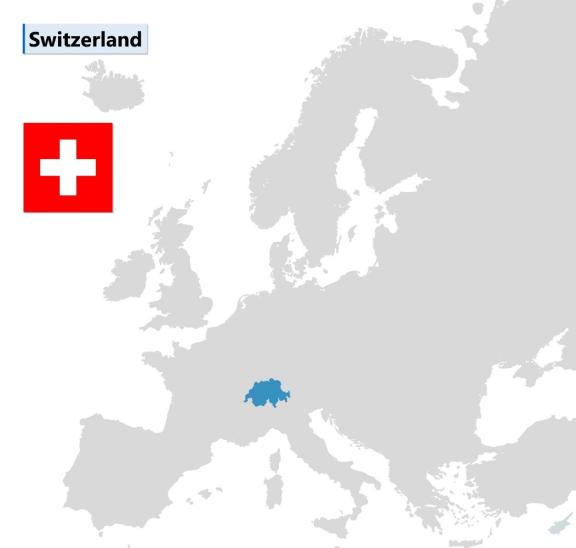
Switzerland is landlocked (Figure 1) but well connected. The Port of Switzerland (Basel Rhine ports) is a national freight hub linked to Rotterdam and Genoa. Zurich Airport is the main cargo gateway for time-sensitive goods.
Figure 1: Switzerland map: location in Europe and national flag
Source: North-West European Geography
2. What makes Switzerland an interesting market for cocoa?
Switzerland is a major cocoa importer. Its cocoa bean imports have been growing steadily over the past years while demand for chocolate stayed high. Almost all cocoa is sourced directly from producing countries, with Ghana by far the leading origin. Ecuador and the Dominican Republic follow as significant and fast-growing suppliers. Côte d’Ivoire and Peru also contribute steadily. This continued growth in cocoa imports creates a range of opportunities for exporters, which we explore in this study.
Switzerland as a major cocoa importer
Switzerland maintains its position as a significant cocoa importer in Europe, ranking the seventh top importer on the continent. In 2024, Switzerland imported cocoa and cocoa products worth € 1.14 billion. It sources nearly all its cocoa beans directly from producing countries. On average, about 99% of the country’s total cocoa bean imports came directly from cocoa-producing countries. Cocoa bean imports reached a value of €244 million in 2024 (Figure 2), almost doubling in value since 2020 on the back of higher global cocoa prices. In volume terms, Switzerland’s imports of cocoa beans grew modestly before COVID-19, from 43,000 tonnes in 2017 to 45,000 tonnes in 2018. It then stalled through 2019-2020.
By 2021, volumes rebounded to 52,000 tonnes, about 15% above pre-pandemic levels. This shows both recovery and Switzerland’s ongoing reliance on raw bean imports. This momentum continued, with imports rising to 63,800 tonnes in 2024, a 22% increase over 2021 (Figure 3). Switzerland’s cocoa market is expected to continue growing in line with Europe’s broader cocoa market. This is projected to reach USD 9.89 billion in 2024 and grow at a CAGR of 4.20% through 2034.
Source: ITC calculations based on UN COMTRADE and ITC statistics
Source: ITC calculations based on UN COMTRADE and ITC statistics
Switzerland: diversified in its cocoa sourcing
Switzerland’s cocoa bean imports from producing countries reveal a well-diversified sourcing strategy. Top countries from which Switzerland imported cocoa over the past five years were Ghana, Ecuador, Dominican Republic, Côte d'Ivoire, Peru and Madagascar (Figure 4).
While Ghana remains the largest supplier, its share on the Swiss market declined from 53% to 38% in 2020-2024. This was mainly driven by declining levels of cocoa production in Ghana. This lead to Swiss imports from Ghana experiencing a negative cumulative annual growth rate (CAGR) of ‑1.8%. Ecuador also experienced a 28% decline (‑7.8% CAGR) in 2020-2024, losing its position as the second-largest origin exporter to Switzerland.
The most striking change is the surge in Latin American sourcing. Imports from the Dominican Republic soared by 423% (39.4% CAGR), making it Switzerland’s second-largest supplier at 14,825 tonnes in 2024. Peru also emerged strongly, growing 366% (46.7% CAGR). By contrast, Côte d’Ivoire posted modest but steady gains (3.7% CAGR), reinforcing its role as a reliable, consistent supplier.
Source: ITC calculations based on UN COMTRADE and ITC statistics
Overall, Switzerland’s cocoa market is shifting. This creates new challenges and opportunities for producing countries. Ghana remains the top supplier, but its declining market share reflects growing competition. It may prompt Ghana to diversify its export markets.
Switzerland houses a strong chocolate-manufacturing industry
Switzerland is home to many chocolate companies. Almost all cocoa beans brought into the country are utilised domestically for further processing. As of 2025, Switzerland is home to approximately 100 chocolate manufacturing companies, according to industry listings compiled by Ensun. These include large-multinationals like Barry Callebaut (headquartered in Zurich) and Lindt & Sprüngli (headquartered in Kilchberg). These multinationals were both founded in Switzerland.
Chocolat Frey, part of the Migros Group, is also a major producer of chocolate for Migros’ own popular private label brand Chocolat Frey. There are also artisanal and bean-to-bar makers like Taucherli and Max Chocolatier. These firms anchor a larger ecosystem of processors, brands and exporters. In addition, there are 124 chocolate retail shops operating across Switzerland, with a strong presence in cantons like Geneva, Zürich and Bern. About two-thirds of these are independently owned, while the rest are part of larger brands.
Switzerland invented white chocolate. They will continue to be a global hub for research and development and premium chocolate innovation. This includes vegan and functional products. Swiss players will continue to seek stable supplies of beans and semi-finished products. This directly ties in to the need for diverse, reliable semi-processed cocoa inputs (liquor, butter, powder) to model and optimise dairy-free and functional chocolate recipes.
Exporters that meet strict specifications will be favoured. By supplying these ingredients with tight technical specs, consistent flavour profiles, strong traceability and documentation for claims (e.g., flavanol levels, nutritional data), exporters can plug into Switzerland’s innovation pipeline and meet growing demand.
The Swiss eat more chocolate
The overall Swiss chocolate confectionery market continues to expand. Projections show an incremental increase of USD 0.2 billion, with a CAGR of nearly 1.3% through 2030. Switzerland has consistently maintained its status as one of the leading chocolate consumers in the world.
In 2021, the average individual in Switzerland consumed 11.3 kg of chocolate, which was 2.2 kg higher than the average consumption in Germany. This amount represented a recovery from 2020, when consumption fell below 10 kg for the first time since 1982, a decline attributed to pandemic-related reductions in tourism, retail and gifting. In 2024, average consumption per person decreased again by 2.4% to 10.6 kg, due partly to rising chocolate prices because of higher cocoa prices in 2024.
However, consumption per person is still high compared to other countries (Figure 5). Swiss consumers favour locally produced chocolate over imported chocolate. The 10.6 kg constitutes consumption of both locally made and imported chocolate. Consumption of locally made chocolate was held steady at 6.3 kg per person, by an increase of 0.1% from 2023. But consumption of imported chocolate dropped by 4.0%, falling to 4.3 kg.
There is a small opportunity for chocolatiers from cocoa-producing countries to export finished products to Switzerland. But the market is dominated by European manufacturers, which leaves very little space for new entrants. Origin country exporters can focus on quality differentiation and sustainability certifications. You can also focus on setting up direct trade relationships with Swiss importers, retailers or supermarkets. This helps you be able to to offer appealing chocolates to Swiss consumers.
Another viable strategy will be to invest in local processing facilities to process semi-finished products like cocoa butter, powder and powder for exports. This allows you to capture more value while supplying the ingredients that Swiss chocolate manufacturers need.
Note: Switzerland’s data is for 2024; other countries’ data is for 2023
Source: CHOCOSUISSE & CAOBISCO Statistical Bulletin
Switzerland imports lots of chocolate
Switzerland imports substantial quantities of chocolate due to high local consumption as noted above. A lot of chocolate is produced in Switzerland. But most of this is for the premium segment, which has high prices. Also, production is not only for local consumption but also focused on exporting to other European countries. Besides this, not all Swiss consumers can afford expensive premium chocolates. This makes retailers stock imported chocolate to meet consumer demand to fill gaps in price, variety and volume for local consumers.
Imported chocolate accounts for approximately 40% of total per-person chocolate consumption. Almost all of Swiss’s import of chocolate comes from large European manufacturers, particularly in Belgium, Germany and Italy. This shows that there's very limited market space for chocolate products from origin countries.
While chocolate imports from cocoa-producing countries remain very marginal, they show gradual growth. Imports have risen from 22 tons valued at US$ 411,000 in 2020 to 108 tons valued at US$ 2.2 million in 2024 (Figure 6). While this represents a nearly fivefold increase, it still constitutes a tiny fraction (less than 1%) of Switzerland’s total chocolate imports.
Source: ITC calculations based on UN COMTRADE and ITC statistics
The implied import price per tonne fluctuated over the period, peaking at €29.6 thousand in 2022 before easing to about €22.8 thousand in 2024. For market entry, SME chocolatiers can differentiate on value while remaining competitively priced. This can be done by showcasing local ingredients, traditional techniques and cultural heritage to craft distinctive products. Pair this with compelling, authentic storytelling regarding origin narratives, producer impact and craft methods tailored to Swiss consumers.
Tips:
- Activate the ‘Translation’ function of your browser to make the studies available in your native language.
- Check the website of the Swiss Chocolate Industry Association (CHOCOSUISSE) to learn more about the chocolate industry in Switzerland.
- Access the ITC Trade Map to analyse European and Swiss trade dynamics yourself and to build your export strategy. By selecting Switzerland as your target market, you will be able to follow developments such as the emergence of new suppliers and the decline of established ones.
- See our study on trade statistics for cocoa for more detailed information about the European trade in cocoa beans.
- Engage and partner with the Swiss Platform for Sustainable Cocoa (SWISSCO). SWISSCO is a multi-stakeholder initiative that promotes sustainability, transparency and traceability in global cocoa supply chains.
3. Which cocoa products offer the most opportunities on the Swiss market?
Demand for premium dark chocolate in Switzerland continues to grow, even after record cocoa prices in 2024. Consumers are willing to pay more for taste, origin and craftsmanship. At the same time, certified sustainable cocoa is now mainstream, with 100% of imports from sustainable sources by 2030 as a target set by SWISSCO. Imports of semi-finished products such as cocoa butter, paste and powder are also rising. Plant-based and vegan chocolate is moving from niche to regular retail.
Compared to the EU, Switzerland has a relatively large premium market for high-quality chocolates produced from fine flavour cacao. This specialty market is generally characterised by direct trade relationships and stringent quality requirements. THis makes it a short and transparent supply chain.
Demand for dark chocolate continues to grow
In Switzerland, chocolate demand is strongly focused on premium products. Even though cocoa prices reached record highs in 2024, Swiss consumers continued to buy high-quality chocolate. This shows that they are willing to pay more for taste, origin and craftsmanship. For example, Lindt & Sprüngli, known for premium dark chocolate, reported organic growth of 7.8% in 2024. It expects further growth based on continued demand for its premium chocolate.
Swiss brands and small chocolate makers like Laflor, Garçoa and Taucherli focus on dark chocolate and single-origin products. These companies use recipes with high cocoa content and very few additives. Because of this, they look for cocoa beans with special flavour profiles and consistent quality. They often choose beans from unique origins and expect exporters to meet strict standards for taste, traceability and sustainability.
The market for premium dark chocolate keeps growing but buyers are becoming more careful. They want beans that are clean, consistent and traceable. This means exporters must be able to prove the origin and flavour of their cocoa. Buyers will choose only those who meet high standards. Also, stories about origin and terroir are becoming more important. Exporters who can offer well-documented, high-quality cocoa from special regions have a better chance of building strong relationships with Swiss buyers.
Certified sustainable cocoa has become mainstream in Switzerland
Switzerland is a global leader in sustainable cocoa sourcing. Organic, Rainforest Alliance (RA) and Fairtrade certification are now mainstream across the market. In 2023, 82% of Swiss cocoa imports came from sustainable production, already surpassing the national goal of 80% by 2025 set by the Swiss Platform for Sustainable Cocoa (SWISSCO). This progress reflects strong collaboration between chocolate companies, retailers, NGOs and government agencies.
Retailers like Migros and Coop and processors like Pronatec played a big part in making certified cocoa the norm. Coop reports that all cocoa-based own-brand products are made with certified sustainable cocoa, including Fairtrade and organic options (Coop Sustainability). Migros also highlights its commitment to certified sourcing and is a leader in the organic segment of chocolate confectionery in Switzerland.
Pronatec also processes only certified organic and Fairtrade cocoa beans into premium-quality cocoa liquor, as well as cocoa butter, cocoa powder and cocoa nibs. These certifications are supported by both third-party schemes and company-led programmes that go beyond basic standards to support farmers directly.
Switzerland’s organic cocoa beans market alone was valued at around $90 million in 2023, and is expected to grow to $125 million by 2028, with a compound annual growth rate of 6%. This growth is driven by high consumer awareness, strong demand for luxury organic chocolate, and strict regulatory support for sustainable farming. The country’s innovation in processing and branding also helps maintain its leadership in the premium organic chocolate segment.
Switzerland’s own organic ordinance (SR 910.18) is in accordance with EU organic regulations. A mandatory national logo for organic products does not exist in Switzerland. However, the private label Bio Suisse, the Swiss private organic sector association, is widely used. EU organic certification is a basic requirement to obtain Bio Suisse certification.
In 2023, the number of supply chain actors in Switzerland with RA certification increased from 39 to 51. In 2024, Switzerland was Europe’s second biggest importer of RA-certified cocoa and cocoa products. Fairtrade sales in Switzerland are also at high levels. Fairtrade sales hit a new peak of €1,044 million in 2023, climbing 5.5% from the year before. For suppliers, following and obtaining certifications such as Fairtrade, BioSuisse, EU Organic or Rainforest Alliance can enhance your access to the Swiss cocoa market. But check to be sure that costs of certification do not outweigh the gains for you.
Switzerland is moving towards 100% sustainable cocoa by 2030. Exporters who can offer certified cocoa with clear documentation of origin, flavour and social impact will be best-positioned to succeed in this demanding and high-value market.
Imports of semi-finished cocoa (paste, butter, powder) from origin countries has steady growth
Imports of semi-finished cocoa products into Switzerland are generally growing even though it is a small segment. This segment expanded greatly between 2020 and 2024. Cocoa butter is by far the dominant product, with imports rising from 3,193 tonnes in 2020 to 5,213 tonnes in 2024 at a compound annual growth rate (CAGR) of 13.0% (Figure 7). This steady increase highlights the importance of butter for Switzerland’s chocolate industry, particularly for premium brands where cocoa butter is a key ingredient. The Swiss cocoa butter market is expected to grow. Europe’s cocoa butter market also grows at a CAGR of 6.2% in 2025-2033.
Cocoa powder and cocoa paste, while smaller in volume, have also shown strong momentum. Imports of cocoa powder grew from 109 tonnes to 184 tonnes over the same period at a CAGR of 14.0%. Cocoa paste imports increased from 325 tonnes to 469 tonnes, at a CAGR of 9.6%. The growth of these semi-finished products shows Switzerland’s expanding demand beyond beans, as producing countries diversify their exports and get more value through local processing.
Source: ITC calculations based on UN COMTRADE and ITC statistics
Swiss chocolate has high premium and quality standards. This means buyers may demand stricter specifications for semi-finished cocoa products. These include tighter limits on moisture content, fat composition, microbiological safety and contaminant thresholds. There are also buyers’ multi-year contracts due to fluctuating cocoa prices.
Exporters who can deliver consistent quality for semi-finished products that meet buyer specification have the best opportunity to succeed. It is also very important to offer semi-finished cocoa with full sustainability documentations, traceability and quality assurance. This helps you get better positioned to secure long-term contracts and build strategic relationships with Swiss buyers.
Demand for plant-based and vegan chocolate products is increasing
Switzerland’s vegan chocolate market is still small, but is growing fast. In terms of revenue, Switzerland accounted for 1.7% of the global vegan chocolate confectionery market in 2021. Sales are expected to rise to US$ 66.9 million by 2033 at an average growth rate of 12.35% per year.
Plant-based (dairy-free) chocolate in Switzerland has evolved from a niche product into a regular feature on store shelves. Its growth is partly driven by vegans and vegetarians. Despite still being a small part of the population, their numbers are rising. Retailers aiming to offer inclusive product ranges are also helping this growth. Young consumers in particular now expect most chocolate brands to include at least one dairy-free option.
In retail, the category is now well-established. Migros offers its V-Love line, and Coop displays vegan chocolates, sweets and snacks together in one section of their stores so that customers can find them easily. Seasonal launches, such as vegan Christmas chocolates, show that dairy-free options are expanding into gifting and festive occasions. Industry tracking services now separate vegan or plant-based chocolate in their reports. This means the segment is big enough to measure on its own.
When your buyer’s target is to supply or use cocoa for plant-based chocolate products, you must focus on consistent, low-defect beans and defined flavour profiles suited to vegan milk alternatives (oat, almond, rice). This is because vegan milk alternatives can mute or shift cocoa notes. Also, ensure strong sustainability and ethical credentials with certifications like organic, Rainforest Alliance and Fairtrade.
Bean-to-bar chocolate movement is growing in Switzerland
The bean-to-bar movement continues to grow in Switzerland, driven by consumer demand for ethical sourcing, premium flavour profiles and transparent supply chains. Artisanal makers like ORFÈVE, Choba Choba, Taucherli, La Flor and Sadé Chocolat are leading this trend. These brands emphasise direct trade, heirloom cacao and small-batch production. Choba Choba, co-owned by Peruvian cocoa farmers, won silver at the 2024 European Bean-to-Bar Competition, confirming its rising profile and quality standards.
Switzerland’s strong domestic chocolate market creates fertile ground for bean-to-bar growth. Legacy brands like Lindt & Sprungli dominate mass-market segments. But the rise of craft chocolate reflects a shift towards origin transparency and flavour diversity. Globally, the bean-to-bar chocolate market is expected to grow at a 7.24% CAGR in 2025-2030, reaching USD 6.16 billion by 2030, with Europe as the largest market.
For origin exporters, this trend offers clear opportunities. Swiss bean-to-bar makers seek fine flavour, full traceability and compelling origin stories. Exporters who can offer micro-lots, sensory documentation and special sustainability projects around aspects like agroforestry or living income are well positioned to build direct trade relationships. Collaborating on storytelling and co-branding can further enhance appeal in specialty retail and online channels.
Novel and upcycled cocoa products are a rising trend
Swiss chocolate makers and researchers are increasingly embracing the full potential of the cocoa fruit – not just the beans. This includes upcycling cocoa pulp, husks and shells into new products that are healthier, more sustainable and economically beneficial for farmers.
Here are some examples:
- ETH Zurich, in collaboration with Swiss chocolate maker Felchlin and Ghanaian startup KOA, developed a new chocolate recipe using cocoa pulp and the endocarp to replace refined sugar. The result is a cocoa-fruit chocolate that is richer in fibre and lower in saturated fat, and offers a new income stream for farmers. The cocoa pulp used in this chocolate can replace up to 20% of powdered sugar, improving both health and sustainability outcomes.
- Also, ETH Zurich researchers developed a method to process cocoa pod husks into a natural sweetener. This innovation reduces waste, lowers saturated fat, and boosts fibre content in chocolate. It also creates a new revenue stream for farmers by turning husks – typically discarded – into a marketable ingredient.
- KOA Natural, based in Ghana, also supplies upcycled cocoa fruit juice to Swiss chocolate makers. Their KOA Natural 3L product is used in beverages, fillings and culinary applications. This model increases farmer income by monetising the pulp, which is typically discarded.
- Swiss-Belgian giant Barry Callebaut has integrated upcycled cacao fruit products into its global portfolio. These include cocoa fruit juice, pulp, and husk-derived ingredients used in chocolate, snacks and beverages. The company highlights triple benefits: taste innovation, health and sustainability. This move aligns with growing consumer demand for low-sugar, plant-based and eco-conscious products.
SME exporters and cooperatives can tap into this trend by:
- Supplying upcycled ingredients: cocoa pulp, juice, husks and shells for novel applications.
- Partnering with Swiss R&D labs or makers to co-develop recipes or pilot projects.
- Documenting sustainability impact such as waste reduction, income diversification and circular processing.
Tips:
- If you can sell certified cocoa, this could give you access to buyers with sustainability commitments. Look at which companies are members of the ISCOs. These companies might be more interested in cocoa that meets social and environmental sustainability requirements. For more information, read our study 9 Tips to become more socially responsible in the cocoa sector.
- When giving cocoa samples, provide flavour notes, cut tests, and moisture and contaminant data with every offer. This saves time and builds trust. Also participate in the Schoggifestival to showcase premium single-origin and bean-to-bar chocolate products. This event specifically promotes fair and sustainable chocolate production. Visit to learn about exhibitor opportunities. It also helps you connect with Switzerland’s mindful chocolate community that values authenticity and origin stories.
- If you want to export chocolate or semi-finished cocoa products, target regional taste preferences. Develop dark chocolate products for French-speaking regions and milk chocolate for German-speaking areas. Also focus on premium and health-conscious formulations. Use Barry Callebaut's premium trend insights to understand Swiss consumer demands for high cocoa content and innovative snacking formats.
- Find potential business partners in Europe by checking the lists of Fairtrade-certified operators, Rainforest Alliance-certified cocoa supply chain actors and organic-certified companies.
- For semi-finished products or chocolate, promote sustainable and ethical aspects of your production process. Support these claims with certification. Read our study on doing business with European buyers of cocoa for more tips on marketing and promotional aspects of your cocoa.
- Check out our study Entering the European market for semi-finished cocoa products to be aware of European Union regulations – important to accessing the European market for semi-finished cocoa products.
4. Which trends offer opportunities or pose threats on the Swiss cocoa market?
Switzerland’s cocoa and chocolate market is shaped by stricter sustainability rules and consumer demand for transparency. At the same time, some trends are opening new opportunities for origin suppliers who can prove quality and innovation. These trends include the bean-to-bar movement, upcycled cocoa products, and persistently high retail chocolate prices
Sustainability rules are becoming stricter due to EU regulations
Switzerland is not a member of the European Union. But its cocoa and chocolate sector is increasingly shaped by EU sustainability regulations. This is because Switzerland is a major hub in cocoa trade. Swiss companies, especially large ones like Barry Callebaut, must comply with EU sustainability laws such as the Deforestation Regulation (EUDR), Corporate Sustainability Reporting Directive (CSRD) and Corporate Sustainability Due Diligence Directive (CSDDD) if they operate in the EU or generate significant turnover there.
Most Swiss cocoa and chocolate products may be exported to other EU countries. Therefore, Swiss-based exporters and SMEs from cocoa-producing countries are affected directly, as EU buyers demand compliance throughout their supply chains. This includes farm-level traceability, GPS mapping, and proof of deforestation-free and child-labour-free sourcing.
The EUDR states that companies must prove their cocoa is deforestation-free, legally produced, and traceable to the exact plot of land where it was grown. It goes into effect from 30 December 2026 (or 30 June 2027 for SMEs). This applies to all cocoa-related products under HS codes 1801 to 1806, including beans, paste, butter, powder and chocolate. Exporters must conduct due diligence, including geolocation, legal compliance and risk mitigation.
Across major producing countries several initiatives are developed to comply with these changing regulations. For example, Ghana and Côte d’Ivoire have begun national strategies to support farmers. Initiatives like the World Cocoa Foundation’s risk assessment framework and Solidaridad’s pilot programmes in Peru are helping smallholders adapt.
Besides EUDR, cocoa businesses must also align with the Corporate Sustainability Due Diligence Directive (CSDDD), which came into force in July 2024. It requires companies to prevent and address human rights and environmental risks across their supply chains, including fair pay, biodiversity protection and carbon neutrality. Exporters can demonstrate compliance through codes of conduct covering ethics, social responsibility and environmental stewardship.
Meanwhile, the Corporate Sustainability Reporting Directive (CSRD), effective since January 2023, mandates standardised ESG reporting and third-party verification. Cocoa suppliers must provide data on emissions, labour practices and resource use to help EU buyers meet their obligations. To simplify these overlapping rules, the EU proposed an omnibus package in February 2025, aiming to harmonise CSDDD, CSRD and the EU Taxonomy. This reform is expected to reduce administrative burdens by 25% overall and by 35% for SMEs.
Switzerland has its own sustainability laws that mirror EU standards in many ways. Article 964 of the Swiss Code of Obligations requires large companies to report on environmental and human rights risks, similarly to the CSRD. The 2024 Ordinance on Climate Disclosures also mandates climate-related reporting for public companies, banks and insurers, based on the TCFD framework. A recent legal update confirms that Swiss companies are ‘indirectly affected by the CSRD and the CSDDD’ if they are part of EU supply chains or meet EU turnover thresholds.
Besides EU obligations, Switzerland has developed its own sustainability framework for cocoa through the Swiss Platform for Sustainable Cocoa (SWISSCO). SWISSCO has set a Roadmap for 2030, with goals including living income for farmers, deforestation-free sourcing and full traceability.
Swiss companies are also subject to legal due diligence and reporting duties on child labour risks and conflict minerals in their supply chains since 2023. These obligations are outlined in the Ordinance on Due Diligence and Transparency in relation to Minerals and Metals from Conflict-Affected Areas and Child Labour.
For cocoa exporters who want to do business in Switzerland, aligning with both Swiss and EU sustainability requirements is very important. This is especially where they are linked to requirements around traceability, deforestation-free sourcing and documented social impact. Buyers will expect clear evidence of compliance. If you can demonstrate verified sustainability and origin transparency, you will be better positioned to succeed.
Cocoa prices are declining, but Swiss chocolate remains expensive
Cocoa prices have been very unstable over the past 18-24 months. After peaking in late 2024 at over US$12,000 per tonne in some futures contracts, prices have since declined. As of mid-September 2025, cocoa futures are trading between US$7,300 and US$7,800 per tonne, depending on the exchange and contract month. Despite this drop, Swiss chocolate prices remain high. Many chocolate manufacturers are raising prices further due to inflation, energy costs and increased production expenses.
For example:
- Confiserie Honold raised prices for its processed specialties by 8%, and its couverture chocolate by 27% due to high cocoa and cocoa butter costs.
- Lindt & Sprüngli, Cailler and Camille Bloch confirmed additional price hikes.
Even supermarkets like Migros and Coop increased prices: Migros raised the price of a 100g Frey Giandor milk bar from CHF 2.20 to CHF 2.45, an 11.4% increase.
While cocoa futures are unlikely to return to historic lows, analysts expect gradual decline until stabilisation. Exporters from producing countries may face tighter sourcing conditions and higher capital requirements. But they also have an opportunity to capture more value through semi-processing, traceability and impact documentation. Also, premium offerings that capture sustainability stories with low competitive prices can give you an advantage.
Tips:
- The EU has introduced a country risk classification; check this list to see where your country falls. Countries are classified into low-risk, standard-risk and high-risk. If your product comes from a low-risk country, only 1% of those operators will be randomly selected for audit by EU authorities.
- Work closely with your buyers to understand their reporting needs under CSRD. Buyers may provide guidance or support in aligning with reporting standards.
Amonarmah Consults carried out this study in partnership with Molgo Research and Ethos Agriculture on behalf of CBI.
Please review our market information disclaimer.
Search
Enter search terms to find market research
Do you have questions about this research?
Demand for organic cocoa products is increasing as consumers become more health-conscious about the effects of farm chemical inputs.

Hans Ramseier, Head of Quality Assurance and Development Imports at Bio Suisse