
Fairer trade for farmers in the food supply chain
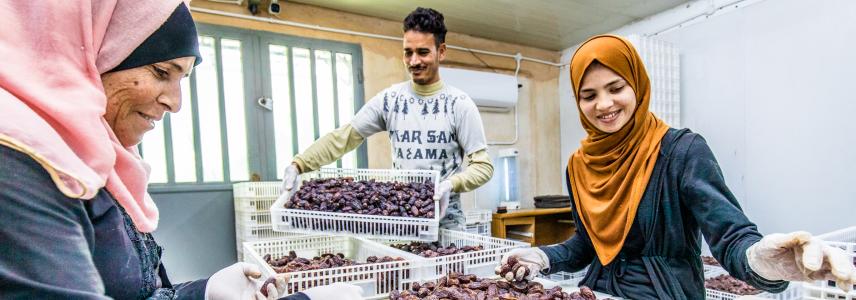
The European Union (EU) strengthened its action against unfair trading this year, giving more support to small farmers and agri-food suppliers. Many non-European exporters still do not know that they already have protection. This protection matters when buyers pay late, change contracts without warning, or cancel orders too late.
EU strengthens supplier protection in the agri-food chain
On 5 March 2026, the Council of the EU adopted a regulation with new rules on cross-border unfair trading practices (UTPs) in the agricultural value chain. The rules will help national authorities to work together across borders. They also add stricter rules for data protection and privacy. That means that suppliers can report unfair practices without their identity being revealed to the buyer. This helps farmers and suppliers to remain safe from unfair treatment by buyers after filing a complaint. The regulation also establishes a mechanism for coordinated action when large-scale cross-border unfair trading practices occur involving at least 3 EU countries. Application of the rules will start from 10 September 2027.
The adoption of the new rules is part of the EU’s wider effort to support farmers in the supply chain. An essential goal is to address the imbalance in bargaining power between suppliers and buyers, especially where farmers deal with much stronger buyers. One of the main tools to achieve this goal is to support a fair distribution of income at the farmers’ level. This regulation strengthens the 2019 directive, which already protects non-EU suppliers selling into the EU. The new rules will also improve cross-border enforcement between national authorities of different EU member states.
Increasing awareness among non-EU suppliers
This update matters for suppliers outside Europe as well, though they may be less aware. In February 2026, the AGRINFO programme, the FairTrade Advocacy Office (FTAO) and Oxfam Belgium held a webinar on the issue, targeted at agri-food suppliers outside the EU who want to sell to the EU. The session was organised in cooperation with European Commission officials and other experts.
Figure 1: Webinar on unfair trading practices in the EU agri-food chain
Source: COLEAD, 2026
The main message of the webinar was that suppliers from low- and middle-income countries are not powerless: they have protections against abusive practices. The current directive already protects suppliers outside the EU when they sell into the EU market. It bans 10 practices without exception, called black practices. This list of unfair practices includes late payment, short-notice cancellation and one-sided contract changes. The directive also limits 6 other practices unless both sides clearly agree to them in writing beforehand. These 6 practices belong to the so-called grey list. Read the 2 lists in Table 1.
Table 1: Unfair trading practices (UTP) in the food supply chain
| Black UTPs | Grey UTPs |
|---|---|
| 1. Payments later than 30 days for perishable agri-food products | 1. Return of unsold products |
| 2. Payment later than 60 days for other agri-food products | 2. Payment of the supplier for stocking, display and listing |
| 3. Short-notice cancellations of perishable agri-food products | 3. Payment of the supplier for promotion |
| 4. Unilateral contract changes by the buyer | 4. Payment of the supplier for marketing |
| 5. Payments not related to a specific transaction | 5. Payment of the supplier for advertising |
| 6. Risk of loss and deterioration transferred to the supplier | 6. Payment of the supplier for staff of the buyer, fitting out premises |
| 8. Misuse of trade secrets by the buyer | |
| 9. Commercial retaliation by the buyer | |
| 10. Transferring the costs of examining customer complaints to the supplier |
Source: Autentika Global, 2026
Know your rights, stay protected
Before signing a contract with an EU buyer, check the list of banned practices in the 2019 UTP Directive. If the contract is already in place, the complaint route is also available. If an EU buyer breaks the rules, a supplier can complain to the national authority in the buyers country. The supplier may request to keep its identity confidential. A business group or other organisation can also complain for the supplier. Authorities can also open cases on their own.
Awareness remains very low, even among EU farmers and smaller suppliers. The European Commission found that only 38% of surveyed EU-based farmers and suppliers knew the EU rules existed. Another 57% did not know which national authority to contact. The webinar by AGRINFO also revealed that very few complaints from suppliers outside the EU are documented. An evaluation support study of the 2019 Directive suggests that this is linked to low awareness and practical barriers. Many small-scale non-EU suppliers face limited awareness of complaint procedures, language barriers, administrative burdens and fear of retaliation by buyers. Given these challenges, it is important that you familiarise yourself with your rights under the Directive and procedures for reporting complaints. This will help you better protect your business from unfair trading practices.
Learn more
To learn more about how to agree on the delivery and contract terms for supply agreements and to find reliable buyers in the processed fruit and vegetables and edible nuts sector, read:
- 6 tips for organising your processed fruit and vegetables export to Europe
- 7 tips for finding buyers in the European processed fruit and vegetables market
Autentika Global wrote this news article for CBI.
Stay informed
To stay informed on the latest developments in the processed fruit and vegetables and edible nuts, subscribe to our newsletter.