
The European market potential for cumin seeds
The popularity of South Asian, North African and Middle Eastern cuisines contributes to the increasing demand for cumin seeds in Europe. The United Kingdom is the largest importer of cumin seeds in Europe. They offer specific opportunities for suppliers to the curry industry. Opportunities for suppliers from developing countries can also be found in other large or growing markets, such as the Netherlands, Germany, Spain, France and Sweden. Proof that your cumin is produced sustainably can increase your export chances.
Contents of this page
1. Product description: cumin seeds
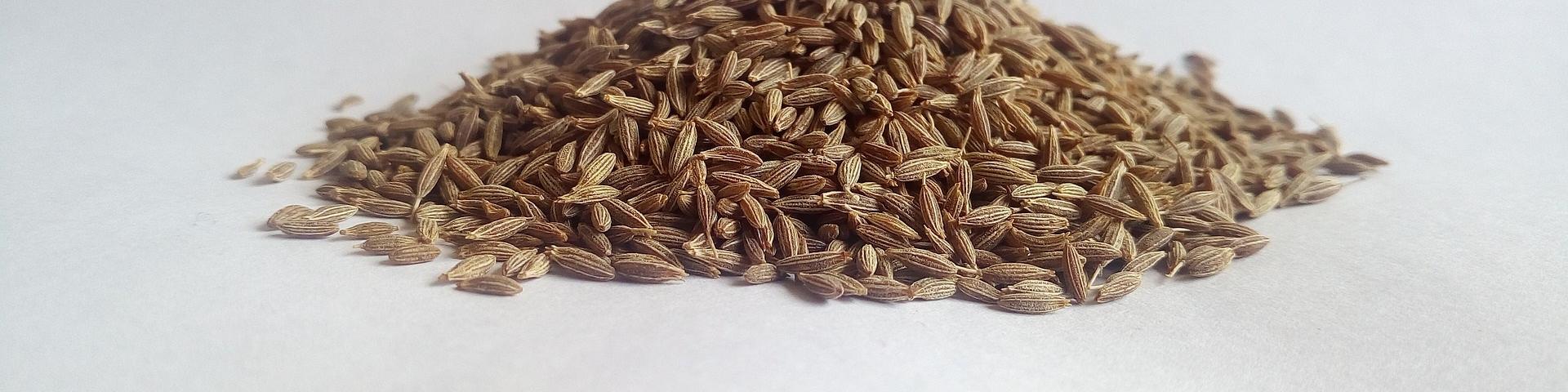
Cumin seeds are the dried ripe fruits of Cuminum cyminum. The part of the plant that is used as a spice is commonly called a seed. However, it is botanically a fruit composed of the pericarp and the seed.
There is no precise data on the global production of cumin seeds. But total world production is estimated to be around 900,000 to 1 million tonnes per year. The main producer is India, which in 2023-2024 harvested approximately 860, 000 tonnes (PDF). Outside India, production is much smaller but still important in Türkiye, as well as in Iran, Syria and China. India consumes around half of its own cumin seed production.
Cumin seeds have a sweet aroma and a slightly bitter and pungent taste. In Indian cooking, cumin powder is a key ingredient in curry sauces and masala mixes. In Turkish and Middle Eastern cuisine, cumin is a common spice in minced and other meat dishes such as köfte or kebab. The spice is also often used as an ingredient in chilli powders and sauces (such as chili con carne). Cumin is increasingly used in Europe due to the popularity of ethnic cuisines, but also in European products such as sausages, soups, cheese, marinades and baked goods.
Post-harvest operations include threshing, drying, cleaning, sorting, heat treatment (often performed to avoid microbiological risks), grading, and packing. They can also include grinding if cumin is processed into powder. The harvesting season differs per country, but it starts in India in February/March, then Syria (April), Iran (May) and lastly in Türkiye (August). Agricultural factors can influence the quality of cumin seeds. For example, quality and variety of the sowing seeds, planting date, density, irrigation, weed control, fertilisation, and harvest time
Cumin seeds in Europe are used in the food industry as an ingredient in spice mixtures and in other products. Cumin is also sold as a single spice, both whole and crushed, in food retail and food service channels. Important European users are ethnic restaurants, but also the cheese and meat processing industries.
This study covers general information regarding the market for cumin seeds in Europe, which may interest producers in developing countries. When 'Europe' is referred to in this report, it means the 27 member states of the European Union (EU), plus the United Kingdom (UK), Iceland, Liechtenstein, Norway, and Switzerland. Table 1 lists the products in the cumin seed product group and their product codes.
Table 1: Products in the cumin seed product group
| Harmonised System (HS) code | Product |
|---|---|
| 090931 | Cumin seeds, neither crushed nor ground |
| 090932 | Cumin seeds, crushed or ground |
The international trade classification does not have an exclusive code for Cuminum cyminum. Because of this codes include black cumin and bitter cumin too. Black cumin (also known as nigella or black onion seed) is the fruit of Nigella sativa, while bitter cumin is the fruit of Elwendia persica. Bitter cumin is mostly consumed in India, Pakistan and Iran and is not widely known in Europe. Neither black cumin nor bitter cumin is covered in this study.
2. What makes Europe an interesting market for cumin seeds?
European imports of cumin often go up and down a little, but they usually stay relatively stable. They mainly come from developing countries. Europe accounts for 6-8% of the world's total cumin seed imports. With that share, European consumption of cumin seeds is smaller than that of countries in South Asia, North Africa and the Middle East.
Source: UN Comtrade (August 2025)
Stable demand despite supply fluctuations
Between 2020 and 2024, Europe’s cumin imports went up and down. After a low point in 2022, volumes grew again in 2023 and 2024. Overall, they slightly went down from 23,500 to 22,700 tonnes at an average annual rate (CAGR) of ‑0.8%. Developing countries supplied most of the cumin, with a 76% share in 2024, while intra-EU trade came to around 23%. Re-exports within the EU were very high in 2023 but returned to normal levels in 2024.
Regular fluctuations in imports are influenced by production variations. Because cumin seeds are produced in the open air, yields are vulnerable to weather conditions. Despite these production fluctuations, European demand is rather stable. As cumin is not commercially grown in Europe, consumption is almost equal to imports. This is because re-exported quantities outside Europe are low.
More than half of Europe’s imports are whole seeds
After imports arrive, the seeds are often processed within Europe before further sale. Whole cumin seeds accounted for about 60% of imports. The remaining 40% was imported in crushed or ground form. Many European buyers prefer to import whole cumin seeds so they can clean, steam-treat and grind them themselves. This step helps reduce microbiological and allergen risks. Also, whole seeds preserve flavour better than powder and keep longer.
Growth drivers of demand in Europe
In the next 5 years, European cumin seed imports are likely to grow at a small annual rate of 0-2%. Import and consumption will be driven by:
- Ethnic cuisine growth: The popularity of Asian, North African and Middle Eastern cuisines is rising in Europe. Consumers are more familiar with dishes that use cumin (curries, kebabs, stews). This trend is boosting cumin’s use;
- Healthy eating / plant‑based meals: European consumers show increased interest in nutritious, lower-salt, plant‑based or less‑meat diets. Cumin, as a natural spice with a “clean label” image, fits well in this context;
- Value‑added products and blends: The growth of ready meals, spice mixes and convenience foods means more ground or blended cumin is needed. Exporters who provide quality cumin seeds suitable for processing stand to benefit.
Tips:
- Read more about the general developments in the spices and herbs market in our study What is the demand for spices and herbs on the European market?
- Visit or participate in trade fairs to get market information and find potential buyers. The most relevant trade fairs in Europe are Food Ingredients Europe, Biofach (organic), SIAL and Anuga.
- Read our 10 tips on how to find buyers on the European spices and herbs market and 7 tips on how to do business with European spices and herbs buyers for how to become a successful exporter to the European market.
3. Which European countries offer the most opportunities for cumin seeds?
The UK is Europe's main importer of cumin. It is an interesting focus market with a 24% overall share in 2024. The UK has the highest curry consumption in Europe and a highly developed curry industry. The Netherlands (14%) is the leading trade hub and the largest market for cumin cheese. Germany (11%) has a large fast-food kebab market, for which cumin is a main ingredient. Spain’s cumin imports (10%) fell after a high in 2021 and only partly recovered by 2024. France (9.3%) and Sweden (2.7%) are also promising markets.
Source: UN Comtrade (August 2025)
United Kingdom: Europe's largest market
The UK makes up about one-third of Europe’s cumin seed imports from developing countries. Still, its imports have been falling in recent years. Volumes dropped from over 6,000 tonnes in 2020 to under 5,000 tonnes in 2023. In 2024, imports rose again by almost 10% to 5,400 tonnes, but this is still about 14% lower than in 2020. This translates to a CAGR of ‑3.6%.
About 60% of the UK's imports are whole seeds. The rest are crushed or ground seeds. In 2024, India was the biggest supplier of cumin to the UK, accounting for almost 92% of the overall supply. Türkiye followed with 2.5%, Vietnam with 1.2%, and China with 1.1%. There were smaller amounts of cumin imported from countries like Pakistan and Sri Lanka. Syria was once a top-4 supplier to the UK. But its cumin exports fell sharply from 131 tonnes in 2020 to almost nothing in 2023. In 2024, they rose slightly to 21 tonnes. This was still about 84% lower than in 2020.
Cumin is an important spice in Indian cooking. It is often used whole for tempering and ground into main spice mixes like 'garam masala' and curry powder. In England and Wales, about 3.1% of the population (1.86 million people) identify as Indian. Indians’ most common country of birth outside of India is also the UK. This helps keep demand strong for Indian ingredients and dishes across the country.
There are thousands of curry restaurants across the UK. Restaurant and retail sales of curries are estimated to be worth €4-5 billion annually. The National Curry Week and the British Curry Awards promote and celebrate the British curry industry. One of the country's leading importers of cumin powder is AB World Foods. They own the brands Patak's (curry pastes), Blue Dragon (Asian food), Capsicana (Latin American food) and Al’Fez (Middle Eastern and North African food).
There are several brands in the UK producing spice mixes for curries or masalas, with cumin as the main ingredient. Aside from curries, cumin seeds are also used as an ingredient in other products. These include pickled and fermented vegetables, spreads like hummus, crispy snacks, pre-cooked rice, falafel and soups. They are also used in different types of breads and bakery products, such as poppadom.
In the retail segment, private labels of retail chains like Tesco, Sainsbury's, ASDA, and Morrisons have the largest market shares for packed cumin seeds and powders. In British supermarkets, private labels still lead the everyday herbs and spices market. Some companies specialise in packing, blending and steam sterilisation of spices, such as Natco. The leading brands selling cumin seeds are Schwartz (owned by McCormick), East End and TRS (both owned by Vibrant Foods), Rajah (owned by Westmill Foods), and Bart (part of the Fuchs Group).
Cumin seed importers and traders in the UK include Vibrant Foods, P&B (Foods), H.J. Langdon, British Pepper & Spice, Virani and Sleaford Quality Foods. Most of the leading importers perform processing activities such as grinding, blending and packing. Crushed cumin is mostly imported by ethnic food importers. They often import from established suppliers that deliver quality according to expectations.
The UK is the largest market for Fairtrade-certified products. This offers opportunities for Fairtrade-certified cumin exporters. Some importers of Fairtrade-certified cumin in the UK are British Pepper and Spice Company Limited, Cotswold and Steenbergs. The first 2 companies trade conventional products and limited volumes of organic and Fairtrade spices. Steenbergs has specialised in organic and Fairtrade-certified spices.
The Netherlands: Europe's spice trade hub and cumin cheese producer
The Netherlands is the second-largest importer of cumin seeds in Europe. Since 2024, Dutch cumin seed imports from developing countries have grown at a CAGR of 7%, reaching about 2,500 tonnes in 2024. Whole seeds accounted for almost 70% of these imports, with the other share for crushed or ground cumin.
The Netherlands re-exports about one-third of its imported cumin. This leaves about 2,000 tonnes for domestic consumption. Dutch exports mainly go to European countries like Germany, France and Spain.
India is the leading supplier of cumin to the Netherlands with a 59% overall share, followed by Vietnam (7.4%) and Syria (7.2%). In 2024, India’s exports grew by 21% to almost 2,000 tonnes, making its position even stronger. Vietnam supplied 230 tonnes. This was a drop compared to earlier years. Syria sent 225 tonnes, which is also a little lower than the year before.
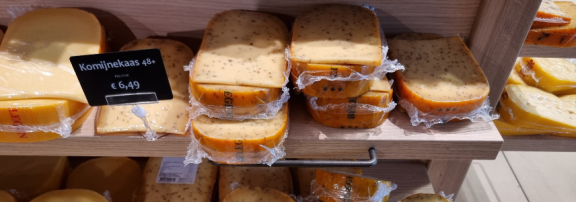
The Netherlands is the largest user of cumin, or 'komijn' in Dutch, as an ingredient in cheese. The Dutch dairy company Friesland Campina (with Milner as the main cheese brand) is the most well-known internationally. Gouda is the main cheese type produced in the Netherlands, and cumin cheese ('Leidse kaas') is the most prominent specialty cheese. Most cheese (including cumin cheese) in the Netherlands is sold under a private label, but it is different for exported Dutch cheese.
Figure 3: Cumin cheese in a mainstream Dutch supermarket
Source: GloballyCool (July 2023)
The Netherlands is also home to several dedicated cheese producers. Examples are DOC Kaas and Uniekaas (both owned by DMK Group), Royal A-ware, Royal Lactalis Leerdammer (owned by Lactalis from France), CONO Kaasmakers and Henri Willig. All these companies together produce cheese in massive quantities, and this often includes cumin cheese. One company, CZ Rouveen, has even specialised in specialty cheeses. These are typically made with herbs and spices.
After the food industry, the largest users are the food service segment and cash & carry wholesalers like Makro and Sligro. Within the food service segment, cumin is frequently used in ethnic restaurants. For example, Indian, Indonesian or Turkish restaurants.
The food retail segment comes third in terms of cumin consumption. Retail chains Albert Heijn and Jumbo together account for approximately half the retail sales of cumin seeds in the Netherlands. The leading independent brands of cumin seeds and spice mixes with cumin powder in the Netherlands are Silvo (part of the McCormick group), Verstegen and Euroma. In the Netherlands, ground cumin seed is also known as 'djintan' or 'djinten'. This is a name of Indonesian origin, used by specialised ethnic food brands like Conimex and Go-Tan.
Examples of Dutch cumin seed bulk traders include Nedspice (with production facilities in India), Catz International, BCFoods, Euroma, Mulder Marne and AVS Spice. Some companies specialise in mixing and crushing, such as Huijbregts Groep. Traders of spices in the Netherlands are organised within the Dutch Spice Association.
Germany: Cumin seeds in spices for kebabs
Germany’s cumin imports from developing countries peaked in 2021 at more than 3,000 tonnes, then fell by half in 2022. After staying more or less steady in 2023, they rose by 31% in 2024 to over 2,000 tonnes. Still, volumes remain below earlier levels. This shows a partial recovery instead of steady growth. This translates to a CAGR of ‑5.1%. Of the total import volume in 2024, 60% consisted of whole seeds and 40% of ground or crushed cumin.
India also dominates the cumin supply to Germany. Imports from India grew from less than 1,000 tonnes in 2020 to 2,000 tonnes in 2024. This meant its overall market share went up from about 25% to 82%. Other suppliers are Türkiye (6.2%) and Syria (3.3%). Although Egypt and Vietnam also supplied cumin to Germany, their volumes stayed very small.
A significant share of Germany’s imported cumin, locally known as 'Kreuzkümmel', is consumed in Döner fast-food restaurants. The German Döner kebab market is the largest in Europe. Cumin is a main ingredient in spice mixes for kebab dishes. Estimates show that the fast-food kebab industry in Germany employs over 60,000 people. It has a turnover of more than €2.4 billion per year.
The German Spice Association has almost 90 members. Most of them are active in refining spices and making spice blends, preparations and other seasoning products. Cumin is often used in the production of sausages, curry spice mixes, sauces and pickled vegetables. Specialised spice mixing companies such as Hügli (part of the Bell Food Group) and AVO make custom spice blends. These are often sold under private labels.
In Germany's retail market, a large share of cumin is sold under private labels like Kania (Lidl), Le Gusto (Aldi Nord and Aldi Süd), and REWE and REWE Beste Wahl (by REWE). Leading brands from the Fuchs Group are also important, including Fuchs, Ostmann and BioWagner (organic). The Fuchs Group itself is owned by DF World of Spices AG. It is the largest privately owned spice producer in Germany and the biggest spice manufacturer in Europe. Besides its own brands, it also packs cumin and other spices for several private labels. Examples of other brands are Hartkorn (organic), Brecht or Liean Ying (by Rila Feinkost).
Germany is the largest European market for organic food (PDF) and the second-largest in the world by retail sales. This makes it a particularly attractive market for organic cumin seeds. Specialised organic food retailers, such as BioMarkt and Alnatura, sell a large share of the organic spices in Germany. Organic-certified cumin is usually sold as a single spice. But it is also used in spice mixes and prepared food products. The organic cumin market is still modest. This is partly because organic-certified products are allowed to include a small percentage of non-organic ingredients. But demand for organic cumin is growing faster than for conventional cumin.
Germany is also the second-largest Fairtrade market worldwide. This creates opportunities for Fairtrade-certified cumin. Weltpartner is a key importer of Fairtrade products that sells cumin. Other companies trading Fairtrade certified cumin are KarmaKollektiv GmbH and Soul Spice. Still, the presence of Fairtrade-certified cumin in the German market is small, and even smaller than the organic market.
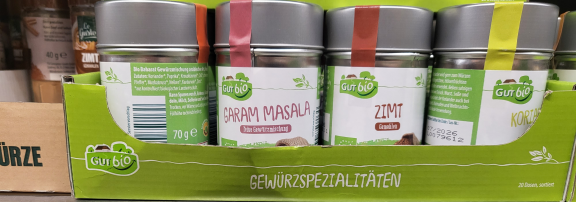
Figure 4: Organic garam masala, which includes cumin, for sale in a German supermarket
Source: GloballyCool (February 2025)
Spain: Whole seeds dominate imports
Spanish cumin imports from developing countries reached a high in 2021. But then they dropped by almost half in 2022 and 2023. In 2024, volumes went up again by 20% to just over 2,000 tonnes, but this was still well below earlier highs. It is an overall downward trend, with a CAGR of ‑7.1%. The market is still important, but recent changes suggest selective opportunities rather than steady growth.
Whole seeds accounted for more than 75% of Spain’s overall imports in 2024. Of the cumin seeds imported into Spain, 82% come from India, followed by Türkiye (5.2%) and Syria (4.5%).
Cumin, or 'comino' in Spanish, is not a traditional spice in Spain, but it has a strong place in Andalusia and the Canary Islands. In Andalusia, cumin is used in marinades for 'pinchos' or 'pinchitos morunos' (grilled meat on skewers). In the Canary Islands, it is an important ingredient in traditional mojos, mixed with garlic, oil and vinegar.
In retail, cumin is sold widely under private labels like Hacendado (Mercadona), Vegecampo (DIA) and Eroski. There are also independent brands like Ducros (McCormick) and Artemis BIO (Herbes del Molí). On the supply side, Spain is home to several large spice companies that handle cumin. Examples are Ramón Sabater (Sabater Global), Ceylan, Paprimur and Juan José Albarracín, and brand-packers like Carmencita (Jesús Navarro S.A.) and Dani. These companies supply both bulk demand for blends and prepared foods and retail packs.
Spain’s market conditions are still supporting demand for flavours with cumin. In 2024, 252,476 foreign residents gained Spanish citizenship. Morocco was the top country of origin, with 42,910 people. Thhis made Maghrebi cuisines more popular, where cumin is a key ingredient. At the same time, Spain’s plant-based retail market grew to €491 million in 2024. This trend shows consumer interest in legume-based dishes, dips, and ready meals like hummus and falafel. Cumin is often used in these dishes.
France: Stable growth and organic potential
France’s cumin imports fell to a low in 2022 but went up strongly in the following years. They reached almost 2,000 tonnes in 2024. This was 23% higher than 2020 and more than 50% above imports in 2022. Overall, France shows steady growth of about 5.4% per year. This makes the country a stable and attractive market in Europe.
In 2024, India was the leading developing country supplier of cumin seeds to France, with a 47% overall share. India's followed by Türkiye (9.9%) and Syria (8.5%). France also imports large volumes from other European countries, which are all re-exported products. Its main European suppliers are Spain (9.6%) and the Netherlands (8.4%). Most cumin is imported as whole seeds.
France's appetite for cumin is driven by Asian, North African and Middle Eastern cuisines. The French also use it in vegetable, meat and fish dishes. Most retail chains sell cumin seeds and powder under their own private labels, including Carrefour, Leclerc (Rustica label) and Auchan (Auchan label). Curry spice mixes are also mostly sold under private labels. These products have varying ingredients, but all contain cumin powder. A special type of French curry mix is known as vadouvan.
Independent spice brands that offer cumin seeds in France include Ducros (owned by McCormick), Fuchs (German brand), Sainte Lucie and TRS (British brand). Examples of French cumin traders are Colin Ingredients, Le Jardin des Epices, Beaun'Epices, Cepasco (acquired by Haudecoeur in 2024), and Eric Bur.
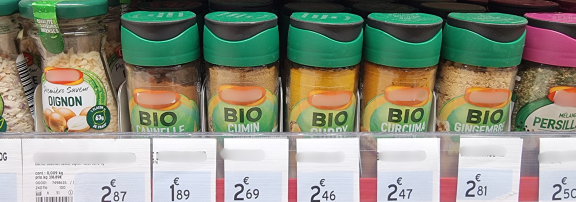
Organic products are very important in France. This country is one of Europe’s largest organic retail markets. Agence Bio reported new growth in 2024 after a slowdown in 2022 and 2023. To sell in organic shops or premium private-label ranges, cumin must be certified under the EU Organic regulation. In France, it must also carry the AB label with full traceability. Buyers also expect documents proving batch traceability and checks on pesticide residues and other contaminants. French consumers value origin, sustainability and transparency. This is why clear storytelling can help cumin win shelf space in organic and world food aisles.
Figure 5: Organic cumin in a French supermarket
Source: GloballyCool (July 2025)
Sweden: a promising market with high growth
Imports of cumin into Sweden almost doubled in 2021 and reached a high in 2022 with 540 tonnes. They then dropped again in 2023. In 2024, volumes rose again to 471 tonnes. Overall, volumes are about 81% higher than in 2020, showing a strong CAGR of 16%.
India is the primary supplier of cumin to Sweden, making up an overall share of over 68% in 2024. Syria and Türkiye are also significant suppliers, with about 2.5% of cumin imports each. Vietnam has disappeared from Sweden’s cumin supply, dropping to zero since 2023. This has removed what was a secondary source in 2021. Egypt remains a relatively small and unstable source, with volumes going up and down a lot from year to year.
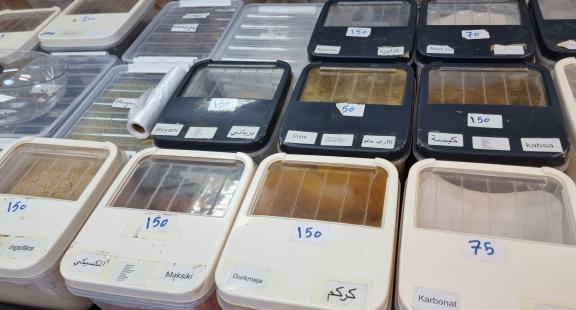
Almost all imported cumin, known as 'kummin' in Swedish, is destined for the local market. Nearly all cumin imported is ground, making up 94% of total imports in 2024. The largest share goes to food processing, primarily for spice mixes, seasonings and sauces. Sweden’s ethnic food retail market has seen strong growth in recent years. In some cities, there are even specialised ethnic spice outlets. Cumin is a very important ingredient of many ethnic spice mixes that you can buy in these outlets.
Figure 6: Spice mixes in a Swedish ethnic spice outlet
Source: GloballyCool (May 2025)
Santa Maria (Part of the Finnish Paulig group) is the market-leading spice brand and a major importer in Sweden. They supply retail, foodservice and industry. Other importers are Culinar, Kockens, Boden & Lindeberg and Nordic Spice. Most of these importers also have organic and Fairtrade-certified cumin in their range. Sweden is also a top organic market in Northern Europe. This supports steady demand for certified spices, including cumin, among buyers.
Tips:
- Learn more about the European seeds market on the websites of national associations. These include the Seasoning and Spice Association (UK), the Royal Dutch Spice Association (Netherlands), the German Spice Association, the National Union of Pepper, Spices, Herbs and Vanilla Processors (France), the Spanish Association of Processors and Packers of Spices and Seasonings, and the Association of the Swedish Flavour and Spice Industry.
- Check the trade statistics of your specific interest through tools such as ITC's Trade Map and the European Commission's Access2Markets.
4. Which trends offer opportunities or pose threats in the European cumin seeds market?
Ethnic cuisines are becoming more popular all around Europe. Consumers want convenient and clean-label products. Buyers need a stable and sustainable supply.
Popularity of Asian, African and Middle Eastern cuisines
European consumers are curious about new tastes. This is partly because of travel, social media and cooking shows. But also because of Europe’s increasingly multicultural population. Over the years, ethnic non-European cuisine has become a regular part of the diet of many European consumers. Cumin seeds are part of many spice mixes, sauces and dishes in various cultures. They are used in Bangladeshi, Indian, Pakistani and Afghan cooking. Cumin seeds are also used in North African and Middle Eastern dishes.
An additional benefit of ‘exotic’ fast food is that it is perceived as being healthier than traditional Western fast food, such as hamburgers, sausages, pizzas and French fries. Also, many ethnic dishes are made without meat. This is in line with the increasing popularity of vegan diets in Europe. Spice mixes of Asian, North African or Middle Eastern origin often combine cumin, coriander and curcuma. Popular spice mixes and dishes that contribute to the consumption of cumin seeds include:
- Curry – Originally described as a dish prepared by stewing a variety of vegetables and meat in a sauce that contains a complex combination of spices. There are many varieties of curries with cumin powder, coriander powder and curcuma as the main ingredients. Inspired by these dishes, many European spice companies created their own spice mixes, with cumin seed powder as a regular ingredient. Those mixes are commonly called 'curry powder' or simply 'curry'.
- Garam masala – A powdered spice mix, originally from South Asia, without a standardised recipe. However, most garam masala spice combinations contain ground cumin seeds. Almost all European spice companies sell garam masala in retail-branded packaging, including a range of private-label packs.
- Turkish meat dishes such as kebab (grilled meat), köfte (meatballs), and sucuk (sausage) use cumin as an important ingredient.
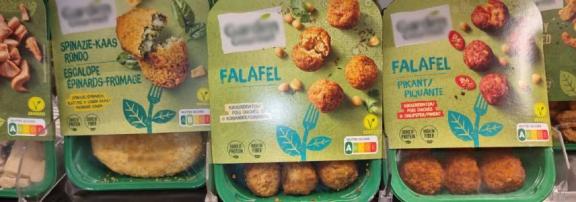
- Falafel is a deep-fried ball made mostly from ground chickpeas, which is often prepared with cumin. The popularity of falafel is increasing across Europe, especially driven by the growing trend of veganism. Although falafel is considered a national dish in several countries (like Egypt and Lebanon), it is now served in non-ethnic restaurants too.
- Dukkah – A mix of toasted nuts, seeds and herbs originally from Egypt. It is mostly used as a dip with bread. The dukkah mix normally contains cumin seeds as an ingredient. Several European companies and a few large retail chains have launched dukkah blends.
Figure 7: Cumin is an important spice in falafel
Source: GloballyCool (July 2023)
Flavour diversity and convenience in new products
Besides flavour, European consumers also want convenience. This means there is a lot of demand for spice blends, pastes and other ready-to-use products. The trend is closely linked to modern lifestyles: busy schedules and less time for cooking, but a desire for bold or exotic flavours at home.
Spice blends, such as curry powders, rub mixes or seasoning kits, help people try global flavours without buying many separate spices. Pastes, meal kits and other ‘ready to cook’ products save time while making it easy to enjoy authentic tastes and new flavour ideas. For cumin, this means more use in ready-mixes and processed foods, not only in whole seeds or plain powders. Industry data confirms this. A report on the European spice sector shows that value-added spice blends are growing rapidly, especially in Germany, the UK, France and Spain.
Many spice companies, like The Spice Club, Just Spices and Freshly Spiced, now focus on blends and convenience products. These products often include cumin when aiming for ethnic tastes such as Indian, Middle Eastern or Tex-Mex. Examples are spice kits, chili con carne or taco bases, ready-made meat substitutes, ready-made sauces, and even ready-made baby food. New product launches often highlight authentic flavour and simple preparation. Consumers are ready to pay a little more for this mix of convenience and authentic taste.
Focus on supplying cumin in ground or blended form, with stable flavour and good quality. This will open doors to food brands, ready-meal makers, restaurants and seasoning companies. Value-added products often bring higher profits than bulk seeds, as long as the spice keeps its flavour, aroma and purity. But there are also risks. Because of grinding and blending cumin has more problems like moisture, contamination and loss of flavour. You must use strict standards for processing, packaging and storage; manage shelf life; preserve flavour stability. You also must comply with European regulations for food blends and additives.
The rise of clean label and health focus
The clean-label movement is a powerful driver in Europe’s food sector. This means short ingredient lists, no additives and not much processing. Cumin fits in well with this trend because it is a natural spice known for its flavour and for traditional health uses. Food companies often use cumin in their products to put across a sense of simplicity, healthiness and trustworthiness. Exporters who can prove their cumin is real and safe can sell it as a high-quality ingredient.
Health awareness is also growing in Europe. According to the WHO, nearly 60% of Europeans are overweight, and 57 % say they are actively trying to eat healthier. People are interested in cumin because it may aid digestion and has antioxidant and anti-inflammatory properties. This creates opportunities for cumin in products such as healthy snacks, plant-based meals and ready-to-eat dishes. Many European brands now use cumin to connect taste with wellness.
Clean-label products must also be safe and free from chemicals. European buyers want proof that cumin is not treated with banned chemicals. They also expect the cumin they import to meet strict rules on pesticide residues and food safety. This is why you need modern cleaning, sterilisation and testing methods. Without these, you risk product rejection, higher costs and damage to your reputation.
Certifications help to build trust. Organic labels show that cumin is grown without synthetic pesticides. If you want to sell your spices as organic in Europe, they must be grown using organic production methods that comply with EU organic legislation. Non-GMO and ‘additive-free’ labels also give consumers confidence. More and more often, European retailers are asking for these certificates before buying products. For producers in developing countries, getting certified can open the door to premium markets. It can also help you stand out from cheaper competitors.
Some exporters are already adapting to these demands. A study found that more buyers are paying extra for pesticide-free and organic cumin. This shows that producers who invest in organic farming, rigorous testing and transparent supply chains can be successful.
Responsible sourcing becomes a market standard
Sustainability is an important topic for European buyers. Important issues in cumin seed production involve the use of soil fertilisers, irrigation water and pesticide residues. Depending on the country, the production itself involves issues affecting women, migrant or child labour. Market leaders are not only investing in sustainability to improve their image. They also do this because of economic benefits, such as cost reduction, shorter supply chains, and easier compliance with European regulations.
Certifications in this area are mainly for buyers and regulators, not always for consumers. Examples are GLOBALG.A.P. and Fairtrade. These are important for exporters if they want to sell to European companies. They may not always appear on retail packaging, but they are required in the supply chain. Small farmers often need help from exporters or NGOs to meet these standards. But in the long run, they gain more stability and better access to markets.
A group of mainly European companies and organisations formed the Sustainable Spices Initiative. They have a shared ambition to improve sustainable production and spices sourcing. Several cumin seed suppliers in developing countries are members of this initiative. The members of the initiative are making additional efforts to support sustainable production. This includes organic production, food safety investments and support to farmers.
Dutch exporter Nedspice runs the Farmers Partnership Programme (NFPP) in India and Vietnam. Through this programme, more than 1,000 farmers produce cumin sustainably. Farmers get training, better tools and traceability systems. Some farms also gained IndG.A.P. certification. This is similar to GLOBALG.A.P. and proves good farming practices. With this programme, Nedspice shows how exporters can support farmers while meeting global sustainability standards.
Another example in the field of sustainability is the large spice company McCormick & Company. Their Grown for Good programme covers cumin and other spices. It includes fair labour, gender equality, regenerative farming and community projects. By 2024, the programme had reached over 20,000 farmers in 12 countries. For cumin producers, joining programmes like these can mean more stable contracts and better prices.
One of the several Indian exporters committed to sustainability is Laxmi Enterprises. The company is among India’s largest cumin exporters. They promote water conservation by collecting and recycling rainwater. Laxmi Enterprises also supports farmers through training and awareness programs. Some examples are good agricultural practices, allergen management, and do’s and don’ts in the local language. Also, 100% of sampling and testing is done at the farm level, and non-compliant lots are rejected at source. The company empowers women to manage the close-to-farm village laboratories.
Despite the progress made here and there, there are still huge challenges. Certification and audits are costly and time-consuming. Climate problems like water shortage also make farming harder. Rising costs of fertilisers and labour are another problem. But there are also rewards: better prices, stronger buyer relations, fewer risks of rejection, and alignment with what European consumers want. For cumin exporters, adopting sustainable and ethical sourcing can open premium markets. It also helps secure long-term deals with buyers who value environmental and social responsibility.
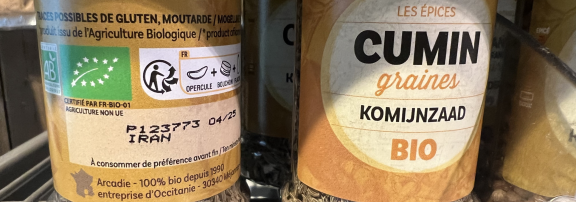
Figure 8: Organic cumin seeds from Iran
Source: GloballyCool (July 2025)
Tips:
- Partner with European processors. Many buyers import whole cumin seeds so they can process them themselves to reduce micro and allergen risks and preserve flavour.
- Do not make health claims about your cumin. EU legislation does not allow it.
- Read our 10 tips to go green in the spices and herbs sector and 6 tips to become socially responsible in the spices and herbs sector for more insights for producers and exporters to become more sustainable.
- Follow the principles of the Sustainable Agricultural Network (SAN) on matters such as environmental integrity, social well-being and economic resilience. Follow sustainable agricultural practices for cumin production, such as the ones promoted by the Sustainable Spice Initiative – India.
- Read our study What requirements must herbs and spices meet to be allowed on the European market? for details about sustainable and organic (certification) requirements, and our study What trends offer opportunities or pose threats on the European spices and herbs market? to find out more about general trends.
GloballyCool carried out this study on behalf of CBI.
Please read our market information disclaimer.
Search
Enter search terms to find market research
Do you have questions about this research?
Buyers in Spain, France and Germany value strong flavour. Syrian cumin has a warm taste that fits well in kebab, curry and spice mixes.

Samir el Riz, Four Seasons