

The European market potential for cinnamon
Europe is a large and steady market for cinnamon exporters. The most promising country markets for cinnamon exporters from developing countries are Germany, the Netherlands, the United Kingdom, Spain, Poland and France. These markets have high import volumes, strong trade systems, and well-developed spices and herbs sectors. The European market is also shaped by sustainability trends. Organic and Fairtrade-certified cinnamon are becoming an especially fast-growing niche.
Contents of this page
1. Product description: cinnamon
Cinnamon is the common name for the perennial plant Cinnamomum sp., a member of the Lauraceae family. There are hundreds of species within the Cinnamomum genus that are native to tropical and subtropical regions. The spice is harvested from the peels of the inner bark of the Cinnamomum tree. Cinnamon is cultivated extensively in China, Indonesia, Sri Lanka and the coastal regions of India and Vietnam.
There are 2 main types of cinnamon traded in Europe:
- Ceylon: Cinnamomum verum, also known as Cinnamomum zeylanicum;
- Cassia: Cinnamomum cassia.
Cassia is the sweetest. Ceylon cinnamon, often referred to as true cinnamon, has a milder flavour and is finer. It also has less coumarin (a moderately toxic, naturally occurring sweet-smelling compound) than cassia. Cassia, the bark of the evergreen cassia tree, is a spice similar to cinnamon, but it is rougher and less fragrant. It is therefore considered to be of lower quality. In this study, cinnamon is used as a general term for both species. When a specific species is meant, it is referred to specifically as cassia or Ceylon cinnamon.
Table 1 lists the products in the cinnamon product group, along with their product codes.
Table 1: Products in the cinnamon product group
| Harmonised System (HS) code | Product |
|---|---|
| 090611 | Cinnamomum zeylanicum blume, neither crushed nor ground |
| 090619 | Cinnamon and cinnamon-tree flowers (excluding Cinnamomum zeylanicum blume), neither crushed nor ground |
| 090620 | Cinnamon and cinnamon-tree flowers, crushed or ground |
HS code 090611 focuses exclusively on Ceylon cinnamon, but 090619 and 090620 also include cassia. The trade data presented in this study combine whole and crushed/ground cinnamon, unless otherwise specified.
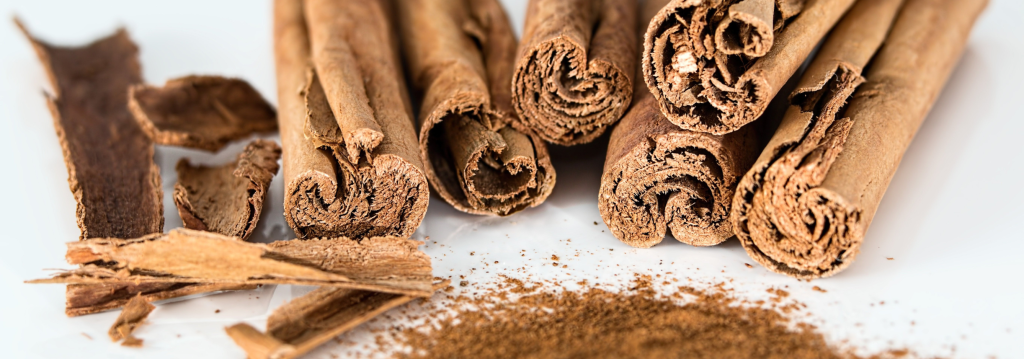
Figure 1: Whole cinnamon sticks: Cinnamomum zeylanicum blume
Source: Pixabay
2. What makes Europe an interesting market for cinnamon?
Cinnamon is one of the world’s most traded spices. It is widely used in Europe, from bakery and sweet treats to beverages and herbal infusions. Cinnamon is used more and more in product innovation and development, especially because of the growing popularity of Asian cuisines in Europe.
Europe represents a wide and diverse market for cinnamon
The European food and drink market is among the largest in the world. The industry turnover is nearly €1.2 trillion. Between 2020 and 2023, the European food and drink industry showed strength and flexibility. In the fourth quarter of 2024, turnover went up by 3.4% compared to the same period in 2023. This is a clear sign that the sector is getting more successful again. France has the largest food and beverage industry in Europe, accounting for €254 billion. It is followed by Germany (€266 billion), Italy (€179 billion) and Spain (€168 billion).
Cinnamon is one of the most used spices in Europe. The largest segments in the food industry use cinnamon. For example, in meat products, cinnamon is used in spice mixes. In bakery and flour-based products, cinnamon is widely used in baked desserts, biscuits and cakes, among several other products. It is also extensively used in drinks like herbal infusions/teas and mulled wine, as well as in dairy products. Those segments make up more than half of the total food industry.
A vast European market fuelled by imports
Europe does not produce cinnamon, so it depends on imports. These mostly come from developing countries.
Source: UN Comtrade, August 2025
*Developing countries following the OECD-DAC list of ODA recipients, ‘Rest of the world’ refers to all other countries.
The European cinnamon market has been stable in recent years. Imports were around 27,000 tonnes on average between 2020 and 2024. The import volume of organic-certified cinnamon has also been relatively stable. It has grown by 1% per year on average, to 1,430 tonnes by 2024. The share has increased, slowly, to reach 8.4% of total imports by 2024. Overall volumes dropped slightly by 0.7% per year. But when you look at product types, this is different.
Imports of ground cinnamon went up steadily, from 12,000 to 15,000 tonnes at an average annual rate (CAGR) of 4.7%. Developing countries supplied more than 70% of this segment. This confirms their leading role as Europe’s main sources.
The market for whole cinnamon, on the other hand, went down at a CAGR of ‑6.1% from 14,000 to 11,000 tonnes. Cassia imports dropped by over 11% annually, and Ceylon cinnamon grew modestly at 2.6% to a market share of 20%. This shows that European buyers are moving away from raw cassia but keep slightly higher demand for whole Ceylon cinnamon. Developing countries were still the main suppliers here too, with over 85% of the imports.
This shift suggests that European buyers more often prefer processed and ready-to-use cinnamon. But ground cinnamon is also more vulnerable to microbial contamination and fraud. Because of this, European buyers are more often looking for cinnamon that is sterilised, tested and certified before it enters the market.
Tips:
- Explore opportunities to work together with European processing companies, especially large ones that have the size and resources required to invest. You can find these companies in the membership lists of the national spice associations of Europe. Go to the Members section of the European Spice Association (ESA) for an overview of associations.
- Read more about the European food and beverage market in the annual publication of the sector association Food and Drink Europe.
- Read more about the general developments in the spices and herbs market in our study What is the demand for spices and herbs on the European market?
3. Which European countries offer the most opportunities for cinnamon?
Germany, the Netherlands, the United Kingdom (UK), Spain, Poland and France can be considered the most promising European markets for cinnamon exporters in developing countries. These countries have the largest cinnamon imports in Europe, with a significant share sourced directly from developing countries. These are countries with a large food and beverage industry and developed spice and herb markets. They often use cinnamon in traditional local recipes.
Source: UN Comtrade, August 2025
Germany: A large market and importer of conventional and organic-certified cinnamon
Germany is the largest European importer of cinnamon from developing countries, although its import volumes went up and down between 2020 and 2024. They peaked at almost 5,000 tonnes in 2022, then dropped sharply to just over 3,000 tonnes in 2023, before going up again to almost 4,000 tonnes in 2024. Overall, this translates to a CAGR of ‑1.1%.
The domination is much stronger in the organic-certified market. Germany made up more than 55% of organic-certified cinnamon imports in 2024 (800 tonnes). Imports have grown by an above-average 3.8% per year.
Vietnam is Germany’s most active supplier. Their exports went up from 890 tonnes in 2020 to over 1,000 tonnes in 2024. China also performed well, reaching 909 tonnes in 2024. On the other hand, Indonesia’s cinnamon exports fell from over 1,000 tonnes in 2020 to only 660 tonnes in 2024. Madagascar’s exports went up and down a lot. They dropped sharply in 2022 and 2023 but bounced back to 750 tonnes in 2024.
Germany still plays a very important role as the primary entry point for cinnamon into Europe. A lot of imported cinnamon is either re-exported or used in Germany’s large food manufacturing and processing sector. This supplies both local and European markets. Large spice companies involved in grinding, packing and other processing have a strong presence in the German market. These companies include Fuchs, Husarich, Hamburger Gewürz-Mühle and ENES Gewürze. They often import spices directly from developing countries.
There are also several relevant spice traders in the country, connecting suppliers to several end-using industries. Examples are Worlée, Schuco, Kräuter Mix, Martin Bauer and AKO The Spice Company. Most German spice companies can be found on the website of the German Spice Association.
Germany offers a strong consumer market for cinnamon. The German word for cinnamon is 'Zimt'. Popular traditional products include 'Schneckennudeln' (German cinnamon rolls), 'Franzbrötchen' (Northern German cinnamon buns) and 'Zimsterne' (cinnamon star cookies). Germany remains the largest consumer market in Europe, both in population and in purchasing power. The country also has the highest GDP in Europe, with strong purchasing power.
Finally, Germany is a very important market for sustainable and niche products. The organic food market in Germany is the largest in Europe. The country imports a large volume of organic cinnamon from all EU27 countries. There are several spice companies handling organic-certified cinnamon active in the German market, like Spice Bar, Herbaria and Hartkorn. Specialised shops offering high-quality spices like Gewürze der Welt are also common.
The Netherlands: Decline in imports from Indonesia
The Netherlands has traditionally been a key hub for importing and distributing cinnamon in Europe. But its importance has gone down in recent years. Its imports from developing countries fell from over 5,000 tonnes in 2020 to 3,000 tonnes in 2024, at a CAGR of ‑13% per year. This was because of a steep decline in cinnamon imports from Indonesia. This country was once the Netherlands’ leading source. Imports from Indonesia to the Netherlands fell sharply from almost 4,000 tonnes in 2020 to just over 1,000 tonnes in 2024.
On the other hand, Vietnam increased its exports from 710 tonnes in 2020 to over 1,000 tonnes in 2024. This despite some ups and downs. Madagascar’s exports were very unstable. There was a high of 670 tonnes in 2022 before falling again to 220 tonnes. Sri Lanka’s supplies went up and down. Exports grew slightly to 172 tonnes in 2024. These changes show that the Netherlands is no longer the high-volume gateway it used to be, especially for Indonesian cassia.
The Netherlands is the EU27’s second-largest market for organic-certified cinnamon, far behind Germany. Imports were 300 tonnes in 2024 but went down by 12% per year. This number is close to the average total decline. The cause is the same as for total imports: a heavy drop in imports from Indonesia (‑23% CAGR). This was not fully compensated by growing imports from Vietnam (+33%).
Royal Polak Spices is by far the largest cinnamon-importing company in the Netherlands. It is also Europe’s leading cinnamon importer, supplying over 20%. It has been active for 170 years and supplies several food industries and spice companies with a wide range of cinnamon varieties. Important Dutch spice traders are Catz and Nedspice. Smaller traders that also distribute cinnamon are H.J. Albring and Keyzer & Company. A full list of Dutch companies trading spices is available on the website of the Dutch Spice Association.
On the Dutch consumer market, Silvo (part of the McCormick group), Verstegen, and Euroma are leading spice companies. Silvo and Verstegen offer whole and ground cinnamon as well as spice mixes with cinnamon. Euroma provides ground Ceylon cinnamon and mixes containing cinnamon. These companies normally import spices directly from developing-country suppliers. Cinnamon, 'kaneel' in Dutch, is commonly used in many biscuits (like 'speculaas', a spiced shortcrust biscuit) and pastries (like apple pie) in the Netherlands.
The Dutch Spice Association strongly supports sustainable sourcing. The association is committed to Corporate Social Responsibility. A leading group of spice importers in the Netherlands established the international Sustainable Spices Initiative with members from the Netherlands and other countries.
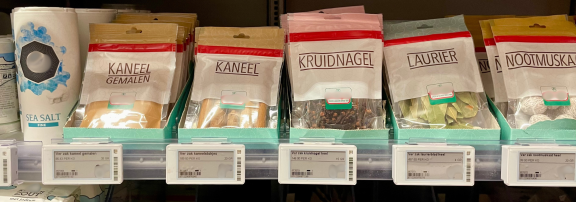
Figure 4: Whole and ground cinnamon ('kaneel') in a Dutch supermarket
Source: GloballyCool, September 2025
The United Kingdom: A diverse food market with growing ethnic and ethical segments
The UK is one of the top-3 importers of cinnamon in Europe. Its market has been fairly stable for cinnamon imports from developing countries. Between 2020 and 2024, volumes moved around 2,500 tonnes with a modest CAGR of 1.5%.
Looking at suppliers, clear changes have happened. Vietnam has become a main source for the UK. The country almost doubled its exports from 460 tonnes in 2020 to 800 tonnes in 2024. China used to be a leading supplier, but its exports fell after 2020. They partly recovered in 2024 to 620 tonnes. India’s exports were unstable, at their highest in 2022 but dropping sharply to only 250 tonnes in 2024. Indonesia also rose strongly in 2022 but has since fallen back to 340 tonnes in 2024.
For exporters, the UK is still an attractive destination. This is because of steady demand and diverse uses for cinnamon in bakery, drinks and ethnic foods. According to the UK Food and Drink Federation (FDF), the country’s food and beverage sector generated about €170 billion in turnover in 2024. Ethnic food plays a very important role in the sector, particularly Indian food.
Cinnamon is a key ingredient in Indian dishes like garam masala and masala chai (tea). It is also a basic spice in Indian cooking. There are 1.9 million people of Indian background in the UK, which is 3.1% of the population. This number continues to rise, as India is also the most common non-UK country of birth for citizens. Indian food is also popular among the rest of the British population. The ethnic food market was worth about €8 billion in 2023 and is expected to almost double by 2032. Indian cuisine is the reason behind much of this growth. This creates strong opportunities.
Several spice companies in the UK offer cinnamon or spice mixes containing cinnamon, like Schwartz (part of McCormick), British Pepper & Spice and Quay Ingredients. Some of these focus specifically on the ethnic market, like Natco. Tea and herbal infusion companies are also important users of cinnamon in the UK. Brands like Pukka Herbs and Twinings add it to their blends. For example, cinnamon is an essential ingredient in Indian Chai Tea, along with clove and ginger.
Many spice importers from the UK also trade cinnamon in different forms. Companies like Rye Spice Co. and The Spice Company supply regular cinnamon, while others, like Organic Herb Trading, specialise in organic cinnamon. The British organic market is among the largest in Europe and has the biggest Fairtrade market in the region. This makes it a very promising market for certified cinnamon. One well-known British spice business in this segment is Bart Ingredients Company.
Spain: Strong growth and shift in suppliers
Cinnamon imports from developing countries have grown strongly in Spain. Between 2020 and 2024, they rose from 2,000 to 2,500 tonnes at a CAGR of 6.2%. In 2024, 46% of imports were whole Ceylon cinnamon. Organic-certified cinnamon imports grew by a high 25% per year to almost 40 tonnes in 2024. Spain is the fifth largest importer of organic-certified cinnamon in the EU27, behind Germany, the Netherlands, Italy and France.
Vietnam is still Spain’s largest supplier with a CAGR of 6.5% between 2020 and 2024. In 2024, it exported more than 1,000 tonnes of cinnamon to Spain. Madagascar has grown the fastest, more than doubling its exports from 370 tonnes in 2020 to 810 tonnes in 2024. Sri Lanka’s exports stayed smaller but fairly stable.
Spain also has a strong spice-processing industry. The Association for Spice Processors and Packers (AEC) has around 20 members that target the retail and food industries. In total, there are around 110 companies specialised in trading and producing spices. Leading importers of cinnamon include Pimentón Y Derivados S.L., López Matencio, Omega Spice and Paprimur S.L.
Cinnamon has deep roots in Spanish food. Known locally as 'canela', it is used in desserts such as 'arroz con leche' (rice pudding), 'natillas' (custard) and 'torrijas' (Easter bread). It is sprinkled on churros and often added to café de olla-style coffees and herbal teas. In Andalusia and Castile, cinnamon is also used in savoury meat stews. This shows the influence of Moorish cooking traditions. Because of these everyday uses, cinnamon has consistent demand across homes, restaurants and bakeries.
Poland: A fast-growing cinnamon market in Central Europe
Poland registered the highest CAGR among the largest European importers between 2020 and 2024, at 10%. Its imports of cinnamon from developing countries went up from 1,000 to 1,500 tonnes. Cinnamon is known as 'cynamon' in Polish. Almost all Polish cinnamon imports are conventional products.
Supplier data shows clear changes in where the cinnamon comes from. Indonesia, once Poland’s main cinnamon supplier, saw exports drop from 660 tonnes in 2020 to 560 tonnes in 2024. On the other hand, Vietnam has grown quickly in the Polish market. The country's exports went up from 180 tonnes in 2020 to 860 tonnes in 2024. This makes Vietnam Poland’s leading and fastest-growing supplier. Vietnam is now taking a much bigger share of the market.
Polish spice imports are handled by Polish traders like Rolmex and TomPol. Production facilities of German spice manufacturers located in Poland, most notably AVO, also handle imports. Poland houses the production facilities of the British company AB World Foods, the parent company of the major European brands of Asian sauces and pastes, Blue Dragon and Pataks. Poland is also a small but growing Central European re-export hub for cinnamon. They export to countries like Czechia, Hungary and Romania.
France: Madagascar is growing share in a stable market
France is also among the main European markets for cinnamon. Its imports from developing countries stayed relatively stable in 2020-2024, at more than 1,000 tonnes with a modest CAGR of 1.4%. Organic-certified cinnamon imports went down by 8% per year to 90 tonnes in 2024. France is the fourth-largest importer of organic-certified cinnamon in the EU27, behind Germany, the Netherlands and Italy.
Indonesia is still the main supplier, but its volumes dropped from 950 tonnes in 2020 to 760 tonnes in 2024. Madagascar strengthened its role with exports rising from 200 to 300 tonnes. Vietnam also expanded its market share, with exports rising from 40 tonnes to 170 tonnes.
France is a leading food and drink market in Europe. It is home to interesting and large spice companies that source directly from origin, like Ducros and Cepasco. France also hosts many small and medium-sized companies. This makes the role of traders significant. The French market has large mainstream importers like SOCO herb, and more specialised importers like L’Arcadie and Comptoir des Épices. More companies involved in cinnamon and other spices are listed on the website of the National Union of Processors of Pepper, Spices, Herbs and Vanilla.
Cinnamon ('canelle' in French) has a long tradition in French cooking and baking. It is used in popular desserts and pastries such as 'pain d’épices' (spiced bread), 'chaussons aux pommes' (apple turnovers), rice pudding, and festive treats like 'bûche de Noël'. In regional cuisines, especially Alsace and Lorraine, cinnamon is added to spiced cakes, mulled wine ('vin chaud') and biscuits. These traditions ensure steady demand, with stronger peaks in winter and during the festive season. Whole sticks are used for infusions, hot drinks and decorative garnishes.
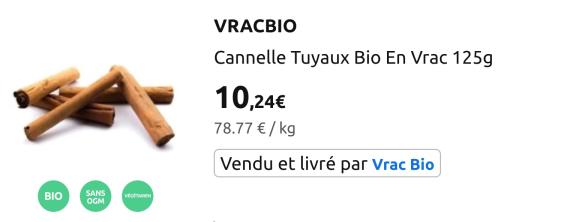
Figure 5: Whole Ceylon cinnamon sticks in bulk package of 125 grams, sold in a mainstream supermarket
Source: GloballyCool, November 2025
Tips:
- Do additional market research for more insight into the differences between the countries mentioned above. Use free statistical databases like ITC Trade Map or Access2Markets.
- Visit trade fairs and/or check out their exhibitors’ lists. This helps you identify interesting buyers in individual European countries. Fairs include Food Ingredients and Health Ingredients Europe, Anuga, SIAL for food products and ingredients, and Biofach specifically for organic products and ingredients. Consider visiting the Nordic Organic Food Fair if you are targeting the Nordic market specifically. If possible, combine your trade fair visit with visits to existing and potential clients in the region.
- Read our study Tips for finding buyers on the European spices and herbs market for valuable information on how to approach European buyers successfully.
4. Which trends offer opportunities or pose threats in the European cinnamon market?
Cinnamon is valued for its warm, familiar flavour. But its role is now much bigger than just a simple kitchen spice. It is used in wellness products, convenient on-the-go foods and plant-based desserts. At the same time, European rules on organic certification, sustainability and coumarin content set a high bar for suppliers. The trend for single-origin spices also gives you an opportunity to tell your story as a cinnamon exporter.
Cinnamon is a key ingredient in innovative and healthy products
Cinnamon is a traditional ingredient in several European dishes, pastries and beverages. It is also a key ingredient in new product launches. The health, wellness and functional foods movement is one of the main drivers behind the European cinnamon market. More consumers now choose natural ingredients that bring comfort and possible health benefits. They avoid products with too much sugar or artificial additives. Cinnamon fits well in this trend because it gives a warm flavour. It can also make food taste rich without adding calories.
You must follow strict European rules, though. Health claims about cinnamon, such as helping immunity, blood sugar or weight loss, are not allowed. Also, EU food laws set limits on coumarin. This gives Ceylon cinnamon, which has much lower coumarin, a selling advantage. Suppliers of cassia must guide their buyers on safe use in recipes. Handling these rules carefully is key to building long-term trust with European partners.
The European Food Safety Authority has not authorised health claims for cinnamon itself. But companies often mix it with other ingredients like vitamin C, fibre or probiotics to create products that follow the rules. Cinnamon connects flavour with function in European health products. In this way, cinnamon supports the idea of healthy living while staying within European regulations. It has become more than just a kitchen spice. It now plays an important role in wellness products across Europe.
Herbal tea specialists like Pukka Herbs and Yogi Tea create special blends with cinnamon as the main flavour. They combine it with other plants to support relaxation or immunity. In cereals and snacks, Bio&Me sells its Apple & Cinnamon Gut-Loving Granola as a fibre-rich option for better digestion. In sports nutrition, MyProtein offers Cinnamon Danish whey protein, which adds flavour. The health claim comes from the protein, though. Retailers like Holland & Barrett also sell cinnamon supplements, although EU law limits how they can advertise them.
The move to reduce sugar in food gives cinnamon even more potential. European regulators and consumer groups are putting pressure on food companies to reduce the amount of sugar. Cinnamon helps here because its smell and taste are linked with sweetness. This makes it easier to use less sugar in drinks, cereals and baked goods. Ground cinnamon can be measured exactly. This makes it especially useful both for large food producers and small artisanal bakers. This is why buyers want suppliers who can guarantee even grind size, good flavour, and safe, clean products.
Looking ahead, cinnamon in functional foods will keep growing with demand for natural wellness. Success will depend less on unproven health claims. It depends more on enhancing flavour, helping reduce sugar, and fitting with ‘clean label’ values. Exporters who can deliver reliable quality, technical support and organic certification are in the best position to meet demand.
Tips:
- Do not make health claims about your cinnamon. EU legislation does not allow this.
- Always provide complete documentation and specifications of your cinnamon to European buyers. This information will allow them to see the potential of your product in different applications. See examples of a product specification sheet from the UK-based Organic Herb Trading Company (Organic Cinnamon (zeylanicum) Bark, PDF), Just Ingredients Trade (Fairtrade Organic Cinnamon Quills, PDF) and OLAM spices (Cinnamon Powder, PDF) to identify the type of data that can be useful for your potential buyers. In addition to lab analysis parameters, note the importance of botanical identification (specific species) and the description of the detailed physical and organoleptic characteristics of cinnamon.
- Keep up to date with product launches and developments. This helps you identify the most dynamic segments of the European food industry. Use sources like Food Navigator and Food Ingredients First to follow the main developments.
Europe’s large market for sustainably certified cinnamon
Sustainable sourcing is a growing trend in Europe. As a supplier, you will be increasingly faced with sustainability requirements. Certifications like GLOBALG.A.P. are required in the supply chain. Organic certification is growing significantly for spices. This is not only because of consumer demand. European buyers also require more traceability and preventive actions to lower cross-contamination risks in their supply chains. With cinnamon, organic certification is commonly paired with Fairtrade certification. This targets social sustainability.
Europe’s organic food market is strong. Overall organic retail sales in Europe reached almost €55 billion in 2023. This means Europe is the world’s second-largest region for organic retail sales (after North America). In 2024, the global organic spice market was worth over €22 billion. By 2033, it will probably reach almost €35 billion with a CAGR of 5.1%. Requirements in Europe are becoming stricter. Any product labelled ‘organic’ must follow EU Regulation 2018/848, which covers organic production and labelling. You need clear records to prove compliance.
For example, Austrian company Sonnentor sells organic Ceylon cinnamon in retail packs. German company Herbaria offers organic cassia from Sumatra, highlighting both its origin and sustainability. This shows how European consumers value certified products with a clear story of where they come from.
Cinnamon is one of the most commonly traded Fairtrade-certified spices. There are over 100 Fairtrade-certified cinnamon traders in Europe. Several European spice companies are offering cinnamon with paired Fairtrade and organic certification. For example, Italian brand Cannamela has a Fairtrade-Organic spice line sourced from Sri Lanka. This proves that certified products are not limited to niche shops but can also reach mainstream supermarkets.
You can learn from successful models in producing countries. In Sri Lanka, the IFC and local partners recognised the first group of GI-certified Ceylon cinnamon growers in 2024. This group combines quality, origin protection and strong market positioning. Sri Lankan companies Joint Agri Products Ceylon and Biofoods already sell organic or double-certified cinnamon (EU/USDA Organic and Fairtrade) to Europe. This proves that small and mid-sized exporters can compete if their quality and paperwork are reliable.
In Indonesia, Cassia Co-op and Tripper have built a model that processes cassia locally. They work directly with small farmers and offer training in Rainforest Alliance and organic standards. This short supply chain improves traceability and transparency. European buyers strongly appreciate this.
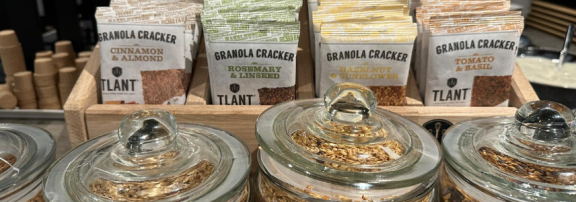
Figure 6: Organic granola crackers with cinnamon
Source: GloballyCool, September 2025
Tips:
- Read our 10 tips to go green in the spices and herbs sector and 6 tips to become socially responsible in the spices and herbs sector. These studies give more insights for producers and exporters to become more sustainable. Read our study What requirements must herbs and spices meet to be allowed on the European market? for details about sustainable and organic (certification) requirements.
- Follow the principles of the Sustainable Agricultural Network (SAN) on matters such as environmental integrity, social well-being and economic resilience.
- Explore the database of Organic-Bio to identify potential importers of organic cinnamon as well as competing suppliers from producing countries. Search the database of FLO-Cert to find specific Fairtrade-certified suppliers around the world and international/European buyers sourcing Fairtrade-certified cinnamon.
- Make a cost-benefit analysis to decide if organic production is worthwhile for you. Carefully look at your capacity to apply organic farming principles. Productivity often goes down during the conversion to organic farming. The conversion phase usually takes 2 years. You will need to take this into account when investing in organic production. This is because a higher price will be generated only after this period.
- Look for possible partners to improve sustainability in your supply chain. You can use available programmes and subsidies from governmental or non-governmental organisations for investments in sustainability. For more information, visit websites like the Sustainable Spice Initiative, the Netherlands Enterprise Agency and the German Ministry for Economic Cooperation and Development.
Convenience and on-the-go demand for cinnamon
Convenience is reshaping European food consumption. Cinnamon plays a role in many quick-prep and on-the-go products. Consumers look for foods that save time but still feel comforting and indulgent. The flavour profile of cinnamon matches this need.
Products like spice mixes in jars, single-serve sachets, ready-to-cook kits and marinade packs are ideal for European consumers, because they want flavour and convenience. They need spices in formats that save time and reduce effort in the kitchen. Cinnamon is used in savoury spice blends like 'garam masala' (Indian), 'ras el hanout' (North African) and five-spice powder (Chinese). These fit in well with the popularity of ethnic cooking across Europe. Cinnamon is also used in spice mixes for baking, like Dutch 'speculaas' spices and cinnamon sugar.
Cinnamon has become very popular in barista culture in many European cities. You will often see chai lattes, spiced cappuccinos and seasonal cinnamon drinks on café menus. This has an effect on retail, with more ready-to-drink spiced and chai beverages available in supermarkets. Ground cinnamon is part of the recipe in instant mixes like Drink Me Chai. In single-serve hot drinks, it is more often included via natural flavourings or extracts. For exporters, this means opportunities both in supplying ground cinnamon to blenders and in working with flavour houses that develop cinnamon-based aromas.
The rise of plant-based products in Europe has also created new opportunities for cinnamon. Plant-based milks, yoghurts and desserts are growing fast. Oat and almond drinks are leading the way. Cinnamon is a natural addition to these products. It delivers flavour depth without artificial additives. Alpro has introduced an apple-pie spiced edition of their plant-based product. This shows how important cinnamon is as a comforting and flavourful ingredient. As plant-based consumption continues to expand, cinnamon’s role in non-dairy products will probably grow too.
Breakfast products also highlight this trend. European supermarkets sell single-serve porridge pots, instant oat sachets and granola cups. Apple and cinnamon is one of the most popular flavour combinations. Brands like Quaker and 3Bears use cinnamon as the main flavour driver in these quick-prep products. Exporters who can supply fine, uniform grinds and safe, residue-free lots are in the best position to serve these industrial buyers.
Tips:
- Explore the possibility of adding value to your cinnamon by highlighting the characteristics that are unique to your company and to the producing regions you are sourcing from. This will make your cinnamon more attractive, especially to buyers of higher-end spices that are interested in high-quality and unique profiles.
- Adapt your grind size and packaging to the needs of convenience products. Buyers for instant drinks and porridge pots want fine, uniform particle sizes and consistent moisture levels. Offering ready-to-use grinds or customised milling can save European buyers processing steps and make your product more attractive.
- Read our study Exporting spice mixes to Europe for more information on the European market potential and requirements for spice blends.
Single origin as a marketing and differentiation tool in Europe
Single origin is a well-known concept in products like coffee and chocolate. It is used more and more in the European market for spices. Single origin spice that are sourced from a specific country, region, and even farm or producer. It highlights spices with unique characteristics and flavours. Single-origin spices are not mixed or blended with spices from other origins.
As customers seek premium and higher-quality products, they are also increasingly interested in the origins of these products. Consumers have also become more interested in the agroclimatic features of production areas. They also want to know the stories of producers and their communities. For spices like cinnamon, single origin also highlights unique components and flavours that can only be grown in a specific region.
For importers and spice companies, single origin also means increasing traceability. This is translated into consistent quality and product safety. It is especially relevant for organic spices, where identity preservation and cross-contamination prevention are crucial.
Many companies market single-origin recognition in cinnamon. Examples are Danish company Mill & Mortar, whose ALBA quality, organic and fair trade-certified cinnamon comes from forest garden harvests in Sri Lanka, and UK-based Rooted Spices with single-origin Ceylon cinnamon from a Kandyan Forest Garden in Sri Lanka’s Central Highlands.
In the cinnamon market, origin also distinguishes different cinnamon species and their quality. This is particularly the case for Ceylon cinnamon. In 2022, Sri Lanka received its first-ever Protected Geographical Indication (PGI) certification from the European Commission through Regulation (EU) 2022/144 (PDF). The PGI differentiates Ceylon Cinnamon on the EU market from lower-quality substitutes, and recognises the exclusive quality coming from the cinnamon’s specific origin and the associated harvesting and processing know-how and techniques. The botanical names Cinnamomum zeylanicum and Cinnamomum ceylanicum can still be used on the label of products from other origins. But the country of origin outside Sri Lanka must also be indicated.
Tips:
- Tell the story of your cinnamon’s origin, tradition and/or producers to add value. Your buyers can use this in their marketing.
- Read our study What trends offer opportunities or pose threats on the European spices and herbs market? to find out more about general trends.
GloballyCool carried out this study on behalf of CBI.
Please read our market information disclaimer.
Search
Enter search terms to find market research
Do you have questions about this research?
Cinnamon is one of the most commonly used single spices by Dutch consumers. This provides opportunities for high-quality products, as consumers are often willing to pay more for products they use on a daily or weekly basis. But the high-end spice segment is limited in the Netherlands. Thus, in order to warm up consumers to the quality differences and prices, these products have to be backed by good stories about the production and the farmers. If not, many consumers prefer the flavours they are used to, mainly low-quality cassia from the supermarket.

Iona Mulder, Founder of The Good Spice