
The Italian market potential for cocoa
Italy is one of Europe’s attractive entry points for cocoa and cocoa‑based products. It combines strong import capacity with a deep, diversified chocolate industry. Their industry ranges from global manufacturers to premium and bean-to-bar artisans. Demand is shifting towards higher‑value, traceable and clean‑label products. Dark, single‑origin, organic, and no‑added‑sugar segments are growing. At the same time, supermarkets, specialty shops and fast‑growing e‑commerce channels provide broad market access.
EU‑level sustainability rules are making verified traceability and compliance essential. For suppliers from producing countries, the opportunity lies in consistent quality, clear documentation and compelling origin stories. These should be backed by reliable logistics and long‑term partnerships. The following sections outline Italy’s market structure, import dynamics, leading players and growth segments. This helps exporters target the most promising opportunities.
Contents of this page
1. Country description: Italy
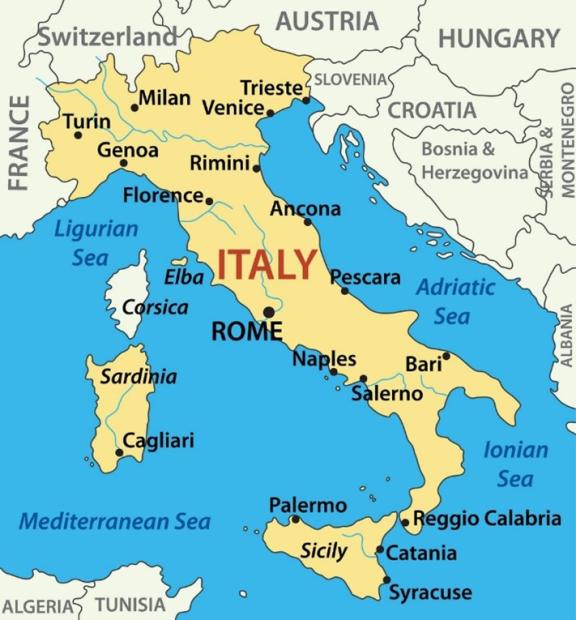
Italy is an EU member in Southern Europe with Rome as capital and Italian as official language. It is part of the Schengen Area. In 2024, Italy’s population was about 59.0 million. Italy lies on the Mediterranean. It is bordered by France, Switzerland, Austria and Slovenia, and encloses San Marino and Vatican City. The map below (Figure 1) shows Italy’s neighbouring countries and main cities.
Italy has a large, advanced economy and is the 3rd largest in the euro area. Real GDP growth in 2024 was about 0.7%, with the European Commission expecting modest growth ahead. Italy benefits from extensive Mediterranean coastline with major ports like Genoa, Trieste, Gioia Tauro, Livorno and La Spezia. In 2023, they handled about 473 million tonnes of cargo. Gioia Tauro was the top container port in Italy. It ranked among the EU’s top-15 and continuing to grow into 2024. These ports serve importers and link directly to northern Italy’s industrial and retail centres, especially Milan and Turin. Italy follows EU customs regulations, with local oversight by the Agenzia delle Dogane e dei Monopoli (Customs and Monopolies Agency).
Italy is a strategic hub for cocoa processing and chocolate manufacturing across the continent. Its position in the EU market, strong logistics and large confectionery base make it a gateway for cocoa and cocoa products into Europe.
Sections 2-4 highlight the market potential (imports, segments and trends) of Italy and show where cocoa exporters in origin can find the best opportunities.
Figure 1: Italy map with major cities, neighbouring countries and surrounding seas
Source: Guide of the world
2. What makes Italy an interesting market for cocoa?
Italy is an attractive market for cocoa because it buys large volumes with a focus on quality. Most of its imported cocoa beans come directly from producing countries, especially Latin American and West African suppliers. The country has many established chocolate makers. They range from big brands like Ferrero and Perugina to premium and bean-to-bar companies like Venchi, Amedei and Domori. They all care about quality, traceability and certifications. Italian consumers are choosing dark, ethical and artisanal chocolate, and retail networks are strong. Over the next years, import values will likely stay high, and traceable, verified cocoa will grow. Suppliers who provide clear specifications, certificates and stable contracts will have the best chance to serve the market.
Italy is a major importer of cocoa in the European Union
Over the last five years, Italy’s imports of cocoa beans have been large in terms of value. In 2020-2024, the value of cocoa bean imports almost doubled. It rose from about €226 million to about €446 million. But import volumes remained almost the same, moving from about 85,000 tonnes in 2020 to about 83,000 tonnes in 2024. The sharp rise in value might be because of the rise in cocoa prices in 2024.
Over the next 1-3 years, import values are likely to remain high. This is because global supply is tight and costs for compliance, such as traceability, are rising. Import volumes will likely be stable. This offers producing countries opportunities to continue exporting to Italy. In the longer term, import volumes may slowly increase. A larger share of imports will likely be verified and traceable as compliance systems improve. Prices may ease from current levels but will likely stay above the average seen in 2018-2022.
Source: ITC calculations based on UN COMTRADE and ITC statistics
Italy buys most cocoa directly from producing countries, and is diversifying its sources
In 2024, 86% of Italy’s cocoa bean imports came directly from producing countries. West Africa is still the main supplier region, with Côte d’Ivoire as the largest source. But the shares are changing. Overall volumes declined globally. However, not all countries experienced a decline in Italian import of their cocoa beans.
Imports from Côte d’Ivoire fell from 43,699 tonnes in 2020 to 35,706 tonnes in 2024. Imports from Ghana also decreased, from 17,286 tonnes to 8,959 tonnes. This is about 14.8% per year (Figure 3). This decline can be linked to lower production trends in the two countries over the past years.
By contrast, imports from several other origins grew. Imports from Ecuador rose from 7,878 tonnes to 13,235 tonnes (about 13.7% per year). Imports Nigeria grew from 1,625 tonnes to 8,659 tonnes (about 50.2% per year). Imports from Peru grew from 3,515 tonnes to 5,557 tonnes (about 12.2% per year).
Italy remains anchored to West African supply. But the above information shows that the share of Latin American and secondary West African origins is expanding. This suggests both strategic hedging against supply risks and an appetite for fine flavour and specialty cocoa.
Over the next 1-3 years, Italy is expected to continue growing purchases from Latin America. Buyers are also likely to further diversify their portfolios based on reliability in compliance with Europe’s sustainability laws in the long term. Fine flavour and single-origin cocoa will probably grow in premium market segments. If you are a supplier in this specialty segment, present your unique flavour profiles with sensory sheets and tell your origin story.
Source: ITC calculations based on UN COMTRADE and ITC statistics
Italy exports lots of chocolate
Italy is one of the world’s leading chocolate exporters, ranking 4th globally in 2024 with approximately US$3.12 billion in chocolate exports, accounting for about 7.1% of worldwide chocolate shipments. Italy is among the dominant European countries – Germany, Belgium, Poland, Italy and the Netherlands. Together, they supplied roughly 49.3% of all global chocolate exports.
Source: World’s top exports
Italy also exports much more chocolate than it imports. In 2024, it had one of the largest positive trade balances in chocolate. Its net export surplus reached about US$2.2 billion, up 17.8% year-over-year. This shows that Italian companies are very good at making chocolate. They have made Italian chocolate very popular and competitive around the world. These manufacturers also sustained demand from international buyers for Italian-made chocolate products.
The biggest Italian chocolate-exporting company is Ferrero. They are known for famous products like Nutella, Ferrero Rocher and Kinder. It sells its chocolate products in more than 170 countries. Other Italian companies like Venchi, Majani and Domori also export chocolate, especially high-quality and specialty chocolate products.
Italy houses a strong chocolate-manufacturing industry
Italy is home to numerous chocolate companies. A lot of cocoa is processed domestically as high-quality chocolate. Global giants like Ferrero (headquartered in Alba, Piedmont), Perugina (headquartered in Perugia, Umbria), and Novi are all founded in Italy. Ferrero is renowned for iconic products like Nutella, Ferrero Rocher and Kinder. Perugina is known for popular products like Baci pralines and assorted chocolate boxes. Novi is also known for dark chocolate bars.
Venchi, a premium chocolate maker, is another major player, producing for both domestic and international markets under its prestigious label. Other key companies are Baratti & Milano, Caffarel, Slitti and Majani. Italy’s chocolate industry is deeply rooted in craftsmanship and regional identity, with many companies investing in traceability and certifications like Rainforest Alliance, Fairtrade and EU organic. Therefore, they prioritise stable supplies of high-quality cocoa beans and semi-finished products, providing opportunity for exporters who meet stringent standards for flavour, purity and moisture content.
Italy also boasts vibrant artisanal and bean-to-bar chocolate makers like Amedei and Domori. These brands focus on single-origin cocoa, direct trade relationships and sustainable sourcing practices. These companies exemplify Italy’s growing emphasis on quality and ethical production. This sets benchmarks for flavour complexity and transparency. Building on this foundation, Italy is poised to remain a global hub for chocolate innovation. This is especially so in the premium, artisanal and sustainable segments.
Italy’s consumer demand and retail networks support chocolate market growth
Italy’s chocolate market is large. It is also estimated to grow from 2.9 billion US$ in 2025 to 3.8 billion US$ by 2030, at a cumulative annual growth rate (CAGR) of 5.56%. This expansion is supported by strong retail networks and shifting consumer preferences towards high-quality and sustainable products.
Regarding the retail networks, supermarkets and hypermarkets are the main places where people buy chocolate. In 2023, they made 46.2% of all chocolate sales. Supermarkets and hypermarkets offer a wide range of products for good prices. The retail market has become more concentrated around big chains like Conad, Selex, Coop and Carrefour. These stores have grown their own private-label chocolate lines. They also still work closely with well-known Italian chocolate brands. This has made supply chains more efficient. It has also given consumers easier access to both premium chocolate and mass‑market chocolate. Besides this, Italy has 538 specialised chocolate shops as of May 2025. About 83% (445) are independently owned and 17.29% (93) are tied to larger brands.
Looking at consumer preference, they are choosing more premium and health-focused chocolate. Manufacturers are responding to this trend with new products. They offer higher cocoa content, organic certified cocoa products and unique flavour mixes. Demand for artisanal chocolate is also rising. Local chocolatiers are becoming more popular for their craft methods and high-quality ingredients.
Italy’s chocolate import from cocoa-producing countries is very small but has shown steady volumes over the last 5 years (Figure 5). The leading countries exporting chocolate to Italy are Nigeria, Peru and Ghana. This suggests a potential opportunity for producing country exporters that can offer sustainable, certified or fine flavour chocolate.
Source: ITC calculations based on UN COMTRADE and ITC statistics
Tips:
- Activate the ‘Translation’ function of your browser to make the studies available in your native language.
- Find a list of chocolate shops in Italy here.
- Visit the ScaleUpNation website to learn the technique of storytelling: it is important to differentiate yourself in a crowded market.
3. Which cocoa products offer the most opportunities on the Italian market?
Italy offers strong opportunities across several cocoa product segments. Premium dark chocolate is growing fastest as consumers choose higher cocoa content, single-origin, organic and no‑added‑sugar options. Semi-finished products also show potential, especially cocoa paste. Cocoa paste has increased sharply in imports. It also suits Italy’s advanced manufacturing needs when suppliers meet strict technical and safety standards.
Unique flavours, health and sustainability are main drivers of demand. Because of this consumers buy bean-to-bar artisanal chocolate as well as vegan and plant-based chocolate more often. This creates potential opportunity for specialty cocoa beans suppliers and exporters who want to enter into long-term partnerships with buyers.
Certified cocoa import is growing
Certified cocoa, particularly under the Rainforest Alliance (RA), Fairtrade and EU Organic schemes, has become important on Italy’s chocolate market.
The share of certified cocoa imported by Italy has grown steadily in recent years. Imports of Rainforest Alliance-certified cocoa from producing countries rose by 48%. It grew from about 3,800 tonnes in 2023 to 5,600 tonnes in 2024 (Rainforest Cocoa Certification Data Report, 2024).
Similarly, fairtrade-certified products remain very important on the Italian market. In 2023, Italians spent about €518 million on fairtrade products. Cocoa remained one of the most purchased Fairtrade commodities in Italy. Sales reached 9,756 tonnes in 2022, which is a 9% increase from the previous year. In 2023 there was a slight slowdown, dropping to 9,649 tonnes (‑1%). This 1% decline was mainly because some major retailers or distributors temporarily changed the products they offer. In 2024, the Italian market recorded volume growth of +4.6%, reaching 10,095 tonnes.
About 82% of Italy’s Fairtrade cocoa comes from Côte d’Ivoire, Ghana and the Dominican Republic, showing strong sourcing links with traditional cocoa origins. Italy’s certified import volumes are smaller compared to Germany or the Netherlands. But the growth trajectory and buyer demand show more opportunities for exporters able to meet sustainability and traceability standards.
There are also substantial volumes of high-quality cocoa (premium and organic), mainly sourced from Peru, the Dominican Republic and Sierra Leone. A considerable share of this Fairtrade cocoa is purchased with organic certification, confirming the growing focus on certified sustainable and ethical production.
Organic cocoa represents another promising, though relatively stable, market segment. Italy’s organic retail market was valued at €3.88 billion in 2023 (FiBL, 2024). But organic cocoa imports have remained consistent. They ranged between 7,000 and 8,700 tonnes in 2020-2024, or roughly 8-9% of total cocoa bean imports. For cocoa to be recognised as organic in Italy, EU Organic certification is the minimum legislative requirement. See our study Exporting organic cocoa to Europe for more details.
Italy’s certified cocoa imports are expected to continue expanding moderately. Retailer commitments and consumer trust in certification logos are main driving forces for this expansion. In the long term, stricter EU sustainability regulations will likely make certification, or equivalent verified traceability, a baseline requirement rather than a niche differentiator. Try to invest early in credible certification, transparency systems and cooperative-level quality management. This will help you be best-positioned to secure high-value, stable Italian buyer relationships.
Premium dark chocolate with high cocoa content
Dark chocolate is now the fastest-growing type of chocolate in Italy. In 2023, it made up 40% of all chocolate eaten in the country. Italian consumers are becoming more health-conscious. Many people now choose dark chocolate with 51% or more cocoa. This is especially if it has no added sugar or comes from a single origin.
In the short term, the premium dark chocolate segment is expected to grow by about 6% each year until 2029. In the long term, the market will become more focused on ultra-premium and functional chocolate. This includes products with added health benefits.
Growth of the dark chocolate segment in Italy is also driven by increasing demand for premium and organic chocolate. Consumers are looking for products made with high-quality cocoa beans from single origins. To meet this demand, major global chocolate companies like Ferrero are expanding their dark chocolate product lines.
The growth in premium dark chocolate demand means that Italian makers will require a larger share of beans suitable for 51%+ cocoa solids recipes. This includes ncluding extra dark (70%+) and single-origin bars. Cocoa beans with flavor clarity and consistency are required. This means your cocoa should be distinct yet have clean profiles that suit dark formulations. For 60-75% bars, cocoa should have low astringency/bitterness. For single-origin bars, it should have complex aromatics (dried fruit, red berries, florals, nuts, caramel) for single-origin bars. For 80-90% bars, there should be deeper cocoa notes with balanced bitterness.
As a cooperative or exporter, developing and knowing the flavour profiles for your cocoa varieties can give you an advantage in meeting the needs of Italian chocolate makers. It is important to invest in post-harvest handling of your cocoa, such as proper fermentation, smoke-free drying, careful sorting and storage. Document your bean quality to show that your cocoa is well-fermented with low-defect beans (e.g. over 70% well-fermented beans). You should also show tight control of off-flavors like smoke, mold and excessive acidity. This can give you an advantage in the Italian market. The main reason for this is because dark chocolate has very little sugar or milk to mask bad tastes. So when cocoa beans are roasted, any flaws in the beans become more noticeable in the final dark chocolate. These flaws can be caused by mold, smoke smell, too much acidity or insect damage.
Cocoa paste import is growing
Italy's manufacturing capabilities give potential opportunities for semi-finished cocoa products from cocoa-producing countries. Import data shows both volatility and growth potential across different product categories. This reveals Italy’s evolving demand patterns. Cocoa butter imports from producing countries fluctuated dramatically from 6,475 tonnes in 2020 to 810 tonnes in 2024. But cocoa paste imports surged from 800 tonnes in 2020 to 14,092 tonnes in 2024. Meanwhile, cocoa powder imports showed moderate growth from 732 tonnes in 2020 to 922 tonnes in 2024 (Figure 6).
Côte d’Ivoire is the top origin country supplier of cocoa paste to Italy (Figure 7). Though these quantities are not large, the rise in cocoa paste imports suggests potential opportunities for producing countries that can supply high-quality cocoa paste.
Italian manufacturers use origin blends to balance cost and flavour, especially in mid-range and premium chocolate lines. It will support the expansion of single-origin chocolate ranges. This is because consumers increasingly seek transparency and ethical sourcing. In the near future, Italy’s demand for cocoa paste from cocoa-producing countries is expected to remain steady. Over the longer term, there will be growing interest in origin cocoa paste with strong traceability and sustainability credentials. This will be due to changing strict EU food safety, traceability and sustainability rules. Buyers may prefer exporters who follow strict rules regarding technical specifications. For example, controlled particle size, microbiological safety and low heavy metals (e.g. cadmium).
Source: ITC calculations based on UN COMTRADE and ITC statistics
Source: ITC calculations based on UN COMTRADE and ITC statistics
Rising vegan and plant-based chocolate demand
Vegan and plant-based chocolate is a growing segment in Italy’s chocolate market. Italian consumers are becoming more health-conscious and environmentally aware. This leads them to choose chocolate that is free from animal products.
As of 2021, the Italian vegan chocolate market was valued at about $25 million. In 2024, the market size grew to about $35 million. It is expected to reach about $42 million by the end of 2025 and $115 million by 2033 (Figure 8). This growth rate is much stronger than the overall chocolate market growth of 5.56%. It is driven by rising lactose intolerance, ethical concerns and interest in plant-based diets.
Source: Europe Vegan Chocolate Market Report 2025
Italy’s vegan and plant-based chocolate sector includes both artisanal makers and large companies. For example, Odelia Cioccolato Kosher produces 100% vegan chocolate crafted with hazelnuts and single-origin cocoa. Venchi, a well-known Italian brand, also offers plant-based chocolate made with carefully selected ingredients. This is in response to growing consumer demand for dairy-free options. In 2024 Ferrero introduced a plant-based version of Nutella. This shows that even major producers are investing in vegan innovation. It suggests that Italian manufacturers are developing new vegan chocolate lines.
Vegan chocolate makers prefer fine flavour cocoa beans like Criollo, Trinitario and Nacional Arriba. These are known for their smooth texture, rich aroma, and naturally balanced taste without milk. They favour beans with high cocoa butter content, low bitterness and clean fermentation. These beans are often sourced from single-origin and organic farms in Latin America or West Africa. Vegan consumers value ethics and sustainability. So makers also prioritise certified, traceable and deforestation-free cocoa that supports fair and environmentally responsible production.
Cocoa exporters from origin countries that can deliver consistent quality and support ethical branding can benefit by supplying cocoa and semi-finished cocoa products for vegan chocolate production. In the long term, the market will continue to mature with a focus on functional and origin-based products.
Increasing demand for bean-to-bar chocolate
Bean-to-bar chocolate is an artisanal approach in which producers transform cocoa beans into finished bars in a controlled, transparent process. In Italy, the rising appetite for premium, origin-driven, ethical chocolates contribute to the growing bean-to-bar chocolate sector.
Globally, the bean-to-bar chocolate market is forecast to grow with a CAGR around 9.94% until 2032.With a market size of about US$ 699.81 million in 2024, the Italian market is expected to grow even more at 10.7% CAGR until 2032.
Italy has a long history of chocolate craftsmanship. Many consumers are willing to pay more for chocolate that is transparent and ethically sourced. Bean-to-bar chocolate is made in small batches. This means producers can control quality and experiment with different flavours.
Italian Amedei is a pioneer and notable bean-to-bar chocolate maker. Amedi is Known for its award-winning ‘Porcelana’ and ‘Chuao’ bars. Due to growing demand, there is an expanding number of bean-to-bar artisanal chocolate makers who focus on quality, transparency and direct relationships with cocoa producers. For example:
- Karuna Chocolate has won many international awards and sources fine flavour cacao from Tanzania, Belize and India through a trusted and transparent supply chain.
- LIM Chocolate produces pure dark chocolate with cacao content between 70% and 76%, using beans from Indonesia.
- Bonajuto is known for its unconched, Mexican-style chocolate, which has a rustic texture and bold flavours.
- Angiolini Cioccolato creates single-origin chocolate bars using cacao from countries like Guatemala and Venezuela.
- Nexo Chocolate is a bean-to-bar maker, shop owner and entrepreneur who transforms fine cacao from Ecuador, Peru and Tanzania into high-quality chocolate every day.
- Rukét Chocolate has received international recognition for its bean-to-bar creations, which include 72% dark chocolate from Tanzania and a floral 75% bar made with cacao from Haiti.
- Ciocomiti works with fine cacao beans from a wide range of origins, including Vietnam, India, Ecuador, Brazil, Peru, Guatemala and Papua New Guinea.
Exporters from cocoa-producing countries can sell specialty cocoa beans directly to Italian craft chocolate makers. They do this through exclusive partnerships for single-origin chocolate bars. Cocoa producers who use careful fermentation and drying methods can add value to their beans. Offer small micro-lots of fine-flavour beans with full sensory and traceability data.
It is also important to keep records of farming and processing methods to show transparency. Some Italian buyers are interested in visiting farms and learning the story behind the cocoa. This creates more interest and trust. These opportunities are especially helpful for farmer cooperatives, individual farmers and local communities. Cooperatives can sign long-term contracts with projected stable prices. Farmers can grow special cocoa varieties for niche markets.
Attending chocolate events like Cioccoshow and competitions like the World Craft Drinking Chocolate Competition in Italy can help cooperatives gain visibility and connect with potential buyers.
Consumers want premium and heathier chocolate
Premium and health trends are changing Italy’s chocolate market. Consumers now look for chocolate made with good ingredients, ethical sourcing and health benefits. This creates a potential opportunity for cocoa exporters who can supply cocoa beans or semi-processed products that are traceable, organic and clean-label.
Premiumisation means a focus on better taste, origin stories and artisanal craft. Dark chocolate is still the main product, making up about 40% of total consumption in 2023. But the trend now also includes milk, white and filled chocolates made with single-origin cocoa and local ingredients such as nuts or salt. Consumers like limited editions, special blends, and chocolates with strong flavours and little processing. This matches what Barry Callebaut calls ‘Intense Indulgence’, where chocolate is valued for its rich taste and sensory experience.
Health awareness is growing fast in Italy. Shops are now creating ‘health-forward shelves’ with high-cocoa bars, no-added-sugar chocolate, vegan options, and even chocolate with added nutrients. This is part of a trend called ‘Mindful Indulgence’. In this, people enjoy chocolate but also want it to match their values. These support fair trade, the environment and personal well-being. Demand for premium and health-conscious chocolate is expected to keep growing steadily in the future, especially in urban areas and specialty retail. This aligns with sector-level trends in plant-based and functional foods.
For cocoa exporters, this means entering higher-value markets. A successful example is Kokoa Kamili in Tanzania, which supplies fine-flavour cocoa to Italian bean-to-bar makers like Karuna Chocolate. Their focus on fermentation quality, traceability and direct trade has helped them access premium buyers. They have also won international prizes such the Cocoa of Excellence Awards, the silver award at the Academy of Chocolate Awards and gold at the International Chocolate Awards.
Tips:
- Joining trade shows like Eurochocolate can help build connections. The Eurochocolate in Italy promotes craft bean-to-bar chocolate and educates curious consumers. When attending shows like this, try building strong relationships with bean-to-bar producers in Italy who prefer to buy directly from origin.
- Choose certification strategically. Align with buyers’ preferred schemes (RA, Fairtrade or EU Organic) and verify the long-term demand before investing. Work through cooperatives. Collective certification reduces costs and ensures traceability.
- Develop clear flavour profiles and origin stories to support ethical branding.
- Invest in post-harvest infrastructure to improve fermentation, drying and packaging.
- Read our studies on how to do business with European cocoa buyers, exporting certified cocoa to Europe, exporting speciality cocoa to Europe, requirements cocoa must meet for the European market and exporting semi-finished cocoa products to Europe.
4. Which trends offer opportunities or pose threats on the Italian cocoa market?
Several trends create opportunities in Italy’s cocoa market. Premiumisation and health awareness are pushing demand for high‑quality, traceable and clean‑label cocoa across dark, milk, white and filled chocolates. Digital commerce is also expanding fast, opening new sales channels and private‑label opportunities. At the same time, EU sustainability rules (like EUDR, CSDDD and CSRD) are becoming essential for market access. This makes traceability and compliance a must.
Expansion of digital commerce
Italy’s chocolate market is changing fast as online shopping grows and supermarkets get stronger. This is reshaping how cocoa products are sold, promoted and sourced. For exporters, it means new chances to connect with Italian buyers through e-commerce and private-label deals.
Online chocolate sales in Italy are expected to grow by about 7% per year until 2029, supported by internet use that now covers over 84% of the population. More consumers are buying chocolate on brand websites, curated marketplaces, and even subscription services. This growth is powered by home delivery, a wider choice of products, and the ease of checking prices and ingredients online.
Major chocolate manufacturers and retailers, including Venchi, Cioccolato Lindt and Gobino, are expanding their digital presence and offering exclusive online promotions. Dark chocolate sales through online channels are particularly strong, reflecting growing consumer preference for premium and artisanal products available through digital platforms. Many specialised chocolate shops in Italy are also active on social media platforms like Facebook (about 299 shops), Instagram (about 255 shops ), and YouTube (about 80 shops).
Retailers are also investing in supply chain efficiency and digital integration. This makes it easier for consumers to access both mass-market and premium products. In the short term, online chocolate sales will continue to grow, especially for vegan, organic and single-origin products. Chocolate exporters who build strong digital and retail relationships will be better positioned to scale and diversify.
The growth of digital commerce in Italy means cocoa exporters must go beyond selling beans. They need to show transparency, traceability and authentic origin stories online. Italian bean-to-bar makers and retailers increasingly buy through digital platforms and value close supplier relationships. Exporters should therefore build a strong digital presence and share verifiable sustainability data. They should also offer flexible, high-quality micro-lots. This helps them meet the expectations of Italy’s premium, story-driven chocolate market.
A successful example is El Ceibo in Bolivia. They are a cooperative that supplies organic cocoa to European retailers including retailers in Italy and bean-to-bar makers. They use digital platforms to share their story, manage logistics and meet buyer expectations. This helps them reach both niche and mainstream markets.
Sustainability regulations and ethical sourcing are now essential
Italy does not have its own national sustainability laws for cocoa. Instead, it applies the broader European Union regulations, which are rapidly evolving and directly affect all cocoa imports.
The EU Deforestation Regulation (EUDR) was supposed to be enforced on 30 December 2025 (or 30 June 2026 for SMEs). However, on 23 September 2025 the European Commission proposed a one‑year delay to enforcement for high‑risk commodities such as cocoa. So now enforcement will begin from 30 December 2026 (or 30 June 2027 for SMEs). Companies placing cocoa on the EU market must prove that their supply is deforestation‑free and legally produced. The cocoa should also be traceable to the exact plot of land where it was grown. Exporters will need to conduct due diligence, including geolocation mapping, legal compliance checks and risk mitigation measures.
This delay, backed by the Council, is intended to give businesses more time to prepare. It should also ensure the EU’s central IT system is fully operational. Simplification measures are also under discussion. Only the first operator placing cocoa on the EU market would need to file a due diligence statement. Downstream traders would keep reference numbers instead of filing separate reports. Micro and small operators could submit a one‑off simplified declaration.
In addition to EUDR, cocoa businesses must also align with the Corporate Sustainability Due Diligence Directive (CSDDD), which came into force in July 2024 but is now only for very large firms (5,000+ workers and €1.5B turnover). It requires companies to prevent and address human rights and environmental risks across their supply chains. This includes fair pay, biodiversity protection and carbon neutrality. Focus is now risk‑based. Companies are to check their own operations and Tier 1 suppliers to make sure they follow the rule. Climate plans are no longer required.
EU Countries must put this into law by July 2028. Exporters should expect buyers to ask about labour rights, fair pay, biodiversity and environment. They can demonstrate compliance through codes of conduct covering ethics, social responsibility and environmental stewardship. Watch our cocoa webinar on meeting European market requirements (from minute 21 onwards) to see how Bara Union from Côte d’Ivoire prevents and addresses human rights to improve sustainability in their cocoa farming community.
Meanwhile, the Corporate Sustainability Reporting Directive (CSRD), effective since January 2023, mandates standardised ESG reporting and third-party verification. The scope has been reduced to firms with 1,000-1,750 workers and €450M turnover. First reports are now due in 2028-2029. Cocoa suppliers must provide data on emissions, labour practices and resource use to help EU buyers meet their obligations.
To simplify these overlapping rules, in February 2025 the EU proposed an omnibus package aiming to harmonise CSDDD, CSRD and the EU Taxonomy. This reform is expected to reduce administrative burdens by 25% overall and by 35% for SMEs.
These laws directly affect your buyers, so it is important to support them. You can do this by providing access to geolocation maps, transparent recordkeeping and compliance documentation. These may require technical support and financial investment. In the long term, meeting these standards can lead to stronger partnerships with Italian buyers. They can also lead to higher premiums and better market access. Try to invest early in traceability systems, farm mapping and ESG reporting. Doing this will make you best-positioned to supply Italy’s ethical chocolate manufacturers and avoid exclusion from the EU market.
Tips:
- Use digital tools to share origin stories and manage traceability. Read our study What trends offer opportunities or pose threats in the European cocoa market? to learn more about EU’s changing sustainability requirements and digital traceability system.
- Create a website or social media handles for your business or cooperative.
- Learn about sustainability in storytelling here.
- Read our study Entering the Italian market for cocoa to learn about all mandatory and other requirements.
Amonarmah Consults carried out this study in partnership with Molgo Research on behalf of CBI.
Please review our market information disclaimer.
Search
Enter search terms to find market research
Do you have questions about this research?
Demand for dark and sugar-free chocolate is rising in Italy. Many specialty chocolate makers prefer Criollo cocoa because of its unique qualities — low bitterness and astringency, delicate aromas (such as nuts, caramel, fruits and flowers), and overall high flavour complexity. These characteristics make Criollo a top choice for crafting premium dark chocolate.

Antico Paolo, Pastry Chef and Managing Director at Antico Dolce Idea