
Women entrepreneurs in Kenya are catalysts for change
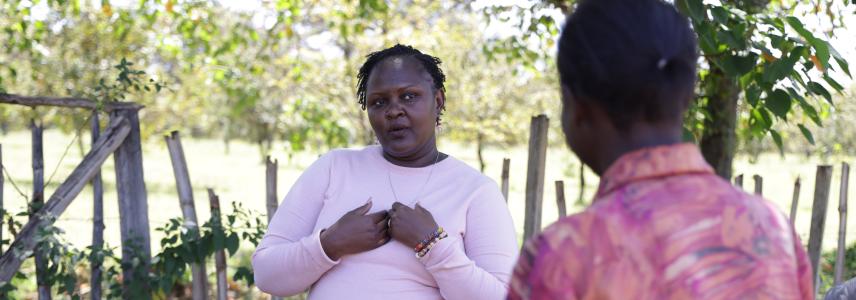
Women-led and women-owned businesses can help push systemic change. CBI's projects in Kenya are an example of how gender awareness and reducing systemic limitations can lead to business growth and market access to the Netherlands and the European Union (EU). Collaborating with women and their environment in Kenya clearly illustrates CBI's strategic shift toward a systems approach. The focus now is on addressing the root causes of systemic problems. This means CBI aims not just to support women-owned and -led small and medium-sized enterprises (SMEs) in Kenya to increase exports and jobs, but to partner with women entrepreneurs. In this insight, CBI programme manager Renee van Woerden shares her observations.
Renee: "We see that when women entrepreneurs gain equal market access, opportunities multiply. They are a powerful force for an inclusive, sustainable economy in their country. Together with women entrepreneurs, we explore how the Kenyan business ecosystem can create the conditions for all Kenyan women entrepreneurs to thrive. The results are quite promising. Everything is in place to help more women in Kenya access to trade opportunities and markets, tap into financing, and participate in the economy with less systemic limitations."
Empowerment: Beyond gender awareness
One important finding so far is that gender awareness alone is not enough to further empower women economically. "Education in Kenya has come a long way since the 1990s," Renee notes. "It has become more inclusive. Also, since then, there are more trade support institutions and other partners offering valuable services to women's groups. But collaborating with Kenyan women and partners, we have discovered a serious gap. Services do not always reach their intended target group." For example, courses may not reach women entrepreneurs, due to little attention to practical factors such as time and location. This demonstrates that gender awareness does not automatically translate into services tailored to the needs of women entrepreneurs.
Renee also cites Kenyan consultant Frida Owinga, with whom she works closely. Frida also emphasises that gender awareness is not enough. More importantly, a systemic redesign is needed so that women have access to:
- Markets;
- Financing; and
- Influence at every level.
The collaborative, locally owned approach in Kenya shows that when gender responsiveness is embedded in institutions and mindsets, inclusive growth becomes inevitable.
"Economic equality for women is good for business."
"When more women work, economies grow."
"Closing gender gaps at work is a key to achieving the Sustainable Development Goals."
These are just a few of the many benefits of women's economic empowerment highlighted by UN Women, the United Nations’ lead entity in gender equality.
A locally owned, collaborative approach
To truly understand the challenges, CBI worked closely with a range of partners. These included:
- Women entrepreneurs.
- Exporters and traders.
- Governmental and non-governmental organisations (NGOs).
- Sector associations.
- Financial institutions.
A steering committee of 7 national stakeholders from different sectors and CBI identified the main challenges. Together, they organised a 3-day event on women's economic empowerment in Kenya, which was attended by around 70 people. "This local, collaborative approach was very effective," says Renee. "It highlighted key challenges that women entrepreneurs face, as well as the most urgent issues to tackle. It also reinforced the value and importance of partnership in pursuing systemic change."
Pathways to change
Following advice from all stakeholders, the project focused on 3 pathways to change.
1. Access to markets
Women entrepreneurs in Kenya often experience challenges in accessing markets. They are resilient entrepreneurs that successfully sell their products locally, but often at minimal, sometimes unfair, prices. By gaining access to a larger market, their opportunity to scale their businesses and contribute to a sustainable economy would be greater. These can be regional or international export markets. "Women entrepreneurs who reach other markets can earn a more decent income for their households and could invest more easily."
In Kenya, CBI shared several access-to-market solutions. One of these was to encourage 11 trade support institutions (TSIs) make their export services more inclusive and suited for women entrepreneurs. A total of 55 employees from these institutions attended a training course in gender-responsive export services. "Our aim was to ensure that these TSIs put the theory of supporting women entrepreneurs into daily practice," comments Renee. CBI and its partners reviewed the TSIs' progress at the start and end of the year to track changes over time. To encourage healthy competition, they launched an award programme, offering a prize for the best-performing TSI advancing gender-responsive services. "This led to the foundation for TSIs in Kenya to embed gender responsiveness in their activities," concludes Renee.
2. Access to finance
For many women entrepreneurs in Kenya, funding business growth is a huge challenge. "Most of them have a bank account, but cannot get a loan," Renee says. "This is because they do not receive the needed information about financial products, or because they do not have collateral, such as land. Lenders often reject women entrepreneurs, assuming they only run a micro-business, especially in agriculture. This can discourage many women from applying. As a result, it is more difficult for their businesses and incomes to grow. And banks miss out on a successful, profitable client base."
To break this vicious circle, CBI and partners have embraced a new approach. "The target now is on both supply and demand," explains Renee. "On the supply side, financial experts worked with banks to develop a clear business case for serving women-owned SMEs. They provided data on loan sizes, repayment rates, and growth potential. On the demand side, business development experts gathered groups of women entrepreneurs with export ambitions. Many of them were already bank customers. The experts explained opportunities and supported entrepreneurs in meeting the loan requirements."
This two-sided approach is meant for women to develop stronger business plans and prepare for loans, while banks learnt to tailor their services and products to women's needs. With 3 banks we are testing this process. "This work has shown us that access to finance is not just about credit," says Renee. "It is about changing mindsets, boosting trust, and unlocking shared value."
3. Speaking up with One Voice
Historically, Kenya has had numerous women's associations. They were mainly active within their own networks. This led to a third focal point in our collaboration with women: The establishment of One Voice. One Voice is an organisation that connects women entrepreneurs in Kenya to network, collaborate and grow together. "The power of One Voice quickly became clear," observes Renee. "It is a place where women can share thoughts and speak out. Together, they can influence government regulations and strengthen their role in trade and export. One Voice still has a lot of work to do to become strong, clear, and financially independent. But already, organised women entrepreneurs in Kenya show they are leading the way towards structural change and fair market access."
An example: Real impact in the macadamia sector
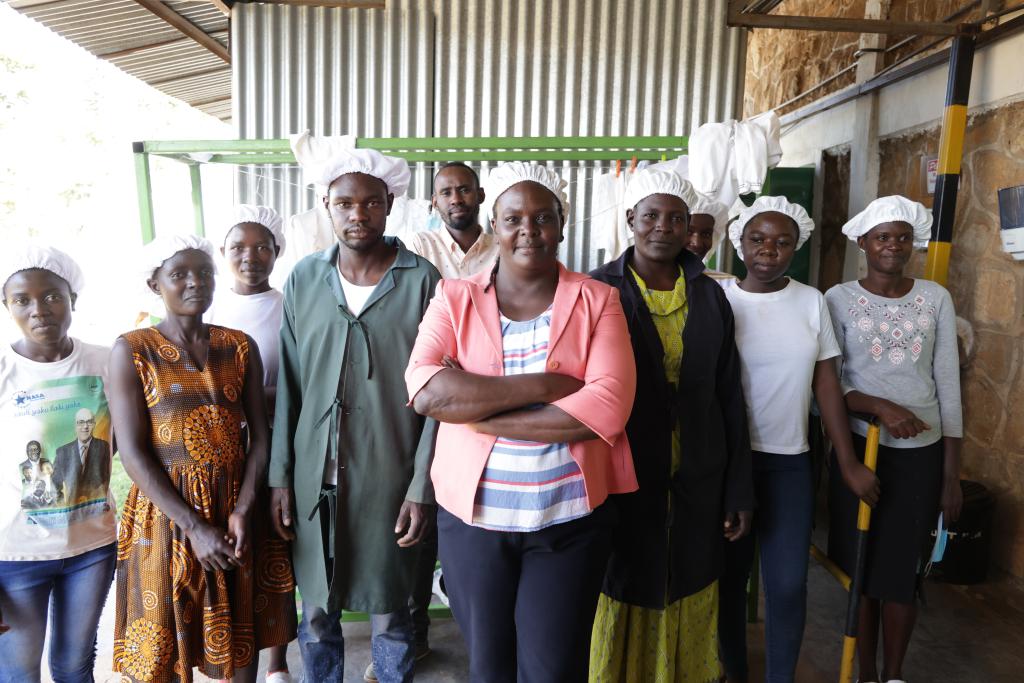
The results in the macadamia farming sector are particularly exciting. Here, CBI collaborated with Onja Uone, a women-led macadamia processor, and 30 women macadamia farmers. Onja Uone guided the farmers in:
- Best farming practices;
- Entrepreneurship; and
- Household decision-making.
"The women learnt about more opportunities, their households benefited, and their businesses and exports have grown," says Renee. "And by involving men in the conversations, their progress has been even greater." The pilot project has shown that this approach benefits both parties. Farmers saw their income increase by 81% and Onja Uone received higher-quality macadamia nuts in larger quantities. Due to its success, CBI has scaled this approach up to 180 farmers and 5 more macadamia processors. Renee concludes: "Our shared experiences in Kenya show us how with a systemic approach we can turn gender awareness into real, sustainable impact."
More information
Learn more about the Women's Economic Empowerment Kenya project.