
The road to change is always changing
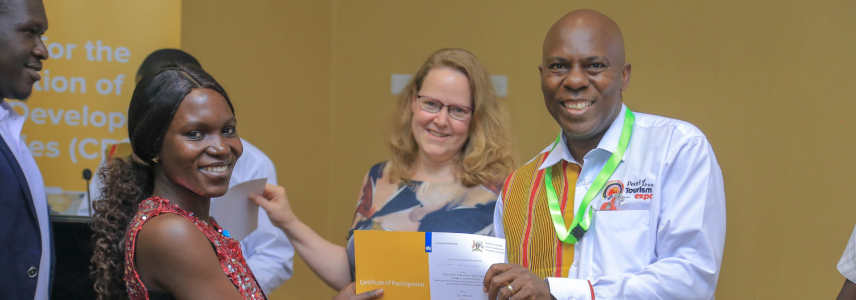
In international development, goals are ambitious and circumstances are always changing. Success is rarely straightforward. CBI's approach to sustainable production and trade recognises this: We ‘Analyse, Reflect & Adapt’. Good examples are the 2 recent projects Sustainable Tourism in Uganda and Moringa Export Development in Burkina Faso.
Continuous learning
The systems we try to influence are complex. That is why we do more than monitor compliance. Instead, we analyse, reflect and adapt to build a culture of curiosity. As insights change, so do our projects. We value learning over rigidity, context over control and impact over box-ticking.
Each project starts with a clear question. How will collaborating with exporters, business support organisations, governments and other stakeholders lead to more inclusive, sustainable trade? As the project progresses, we ask further questions such as:
- Are we seeing the expected results?
- Are behaviours changing?
- How are changes in the market system influencing results?
- Are there blind spots?
Uganda: Reflective learning in action
The Uganda Sustainable Tourism project, led by programme manager Jeanette Scherpenzeel, shows the approach in practice. In Uganda, Jeanette took a bold step towards systemic change. “I decided that everyone who wants to contribute to scaling up sustainable tourism is my friend,” she recalls.
Rather than selecting a small group of small and medium enterprises (SMEs), CBI involved all 73 tour operators interested in the project. Over time, collaboration with 23 of them discontinued. We divided the remaining 50 into a 20-member accelerator group and a broader learning group. This open, inclusive model enabled natural filtering and wider-reaching effects across the ecosystem.
Jeanette and her team regularly reflected on what was working, identified obstacles and adapted their approach. It made the project more effective, stimulating ownership and problem-solving among partners. She highlights the importance of being flexible: “If it isn’t working, you learn the lessons, accept your loss and try another way.”
Burkina Faso: Reflexive monitoring
The Moringa Export Development project in Burkina Faso is another example. Moringa is a promising crop for local farmers and SMEs. It is known for its health benefits and export potential, but the market is fragile. Building a sustainable export value chain requires constant adaptation. That is why we used so-called reflexive monitoring. That means reflection and learning become essential parts of the project. This method helps us track not only output, but also changes in relationships, skills and systems.
Key lessons
Our approach in Burkina Faso taught us several lessons:
- The project focused on supporting farmers and companies. In 2024, it became clear these groups could work together more effectively. Improving collaboration became a priority.
- Much of our work involved bringing people together in meetings, workshops and informal discussions. The results were less tangible than those offered by infrastructure or investment. Still, these activities were crucial for building trust and making decisions.
- Quick wins were appealing, but the project’s early stages focused on laying strong foundations. Communicating clearly about timelines and defining activities became crucial.
From evaluation to navigation
Experts play an important role in the ‘Analyse, Reflect & Adapt’ approach. Their knowledge and experience help us understand what is happening on the ground and decide which areas to focus on. In both Uganda and Burkina Faso, experts did more than just implement. They helped develop our strategy and turned insight into action. This reflects a broader shift in CBI’s identity, from providing technical support to helping change a system. It is a shift that requires humility, patience, a deep belief in the power of dialogue – and a lot of flexibility.
Conclusion: Discover, not just deliver
'Analyse, Reflect & Adapt' is more than a monitoring tool. It is a way of thinking that accepts complexity, encourages responsibility and prioritises learning. It forces us to be flexible while keeping our goals in mind. We expect change and are open to surprises about what works best. It is a mindset, not just a method.
In Uganda’s tourism sector, it allowed us to experiment and create a bigger impact. In Burkina Faso’s moringa sector, it turned uncertainty into insight and process into progress. Both projects show that to change a system, you need to discover, not just deliver.
Learn more about decent work
Decent work and economic growth are not only necessary, but also achievable. Yet, many people around the world struggle to find jobs that pay well, offer stability, have workplace security and allow for personal growth opportunities. This can change.
At CBI, we promote decent work by encouraging and creating decent jobs and stimulating sustainable production and trade. We ensure that the small and medium-sized enterprises we support adopt the principles of decent work and maintain high social and environmental standards while expanding their businesses and increasing exports to Europe and regional markets. By doing so, we promote inclusive and sustainable economic growth.