
Transforming markets through systemic thinking

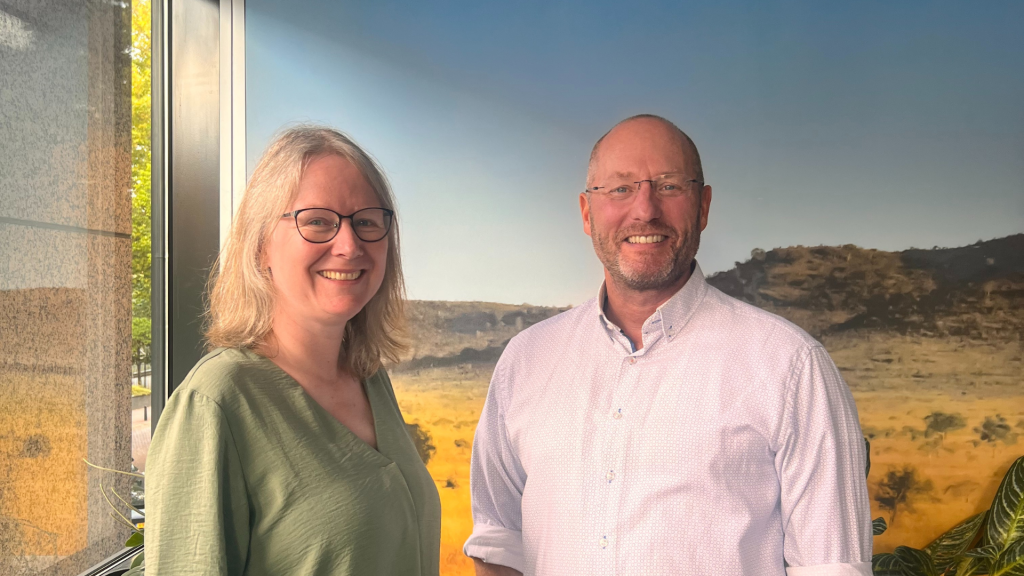
With the close of CBI's 2021-2025 strategy, we reflect on a significant shift: Approaching markets and economies more systemically. To explore what this change brought, we spoke with Janneke Vereijken (CBI coordinator) and Lucas Simons (founder of partner organisation NewForesight) about the challenges they faced and the key lessons for our future work.
"There are many differences between the way CBI worked 20 years ago and our recent approach," Janneke begins. "Before 2021, we focused mainly on supporting companies to meet European Union (EU) market requirements. We worked together to increase their exports, improve their Corporate Social Responsibility (CSR) policies and create more jobs. Now, we approach sectors more holistically, as a system of intricately linked parts.
Building on this, our approach has become both broader and deeper. Previously, we measured impact by the number of export companies we helped, their export figures, and the jobs created. Moving forward, our priority is transitioning to sustainable, inclusive sectors. For example, in relevant agriculture sectors, we contribute to:
- The air-to-sea freight transition;
- Climate-smart agriculture; and
- Socially impactful, inclusive supply chains.
In the textile sector, we contribute to:
- The transition to circular textiles; and
- Socially impactful, inclusive textile chains.
This broader approach includes working with a more diverse set of partners than before. Although this is complex and takes more time, it is exciting to see shifts that are emerging."
Changing how markets work - MSD
CBI's approach combines theories and guidelines of Market Systems Development (MSD) and Sustainable Market Transformation (SMT). MSD encourages development organisations like CBI to focus on changing how markets work for various market players, rather than directly supporting them, such as exporting SMEs. "CBI sees trade not as a goal but as a means - one of many," Janneke explains.
"The MSD perspective enables us to address root causes behind unsustainable and non-inclusive trade practices. These are underlying issues that hinder sectors in low- and middle-income countries from benefiting from trade with the European and Dutch market. By adopting MSD, our efforts benefit not only a select group of exporters but a wider range of actors, including employees and suppliers, such as women, youth, or local farmers. By addressing root causes and scaling solutions, we can contribute to change and socio-economic development across the market and contribute to market development."
"Trade can be part of the problem" - SMT
SMT complements MSD. SMT is a development framework used and advocated by Lucas Simons and his team at NewForesight. "When we learnt about NewForesight's SMT work, we knew they could help us further," says Janneke. "MSD has guided our ways of working, focused on root causes, the scaling of success, and market-based solutions as opposed to outside-in interventions. It provides answers to the question of 'how'. With SMT, we learn about the 'why' and 'what' of systemic work. SMT provides a framework for analysing and understanding a market system and its actors. It also answers questions such as:
- How does the system function?
- Who benefits, and who is left out?
- What are the alternatives?
- Which issues need to be addressed to bring about change?
- Who is involved, and how can each player, including ourselves, contribute at their best?
SMT enables us to focus and structure our contribution towards systemic transformation."
Janneke adds that, although MSD has been around for at least 20 years, the wider MSD community is evolving. She highlights: "At the Donor Committee for Enterprise Development (DCED) conference in Kenya, 1 question stood out: 'Are we being transformational enough?' To me, this underscores exactly why CBI's approach and the need for systemic change are urgent."
From one-man band to symphony
Lucas observes that at the start of the 2021-2025 strategy period, CBI had to adapt to different role. "In SMT, it is not enough to focus on what you are good at and simply do as much of that as possible. Instead, you must take a wide view of the market system. You must work with many different stakeholders. Together, you identify root causes and opportunities together. You decide what to scale up and what to dismantle, and who is best equipped for each role. Mobilising others is more important and has a greater impact on the system than running ahead and doing your own projects. It is easy for a bunch of one-man bands to make a lot of noise. Systemic work is about creating a symphony."
Progress during changing political and economic landscapes
CBI has made fantastic progress, Lucas notes. "They deal with a shifting political and economic landscape, where many focus on quick wins instead of long-term change. In that context, CBI is a stable force for good. CBI has a clear vision, and strong focus areas that impact market systems. these include climate action, youth employment, and the empowerment of women. They have large networks in Europe, the Netherlands, and low- and middle-income countries. They are committed to transferring projects and processes responsibility to local partners. CBI asks the right questions, even if the answers are not clear yet. These questions are about sustainability, inclusivity, and true change for the people who need it most."
A systemic perspective
"Looking at markets from a systemic perspective has opened my eyes," Janneke says. "Many common practices in the world of trade and production go against sustainability and inclusiveness. For example, trade between low- and middle-income countries and Europe is often just about getting the lowest price. Local producers ultimately pay the price. And European and Dutch buyers receive products of inferior quality."
She adds that the issues CBI now faces are bigger and more complex than before, when they worked with small groups of exporters. "A simple example: Just creating jobs through export does not guarantee that those jobs are decent, or that they go to those who need them most."
The leather industry in Bangladesh
Janneke and Lucas cite CBI's work with the leather industry in Bangladesh as another example. "When researching the market system, we found a lot of attention goes to environmental performance," Janneke states. "But in social performance, this sector can still improve. This is especially true with European and Dutch buyers who demand both environmental and social responsibility."
"In the past", Janneke continues, "CBI would have selected a number of companies and trained them to increase their exports, focusing on their individual social performance. The system approach aims for a broader impact. Building on previous experiences with a small group of frontrunners, we want to contribute to a social norm for the entire industry. That norm can then be rolled out to more leather firms in Bangladesh.
Lucas comments, "This approach reinforces the impact. First, there will be a group of frontrunner exporters who earn more money thanks to their improved social footprint. Then, their example and the social norm will ensure that many more companies follow suit."
Janneke adds: "Second, players who struggle to meet the norm can receive training courses. This way, the whole market system benefits. Again, the ultimate goal is not to help a small group of companies become socially responsible, grow their exports and create more jobs. It is to leverage their success for many more companies. And we can do that by collaborating with a range of partners and market players to create the right conditions and support services. It is about the bigger picture."
Quick results versus gradual transformation
Overall, CBI believes the systemic approach will bring broader results. But that takes time, Janneke explains. "The old approach, where we worked with a few eager and capable export companies and brought them to the European market, seems almost like a quick fix compared to our current approach. We spend much more time setting up our new programmes. This includes researching assumptions about a market system, the underlying causes of its failure to lift people out of unemployment and poverty, power dynamics, and more.
We have had to thoroughly review our processes and tools. At the execution level, we take on a more facilitative role. We experience more trial and error than before, because we test solutions with partners and withdraw if they do not work, or scale up if they do. Projects take longer than the average 4 years we are used to. And because we are working on a broader front, the impact is becoming visible more gradually. This is a challenge, especially in a world that demands quick results."
The challenge of choosing
"Another challenge is choosing the focus", Janneke says. "It starts with defining what a market system actually is. That is much more complicated than defining an export sector in a particular country. According to the MSD framework, a market system includes not only businesses but also regulators, financial services providers, certifiers and a range of other players – any player or dynamic that affects the system's functioning. And no 2 systems are the same: Different markets and countries have different players and dynamics. This presents us with countless potential problems and root causes. Thorough analysis and consultation with other actors in the system reveal specific sustainability challenges that will have the greatest impact when addressed."
Transformation will happen
Lucas responds to these challenges with words of encouragement: "When you start working with Market Systems Development and Sustainable Market Transformation, the question is not: Will it be easy or difficult? It is always difficult. The more relevant question is: Are we doing the right things? Because if you do the right things, and we believe that CBI is doing that, transformation will take place. CBI swims against the tide, which is very important at the moment. Other like-minded organisations will want to join the movement when the systemic results become more visible. It is a matter of patience and perseverance. Remember that the transformation of market systems can typically take 10 to 15 years."
Janneke concludes: "Pioneering is challenging. We are on a steep learning curve. Because we do see signs of real transformation, the journey is also hugely exciting and rewarding. CBI is fully committed to continuing on this path towards inclusive and sustainable economies."