
Stronger together: Exporters and importers in compliance
Our collaboration with entrepreneurs and other stakeholders in the market systems of low- and middle-income countries almost always results in increased exports to Europe. But export development is not the goal – it is a means. The real goal we aim for together is to transition to more sustainable and inclusive economies. Sharing knowledge about trends and developments often helps exporters and importers to identify opportunities for better practices. The Uganda coffee sector is an example of this. A change in the law is benefitting exporters and importers, while also making the sector more future-proof.
Uganda is the second-largest coffee producer in Africa and the eighth-largest in the world. In 2023, 1.8% of Dutch green coffee imports came from Uganda. Ugandan coffee exports increased by 55% between 2019 and 2023
Coffee is one of Uganda's most valuable exports. Over 2,000,000 smallholder farmers depend on coffee export for their livelihoods. Despite its size, the sector has many challenges. These include fragmented production, poor infrastructure, limited value addition, a generational gap in farming and worsening impacts of climate change. In the Uganda coffee sector, we work with exporters, importers and other players in the market system bring about change.
Sharing market information
An important step we took was to share market information about the new European Union Deforestation Regulation (EUDR). This regulation states that by December 2025, large and medium-sized companies can only export their coffee to the EU if they can prove it is deforestation-free and traceable. By July 2026, small companies must meet the same requirement.
"We are using this new development to bring exporters and importers together," says CBI programme manager Anne-Marie Roorda. "Part of our role is to create awareness and understanding of new requirements. The EUDR is an incentive for many stakeholders to make choices that are good for the whole market system. It motivates them to engage in sustainability initiatives."
Advantages of traceability
The EUDR offers an opportunity to promote what we call a 'climate-smart coffee sector' in Uganda. "Ugandan farmers and exporters who do not meet EUDR requirements risk being cut off from their most valuable market. Meeting these requirements means they can keep exporting. They may also be able to sell their coffee at a higher price, giving local farmers more income. It will also enable them to invest in future-proof practices, such as drought-resistant coffee varieties, better irrigation and multi-cropping."
Anne-Marie believes the traceability data required by the EUDR offer many more advantages. "Data about coffee, land and supply chains are valuable for farmers. They can use it to gain access to finance, secure land rights or improve quality control. For importers who are targeting conscious consumers, data about traceability and stories about sustainable origins can be a sales advantage. Compliance is not just good for business: it also boosts sustainability."
Importer focus group
Anne-Marie also explains how CBI involves European importers in contributing to deforestation-free and traceable Ugandan coffee exports. "We have set up an importer focus group to discuss challenges and solutions with a number of buyers. They are not just buying coffee but actively contributing to better practices."
For example, 4 importers created a video for exporters. In the video, Wakuli, Ikigai Coffee, The Coffee Quest and This Side Up explain why they are interested in Ugandan coffee that meets EUDR requirements. "Together," Anne-Marie says, "we can create traceability systems, quality control and climate-smart practices that follow EU standards. This offers importers a steady supply of compliant coffee. In this way, we use market developments and demand to work towards a more sustainable and inclusive sector. We call this 'export as a means'. It is an important principle for us."
Sustainable pricing structure
For change to happen, importers have to be willing to pay a higher price for climate-resilient coffee. "The focus group taught us that many mainstream coffee buyers prioritise competitive pricing and in-time delivery," Anne-Marie says. "The current pricing structure reflects that." A small number of large companies control most of Uganda’s coffee exports. This 'race to the bottom' pricing structure undermines economic, environmental and social sustainability.
The good news, Anne-Marie says, is that some importers think long term. Several of them are very interested in climate-resilient coffee. They believe their customers are willing to pay more for it. "By bringing motivated importers and exporters together, we can start to change the pricing structure."
Collaborating across borders
In the Uganda coffee sector, we also work with local institutions and policymakers to make sure every voice in the market system is heard. Partner organisations include the Ministry of Agriculture, Animal Industry and Fisheries, and Café Africa.
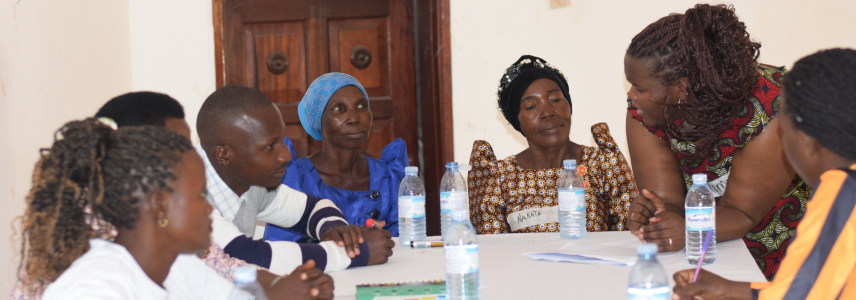
"In January 2025, we hosted a validation session," Anne-Marie explains. "During the session, we brought together stakeholders from different parts of the sector. These included women farmers, young entrepreneurs, as well as financial institutions and international importers. We invited them to develop the project together. This helps to build ownership, resilience and relevance. Sustainability and inclusion are the main objectives, but export makes the transition happen."
A driver and an outcome
The Uganda coffee sector shows that trade and sustainability can go hand in hand. Some European importers now see climate-smart coffee from Uganda as a way of improving sustainability and standing out in the market. Benefits for exporters can include better prices and more sustainable practices. "Although the project is still in its early stages," Anne-Marie concludes, "It is already showing how export can be a means of creating lasting systemic change."